



When I first looked into updating my home’s exterior, I quickly realized how much house siding costs can vary. The prices depend on the material, the size of the house, and even where you live.
I wanted something durable, low-maintenance, and within budget, but the options were overwhelming. So, I decided to compare the real costs of vinyl, wood, fiber cement, and other siding types from trusted stores.
If you’re planning to replace or install siding, this guide will help you understand pricing, compare materials, and make smart choices that fit your budget.
What Affects House Siding Cost
Before you compare prices, it helps to understand what actually drives the total cost of siding a house. A few key factors can make a big difference in your final budget.
- Material type: Vinyl, wood, and fiber cement all come with different price tags.
- Home size: Bigger homes need more siding and labor, which raises the total cost.
- Labor rates: Prices change depending on where you live. Labor can range from $1 to $5 per square foot.
- Old siding removal: If your home has existing siding, removing it adds both time and expense.
- Insulation and finishes: Insulated or decorative panels cost more but improve energy efficiency.
Each of these factors affects how much you’ll spend on materials and installation.
Knowing them helps you make fair comparisons when you start checking store prices.
Average House Siding Cost by Material
Siding prices can vary widely depending on the material you choose. Some options are more affordable upfront, while others cost more but last longer and need less maintenance over time.
Below is a quick comparison of average prices for popular siding materials:
| Material | Average Cost per Sq. Ft. | 1,000 Sq. Ft. Home Cost | Key Features | Maintenance Level |
|---|---|---|---|---|
| Vinyl | $3 – $8 | $4,500 – $8,200 | Affordable, easy to install, wide color range | Very Low |
| Fiber Cement | $5 – $12 | $5,000 – $10,000 | Fire-resistant, durable, wood-like finish | Low |
| Wood | $6 – $14 | $7,000 – $13,000 | Natural look, eco-friendly, classic design | High (needs staining/painting) |
| Metal | $8 – $15 | $9,000 – $16,000 | Modern look, weather- and pest-resistant | Low |
| Stone / Brick Veneer | $25 – $45 | $25,000 – $45,000 | Premium appearance, long lifespan, high durability | Low |
Vinyl is the most popular option because it’s affordable, lightweight, and easy to maintain. Fiber cement and wood offer a higher-end appearance but require more investment and care.
Stone or brick siding adds a premium finish and excellent durability, though it’s the most expensive to install.
Use these ranges as a starting point when comparing materials and store listings. Your final price will depend on your home’s size, design, and the local cost of labor.
How Much Does Vinyl Siding Cost?
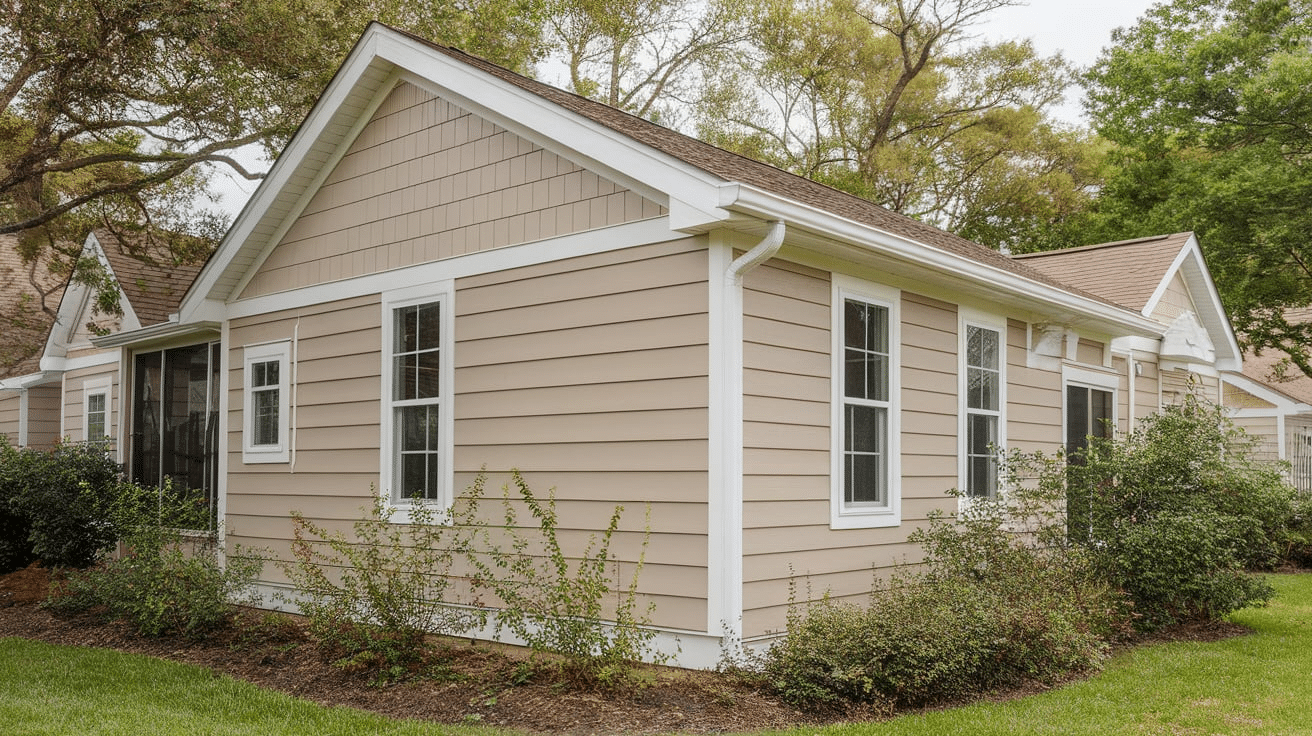
Vinyl siding is one of the most affordable and popular choices for homes, thanks to its lightweight build, easy installation, and wide range of colors and finishes.
It typically costs around $3–$8 per sq. ft., with a 1,000 sq. ft. home running roughly $4,500–$8,200 including materials and labor.
Standard panels are the cheapest option, while insulated or premium vinyl costs more but offers better durability and energy efficiency.
You’ll find plenty of options at retailers like Home Depot, Lowe’s, and Menards, with pricing varying by region, brand, finish, and warranty – so it’s worth comparing online deals before you buy.
Things to keep in mind:
- Affordable: One of the lowest-cost siding options for most homes.
- Low-maintenance: No regular painting needed; simple cleaning is usually enough.
- Weather- and pest-resistant: Holds up well against rain, moisture, and insects.
- Durable: Can last many years when properly installed and maintained.
- Appearance limitations: Doesn’t fully match the natural look of real wood or stone.
- Heat issues: Can fade, warp, or crack over time in very hot, sunny climates
Other Factors That Influence Total Siding Cost
Beyond the material itself, several other factors can affect how much your siding project will cost. Knowing these helps you plan your budget more accurately.
- Material grade and finish: Higher-end textures, colors, and thicknesses increase the overall cost but also improve durability and appearance.
- Insulation: Insulated siding adds upfront cost but helps lower energy bills over time, especially in colder climates.
- Accessories: Items like trim, soffits, and fascia boards complete the installation but can add to the total price.
- Labor rates: Costs vary by region and contractor experience, ranging from $1 to $5 per square foot for installation.
- Home design and height: Multi-story or complex layouts need more time and labor, which raises the overall project cost.
Getting quotes from multiple contractors is the best way to understand local pricing and find the most reasonable rate for your home.
DIY vs Professional Installation
Choosing between DIY and professional installation affects both cost and results. Each option has its benefits depending on your skill and budget.
DIY installation costs about $3 to $10 per square foot for materials and tools. It’s cheaper but risky if you’re inexperienced, as mistakes can lead to gaps or water damage.
Professional installation runs $6 to $15 per square foot, including labor and cleanup. It costs more upfront but ensures proper fitting, better durability, and often includes a warranty.
If you want guaranteed quality, hiring a pro is worth it. DIY works best for small projects and experienced homeowners.
How to Save on Siding Costs
Siding projects can get expensive, but a few smart choices can help you cut costs without losing quality.
- Buy during off-season sales: Prices often drop in late fall or winter when fewer projects are scheduled.
- Compare multiple stores: Check Home Depot, Lowe’s, Menards, and online suppliers for the best prices.
- Watch for discounts and rebates: Look for deals on energy-efficient or insulated siding to save on both cost and energy bills.
- Bundle purchases: Buying siding, trim, and accessories together from one retailer can lower your total price.
- Hire local contractors: Local pros often charge less for travel and may include installation discounts or free estimates.
A little planning and comparison can help you save hundreds or even thousands on your siding project.
Conclusion
Understanding your house siding cost helps you plan better and avoid surprises during installation.
The right material can balance cost, style, and long-term value for your home.
Vinyl is often the most affordable choice, while wood, fiber cement, and stone give a more refined finish. Comparing prices and materials side by side makes the decision easier.
Take a few minutes to check local listings or get free quotes from nearby contractors today. It’s the best way to find quality siding that fits both your budget and your home’s look.