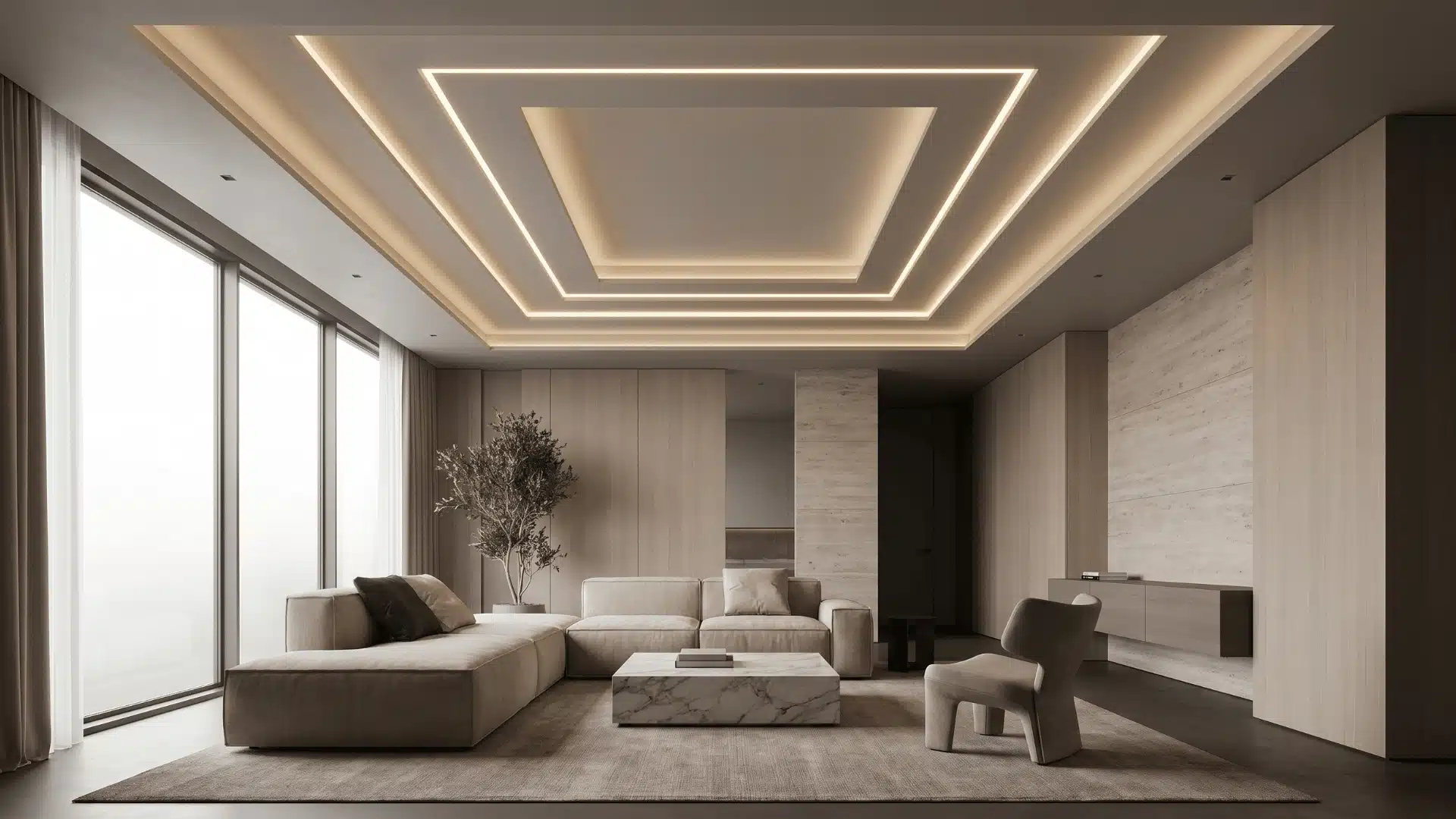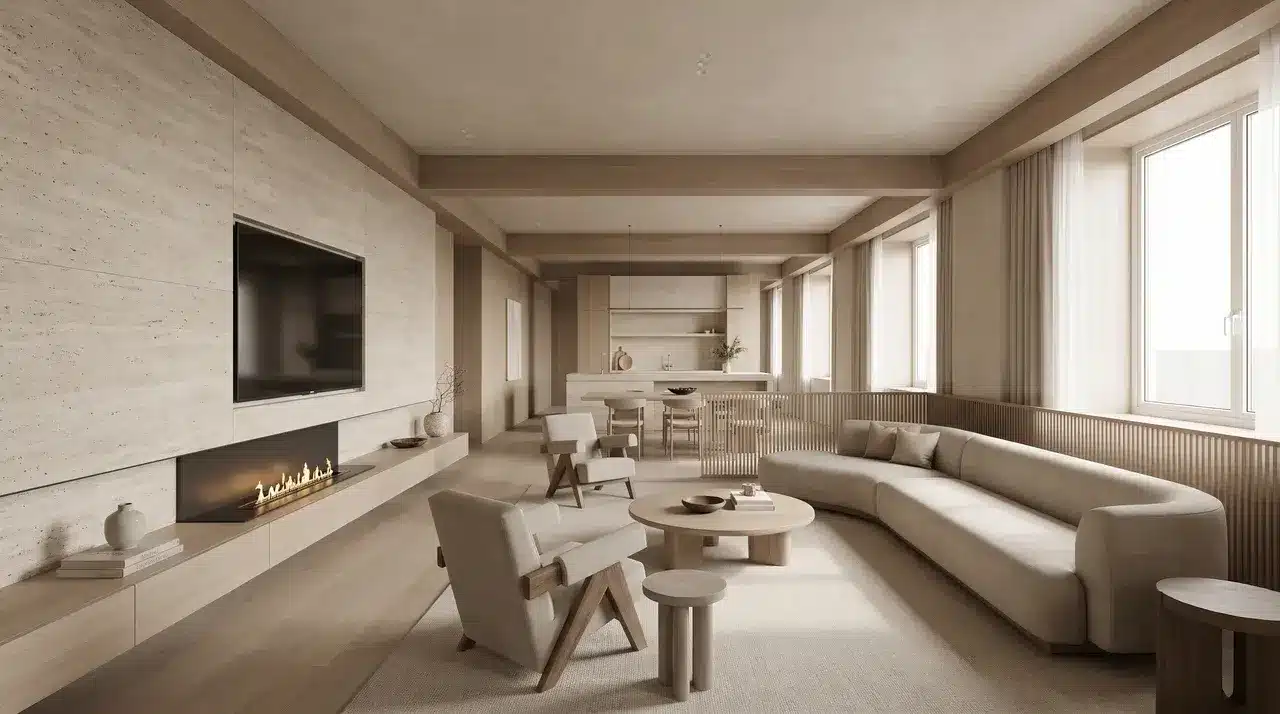
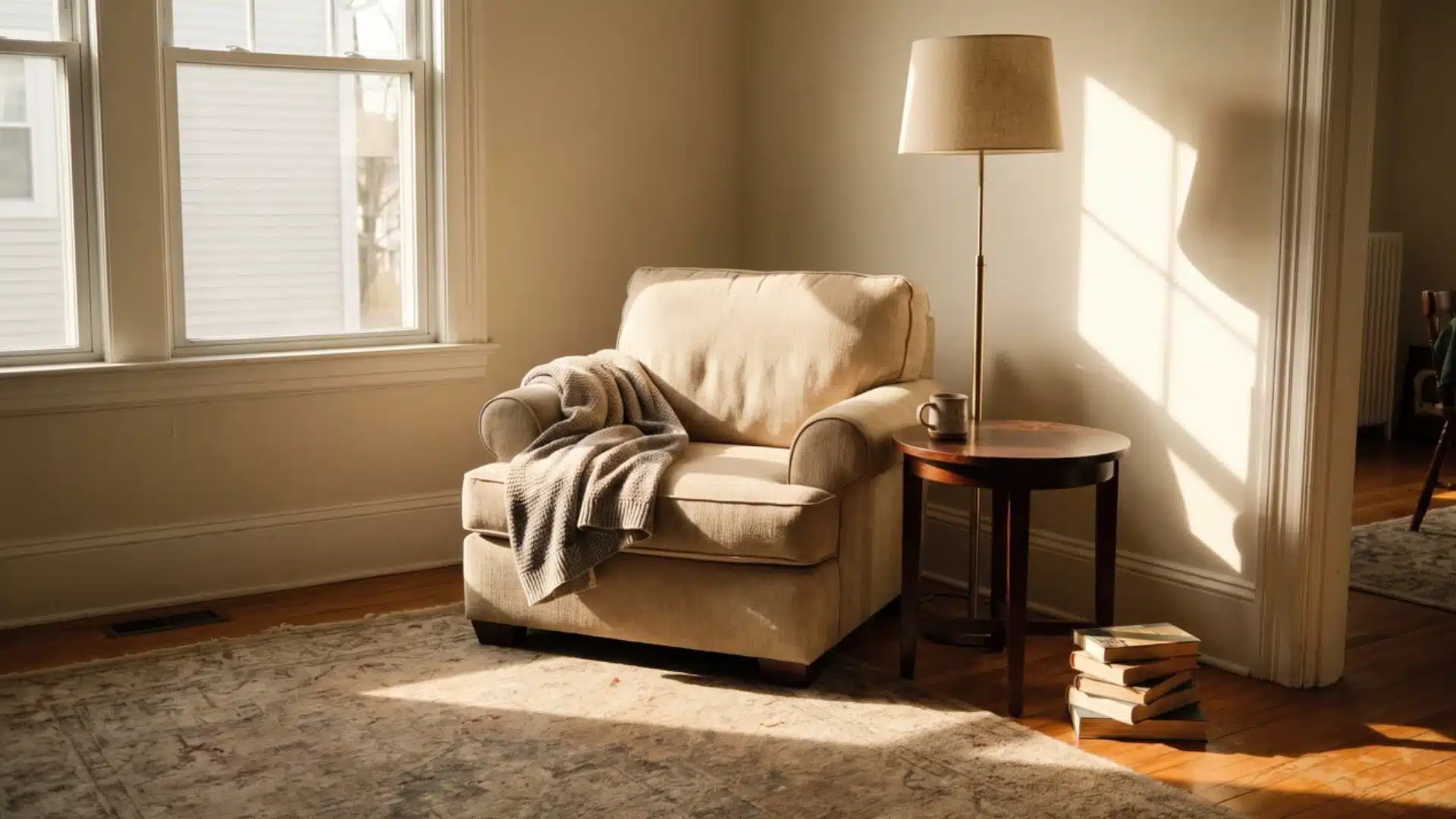


That empty corner you keep walking past could be one comfortable chair away from becoming your favorite spot in the house.
A good reading nook does not need a spare room or a design budget, just a little intention about where you already spend quiet moments.
I have turned corners nobody wanted, from a drafty window ledge to a closet with the doors taken off, into spots I use every day.
Reading nook ideas work best when they fit your real space instead of a magazine photo, whether that is a bedroom edge, a stair landing, or a patch of unused wall.
Before picking a layout, comfort has to come first.
What Makes a Reading Nook Actually Comfortable?
Before choosing a layout, I would get the basics right first. A reading nook can look great and still feel uncomfortable after ten minutes if the seat is too firm, the lighting is poor, or the space feels too exposed.
There is real research behind why this matters. A 2009 study on reading and stress found that just a few minutes of reading lowered participants’ stress levels by 68% more than music, tea, or a short walk did.
A spot that actually gets used, not just looked at, is what turns a corner into a real reading nook.
Start with somewhere supportive to sit, whether that is a chair, bench, floor cushion, or built-in seat.
Add a lamp or nearby light source that works after sunset, and keep your current book close enough that you do not have to get up every time you want to read.
I would also avoid spots with constant foot traffic, loud appliances, or people passing through all day.
The best nook is not always the prettiest one. It is the one where you can settle in, stay comfortable, and read without being interrupted every few minutes.
Reading Nook Ideas Worth Trying
Not every home has the same amount of spare space, so these ideas range from tiny corners to larger built-in setups. Some need little more than a chair and lamp, while others make better use of windows, walls, or unused areas.
Scan through and pick the option that best fits your space and reading habits.
1. Turn an Empty Corner Into a Reading Nook
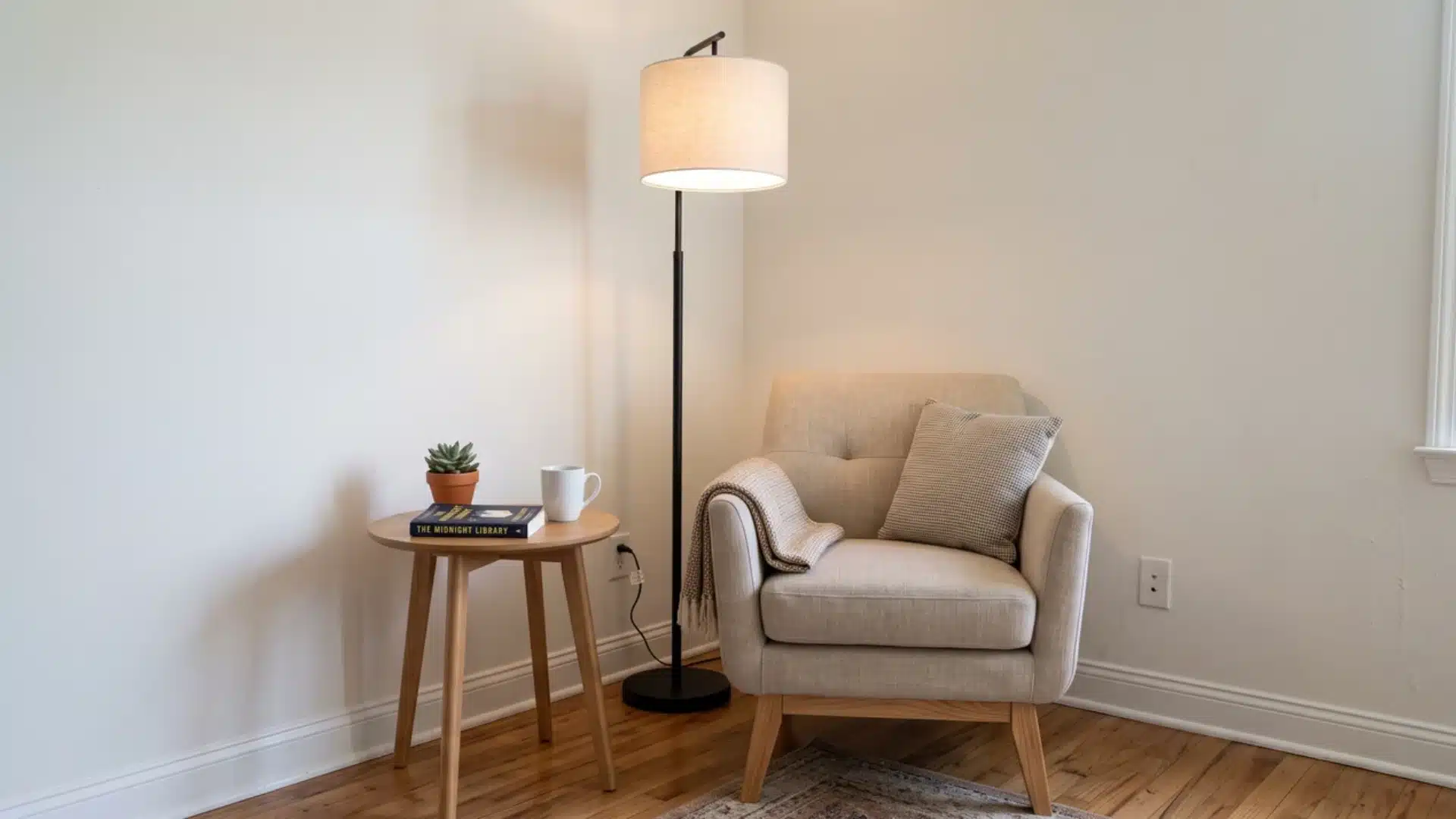
An empty corner is often the easiest place to turn into a reading nook because it needs very little work. Start with a comfortable chair, then add a floor lamp so the space stays useful after sunset.
A small side table gives you room for a drink, glasses, or your current book.
- Keep furniture slim if the corner feels tight.
- Use a floating shelf or wall light to save floor space.
The aim is simple: make the corner feel planned, comfortable, and useful without crowding the room or making the surrounding area harder to move through every day.
2. Create a Window Reading Nook
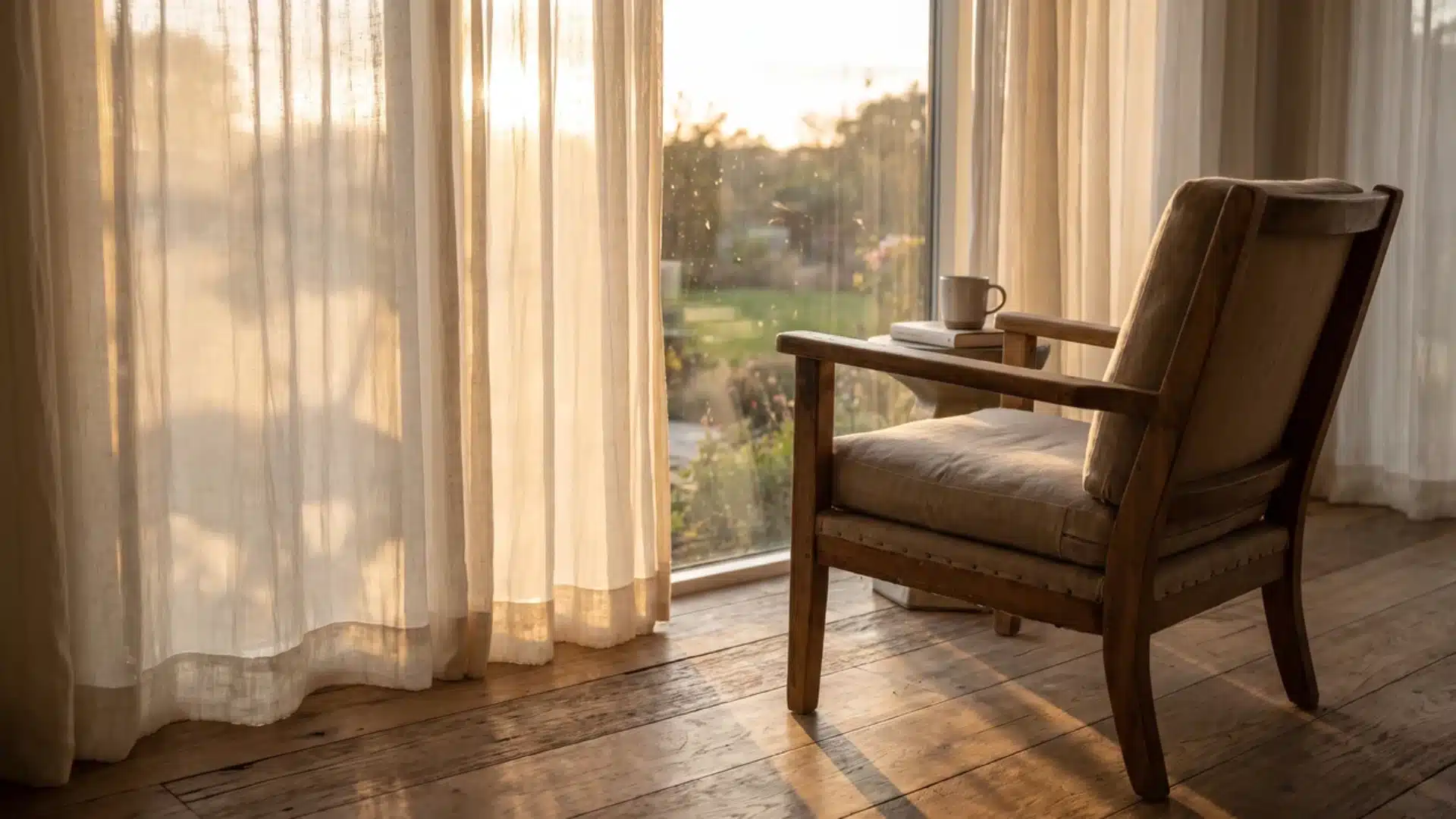
A window already gives a reading nook one major advantage: natural light.
Place a comfortable chair beside the glass instead of directly in front of it, especially if strong afternoon sun causes glare.
Curtains, blinds, or a light-filtering shade can make the spot easier to use throughout the day.
- Add a lamp for evening reading.
- Keep a small table or ledge nearby for books and drinks.
Do not depend entirely on daylight. Once the sun goes down, the space should still feel practical. A simple setup with good light and easy access to essentials usually works best overall.
3. Use a Bedroom Corner
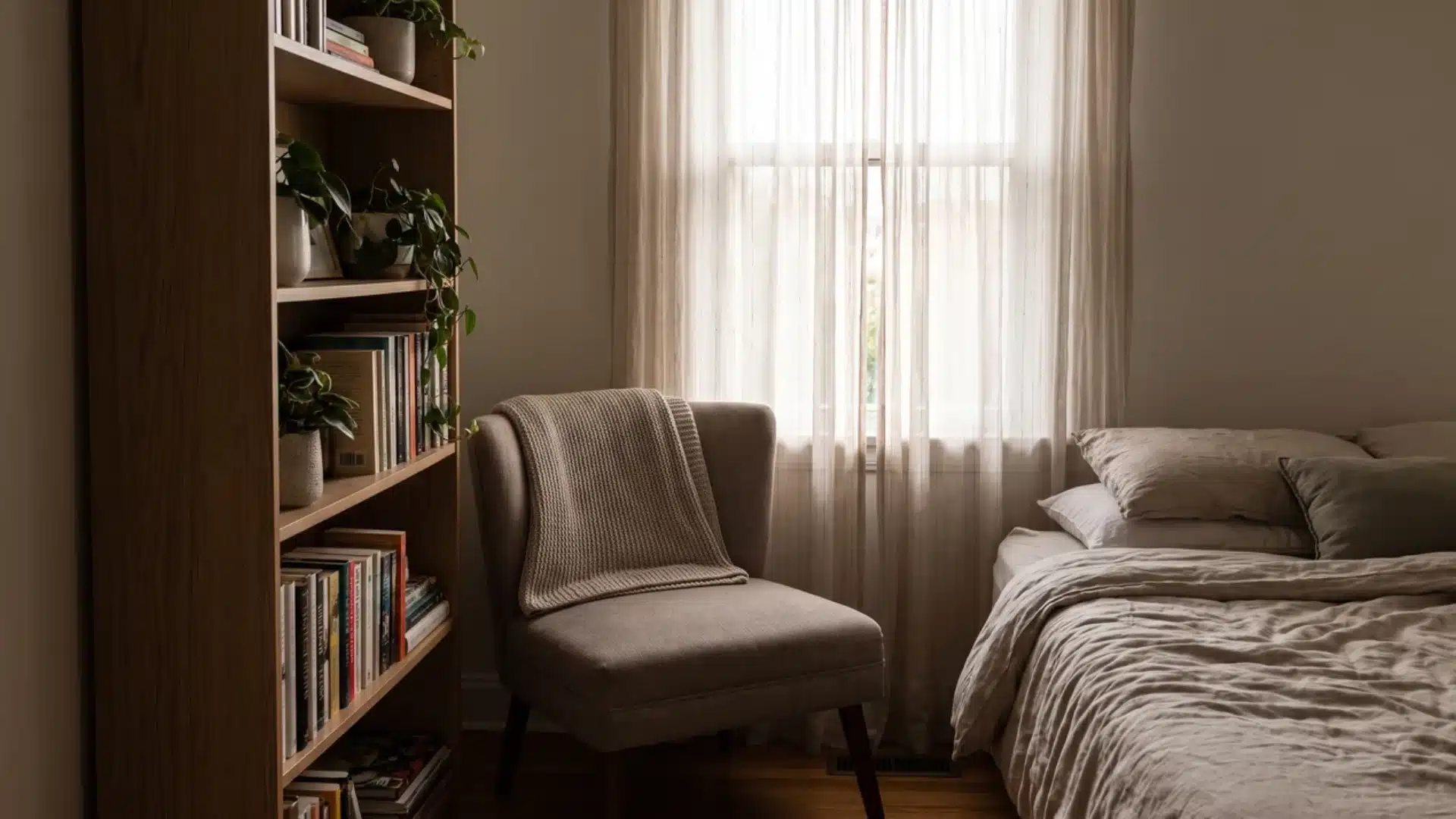
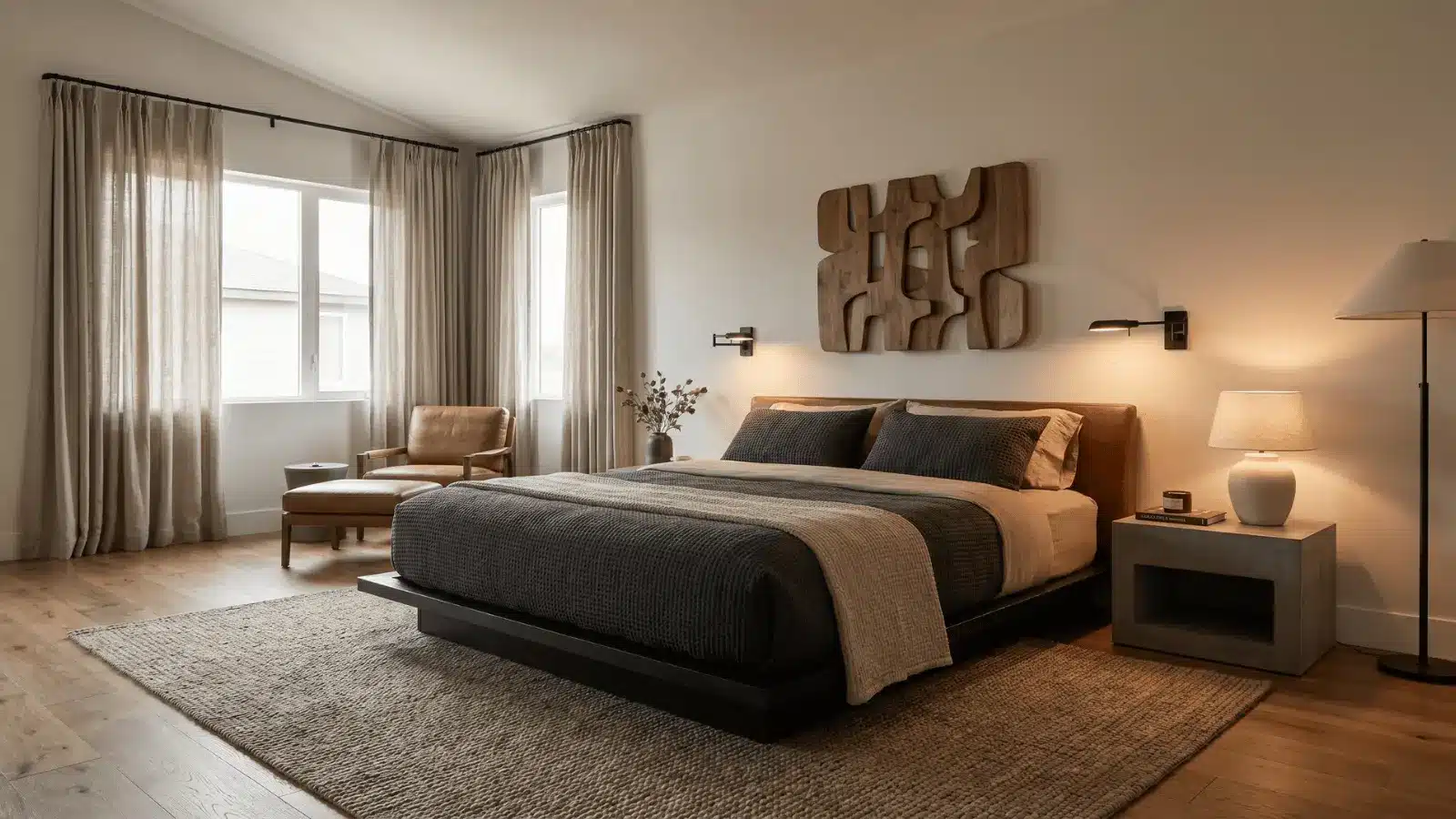
A bedroom corner can become a reading spot without making the room feel crowded. Choose a chair that fits comfortably beside a lamp, then leave a little distance between the nook and the bed.
That separation helps the area feel like its own space, not part of the sleeping zone.
- Keep the chair away from busy walking paths.
- Use a slim shelf, basket, or small table for books.
Avoid filling the corner with too much furniture. A simple setup usually feels calmer and more inviting, which matters in a bedroom where the atmosphere should remain restful.
4. Build a Living Room Reading Corner
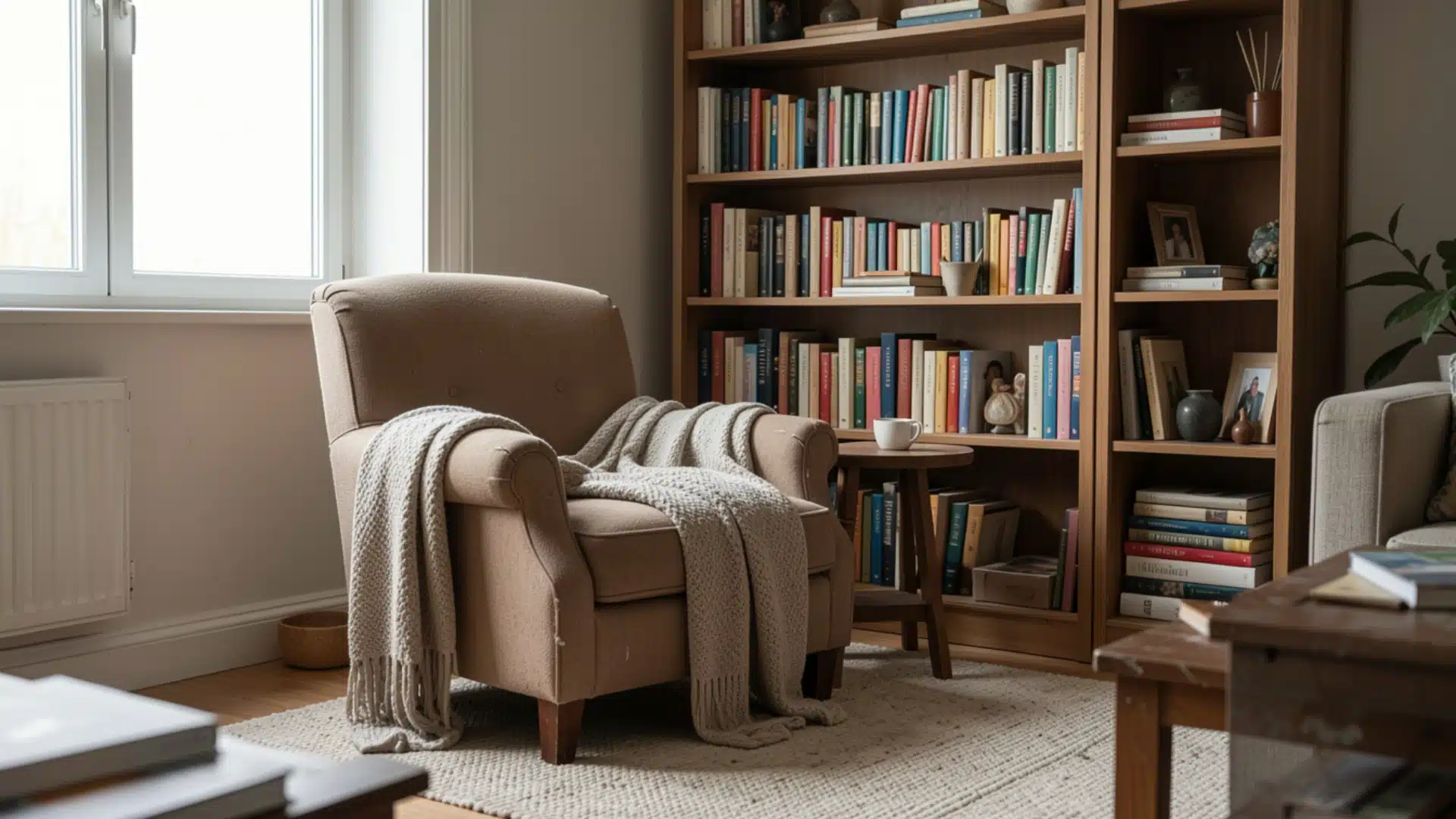
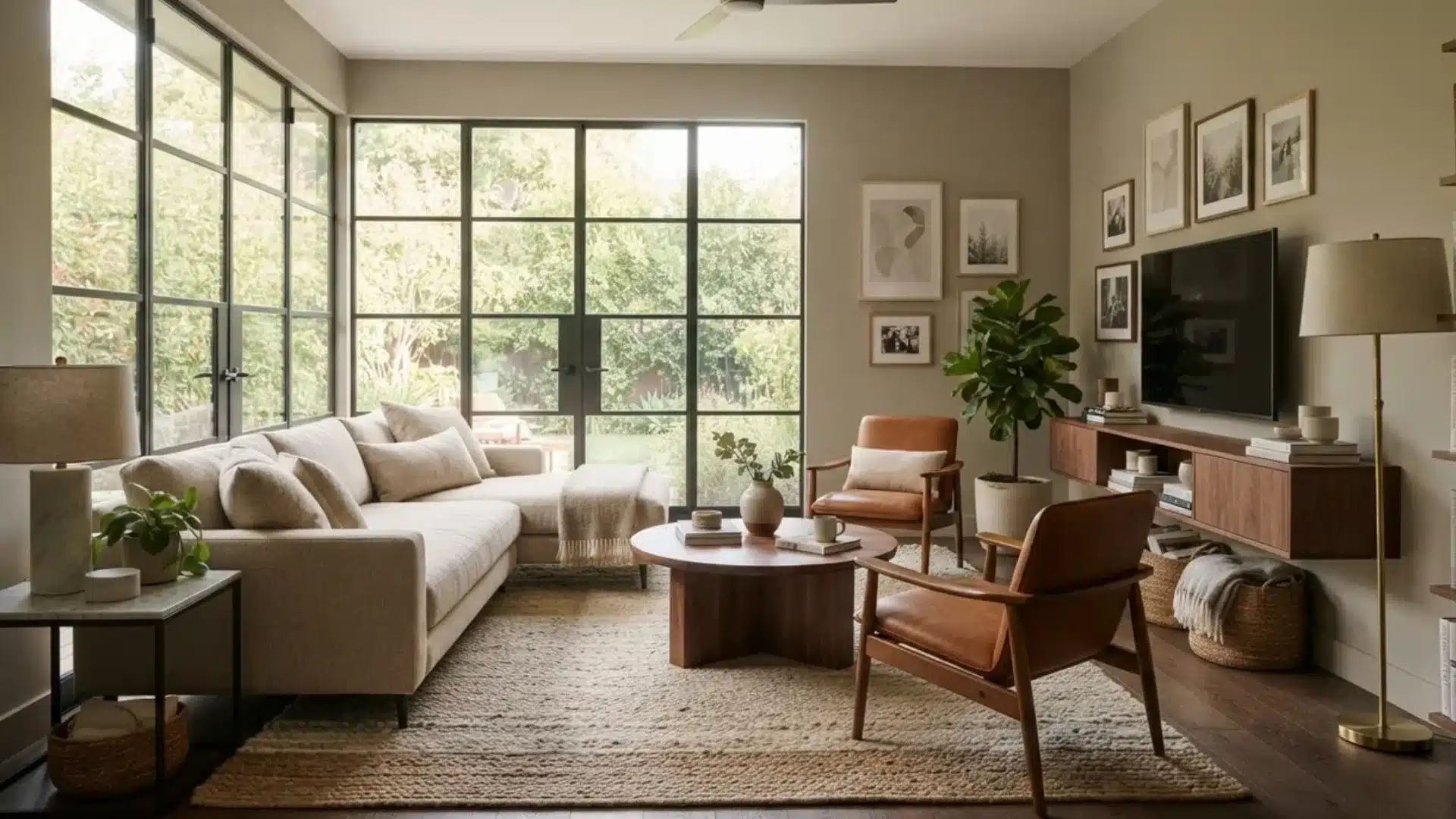
A living room reading corner can often be created with furniture you already own. Move an armchair closer to a window, bookcase, or quieter side of the room.
Then add a lamp or small rug to help the space feel separate from the main seating area.
If you are not sure where to start, our guide to arranging living room furniture can help you find a layout that still leaves room for a quiet corner.
- Turn the chair away from the television when possible.
- Keep a few books within easy reach.
Good lighting matters more than extra decoration. The lamp should reach the page comfortably without brightening the entire room.
A small change in furniture placement can create a reading area that feels intentional.
5. Make Use of an Alcove or Recess
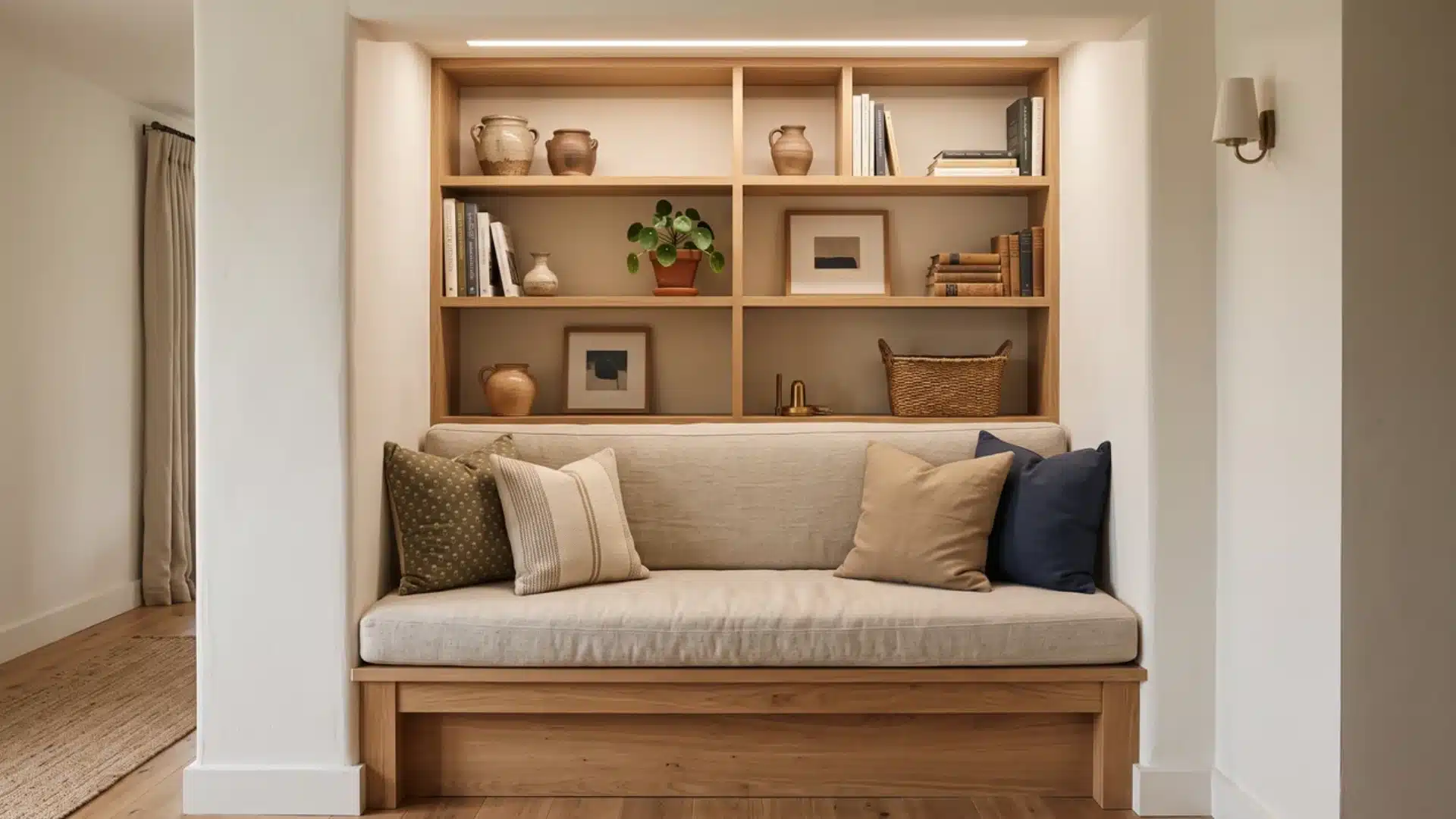
An alcove or wall recess already feels separate from the rest of the room, which makes it a natural place for a reading nook.
Depending on the depth, you can add a compact chair, small bench, or cushioned seat with narrow shelves along one side.
- Measure the width, depth, and headroom first.
- Use wall-mounted lighting if floor space is limited.
Sit in the area before making anything permanent. Some recesses look roomy until you add furniture.
Make sure you can enter, sit, and stand comfortably without bumping into nearby surfaces, and without making the space feel too tight overall.
6. Turn an Under-Stair Space Into a Reading Nook
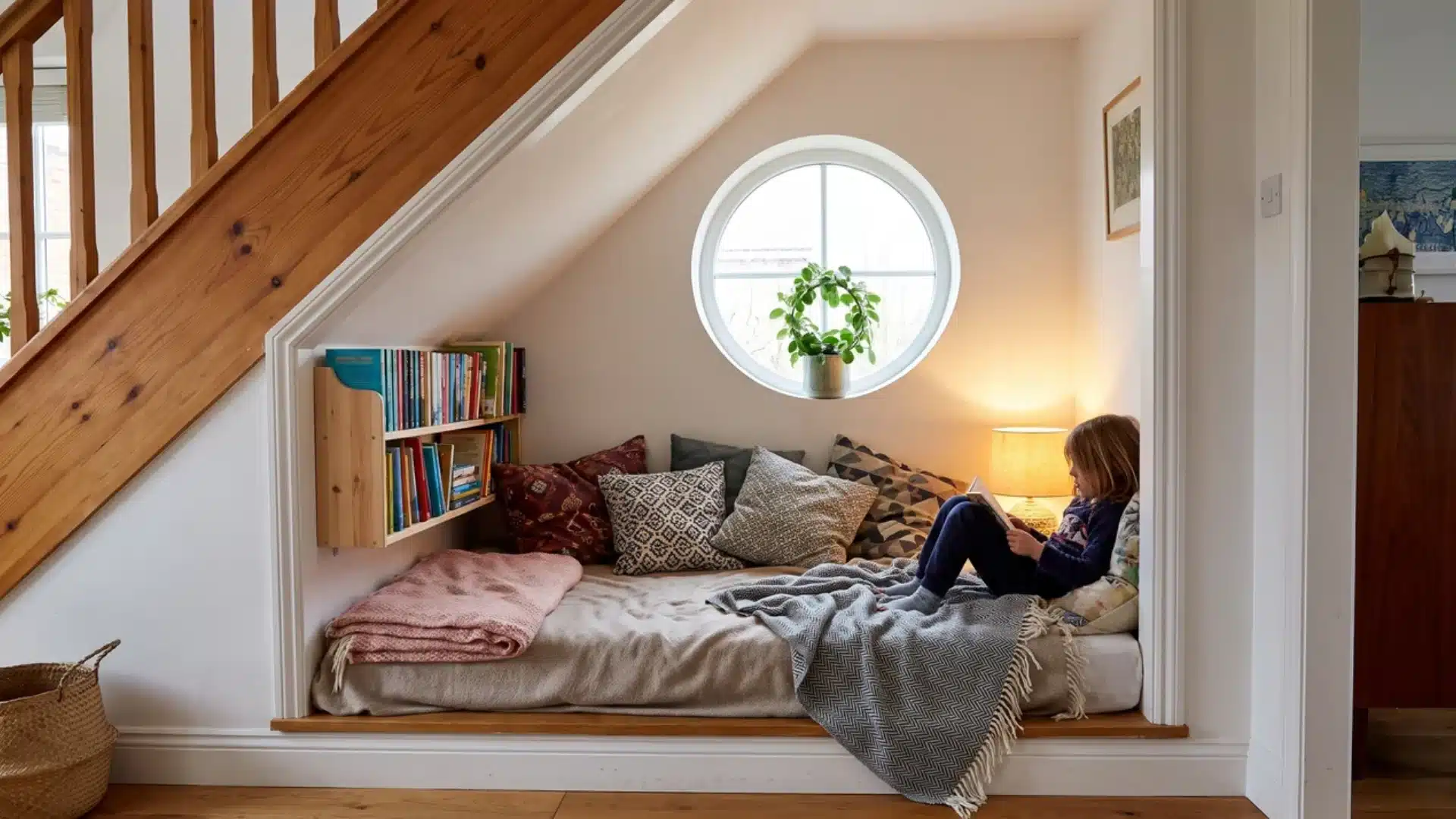
The space beneath a staircase can work well as a reading nook when there is enough height and depth to sit comfortably.
Low benches, fitted cushions, and shallow shelves usually suit the sloping shape better than tall furniture. Storage underneath can also make the area more useful.
- Test the space before building anything permanent.
- Add focused lighting because under-stair areas are often dark.
If you have to duck constantly or feel boxed in, the nook may not be comfortable enough to use. Airflow matters too. A practical under-stair nook should feel cozy, not cramped or difficult to enter.
7. Use a Stair Landing
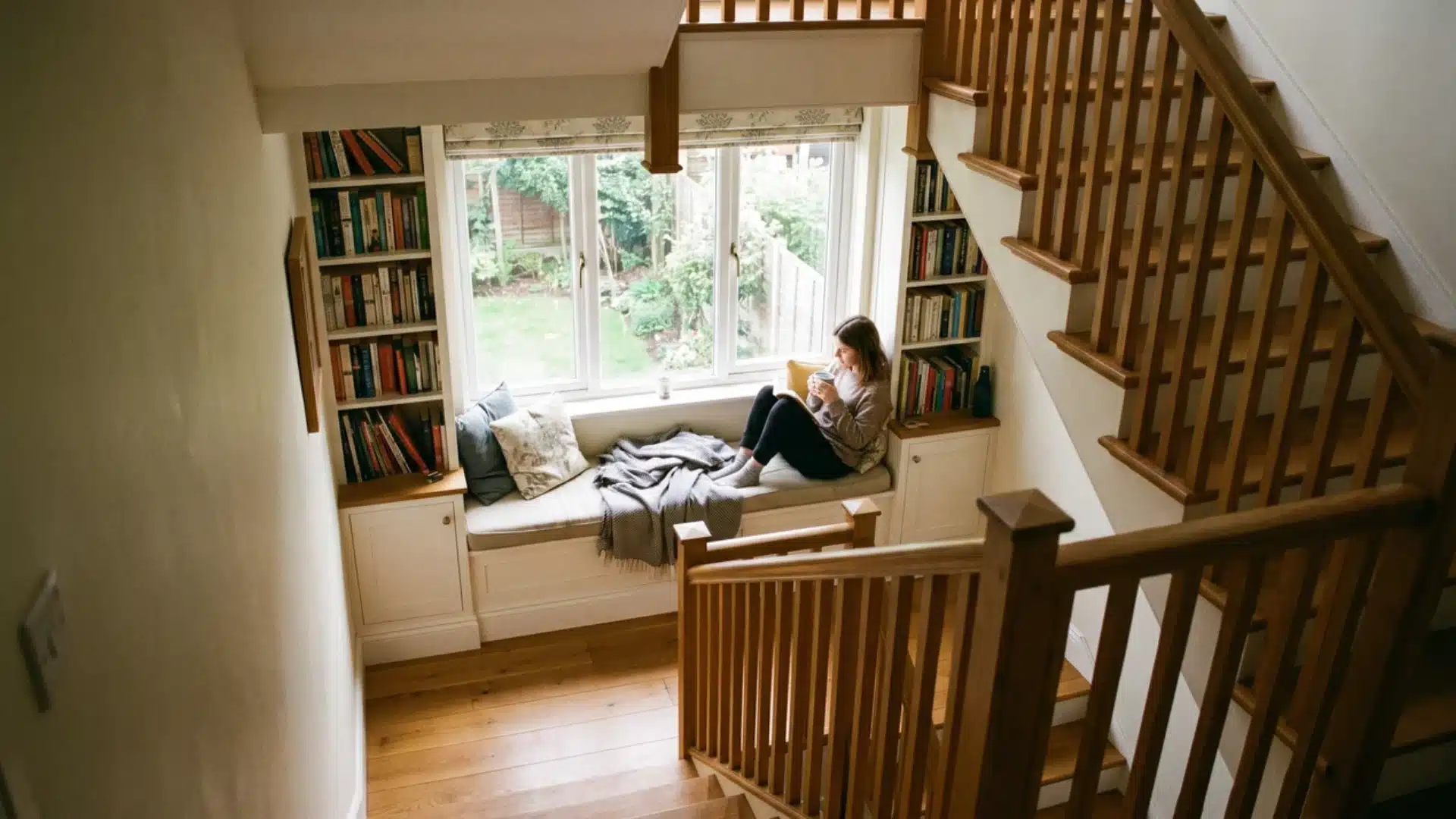
A wide stair landing can become a reading spot without changing the main function of the space.
A compact chair, narrow bench, or wall-mounted shelf may be enough, especially when a nearby window already provides natural light.
This setup usually suits shorter reading sessions best.
- Leave a clear path for people using the stairs.
- Choose wall lighting or a narrow lamp to reduce clutter.
Safety matters more than decoration here.
Avoid furniture that sticks into the walkway or creates a tripping risk. The nook should feel comfortable without making the landing harder to move through during daily use.
8. Claim a Hallway Nook
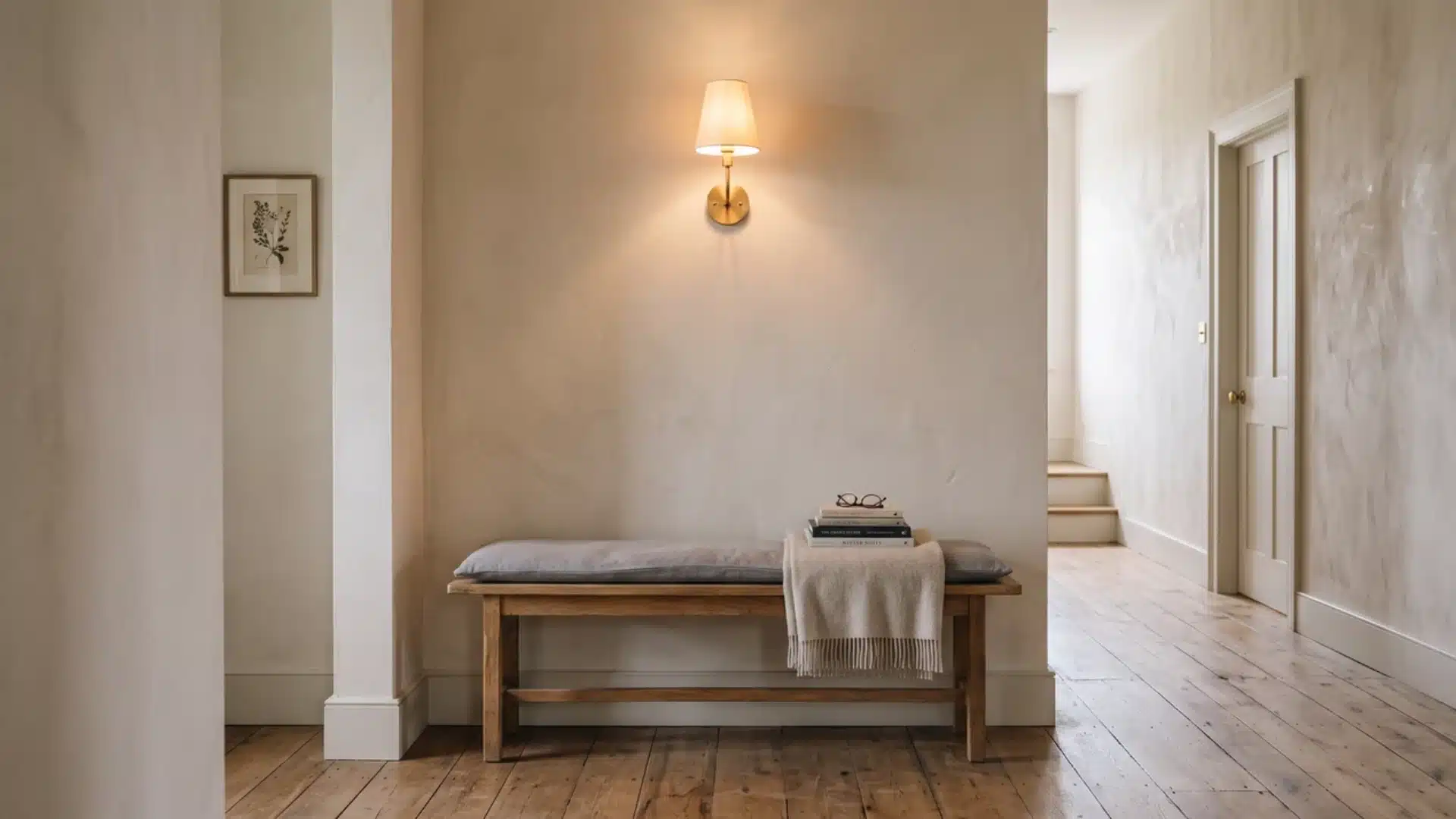
A wide hallway can support a reading nook well when the space isn’t constantly busy. Place a slim bench or narrow chair against one wall so the walkway remains open.
A wall sconce or picture light can provide evening lighting without taking up floor space.
- Keep enough room for people to pass comfortably.
- Use a small wall shelf instead of a side table.
This idea only works when the hallway is wide enough. If people have to squeeze past the seat, the nook will never feel relaxing. Let comfort and clear movement guide every choice you make.
9. Convert a Closet Into a Reading Nook
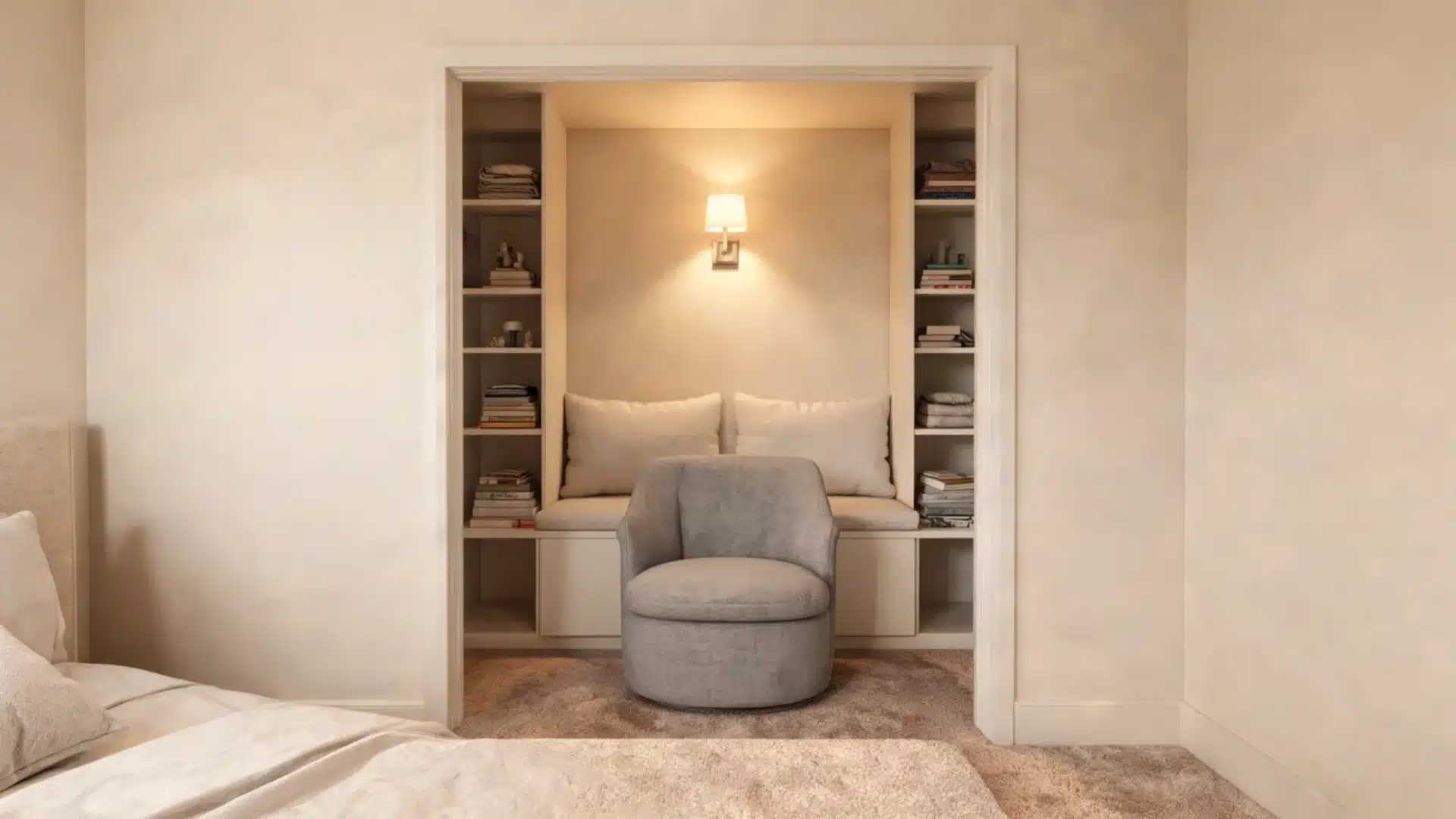
An unused closet can become a private reading nook once you remove the doors and hanging hardware. Add a fitted cushion, compact chair, or small bench, then use the side walls for shallow shelves.
The enclosed shape can make the spot feel quiet even inside a busy room.
- Check ventilation before adding soft furnishings.
- Use a wall-mounted lamp to save space.
Light-colored walls and cushions can stop the nook from feeling too closed in.
Before spending money, sit inside the closet for a while and make sure it doesn’t get warm, stuffy, or uncomfortable during reading sessions.
10. Use an Attic Dormer
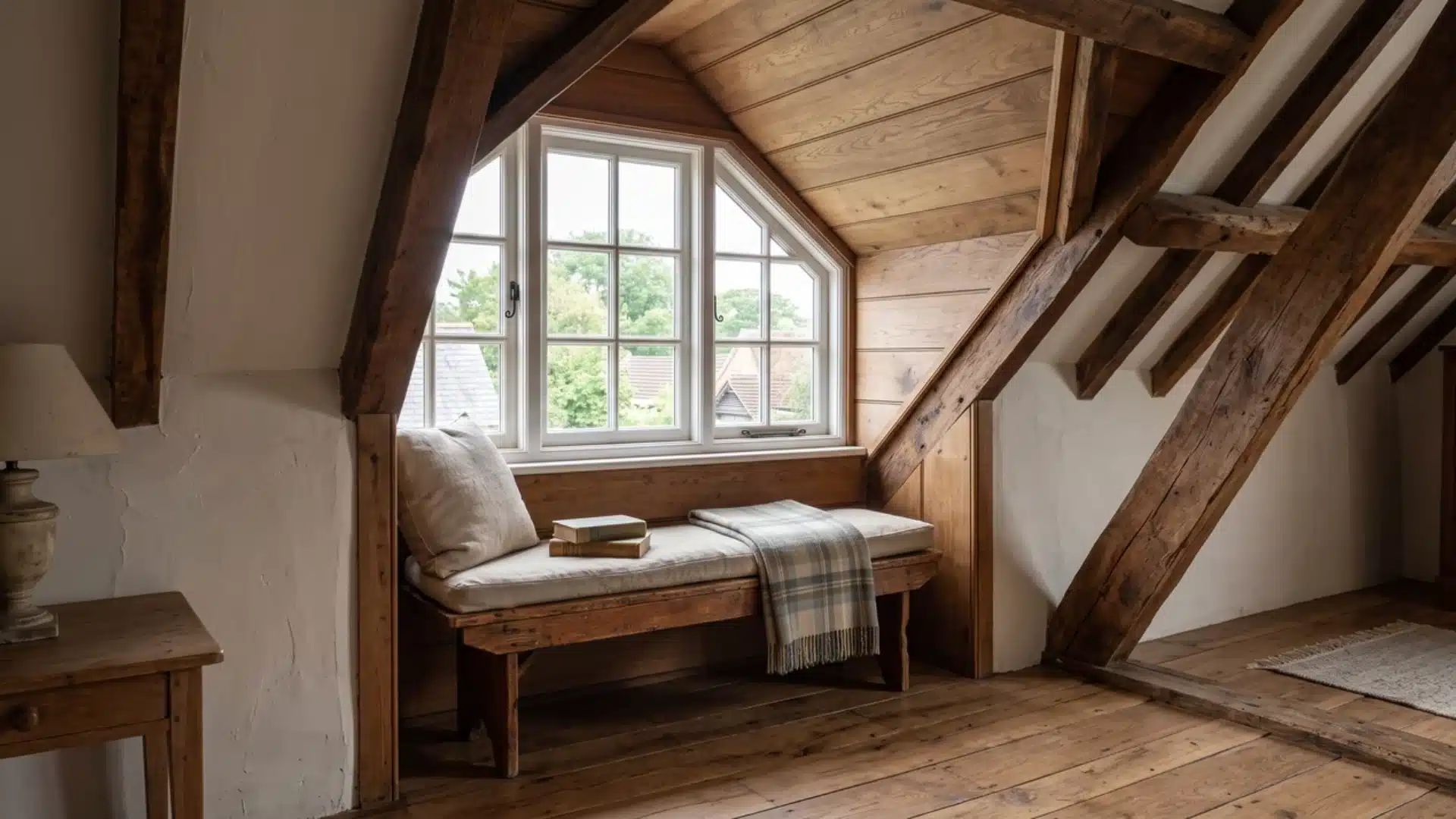
An attic dormer often creates a pocket of floor space that is difficult to use for standard furniture. That makes it a good place for a reading bench or compact chair.
The window brings in daylight, while the angled ceiling can make the area feel tucked away.
- Check the temperature before setting up the nook.
- Choose seating that fits comfortably beneath the roofline.
Attics can become warmer or colder than other rooms so that comfort may change with the season.
Add a reading lamp for evenings and cloudy days, and make sure standing up does not require constant ducking.
11. Set Up a Basement Corner
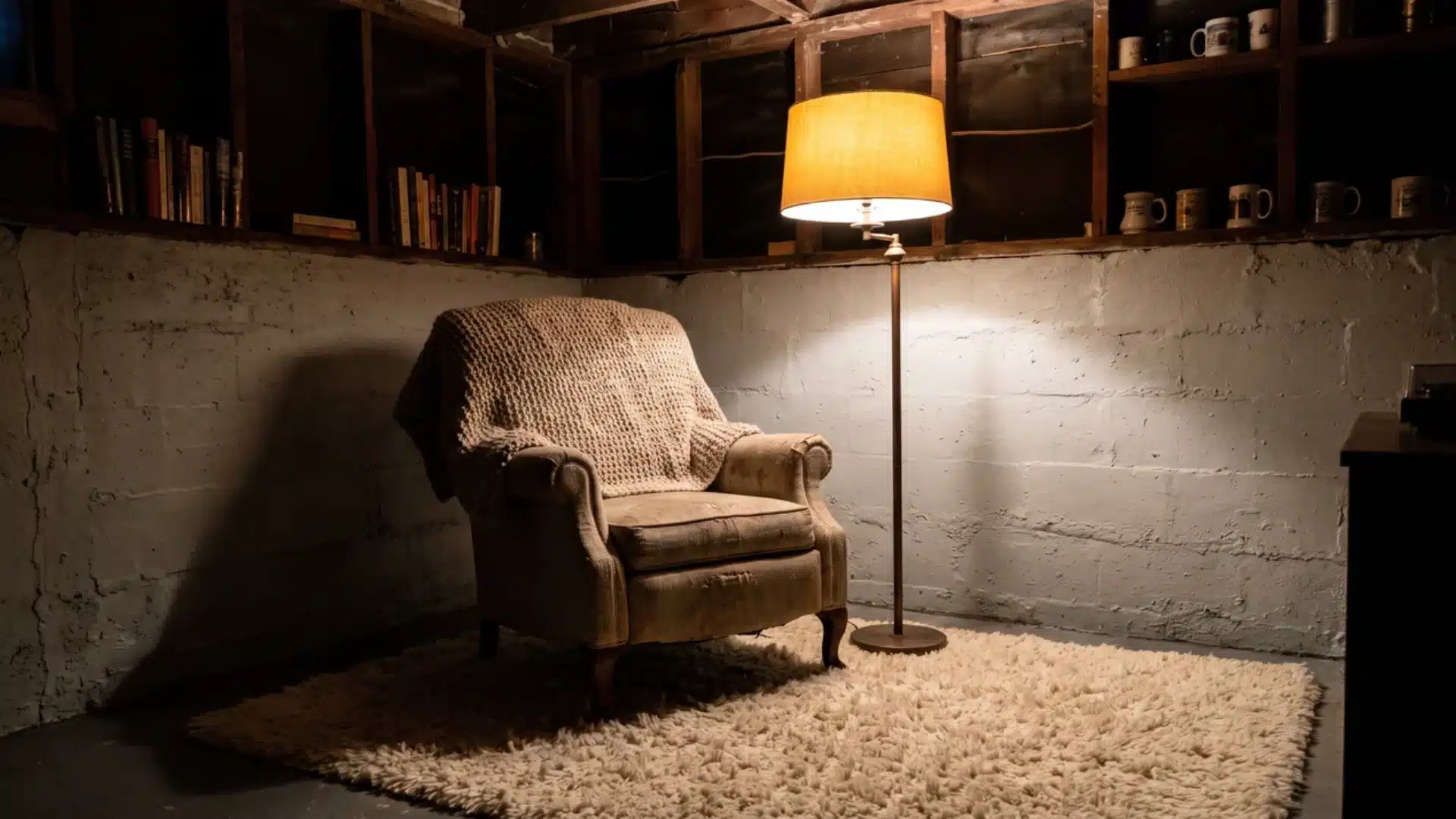
A basement corner can become a reading nook once you deal with limited natural light. Start with a warm floor lamp or table lamp instead of relying only on harsh overhead lighting.
A rug, upholstered chair, and blanket can help soften a space that otherwise feels unfinished.
- Check for moisture before bringing in books or fabric.
- Choose a corner away from noisy appliances.
If the basement feels damp, use a dehumidifier and keep books raised off the floor.
Comfort depends on the environment as much as the furniture, so solve lighting, moisture, and noise problems before adding details.
12. Build a Sunroom Reading Spot
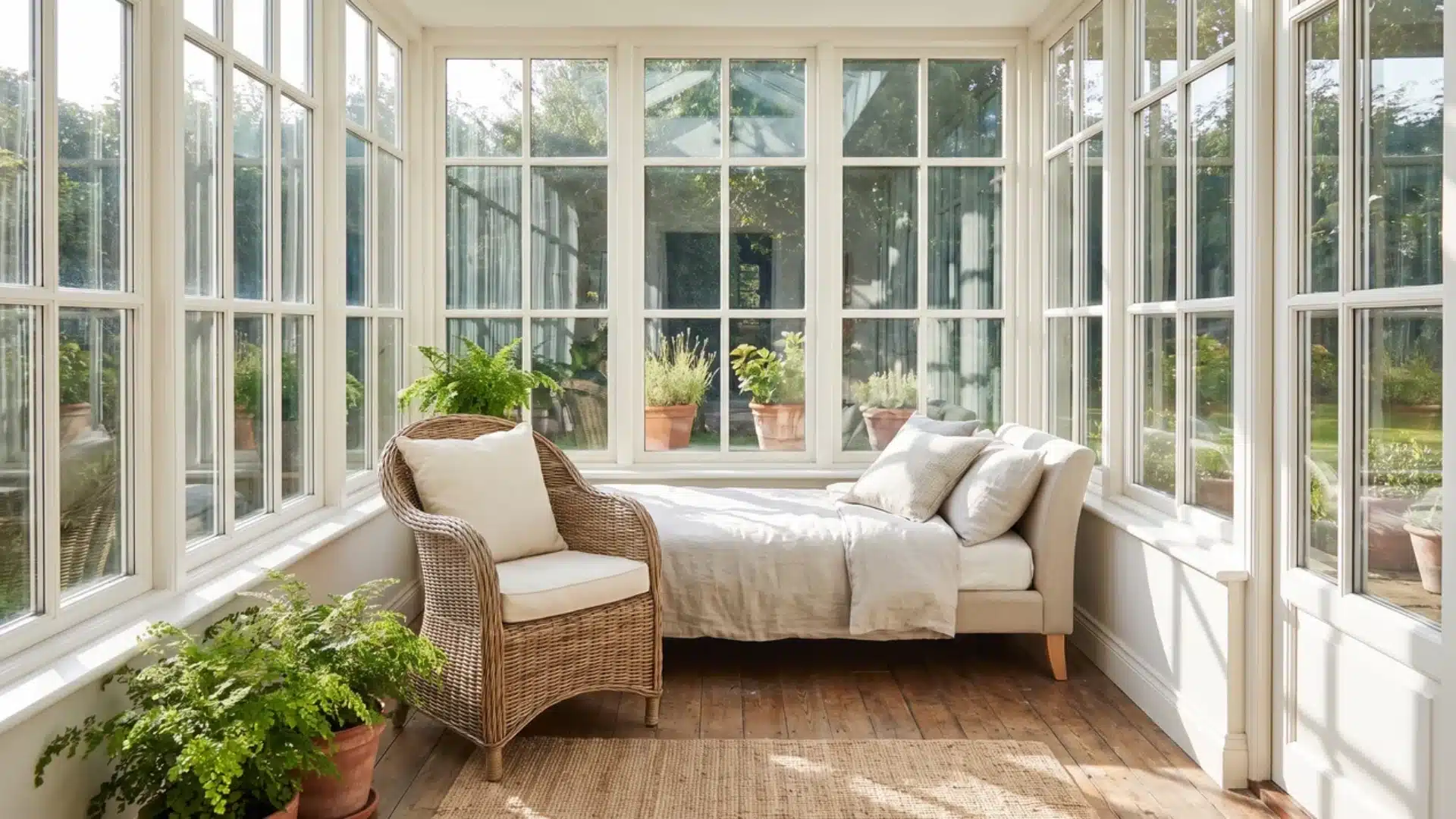
A sunroom already offers one of the best features for reading: plenty of daylight.
A cushioned lounge chair, daybed, or wicker seat can work well without making the room feel too formal. Position the seat where the light is steady but not shining directly into your eyes.
- Add blinds, shades, or curtains for strong afternoon sun.
- Keep a lamp nearby for evening reading.
Sunrooms can heat up quickly because of all the glass. A fan may help during warmer months.
Choose fabrics that can handle repeated sunlight so cushions and upholstery stay comfortable and presentable over time outdoors.
13. Use a Screened Porch
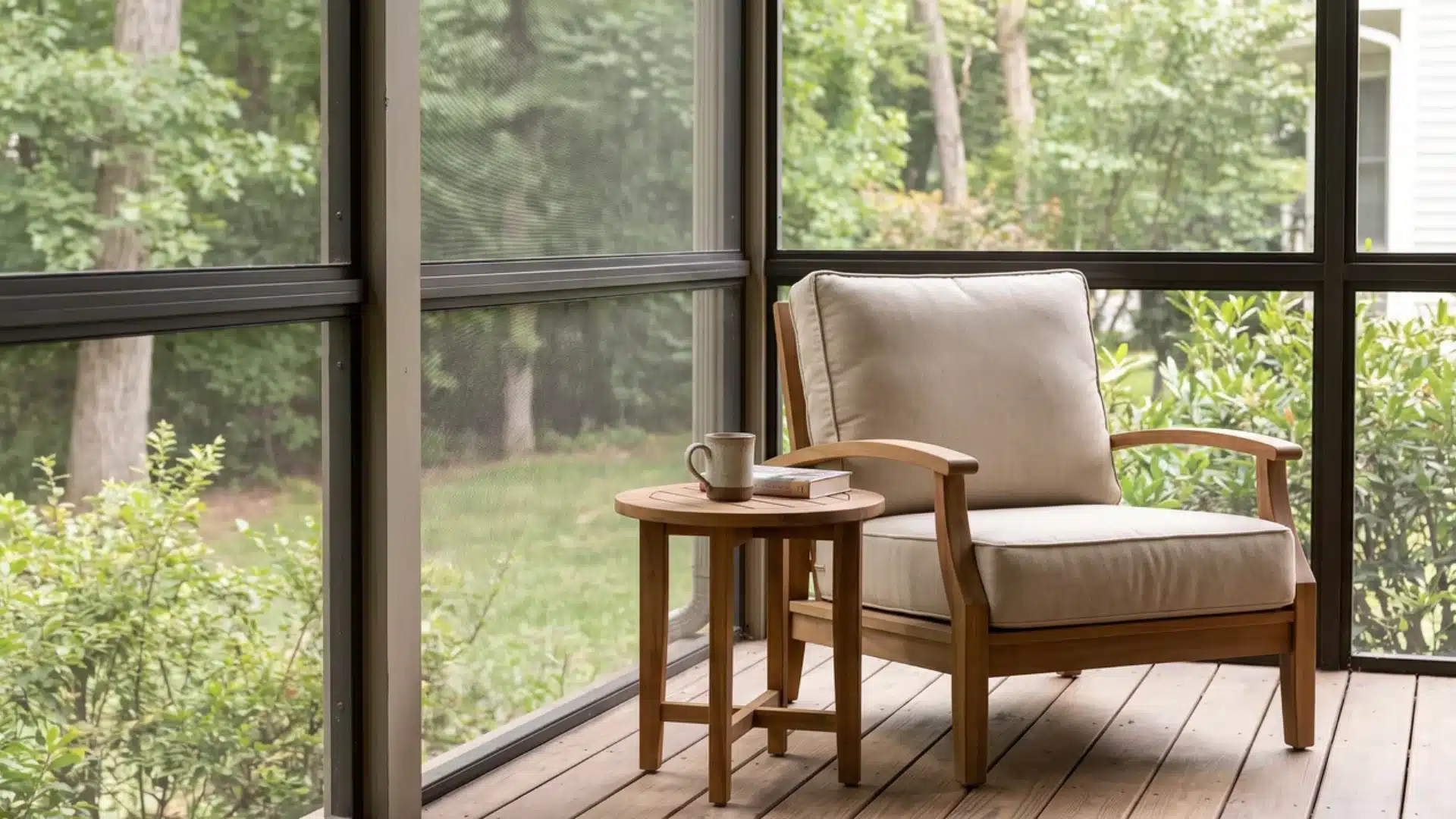
A screened porch lets you enjoy fresh air and outdoor sounds while keeping insects away. A cushioned chair and side table are often enough to create a relaxed reading spot.
Choose the quietest corner instead of placing the seat close to the entrance. If you want to make the whole porch feel more finished, our fall porch ideas are worth a look too.
- Use furniture and cushions that can handle some moisture.
- Add an outdoor-rated or portable lamp for evening use.
The porch is still exposed to weather so that soft furnishings may need extra care. Bring cushions indoors during heavy rain or high humidity. A simple setup usually works better than filling the porch with too many accessories.
14. Add a Balcony Reading Nook
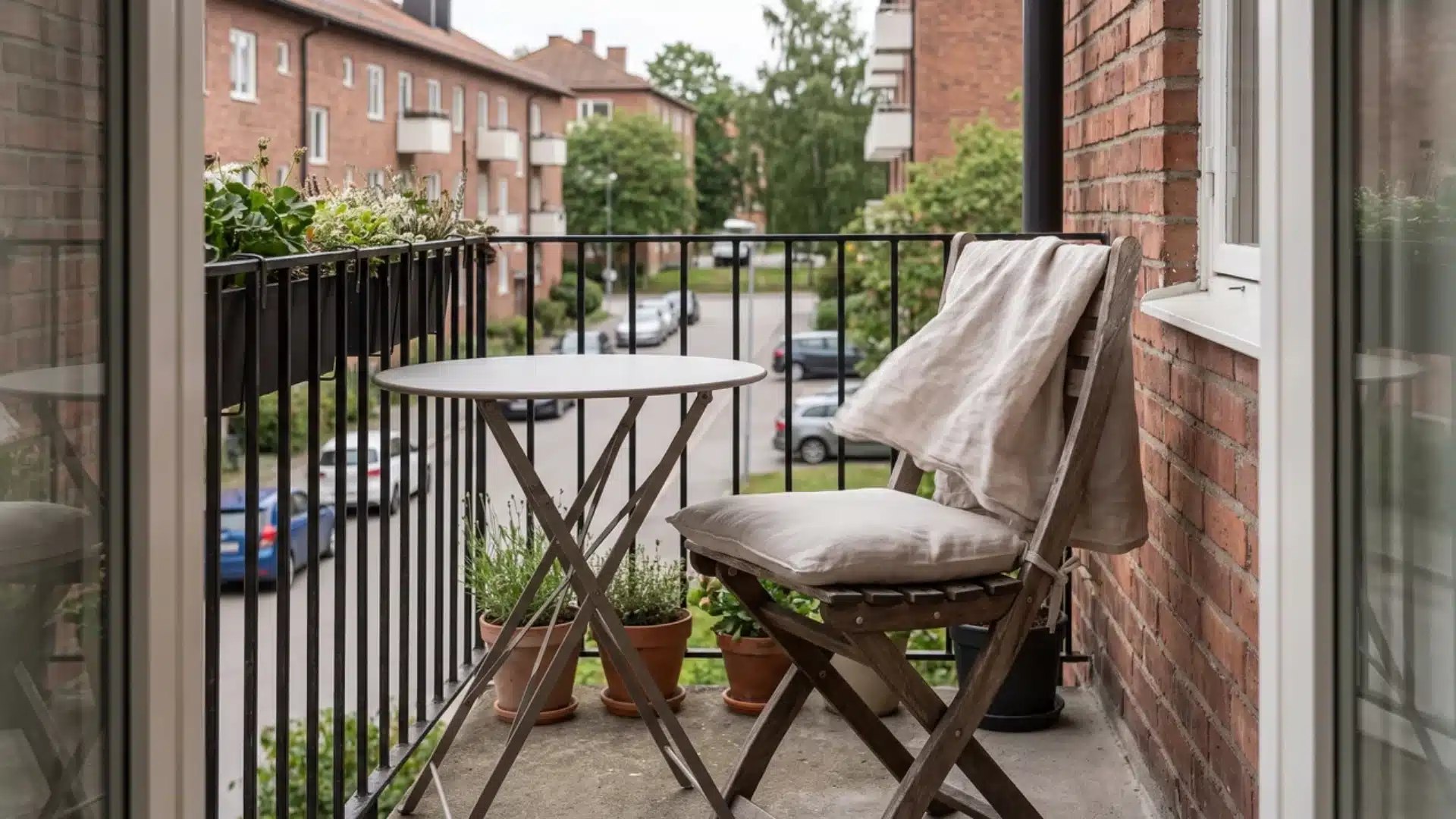
Even a balcony can work as a reading nook if the furniture stays compact.
A folding chair, small outdoor armchair, or built-in bench can provide enough comfort without making the space difficult to move through.
A railing shelf or tiny table keeps books and drinks nearby.
- Choose weather-resistant furniture from the start.
- Add shade if strong sun makes the balcony uncomfortable.
Cushions that can be carried indoors are practical. Heat, glare, and wind can quickly ruin a good-looking setup, so focus on comfort first.
The best balcony nook should feel easy to use, not crowded or overly delicate.
15. Build a Garden Reading Nook

A garden bench under a tree, pergola, or other shaded area can become a peaceful reading nook.
Look for a spot with some privacy and protection from direct afternoon sun. A small outdoor table beside the seat gives you somewhere to place a drink or book.
- Check that the ground is level and easy to walk on.
- Use weather-resistant cushions instead of indoor fabrics.
Mud, wet grass, or uneven paving can make the area less practical than it looks. A nearby storage box can help protect blankets and books when the nook isn’t used regularly.
16. Read Beside the Fireplace
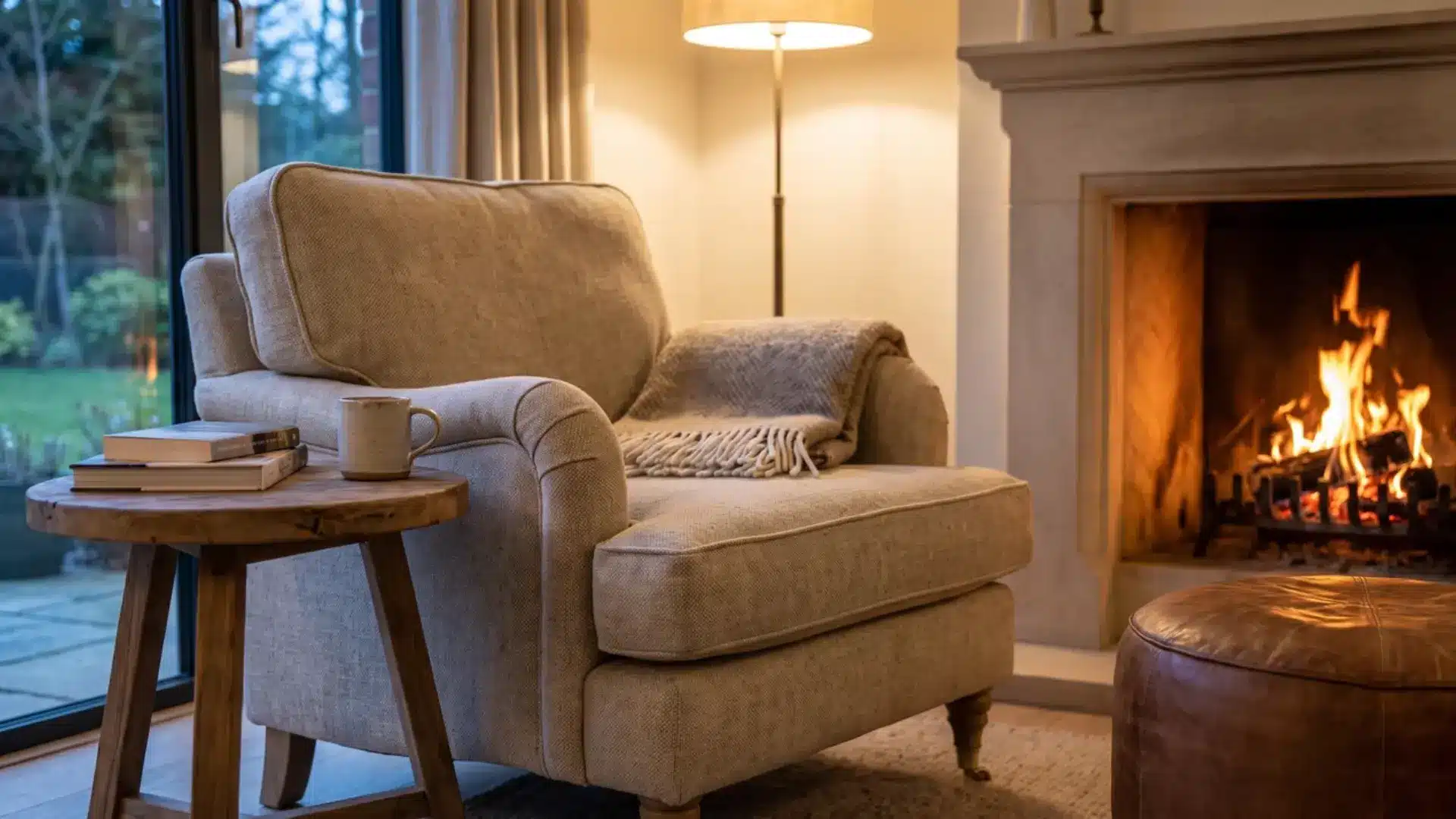
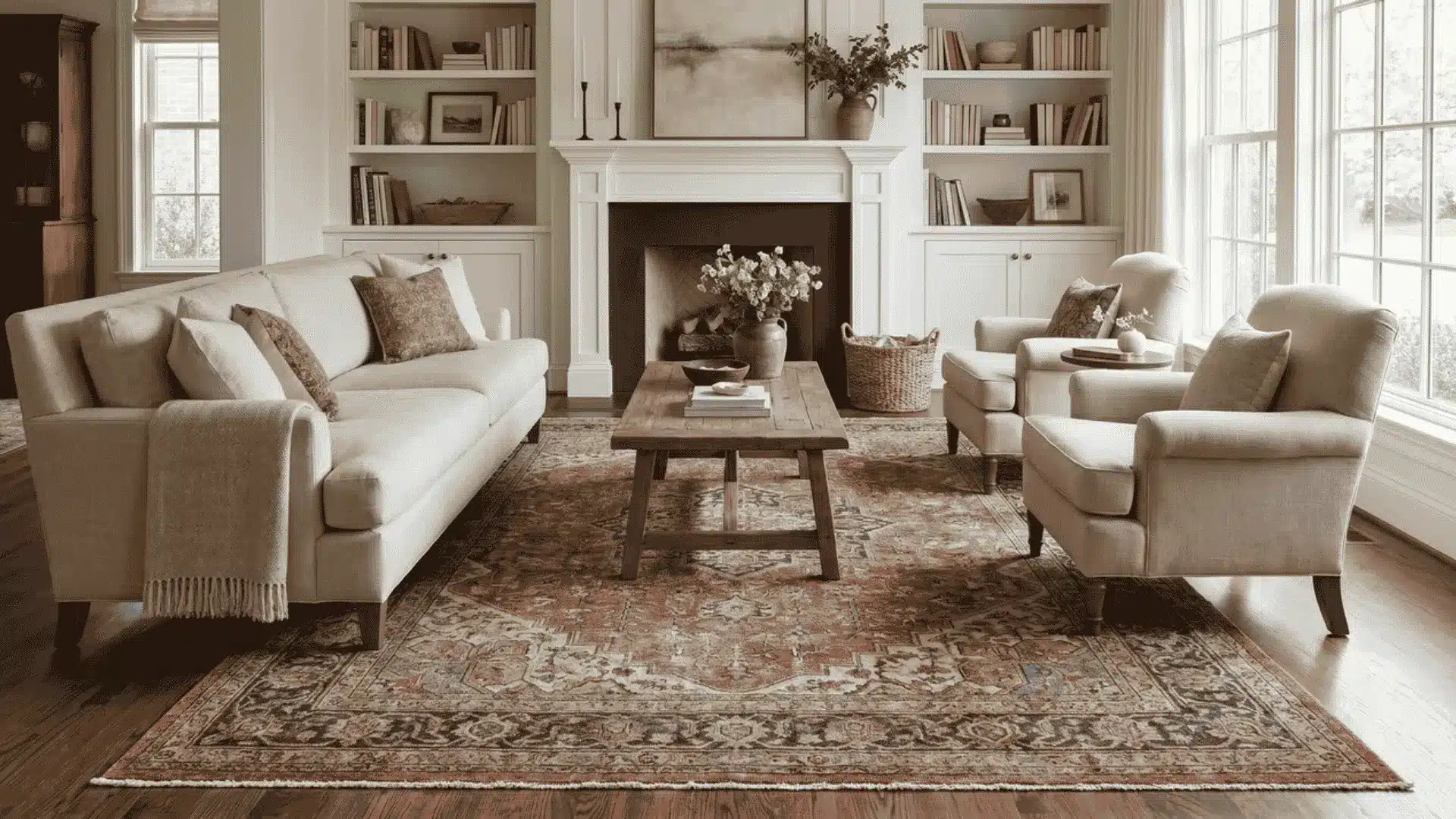
A chair beside the fireplace can create a reading spot during colder evenings.
If you already have seating nearby, you may only need a small table, a reading lamp, and a soft throw to make the space work for longer sessions.
- Keep books and blankets away from flames or hot surfaces.
- Leave enough distance so the heat stays comfortable.
Do not place the chair so close that you feel overheated after a few minutes.
The fireplace should add warmth, not control the setup; good lighting and safe spacing matter just as much as the cozy atmosphere around it.
17. Set Up a Daybed Reading Nook
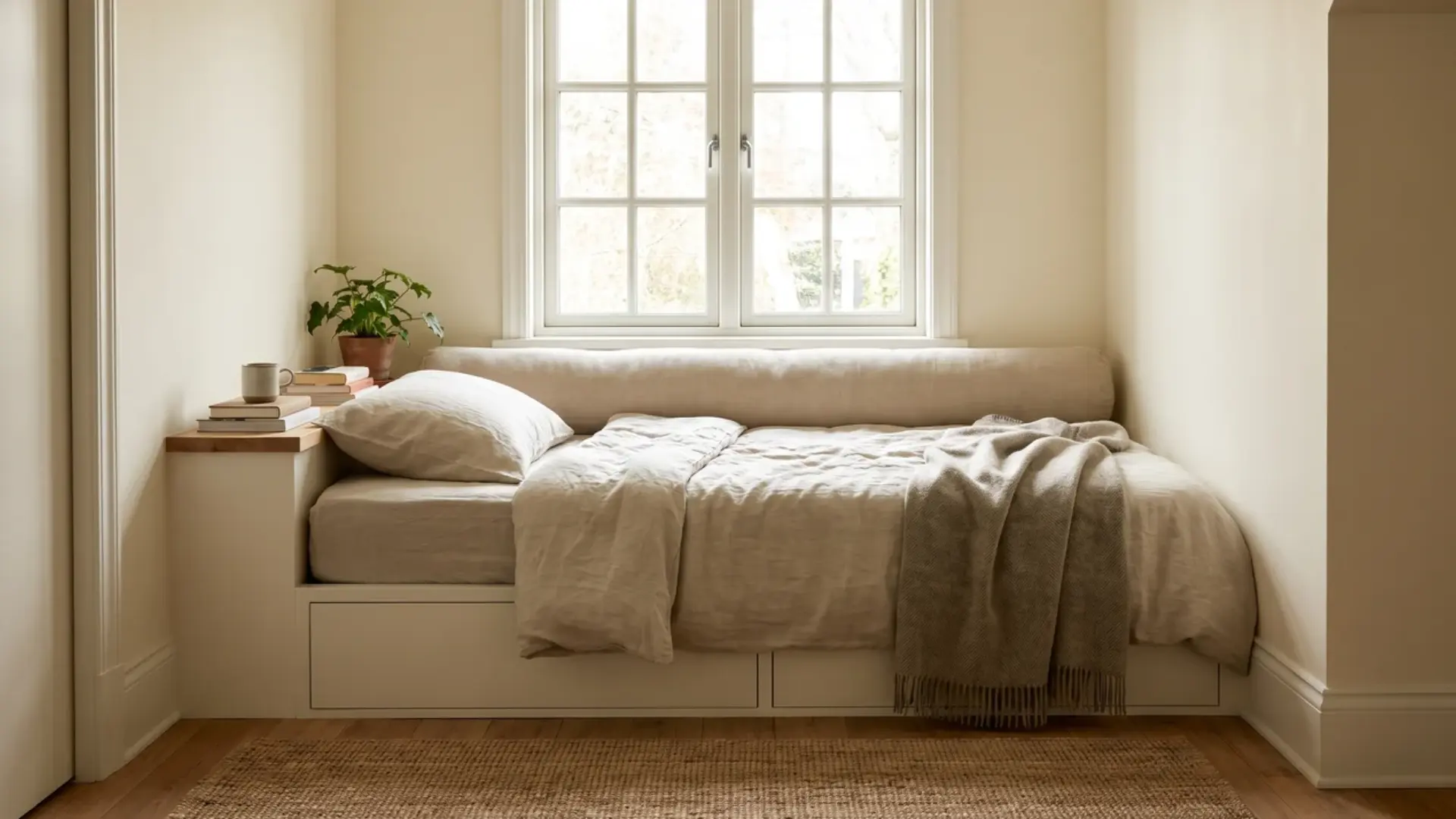
A daybed gives you more room to stretch out than a chair, making it useful for long reading sessions.
Placing one beneath a window works well because you get natural light during the day. Add a bolster or firm pillow to support your back while reading.
- Keep a small table or shelf within easy reach.
- Use a few supportive cushions instead of many decorative ones.
Too many pillows often end up on the floor and reduce usable space.
Keep the setup practical so you can sit, recline, or lie down comfortably without rearranging everything each time you read.
18. Use a Chaise Lounge
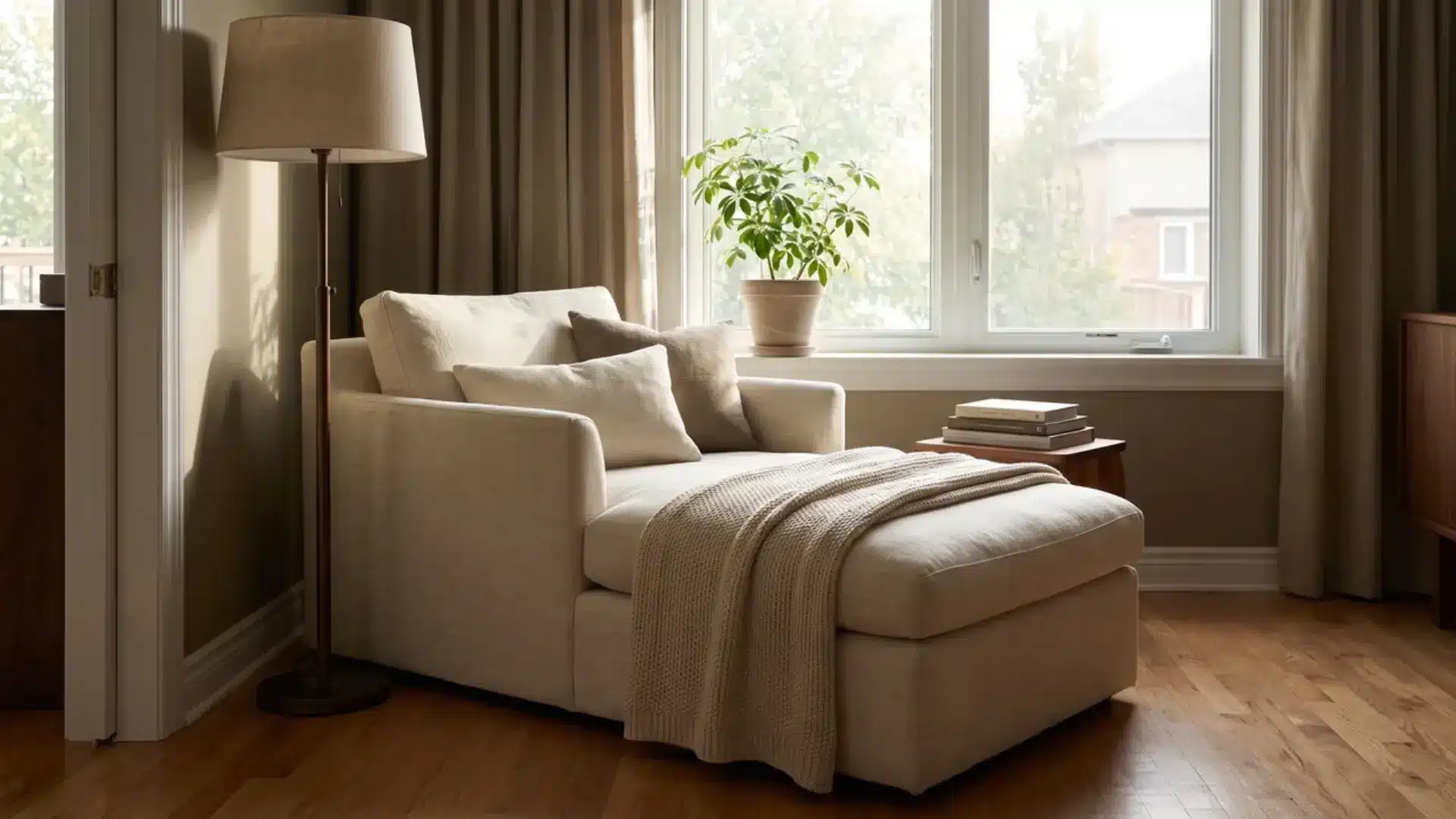
A chaise lounge works well if you prefer reading with your legs stretched out. It supports more of your body than a regular armchair and removes the need for a separate ottoman.
Place it beside a window for daytime reading or near a floor lamp for evening use.
- Measure the available space before buying one.
- Leave enough room to walk around it comfortably.
Because a chaise is longer than a normal chair, it can quickly dominate a small room. A slim side table or wall shelf keeps essentials nearby without adding bulk to the reading area.
19. Hang an Indoor Hammock Chair
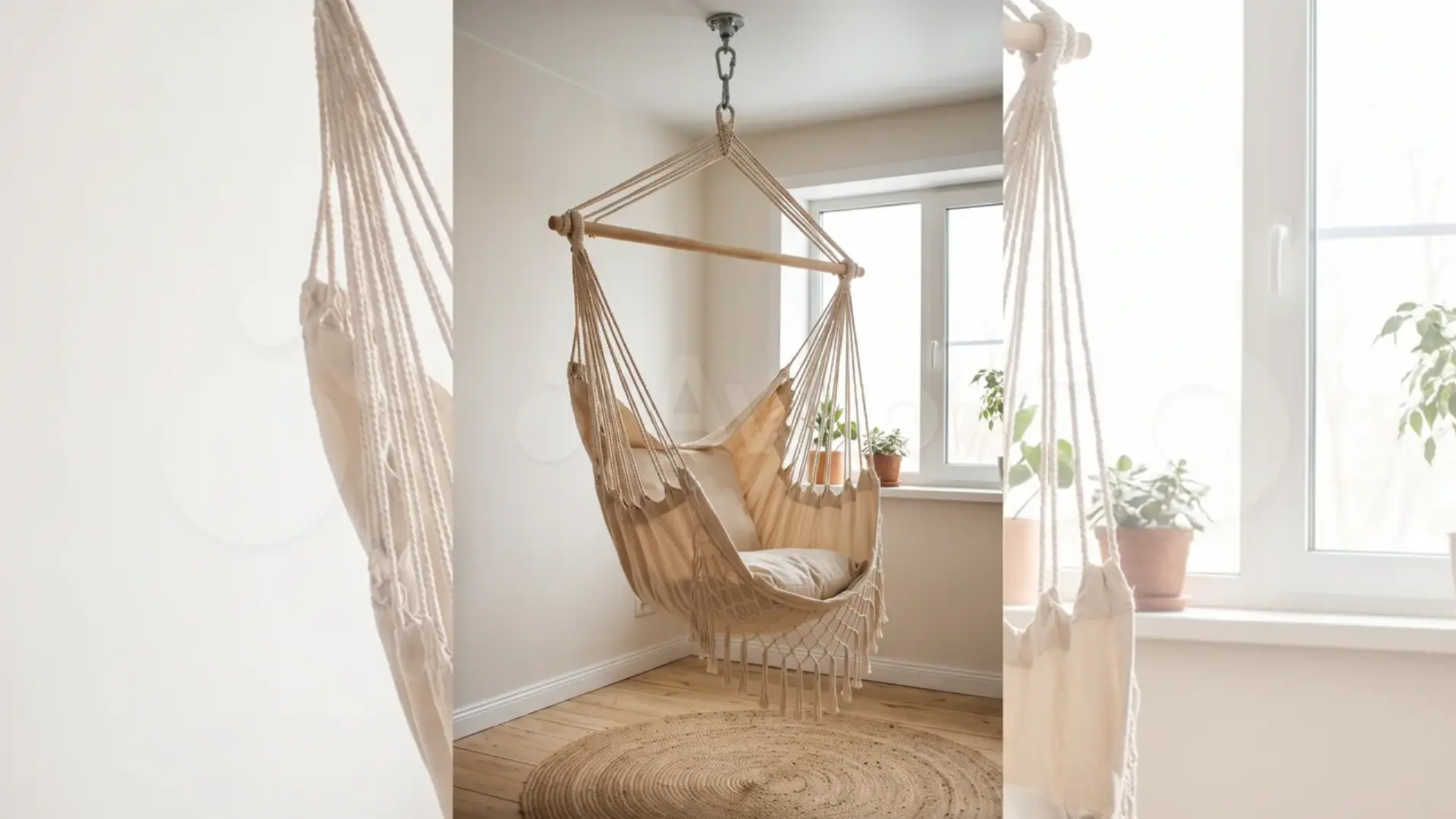
A hammock chair can make a reading corner feel relaxed while using less floor space than some lounge chairs.
It works well in bedrooms, lofts, or quiet corners where gentle movement will not interfere with nearby furniture. Add a small cushion for extra back support.
- Secure the chair to a suitable joist, beam, or mounting point.
- Leave enough clearance for gentle swinging.
Installation deserves more attention than decoration. The mounting point must support both the chair and the person using it.
Keep sharp-edged furniture away from the swing area so the nook remains comfortable and safe during use.
20. Build a Floor Cushion Nook
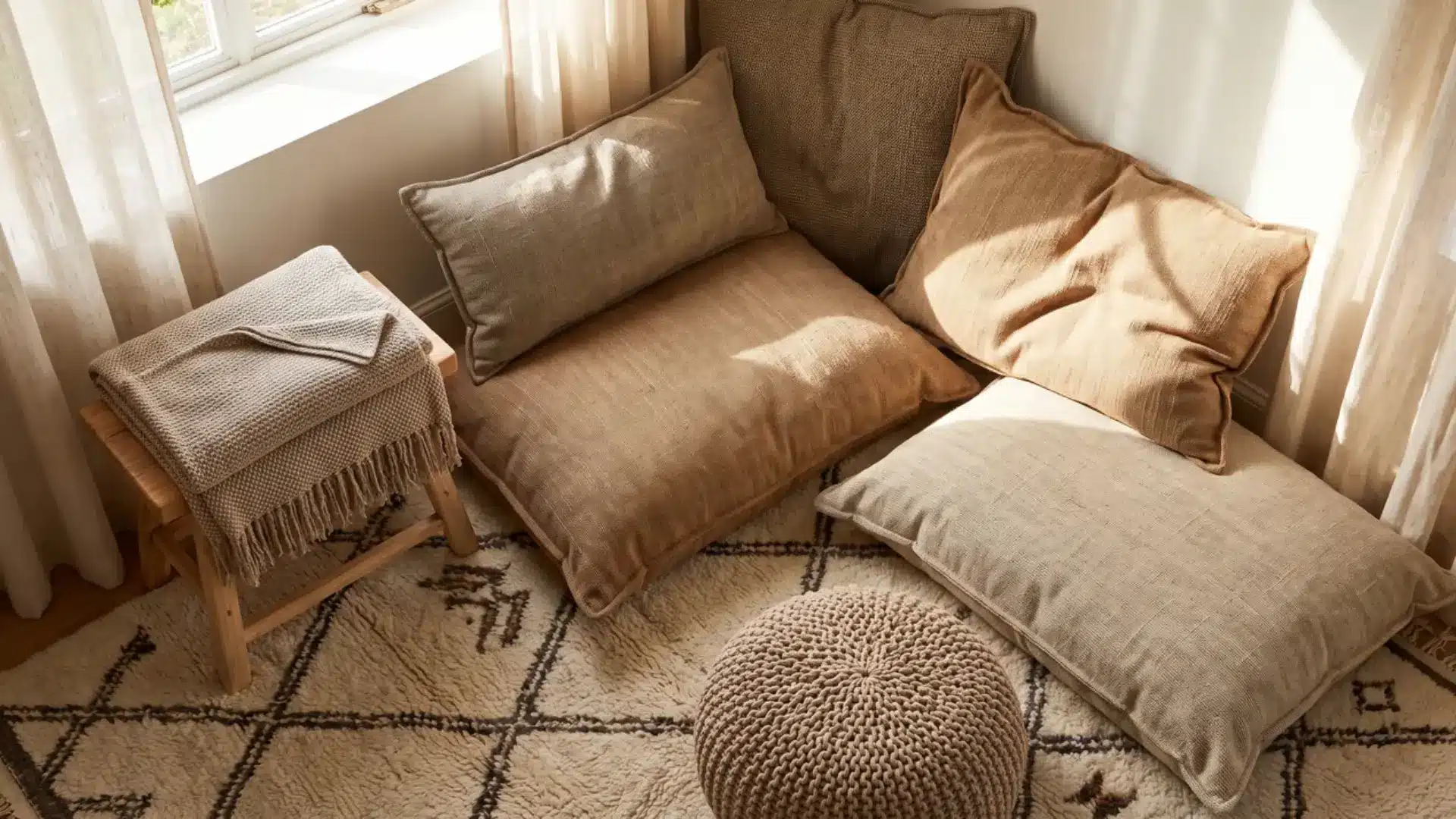
Floor cushions are an option when you want a casual reading nook without adding a full chair.
Large cushions, a low pouf, and a soft rug can create a setup in a bedroom, loft, or quiet corner. The pieces are easy to move when needed.
If the bedroom itself feels tight, these small bedroom layout ideas can help you find the extra floor space first.
- Layer several cushions for better comfort on hard floors.
- Add back support against a wall whenever possible.
A low lamp or wall light makes reading easier without crowding the floor. Keep books in a basket to keep the area organized.
The setup should feel relaxed without becoming messy or uncomfortable after longer use.
21. Set Up a Canopy Nook for Kids
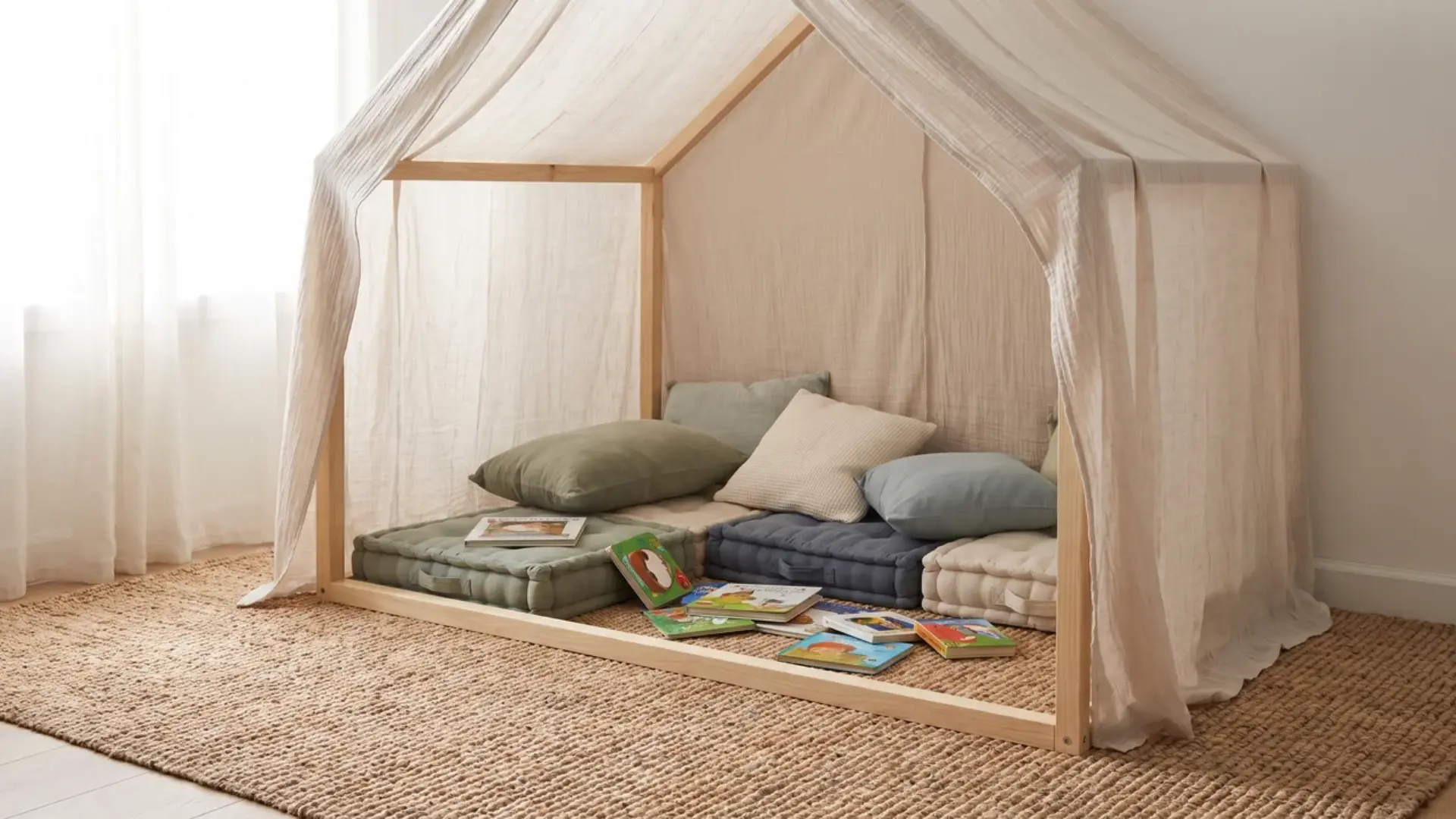
A canopy or fabric tent can give children a reading nook that feels separate from the rest of the room.
Place soft floor cushions inside and keep a selection of books low enough for children to reach on their own. The enclosed feeling can make reading feel more inviting.
- Keep decorations light, simple, and easy to clean.
- Use safe battery-powered lighting instead of loose cords.
Leave enough open space for ventilation and easy entry. Avoid heavy items that could fall into the seating area.
A kids’ reading nook should feel comfortable, simple, and safe enough for independent use.
22. Create a Bean Bag Corner for Teens
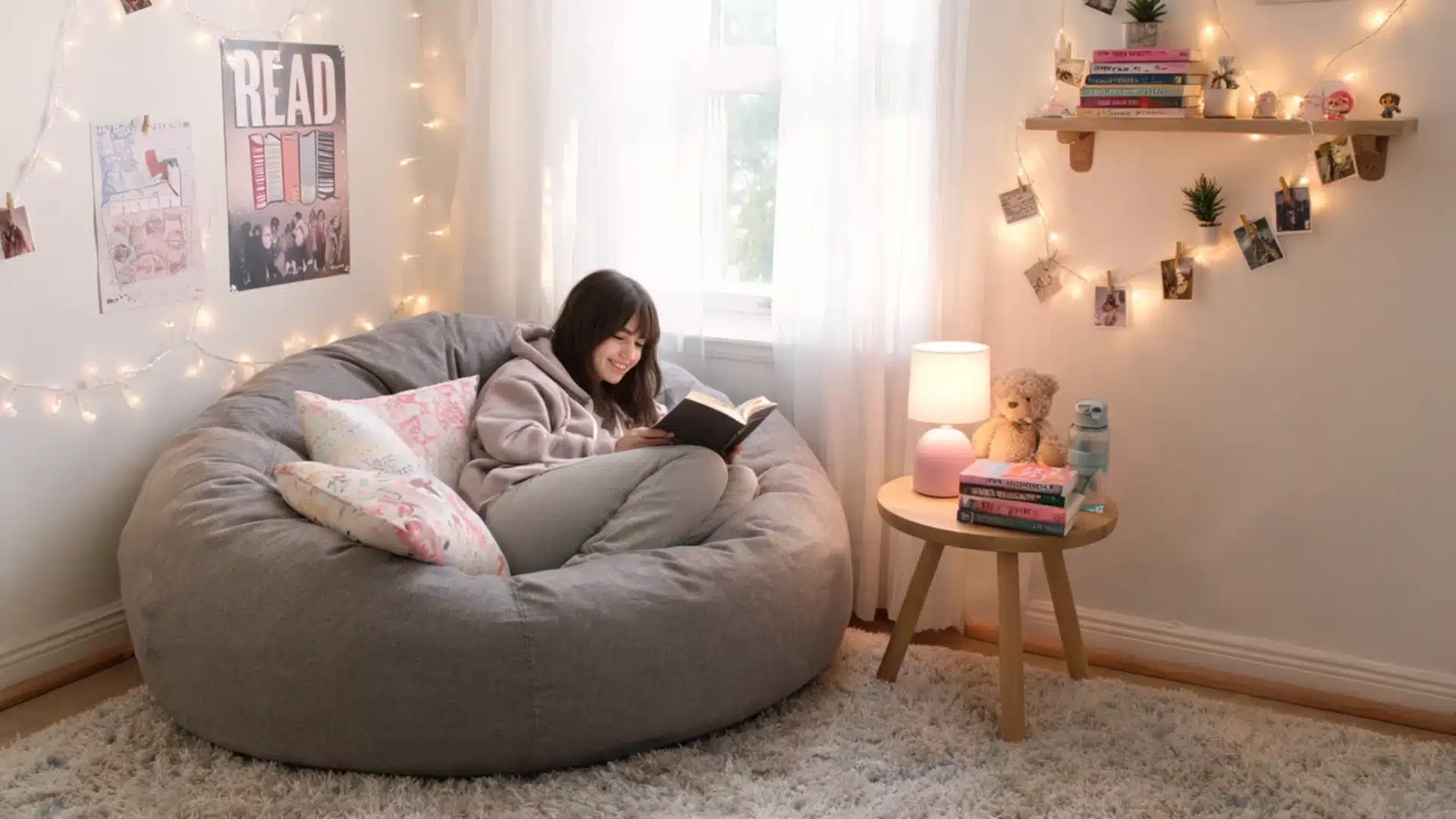
A bean bag can suit a teen room better than a formal reading chair because it feels casual and is easy to move.
Place it in a quieter corner with a clip-on lamp or wall light, then add a crate, basket, or small shelf for books.
- Choose enough filling to support the back properly.
- Look for a removable, washable cover for cleaning.
Keep the surrounding floor clear so the corner does not start to feel messy.
A practical setup works better than a heavily decorated one, especially in a room where the furniture may be moved around often.
23. Build a Ladder Shelf Reading Wall
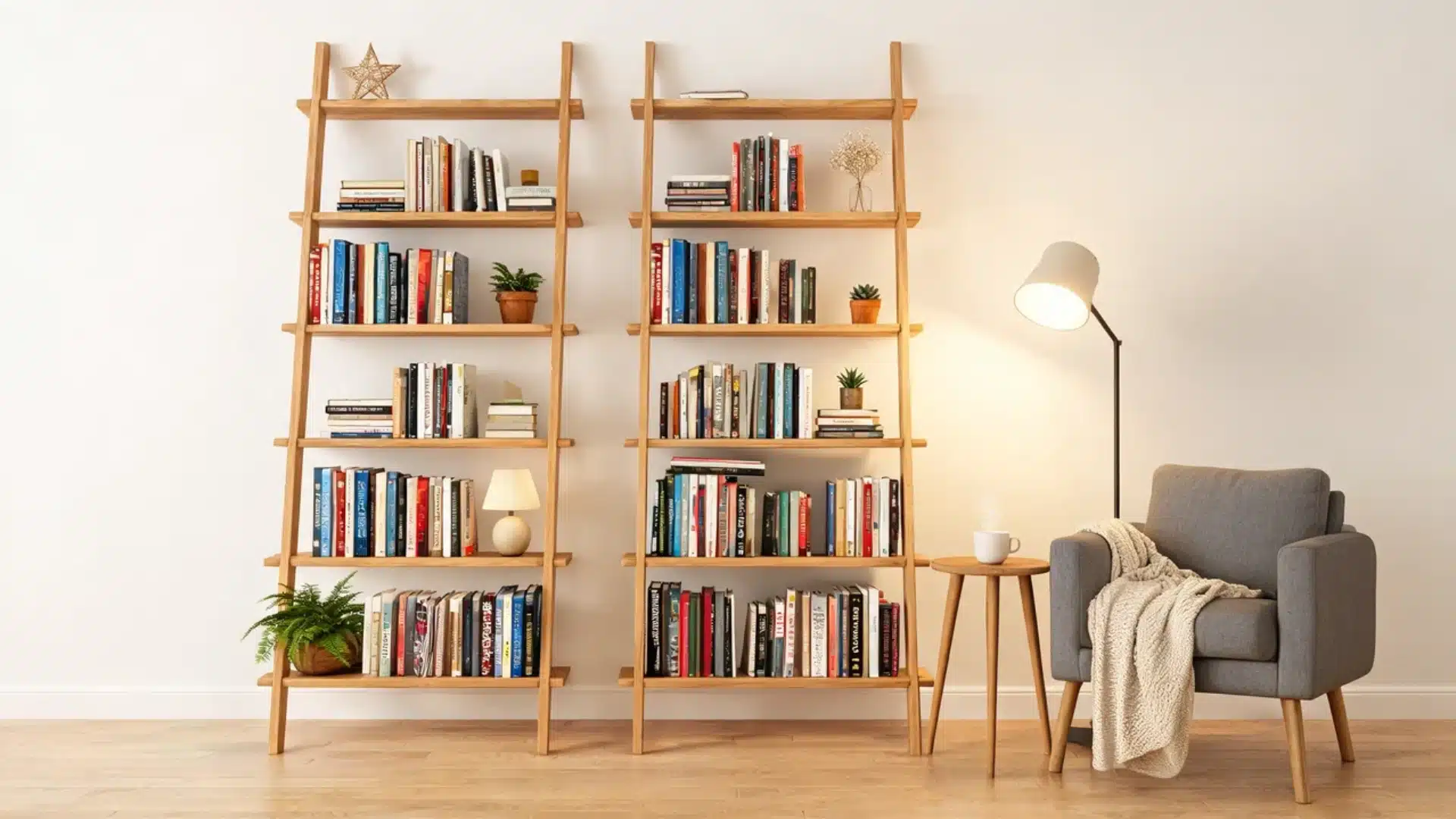
A full wall of shelving can turn book storage into the main feature of a reading area. If the shelves reach high enough, a rolling library ladder can make upper rows easier to access while adding character.
Place a chair nearby so books are easy to reach.
- Use a ladder system designed for secure installation.
- Make sure there is enough floor clearance for safe movement.
This idea needs more planning than most reading nooks. It works best on a dedicated wall with good ceiling height.
Safety, rail strength, and movement space should come before appearance or extra decoration.
24. Choose a Storage Bench
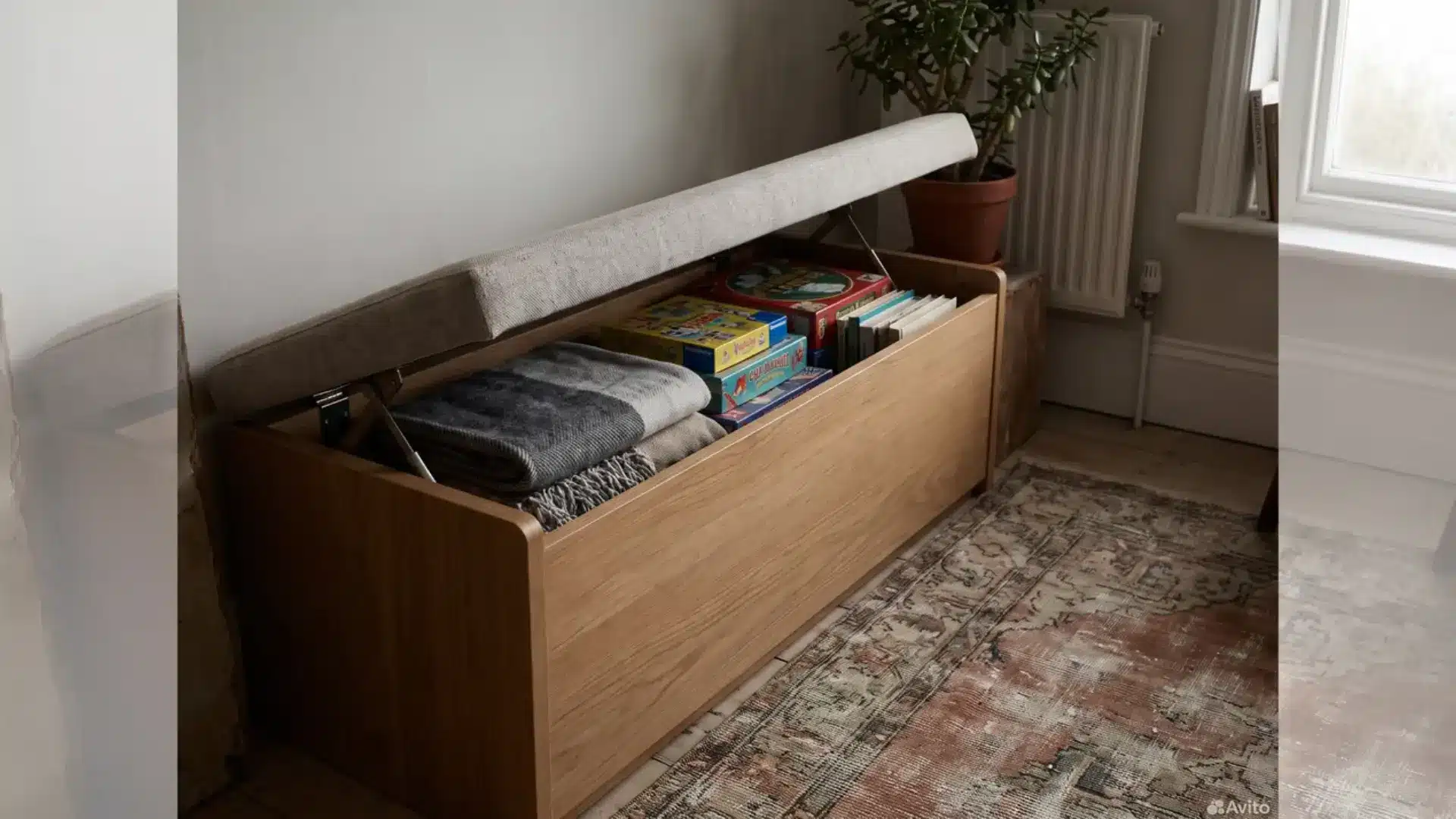
A storage bench is useful when you need seating and hidden storage in one piece of furniture.
Place it under a window, along a wall, or inside a recessed area, then add a firm seat cushion and a few supportive pillows for comfort.
- Use the compartment for books, throws, or spare cushions.
- Check the lid mechanism before buying or building the bench.
Choose a bench deep enough for comfortable sitting, not one designed mainly for shoes.
If children will use it, soft-close hinges can make lift-up designs safer and easier to handle during everyday use around the home.
25. Add a Wall-Mounted Shelf
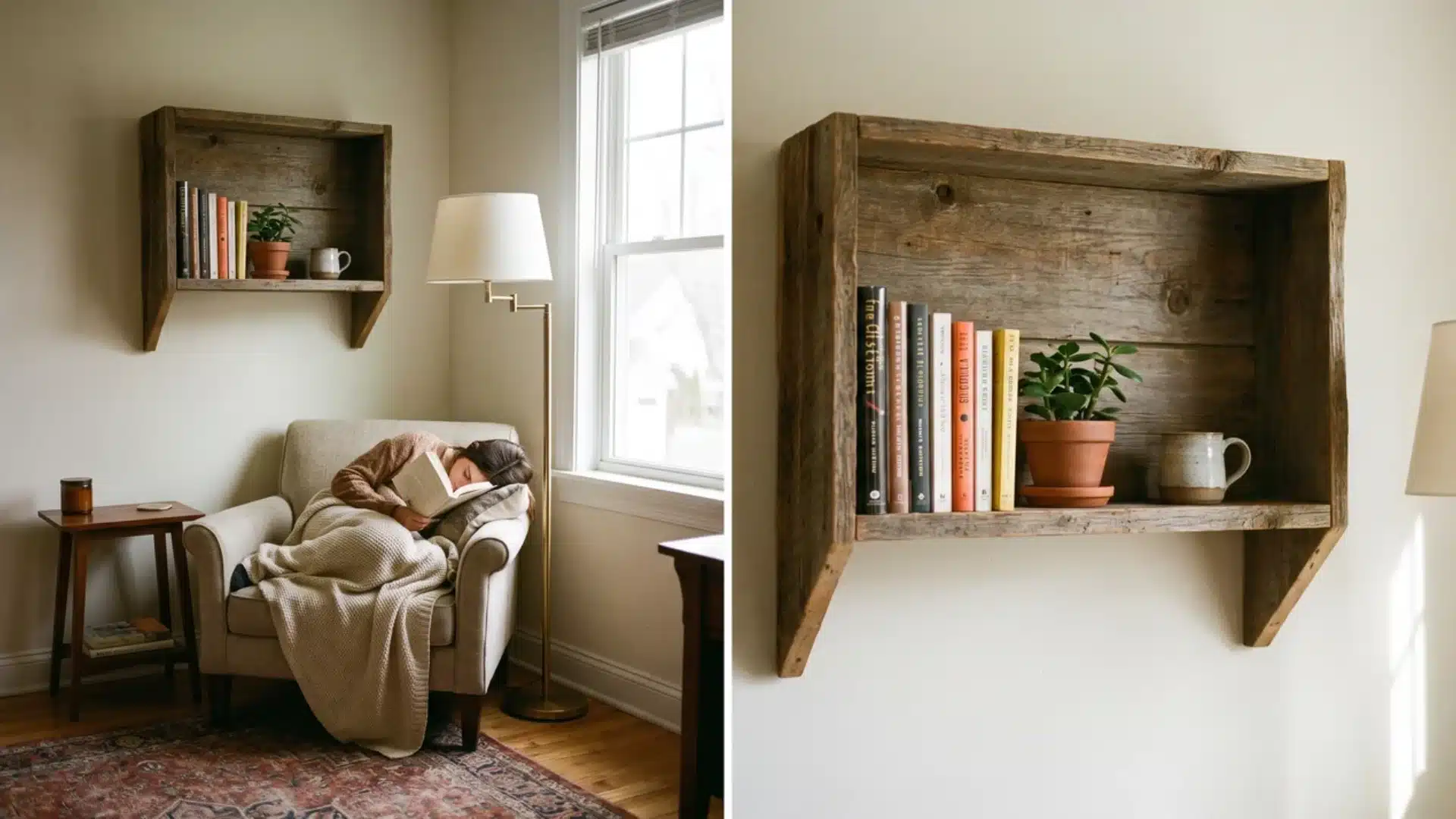
Wall-mounted shelves are a practical way to keep books nearby when there is not enough room for a full bookcase.
Install one or two shelves beside the chair and keep frequently used books within easy reach. This helps the nook stay organized while leaving the floor open.
- Avoid placing heavy shelves directly above the seat.
- Pair shelves with a wall-mounted light to save more space.
Use fixings that suit the wall and support the expected weight.
A narrow floating shelf is often enough for books, glasses, or a small object without making a compact reading corner feel crowded.
26. Build a Home Office Reading Nook
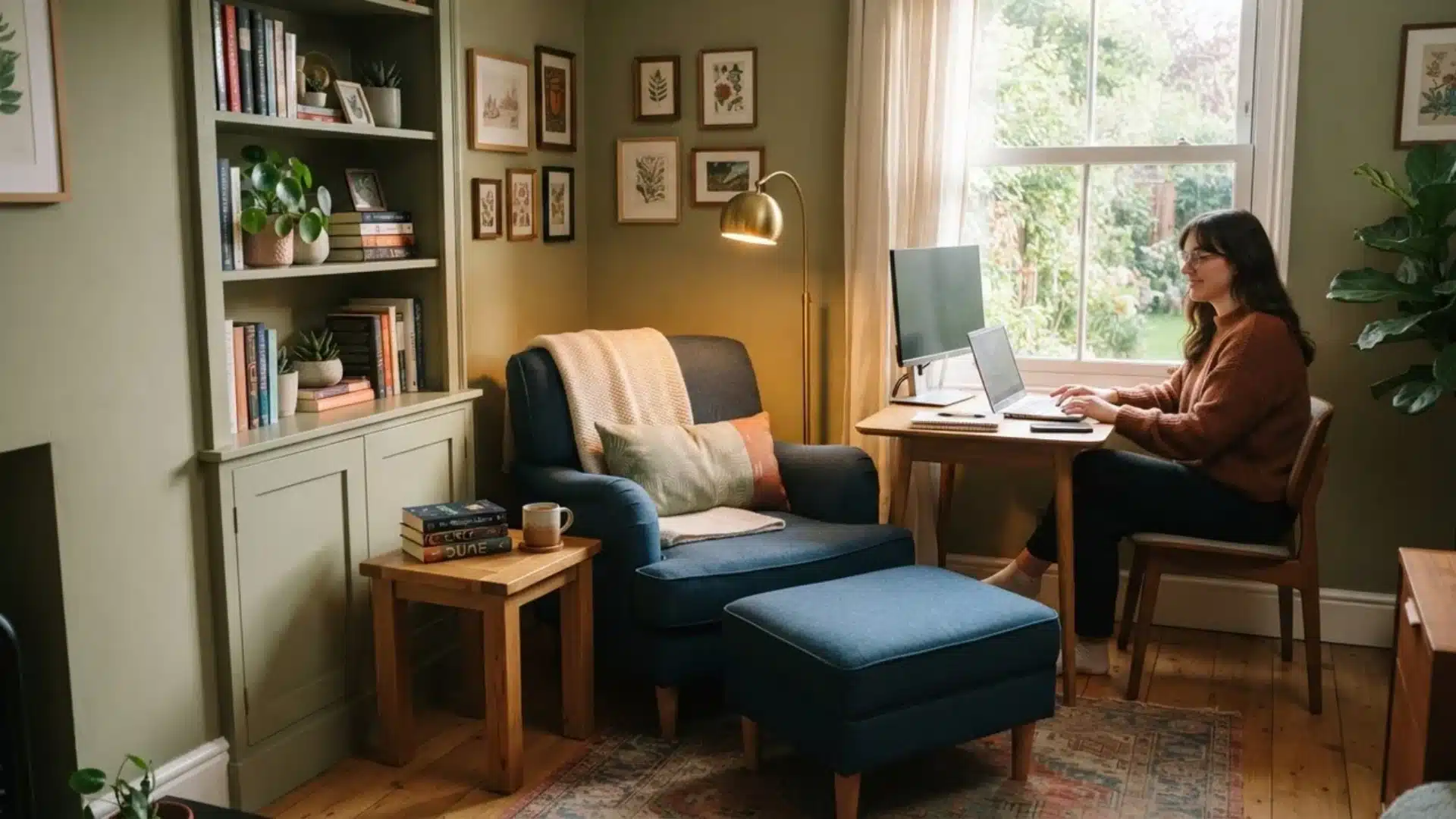
A reading chair can give a home office a second purpose beyond work. Place it away from the desk if possible, even if it’s only a few feet.
That small separation can help the nook feel less connected to emails, meetings, and unfinished tasks.
- Give the reading area its own lamp.
- Keep books on a separate shelf or small table.
Softer seating can also help distinguish the nook from the work zone. The idea is to create a visual and physical break, so reading feels like a different activity instead of another part of the workday.
27. Use an Entryway Bench
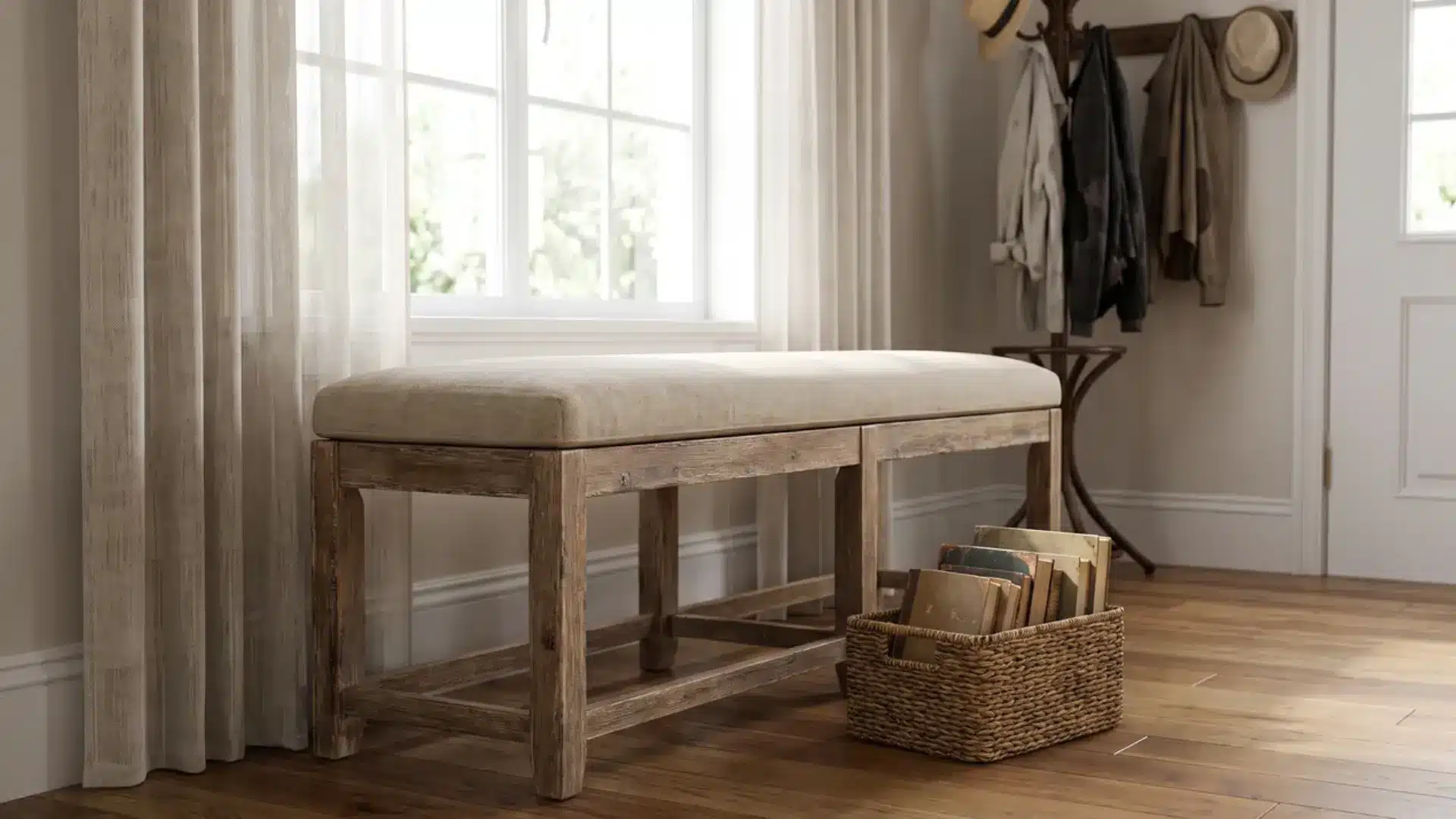
An entryway bench can double as a reading spot when it sits near a window, and the area isn’t constantly busy.
Add a supportive cushion and keep a small basket of books beside or underneath it. This works best for quick reading sessions.
- Keep the main entrance path clear.
- Add a nearby wall light if natural light is limited.
Avoid placing the nook where shoes, bags, and coats pile up. The area should remain easy to enter and leave. A tidy setup makes the bench feel more inviting and keeps it useful for both seating and reading.
28. Build a Rooftop Terrace Nook
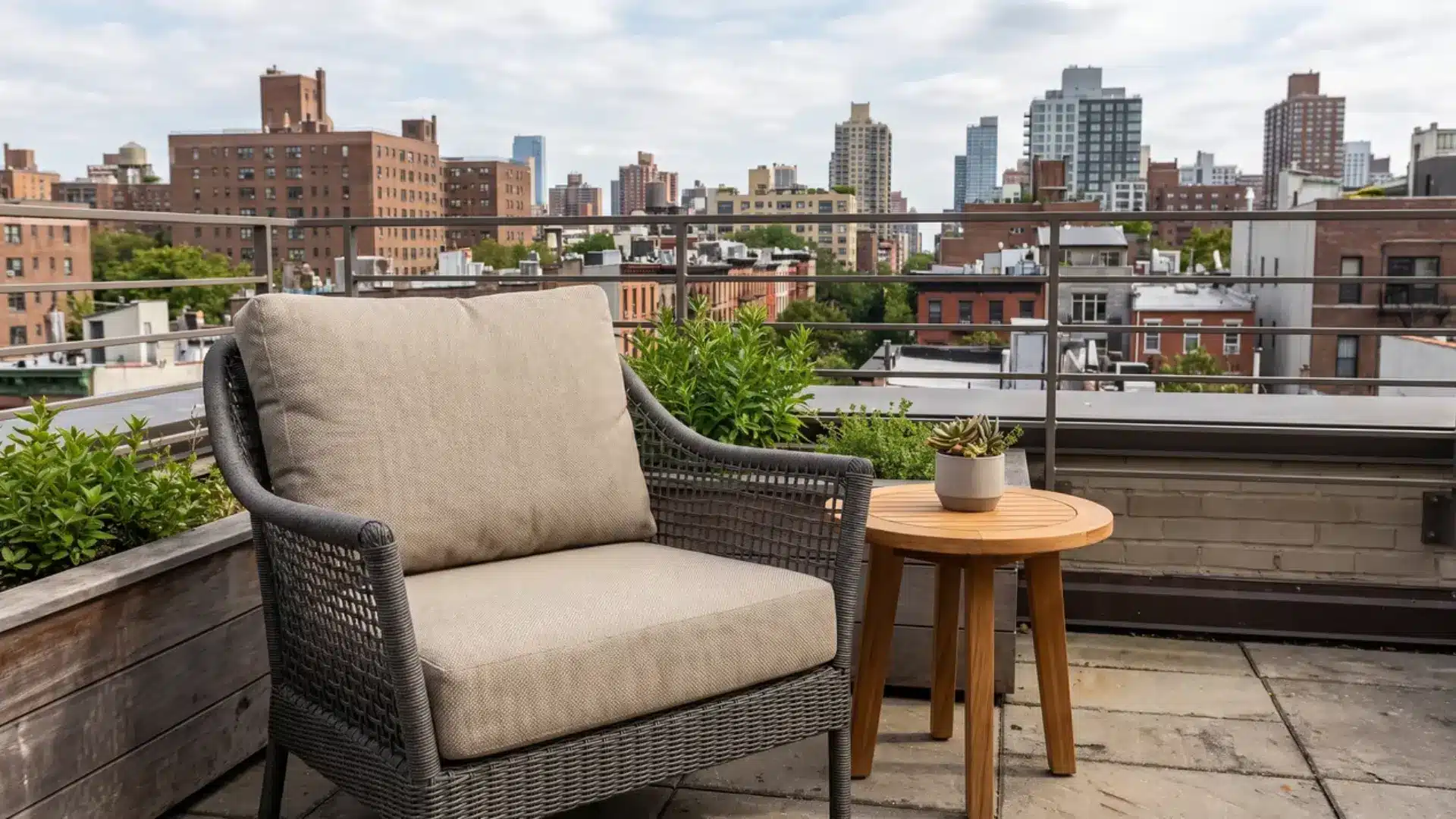
A rooftop terrace can become a calm reading nook with an outdoor chair and compact side table.
Choose a section with shelter from direct sun and strong wind, since rooftops are usually more exposed than balconies. An outdoor rug can help define the space.
- Use stable furniture that will not shift easily.
- Bring cushions indoors when you don’t need them.
Shade can make the nook far more comfortable during hot afternoons. A rechargeable outdoor lamp is useful after sunset and avoids permanent wiring.
Keep the setup simple so changing weather does not turn maintenance into a constant problem.
29. Set Up an RV or Camper Reading Nook
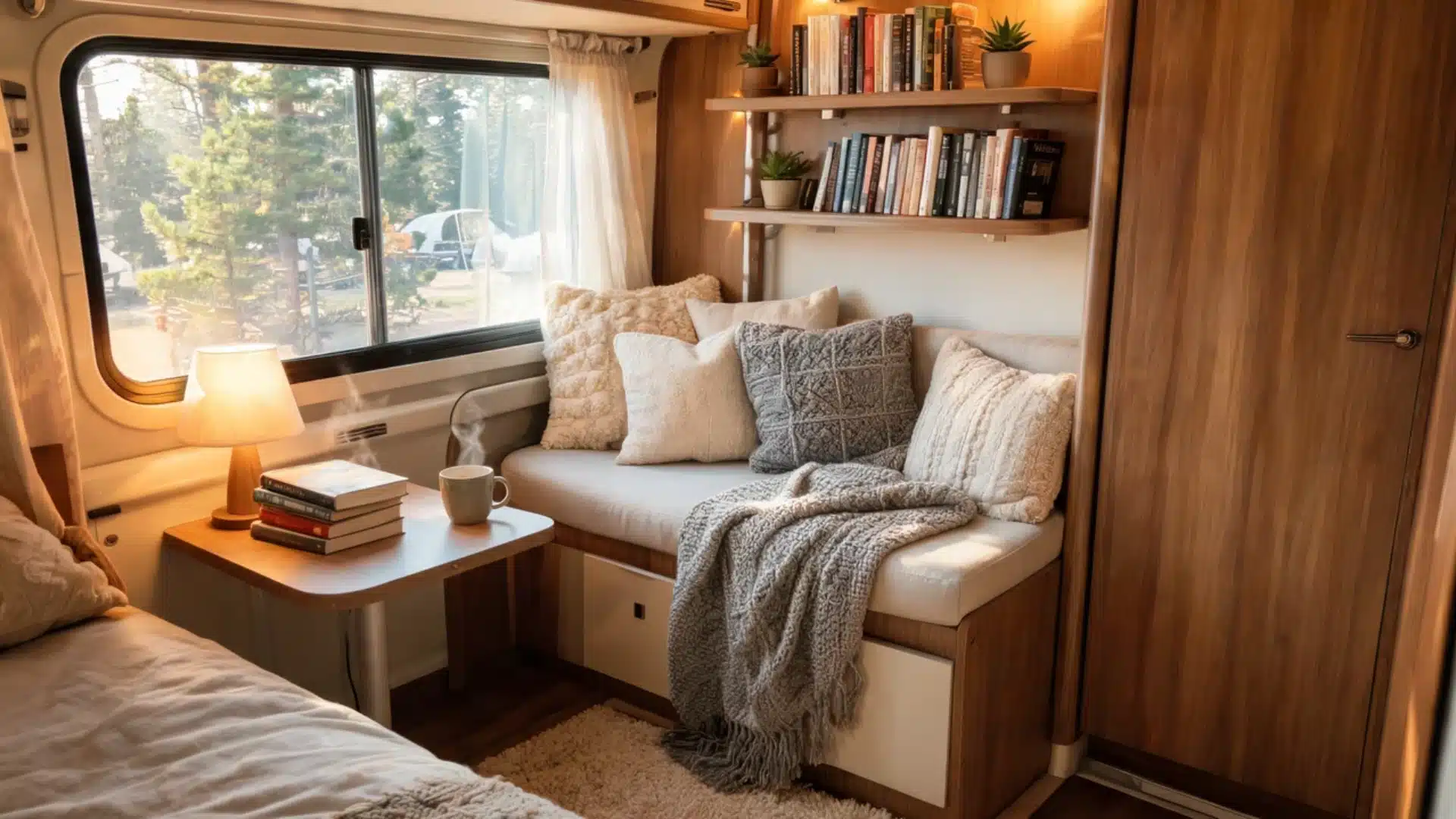
An RV or camper reading nook works best when the seating already serves another purpose.
A dinette bench, passenger seat, or folding chair can become a reading spot with a supportive cushion and clip-on light. This saves space while keeping the setup useful.
- Store books in a secured basket, cabinet, or soft-sided bin.
- Keep the walkway clear at all times.
Anything added should be easy to pack away before driving. Loose books, lamps, or accessories can shift while the vehicle is moving.
An RV reading nook should feel comfortable when parked and remain practical when travel begins again.
How Do You Choose the Right Reading Nook Idea?
Start with the space you actually have, then choose seating that fits without making the area harder to use.
A spacious corner might handle a chaise lounge, while a bedroom edge or narrow alcove may work better with a compact chair, bench, or floor cushion.
Think about how often you read there too. If it will become an everyday spot, prioritize supportive seating, good task lighting, and reachable book storage.
For occasional reading, a movable chair, lamp, and small basket may be enough.
I would also consider how permanent you want the setup to be. Renters and budget-conscious readers can stick with freestanding furniture and wall-friendly storage.
Built-in benches or window seats make more sense when the space already suits them, and you know the nook will be used regularly.
Final Thoughts
A reading nook earns its spot by actually getting used, not by how it photographs.
Comfort, lighting, and how often you will really sit there matter more than size or a perfect layout.
Whether you have a spare window, a stair landing, a closet, or a patch of unused wall, one of these reading nook ideas will likely fit your home without a renovation.
Pick the setup that feels easiest to use every day, then build from there.
Once your spot is ready, tell us in the comments which idea you tried, or share the small space trick that worked best for you.
Frequently Asked Questions
How Do You Make a Simple Reading Nook?
Start with one comfortable chair, bench, or floor cushion in a quiet corner, then add a lamp so the spot works after sunset. Keep a small table, wall shelf, or basket nearby to hold a few books and a drink. A simple reading nook only needs three things: comfortable seating, good light, and easy reach to what you are reading.
Does a Reading Nook Need to Be by a Window?
No, a window is a nice bonus but not a requirement. Natural light helps during the day, but any comfortable, low traffic spot can become a reading nook with the right lamp. A bedroom corner, hallway, stair landing, closet, or under stair space all work well once you add supportive seating and a light source that carries into the evening.
How Much Space Do You Need for a Reading Nook?
There is no fixed minimum, since the space you need depends entirely on the seating you pick. A floor cushion or compact chair can fit into a corner as small as three feet wide, while a chaise lounge or daybed needs a full wall of clearance. Match the seating to the space you actually have.
How Can I Make a Reading Nook Cozy Without Spending Much?
Start with furniture you already own instead of buying new pieces. Add a cushion, a soft throw, a lamp, and a small rug to make the spot feel intentional. Moving an existing chair beside a window, bookshelf, or fireplace is often enough to create a reading nook that feels cozy without any construction or big purchases.