


When you’re deciding between two popular hardwoods like red oak and white oak, it’s easy to wonder which one really fits your project best. Both look beautiful, but they differ in how they age, handle moisture, and fit different styles.
In my experience, understanding those small differences makes a big impact on how your flooring, furniture, or cabinets turn out.
Today, you’ll learn about everything that sets red oak and white oak apart, from strength to cost and ideal uses. I’ll also give you tips to help pick the right one for your needs and budget.
Let’s see how they measure up.
Red Oak vs. White Oak Flooring: Quick Look
Both red oak and white oak are popular for flooring, furniture, and cabinetry. But they differ in color, durability, and cost. Here’s a simple side-by-side look to help you compare them easily:
| Feature | Red Oak | White Oak |
|---|---|---|
| Color Tone | Warm pinkish-red hue | Beige to light brown with olive tones |
| Grain Texture | Open and porous with shorter rays | Tight, smooth grain with longer rays |
| Density (Janka Hardness) | Around 1,290 lbf | Around 1,360 lbf |
| Durability | Softer and less resistant to moisture | Denser and more resistant to rot and wear |
| Water Resistance | Absorbs water easily; not ideal outdoors | Naturally water-resistant; great for exterior use |
| Price Range | More affordable and widely available | Pricier due to slower growth and higher demand |
| Best Uses | Interior furniture, trim, and flooring | Outdoor projects, high-end flooring, and cabinetry |
If you’re looking for affordability and ease of work, red oak is a solid choice. But if you want long-term durability and water protection, white oak wins.
White Oak vs. Red Oak for Flooring: Performance Differences
Both types of oak look strong and classic, but their appearance and performance set them apart. Here’s a closer look at how they differ in color, growth, durability, cost, and finishing:
1. Color and Grain
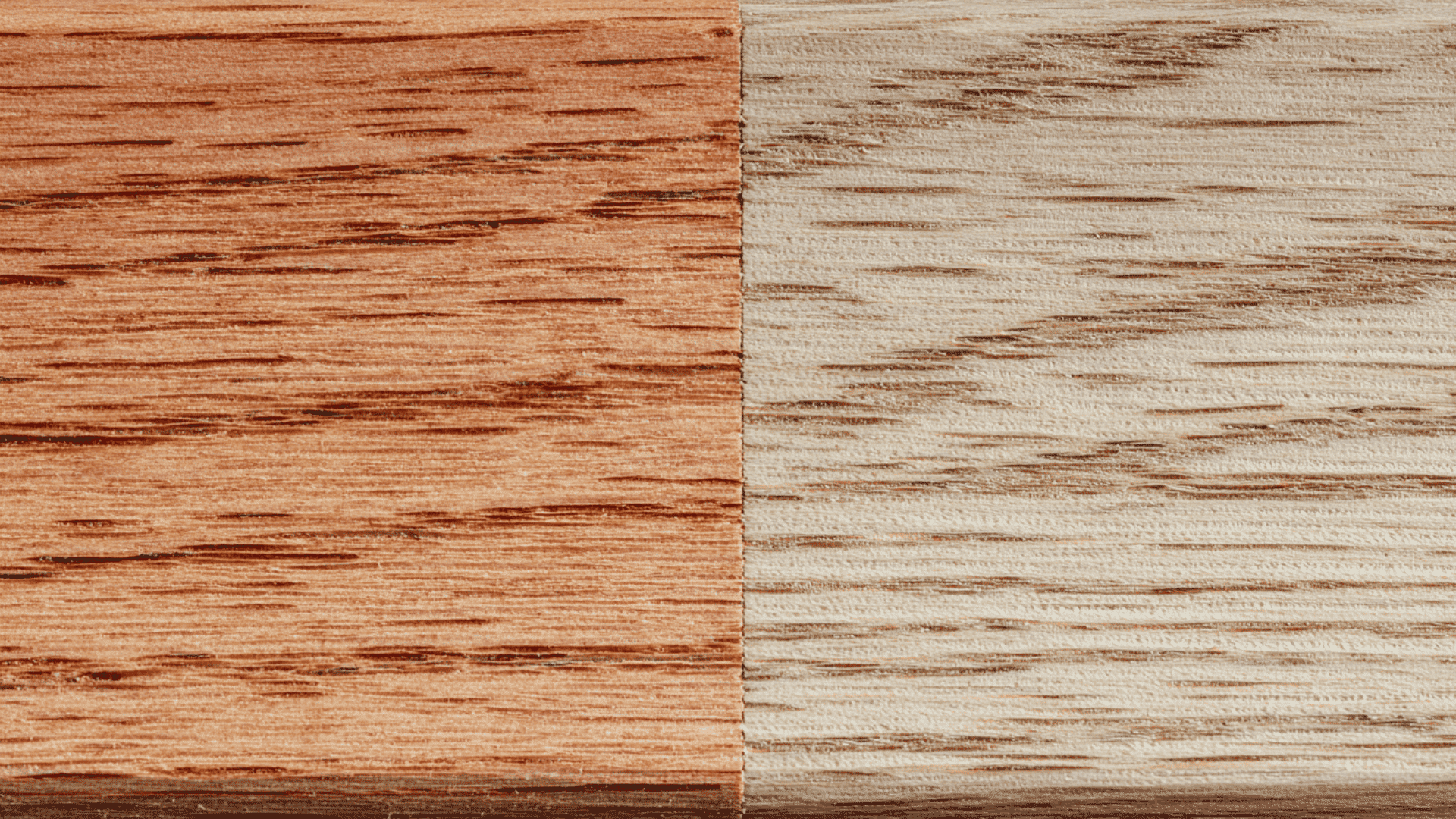
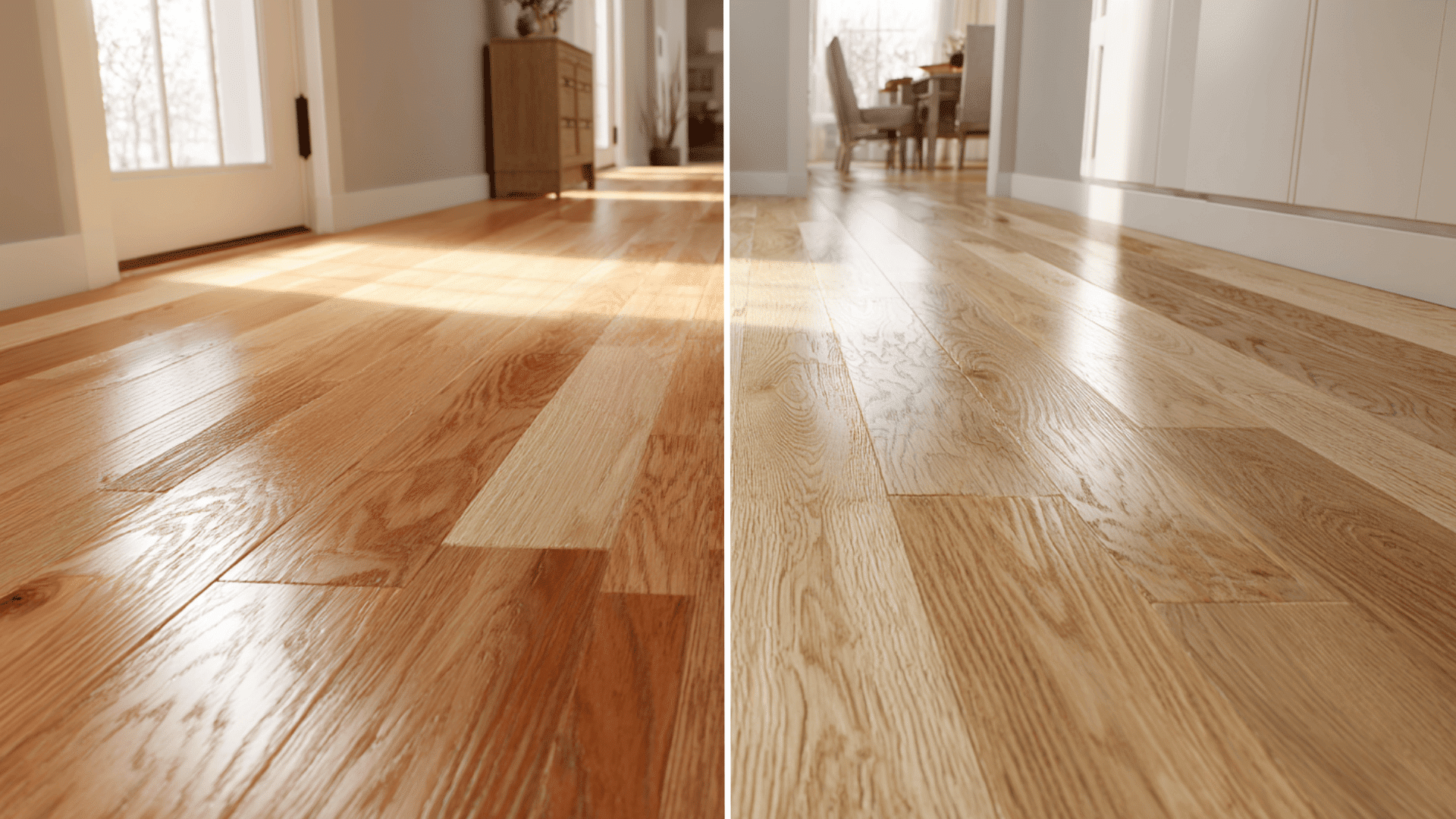
Red oak has a warm, pinkish-red hue with open pores and visible grain lines. The texture feels slightly rough, which gives furniture or flooring a more traditional look.
White oak, on the other hand, has tighter pores and a smoother surface. Its color leans beige or light brown with olive undertones. The grain lines appear straighter and longer, especially in quarter-sawn boards.
If you were to see both side by side, white oak looks more even and modern, while red oak feels warmer and more rustic. You can add close-up visuals or AI-generated examples here to show both textures clearly.
2. Growth and Leaf Characteristics
Both woods come from different species of oak trees. Red oaks grow faster and have pointed leaves with sharp lobes. Their bark is smoother and lighter in texture.
White oaks grow more slowly and feature rounded leaves with a rougher, thicker bark. Because of this slower growth, white oak tends to be denser, which makes it both stronger and more expensive to source.
Faster-growing red oak is more widely available, which is one reason it costs less and is used more often for general interior projects.
3. Durability and Water Resistance
When it comes to toughness, white oak wins. It has a Janka hardness of around 1,360 lbf, compared to 1,290 lbf for red oak. That small difference makes a big impact on long-term wear.
White oak’s closed pores keep out moisture, so it’s ideal for outdoor furniture, decks, or even boat building. Red oak’s open pores make it less resistant to water, meaning it’s better for indoor use like cabinets or interior flooring.
In my experience, if your project might see spills, humidity, or rain, white oak will hold up longer and stay more stable over time.
4. Cost and Availability
Because red oak grows faster and is more common, it’s typically cheaper, around $5 to $8 per board foot, depending on grade and region.
White oak, however, costs more, usually $8 to $12 per board foot, due to slower growth and higher demand in high-end builds. Its durability and timeless appeal make it a favorite for premium flooring, cabinetry, and outdoor furniture.
If budget is tight, red oak offers great value without compromising too much on quality.
5. Workability and Finishing
Red oak is easier to cut, shape, and sand. It also takes stain evenly, making it a great option for DIY projects or refinishing work.
White oak is tougher on tools due to its density, but it finishes beautifully with the right preparation. Its tighter grain absorbs less stain, giving it a cleaner, more refined look, ideal for modern or minimalist interiors.
Best stain colors for each:
- Red Oak: Warm tones like golden oak, chestnut, or medium walnut
- White Oak: Cooler tones like gray, driftwood, or natural matte finishes
If you like a classic, reddish warmth, go for red oak. If you prefer sleek, neutral tones with higher durability, white oak is the better fit.
How to Identify Which Oak You’re Dealing With
It’s easy to mix them up, but a few quick checks can help you tell red oak from white oak right away. Here’s what to look for:
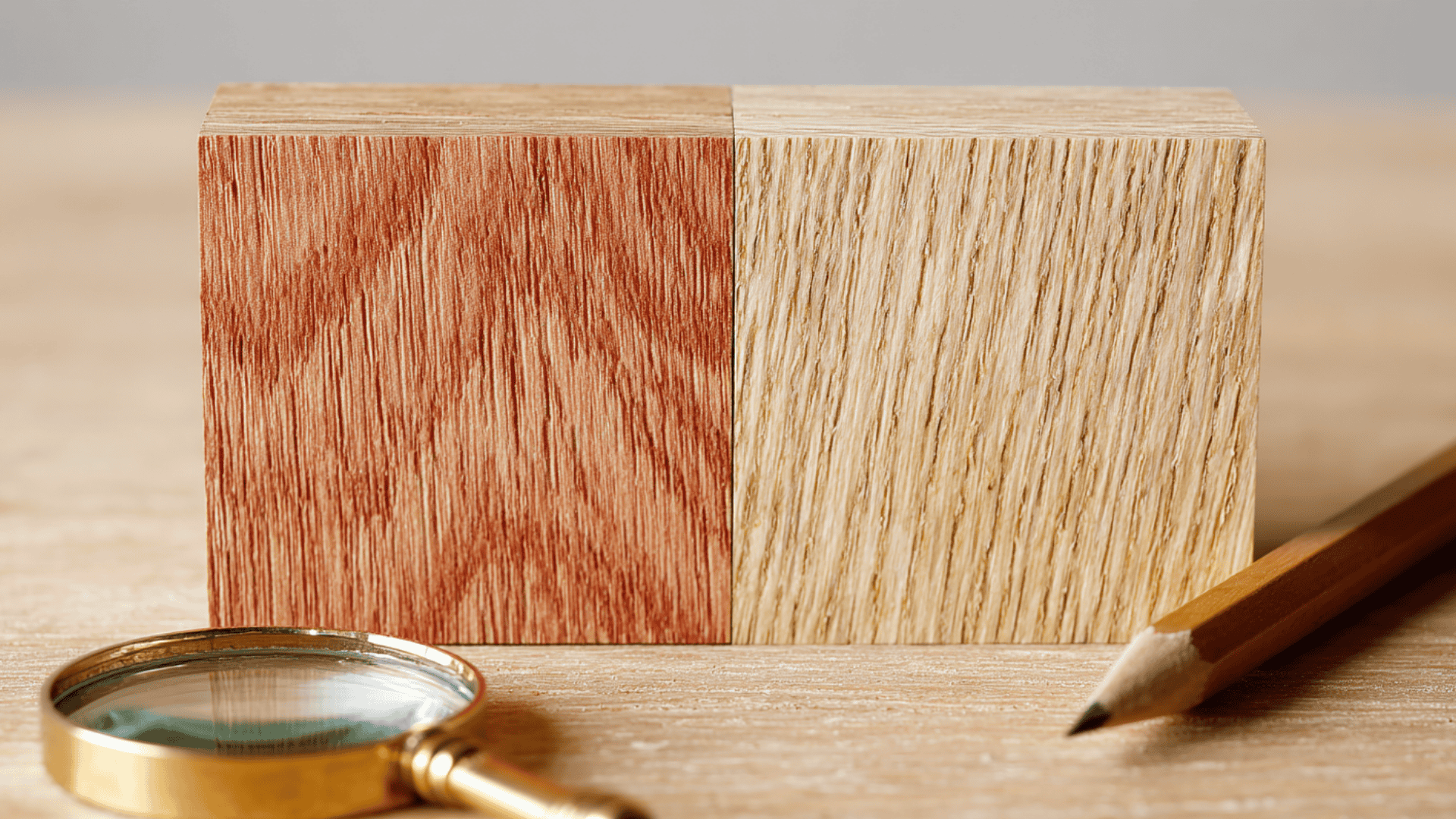
- End-Grain Pore Test: Red oak has open pores you can blow air through or see light pass. White oak’s pores are sealed with tyloses, making it water-resistant.
- Ray Length and Pattern: Red oak has short rays, about 1/8 to 1/2 inch long. White oak has longer rays, often over 3/4 inch, creating those “ray flecks” you see in quarter-sawn boards.
- Sodium Nitrate Test: Apply a 10% sodium nitrate solution to a sanded spot. Red oak turns dark brown, while white oak turns green, purple, or black due to higher tannin levels.
- Visual Tip: Red oak usually shows a pinkish tint and rougher texture. White oak appears beige or tan with a smoother, tighter grain.
Include a simple diagram or side-by-side photo comparing end grain, ray length, and leaf shapes to make identification clearer for readers.
Choosing the Right Oak for Your Project
| Application | Red Oak | White Oak |
|---|---|---|
| Flooring | Warm reddish tones with visible grain; affordable and easy to stain; best for dry indoor areas. | Smooth, even texture; more durable and water-resistant; great for kitchens, basements, and entryways. |
| Furniture | Easy to cut and shape; stains evenly for a classic look; ideal for DIY or rustic pieces. | Harder and denser; resists dents and scratches; perfect for high-end or modern furniture. |
| Cabinetry | Traditional appeal with a warm tone; budget-friendly; fits rustic or farmhouse kitchens. | Uniform grain with a sleek finish; moisture-resistant; great for modern or minimalist designs. |
| Outdoor Projects | Not recommended; open pores absorb moisture and lead to warping or rot. | Excellent choice; closed pores block water and resist rot; ideal for decks, benches, and outdoor furniture. |
| Budget | More affordable and widely available; great for cost-conscious builds. | Pricier due to slower growth and higher demand; seen as a long-term investment. |
| Appearance | Reddish tint with open grain; adds warmth and texture to interiors. | Beige to light brown with smooth grain; clean, neutral look that fits most styles. |
| Durability | Slightly softer and less resistant to moisture. | Denser and longer-lasting, especially in humid or wet conditions. |
If you’re focused on cost, easy workability, and a traditional look, red oak is a solid pick. But if you want higher durability, water resistance, and a refined finish, white oak is worth the investment.
Sustainability and Sourcing
Both red oak and white oak are sustainable when sourced responsibly. They’re native to North America and widely managed under certified forestry programs.
Red oak grows faster, reaching maturity in about 60 to 80 years. White oak grows slower, often taking over a century to mature. Because of this, red oak replenishes more quickly and is slightly more sustainable for large-scale use.
Both species are common across the eastern and central United States. Red oak prefers drier soils, while white oak thrives in wetter areas. Managed forests in these regions supply most of the oak lumber sold today.
Most oak wood available in North America comes from forests certified by the Forest Stewardship Council (FSC) or Sustainable Forestry Initiative (SFI). These programs ensure that harvesting supports forest regeneration and limits waste.
If you’re trying to minimize environmental impact, red oak is usually the better choice due to its faster growth. Still, both are renewable and responsible options when sourced from certified suppliers.
Wrapping Up
Both red oak and white oak have their own strengths, and the best choice depends on what matters most to you.
If you value warmth, affordability, and easy workability, red oak fits well for most indoor projects. But if durability, moisture resistance, and a refined look are priorities, white oak offers lasting performance and elegance.
As I see it, understanding the key differences in red oak vs. white oak helps you match the right wood to your needs instead of guessing.
Take a look at your project goals, compare your options, and choose the oak that fits your space and style best.