




Understanding how old vintage is helps you make sense of older items and the stories they carry.
I’ve seen how confusing it can be to tell whether something is truly from a past era or simply styled to look that way, especially when different industries use their own timelines.
Today, I’ll walk you through how it compares to antique and retro pieces, and simple ways to spot real vintage items without guessing. You’ll also see why these labels matter when buying, selling, or collecting.
How Old is Vintage?
Vintage refers to items made in an earlier era that still show the style, materials, and design of the time they were created. These pieces feel familiar but carry clear signs of their decade, which makes it easier to see how trends and craftsmanship have changed over the years.
Most people consider an item vintage when it’s 20 to 99 years old. This age range is widely accepted because it marks pieces that reflect a past era without crossing into antique territory.
Different industries apply this rule in their own way. Fashion uses it to sort clothing by decade, while furniture, décor, electronics, and collectibles use it to label pieces that show older styles and materials.
Antique vs. Vintage vs. Retro: The Complete Breakdown
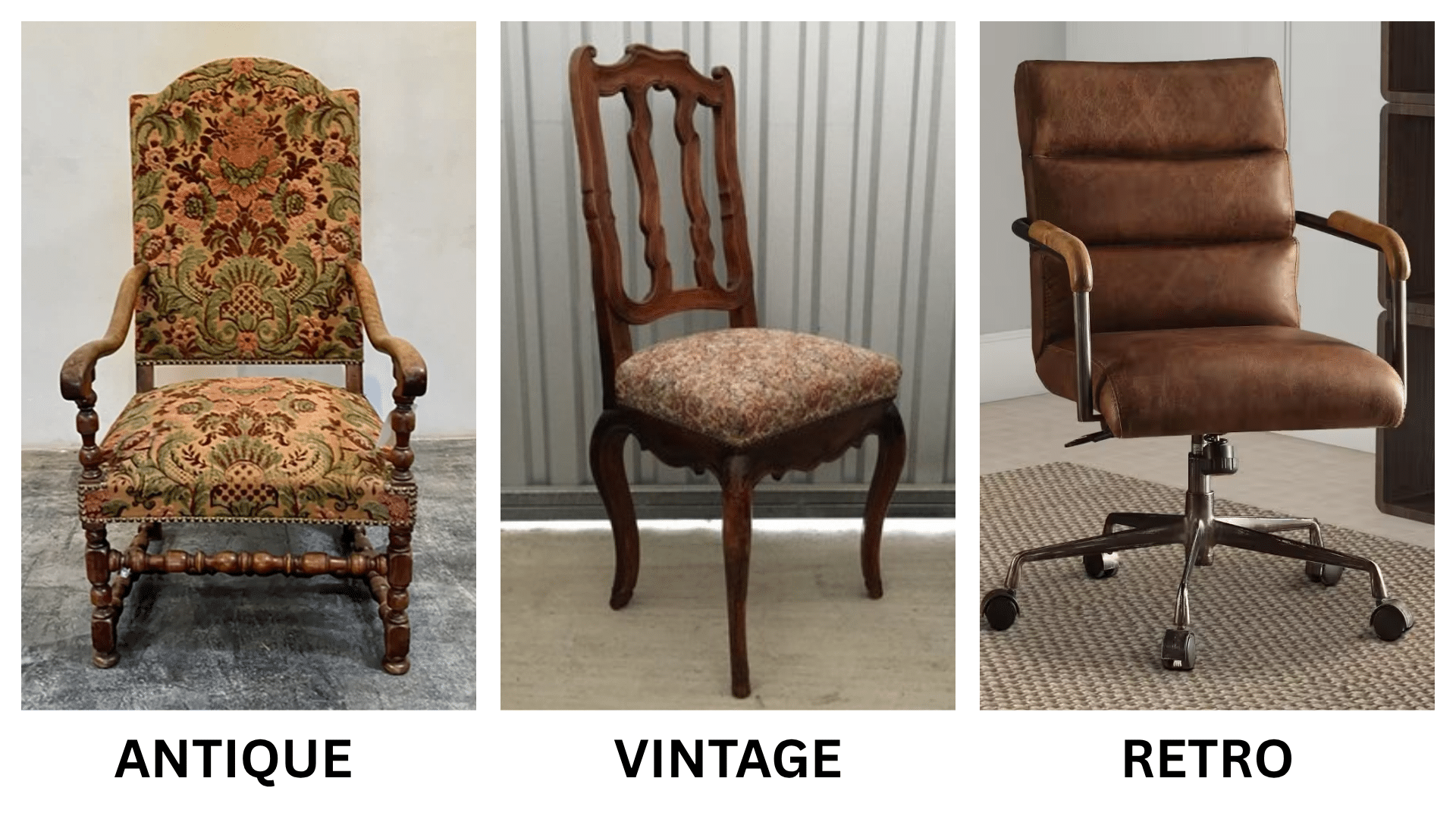
| Category | Antique | Vintage | Retro |
|---|---|---|---|
| Age | 100+ years | 20–99 years | Not old (new) |
| Meaning | Made in a much earlier time | Reflects a past decade | New item made to look old |
| Based On | Historical age | Style + era | Style only |
| Examples | 1800s furniture | 70s clothing, 90s cameras | New decor with old-style design |
| Value | High and collectible | Medium to high | Low |
| Authenticity | Always original and old | Original and old | Modern reproduction |
How Age Labels Change Across Different Categories
Age labels shift depending on the type of item. Each category uses its own timeline because trends, materials, and design changes move at different speeds.
Clothing usually becomes vintage after about 20 years. Older tags, fabrics, and fits help place pieces in the right era and confirm that they’re truly vintage.
Furniture often needs closer to 40 years to fit the vintage label. Wood types, joints, and finishes also make it easier to separate older pieces from modern reproductions.
Cars, jewelry, decor, and collectibles follow their own age rules. Industry terms, craftsmanship, materials, and style periods help determine whether an item counts as vintage.
How to Tell if Something is Truly Vintage

Many items look old at first glance, but not all of them are real vintage pieces. These quick checks help you understand an item’s true age and avoid confusing vintage with modern look-alikes:
- Check labels and maker’s marks: Old tags, stamps, or engraved marks often show designs, fonts, or country names no longer used today.
- Look at the materials: Vintage items often use older fabrics, metal zippers, real wood, or hand-made details that stand out from modern pieces.
- Study the construction: Strong stitching, dovetail joints, or solid craftsmanship often point to older production methods.
- Watch for new items made in an old style: Retro pieces copy vintage looks but use modern materials, plastic parts, or machine finishing.
- Check for natural signs of age: Real vintage shows soft wear, fading, or gentle patina that new items usually do not have.
With a quick check, you can avoid confusion and choose pieces that carry real history and character.
Why These Age Labels Matter for Buyers and Collectors
Age labels help buyers understand what they are looking at and what makes an item special. They also provide a clear idea of why some pieces cost more than others.
Knowing whether something is antique, vintage, or retro helps avoid mistakes during resale. It also builds trust because people feel confident when labels match the item’s true age.
Mislabeling can cause confusion, especially online, where photos can be misleading. Clear age labels protect buyers and sellers and make it easier to compare items fairly.
Common Myths About Vintage
Many people mix up what vintage really means, and that leads to a lot of confusion. This table breaks down the most common myths so you can understand the term more clearly.
| Myth | Reality |
|---|---|
| Vintage must be rare | Many vintage items were everyday pieces in their time, so rarity is not required. |
| Vintage and antique are the same | Antique items are 100+ years old; vintage items come from more recent decades. |
| Retro and vintage mean the same | Retro pieces are new but made to look old; vintage pieces are truly from an earlier era. |
| Vintage must be expensive | Price does not decide age; even low-cost older items can be vintage. |
| Vintage must be from a known brand | Brand names don’t determine age; many unbranded older items count as vintage. |
Wrapping Up
Understanding how old vintage is gives you a clearer way to look at older pieces and recognize what makes them meaningful.
When you know the true age range and the differences between antique, vintage, and retro, it becomes easier to judge quality, spot original details, and sort genuine finds from newer look-alikes.
These small distinctions also help you shop with confidence and avoid mistakes that often happen when labels are unclear.
If you’re building a collection or updating your space, take a moment to study tags, materials, and wear patterns before choosing a piece. You’ll make stronger choices and enjoy items that truly fit your style.