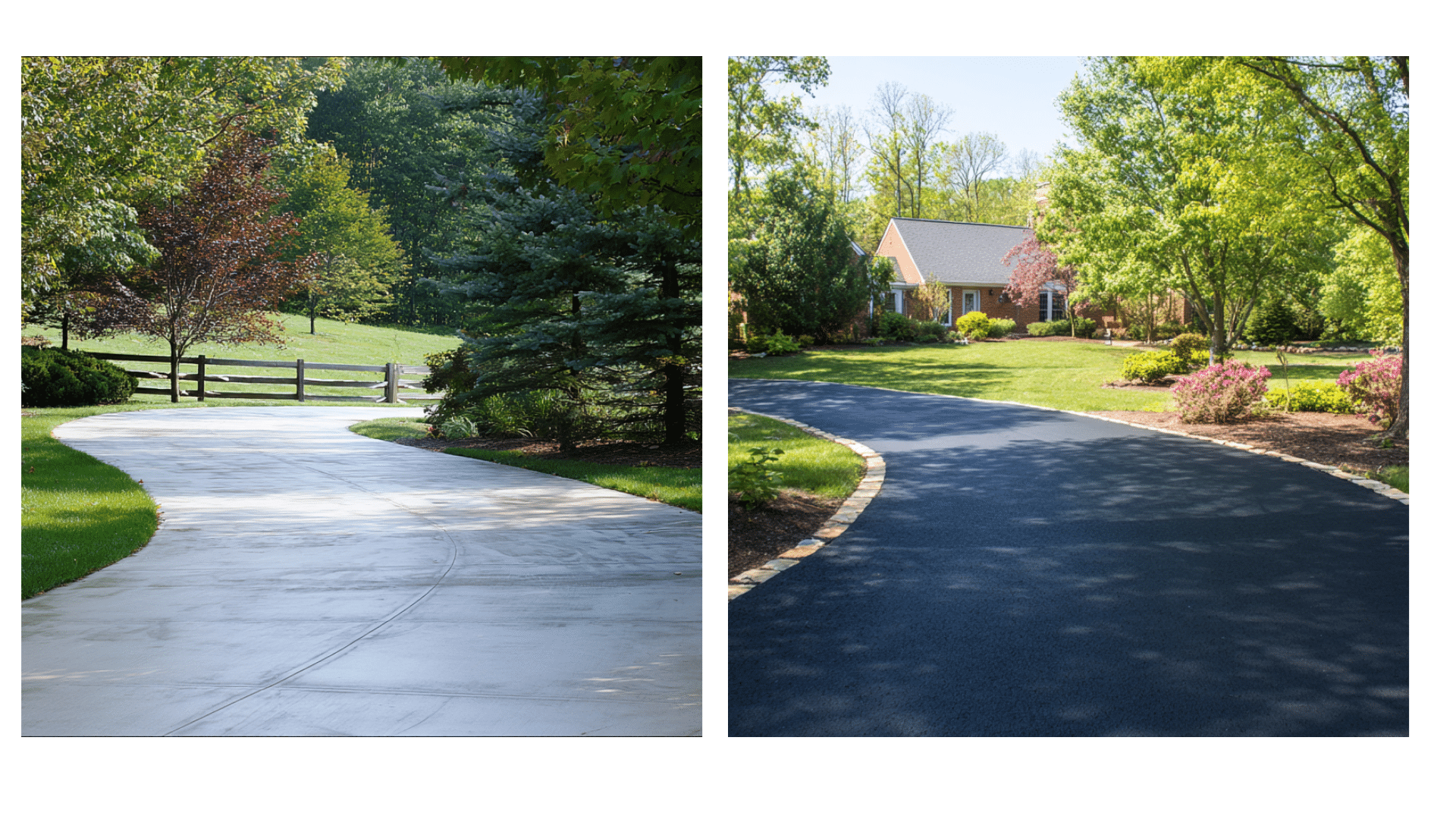



Have you ever wondered whether a concrete or asphalt driveway is the better choice for your home? I’ve seen many homeowners feel unsure because both materials look similar, but work very differently.
These differences matter because weather, cost, and long-term durability can change how well each driveway holds up. What performs well in one climate or budget might not be the best fit for someone else.
This article will walk you through how concrete and asphalt compare in cost, strength, maintenance, and climate performance.
Let’s get you a clearer sense of which driveway fits your home, your preferences, and your day-to-day routine.
Concrete vs. Asphalt Driveway: Quick Look
| Feature | Concrete | Asphalt |
|---|---|---|
| Cost | Higher upfront cost | Lower upfront cost |
| Lifespan | 30–40 years | 20–30 years |
| Installation Time | Takes longer to cure | Ready to use faster |
| Climate Performance | Best in warm or hot climates | Better for cold or snowy climates |
| Maintenance | Low, but repairs cost more | Needs sealing often, but repairs are cheaper |
| Appearance | More color and pattern options | Smooth, dark, simple look |
| Best Uses | Long-term value and decorative designs | Budget projects and cold-weather regions |
If you want long-lasting strength and more design choices, concrete is the better fit. If you want a lower cost and quicker installation, asphalt makes more sense.
How Concrete and Asphalt Perform
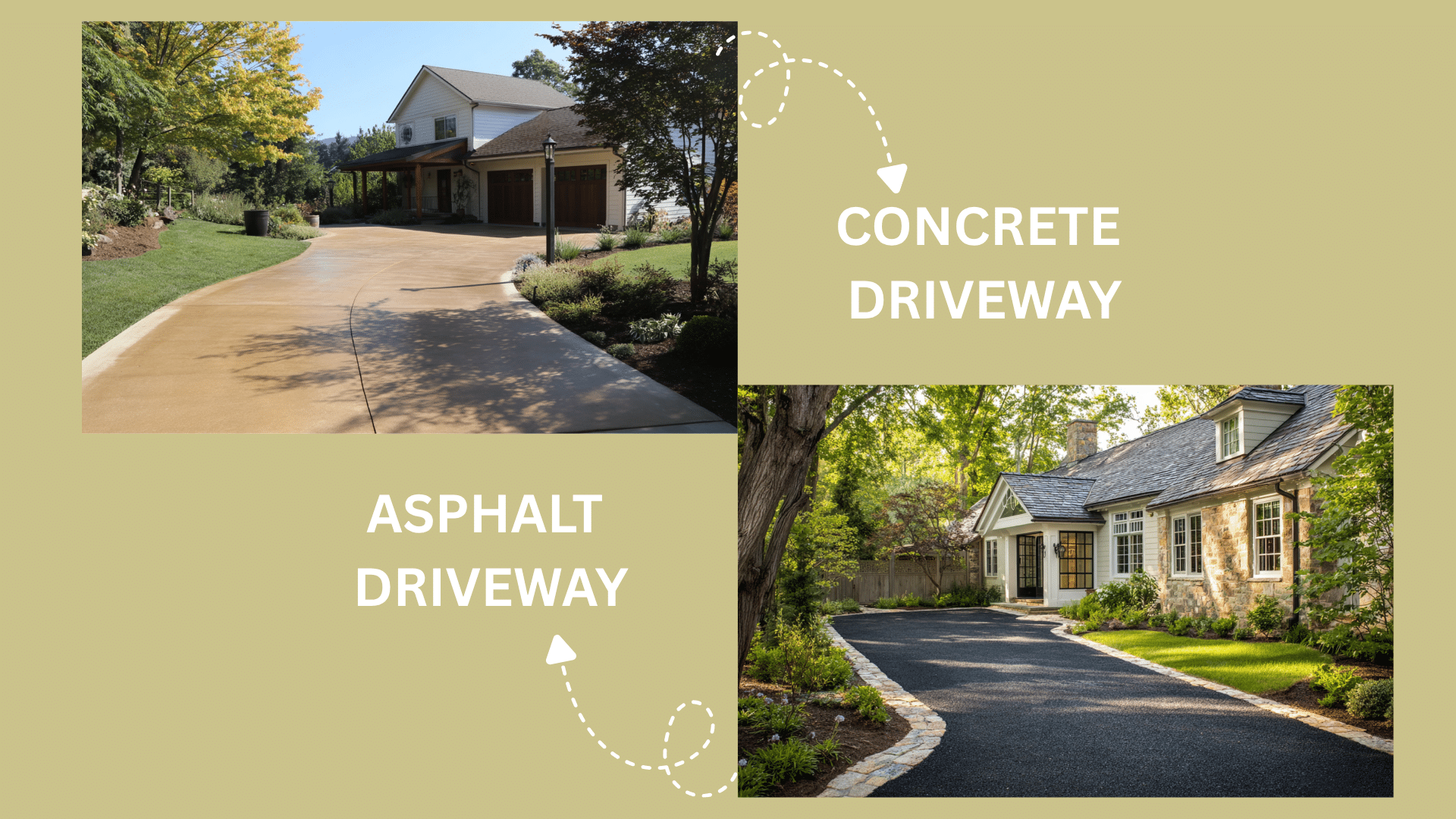
Both materials work well for driveways, but they differ in how they handle daily use, weather, and long-term wear. Here’s a closer look at how they compare in real situations:
1. Durability and Lifespan
Concrete is known for its long life and solid strength, which makes it a dependable choice. A well-built concrete driveway can last 30 to 40 years with only small repairs over time.
Asphalt is softer, so it handles movement in the ground better, especially in winter. Its flexible nature helps prevent cracks, but it usually lasts 20 to 30 years overall.
Concrete offers long-term stability, while asphalt gives you better performance in cold weather. The right choice depends on how much wear your driveway will see and how your climate behaves.
2. Climate and Weather Response
Concrete performs well in hot weather and stays firm even under steady sunlight. The downside is that it can crack in areas where winter temperatures change quickly.
Asphalt’s flexibility makes it a strong choice for cold climates with heavy snow. It warms up faster, which can help melt ice, but may soften during extreme heat waves.
Your local weather plays a big role in the best pick. Concrete handles heat better, while asphalt stands up to winter conditions with fewer issues.
3. Cost and Value
Concrete has a higher installation cost but gives you more years before major repairs. Most homeowners see it as a long-term investment that pays off through durability.
Asphalt is easier on your budget at the start, making it appealing for quick projects. But because it needs sealing and patching, it costs more to maintain over the years.
If you want to save now, asphalt is the cheaper choice. If you want fewer long-term costs, concrete often delivers better lifetime value.
4. Maintenance and Care
Concrete needs slow, steady care, like sealing cracks before they spread too far. Repairs cost more, but they don’t need to happen as often, which saves time.
Asphalt requires more routine upkeep to stay smooth and protected. It needs sealing every few years, and small holes should be patched early.
Concrete is easier to maintain over many years, while asphalt is easier to fix when problems show up. Your choice depends on how much time and effort you want to put into caring for the driveway.
5. Appearance and Style
Concrete offers many design options, including stamped patterns and added color. This makes it easy to match your driveway to the overall style of your home.
Asphalt creates a smooth, dark surface that looks clean and simple right from the start. It blends well with most homes, even without extra design details.
Concrete gives more room for creativity, while asphalt delivers a sleek, classic look. The better option depends on whether you want something decorative or something simple.
How to Tell Which Material Fits Your Needs

It helps to look at a few key points before choosing a driveway material. These simple checks guide you toward the option that fits your home better.
- Climate fit: Concrete handles heat well, while asphalt works better in colder regions.
- Project goals: Concrete is better for style and long-term stability, while asphalt is better for quick, budget-friendly projects.
- Installation timing: Concrete takes longer to cure, while asphalt can be ready much sooner.
- Care preferences: Concrete needs less frequent attention, while asphalt requires regular sealing but offers simpler repairs.
- Personal priorities: Think about how long you plan to stay, your budget, and how much upkeep you’re comfortable with.
Once you look at these points, choosing becomes easier. Pick the material that lines up with your climate, timeline, and the way you want your driveway to age.
Best Uses for Each Material
| Situation / Need | Concrete | Asphalt |
|---|---|---|
| Climate Fit | Best for warm or hot climates | Best for cold or snowy climates |
| Budget | Higher upfront cost, long-term value | Lower upfront cost, budget-friendly |
| Installation Timing | Longer curing time | Fast installation, ready sooner |
| Design Preference | Offers colors, patterns, and decorative finishes | Simple, smooth, dark finish |
| Use & Load | Great for heavy vehicles and long-term stability | Good for homes needing easy, quick repairs |
| Maintenance Style | Needs less frequent care | Needs regular sealing but easy to fix |
These points make it easier to see which one fits your home better. Choose based on your weather, your goals, and how much upkeep you prefer.
Sustainability and Environmental Impact
Concrete and asphalt affect the environment in different ways based on how they’re made and used over time. Knowing these differences helps you pick the option that aligns with your values.
Concrete takes more energy to produce because cement creates higher carbon emissions during manufacturing. Asphalt uses less energy upfront, but it needs more resurfacing as it wears down.
Asphalt is easier to recycle and is often reused in new pavement mixes, which helps reduce waste. Concrete can be recycled, too, but the process is less common and requires more work.
Concrete reflects more heat and stays cooler in direct sun, which can help reduce heat buildup. Asphalt absorbs more heat, but its strong recycling potential helps offset its shorter lifespan.
Wrapping Up
Concrete or asphalt both offer solid benefits, and the best choice depends on what matters most to you.
Concrete gives you long-term durability and more design options, while asphalt offers lower cost and better cold-weather performance.
Both materials work well for driveways, but they fit different needs, climates, and maintenance styles. Think about how long you plan to stay, how much care you want to handle, and how your local weather behaves.
Once you compare your goals, your budget, and your climate, the right option becomes much clearer.