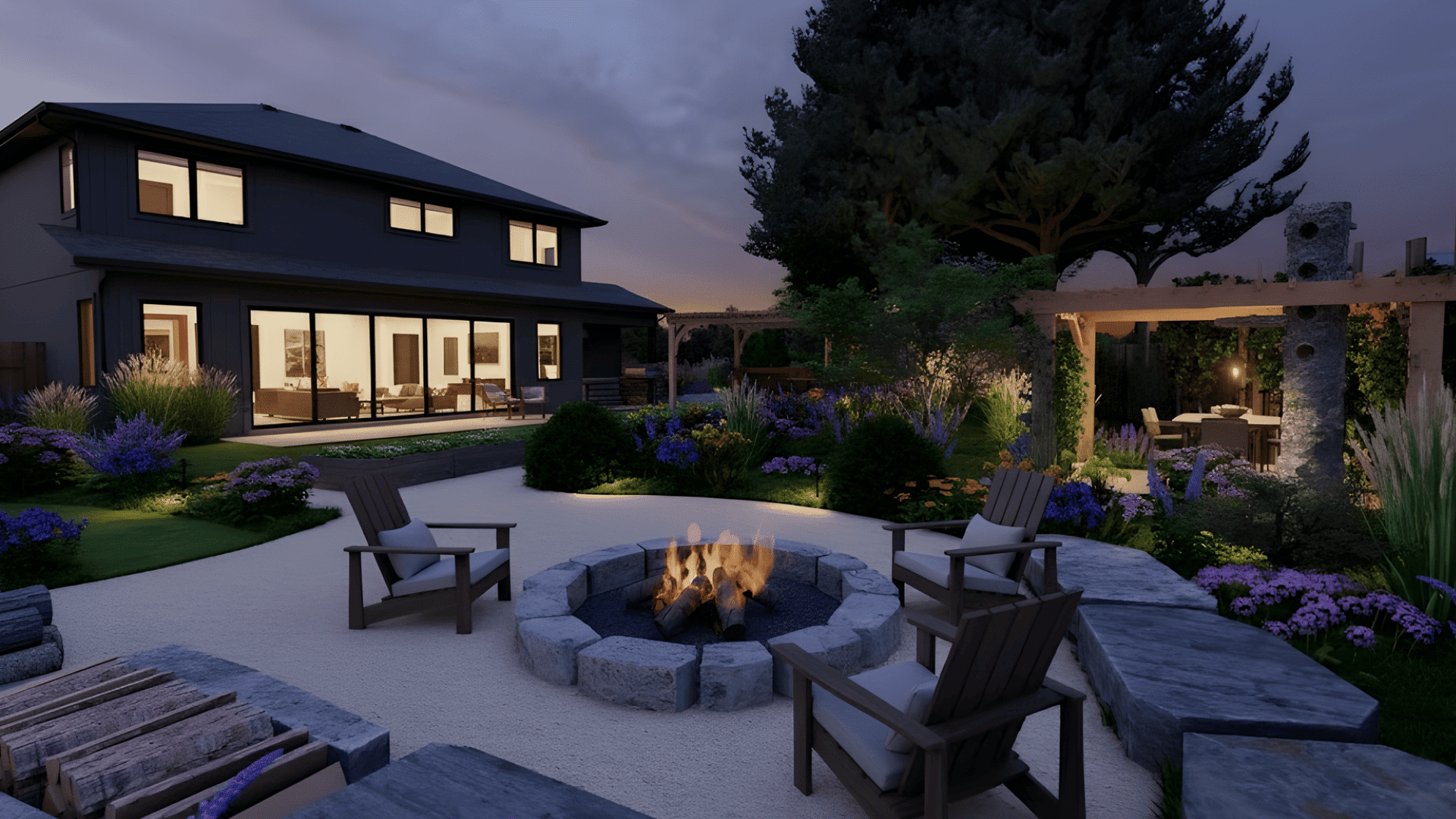
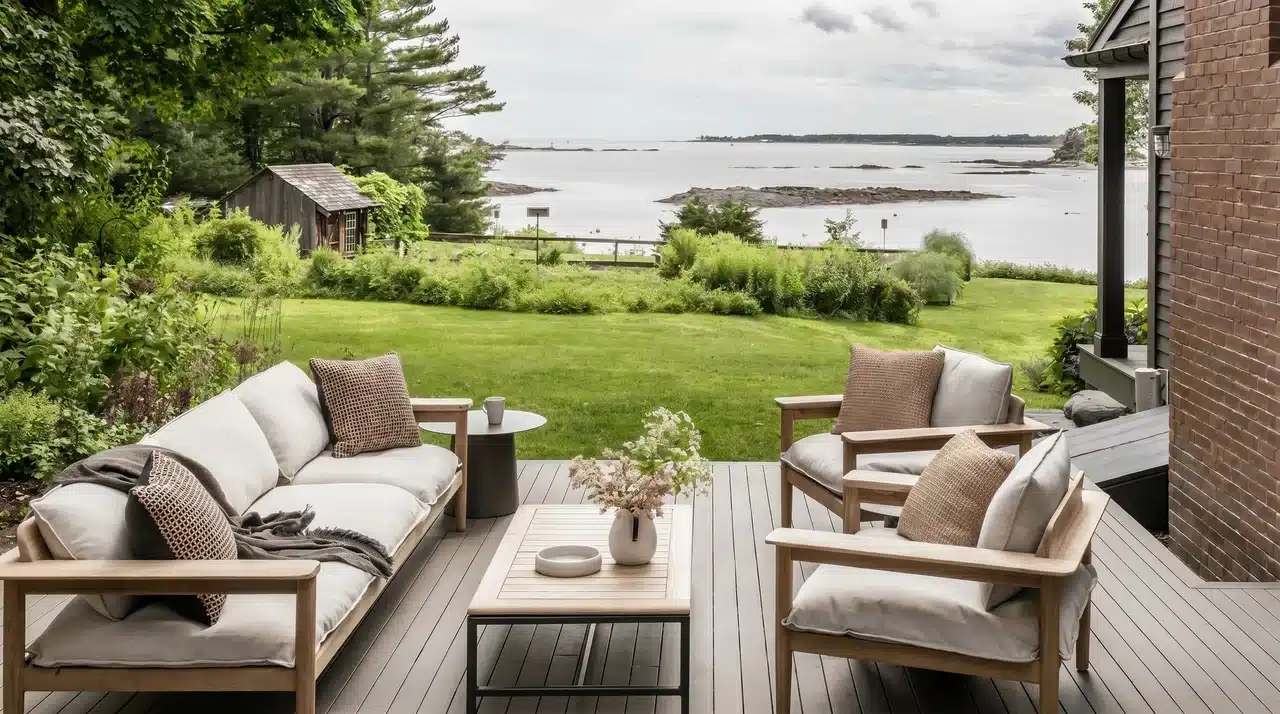



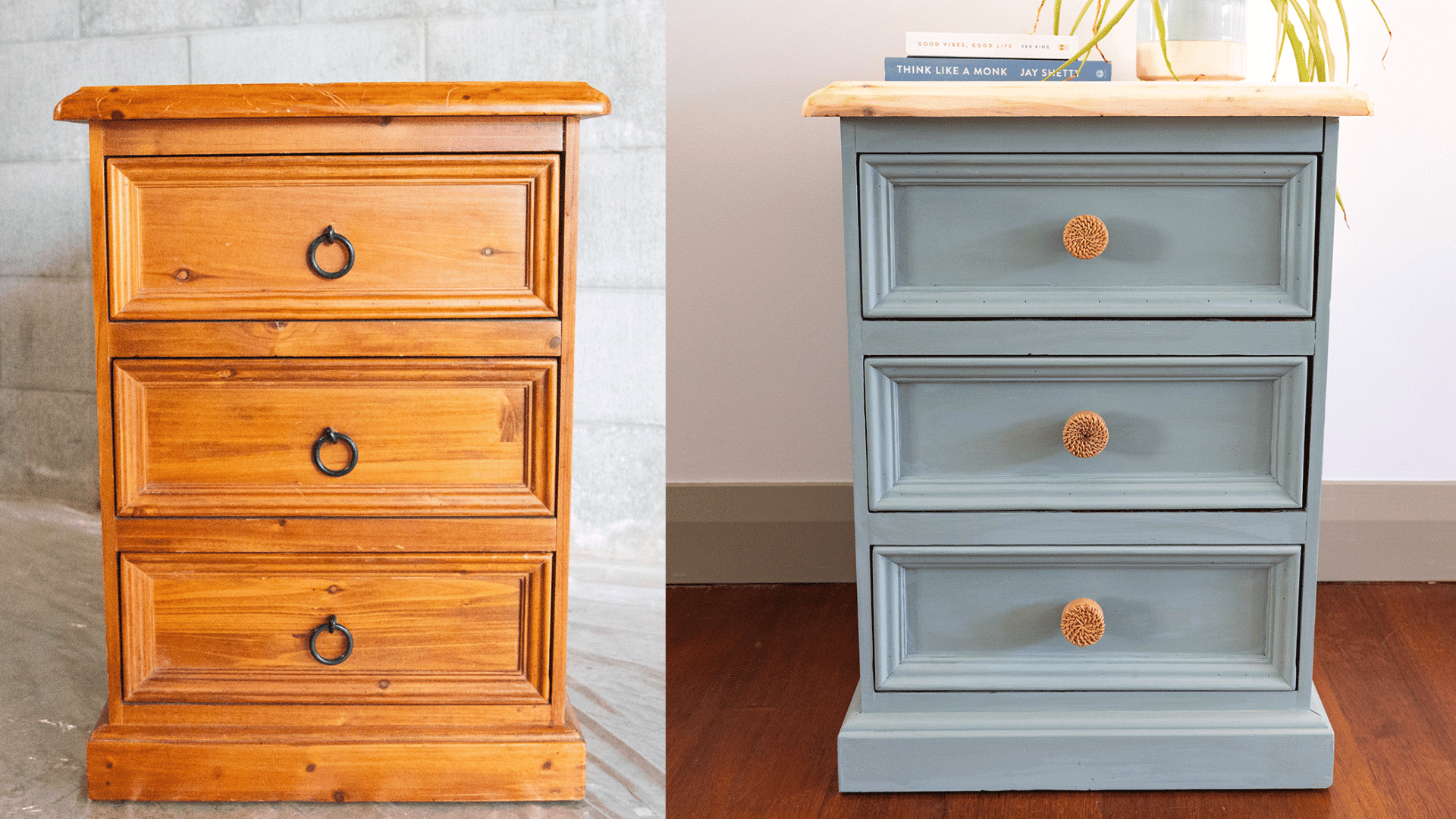
A deck can be more than a place for a few chairs and a grill. With the right mix of furniture, plants, colors, and lighting, it can feel like a natural extension of your home.
I like starting with pieces that already work, such as the best wood furniture, and building the rest of the space around them. The best deck decorating ideas are not about filling every empty spot.
They are about creating comfortable areas with a clear purpose. You might want a cozy corner for morning coffee, a dining spot for guests, or a quiet place to unwind at night.
From simple updates to creative focal points, the right choices can help your deck feel inviting, organized, and ready to enjoy.
Before You Decorate, Pick a Theme and Color Palette
Start with a simple color palette before buying furniture or décor for your deck. Look at your home’s exterior, existing furniture, and fixed features such as railings or flooring, then choose colors that work well together.
Lowe’s also recommends coordinating outdoor plant colors with the house, deck, or furniture. Choose a style that suits your home, such as coastal, earthy, modern, or minimal, and use a rug, cushion, or planter as a starting point.
Two or three related colors are usually enough to create a balanced look. Take color samples outside before buying, since natural light can change how colors appear.
A clear palette also makes it easier to choose pieces that belong together.
Deck Decorating Ideas for a Cohesive Outdoor Space
This collection of deck decorating ideas helps you create a more cohesive outdoor space with simple layout, lighting, greenery, furniture, and styling choices that work together naturally and make the space feel complete.
1. Central Fire Feature to Anchor Your Deck Layout
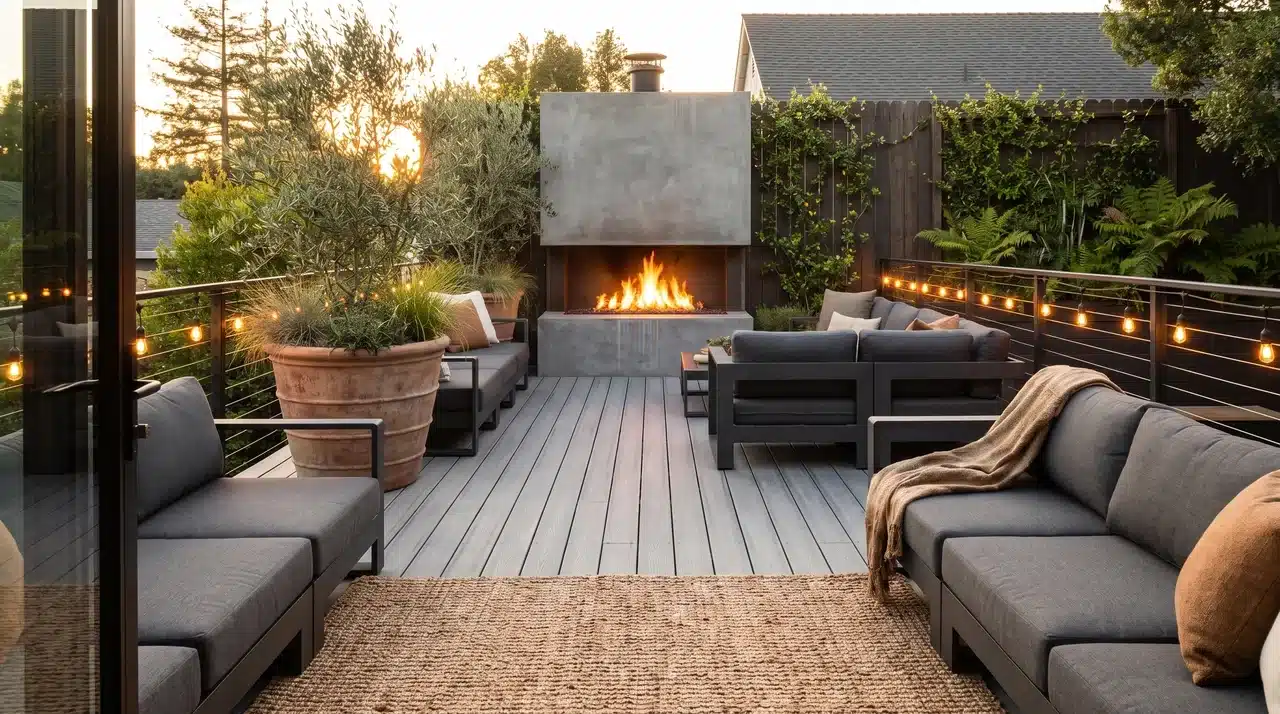
A deck without a focal point can feel directionless because there is nothing for the eye to settle on. A fire pit landscape design, statement planter, or feature wall gives the layout a clear center.
Place the focal point at the far end or center of the deck where it is visible as soon as someone steps outside. Position seating, rugs, and lighting around it so the rest of the layout naturally supports the feature.
2. Install an Inlay Deck Compass Rose
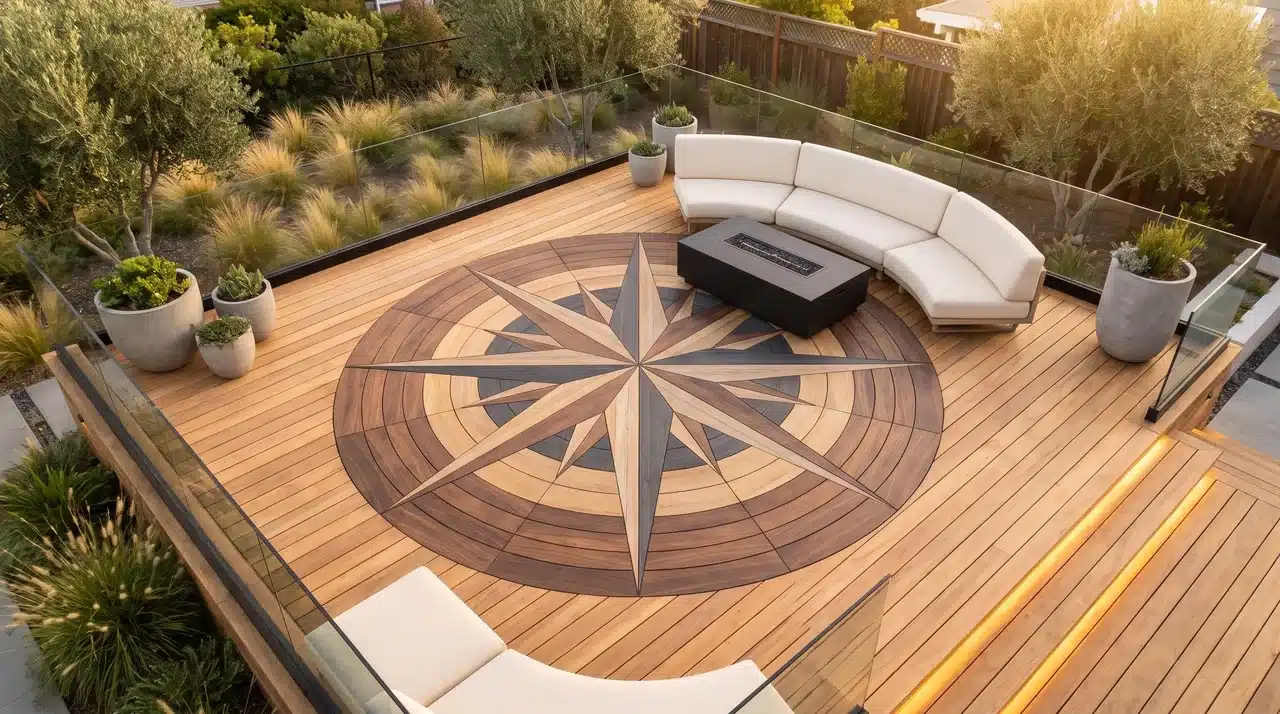
A decorative compass rose built directly into the decking can turn an ordinary floor into a custom design feature. Contrasting composite or hardwood boards give the pattern a nautical character without requiring additional furniture.
Place the inlay in the center of the main seating area and use contrasting boards to make it stand out. A simple border around the design keeps the pattern defined.
3. Add a Vertical Garden or Living Wall
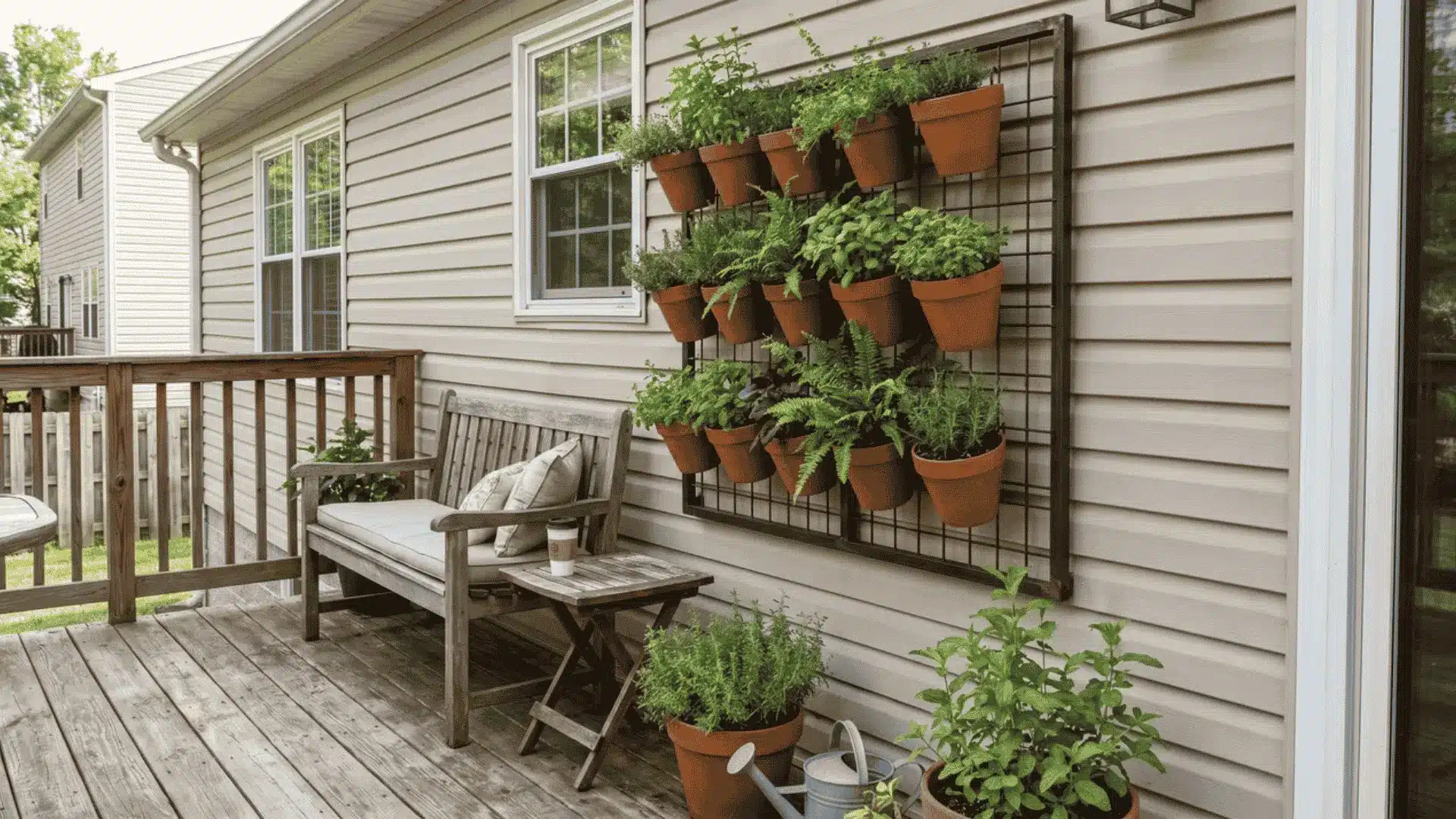
If your deck is small, going vertical is the smartest move available. A wall-mounted planter system takes up almost no floor space and adds a dramatic amount of green to an otherwise bare surface.
Start with a simple pocket planter or modular wall frame mounted at eye height. Herbs work especially well here; basil, mint, and rosemary are manageable, practical, and visually appealing. Water from the top down
4. Create a Pebble Inlay Between Deck Boards
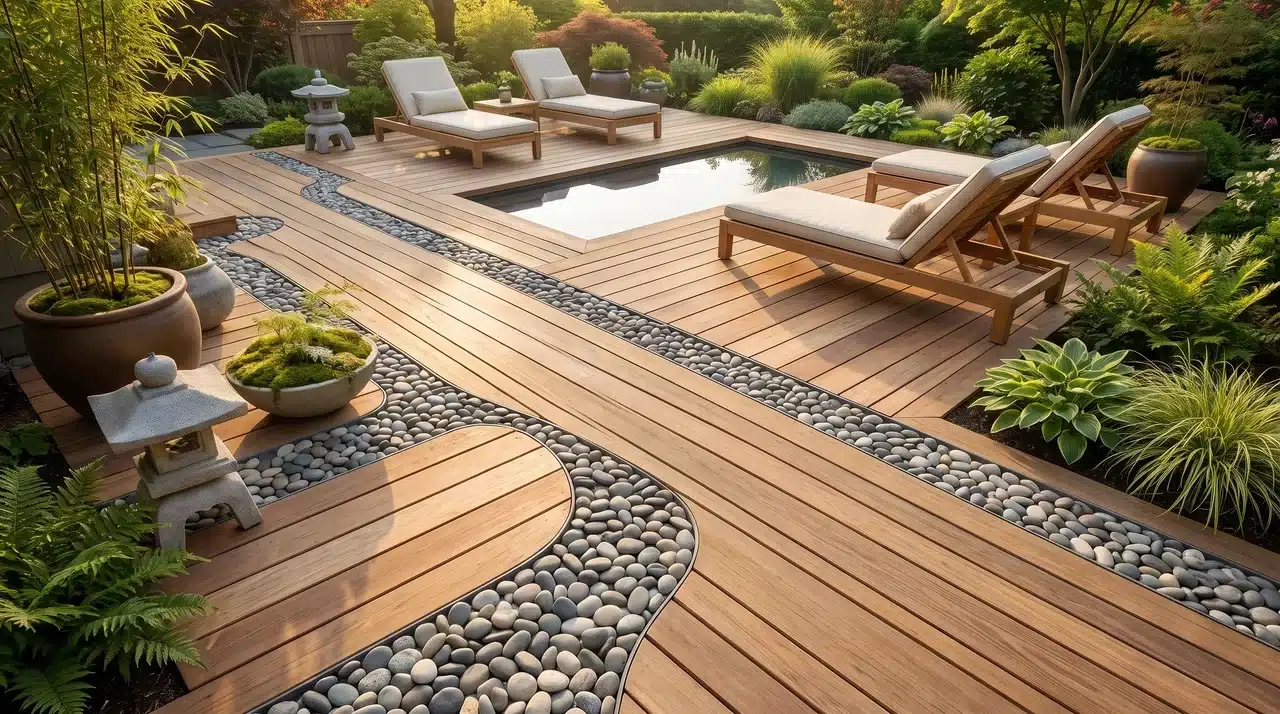
Narrow channels filled with smooth river pebbles introduce a different material without covering the timber surface. The contrast between natural stone and decking adds texture and visual rhythm.
Leave evenly spaced recessed channels between deck sections and fill them with polished pebbles in neutral shades. Keep the spacing consistent for a cleaner architectural finish.
5. Add Weather-Resistant Throw Pillows
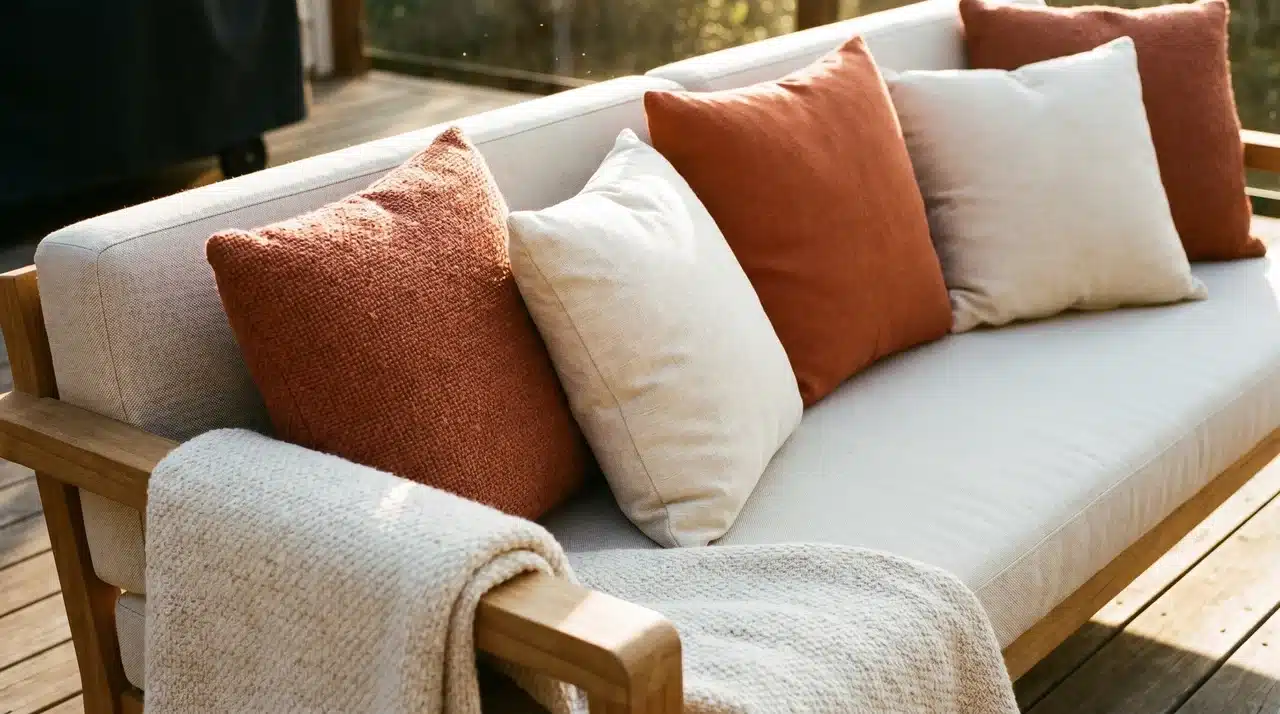
Outdoor pillows are an easy way to introduce color and softness, but fabric quality matters. Solution-dyed acrylic resists fading and performs better in sun and rain than standard fabrics.
Look for solution-dyed acrylic or Sunbrella fabric. Covers are more practical than permanently filled cushions because the inserts can be brought indoors during heavy rain.
Keep the pillows within your existing palette by using two main colors and one accent.
6. Hang Outdoor Curtains for Softness and Privacy
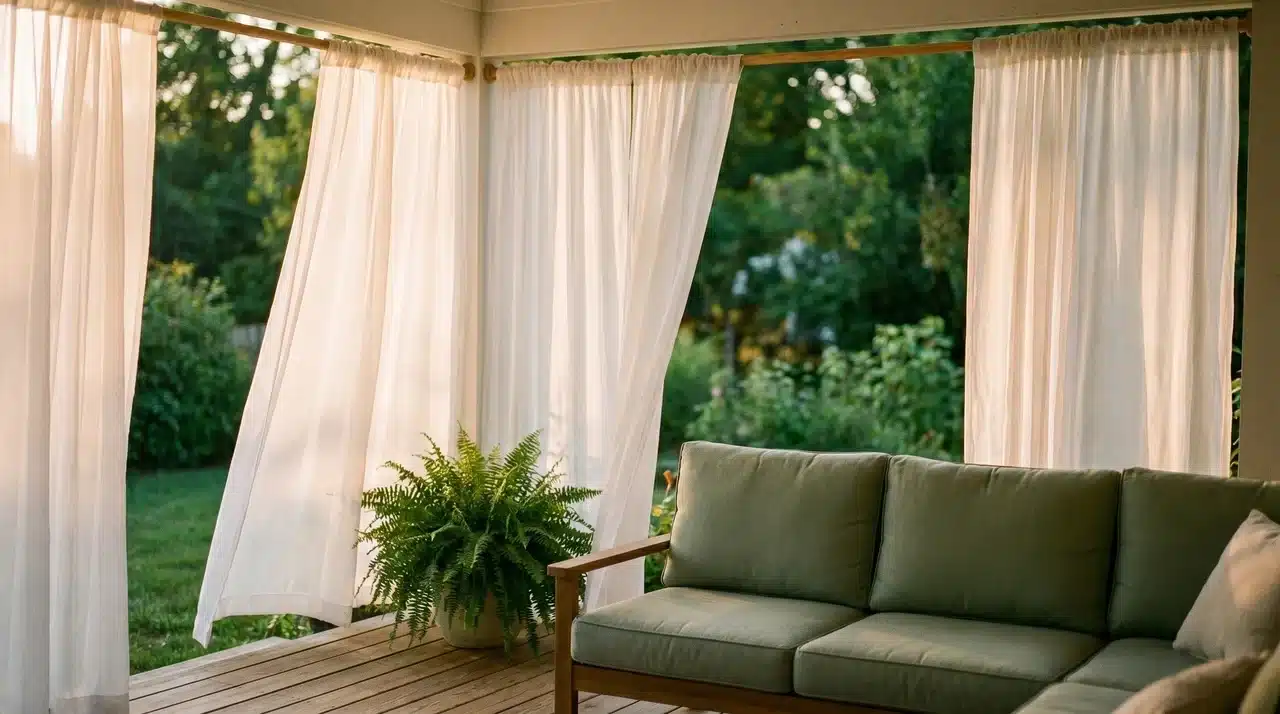
Outdoor curtains soften hard surfaces and add privacy to a deck. They can also make the area feel more connected to the interior of the home.
Mount a tension wire or curtain rod to pergola posts or an exterior wall. Choose UV-resistant fabric in a neutral shade or one that matches your palette.
Use paired panels so they can be opened during the day and closed in the evening.
7. Add Decorative Metal Medallions Between Board Intersections
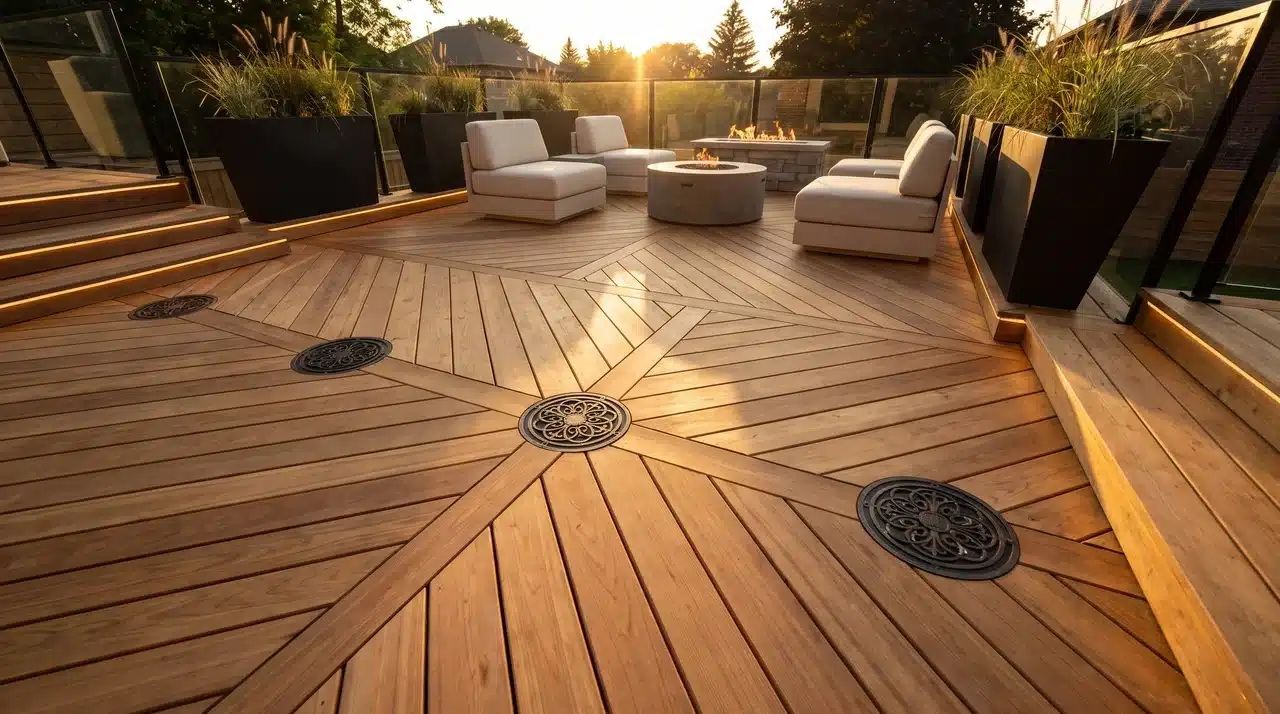
Custom decorative metal medallions placed where deck patterns intersect create subtle handcrafted detailing. This unexpected feature gives the deck a bespoke appearance without changing the overall layout or overwhelming the clean design.
Install weather-resistant bronze or black metal medallions only at key intersections. Repeat them consistently across the deck for a cohesive decorative rhythm.
8. Set Up a Bistro Corner for Morning Coffee
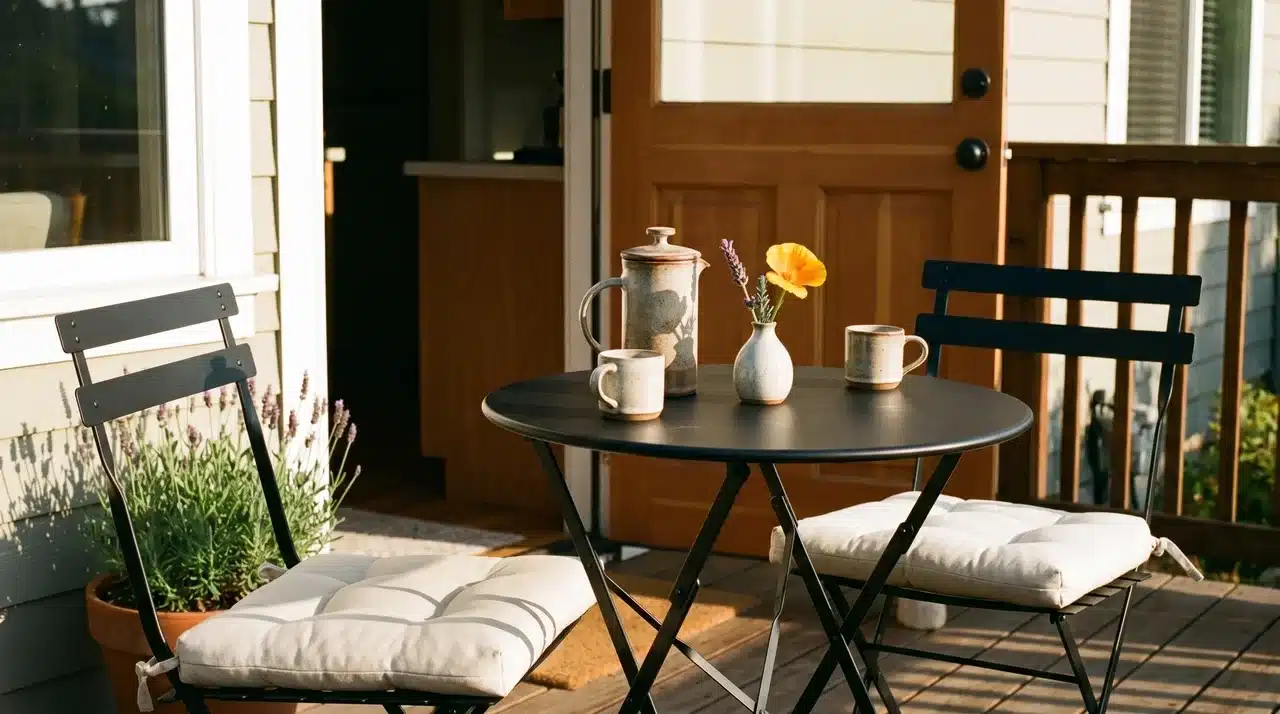
A small table and two chairs can turn an unused corner into a dedicated spot for coffee, reading, or an evening drink.
A 24-inch round table provides enough room for two cups and a book. Position it near the back door or against a railing, then add a lantern or pendant above it for evening use.
9. Use Trailing Plants in Hanging Baskets
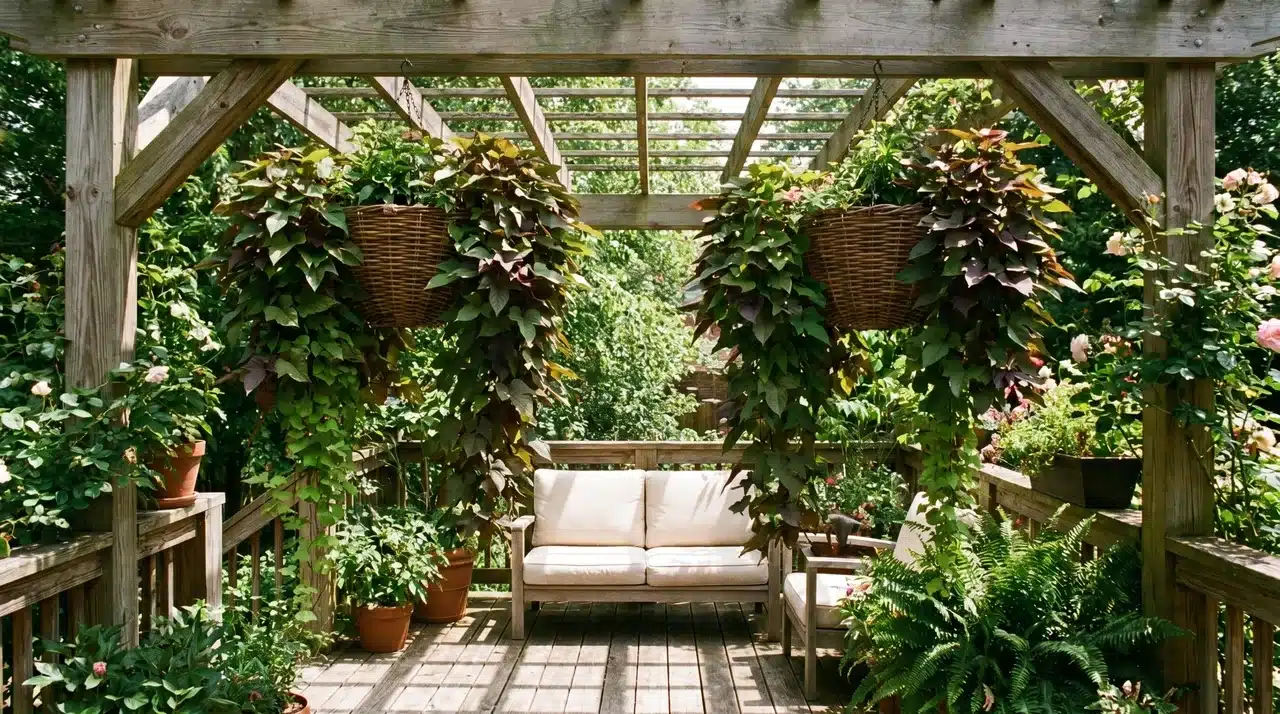
Hanging baskets add greenery above the furniture line without taking up floor space. Mount them to pergola posts, overhead beams, or wall hooks slightly above seated eye level.
Sweet potato vine, ivy, and string of pearls can create a trailing effect as they grow. Hanging containers dry faster than ground-level pots, so they may need watering every two days during warm weather.
10. Choose an Outdoor Rug to Anchor Each Zone
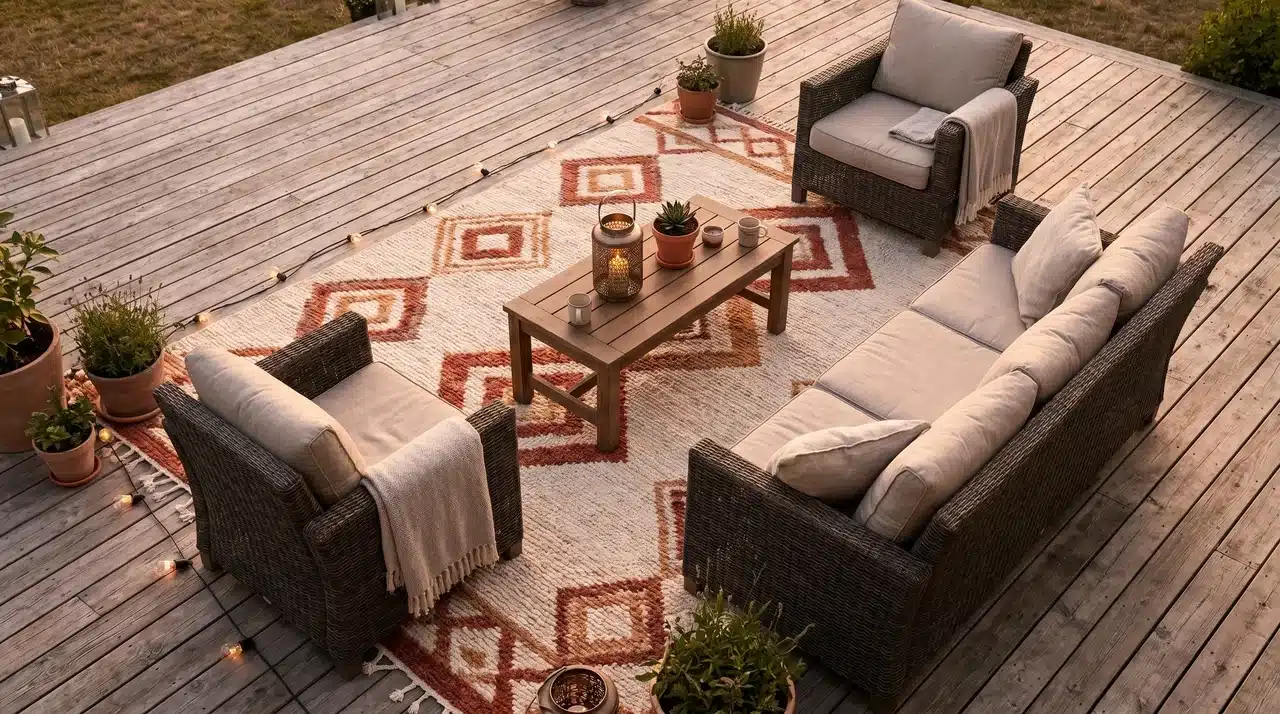
A rug does more visual work than most people expect. It tells the eye where one area begins and another ends, turning scattered furniture into a composed setting.
Choose a rug large enough for all four legs of your seating to sit on it, or at least the front two. Place it before you position furniture around it, not after.
This makes sizing decisions easier and ensures the zone reads as intentional rather than accidental.
11. Install Bamboo Privacy Screens
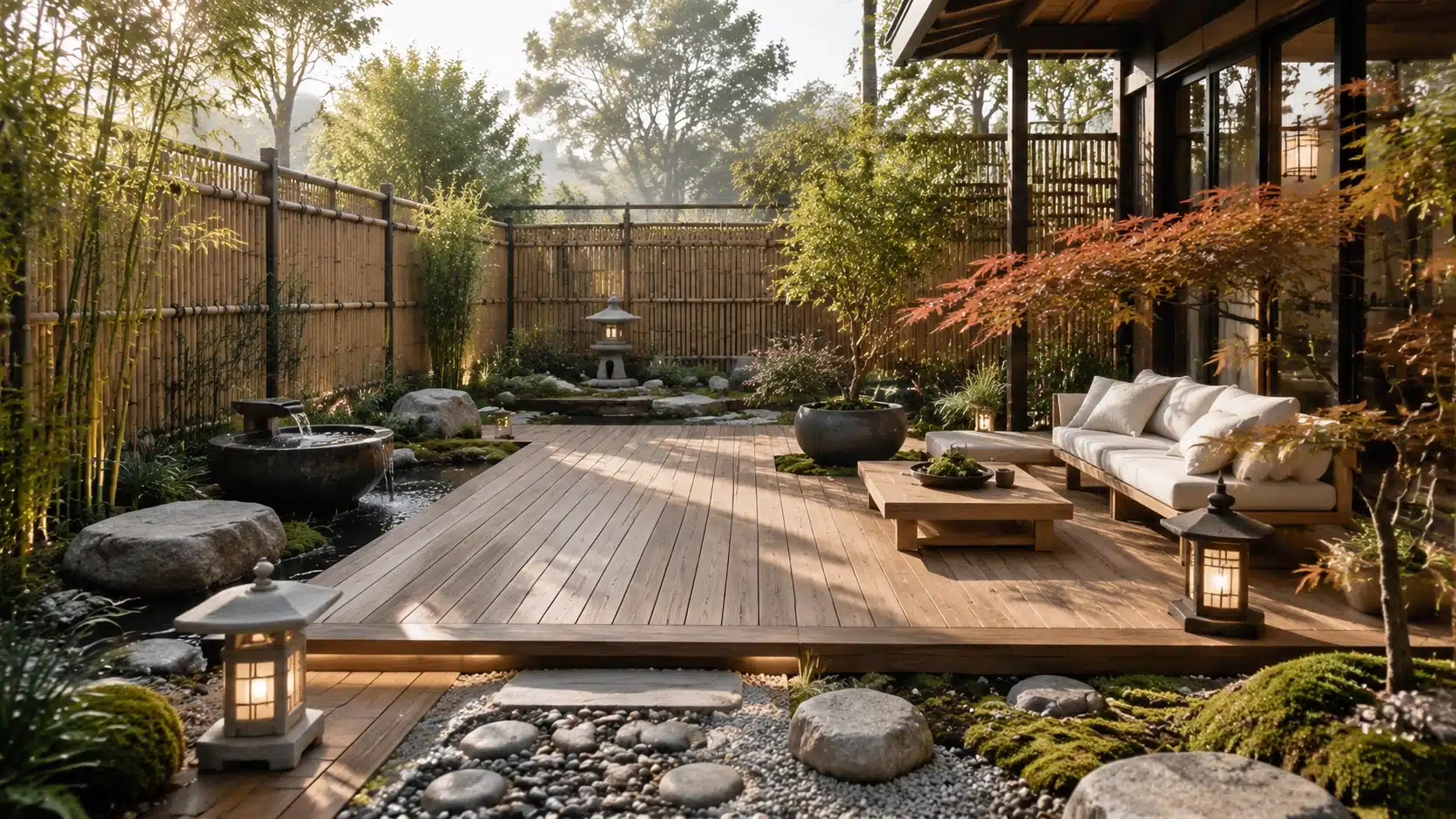
Bamboo screens can make an exposed deck feel more private without the visual weight of a solid fence. The vertical canes filter sunlight while adding warmth and texture.
Pair them with stone lanterns, Japanese maples, or low greenery for a natural backdrop that still keeps the space open.
12. Loop String Lights Along the Railing
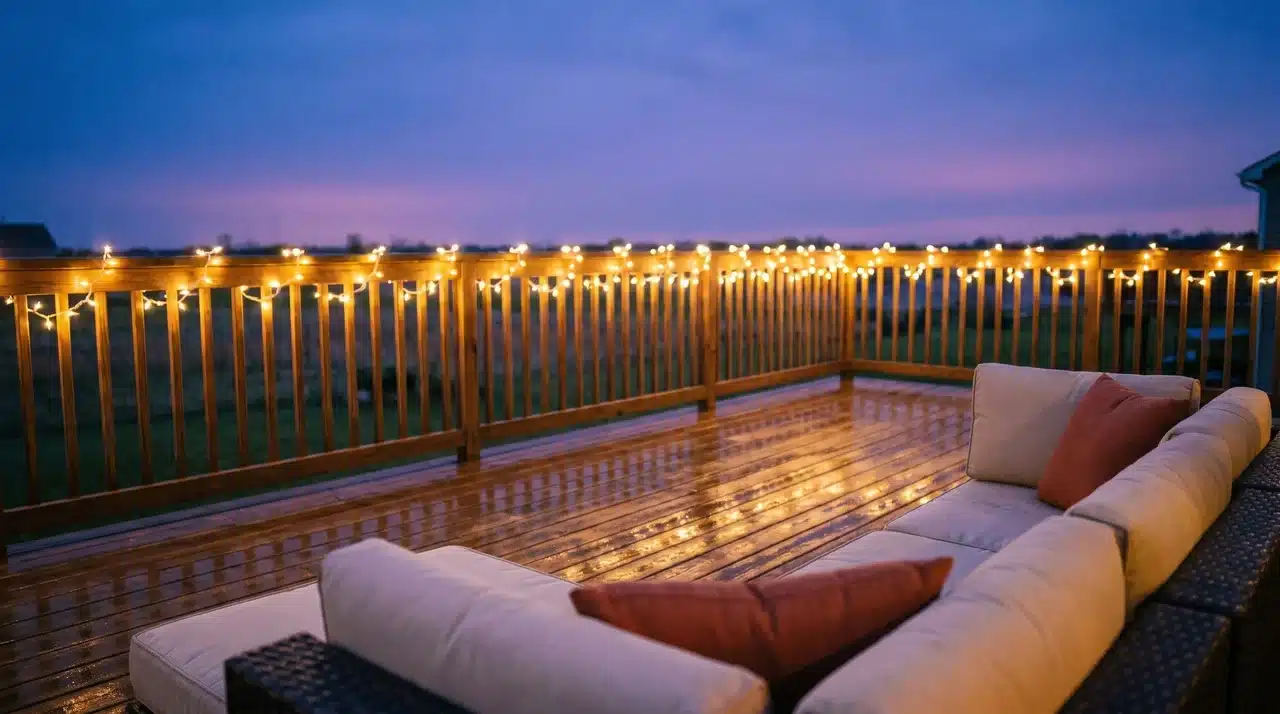
String lights can provide warm, low-level illumination without making the deck feel overly bright.
Use outdoor-rated Edison or globe bulbs and run them along the inner railing at seated eye level. Space the bulbs no more than 6 inches apart for an even glow, then connect them to an outdoor timer for automatic operation at dusk.
13. Create a Tabletop Micro-Landscape Styling Zone
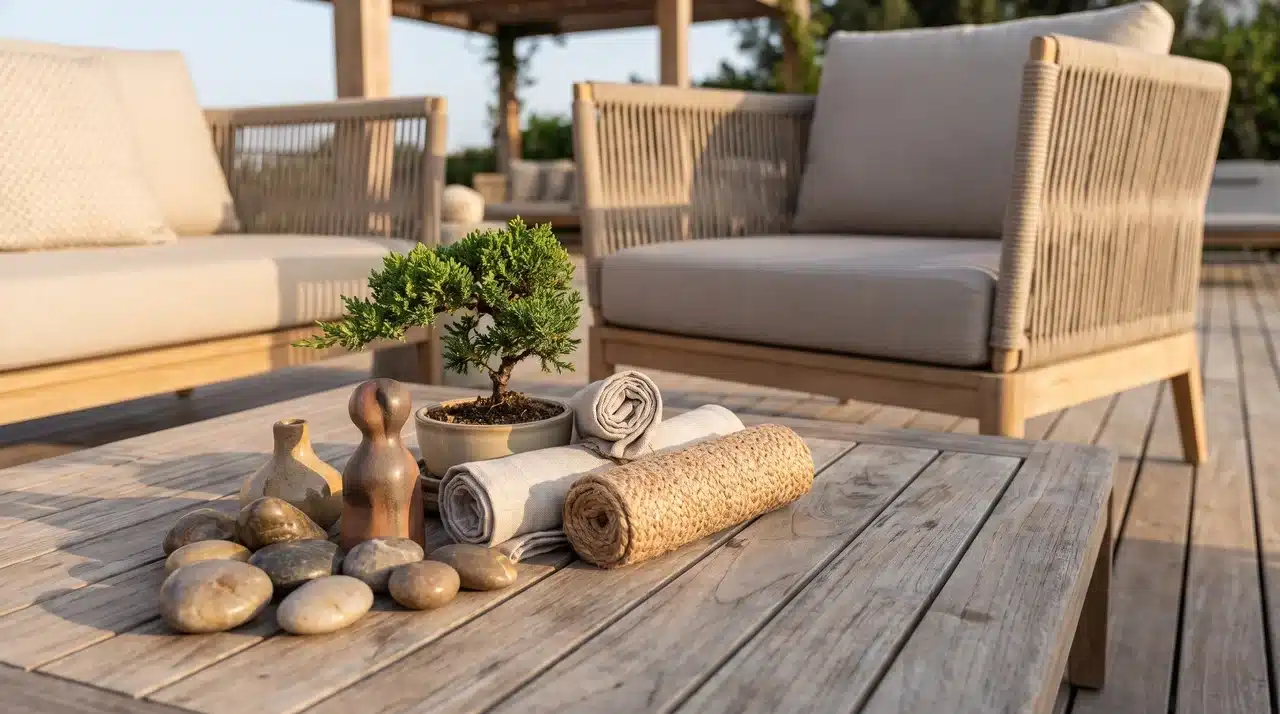
Instead of scattering small decorations across the deck, dedicate one section of a table to a miniature landscape.
Combine objects with different heights, textures, and tones. Keeping the arrangement together gives the tabletop a defined visual focus without adding clutter to the rest of the space.
14. Dual-Tone Herringbone Deck Floor Pattern
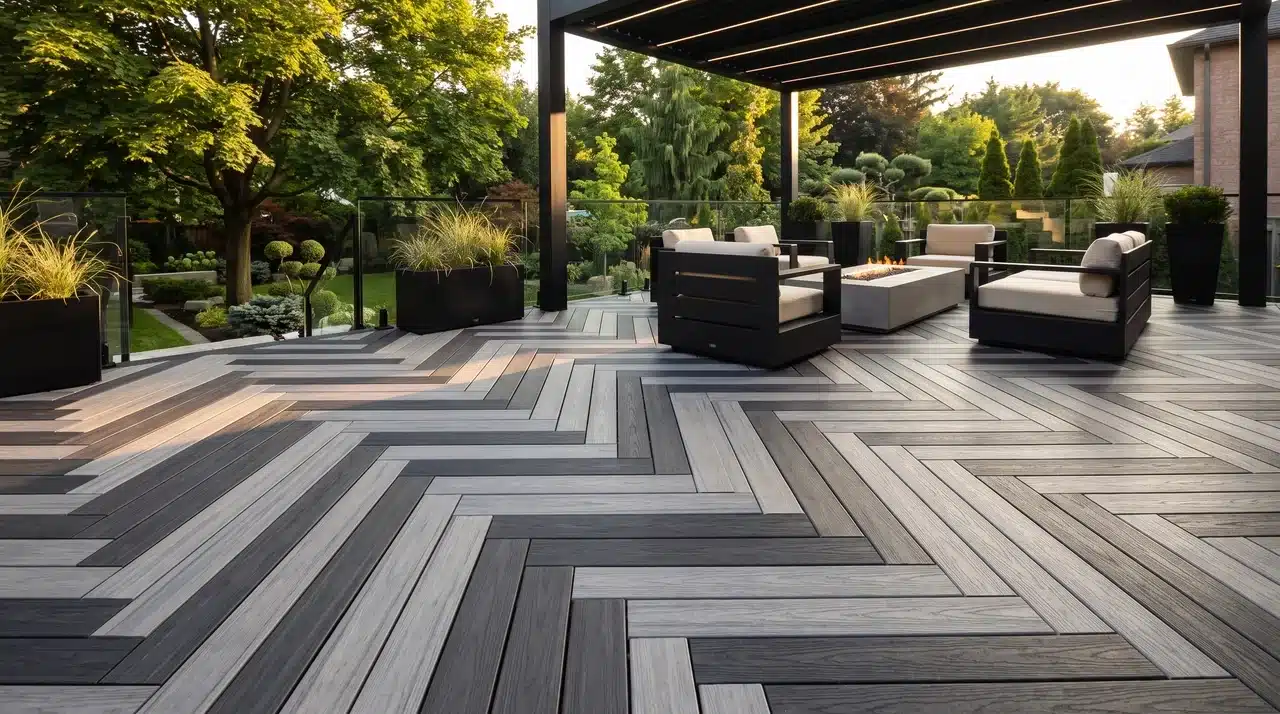
The deck floor itself can become a major design element. Charcoal and light gray composite boards arranged in a herringbone pattern add strong geometric movement.
Use equal-width boards in two complementary shades and maintain consistent 45-degree angles. Frame the pattern with a matching border board and keep the surrounding furniture simple so the flooring remains the focal point.
15. Try a Floor Lamp or Outdoor Pendant Light
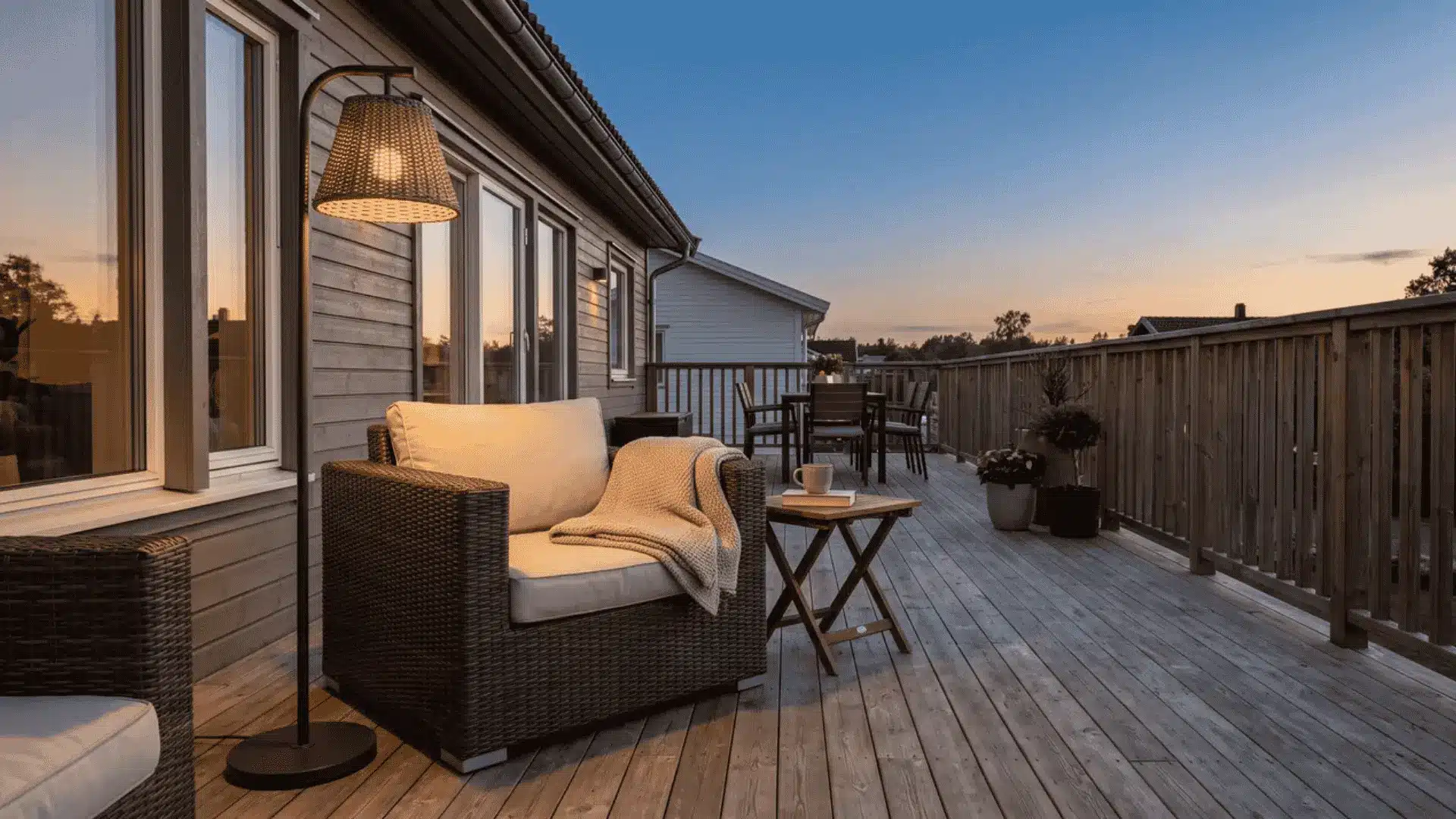
A weatherproof floor lamp beside a reading chair or a pendant suspended from a pergola can make the deck feel more like an outdoor room.
Look for floor lamps rated IP44 or higher. Outdoor pendants should have weatherproof cord protection and an outdoor-rated bulb.
Position the light near your most-used seating area so it provides both illumination and a focal point.
16. Style Edge Clustering Decor Corners
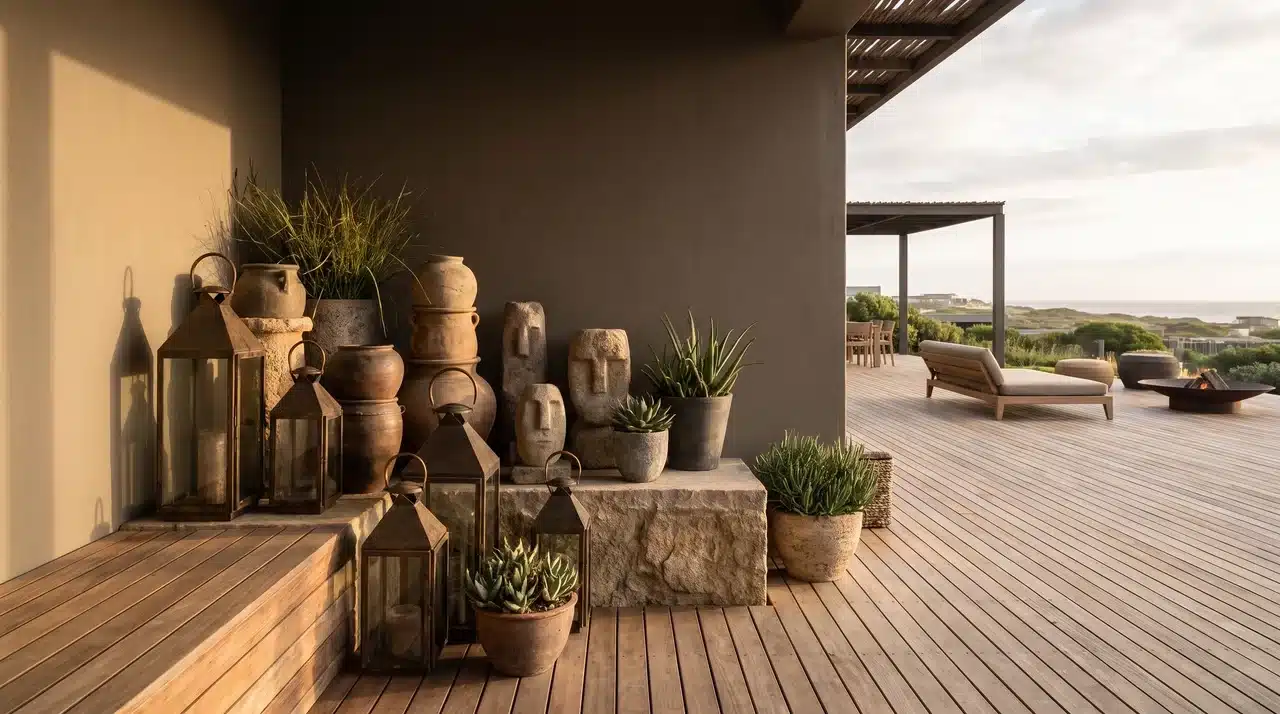
Empty deck corners often go unused, but intentional clustering transforms them into visual anchors. Instead of spreading décor evenly, concentrating it in one corner creates stronger composition and design impact.
Group decorative objects like lanterns, sculptural pieces, and textured accents tightly in one deck corner to create a focused visual pocket.
17. Add a Personalized Sign or Welcome Board
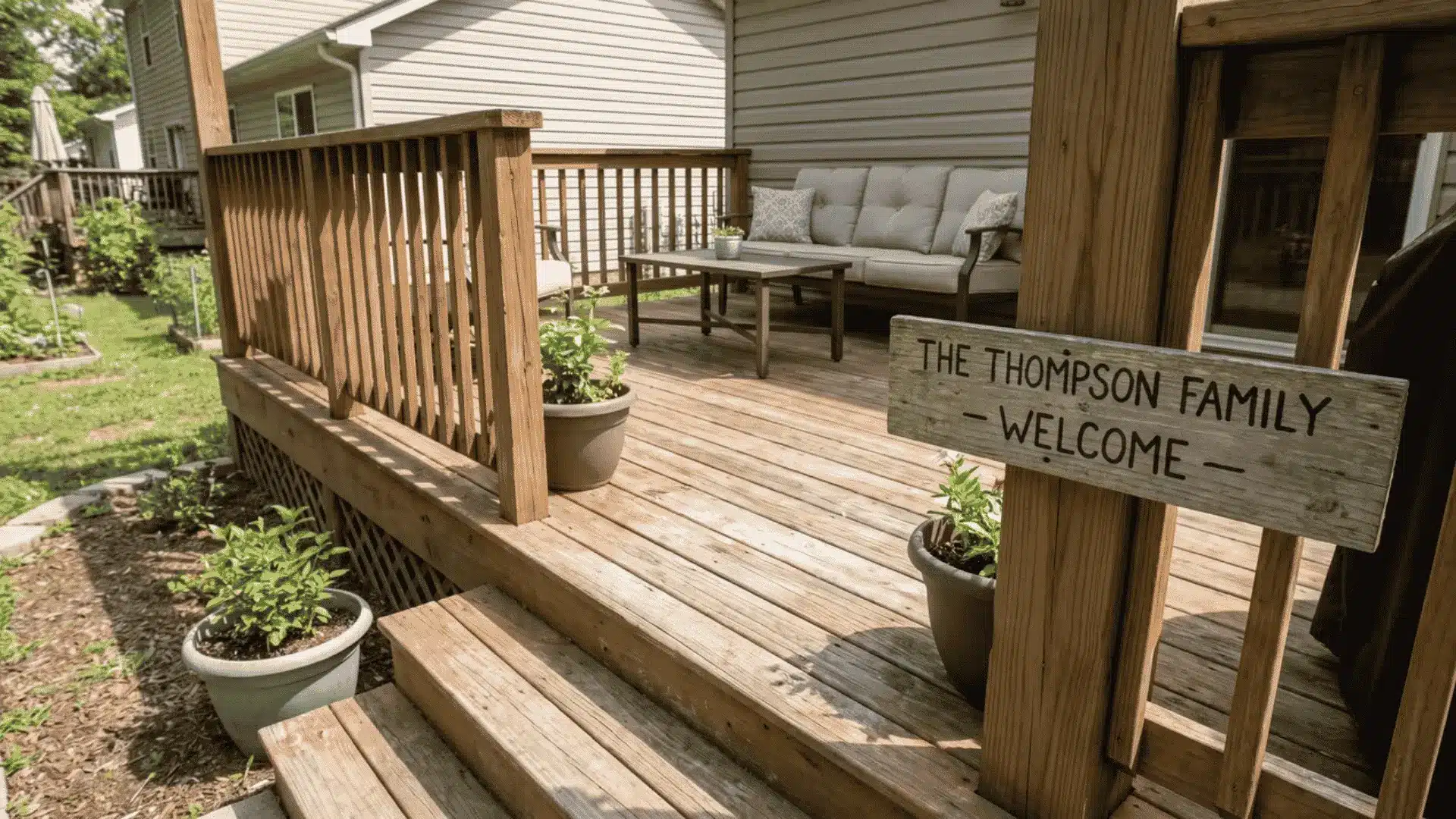
A family name or short phrase can make the deck feel personal rather than staged.
Choose weathered wood for an earthy style or powder-coated metal for a modern or coastal setup. Keep the wording short and mount the sign at eye level near the entrance.
18. Create a Four-Season Deck Style
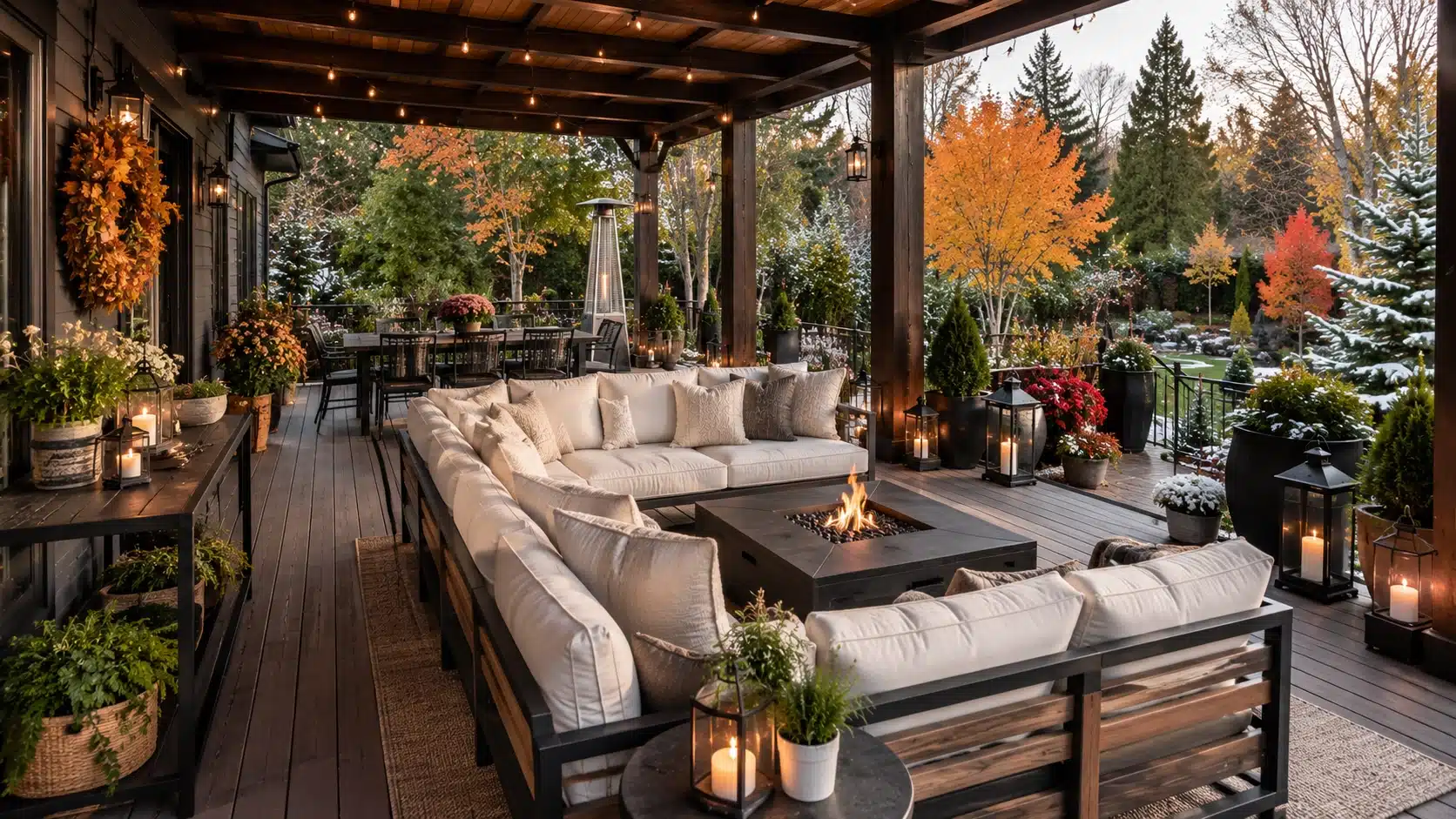
A neutral furniture base makes seasonal changes easier. Instead of replacing large pieces, rotate cushions, wreaths, lanterns, plants, and other smaller accents throughout the year.
Use durable, weather-resistant materials and a timeless base palette so seasonal updates remain connected to the overall design.
19. Hang an Outdoor Mirror to Open Up the Space
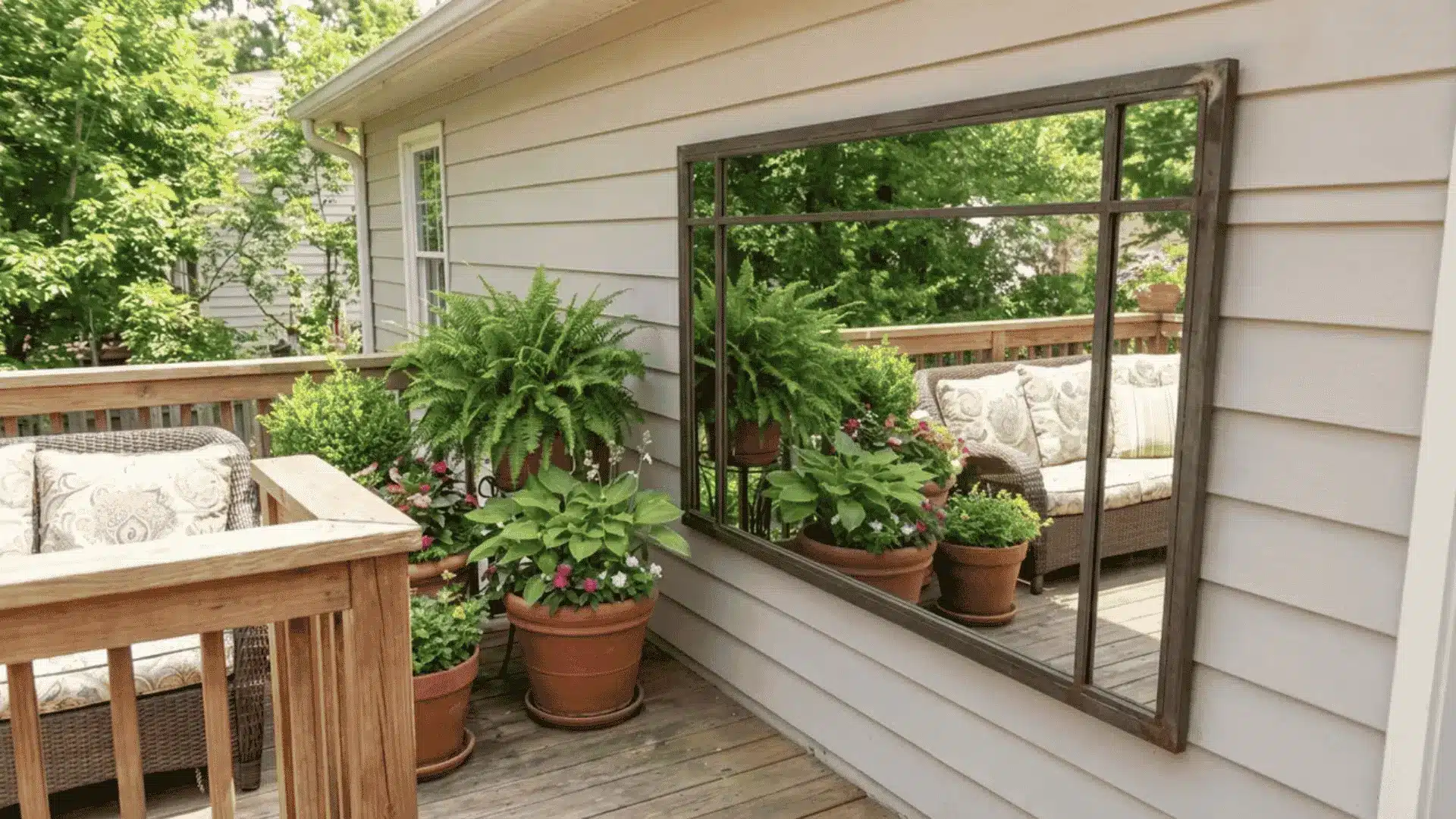
An outdoor mirror can make a small deck appear deeper while reflecting natural light and surrounding greenery. Choose a metal-framed mirror rated for outdoor use and avoid wood-backed designs that can warp with moisture.
Mount it on a solid wall or fence behind planters so the reflection includes greenery. Hang it around standing eye height and angle it slightly downward toward the deck.
20. Set up A Dedicated Outdoor Bar Cart
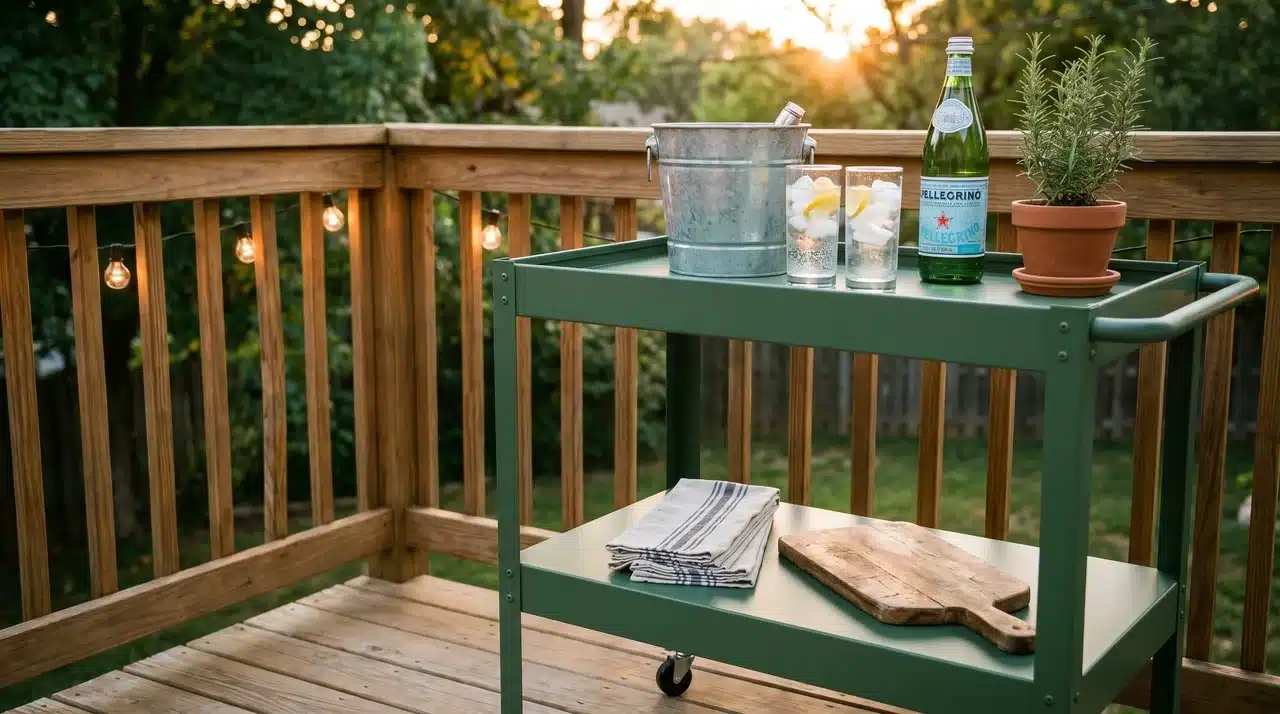
A bar cart keeps drinks and glassware together while giving an entertaining area a clear focal point.
A metal utility cart can work as well as a purpose-built outdoor model. Add an ice bucket, glassware, and a few bottles, then place it near the seating area without blocking the main walkway.
21. Navy & White Nautical Color Blocking
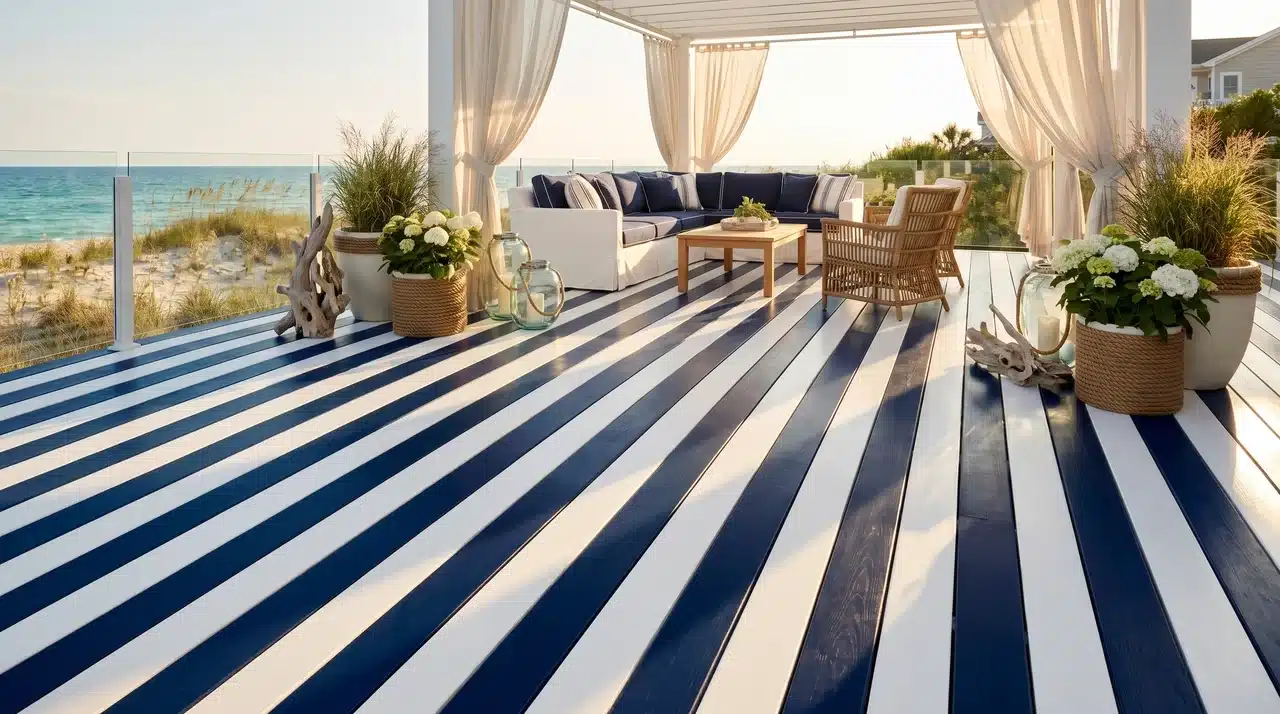
Alternating navy and crisp white deck boards can create a bold striped floor for a coastal space. Rope-wrapped planters and driftwood accents reinforce the theme without requiring excessive decoration.
Use marine-grade deck paint, carefully tape the board edges, and apply two coats of each color. Finish with a UV-protective sealant.
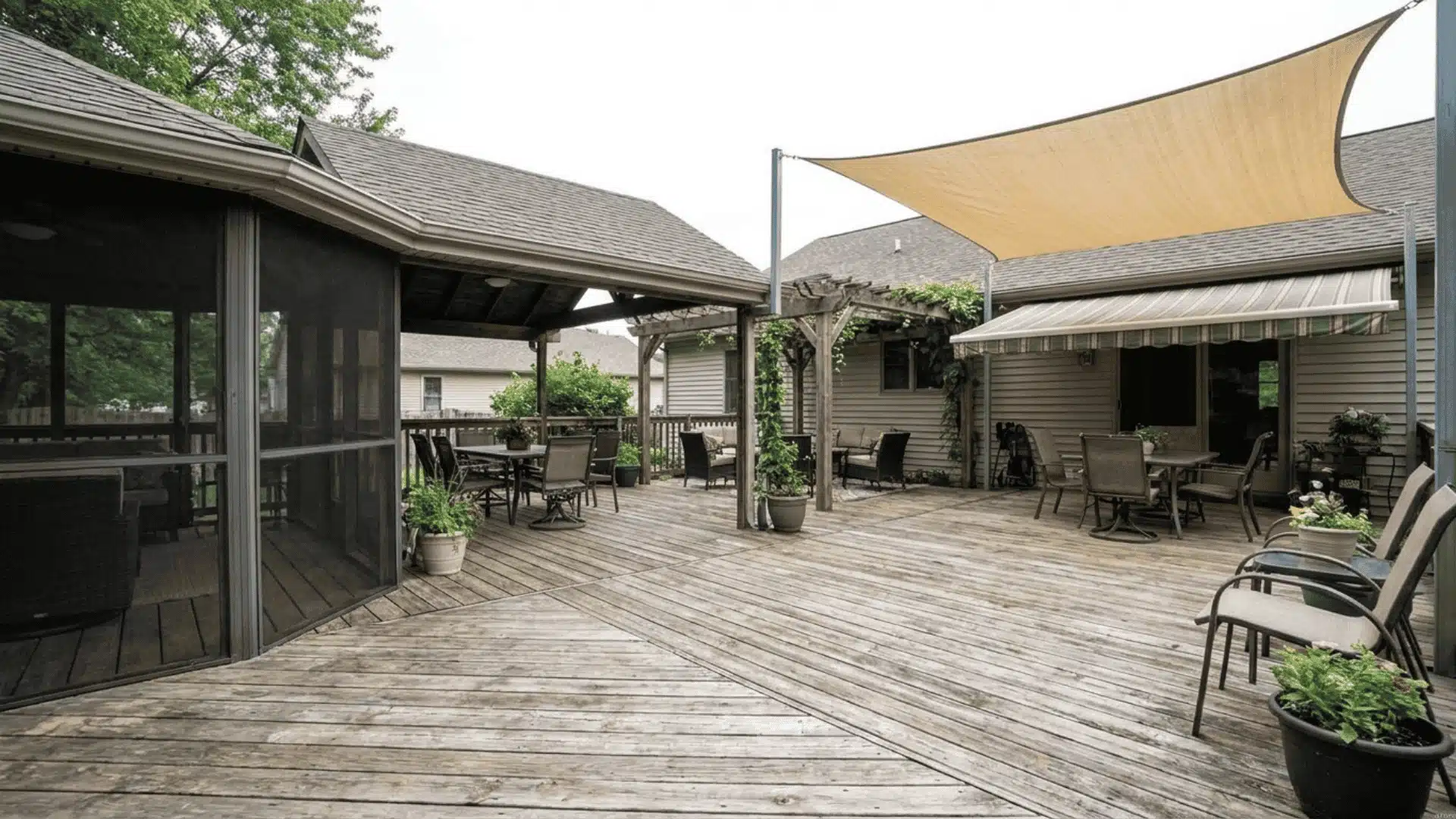
22. Add a Shade Sail or Retractable Awning
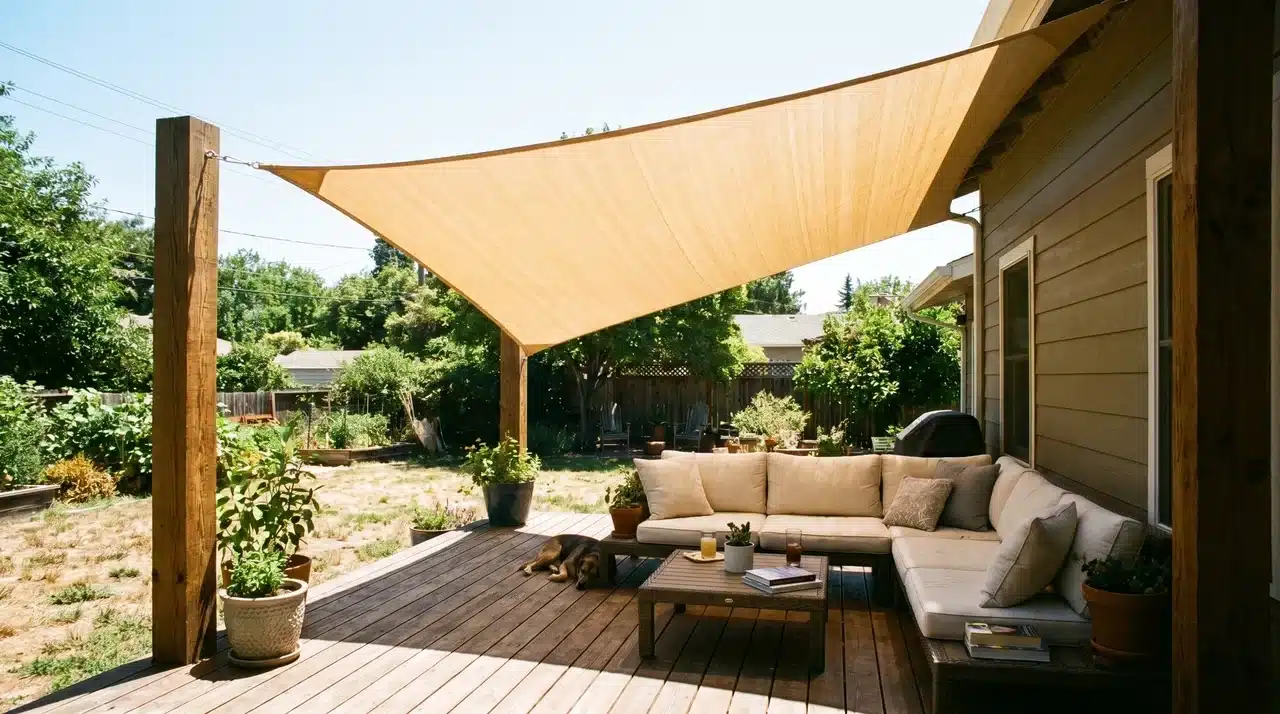
Shade affects how often a deck can actually be used during warmer parts of the day. A well-positioned shade sail can make the main seating area more comfortable without changing the layout.
Attach a triangle or square sail to three or four anchor points using tensioned cables and stainless hardware.
Aim for 70-90% UV protection and position it over the main seating area between approximately 11 a.m. and 3 p.m. A 10-by-13-foot sail can cover a standard seating arrangement.
23. Create a Light-Shadow Pattern with Lattice Casting
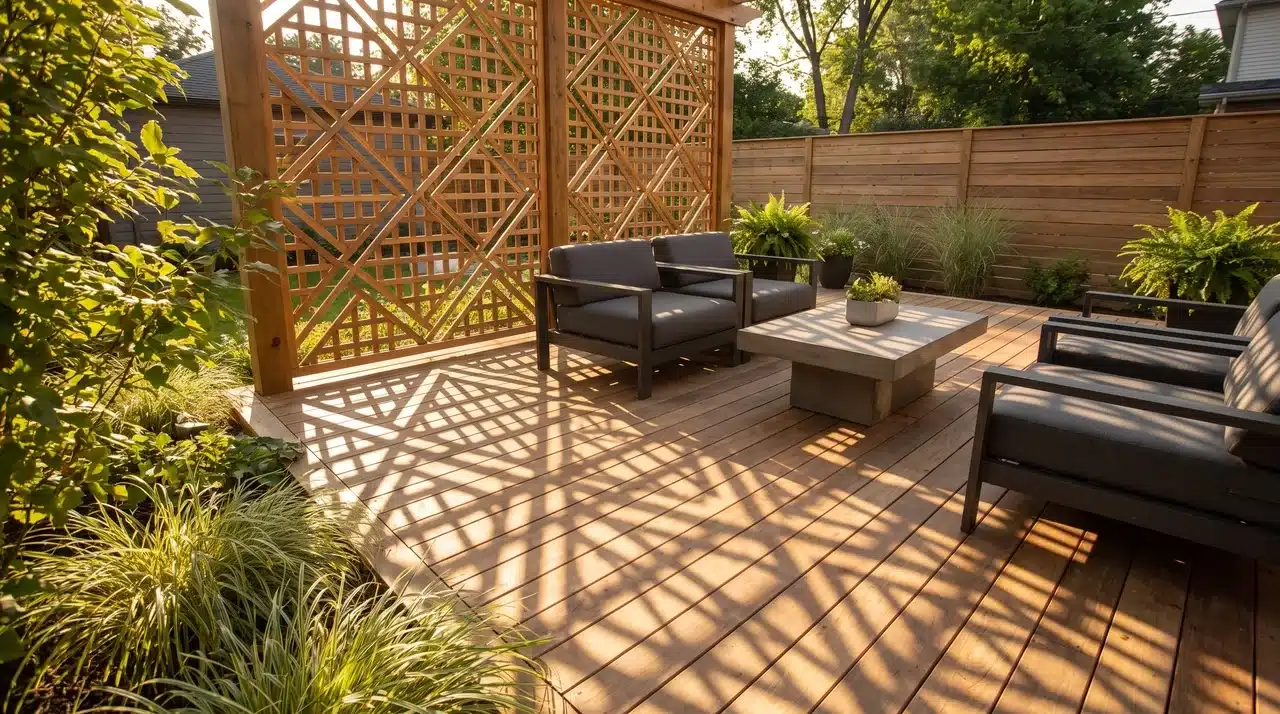
A deck instantly feels more designed when shadows become part of the décor. Instead of adding objects, introduce patterned shadow play that moves across surfaces throughout the day, giving the space a dynamic, artistic layer that changes with sunlight.
Position a decorative lattice screen or patterned divider where sunlight passes through it onto the deck floor and seating area.
How to Maintain Your Deck Décor
A few simple maintenance habits can keep your deck clean, comfortable, and ready to use. The right care also depends on the materials you have, so always follow the care instructions for your decking, furniture, fabrics, and lighting.
- Clean the Deck: Sweep away leaves, dirt, and debris regularly. Use a cleaner made for your decking material and follow its instructions.
- Care for Fabrics: Clean cushions, pillows, rugs, and curtains according to their care labels. Store cushions in a dry place or cover them when severe weather is expected.
- Look After Plants: Check the soil in planters and hanging baskets regularly, especially during hot or dry weather. Trim dead or overgrown growth as needed.
- Check Lights and Décor: Look for loose fittings, damaged cords, or signs of moisture around outdoor lights. Make sure mirrors, privacy screens, shade sails, and other installed décor remain secure.
- Store Seasonal Items: Bring in lightweight décor and other loose items before strong winds or severe weather. Clean and dry items before storing them in a dry, protected space.
Regular checks also give you a chance to spot small problems early. Keeping the deck free of debris and storing items when needed can help your outdoor space stay neat and usable for longer
Conclusion
A well-decorated deck does not need dozens of accessories to feel complete. Start with the layout, choose a simple color palette, and add pieces that make the space more useful and comfortable.
A rug can define a seating area, plants can add natural texture, and outdoor lighting can make the deck enjoyable after sunset.
I find that a few thoughtful choices often have more impact than filling every empty corner.
Use these deck decorating ideas as a starting point, then choose the ones that fit your home and lifestyle. Which idea would you try first? Share your favorite deck decorating idea in the comments!
Frequently Asked Questions
How do I make a small deck look bigger?
Use compact, open-frame furniture and avoid filling every corner. A properly sized outdoor rug can help define the space, while vertical planters draw the eye upward and save floor space.
What is the easiest way to decorate a deck on a budget under $100?
Start with one or two affordable updates, such as string lights, potted plants, or outdoor pillows. Compare prices and focus on small changes that add color, comfort, or lighting without exceeding your budget.
How do I decorate a deck for both lounging and entertaining?
Create separate areas for lounging and dining, using furniture placement or outdoor rugs to define each zone. Add suitable lighting to both areas so the deck remains useful after sunset.
What outdoor textiles actually hold up to weather?
Solution-dyed acrylic is a strong choice for outdoor cushions because it resists fading and mildew. Polypropylene is commonly used for outdoor rugs because it resists moisture, dries quickly, and handles outdoor exposure well.