

A deck should feel useful on more than perfect weather days.
The right cover can add shade, block light rain, protect furniture, and turn the space into somewhere you actually use more often.
But not all covers solve the same problem. A pergola gives filtered shade, an awning works well for flexible sun control, and a solid roof offers stronger weather protection.
That is why the best covered deck ideas start with how you want to use the space, not just how the structure looks.
Here, you will find practical options for small decks, dining areas, outdoor kitchens, privacy, shade, and year-round comfort.
What Does a Covered Deck Mean?
A covered deck is a deck with overhead protection from sun or rain, ranging from a simple fabric sail to a permanent roof tied into the house.
People often use the term as a catch-all, but the specific covering you choose determines the result. A shade sail reduces sun exposure, while a solid roof can keep the deck usable during heavy rain.
Those options may look similar, but they solve different problems, so it helps to decide what protection you actually need first.
That choice also affects permits, structural support, attachment points, maintenance, and cost. I always recommend settling that question before comparing styles.
Once you know whether you need light shade or dependable weather protection, the rest of the planning gets easier.
You are also less likely to choose a design that does not suit your deck.
The Five Main Structure Types
- Pergolas: Open timber or metal framework with a slatted roof that filters sunlight. Louvered versions add rain control.
- Attached Roof Extensions: Permanent structure tied into your home’s roofline for maximum weather protection. Always requires a permit.
- Awnings: Fixed or retractable fabric covers for sun and light rain. Wind is the main limitation.
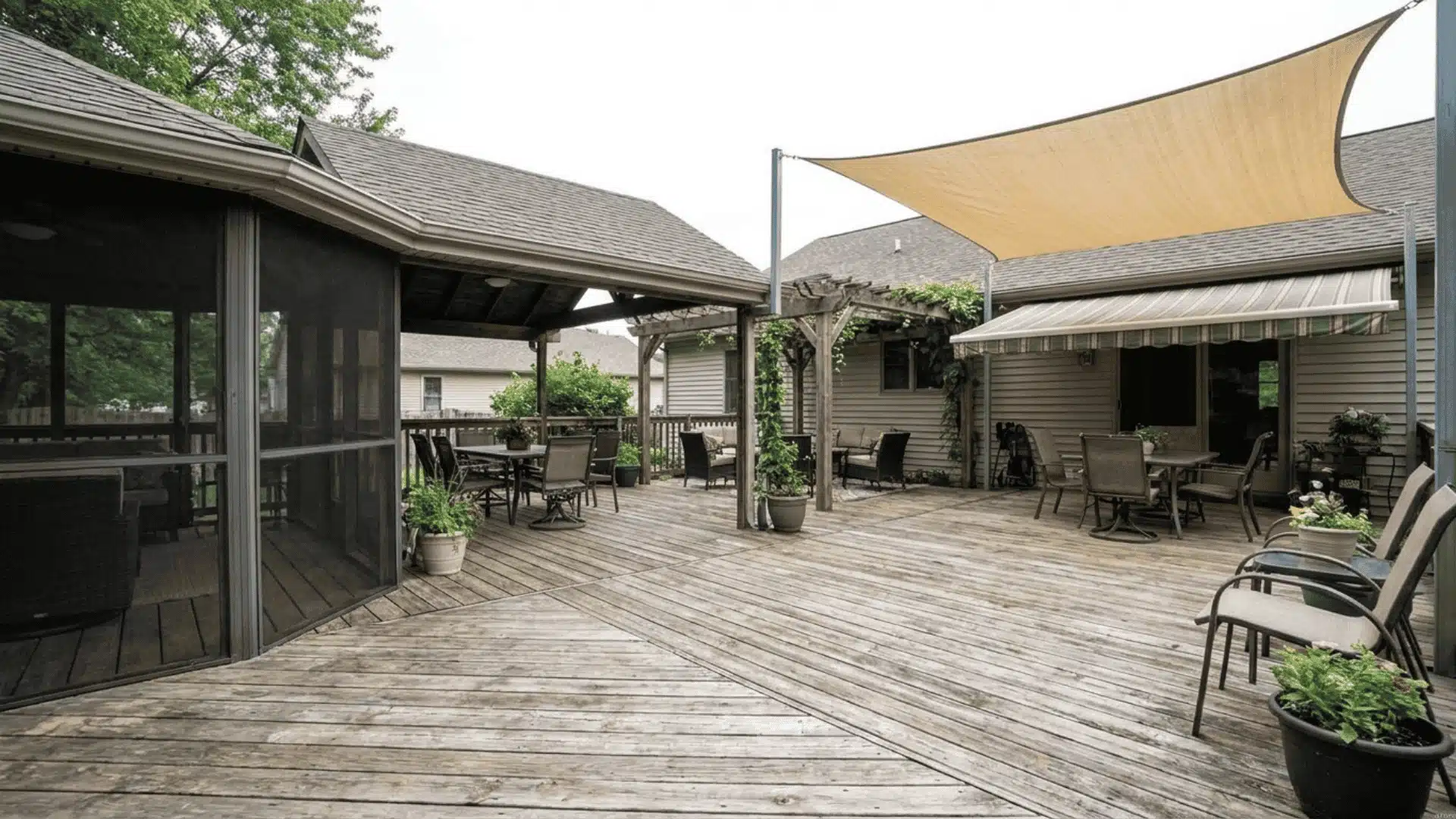
- Shade Sails and Canopies: Temporary, low-cost fabric structures suited for sun coverage in mild climates only.
- Screened or Enclosed Structures: Mesh or glazed walls added to an existing covered frame. Once you add walls, the structure moves into a different permit category.
Beautiful Covered Deck Ideas to Inspire Your Outdoor Space
Covered deck ideas range from a quick shade upgrade to a fully enclosed outdoor room, and the right one for you depends on how much protection, privacy, and year-round use you want.
Here is a range that covers every budget and structure type, without repeating the same idea in a different color.
1. Classic Open Pergola
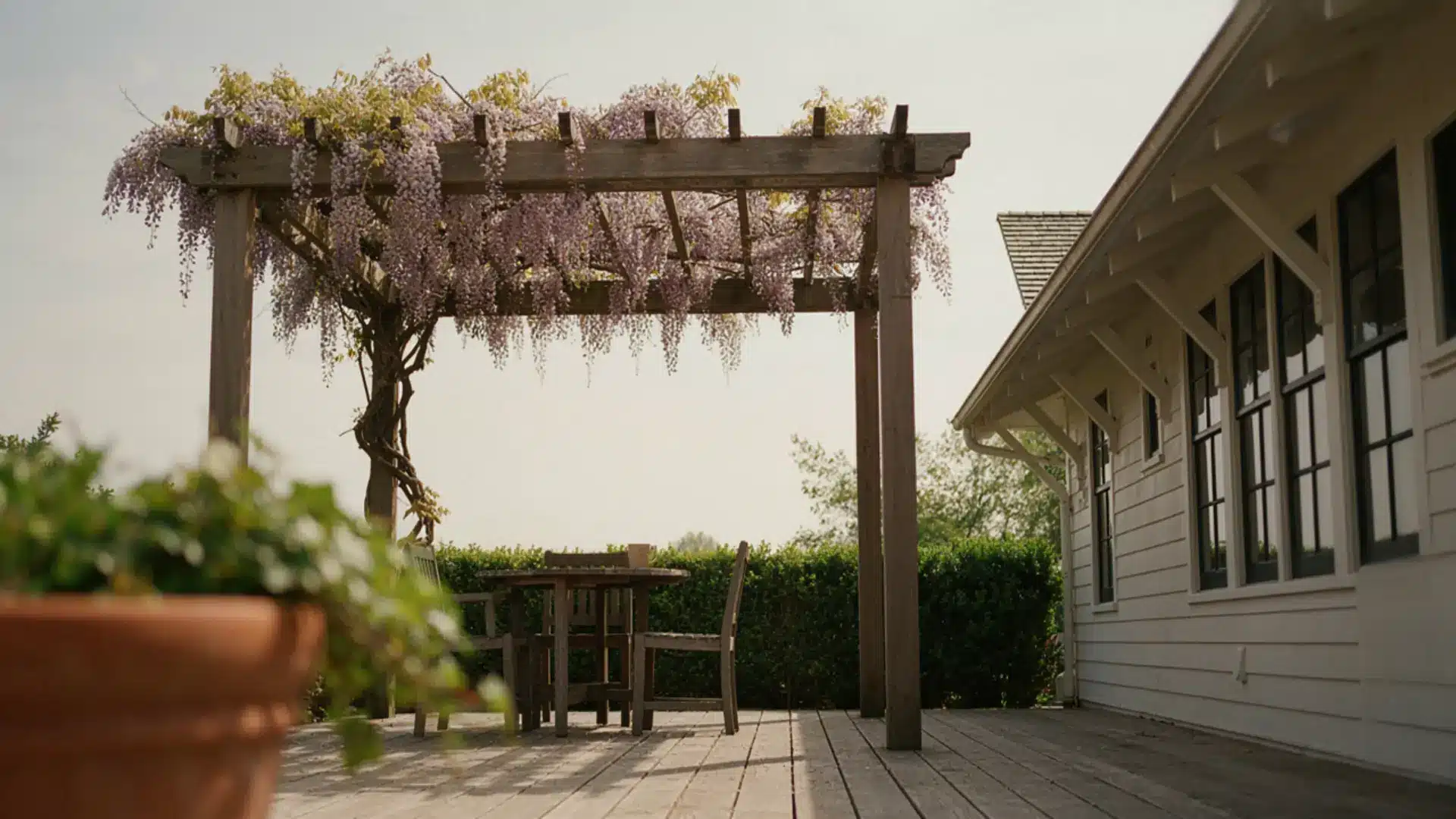
A classic open pergola filters sunlight through an open timber or metal framework without enclosing the space.
Climbing plants like wisteria or jasmine grow through the frame over a season or two, adding natural, shifting shade as they fill in.
If you would rather build the frame yourself, our guide to building your own pergola walks through the full process step by step.
Tip: This works best in sunny, low-rain climates. Pair it with a waterproof shade sail underneath for light rain coverage without committing to a permanent roof.
2. Louvered Pergola
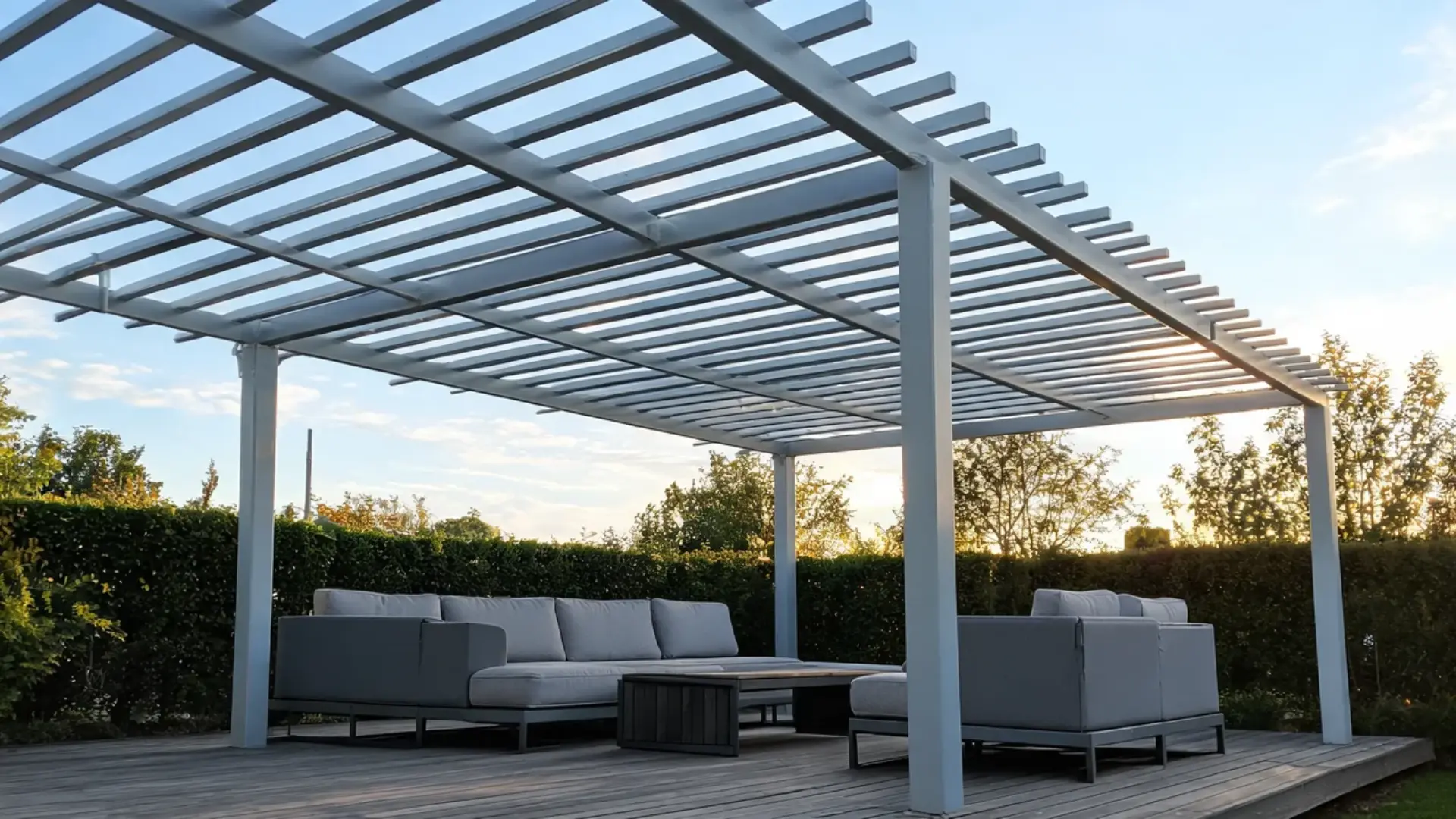
A louvered pergola has adjustable roof slats that control sunlight and block light rain, which makes it one of the most flexible covered deck ideas across different climates and seasons.
Tip: Motorized louvers respond faster to changing weather. Set the slats around 45 degrees for filtered afternoon light and close them fully once rain starts.
3. Cover a Pergola With a Solid or Fabric Roof Insert
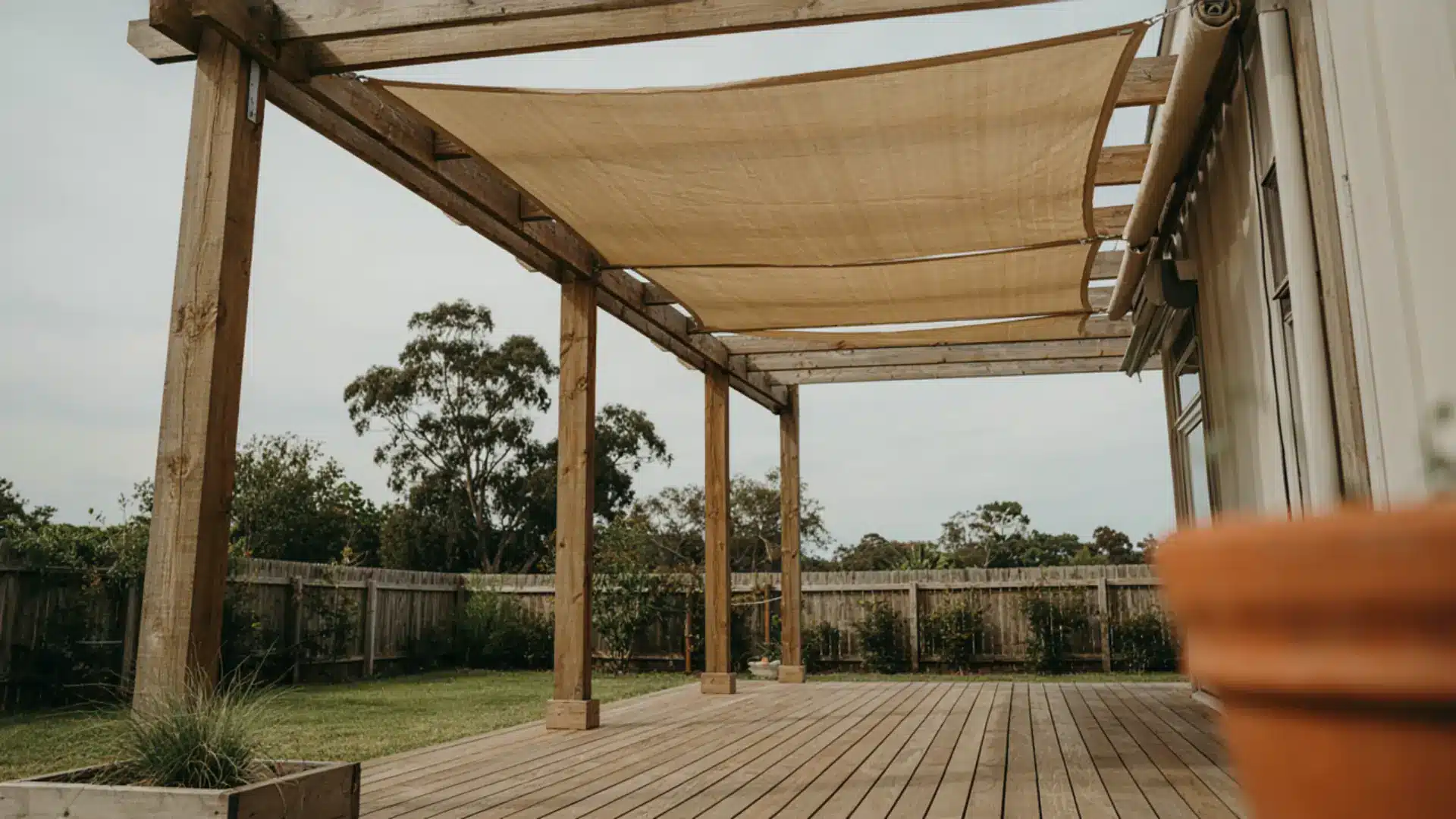
An open pergola offers shade, but it will not keep rain out.
Adding polycarbonate panels, waterproof canvas, or retractable fabric can provide better protection without replacing the entire structure.
Tip: Check beam spacing and the pergola’s load rating before fitting solid roofing, especially in areas where snow can add extra weight
4. Attached Gable Roof
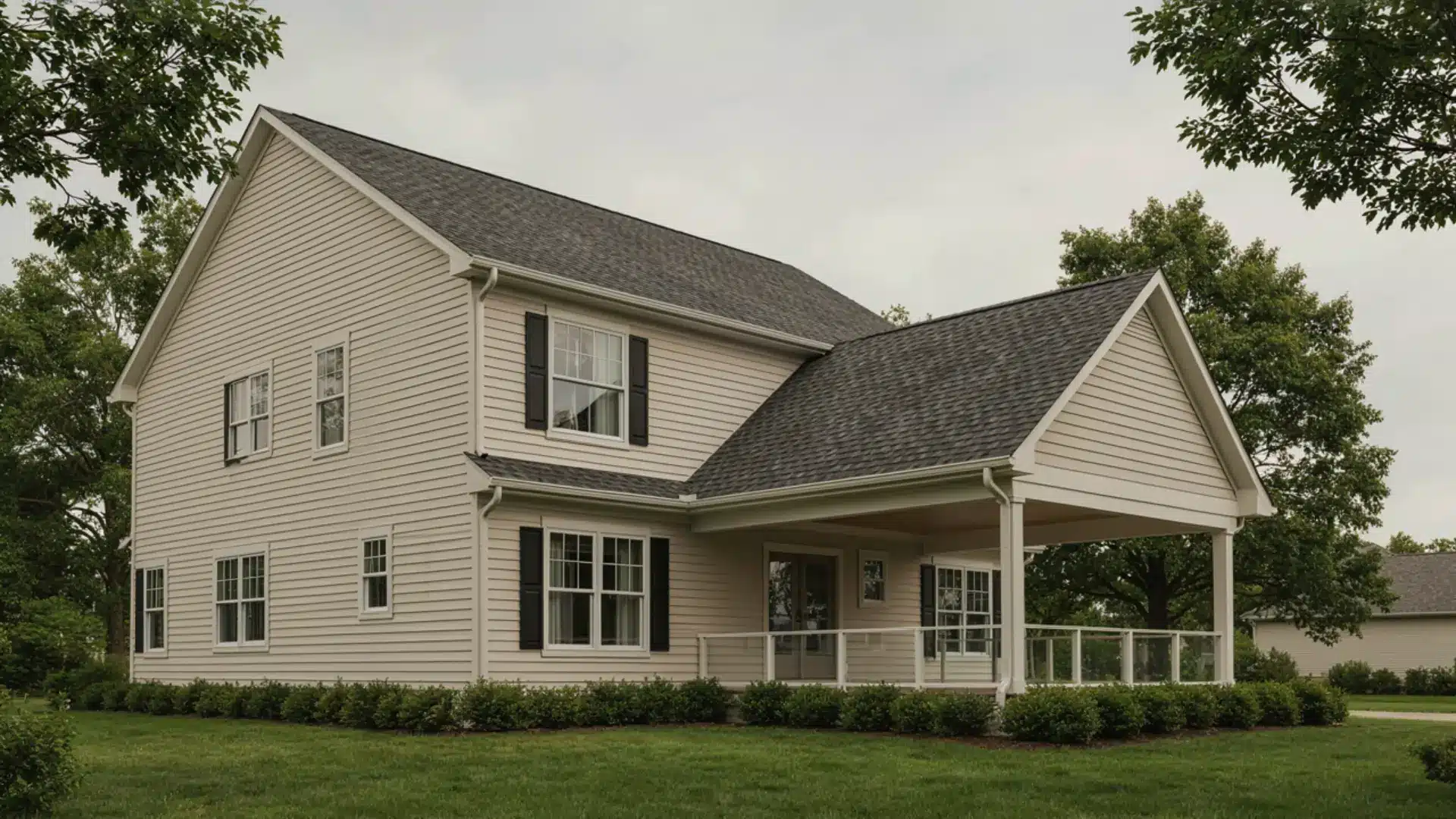
A gable roof extension matches your home’s existing roofline and gives you the strongest protection against rain and wind of any structure type here.
It is the option that comes closest to genuine year-round outdoor living.
Tip: Match the roofing material to your existing roof so it doesn’t look bolted on, and mirror your home’s pitch for proportional framing and proper drainage.
5. Lean-To Patio Roof
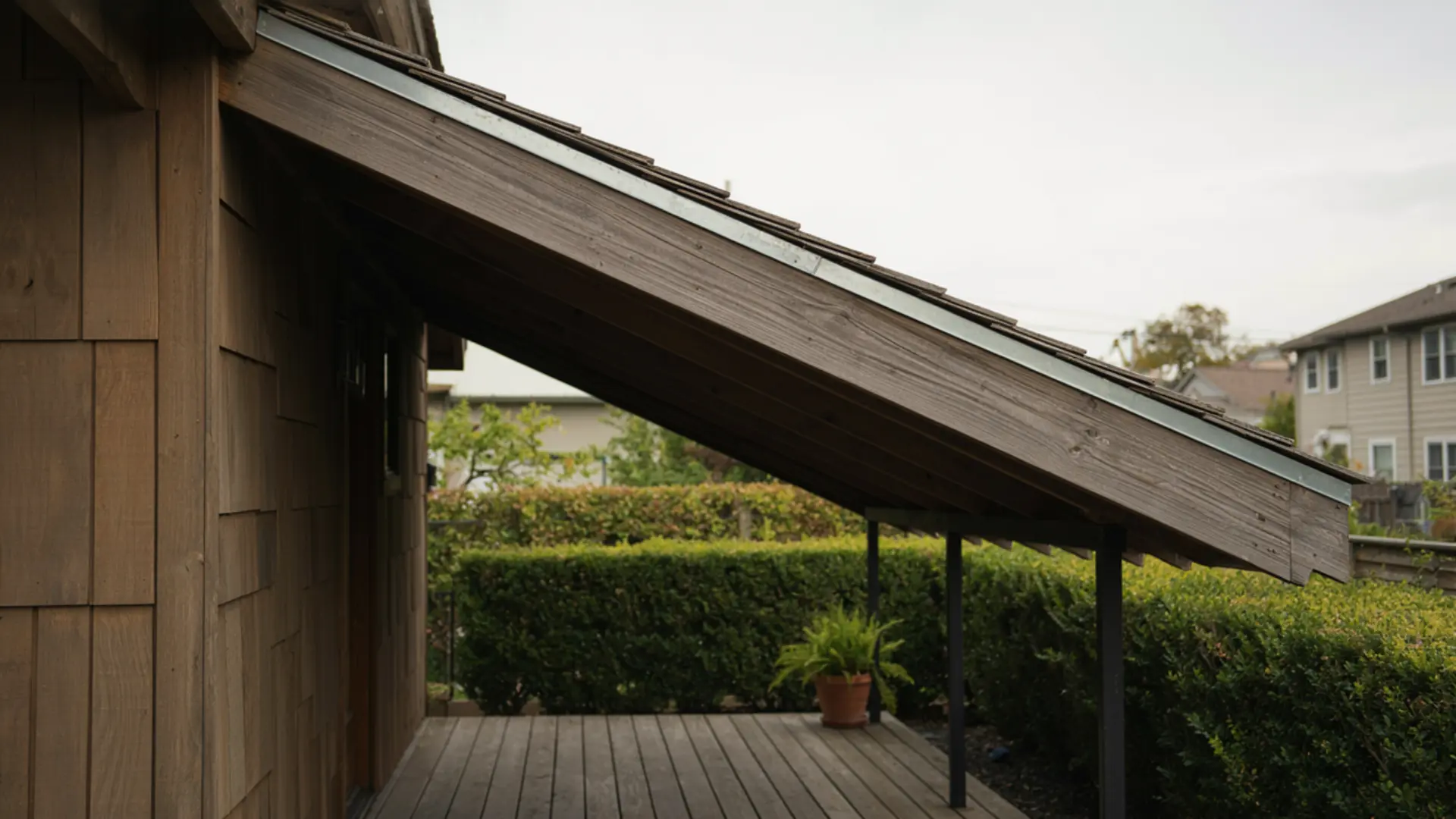
A lean-to roof pitches away from the house on a single slope, creating solid cover over the deck. It is simpler and less expensive than a full gable extension, especially on smaller decks.
Tip: Make sure the pitch drains away from the house wall, and flash the attachment point carefully. That junction is where leaks show up when the seal is not done right.
6. Covered Deck with Skylights
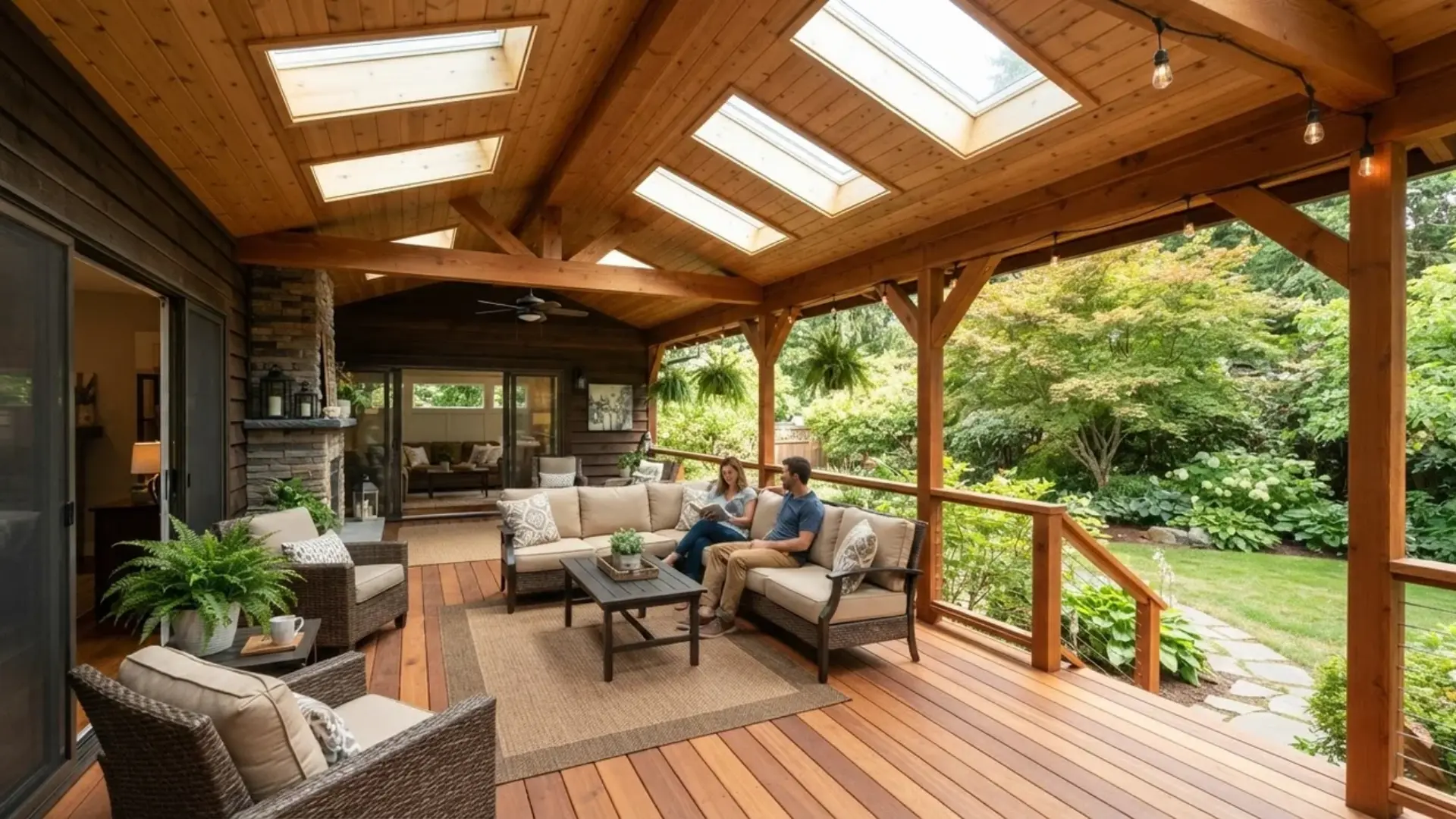
Skylights set into a solid roof keep the deck bright and connected to the outdoors, which solves the most common complaint about fully covered decks: that they end up feeling dark and closed in.
Tip: Position skylights on the north-facing side to cut down on summer glare, and choose double-glazed or polycarbonate units to reduce condensation on cooler evenings.
7. Metal Roof Covered Deck
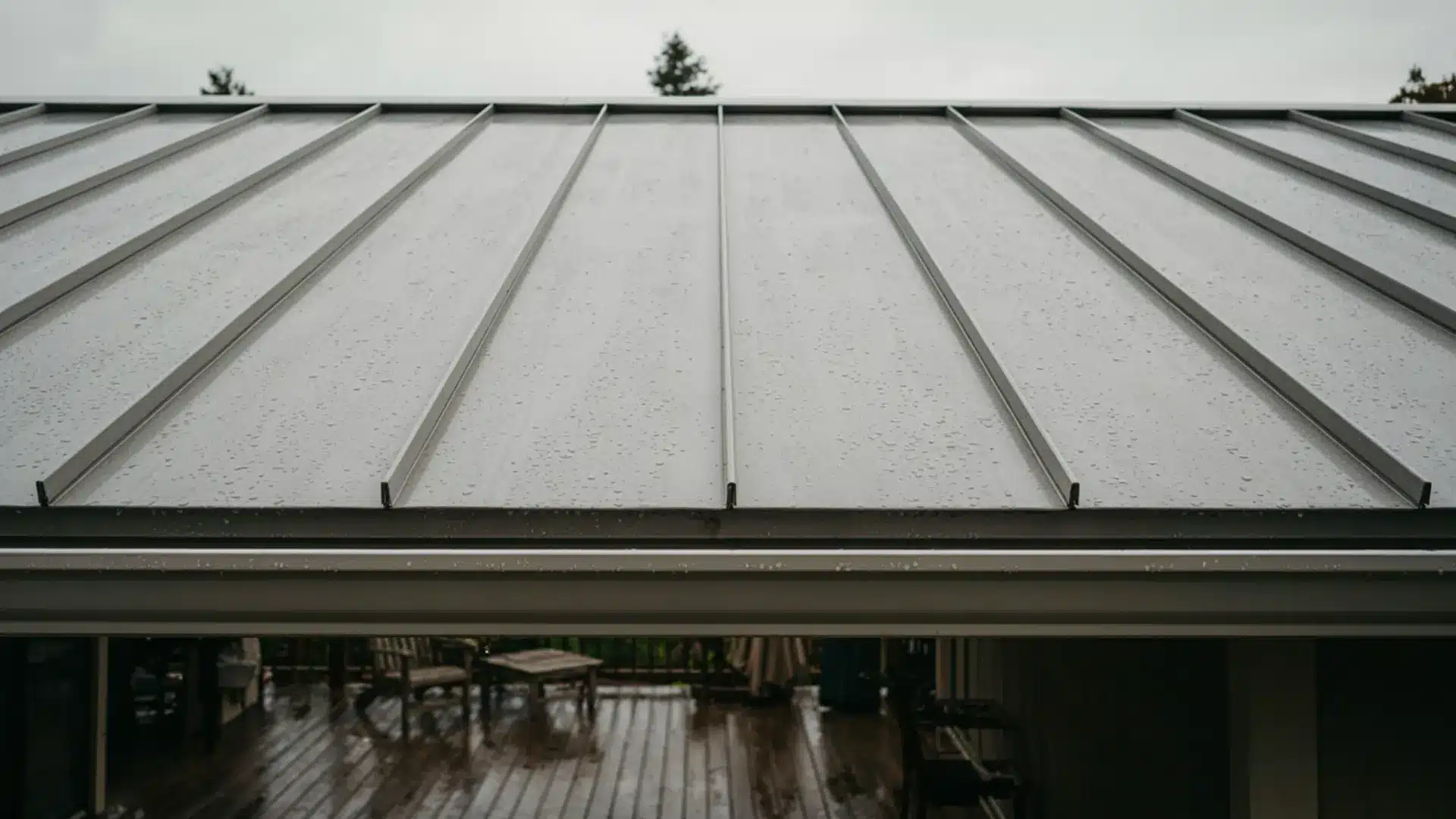
A metal roof handles heavy rain and snow loads better than most alternatives and needs very little maintenance over its lifespan.
The trade-off is noise, since it amplifies rain, so it is worth insulating if that bothers you.
Tip: Install insulation batts between the frame and the sheeting to reduce noise. In coastal areas, choose pre-painted steel to resist salt air corrosion.
8. Polycarbonate Roof Cover
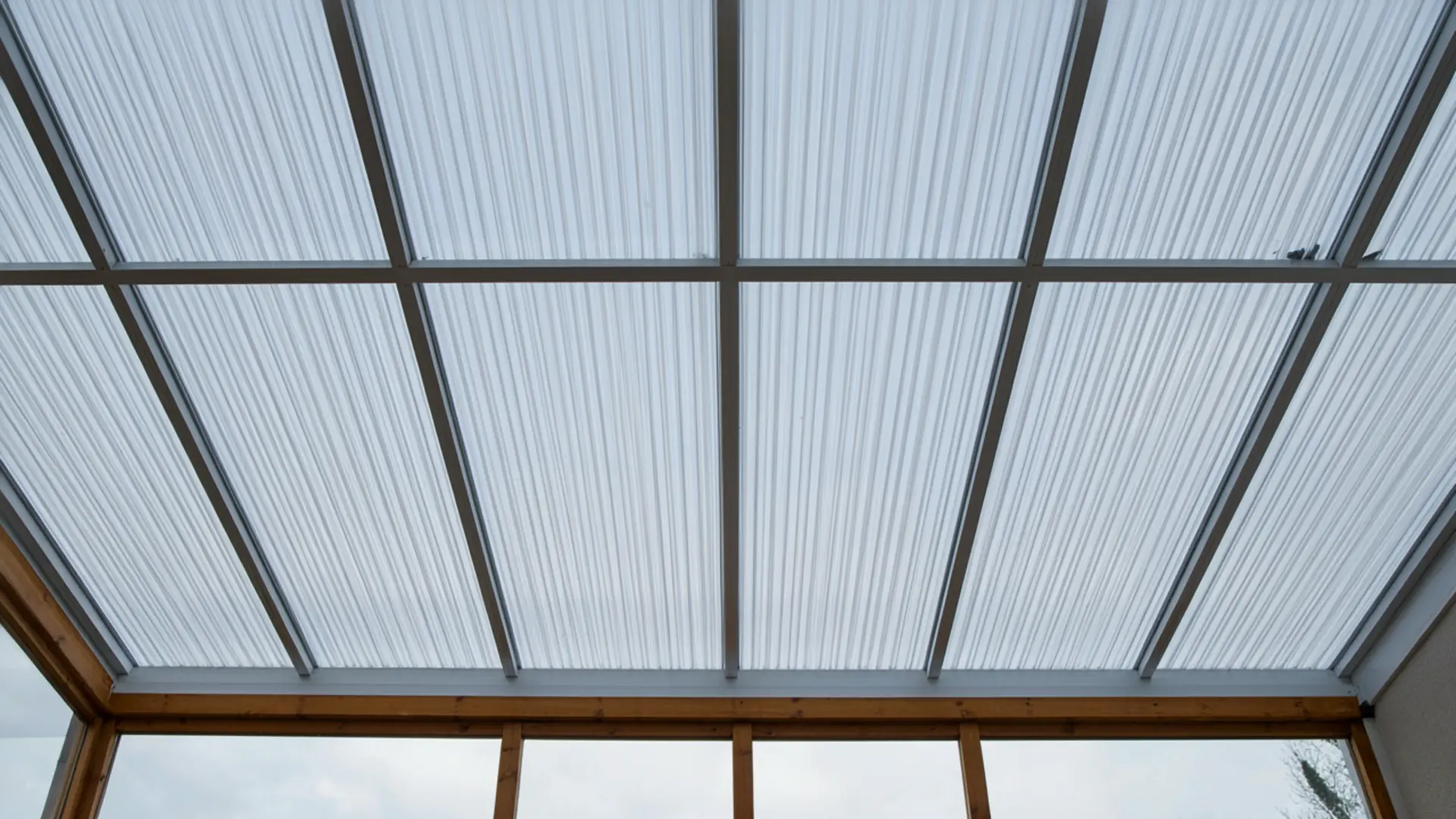
Polycarbonate panels let natural light through while still blocking rain, which makes them a practical middle ground between a pergola and a solid roof when brightness matters as much as staying dry.
Tip: Choose twin-wall panels over single-layer sheets for better insulation, and seal all cut edges with aluminum tape to keep moisture and algae out of the fluted channels.
9. Retractable Fabric Awning
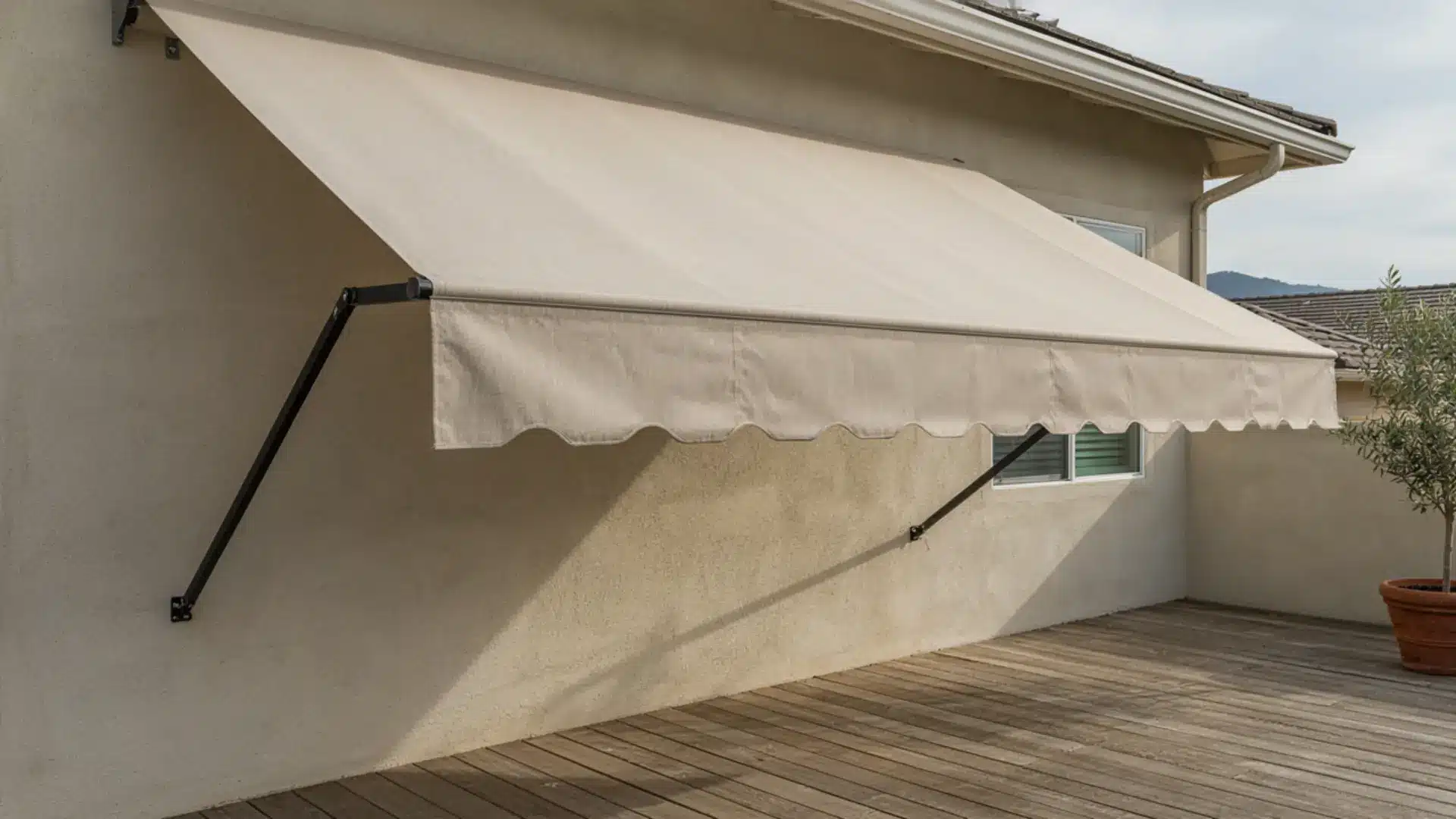
A retractable fabric awning gives you shade when you need it without adding a permanent roof.
Manual models use a simple hand crank, while motorized versions open with a remote or wall switch and feel more convenient.
Tip: Measure the projection carefully, choose solution-dyed acrylic fabric, and add a wind sensor to motorized models too.
10. Retractable Canopy
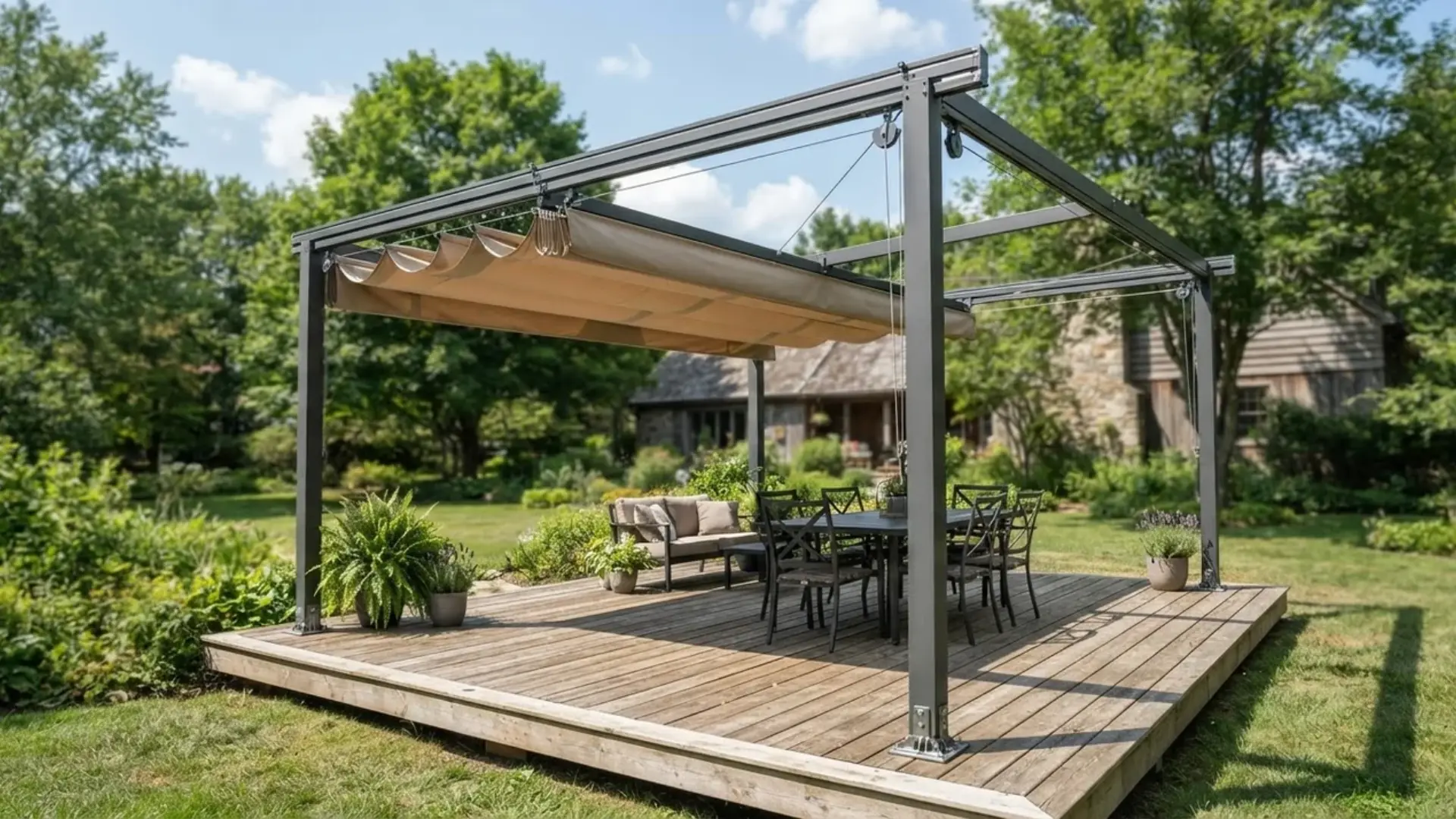
A retractable canopy is a smart choice when your deck sits away from the house, or you want shade without attaching anything to the siding.
It slides along a track and can open or close manually or by motor.
Tip: Pick one rated for local wind conditions, and always retract it fully during outside storms.
11. Waterproof Shade Sail
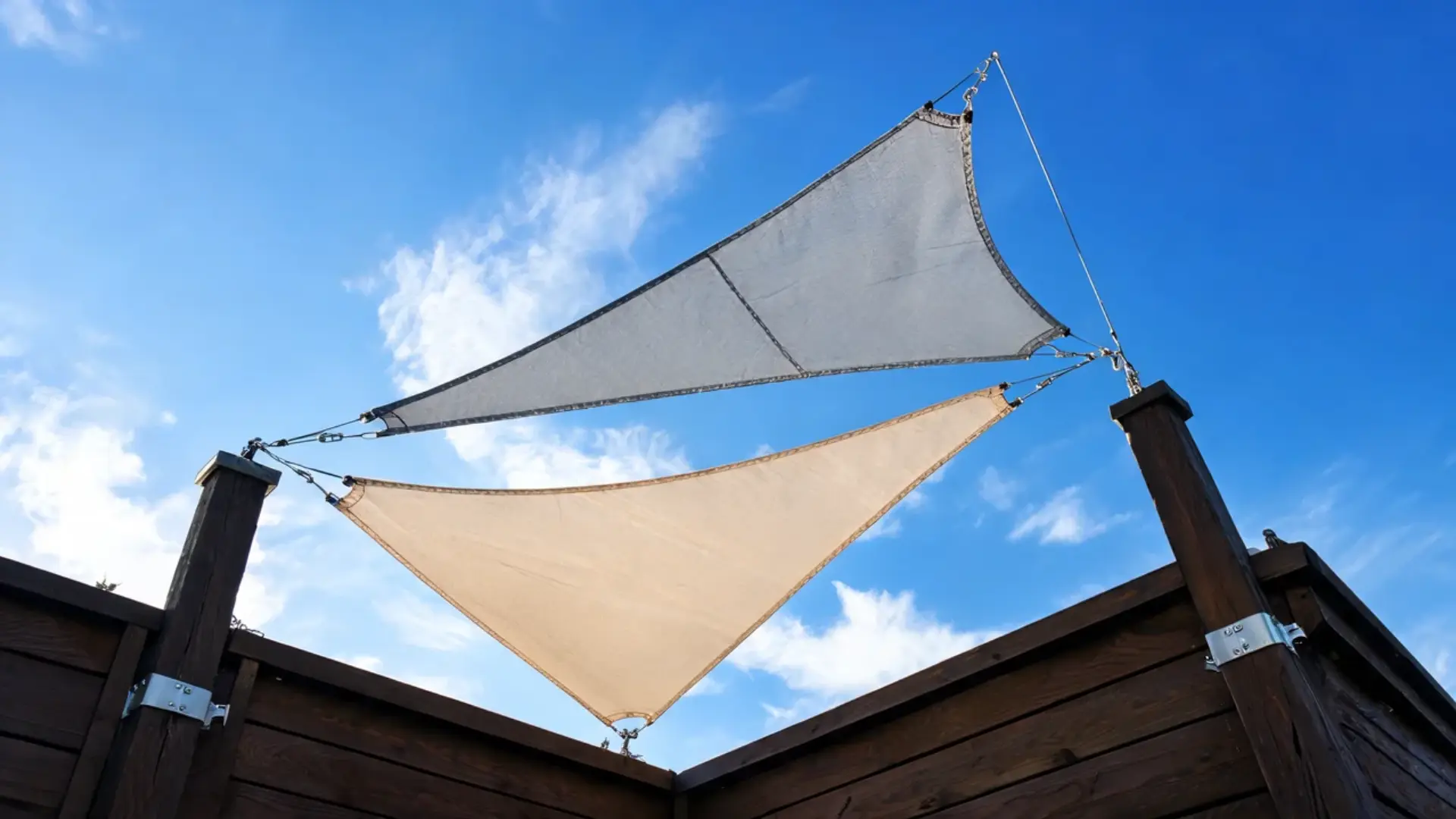
A waterproof shade sail is a budget-friendly way to add shade and light rain protection to your deck, especially during warmer months.
For oddly shaped spaces, layering two or three sails at different heights can cover gaps and add character.
Tip: Keep each sail tightly tensioned, offset layered panels vertically, and always use stainless steel fittings.
12. Freestanding Pavilion
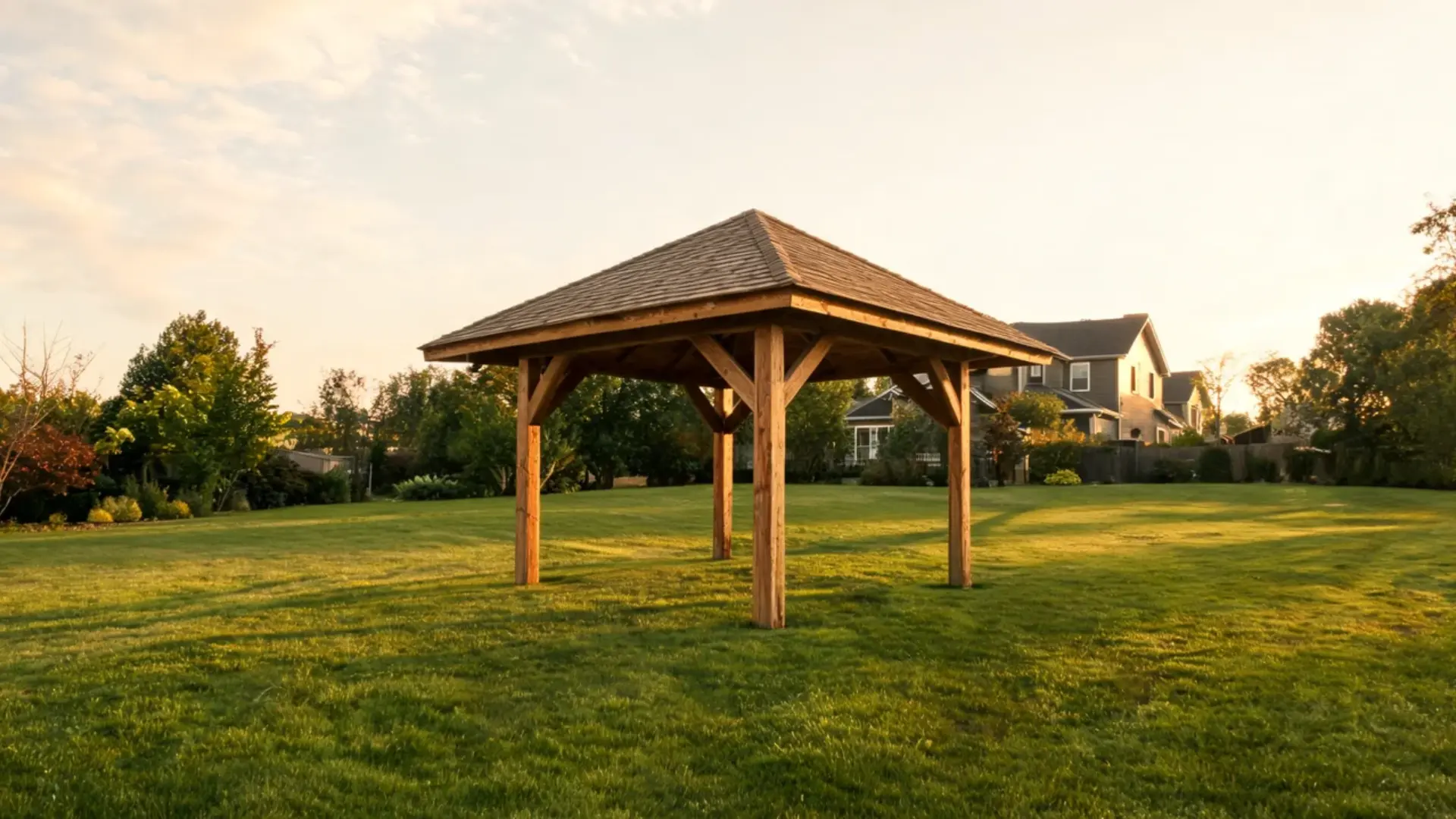
A freestanding pavilion sits independently from the house, so it needs no structural tie-in at all.
It is a strong option when permit rules for attached structures get complicated, or when HOA rules restrict anything touching the house.
I have laid out a few of these for readers over the years, and the ones that hold up best always start with solid footings, not a good-looking roof.
Tip: Set posts on concrete footings rather than ground spikes to stop shifting, and check your local size thresholds since exceeding them can trigger a permit even for a freestanding structure.
13. Gazebo-Style Covered Deck
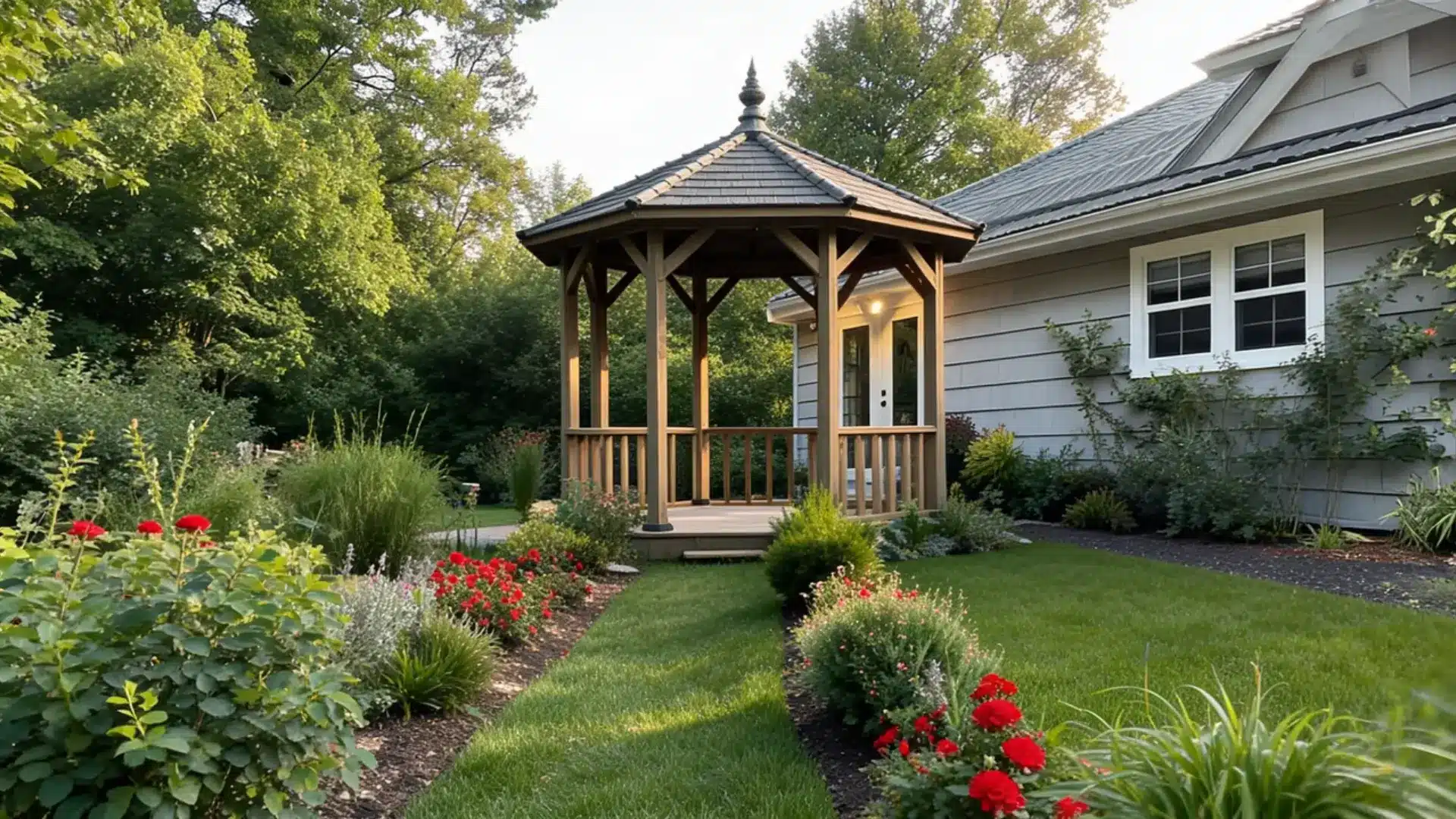
A gazebo-style structure has a full decorative roof, open sides, and a defined footprint. It reads more like a backyard destination than a direct extension of your main living area.
Tip: Position it at the far end of the yard to draw people out into the garden. A hexagonal or octagonal footprint sheds wind more evenly than a square frame.
14. Screened-In Covered Deck
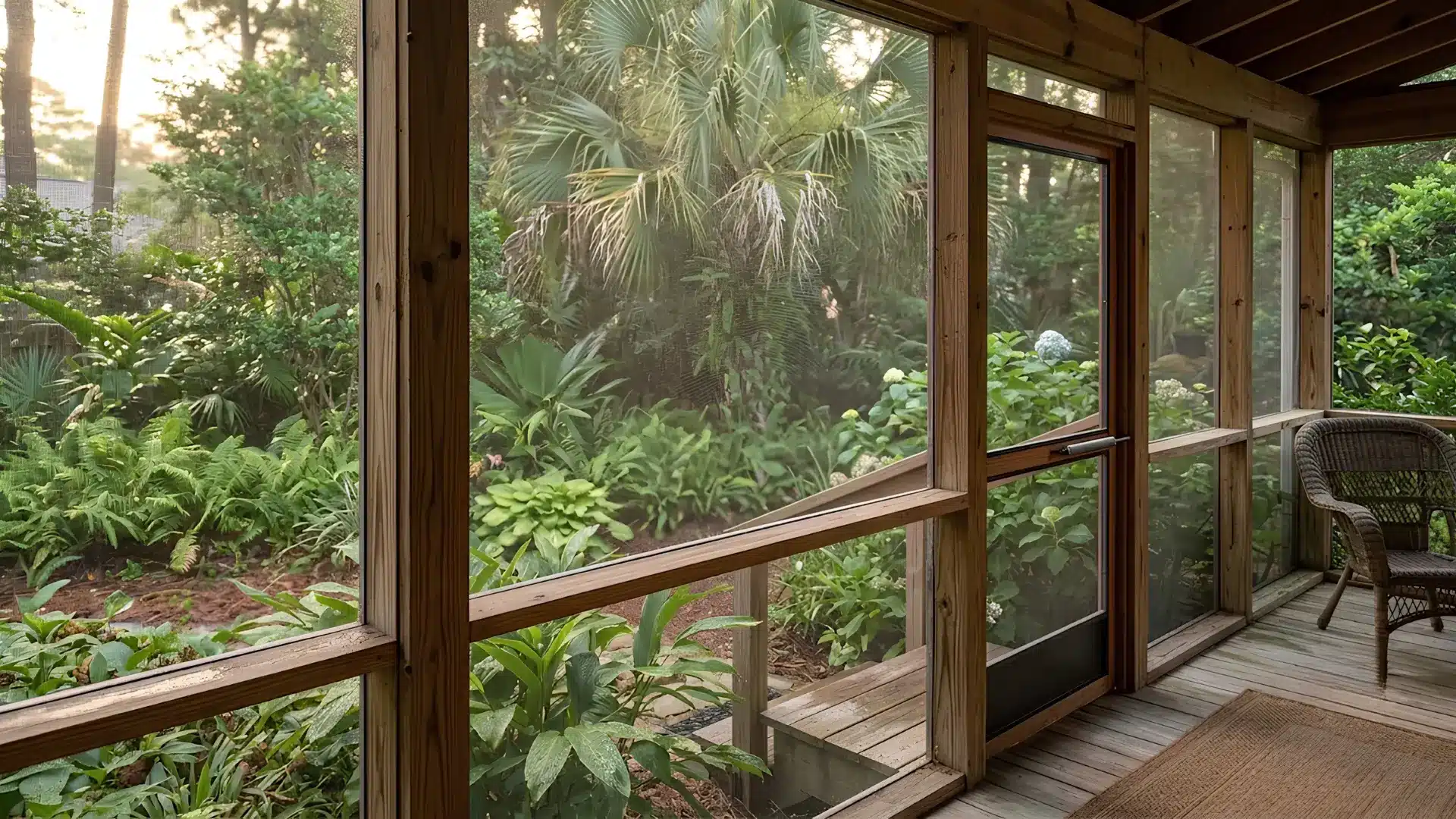
A screened enclosure keeps insects out without shutting off airflow, which matters a lot in humid climates where mosquitoes make open-air evenings miserable from spring through fall.
Tip: Use fiberglass mesh over aluminum screening for easier tensioning and better durability, and add a self-closing screen door to keep bugs out during high-traffic moments.
15. Three-Season Porch Conversion
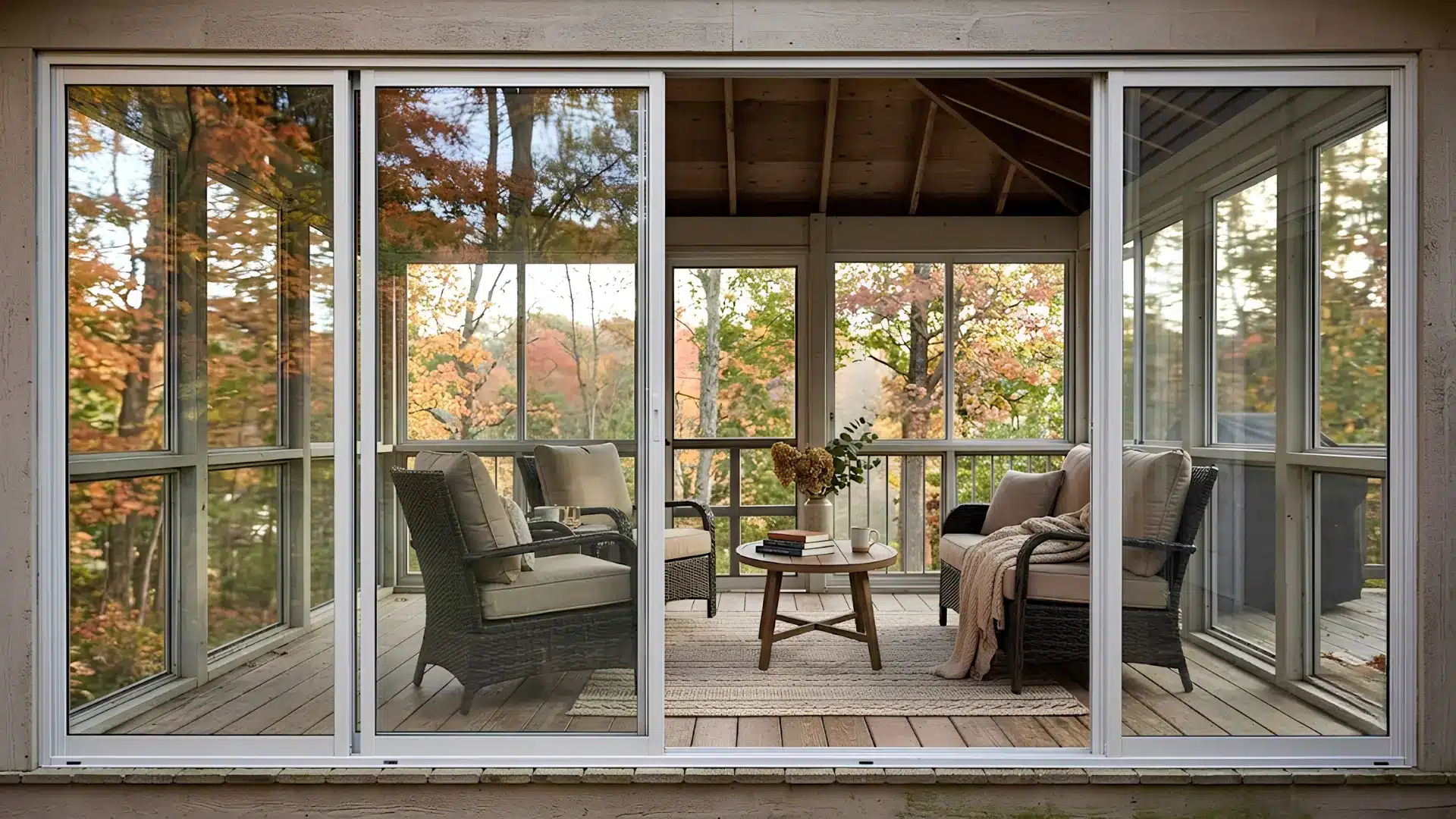
Adding windows to a covered deck frame turns it into a three-season porch that stretches comfortable use well into cooler weather.
It will not replace a fully heated room, but it noticeably extends the usable season.
Tip: Use double-glazed sliding panels so you can switch between open and closed configurations, and add a ceiling fan to prevent heat buildup on sunny days when the panels are closed.
16. Outdoor Living Room Deck
A covered deck built around a fireplace or wall-mounted TV becomes a real entertaining space, not just a covered walkway.
Roof height matters here more than people expect, since too low feels cramped while a vaulted or raised ceiling keeps it comfortable for a group.
Tip: Run electrical conduit during the build phase. Adding circuits after the ceiling is finished is far more disruptive. Aim for a minimum ceiling height around 2.7 meters.
17. Outdoor Kitchen Under Cover
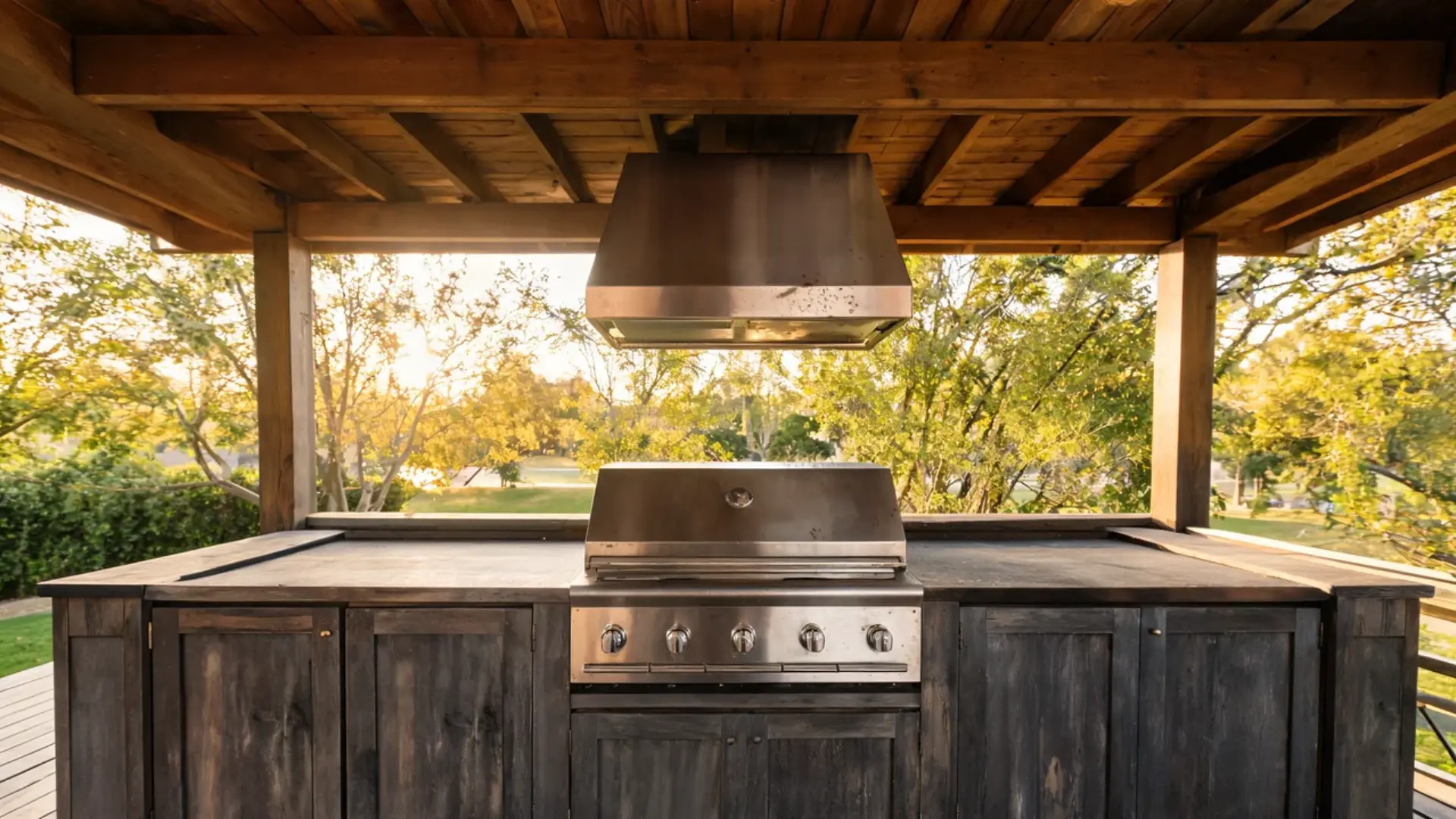
A covered outdoor kitchen keeps appliances and cabinets protected while making grilling easier in more weather conditions.
Even a basic lean-to roof can make the space feel far more usable.
If you are budgeting for one, our breakdown of planning an outdoor kitchen build is a solid next stop.
Tip: Keep the grill near the open edge for better smoke flow, and add a range hood if needed. Plan the wider kitchen budget too.
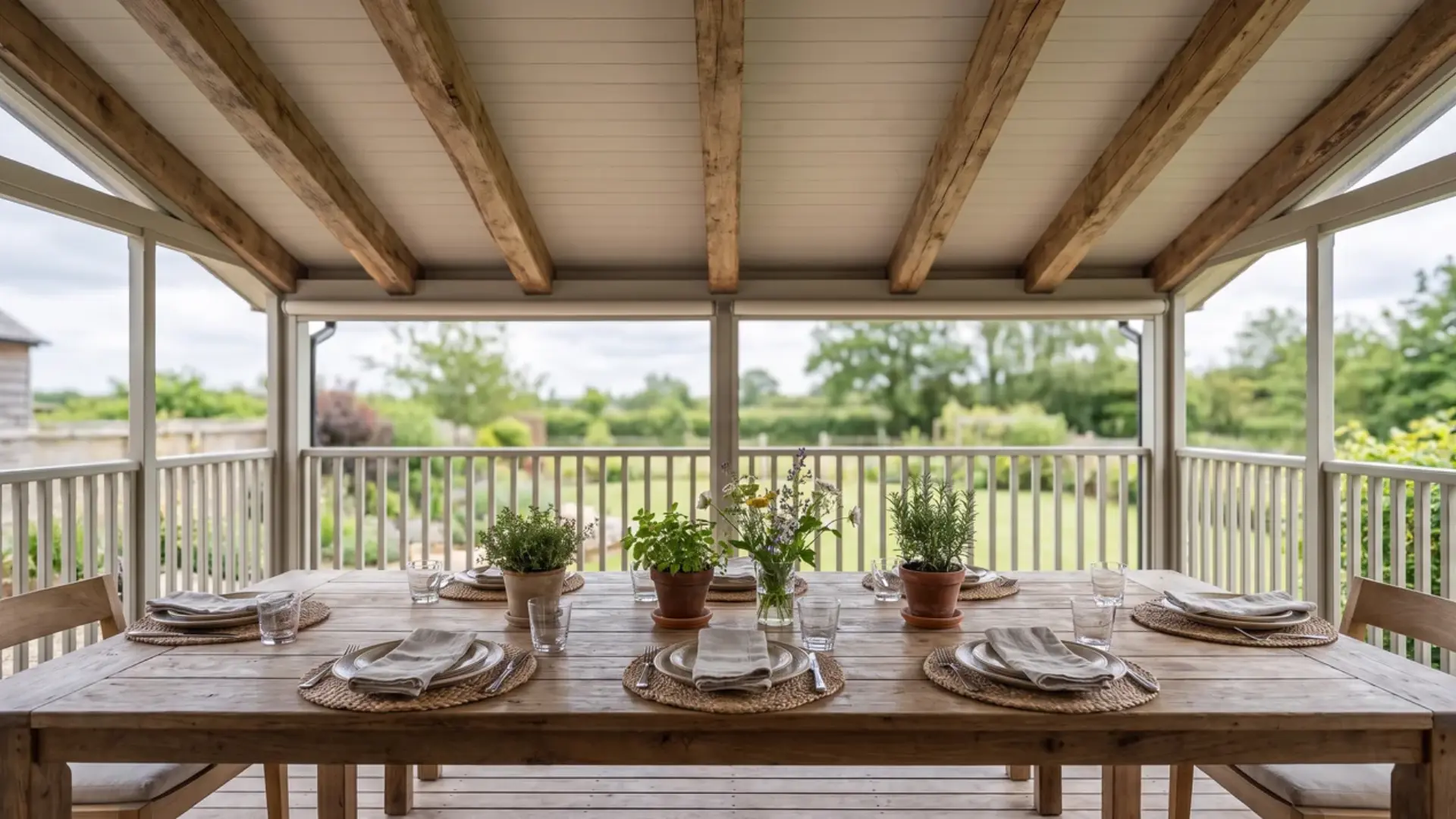
18. Dining Deck with Vaulted Roof
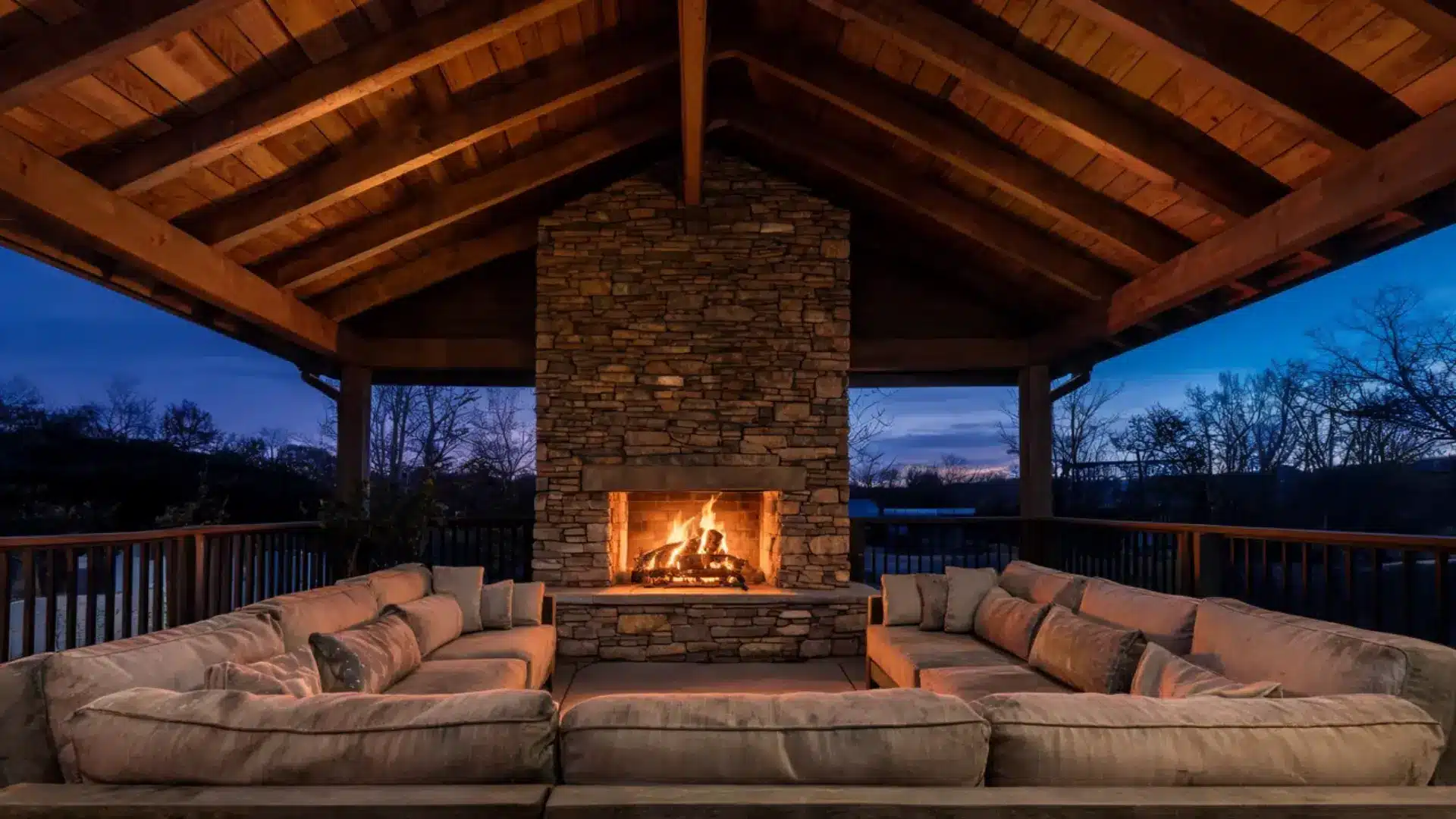
A vaulted ceiling over a dining area creates a sense of openness that flat roofs cannot deliver.
It suits larger decks built for family meals, where the overhead structure needs to feel generous rather than tight.
Tip: Frame the vault to run lengthwise along the deck so narrow spaces feel longer, and use exposed timber purlins instead of flat ceiling lining for warmth and scale.
19. Covered Deck with Privacy Screens
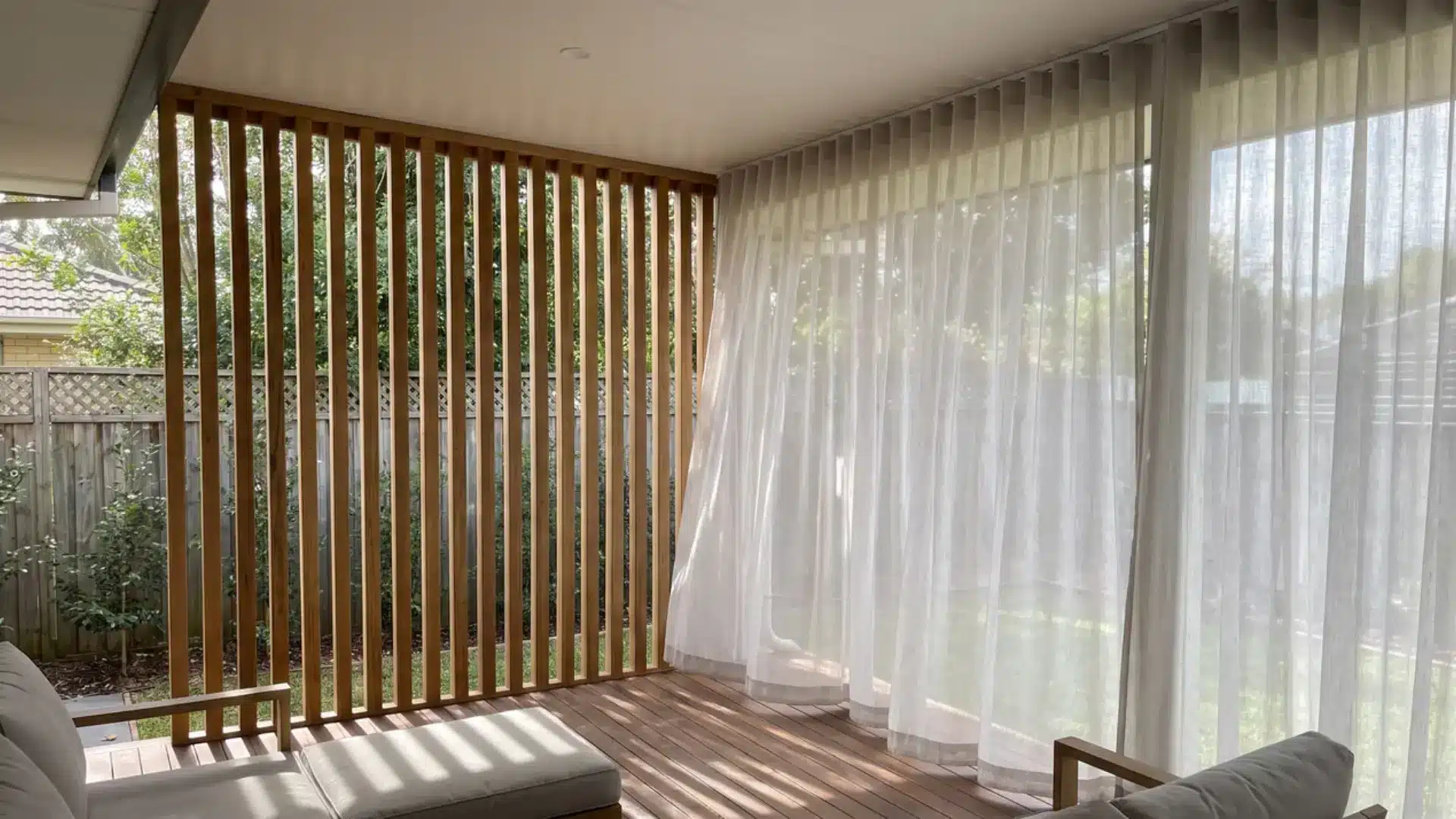
Privacy screens on one or two sides can block neighboring views without making your deck feel boxed in.
Outdoor curtains do the same while softening the space and reducing low-angle glare.
Pair either with overhead cover for an outdoor room, and check out more deck decorating ideas for finishing touches once the structure is in place.
Tip: Screen only exposed sides, or use curtains when you want adjustable privacy and airflow.
20. Rustic Exposed Beam Roof
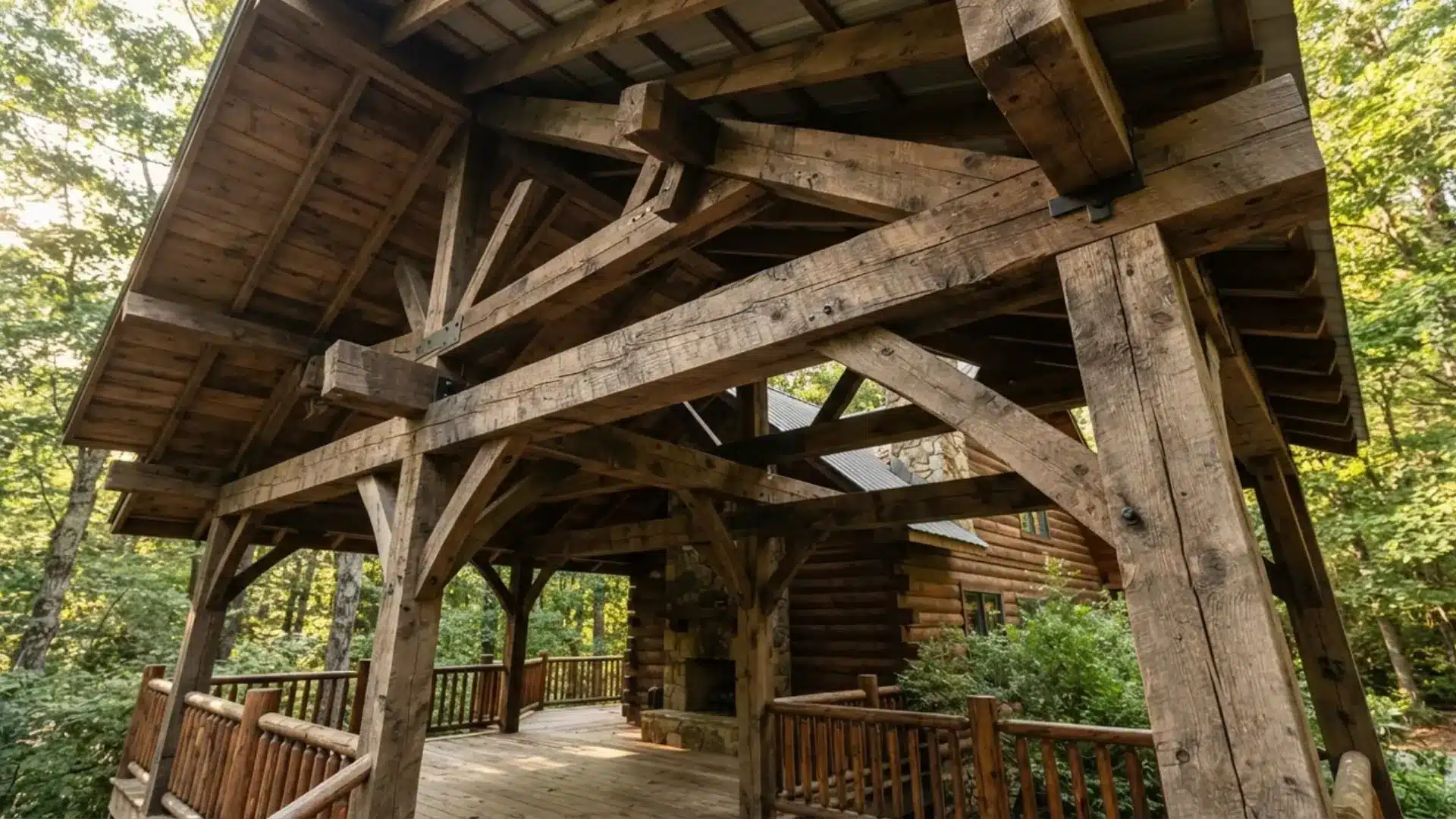
Heavy timber beams left visible overhead give a covered deck a substantial, architectural feel.
It suits cabins, country homes, and any property where the outdoor space is meant to feel as considered as the interior.
Tip: Use structurally rated hardwood or treated pine, since appearance-grade timber can deflect under roof load over time. Leave beam faces rough-sawn for a more authentically weathered finish.
21. Minimalist Flat Roof Cover
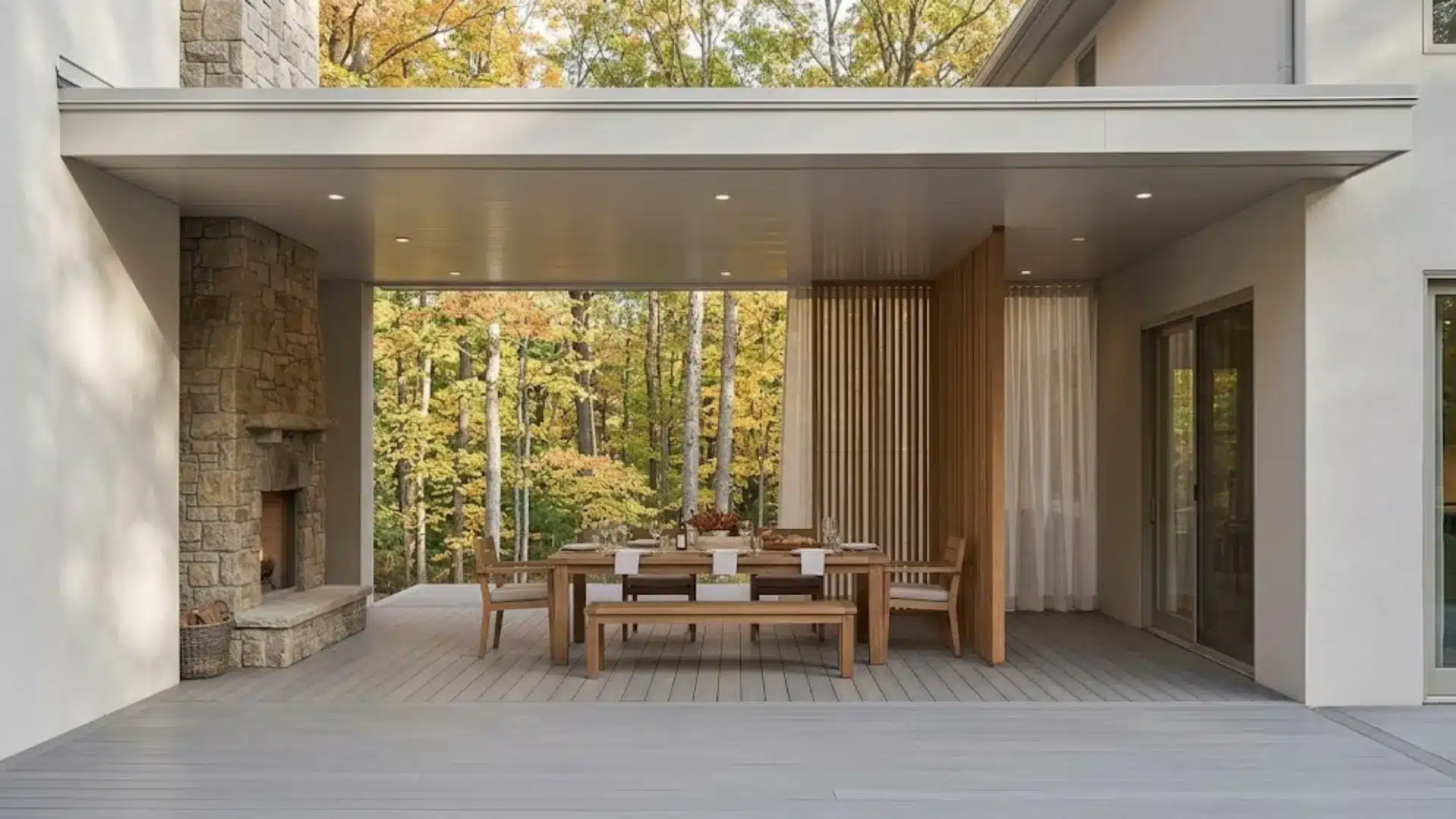
A flat roof cover suits modern and contemporary homes where clean architectural lines matter most.
It reads as a deliberate extension of the house rather than something decorative bolted onto the exterior.
Tip: Build in at least a one-degree fall for drainage. Pooling water on a flat cover causes long-term structural damage, so a membrane roofing system performs better at low pitch angles.
22. Covered Deck with Ceiling Fans
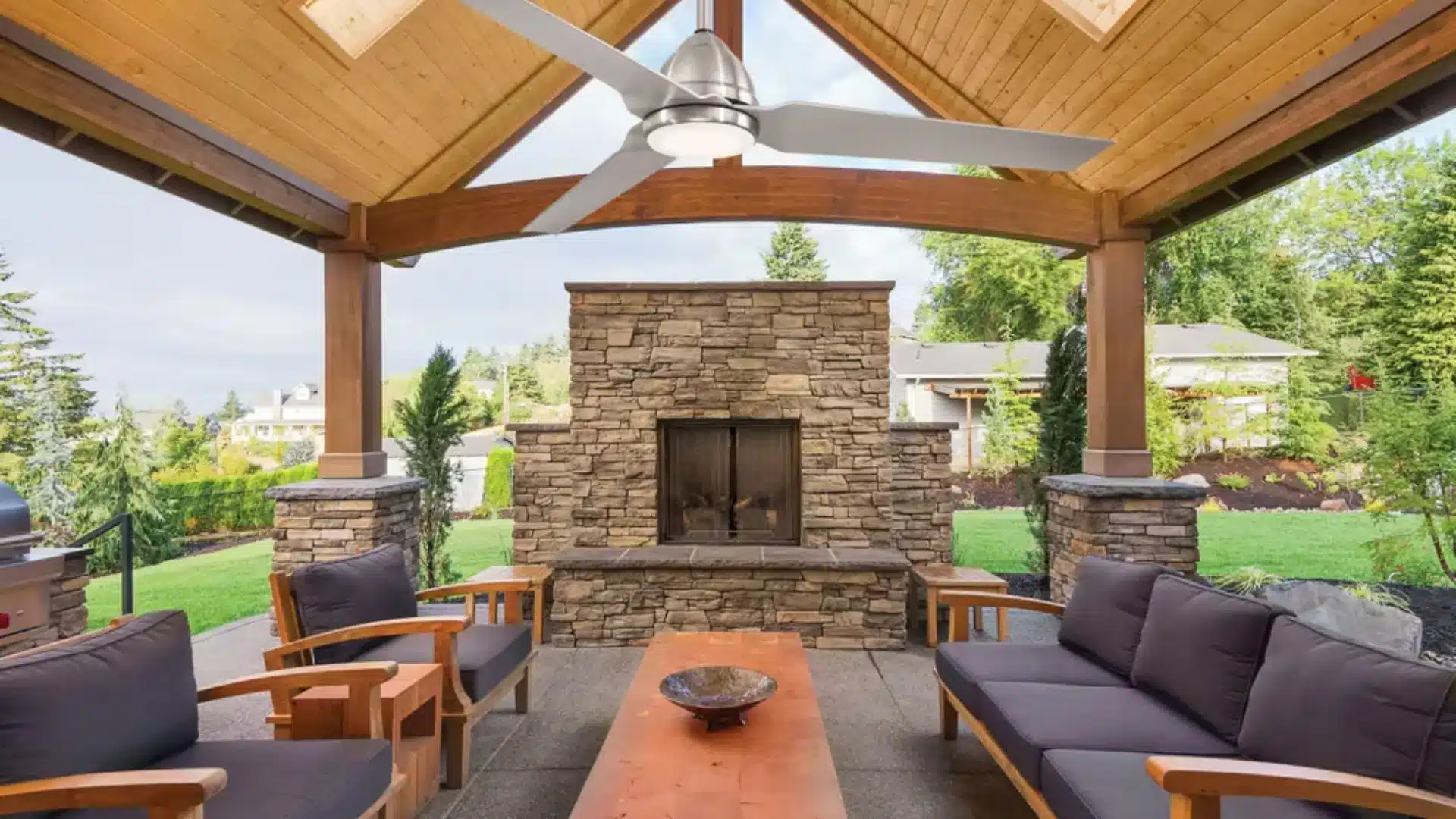
Ceiling fans make a covered deck noticeably more comfortable in hot climates by keeping air moving once temperatures drop, but humidity lingers.
People tend to use them far more than they expect during installation.
Tip: Size the fan to the space. Blades around 1200mm suit decks up to 15 square meters. Mount it on a downrod rather than flush with the ceiling to improve airflow below.
23. Covered Deck with Integrated Lighting
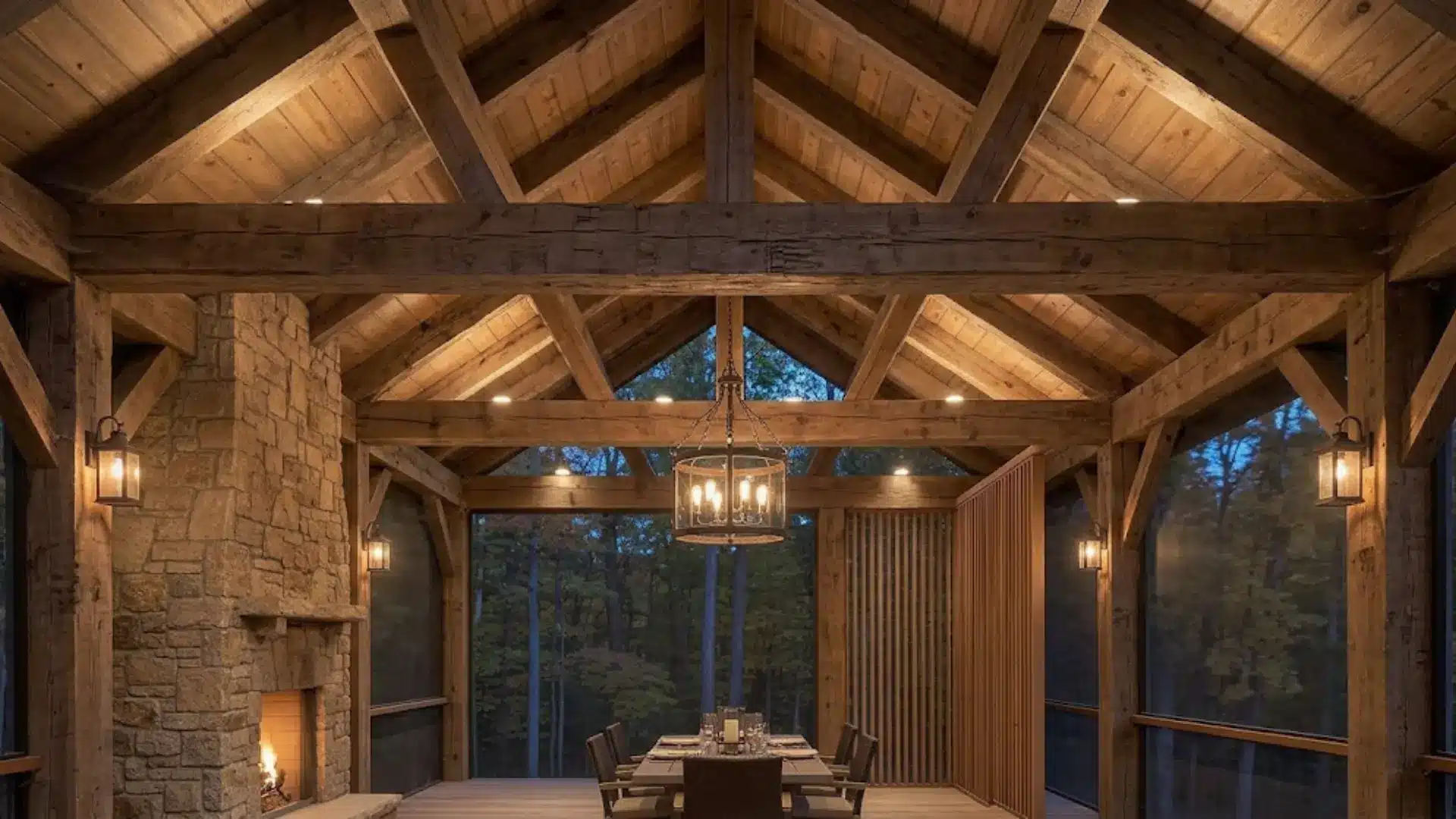
Recessed downlights or pendant fixtures stretch the deck’s usable hours well past sunset.
Good lighting changes how the space feels at night, less like an outdoor area and more like a proper room.
Tip: Plan lighting zones during the build: ambient, task, and accent. Use warm white globes rated 2700 to 3000K for an inviting feel rather than a purely functional one.
24. Keep a Small Covered Deck Simple
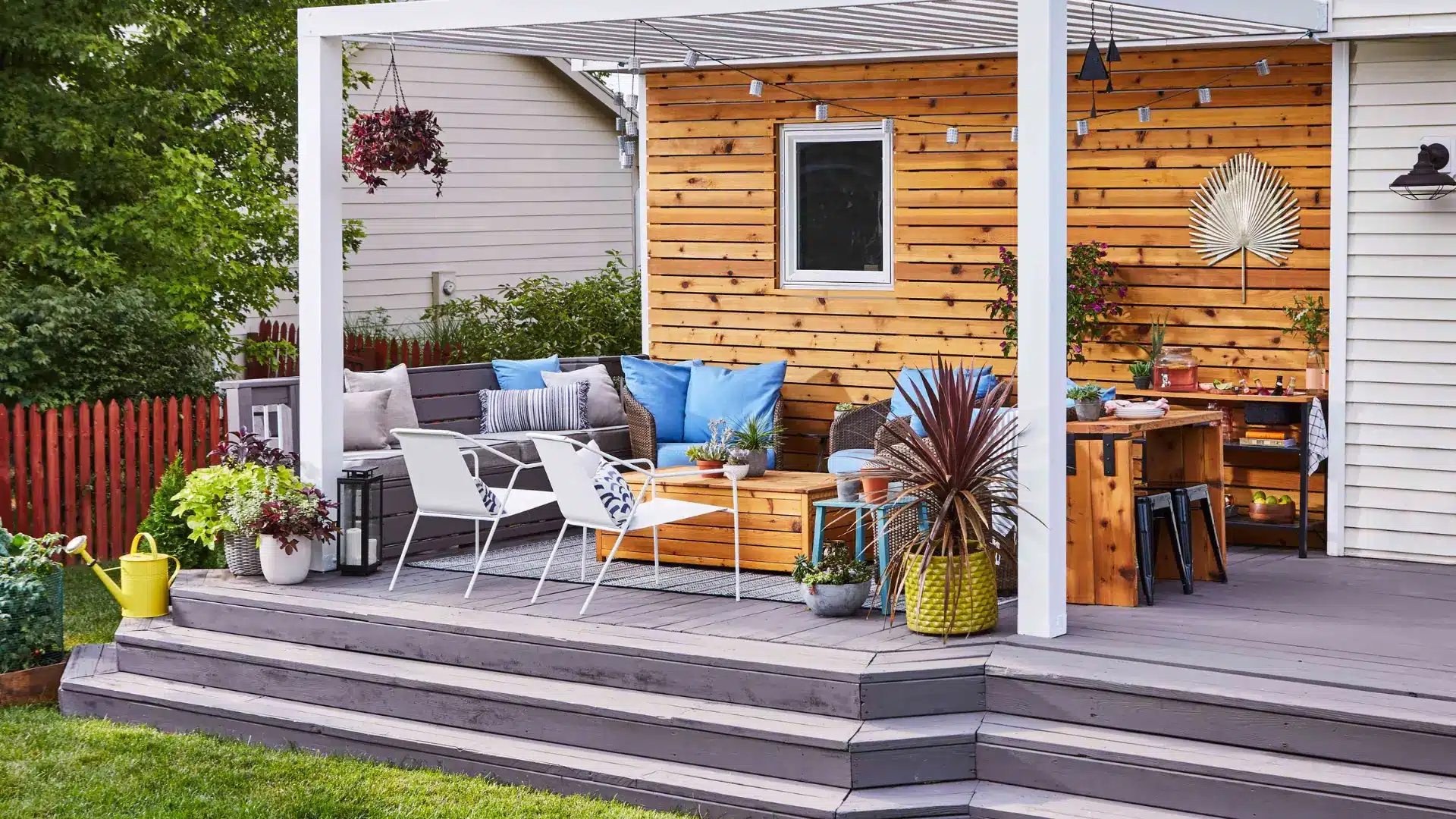
Small decks do not need every idea on this list at once, and trying to fit too much overhead structure onto a compact footprint usually backfires.
A single wall-mounted awning or a slim lean-to roof covers a small deck without crowding it, and skipping bulky posts keeps the floor space fully usable.
Tip: Choose furniture scaled to the deck, not to the photo you saw online. On a small footprint, one well-placed post beats four, and a lighter fabric cover almost always looks less cramped than a heavy timber roof.
What Does a Covered Deck Realistically Cost Today?
Covered deck costs can vary sharply because a shade sail and a full roof extension are completely different projects. The final price usually depends on structure type, attachment method, footing work, permits, and local labor rates.
Typical ranges are:
- Shade sail or basic awning: $500 to $3,000
- Freestanding pergola: $5,000 to $15,000
- Solid roof over an existing deck: $4,000 to $14,000
- New deck with cover: $8,000 to $22,000
- Attached roof extension with permits and electrical: $15,000 to $35,000
Local pricing can shift quotes by 40 to 60 percent, so get at least two estimates before choosing a design.
Larger decks, premium materials, and expensive labor markets push costs higher.
Note: Ranges above reflect typical 2026 contractor quotes and can shift with local labor rates. Get a current local quote before budgeting against these numbers.
What to Consider Before You Cover Your Deck?
Choosing the right covered deck starts with climate, attachment, and how you plan to use the space. Style matters, but function comes first.
- Deck Size and Layout: Measure the footprint. Small decks lose space quickly, so awnings or lean-to covers work better than structures with several posts.
- Drainage and Wind Exposure: Roofs need proper drainage and strength for local wind conditions. Low-pitch roofs require reliable runoff, while pergolas and canopies need wind ratings.
- House Attachment: An attached roof can require stronger footings because the existing deck may not support added weight.
- Light and Shade: Solid roofs can reduce daylight indoors. Consider skylights, partial coverage, or adjustable louvers near windows.
- Existing Structure: Check framing, footings, and permits before building.
Get these basics right, and your final design will be easier to live with long-term.
How to Choose the Right Covered Deck?
Choosing the right covered deck starts with climate, attachment, and intended use. Style should come after those practical decisions.
| Factor | What to Consider |
|---|---|
| Climate | Frequent rain, snow, or year-round use usually calls for a solid roof. In dry, sunny areas, a louvered pergola, awning, or shade sail may provide enough protection without a permanent roof. |
| Attachment | Attached covers offer stronger shelter but may require permits, structural checks, and upgraded footings. If setbacks or HOA rules limit attachment, a freestanding pavilion or pergola may be the better fit. |
| Intended use | Think about when you will actually use the deck. Seasonal shade needs differ from year-round shelter, and that distinction can quickly eliminate unsuitable options. |
Get these three decisions right first, and choosing a structure becomes simpler, more practical, and far less likely to disappoint later for your home and daily routine.
Common Mistakes Worth Knowing Before You Commit
Most projects that stall or go over budget hit the same problems. These are the ones worth knowing before planning gets too far along.
- Choosing aesthetics first: A structure that looks right on a mood board may not be buildable due to permit requirements, setbacks, or HOA rules.
- Assuming freestanding means permit-free: Local size thresholds still apply even without attachment to the house. Verify before committing to any design.
- Ignoring permits until quotes arrive: Attached roof extensions require engineering sign-off. Finding that out after quotes are in means starting the process over.
- Underestimating the timeline: Permit approvals, inspections, and contractor scheduling compound quickly. A six-week build can easily run twice that once approvals are factored in.
One early conversation with your local building department costs nothing. Restarting from scratch after quotes are already in costs considerably more.
Conclusion
The best covered deck ideas are the ones that make your outdoor space easier to use in real life.
A simple awning may be enough for afternoon shade, while a solid roof, pavilion, or screened structure makes more sense for rain, dining, or year-round comfort.
Before choosing, think about your climate, deck size, budget, drainage, wind exposure, and permit rules. A cover should improve how the deck works, not create more maintenance or limit the space.
Start with the problem you want to solve, then choose the structure that fits it best.
Which covered deck idea would you choose for your backyard? Share your favorite in the comments.
Frequently Asked Questions
How Can I Cover My Deck Cheaply?
Shade sails, canvas awnings, and freestanding pergolas with climbing plants are the lowest-cost entry points, typically ranging from a few hundred to a few thousand dollars, depending on size. These provide seasonal shade rather than full weather protection. If budget is the primary constraint, a shade sail anchored to existing posts is the fastest and most affordable option.
Is a Covered Deck a Good Idea?
For most homeowners, yes. A covered deck extends usable outdoor time, protects against sun and light rain, and reduces UV damage to deck materials and furniture. Whether it is worth the investment depends on your climate, how often you use the deck, and which structure fits your budget and permit requirements.
Does a Covered Deck Require a Permit?
Whether a covered deck needs a permit depends on the structure type and how it attaches to the house. Freestanding options like pergolas and shade sails typically do not require permits in most areas, but an attached roof extension is usually classified as a structural addition and will. Confirm with your local building department before finalizing any design tied to your house.
What is the Difference Between a Pergola and a Covered Deck?
A pergola is a type of covered deck structure with an open or slatted roof that provides partial shade but not full rain protection. A covered deck is the broader category, which includes pergolas, attached roof extensions, awnings, and screened enclosures. Not all covered decks have pergolas, and not all pergolas provide the weather protection homeowners expect.