


If you’re thinking about updating your kitchen, you’ve probably asked yourself what the real cost to paint kitchen cabinets looks like, why prices vary so much, and how to make the smartest choice for your space.
It’s a common question, and you’re definitely not the only one trying to figure it out.
This blog walks you through the numbers, the choices you’ll face, and the small details that can make a big difference.
You’ll get a clearer picture of what to expect before you spend a dollar, without the usual noise or guesswork.
Average Cost to Paint Kitchen Cabinets
Painting kitchen cabinets usually costs between $1,000 and $12,000, depending on the size of your kitchen and the finish you choose.
Small kitchens tend to fall on the lower end of the range, medium kitchens land in the middle, and large kitchens usually cost the most because they have more doors, drawers, and prep surfaces.
Formula to Estimate Your Cost:
- Count the number of cabinet doors and multiply by the cost per door.
- Count your drawers and multiply by the cost per drawer.
- Add the cost for each cabinet box.
- Include any extra prep work, like repairs or heavy cleaning.
What Drives the Cost of Painting Kitchen Cabinets?
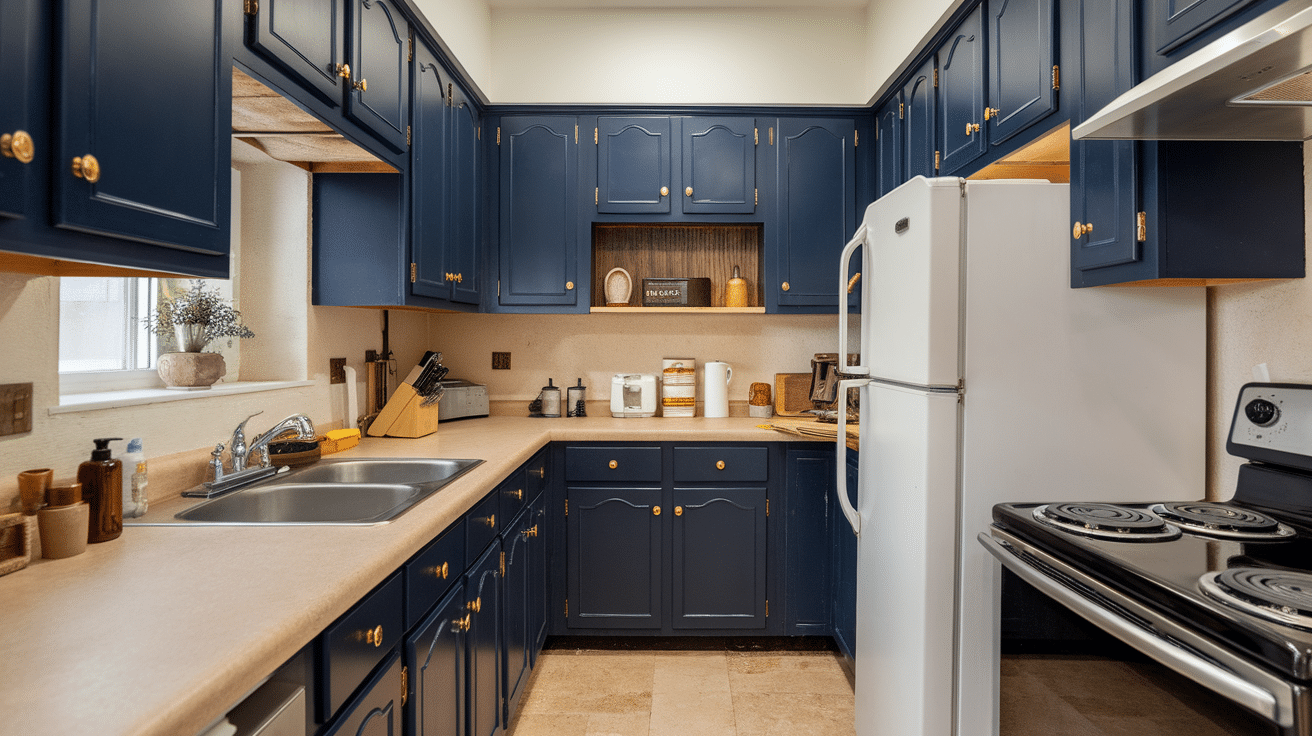
The cost of painting kitchen cabinets can vary a lot from one home to another. Small details in the job often make the price go up or down.
1. Number of Doors, Drawers, and Cabinet Boxes
More doors, drawers, and cabinet boxes mean more time spent cleaning, sanding, priming, and painting. Kitchens with islands, tall cabinets, or corner units also take longer because they’re harder to reach. Extra time increases the overall cost.
2. Cabinet Condition and Prep Work Needed
Cabinets in good shape cost less because they need less prep. Grease, dents, worn spots, or peeling paint require repairs before painting. Water damage or loose veneer adds even more work. The more prep needed, the higher the labor cost. Extra time spent cleaning and repairing surfaces directly increases the total project price.
3. Material Type
Different materials need different prep steps. Wood is easy to sand and paint. Laminate and MDF need special primers and extra prep to help the paint stick. Slick or delicate surfaces add more time, increasing cost. Choosing the right primer and technique for each material ensures a longer-lasting finish.
4. Painting Method
Spraying gives a smooth finish but requires masking, equipment, and skill, so it costs more. Brushing or rolling is cheaper but may show texture. Pros usually charge more for sprayed finishes because the prep takes longer. The method you choose also affects how quickly the job can be completed from start to finish.
5. Paint Quality, Finish Level, and Hardware Updates
High-quality paint and glossy finishes cost more because they need more coats and careful sanding. Updating knobs, pulls, or hinges also adds to the total. Soft-close hinge upgrades require extra labor. Premium finishes and hardware can enhance durability and overall kitchen appearance.
6. Labor Rates and Your Region
Labor makes up most of the cost. Prices vary by city and demand. Kitchens that are tight or hard to access take longer to work on, increasing labor time and total cost. Areas with higher living costs or limited contractors typically see higher painting prices.
DIY vs. Hiring a Pro: Cost to Paint Kitchen Cabinets
This breakdown makes it easier to see what you’re actually paying for with each option:
| Category | DIY | Hiring a Professional |
|---|---|---|
| Pros | Lowest cost, full control, good for small kitchens | Fast and easy, smooth, durable finish, includes prep, repairs, and cleanup |
| Cons | Time-consuming, requires prep and painting skills, the finish may show brush marks | Higher cost, paying for labor and equipment, and less schedule control |
| Basic Cost | $200–$600 for materials | $1,500–$5,000+ for labor and materials |
| Material Costs | Primer $20–$40; Paint $40–$120; Degreaser $10–$20; Sandpaper $10–$20; Tape/plastic $15–$30 | Included in quote: pro-grade materials usually $150–$300 value |
| Tool Costs | Brushes/rollers $20–$40; Optional sprayer $80–$200; Drop cloths $10–$20 | Included: commercial sprayers and dust-control systems used |
| Prep Costs | Degreasing $10–$20; Minor repairs done by homeowner; Sanding pads $10–$25 | Repairs $50–$200; Grease removal $50–$150; Sanding or stripping $200–$600 |
| Hardware Costs | Knobs/pulls $2–$10 each; Soft-close hinges $4–$12 each | Same hardware cost; Installation labor $50–$200 |
| Finish Quality Costs | Brushed or rolled finish at no extra cost; Sprayer purchase $80–$200 | Brushed or rolled finish included; Factory-smooth sprayed finish +$300–$800 |
| Add-On Costs | Extra sanding tools $10–$30; Extra primer $20–$40; Wood filler $10–$20 | Door rehanging $100–$200; Filling old holes $2–$5 each; Extra coats for dark colors $100–$300 |
| Hidden Costs | Mistakes may require repainting; Poor prep can cause adhesion issues; Longer drying times | Travel fees in some areas; Seasonal price increases |
| Time Needed | 2–5 days | 3–7 days |
| Examples | Small kitchen with a brushed DIY finish done on a budget | Medium kitchen with a sprayed finish, including prep and repairs |
DIY works best if you’re trying to save money and don’t mind spending a few days on prep and painting. It’s a good choice for smaller kitchens or simple layouts.
Hiring a pro is worth it when you want a smooth, long-lasting finish without doing the work yourself. It’s also the better pick for larger kitchens, damaged cabinets, or jobs that need spraying for a cleaner look.
What to Look for Before Hiring a Cabinet Painter
Picking the right cabinet painter affects how your cabinets turn out. A few quick checks mentioned below can help you avoid issues and get the job done right:
- Warranty: Look for a written warranty that covers peeling, chipping, or adhesion issues.
- Prep Work Included: Confirm they handle cleaning, sanding, repairs, caulking, and masking.
- Painting Method: Spraying gives a smoother finish; brushing or rolling may show texture.
- Product Quality: Ensure they use a high-quality primer and cabinet-grade paint from reliable brands.
- Quote Breakdown: The estimate should list labor, materials, hardware removal, the number of coats, and any extra fees.
Painting vs. Refacing vs. Replacing Cabinets
There are different ways to update your kitchen cabinets, and each comes with its own cost and timeline. This quick comparison helps you see which option fits your needs:
| Category | Painting | Refacing | Replacing |
|---|---|---|---|
| Definition | Recoating existing cabinets with new paint. | Updating the exterior with new doors, fronts, and veneers. | Removing old cabinets and installing brand-new units. |
| Cost | $1,000–$7,000 | $4,000–$12,000 | $8,000–$25,000+ |
| Timeline | 3–7 days | 4–10 days | 1–3 weeks |
| Durability | 3–7 years, depending on prep and paint quality | 10–20 years with new doors and veneers | 20+ years with new cabinets |
| What’s Changed | Only the color and finish | New doors, drawer fronts, and veneers; boxes remain | Entire cabinets replaced, including boxes and doors |
| Pros | Lowest cost, fast upgrade, works well for solid cabinets | Big visual change, more durable than paint, keeps the same layout | Full design freedom, longest lifespan, fixes layout or structural issues |
| Cons | Less durable, does not fix damage or bad layouts | Costs more than paint; boxes must be in good condition | Highest cost, longest timeline, more disruption |
| Best For | Budget-friendly updates when cabinets are in good shape | When boxes are strong, but you want a modern look | Major remodels, layout changes, or damaged cabinets |
Each option suits different budgets and cabinet conditions. Knowing the differences makes it easier to choose the right one.
Cost-Saving Tips Without Compromising Quality
Saving money on cabinet painting doesn’t mean you have to settle for a weaker finish. A few smart choices can lower your cost while still giving you a clean, durable result.
- Reuse your current hardware if it’s still in good shape.
- Do basic prep yourself, like cleaning and degreasing, even if you hire a pro.
- Choose a durable mid-range paint instead of a premium option.
- Go with on-site spraying when possible, since off-site work adds cost.
- Avoid major color shifts, such as dark to very light, because they often require extra coats.
Wrapping Up
Painting your kitchen cabinets is one of the most cost-effective upgrades you can make, offering a fresh, modern look without the high price of refacing or replacing.
Understanding what affects your total cost, such as cabinet condition, materials, prep work, and finish quality, helps you plan realistically and avoid surprises.
With the right choices, cabinet painting can transform your kitchen beautifully while staying well within your budget.