


Many people believe that setting a “proper” table requires a rigid adherence to elaborate rules and expensive pieces. In reality, a proper table setting is all about appropriateness for the occasion, not perfection.
From casual family dinners to formal events, it’s easy to feel overwhelmed by what goes where, but the reality is simpler than it seems.
Overcomplicating a setting can make the meal feel stiff, while a lack of structure can make it seem rushed.
The key is in understanding when to simplify and when to layer, creating a welcoming atmosphere without excessive formality. This approach helps you set a table that feels right for the event.
What “Proper” Actually Means for a Table Setting
A place setting, sometimes called a cover, is the arrangement of tableware laid out for one person. The way you set it signals the meal type and level of formality to guests before a single dish is served.
There is no single correct image of a proper table. What’s appropriate shifts based on the occasion tier: basic, casual, semi-formal, or formal.
Each tier builds on the previous one, and each is entirely correct for its purpose. A basic setting is not a lesser version of formal; it is the right choice for the occasion it serves.
Proper means suitable for the event at hand, not expensive or elaborate. Understanding that distinction is the first step to setting a table with confidence.
Basic and Casual Table Setting
These two tiers share the same foundation. Basic covers everyday meals, while Casual builds on it for guest-ready occasions.
Basic Setup for Everyday Meals
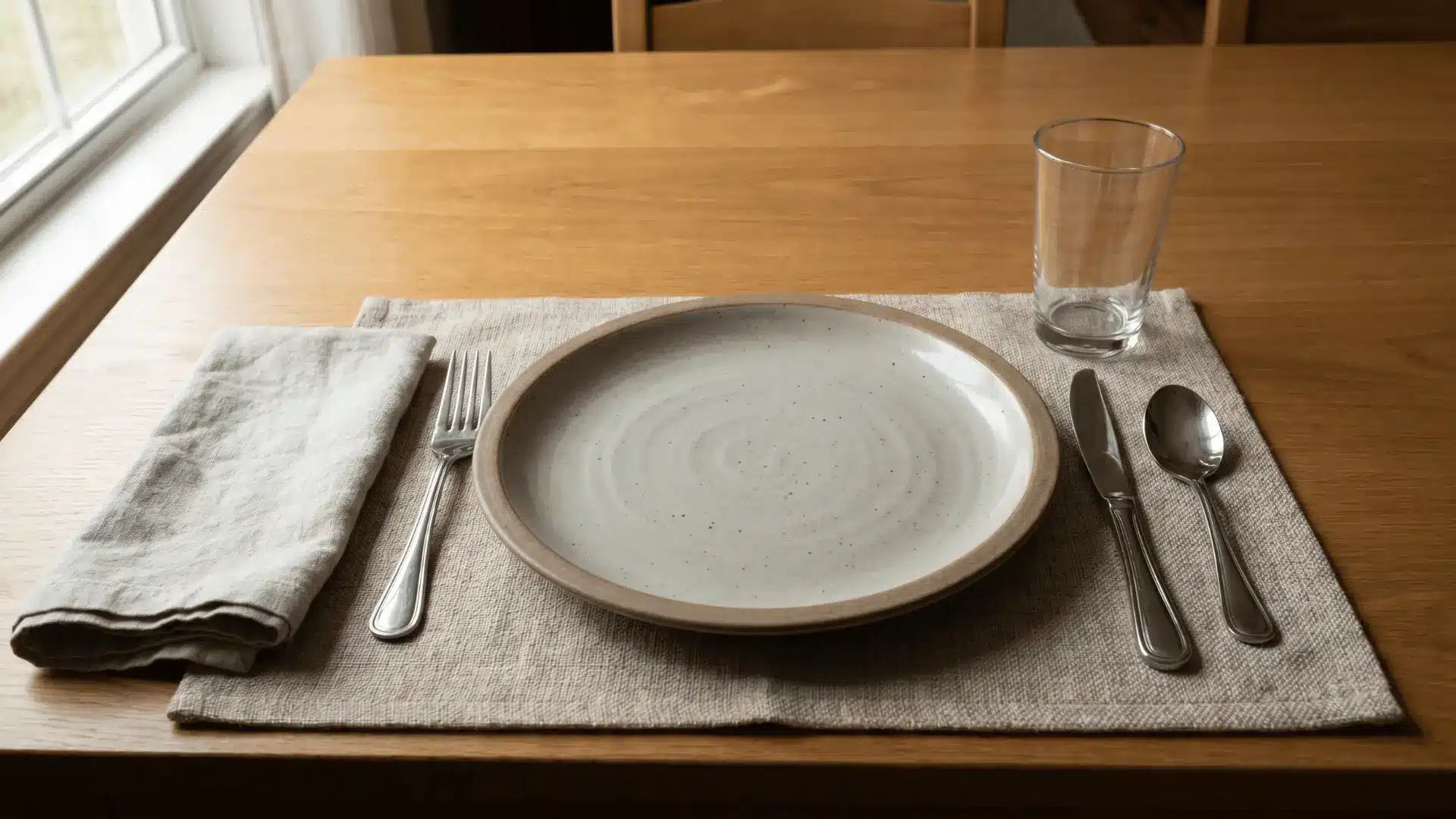
Start by laying a placemat at each seat, keeping in mind the standard table height as you plan seating comfort, to define personal space. It gives the table structure and makes each setting feel intentional. Center the dinner plate on it to anchor the arrangement.
Next, position the utensils. Place the fork to the left, with the napkin beneath or beside it. The knife goes to the right, blade facing inward. The spoon sits just outside the knife. That inward-facing blade is a small detail, but it matters for safety and visual consistency.
Finally, set the water glass just above the plate around 1 o’clock. It stays within reach without crowding the plate or utensils. The napkin can also sit on the plate if you prefer.
This keeps flexibility without breaking any conventions. These small, deliberate choices make a simple table feel composed and functional.
Casual Additions for Hosting Guests
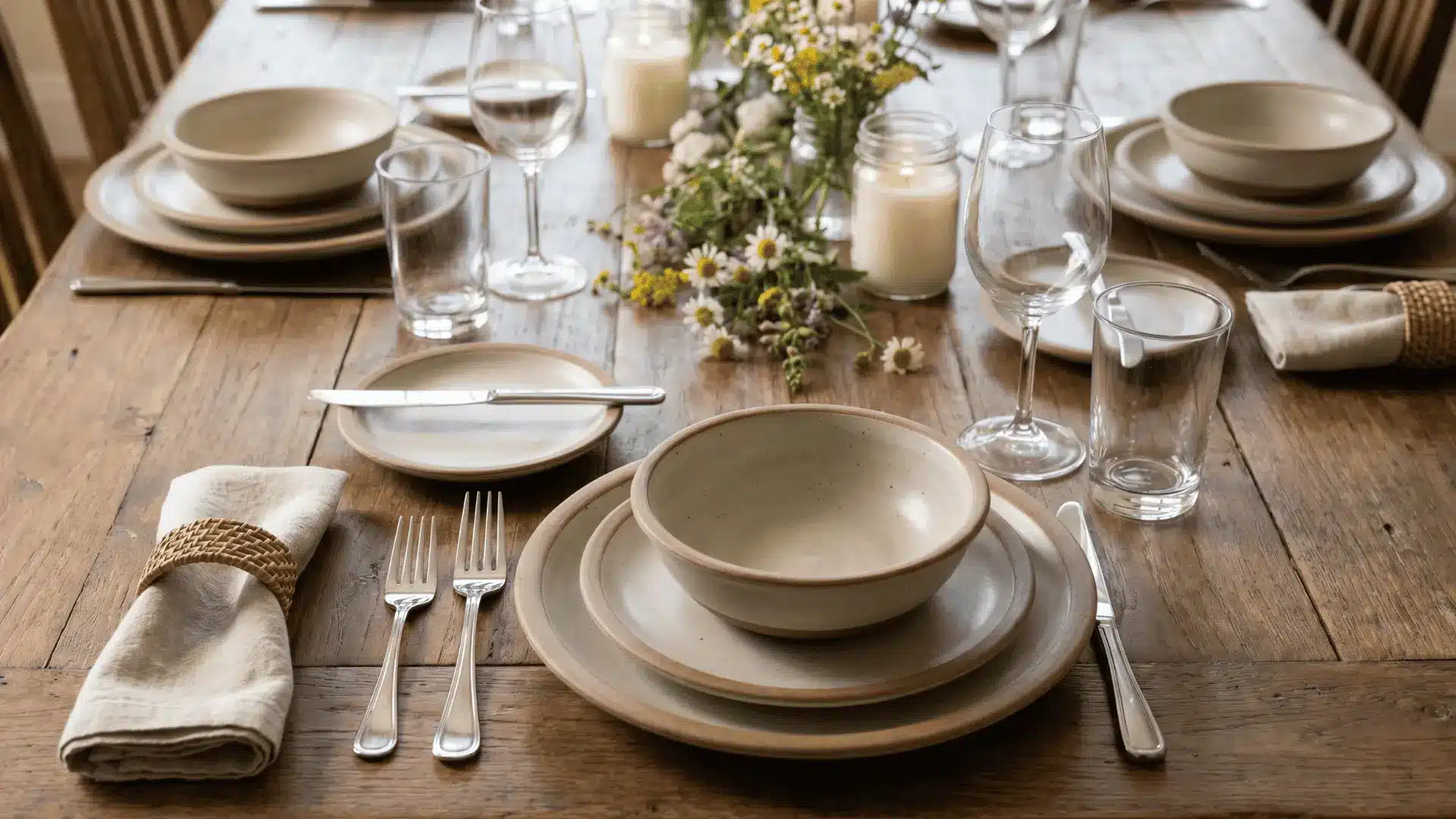
Once the basic layout is set, add only what the meal requires. Place a salad fork to the left of the dinner fork, farthest from the plate, and set a salad plate on top of the dinner plate or to the left of the forks. If serving soup, place a soup bowl on the salad plate.
The bread plate goes in the upper left corner, with a bread knife laid horizontally across it. If serving wine, place the wine glass to the right of the water glass.
For a subtle-styled touch, a napkin ring can replace flat placement without making the setting formal.
This tiered approach works for dinner parties, holiday meals, upscale brunches, or any multi-course occasion that doesn’t demand full protocol.
One principle applies to all setups: only set what the meal calls for. A wine glass with no wine or a soup spoon without soup feels careless. Over-setting is as distracting as under-setting, so restraint keeps the table thoughtful and practical.
Semi-Formal Table Setting: The Middle Ground
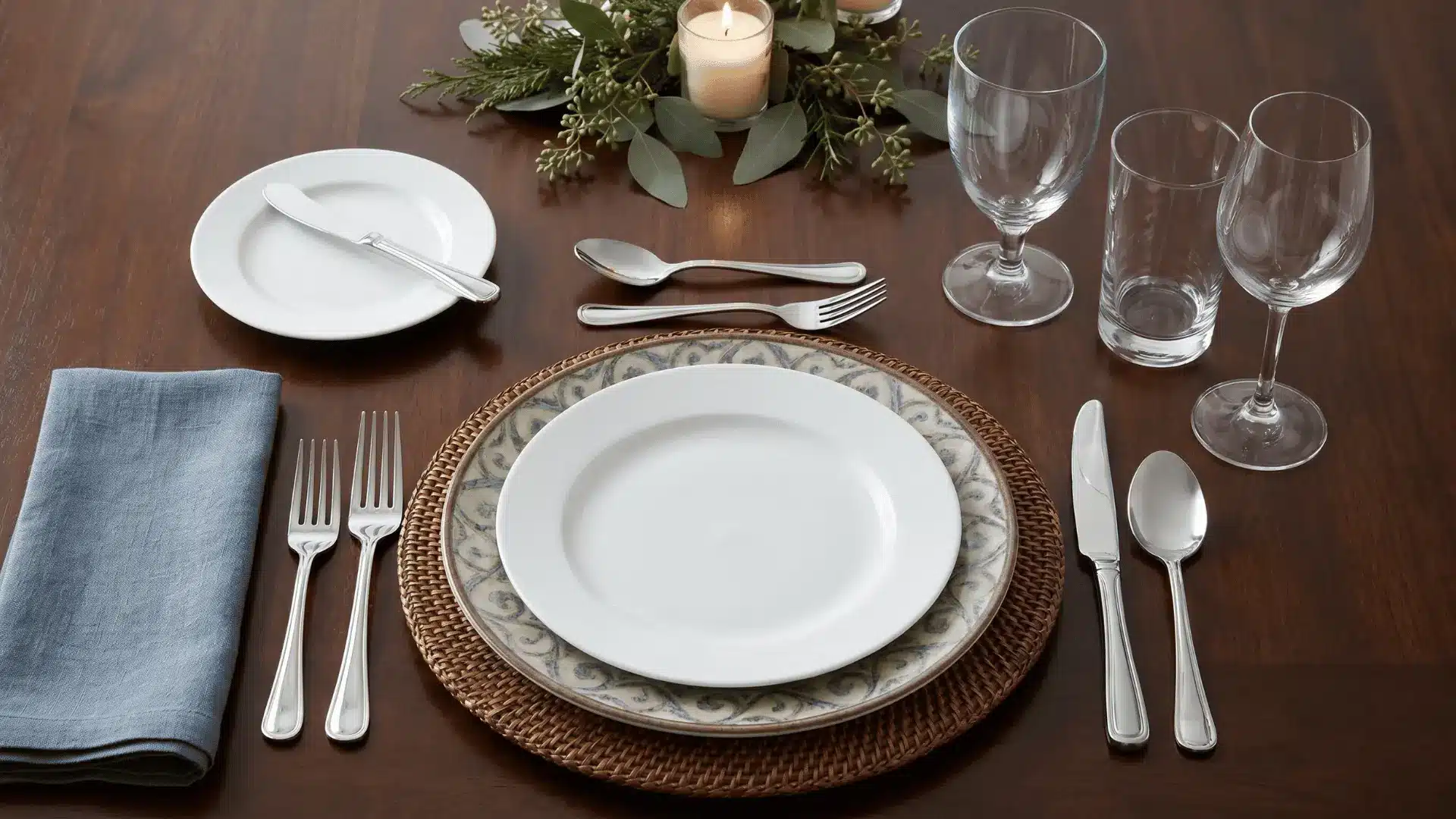
Semi-formal sits between casual and full formal, hitting the sweet spot most home hosts need, alongside details like curtain length that round out a dining room’s formality.
It’s perfect for dinner parties, Thanksgiving, holiday gatherings, and any occasion that feels special without needing fancy dining skills.
It uses the casual foundation with these additions:
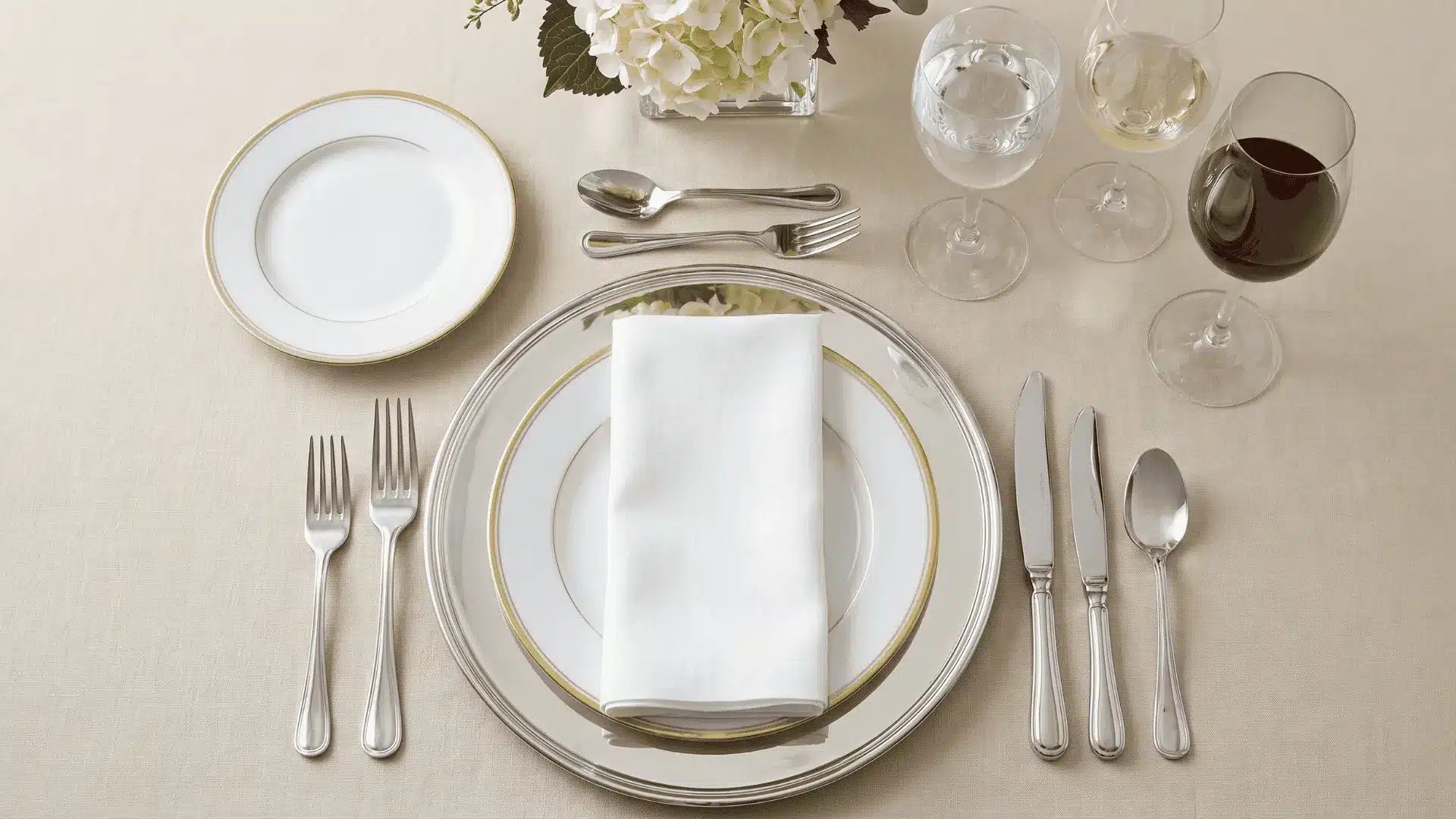
- Charger plate: It acts as the base beneath the dinner plate, replacing the placemat
- Dessert utensils: They are placed horizontally above the plate, dessert fork with handle facing left, dessert spoon with handle facing right, spoon above fork
- Cloth napkin: It is neatly folded and placed on the charger or to the left of the forks
The semi-formal style is perfect for hosts without a full formal set. I’ve set plenty of tables where not every formal piece was available, and using just a charger, cloth napkins, and the essentials made the table feel polished and thoughtful.
A complete semi-formal setup like this often looks and works better than a formal one with missing pieces, keeping the experience seamless for host and guests.
Formal Table Setting Placement Logic, Not Just Rules
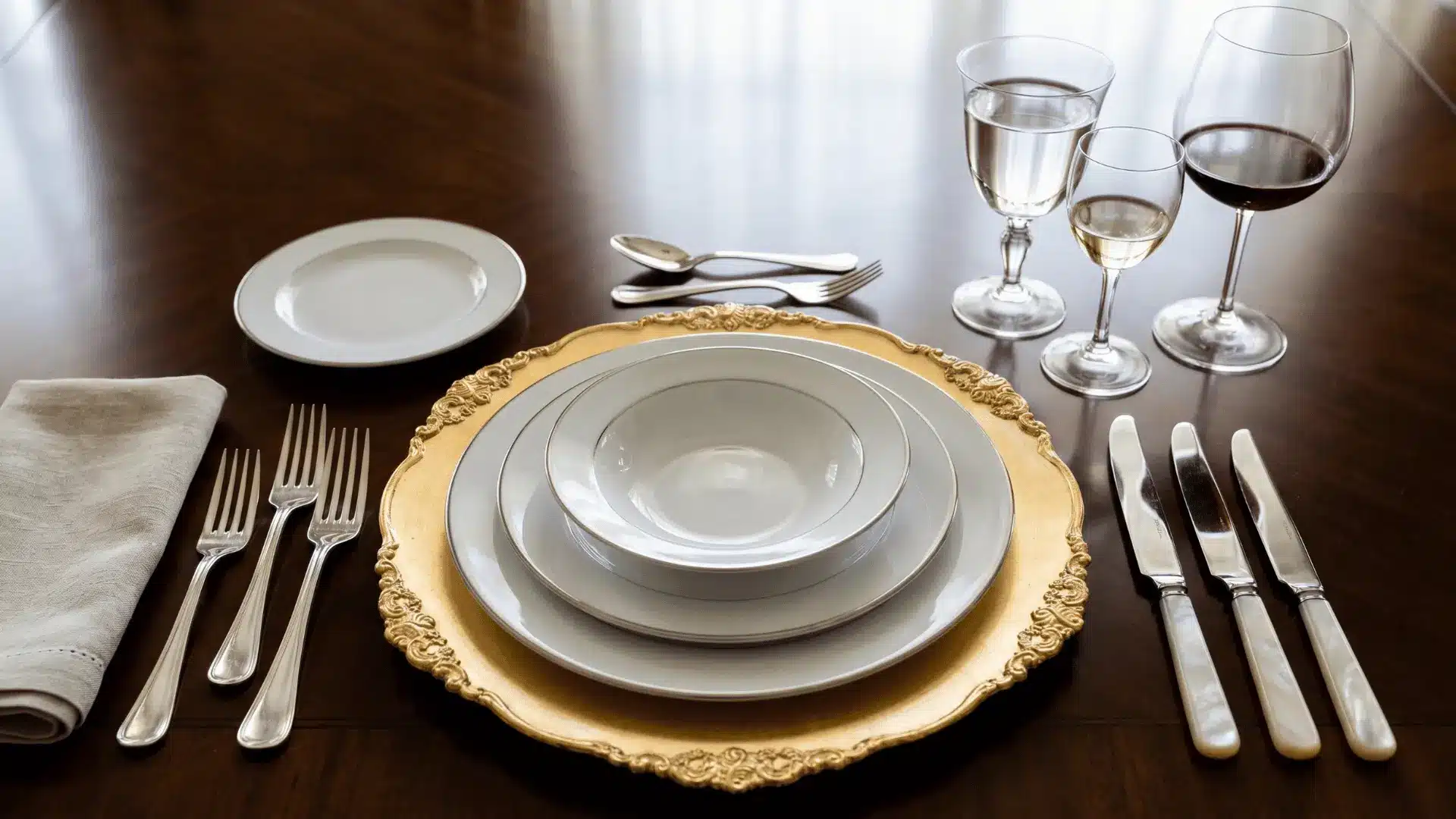
A formal place setting is designed for multi-course dinners, wedding receptions, or holiday feasts with five or more courses. It’s arranged so guests can navigate the table without knowing the menu ahead of time.
The key is the outside-in rule. Utensils are placed in reverse order of use, so the outermost piece is always the next one needed. It’s a functional navigation system that prevents confusion and keeps the meal flowing smoothly.
Flatware Placement
Arrange forks, knives, and spoons in the order they’ll be used, following the outside-in principle to guide guests naturally through each course
1. Forks
Go to the left of the plate, arranged in the order they’ll be used, from the outside in:
Start with the salad fork on the outermost left. If a fish course is served, the fish fork goes next, closer to the plate. The dinner fork sits nearest the plate, ready for the main course.
2. Knife
Go to the right side of the plate, arranged outside-in, with blades always facing the plate.
If a fish or salad course is served, place the knife on the outermost right. The dinner knife sits closest to the plate, ready for the main course.
Blades facing inward are both a safety measure and a subtle signal that the setting is intentional and thoughtful.
3. Spoon
They are placed to the right, arranged in order of use.
Dessert spoons sit horizontally above the plate, handle facing right. They’re positioned above the plate because they’re used last, after all other courses.
This placement preserves the outside-in logic and keeps the tabletop uncluttered during earlier courses
4. Glassware Placement
All glasses sit in the upper right of the place setting:
The water glass goes closest to the center, directly above the dinner knife, since it’s used throughout the meal. The white wine glass sits slightly to its right, with the red wine glass furthest right, just behind the white.
This arrangement follows the order-of-use principle. Wine glasses step outward because white wine is typically served before red, allowing guests to reach each naturally without disrupting the table.
5. Plate and Napkin Placement
The charger plate sits at the center as the foundation of the setting, with the dinner plate directly on top. If serving soup, the soup bowl goes on the dinner plate, and any appetizer plate stacks above it.
Courses are arranged in reverse order of service, so each can be removed without disturbing the rest of the table.
The napkin can be folded on the charger or placed to the left, keeping it accessible while maintaining a clean, organized look.
Note: Dessert plates are never pre-set at a formal table. They are brought out when the dessert course is served.
At a five-course meal, guests don’t need to guess which utensil to use. The layout guides them naturally through each course, from appetizer to dessert, making the experience feel effortless and intentional.
Table Setting Mistakes to Avoid
Most of these happen in a rush. A quick once-over before guests sit down can save you from the most common slips.
- Knife blade faces the wrong way: The blade always faces the plate, toward the fork. Facing it outward is the most noticeable etiquette slip at a table.
- Napkin goes on the right: The napkin belongs to the left of the fork, or on the plate. The right side is reserved for the knife and spoons, no exceptions.
- Setting pieces that won’t be used: A wine glass with no wine, a soup spoon with no soup. Over-setting reads as a mistake, not effort. Only put out what the meal actually calls for.
- Glasses crowded together: The water glass sits closest to the plate, upper right. Wine glasses step outward to the right. Crowding them together signals the setting wasn’t thought through.
- Forcing a formal set when you don’t own every piece: Don’t substitute randomly. Drop the whole setting down one tier intentionally. A complete semi-formal or casual setting beats an incomplete formal one every time.
Conclusion
A proper table setting reflects both style and etiquette, enhancing your dining experience and impressing guests. Whether you’re hosting an everyday meal or a formal dinner, knowing the appropriate tier and placement is key.
The basic, casual, semi-formal, and formal settings each serve their purpose and ensure that your table is set to match the occasion.
By understanding these guidelines, you can confidently create an inviting and well-organized table for any event.
Remember, the most important rule is to only set what’s necessary for the meal. Ready to set the perfect table? Start with these tips and enjoy impressing your guests at your next gathering!
Frequently Asked Questions
What is the correct way to set a table?
Place the plate at the center. Fork left, knife right, with the blade facing inward, spoon beside the knife. Water glass upper right at the 1 o’clock position, napkin to the left of the fork or on the plate.
Do napkins go on the left or right?
The napkin goes to the left of the fork or on the plate. At a formal setting, it sits folded on the charger. The left side is the default across all tiers.
What are the 5 classic table settings?
Basic, casual, semi-formal, formal, and buffet. Each tier adds more pieces. Basic covers everyday meals; formal uses a full multi-course layout with a charger plate.
What are the essential items for a basic table setting?
A dinner plate, fork, knife, spoon, water glass, and napkin. Everything else belongs to casual or formal settings and only appears when the course requires it.