


Transforming a small pantry can feel like solving a puzzle: I’ve spent hours rearranging shelves and bins, only to realize one wrong choice ruins the flow.
Small pantry solutions aren’t just about cramming in storage; they’re about creating a system that actually works while blending function and style.
Here, I’ll walk you through the common mistakes, how to identify your pantry type, and practical strategies for organizing, styling, and maintaining a space that lasts.
From container choices to layout insights, it shows how intentional design decisions can make even the tiniest pantry feel effortless.
What Makes a Small Pantry Work: Before You Start
A small pantry works best when its layout makes every item easy to see, reach, organize, and use each day.
- Focus on visibility: More storage will not help if you cannot see the items already inside.
- Avoid hidden rows: Deep shelves push food behind the front row, where it becomes forgotten and wasted.
- Check corner access: Corner pantries may offer extra space, but angled shelves can make items difficult to reach.
- Review the door swing: An inward-opening door can reduce floor space and block shelves, baskets, or storage racks.
- Adjust shelf depth: Shallower shelves often make products easier to see, organize, and grab without moving other items.
Fix the pantry’s basic layout before buying bins or organizers, so every storage product serves a clear purpose.
Space-Maximizing Storage Solutions
These ideas focus on the shelving and structure itself. Get this right, and everything else you add works better.
1. Adjustable Shelving
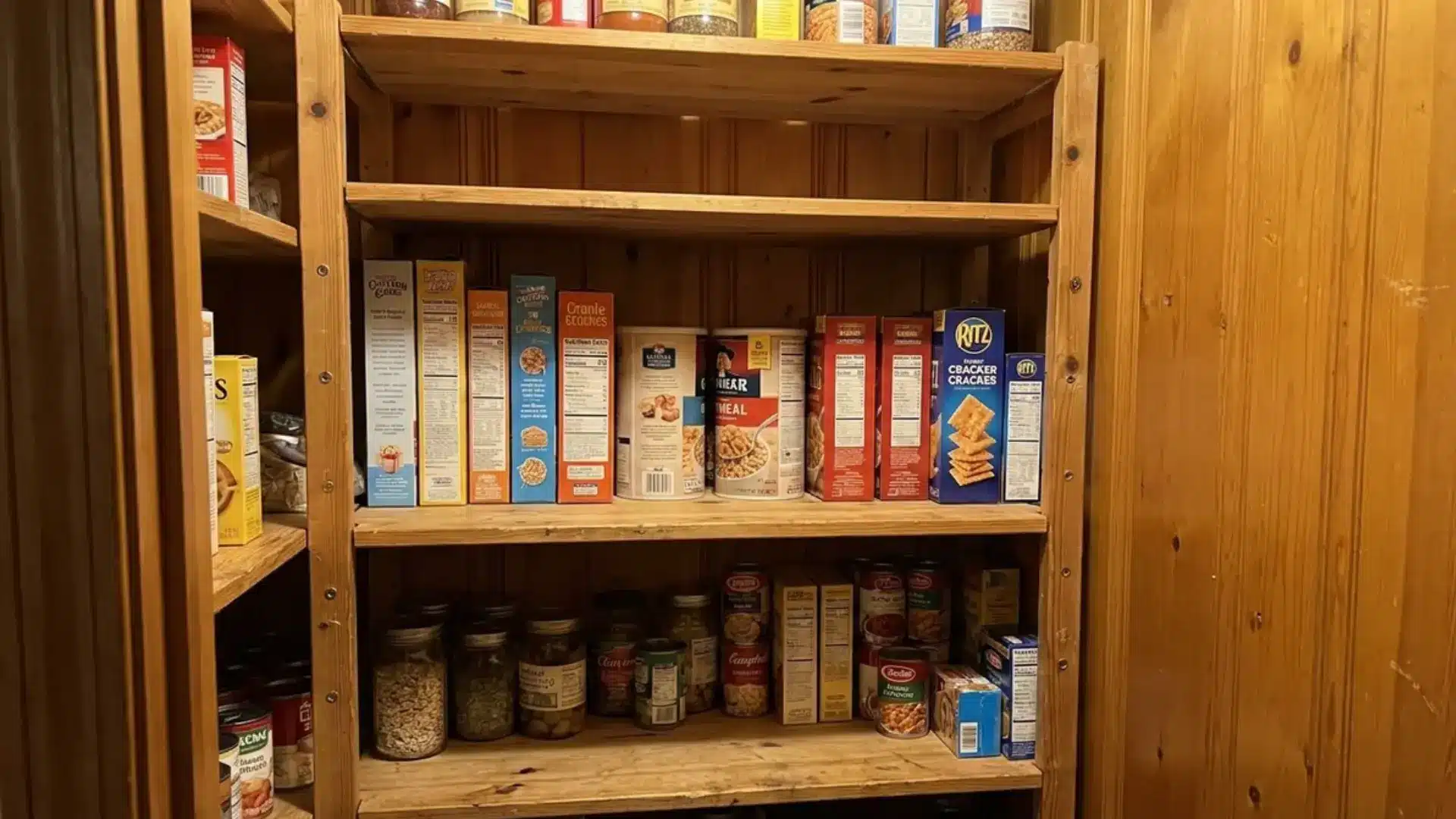
Fixed shelves waste space when your items don’t match the gaps. Adjustable shelving lets you reposition shelves to fit tall cereal boxes on one level and short spice jars on another.
It’s one of the cheapest upgrades you can make, and most pantry shelving kits include this option by default. The only downside is you’ll need to plan spacing as your grocery habits change.
2. Floor-to-Ceiling Shelves
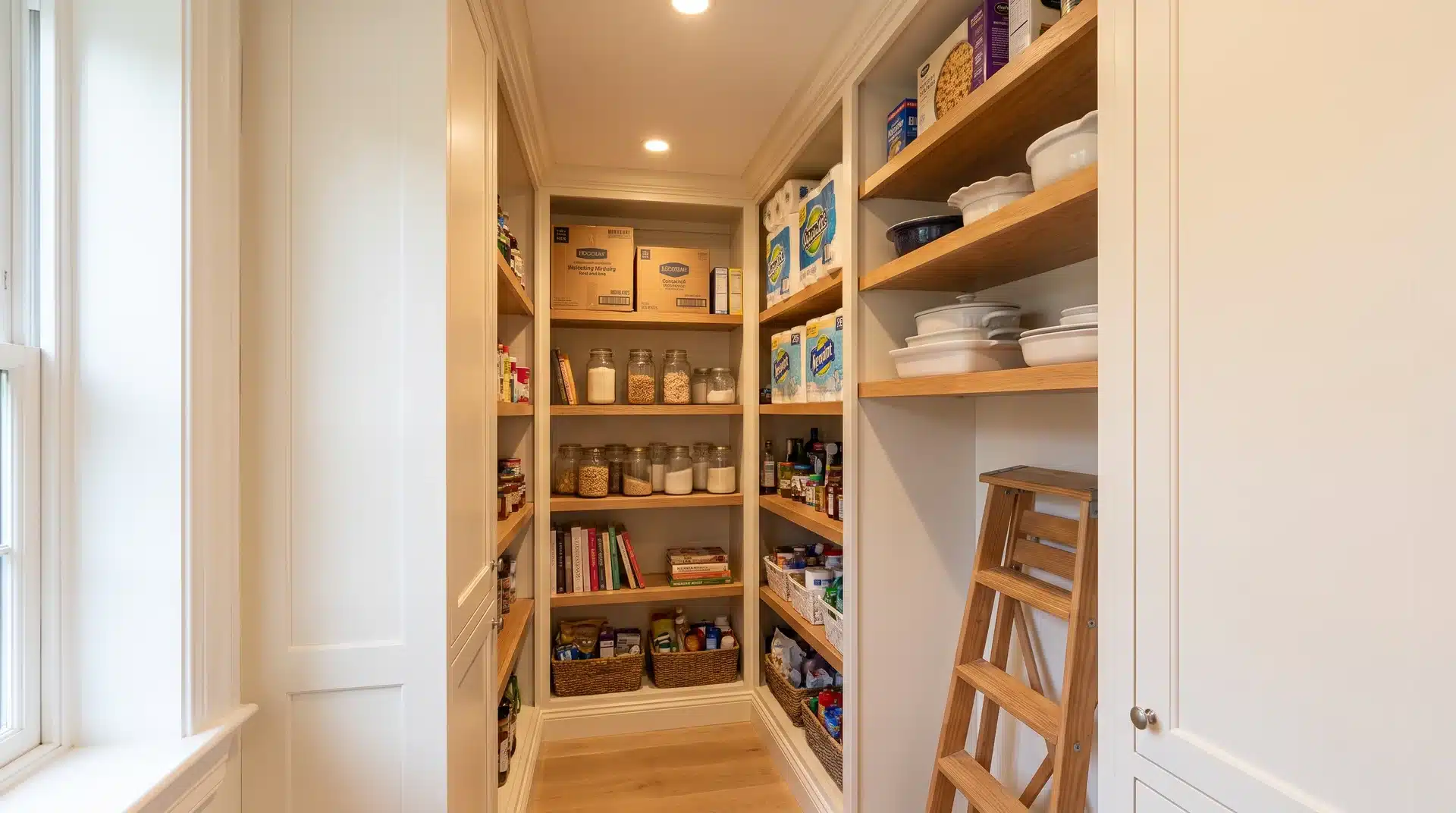
A small pantry can’t grow outward, so let it grow up. Most stop shelving a foot or two short of the ceiling, wasting the one dimension that’s actually free to use.
Extend shelves all the way up for bulk items or things you grab a few times a year, like holiday dishes or extra paper goods. Keep a step stool nearby, since the top shelf won’t be part of your everyday reach.
That keeps it to two short paragraphs like the rest of the list, just with the “small pantry” framing built into the opening line instead of tacked on.
3. Pantry Drawers Instead of Shelves
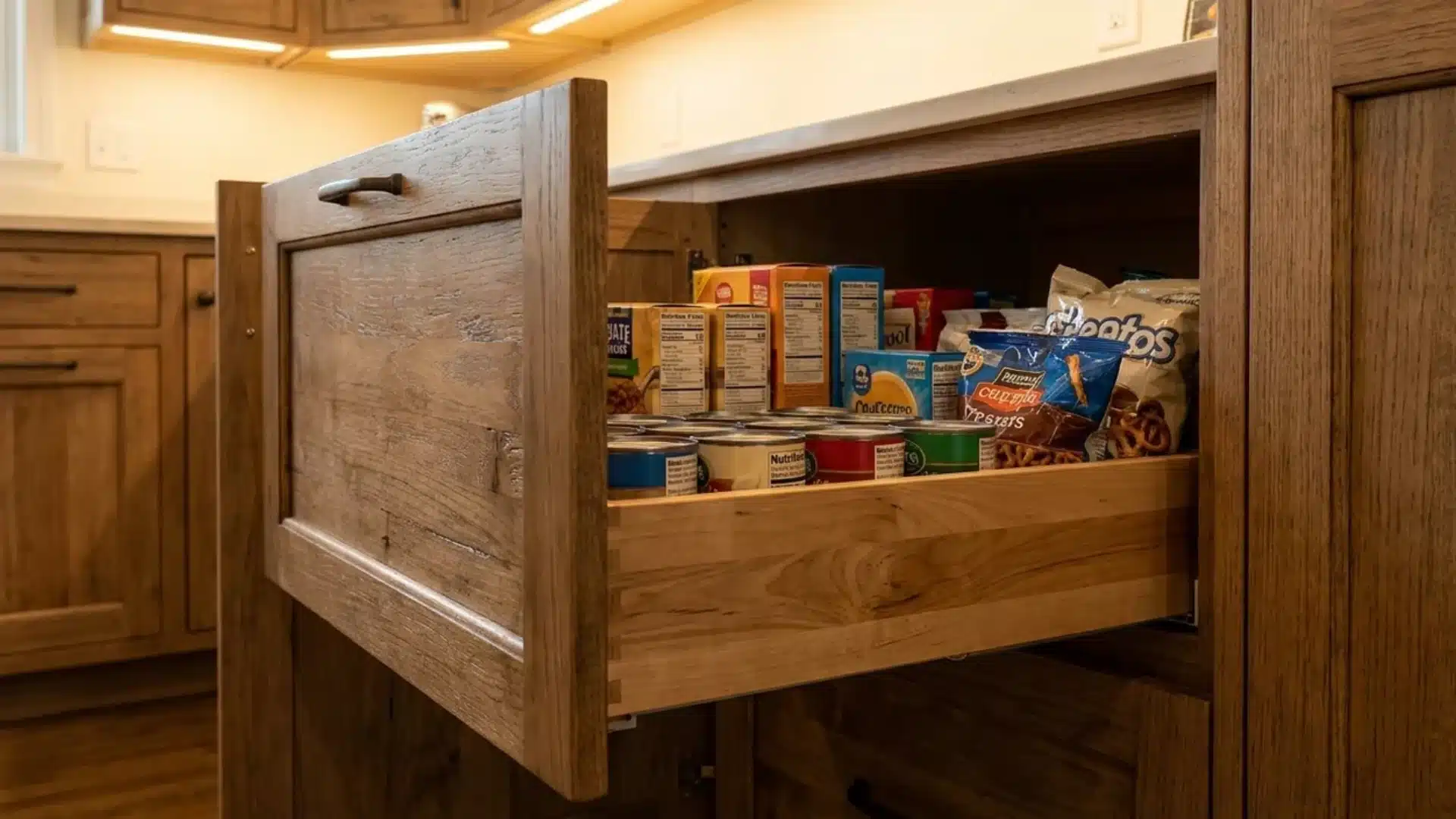
Deep shelves hide things. Drawers solve that by pulling the entire contents forward when you open them.
This works especially well for canned goods, snacks, or produce that tends to get lost at the back of a shelf. Drawers cost more to install than standard shelving, but the payoff is fewer forgotten items and less digging.
4. Stacked Wall Cabinets as Base Storage
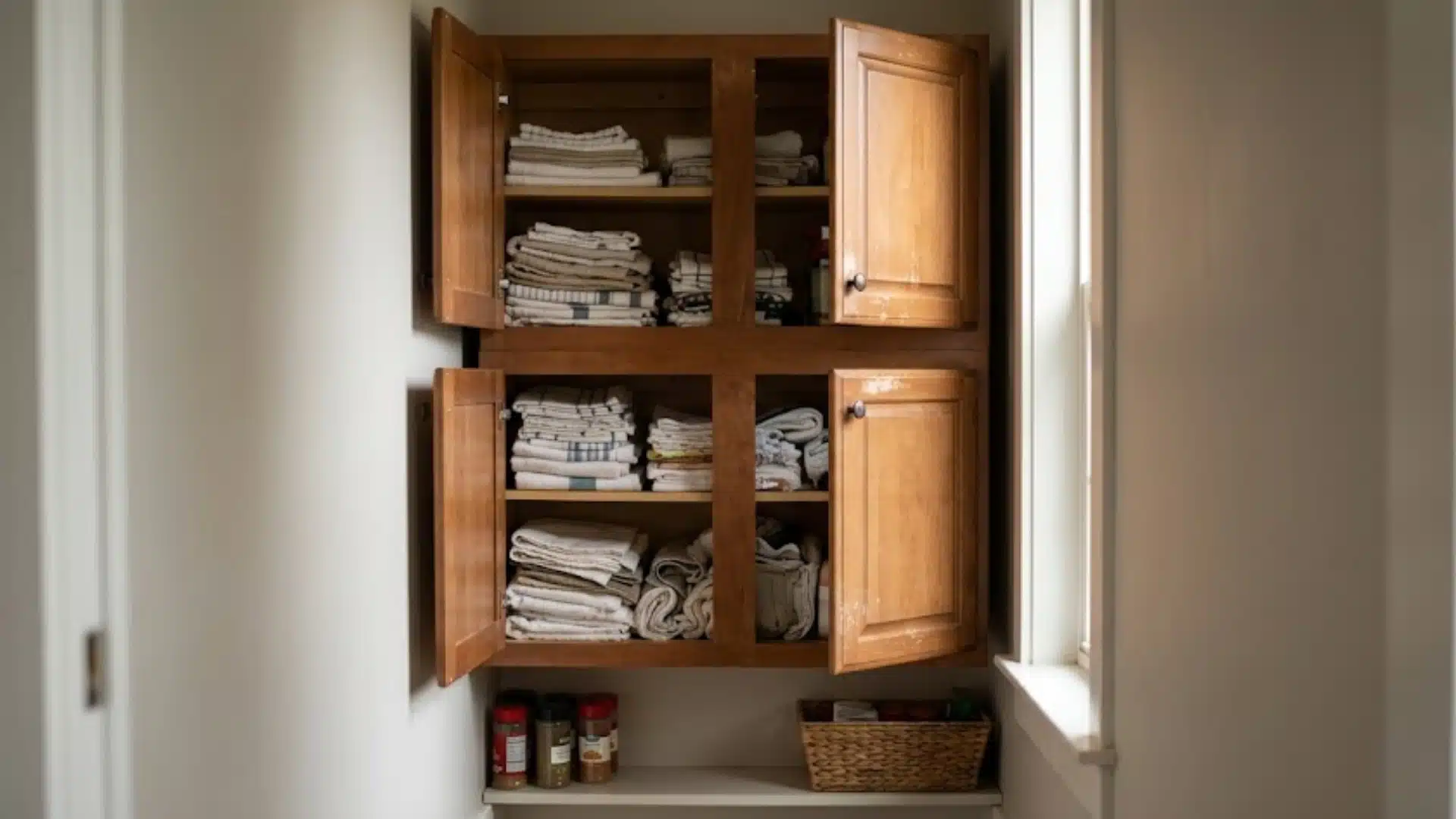
If your bathroom pantry has wall space but limited floor space, mounting base-use cabinets higher up adds enclosed storage without taking up any square footage on the ground.
This works well in pantries that are more hallway than room. It does mean giving up some open shelving, so weigh that against how much closed storage you actually need.
5. Corner Pantry Shelving
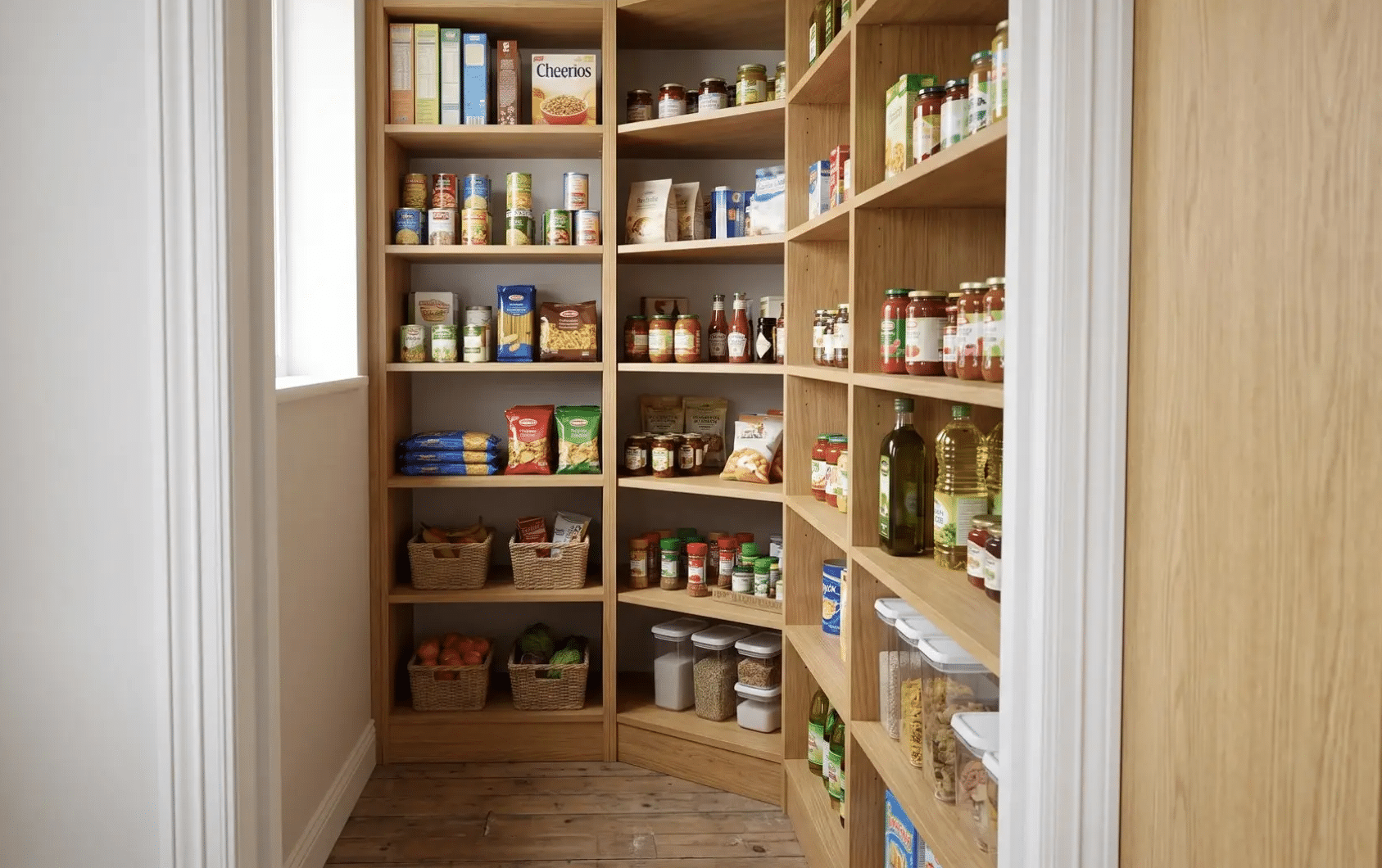
Corners are where small pantries lose the most usable space. Standard shelving can’t follow the angle, which leaves a wedge of dead space behind every shelf.
Angled or diagonal shelving units are built for this problem, making that corner functional instead of wasted.
6. Retractable or Expandable Shelves
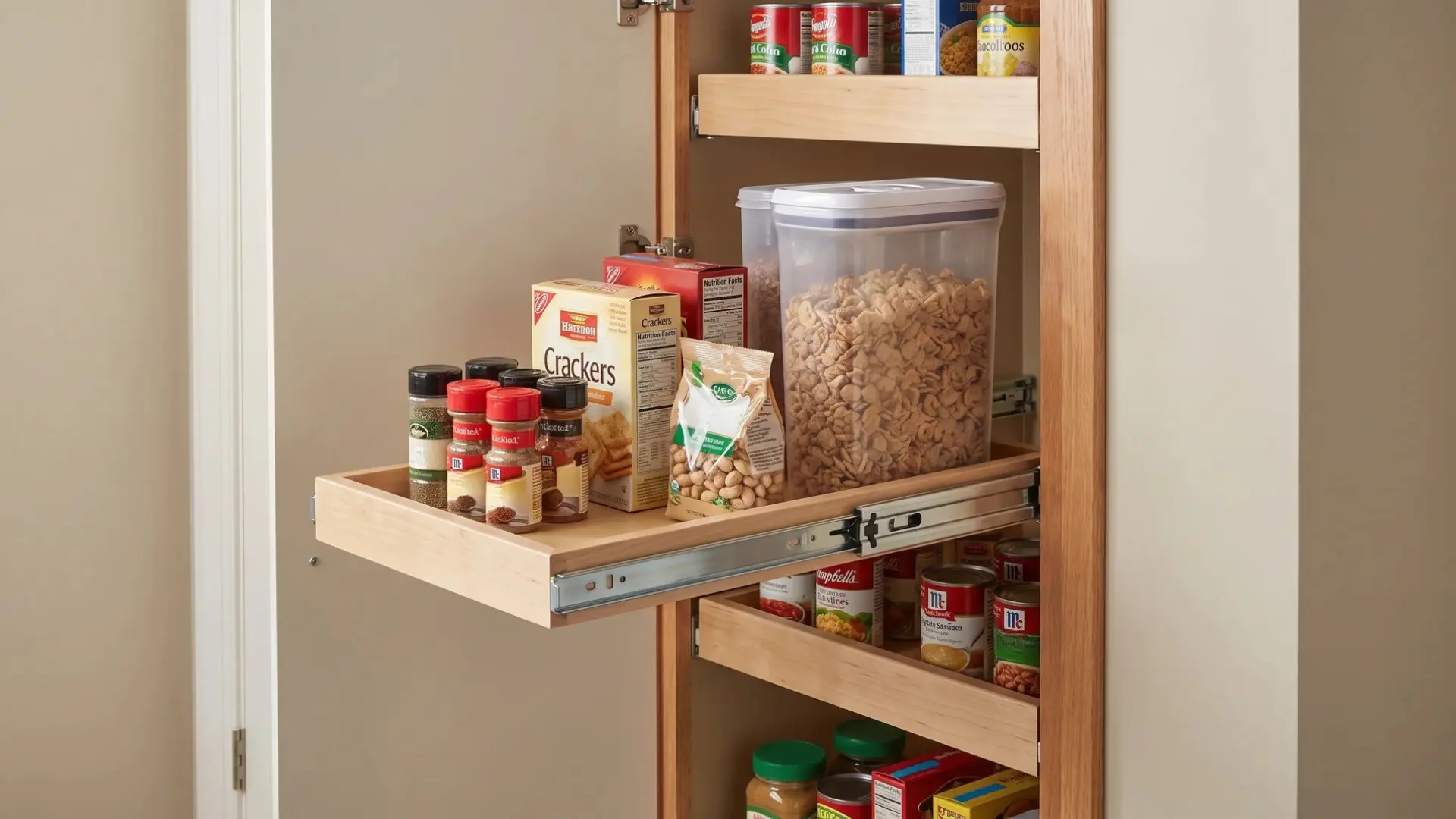
Some shelves extend outward or telescope to adjust their depth. That flexibility means one shelf can hold small items close to the front, then pull out to accommodate something bigger.
It’s a good middle ground if you’re not ready to commit to a full drawer system but still want better access than a fixed shelf gives you.
Choose storage that uses vertical space, reduces shelf depth, and keeps every pantry item visible, accessible, and easy to replace.
Smart Organization Systems
Once the structure is right, these systems keep everything visible and easy to put back where it belongs.
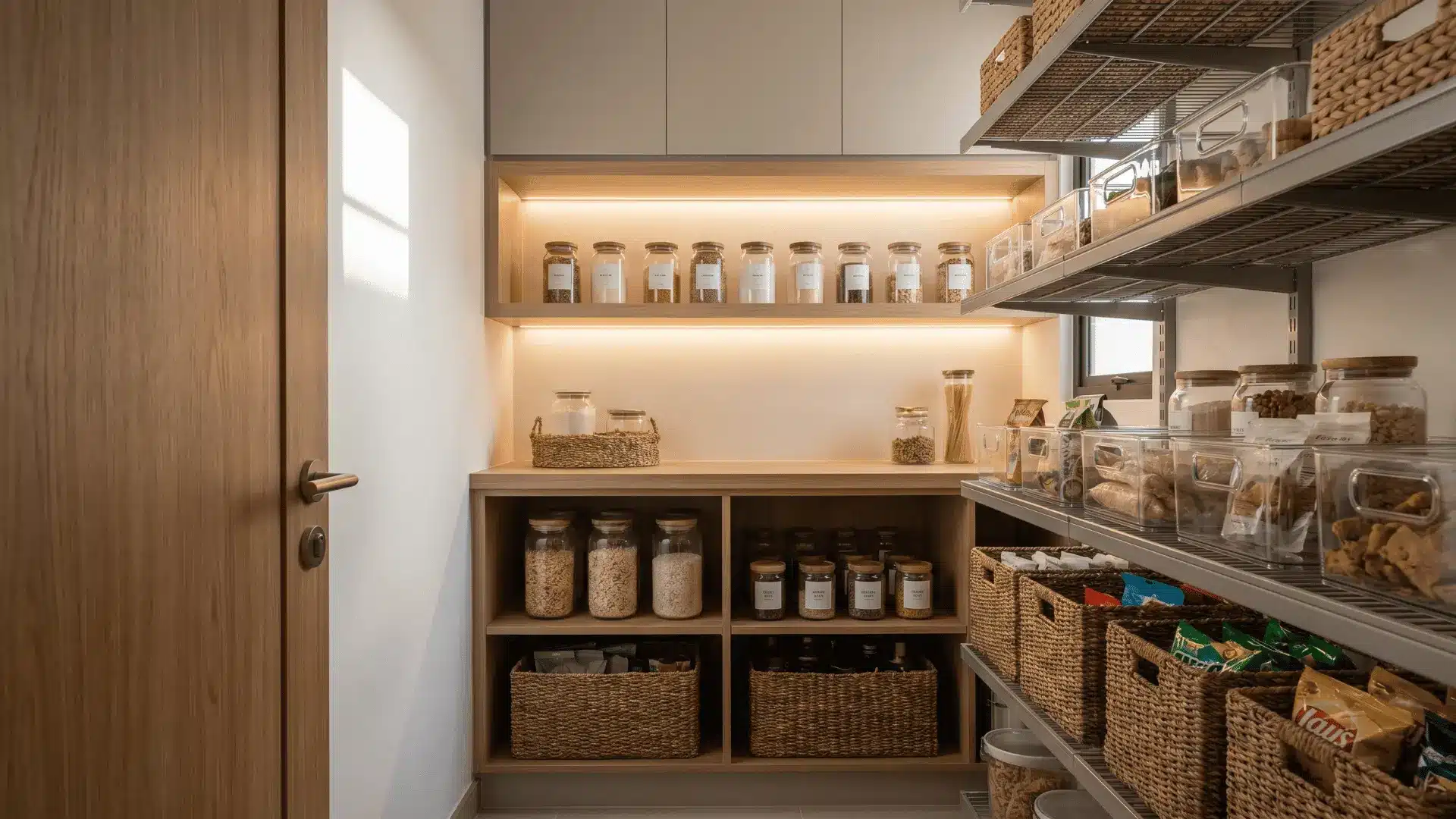
7. Clear Bins for Visibility
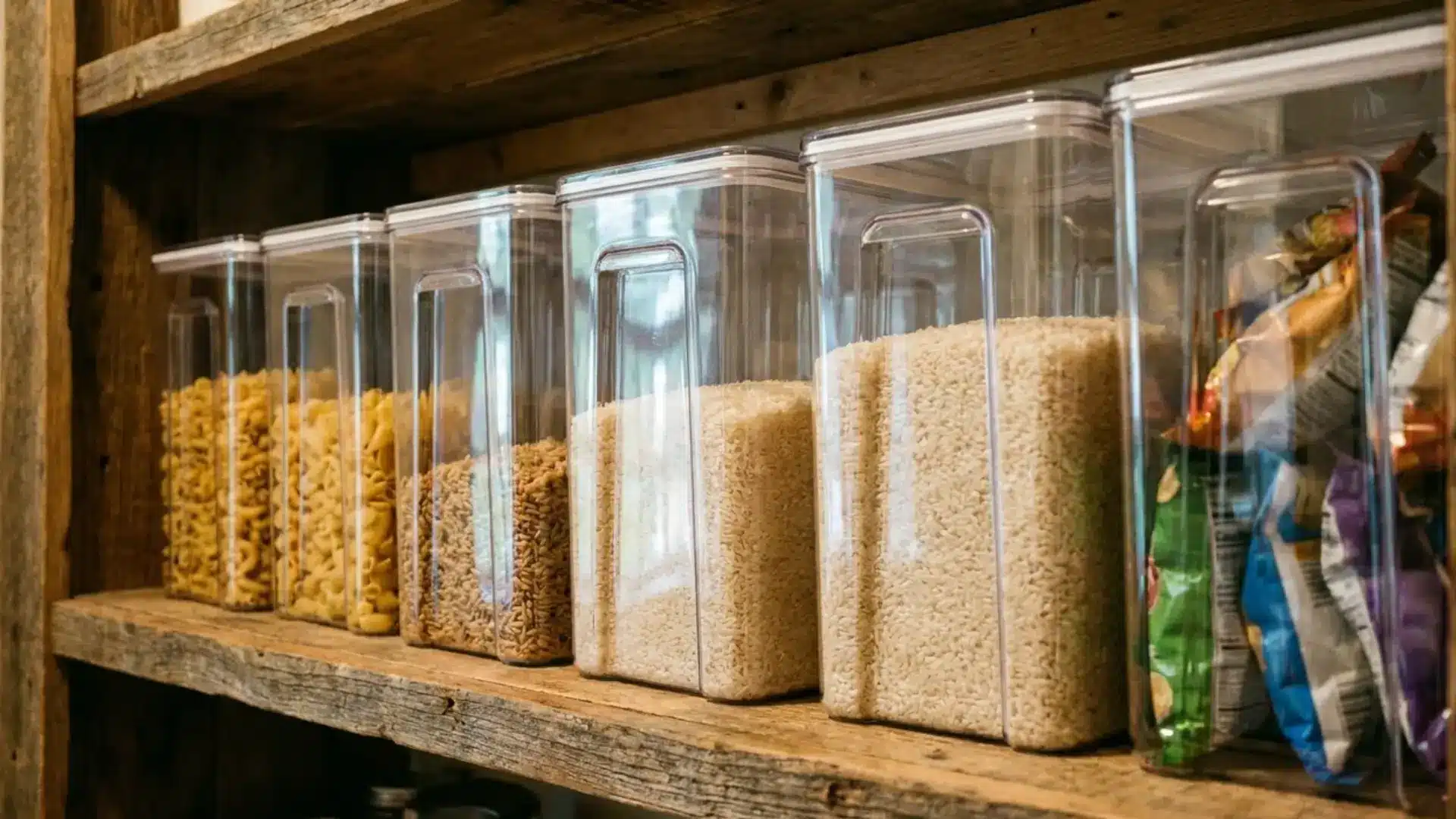
Opaque bins hide their contents just as much as a deep shelf does. Clear bins solve that instantly.
You see what’s inside without opening anything, which cuts down on the “I didn’t know we had this” problem that leads to duplicate grocery purchases.
8. Zone-Based Grouping
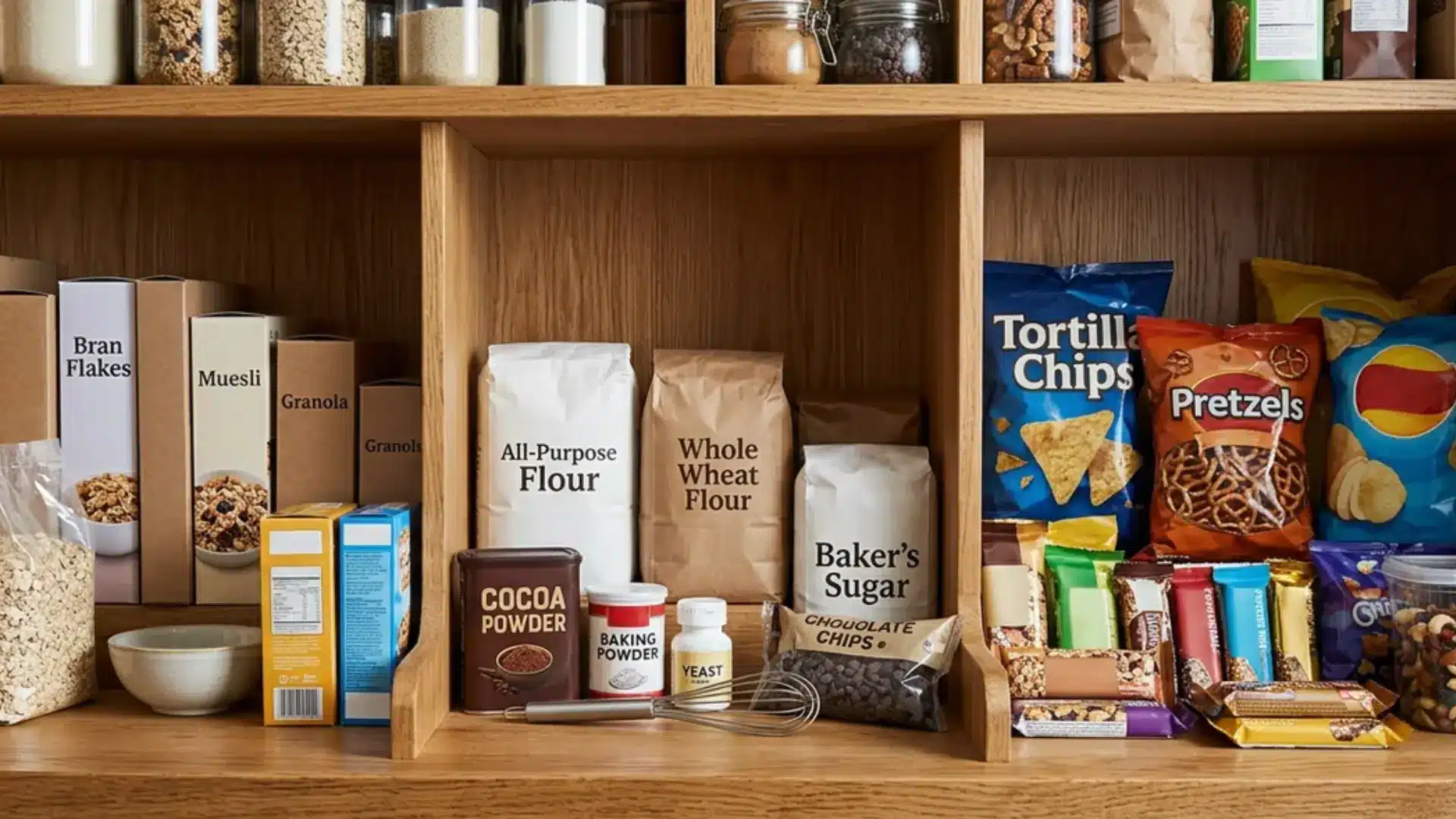
Grouping items by category, like breakfast foods, baking supplies, and snacks, shortens the time it takes to find anything.
It also makes it obvious when you’re running low on something, since an empty zone stands out. This works better than organizing by size or shape, which looks neat but doesn’t help you shop or cook faster.
9. Door-Mounted Storage Racks
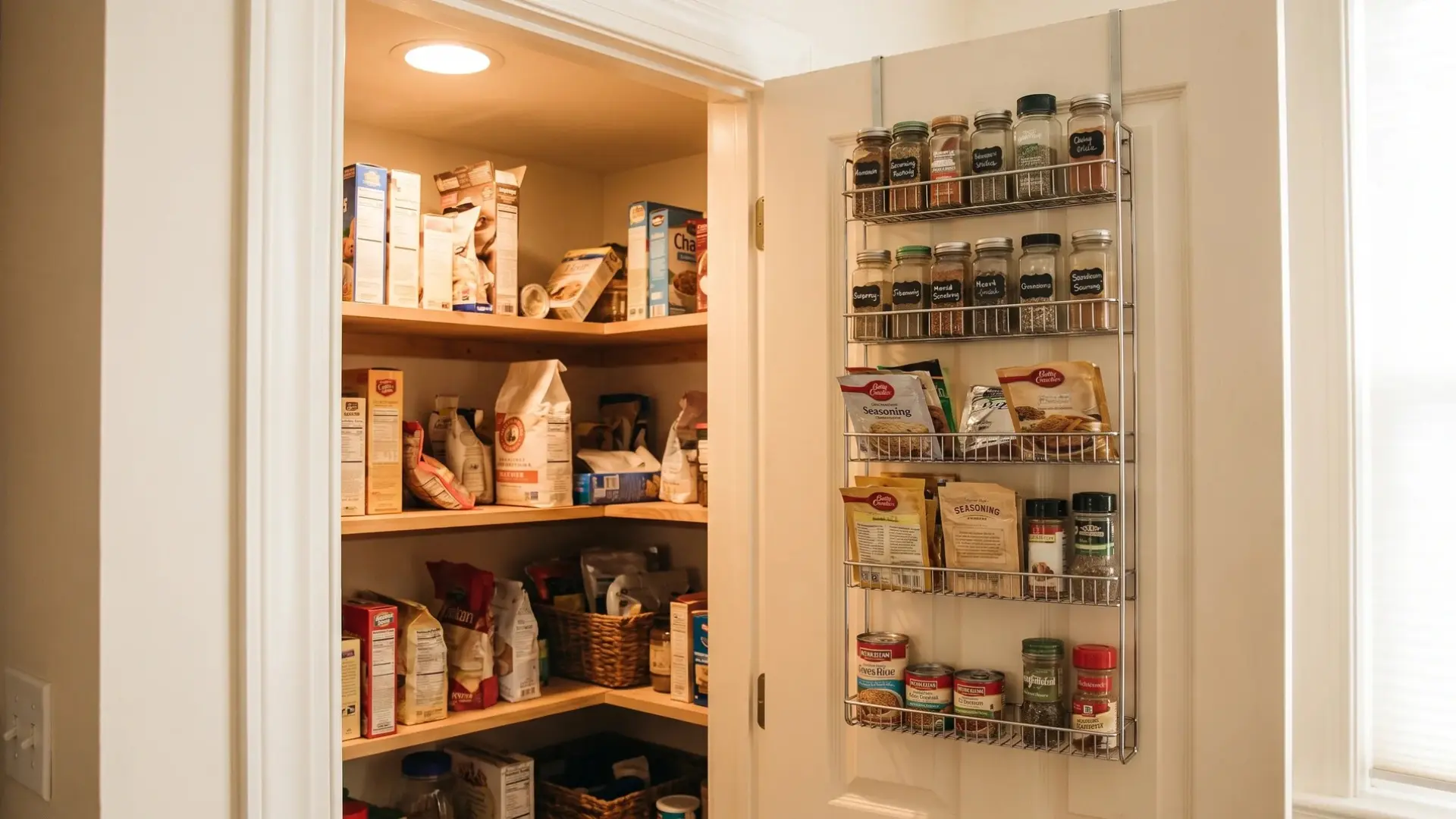
The back of the pantry door is dead space in most small pantries, yet it’s tall enough to hold a whole category of items on its own.
A door-mounted rack adds room for spices, packets, or canned goods without touching your shelves at all. Check the rack’s depth before installing, since anything too deep can bump into shelving when the door closes
10. Labeling Systems
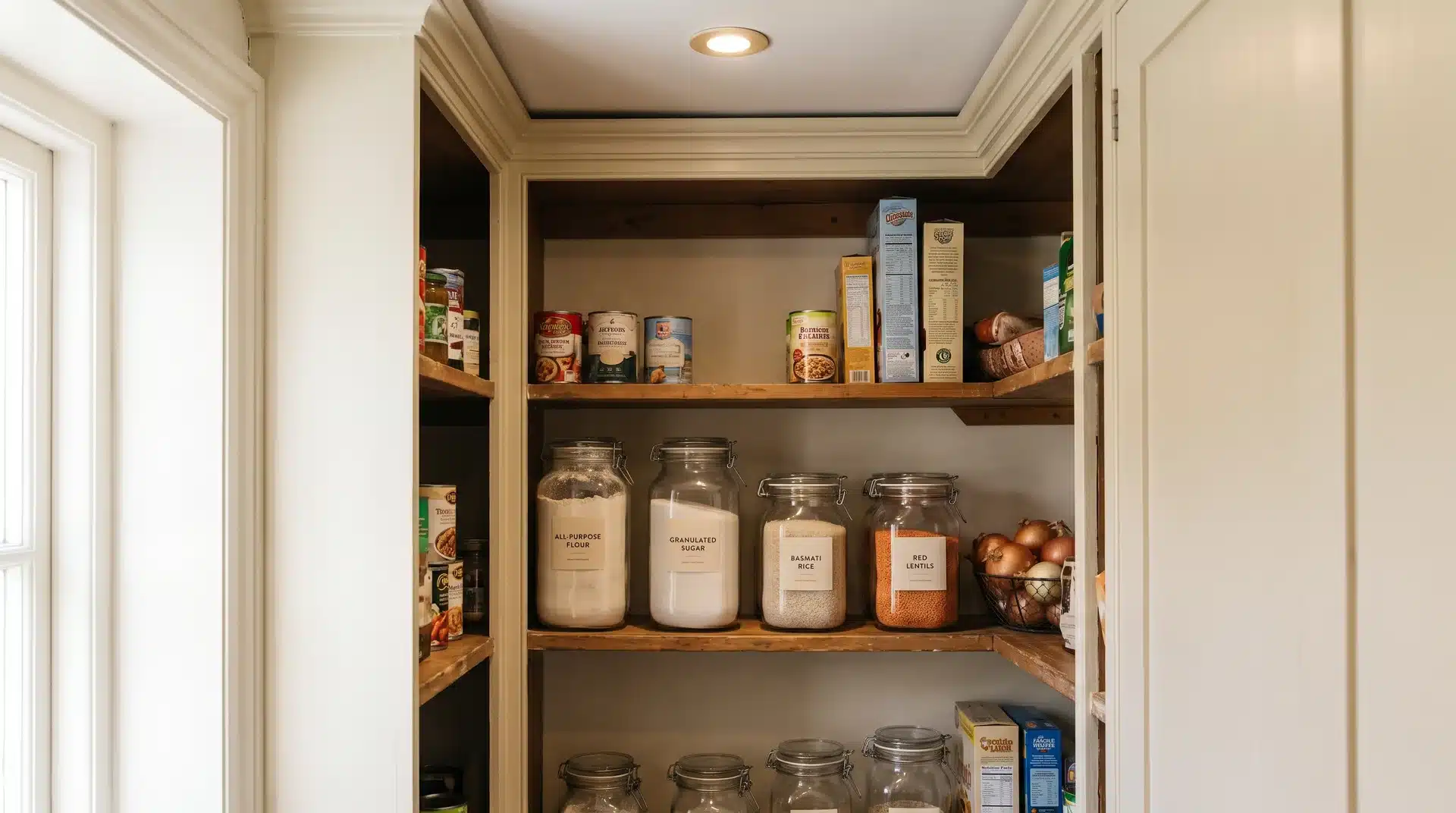
Labels keep everyone in the house putting things back in the same spot. That consistency matters more in a small pantry, where one misplaced item can throw off the whole system.
Simple printed labels work fine. You don’t need anything elaborate for this system to make a difference.
11. Lazy Susans for Corners
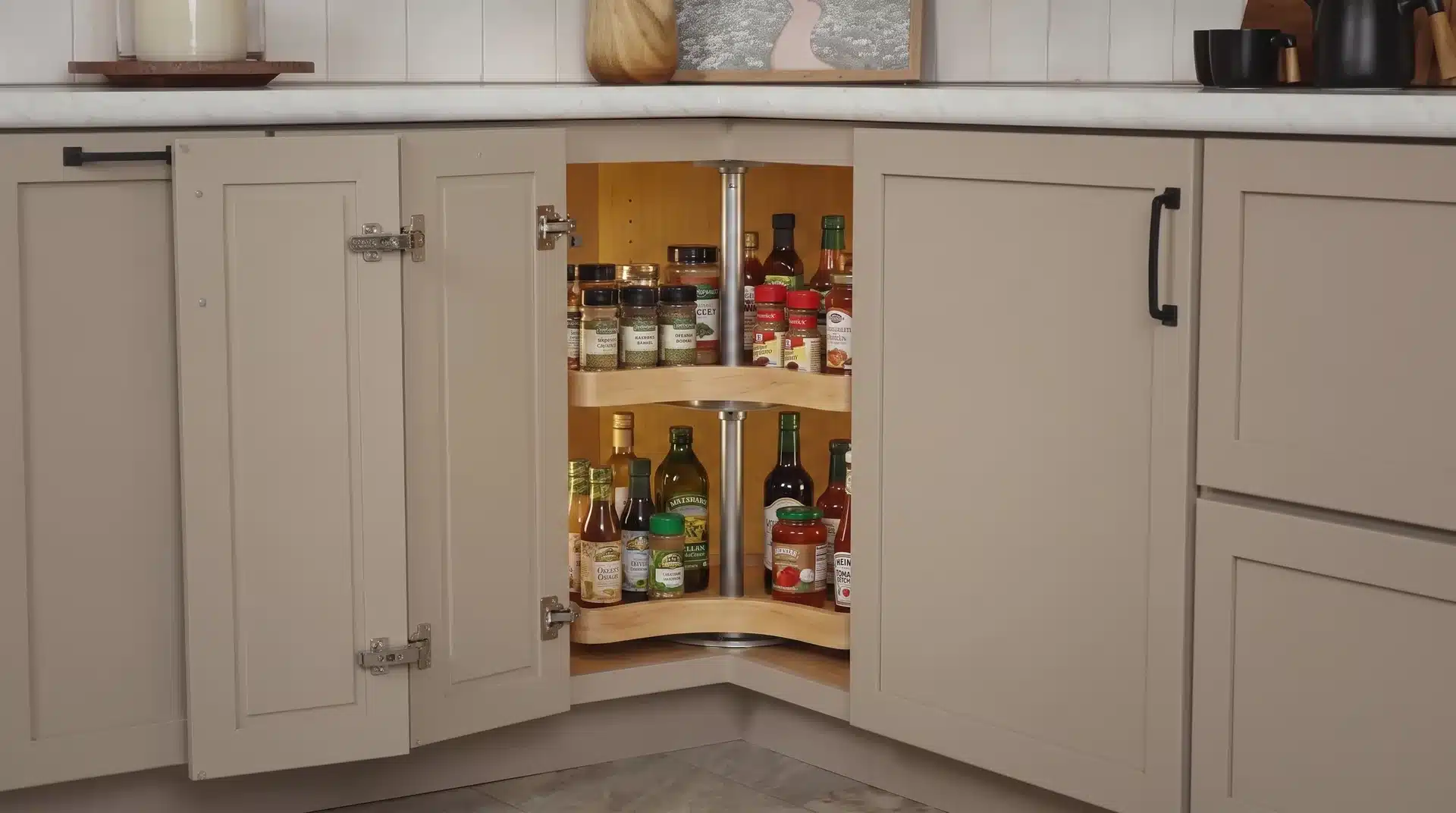
Rotating trays solve the same reach problem fixed corner shelving struggles with. Spin instead of dig.
They work well for pots, bowls, pitchers, and other bulky items that would otherwise get buried in a corner’s blind spot, letting you access the back of the cabinet just by turning the tray.
A clear organization system saves time, prevents waste, and makes it easier to maintain order after every shopping trip
Door and Layout Solutions
The door and layout often decide which storage ideas above will even work. Here’s how to fix that first.
12. Pocket Doors
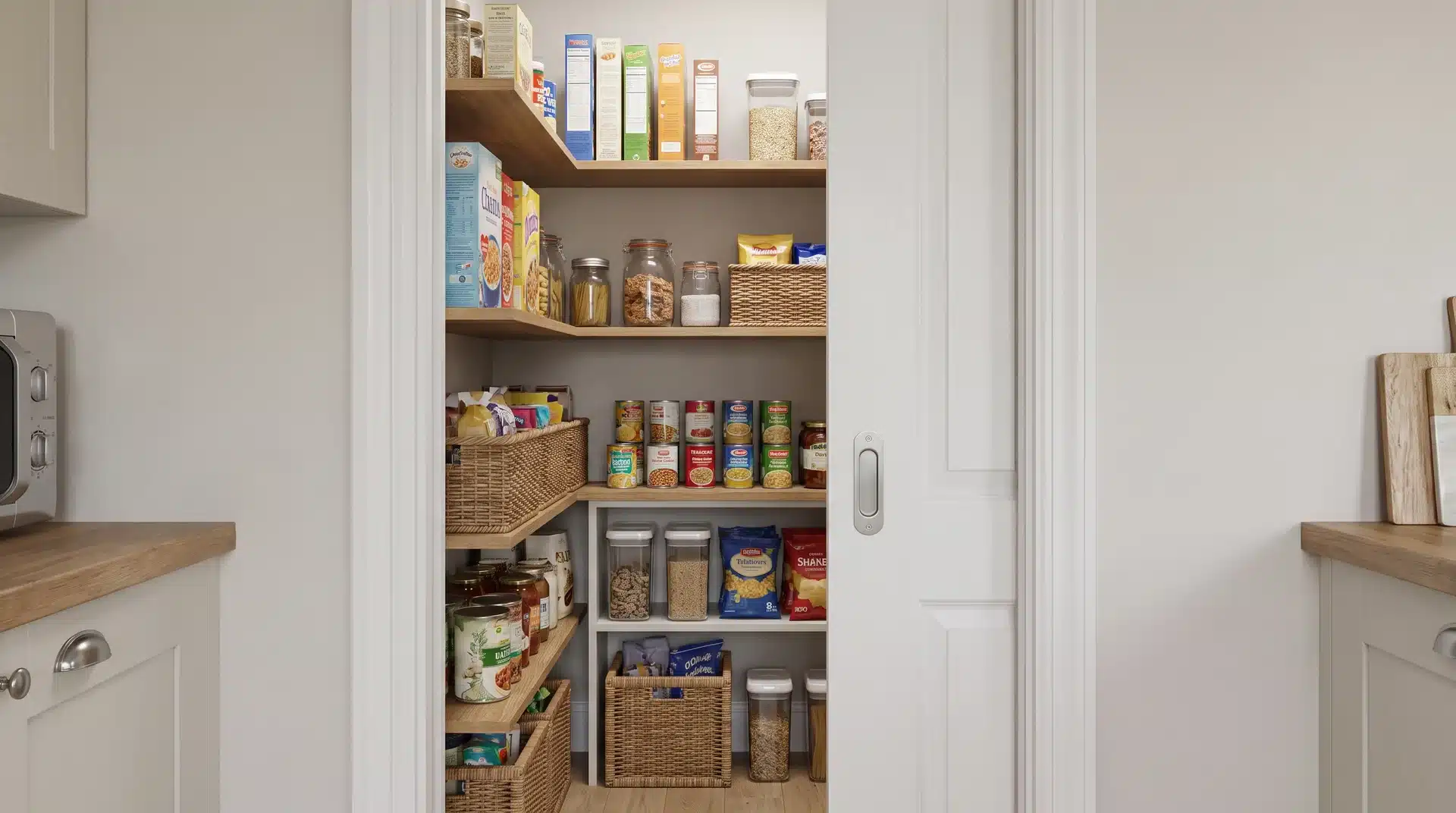
In a small pantry, floor space is limited, and a swinging door uses some of it just to open. A pocket door slides into the wall, freeing that space for shelves, baskets, or easier access to the back wall.
It takes more construction work than most fixes on this list, but in a pantry this tight, getting that swing clearance back can be worth it.
13. Sliding Barn Doors
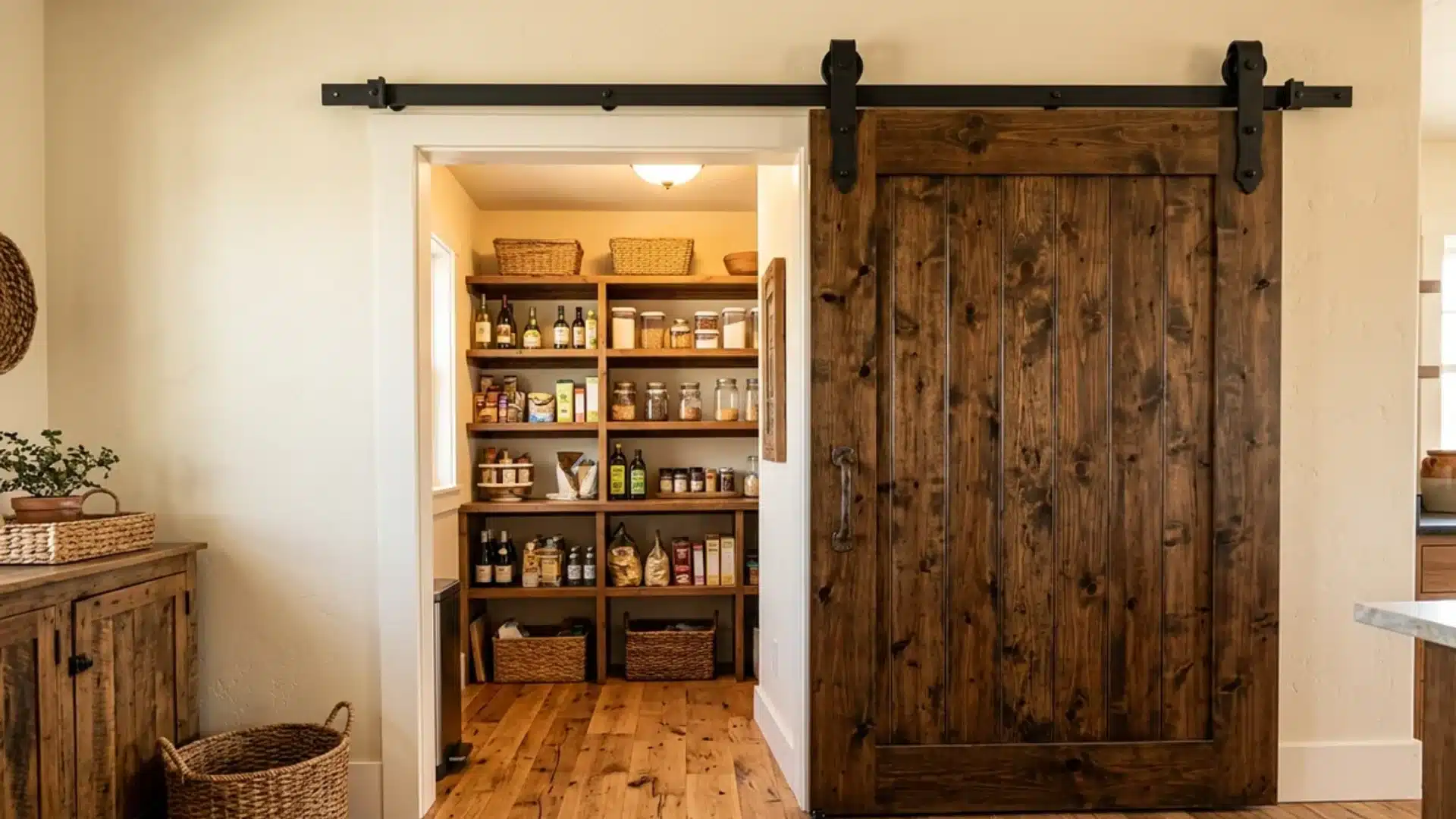
If you want the clearance benefit of a pocket door without opening up the wall, a surface-mounted sliding door does the same job.
It hangs on a track above the doorway and slides to the side. It’s a bigger visual statement than a pocket door, so it works best if that style fits your kitchen.
14. Open Shelving Instead of a Door
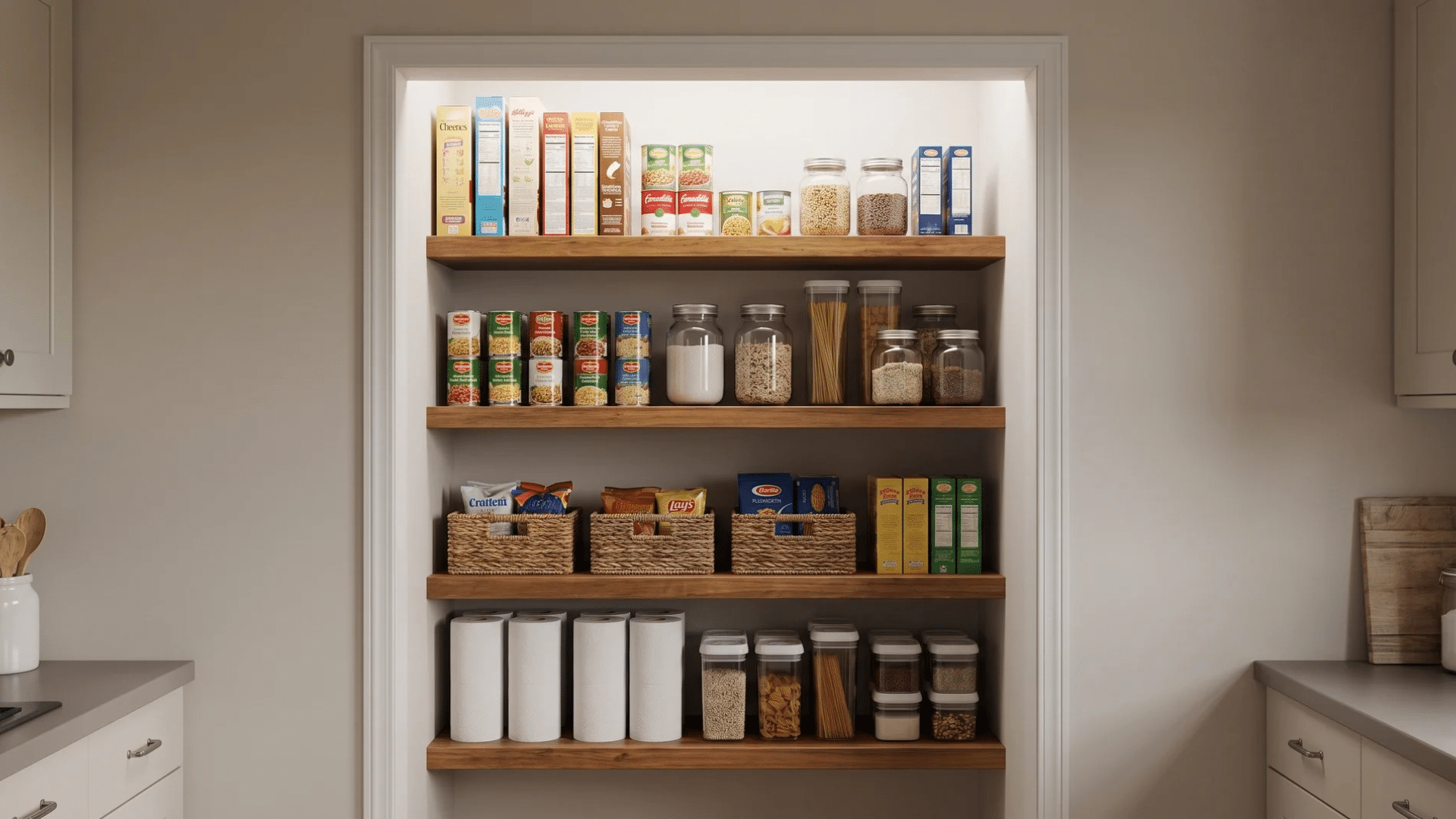
Removing the door entirely trades concealment for constant visibility. You’ll see everything at a glance, and there’s no clearance to plan around.
The trade-off is that your pantry becomes part of the kitchen’s visual space, so it needs to stay tidy since there’s nothing hiding it.
15. Closet-to-Pantry Conversion
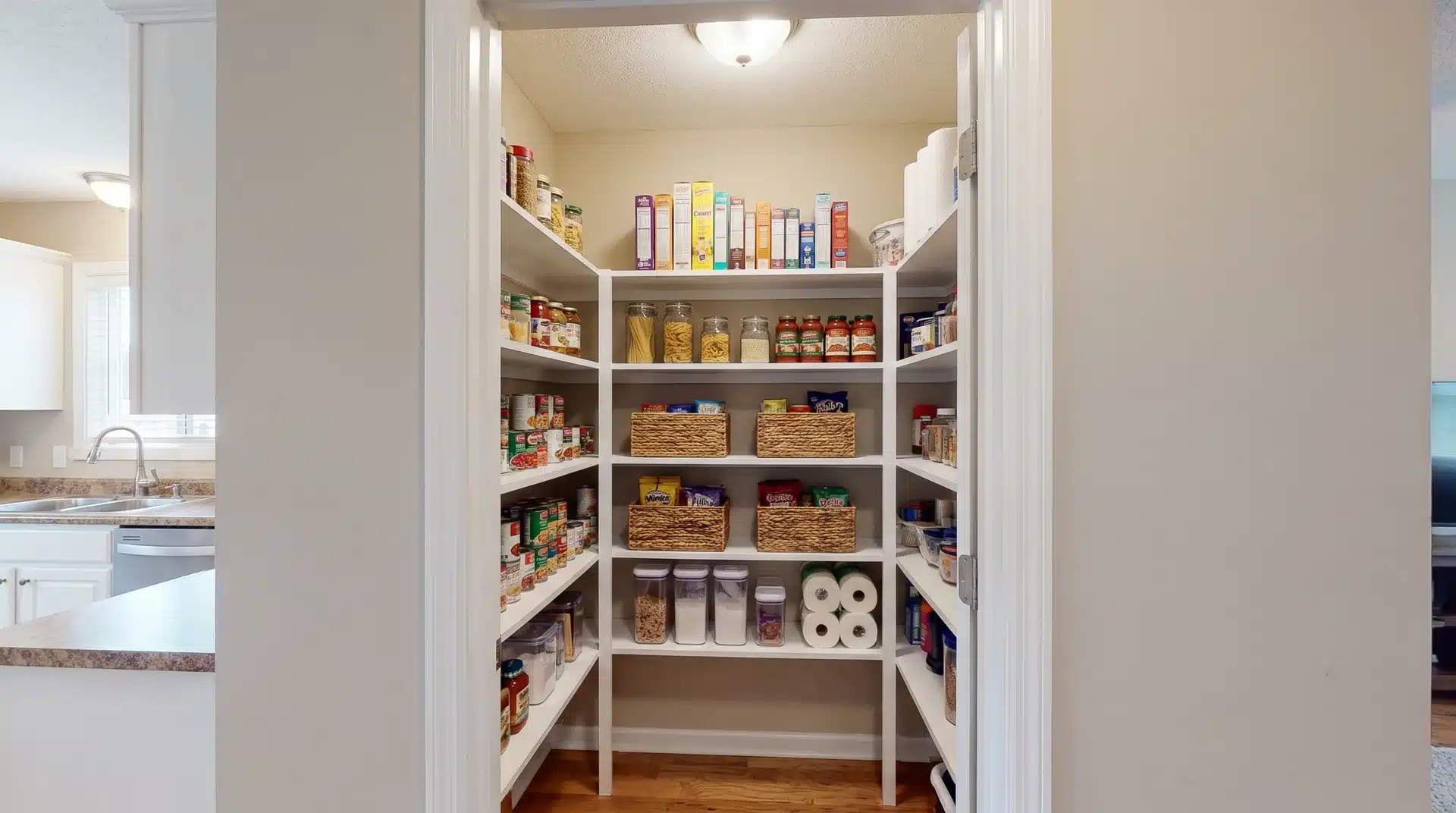
If you don’t have a dedicated pantry, a closet near the kitchen can become one. This usually only requires adding shelving that matches the closet’s depth and height, not a full renovation. It’s one of the most budget-friendly ways to add pantry space where none currently exists.
Small layout changes can improve movement, free usable space, and make shelves, corners, and stored items easier to reach.
Budget-Friendly DIY Ideas
Not every fix needs a contractor. These options work with basic tools and a weekend afternoon to enhance the pantry.
16. Tension Rod Shelf Dividers
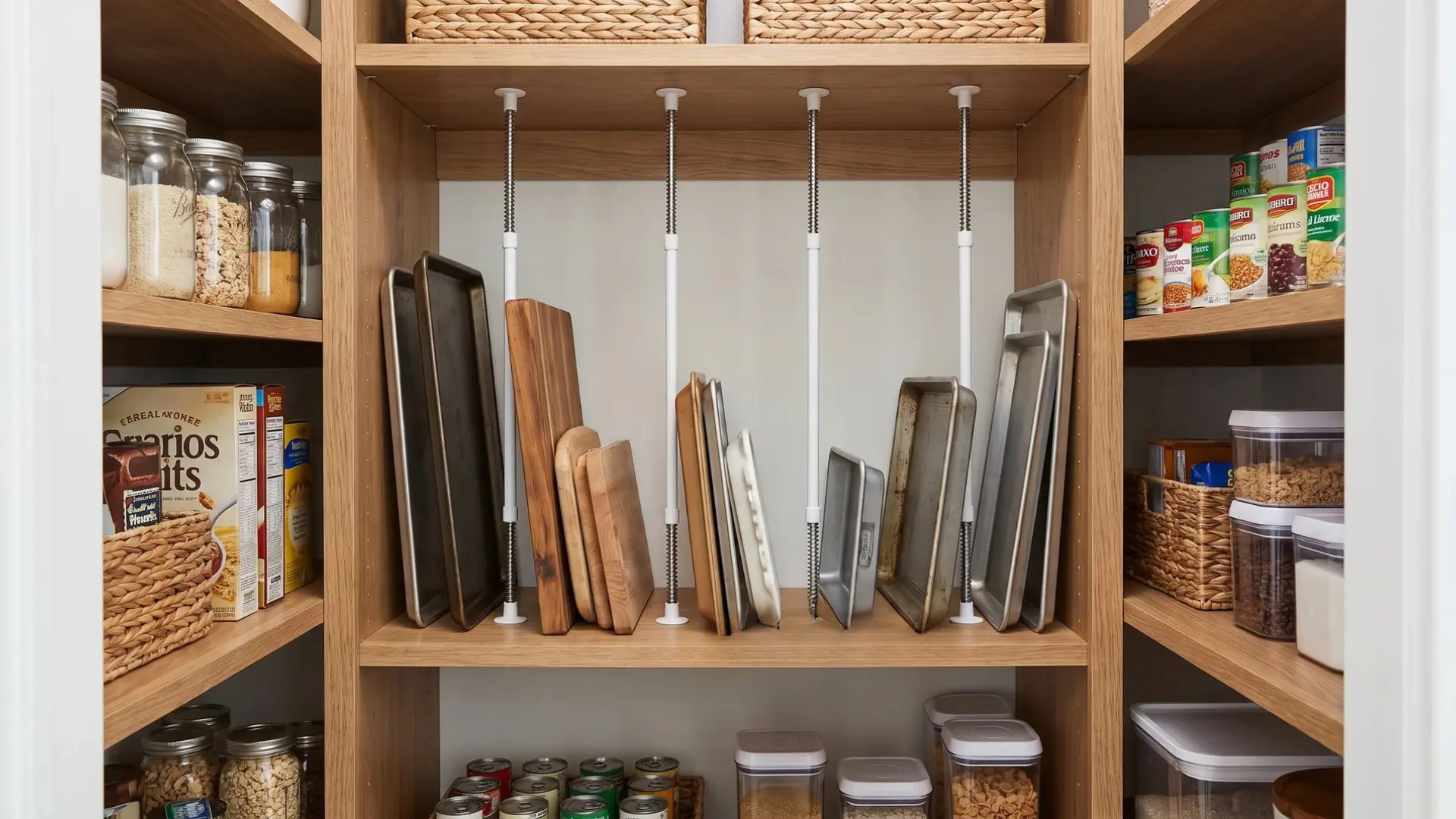
Flat items like trays, cutting boards, and baking sheets tend to slide and topple when they’re stacked flat on a shelf.
A few tension rods installed vertically create upright slots, so each item stands on its edge and slides out on its own without disturbing the rest. It costs a few dollars and takes minutes to install.
17. Command Hook Storage
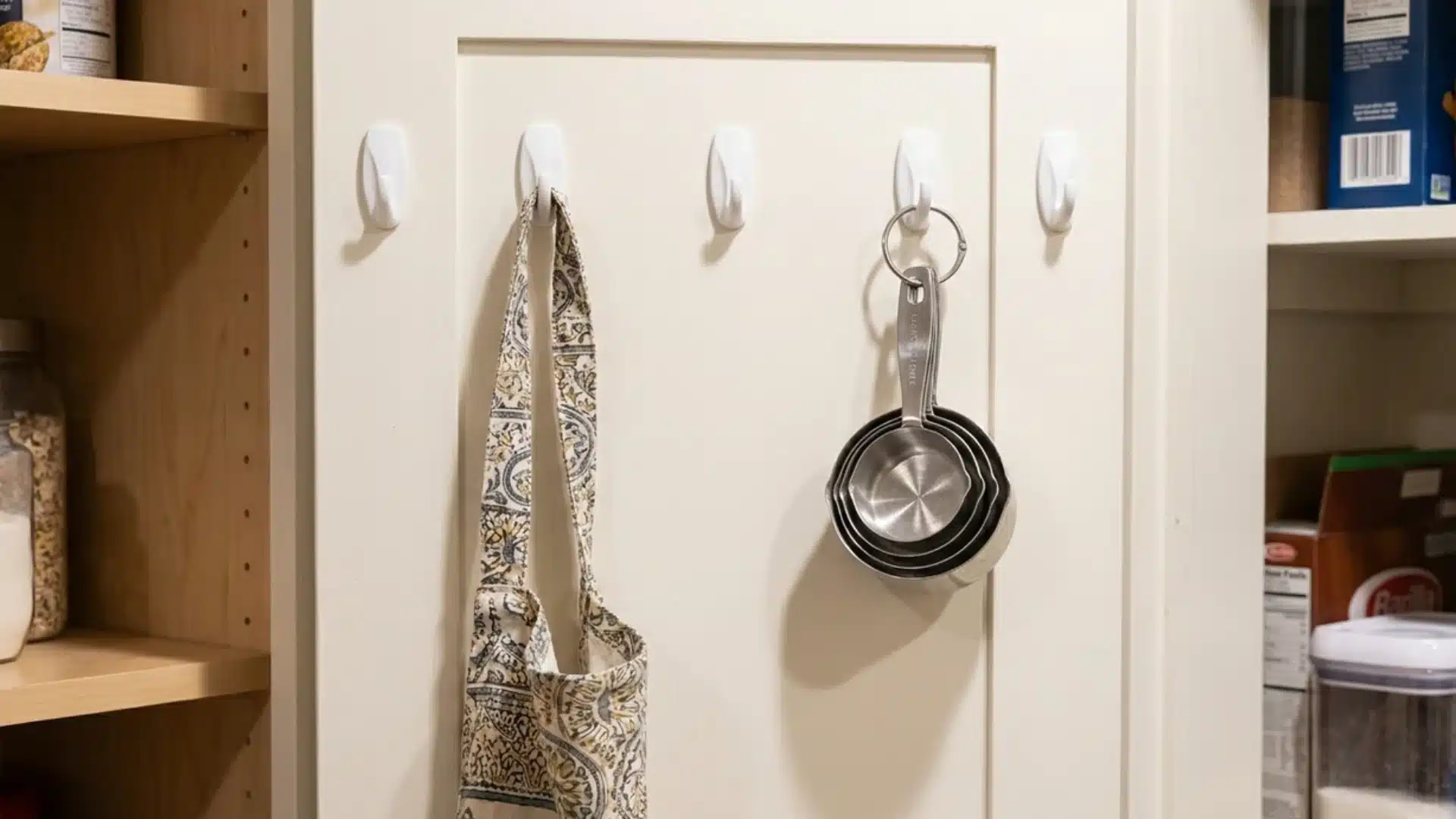
Adhesive hooks add hanging storage on the back of the pantry door or on a side wall, without drilling into anything.
This is a solid option if you’re renting and can’t make permanent changes. Use them for lightweight items like aprons, small bags, or measuring cups.
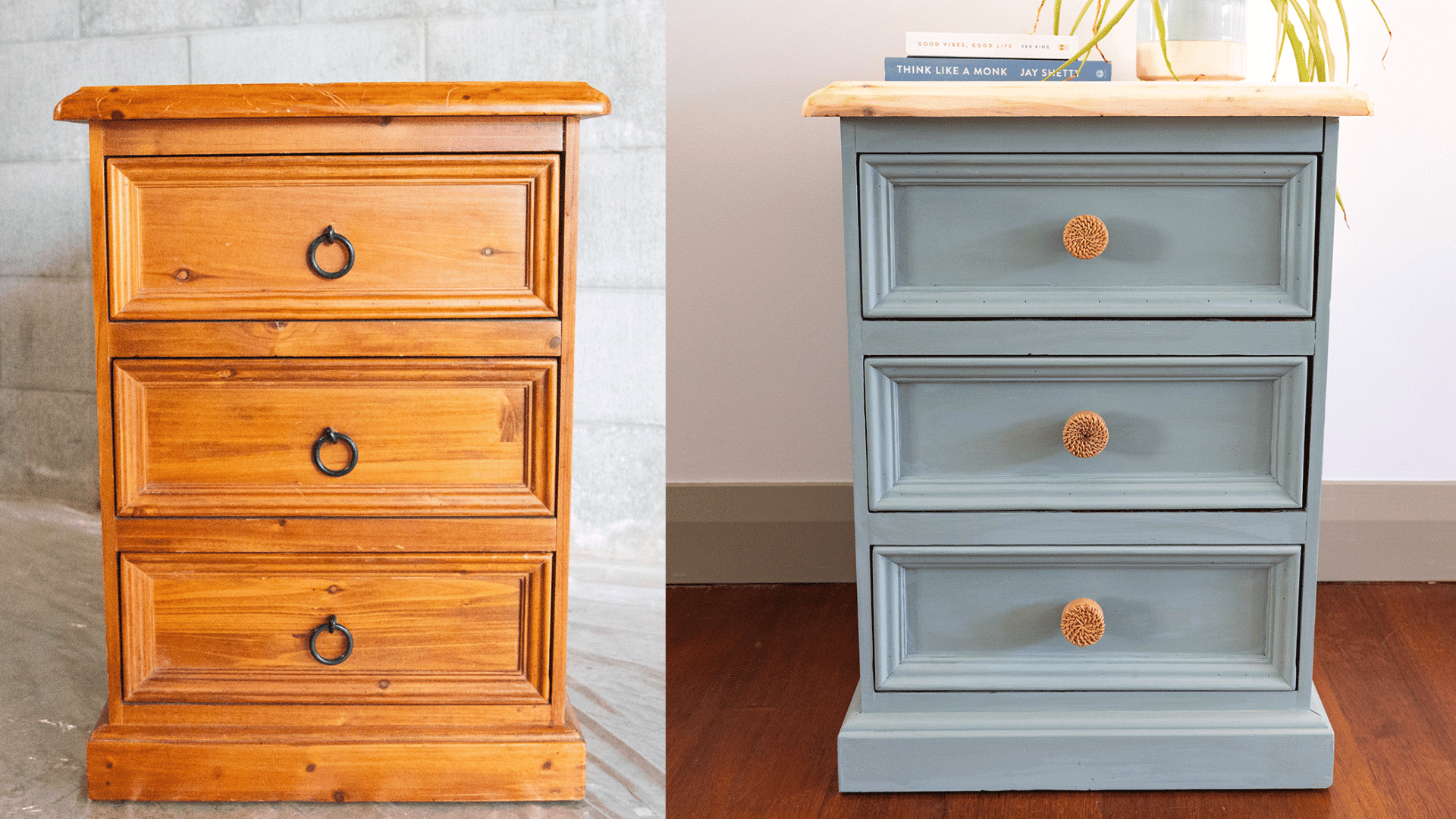
18. Repurposed Furniture as Pantry Storage
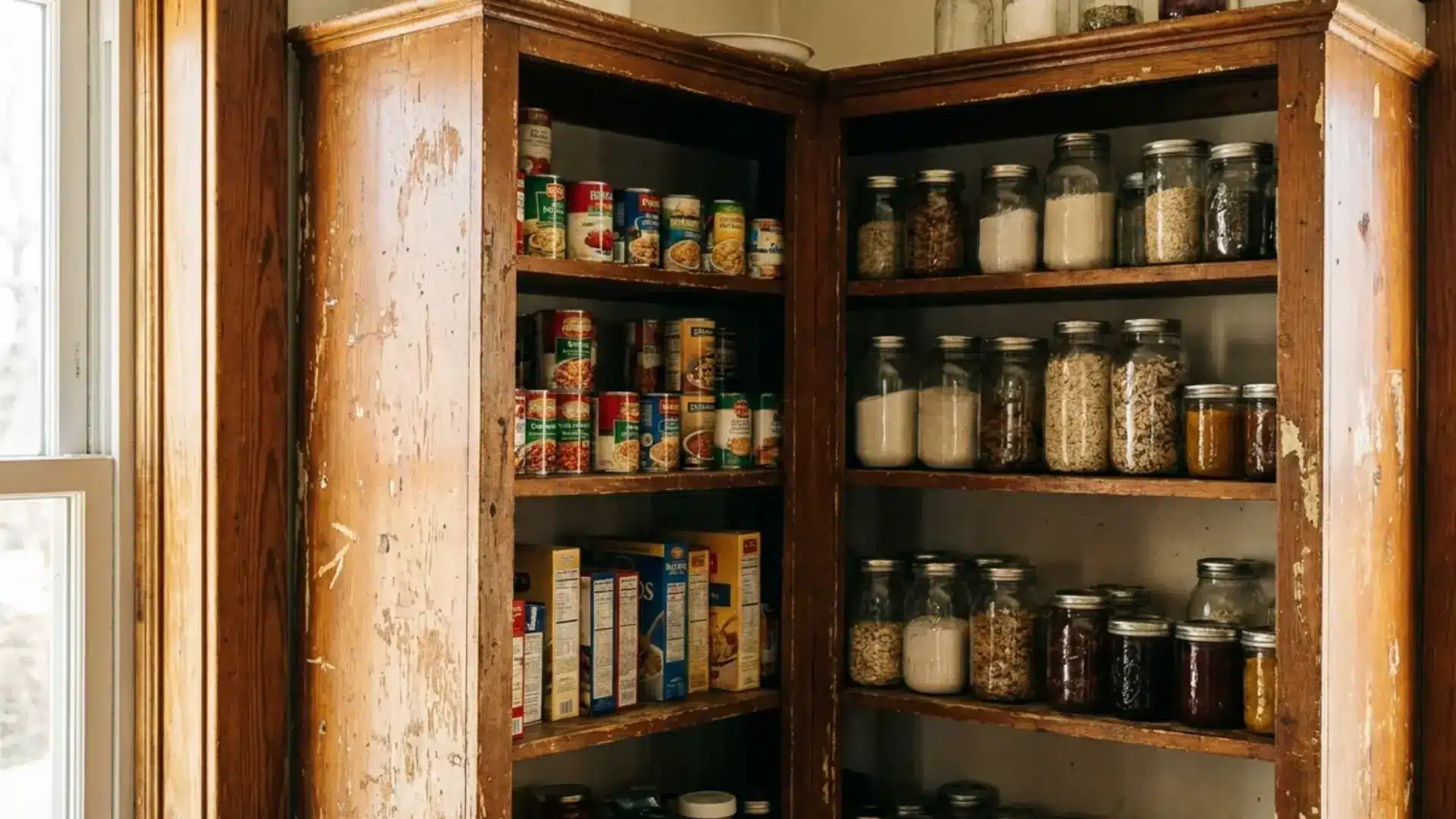
A secondhand bookshelf or cabinet can work as pantry storage for a fraction of the cost of custom built-ins.
Look for something with adjustable shelves so you can match the spacing to your items. This works especially well if your “pantry” is really just a corner of the kitchen without a dedicated closet.
Simple DIY upgrades can improve pantry function without major spending, especially when they solve specific storage or access problems.
Style and Finishing Touches
Once the pantry layout works, these finishing details make daily use simpler, more organized, and much more visually appealing overall.
19. Under-Shelf Lighting
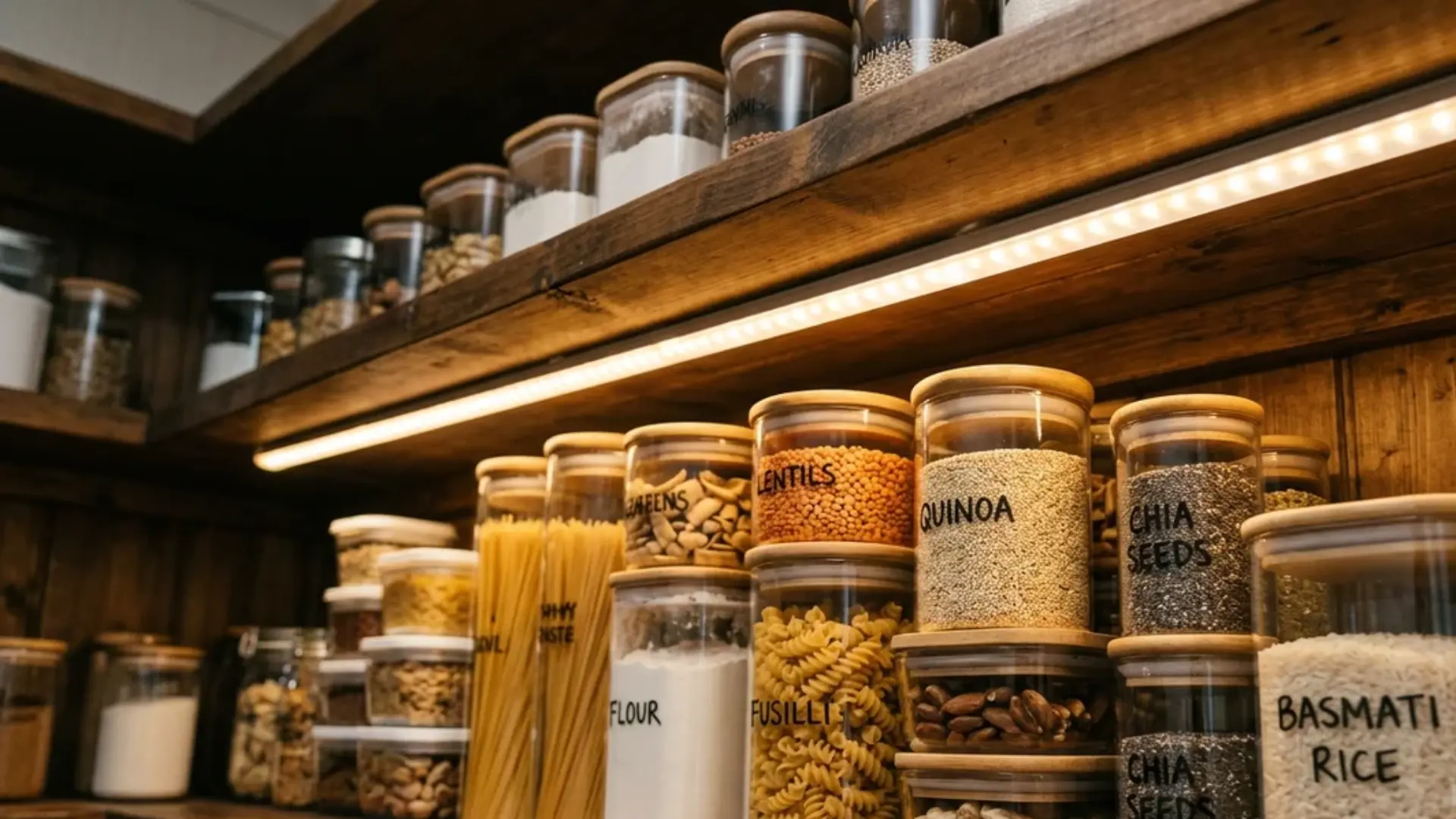
Enclosed pantries create dark corners even when the organization inside is solid. Battery-powered or plug-in strip lighting fixed under each shelf solves that instantly.
It is a simple upgrade that improves visibility, access, and convenience every time you open your pantry door.
20. Patterned Shelf Liner or Wallpaper
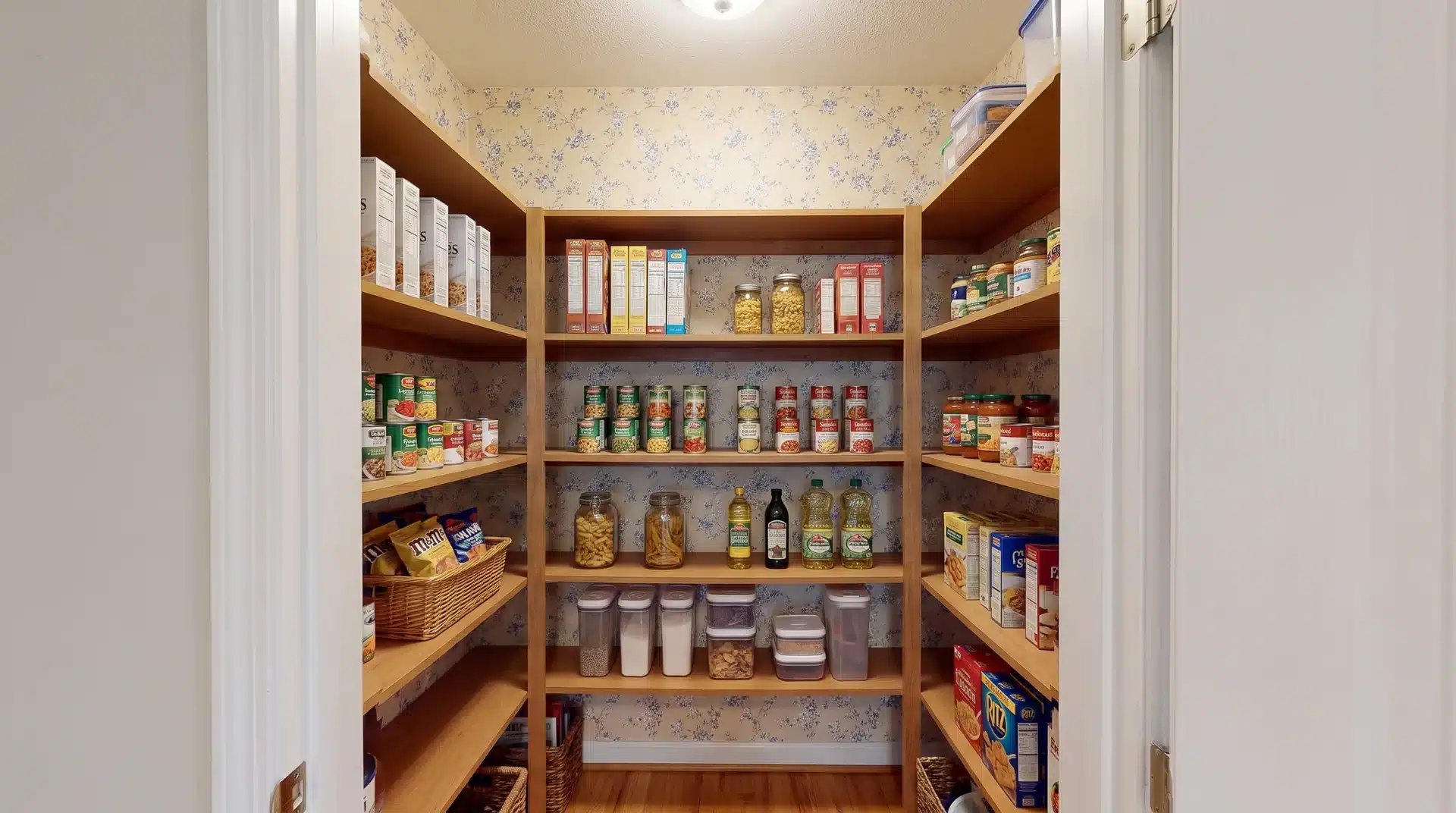
A bare shelf back or blank wall can make even a well-organized pantry feel unfinished. Lining the shelves or wallpapering the back wall adds personality without changing how anything functions.
Peel-and-stick options make this easy to update later, so you’re not locked into one look as your style or the space’s use changes
21. Custom Utensil or Silverware Drawer Insert
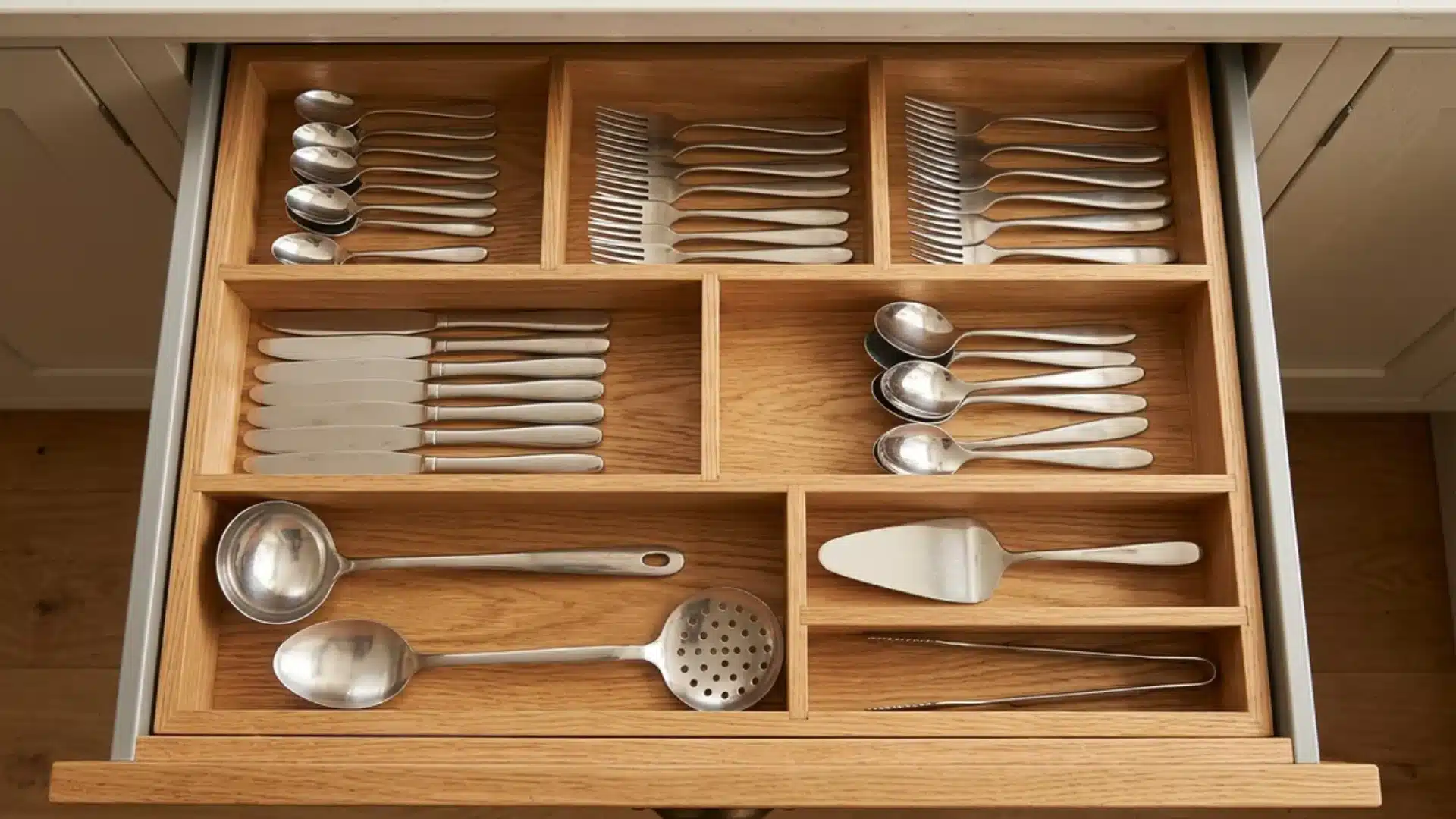
If your pantry includes a drawer, loose utensils can turn it into clutter fast. A built-in or purchased insert keeps everything in its own slot. This is a small, specific fix rather than a whole-pantry solution, but it solves a real annoyance.
Finishing touches should support the pantry’s function while creating a clean, consistent appearance that feels connected to your home.
Common Small Pantry Mistakes to Avoid
Even smart pantry ideas can fail when poor layouts and daily habits make items difficult to see, reach, and organize.
- Fix the layout first: Do not buy organizers while doors, shelves, or corners still limit usable space.
- Avoid repeat purchases: Poorly fitted bins often need replacing once you understand how the pantry actually functions.
- Choose visibility over depth: Deep shelves hide food behind the first row, increasing clutter, waste, and expired items.
- Match shelves to closet depth: Closet conversions need correctly sized shelving to prevent awkward gaps, overhangs, and wasted space.
- Use corner angles properly: Corner pantry shelves should follow the available angle instead of leaving an unreachable wedge behind.
Choose solutions based on your pantry’s actual shape, dimensions, and access points rather than copying a general layout.
Conclusion
A functional and stylish pantry isn’t just about adding shelves or containers; it comes from really understanding the space, picking solutions that actually fit, and keeping up habits that prevent clutter from creeping back in.
The best small pantry ideas combine practical storage, consistent styling, and layouts that make sense for the way the kitchen is used.
Whether it’s a tiny closet, open shelving, or a repurposed piece of furniture, knowing your pantry type and making deliberate design choices helps keep it organized and visually balanced.
Apply these strategies thoughtfully, and the pantry becomes both practical and inviting.
Frequently Asked Questions
What is the best layout for a very small pantry?
The best layout depends on shape more than size. Corner pantries benefit from angled or rotating shelving, while narrow closet-style pantries do best with floor-to-ceiling shelves and a door that doesn’t require swing clearance, like a pocket or sliding door.
How do I organize a small pantry with deep shelves?
Deep shelves work best with slide-out organizers or bins that pull forward, since fixed deep shelving hides items at the back. Grouping by category and adding labels also reduces the time spent searching once items are out of immediate view.
Can I add a pantry if I don’t have one?
Yes. A closet, especially one near the kitchen, can become a functional pantry with shelving alone. This requires no structural change, only shelving that matches the closet’s depth and height.
What’s the most common small pantry mistake?
The most common mistake is buying storage products before addressing layout or door clearance. Fixing depth, visibility, and door type first prevents having to redo the organization system once those constraints become obvious.