


Pruning hydrangeas can feel risky when one cut might remove next season’s flowers. The good news is that the job gets much easier once you know what type of hydrangea you have.
Learning how to prune hydrangeas starts with one simple question: does your plant bloom on old wood or new wood?
That answer tells you when to prune, how much to remove, and which stems should stay.
Instead of cutting the shrub into shape, focus on dead flowers, damaged stems, crowded growth, and healthy buds. I will walk you through the timing, cuts, and mistakes to avoid before you pick up the pruners.
Identify Your Hydrangea Before You Start Pruning
Before making any cuts, identify your hydrangea type and whether it blooms on old or new wood. This determines the safest time to prune without removing future flower buds.
Use the table below to match your hydrangea by its appearance, bloom wood, and recommended pruning window.
| Hydrangea Type | How to Identify It | Blooms On | Best Time to Prune |
|---|---|---|---|
| Bigleaf | Large round or flat blooms with thick, oval leaves | Old wood | Right after flowering |
| Mountain | Smaller, delicate flowers with leaves similar to bigleaf hydrangeas | Old wood | Right after flowering |
| Oakleaf | Oak-shaped leaves with cone-shaped flower clusters | Old wood | Right after flowering |
| Panicle | Cone-shaped blooms that often turn pink as summer progresses | New wood | Late winter or early spring |
| Smooth | Rounded white blooms, including popular varieties such as Annabelle | New wood | Late winter or early spring |
| Climbing | Climbing vine with white lacecap flowers that attaches to walls or supports | Old wood | Rarely, and after flowering |
Old wood is growth produced the previous year, while new wood develops during the current growing season.
Match your plant to the table before pruning so you do not accidentally remove developing flower buds.
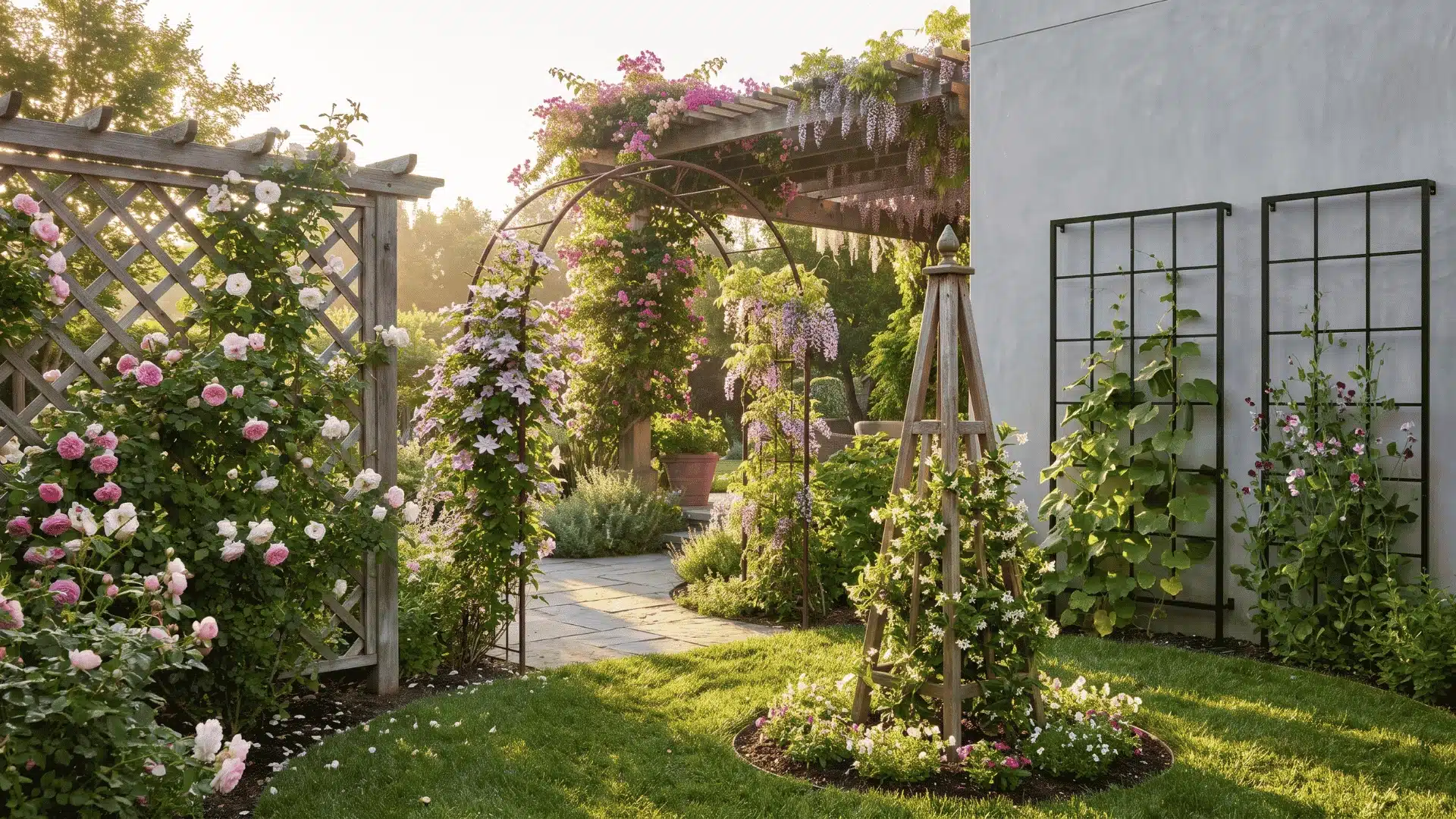
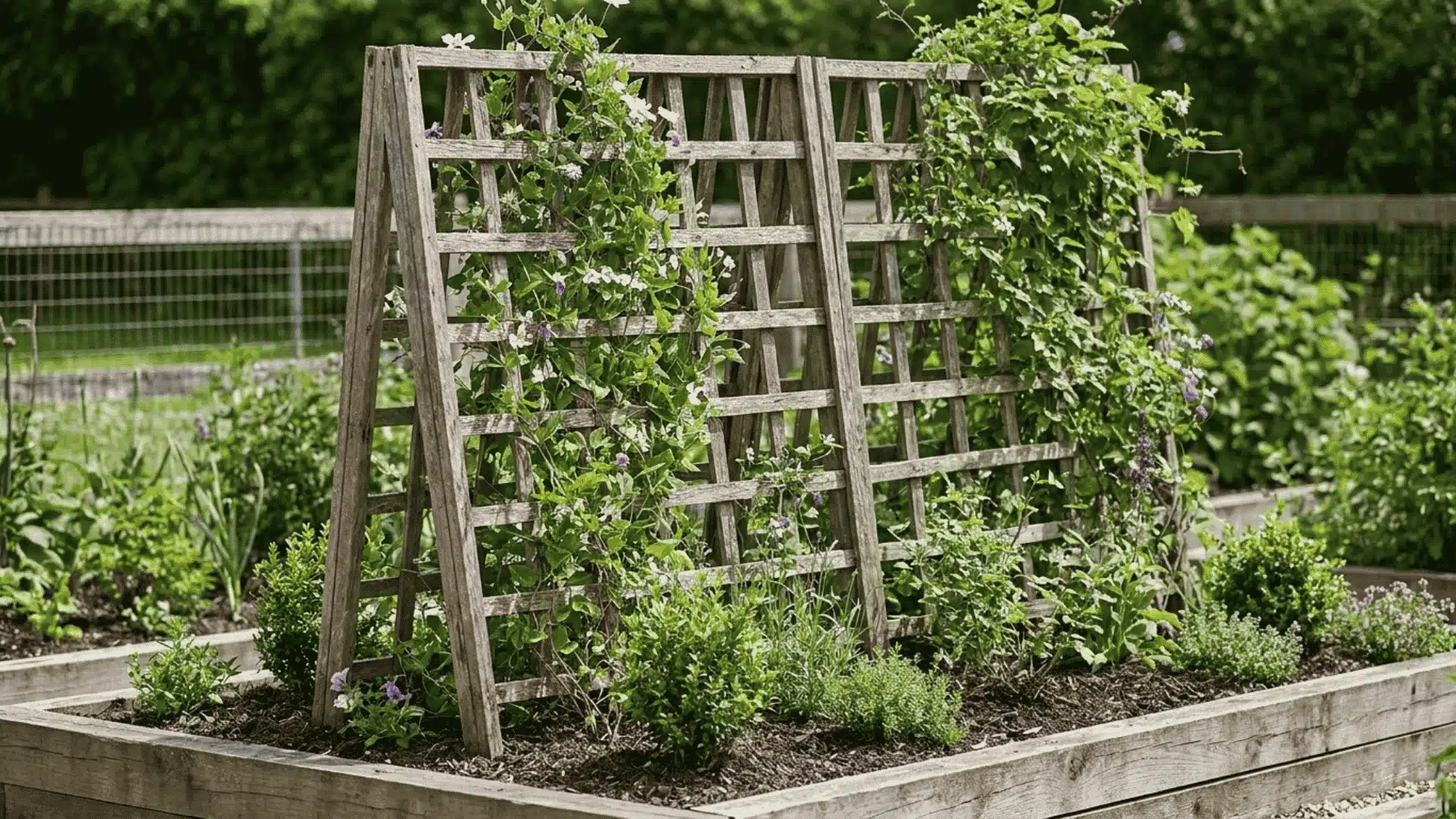
If you’re growing a climbing hydrangea, give it a sturdy support structure to grow on before you ever pick up the pruners, since most of its care comes down to keeping the vine attached and controlled rather than cutting it back.
How to Prune Each Type of Hydrangea?
Once you know your hydrangea’s type, the timing and the cut both follow from it. Here’s exactly what to do for each one, starting with the tools you’ll need.
Step 0: Grab Tools and Materials
- Clean, sharp secateurs or pruning shears
- Gardening gloves
- Garden waste bag or container
- Bypass loppers: for older or thicker canes, since anvil-style blades tend to crush live wood instead of slicing it cleanly
Step 1: Check That the Hydrangea Is Ready for Pruning
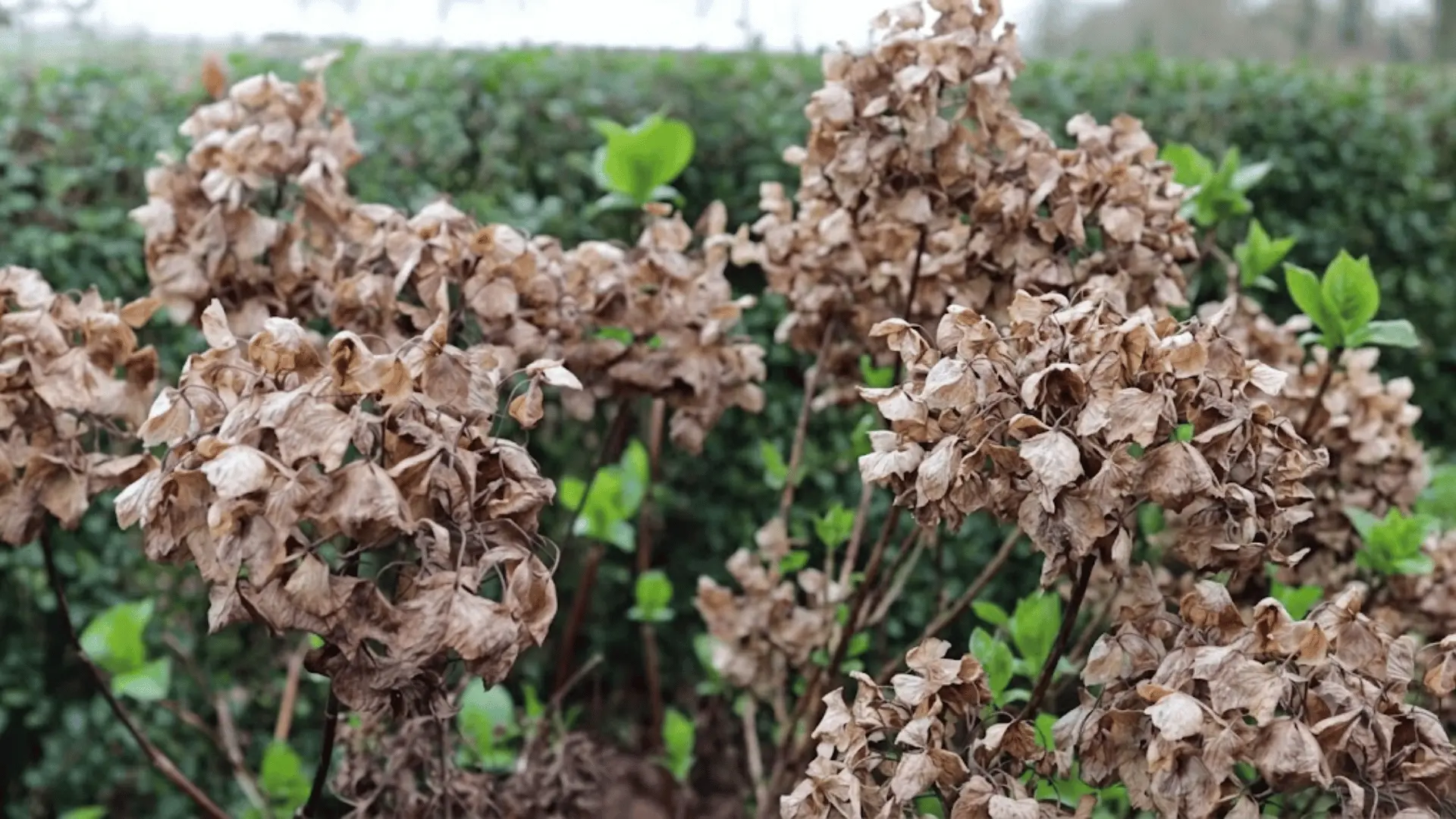
Wait until late winter, when the old flower heads are dry and fresh green buds begin appearing along the stems. These buds show that the hydrangea is starting active growth again.
Inspect the entire shrub before making any cuts.
Look for dried flowers, brown stems, healthy buds, dead growth, and crowded branches so you know exactly which areas need attention first.
Step 2: Remove the Old Dried Flower Heads
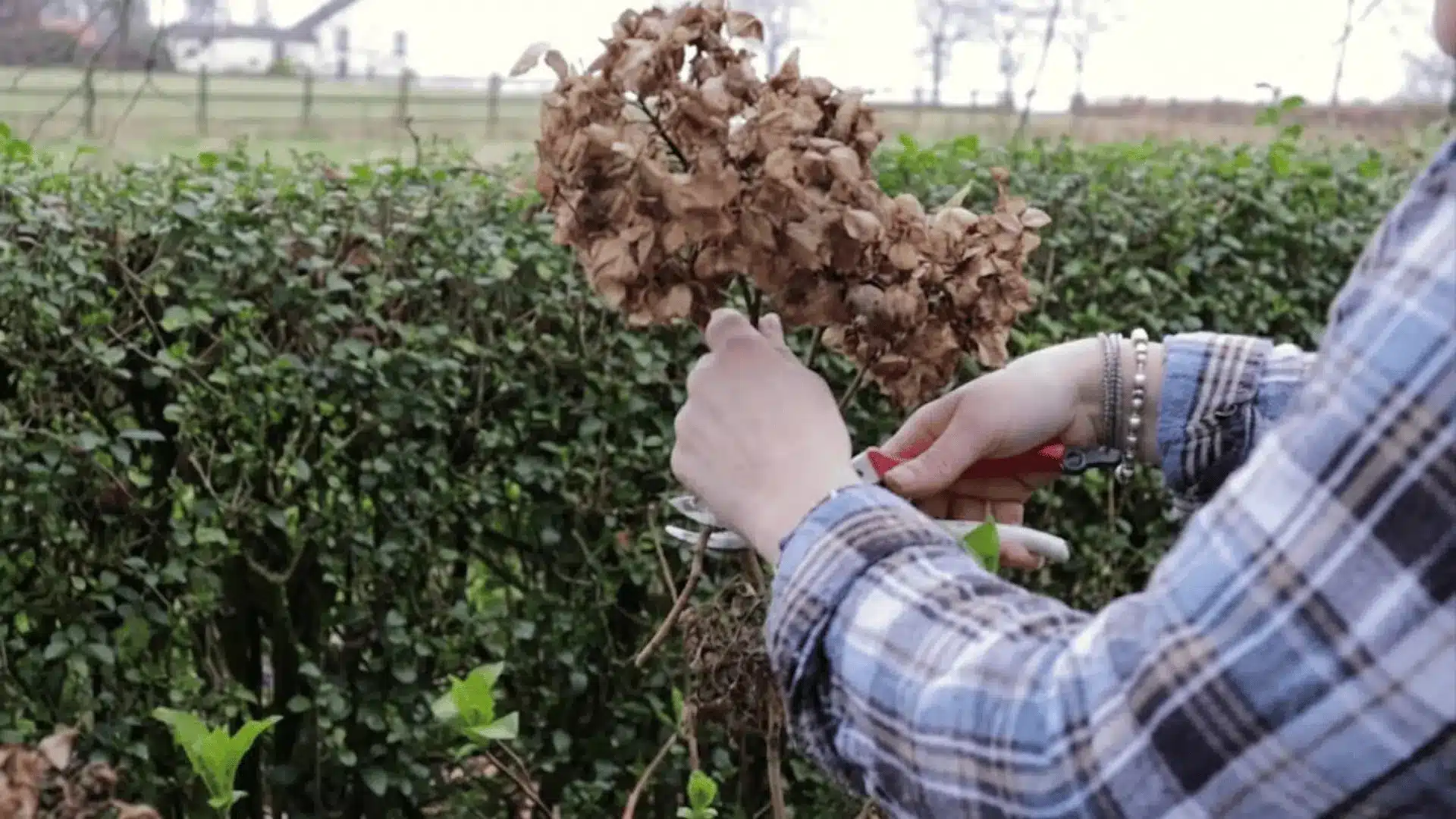
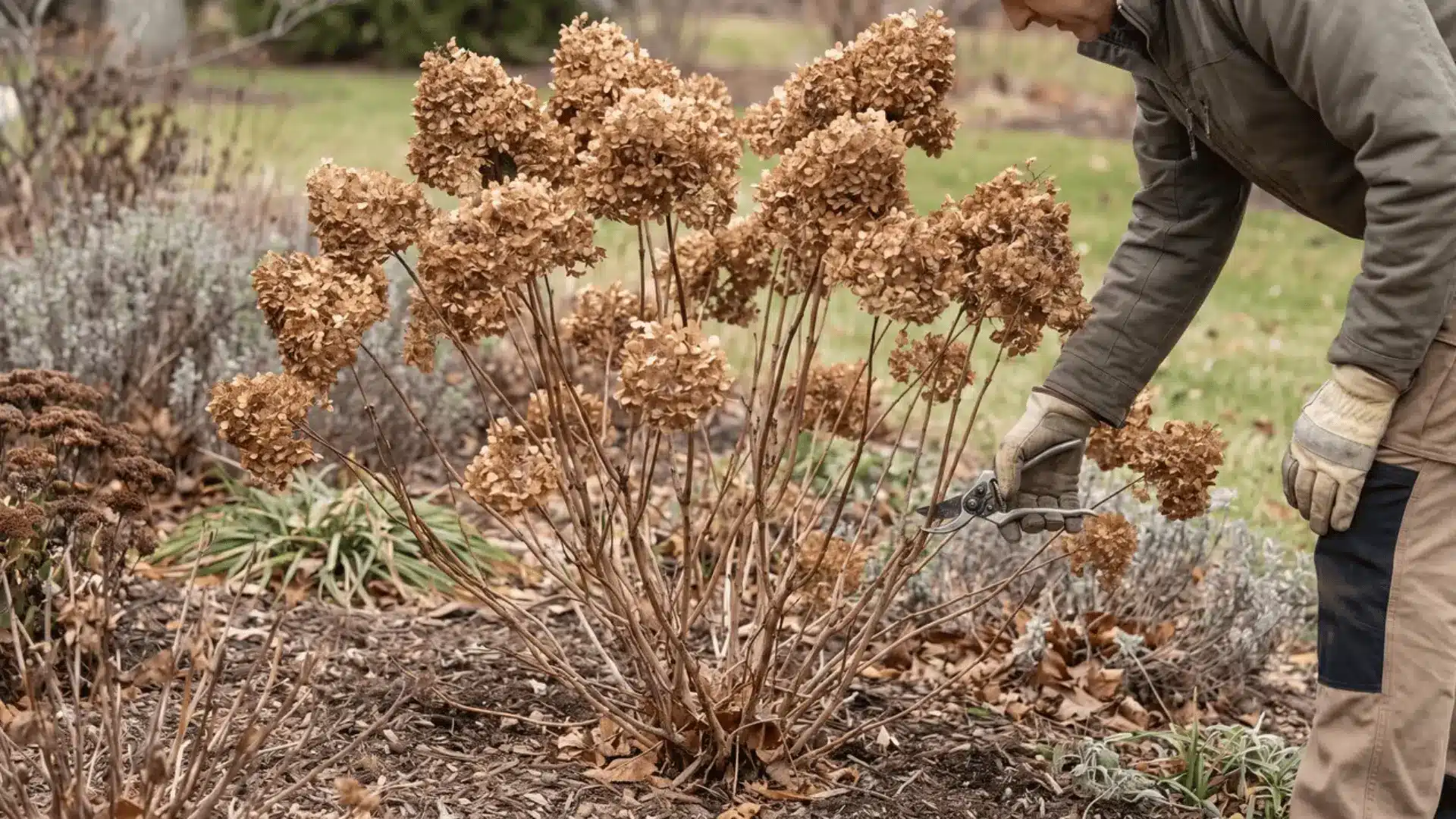
Follow each dried flower head down the stem until you reach the first healthy pair of green buds.
Position your secateurs just above those buds so the developing growth remains undamaged.
Work around the shrub one stem at a time rather than cutting everything to the same height. This exposes fresh buds while preserving the plant’s natural shape.
Step 3: Make Clean Cuts Above Healthy Buds
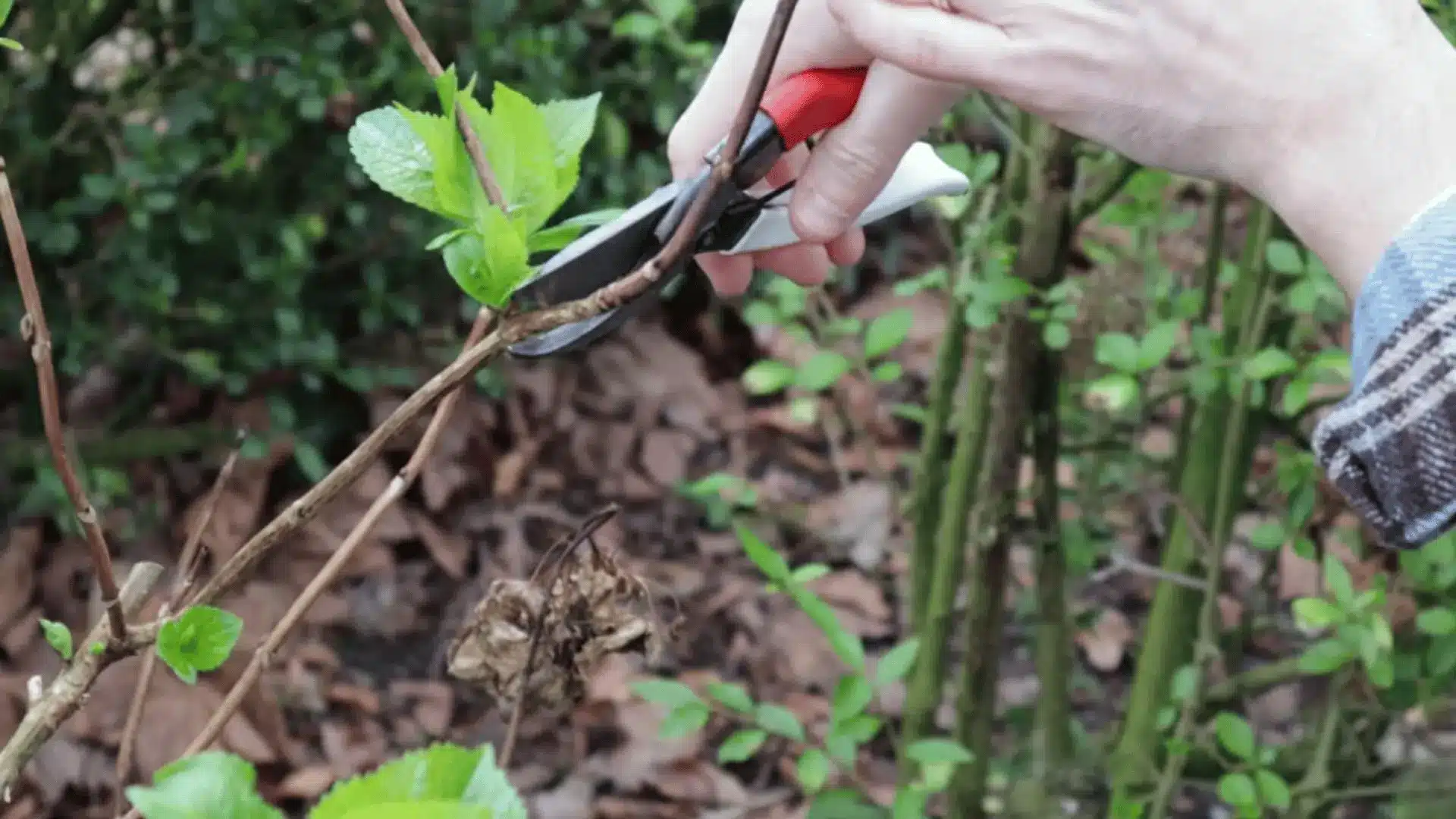
Place sharp secateurs slightly above a healthy pair of buds and make a clean, angled cut. Angle the cut away from the buds so water is less likely to collect nearby.
Avoid cutting directly into healthy buds or leaving a long section of bare stem above them.
Repeat the same careful method on every stem that still carries an old flower head.
Step 4: Thin Out Crowded and Older Stems
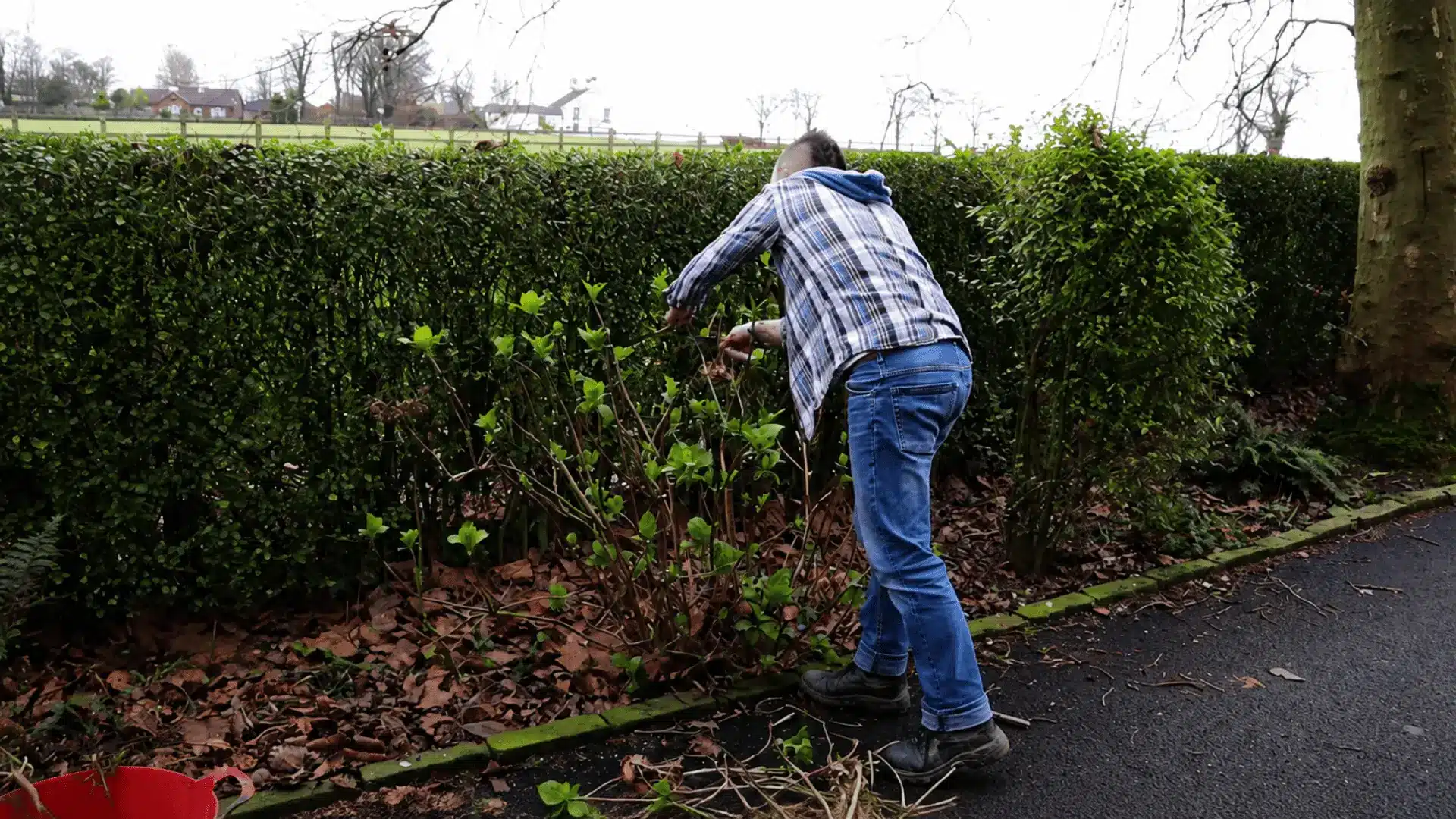
Inspect the center of the hydrangea for older stems that make the shrub dense or crowded.
Where thinning is necessary, remove roughly one-third of the oldest stems from the plant each year, a ratio backed by university extension research.
Cut selected older stems low enough to create open spaces through the shrub.
This improves airflow and light penetration while giving fresh shoots more room to develop without removing excessive healthy growth.
In my own garden, thinning even a few of the oldest stems each spring keeps air moving through the center, and it’s cut down on the mildew I used to fight every humid summer.
Step 5: Remove Dead and Crossing Branches
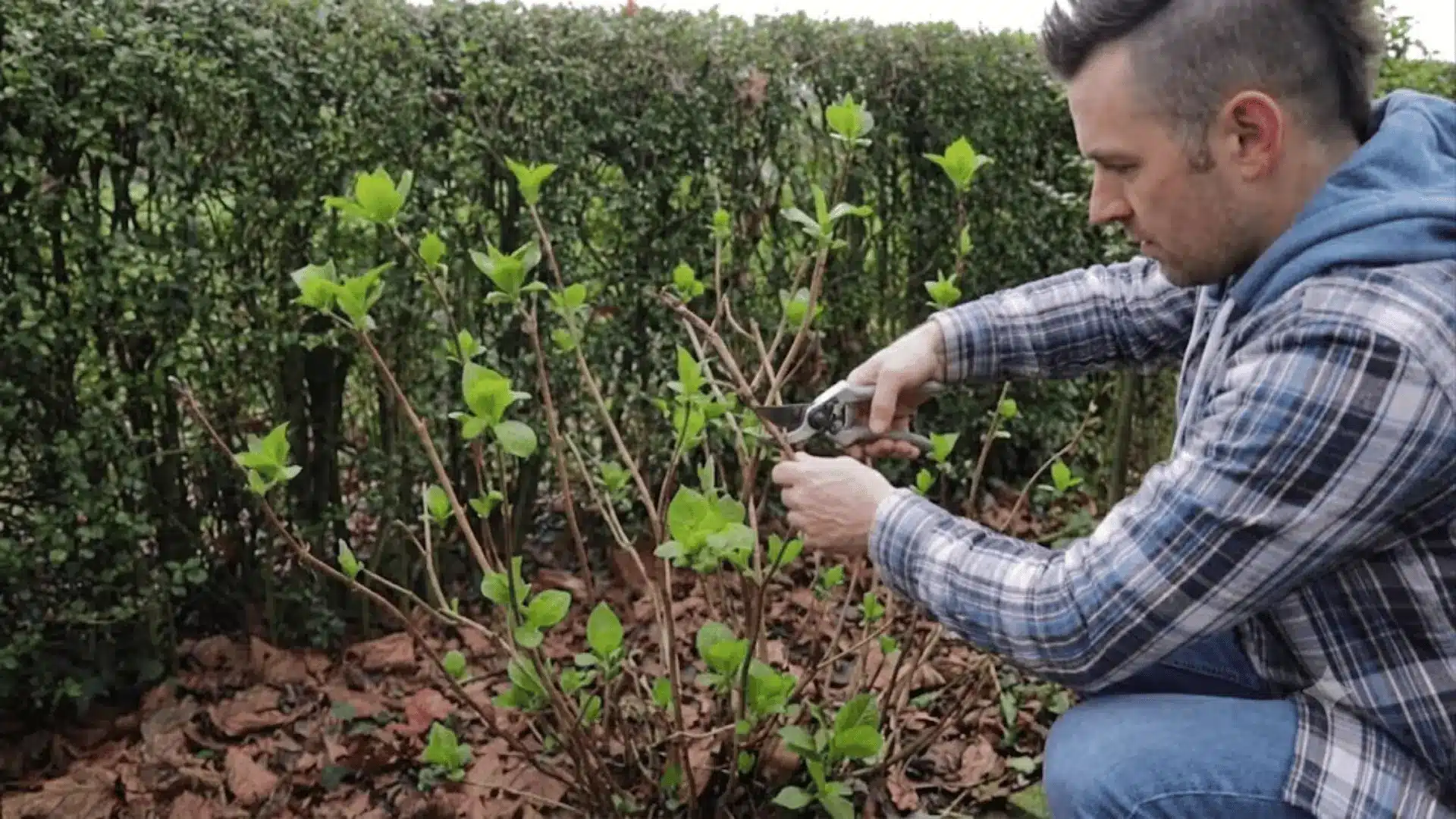
Look for branches that are completely dead, damaged, crossing, or rubbing against neighboring stems.
Remove these sections cleanly with sharp secateurs so the remaining healthy branches have enough room to grow. Check the shrub from several angles as you work.
The finished structure should look open and balanced, with healthy stems separated enough to reduce rubbing, congestion, and unnecessary competition for space.
Step 6: Tidy the Base and Check the Finished Shape
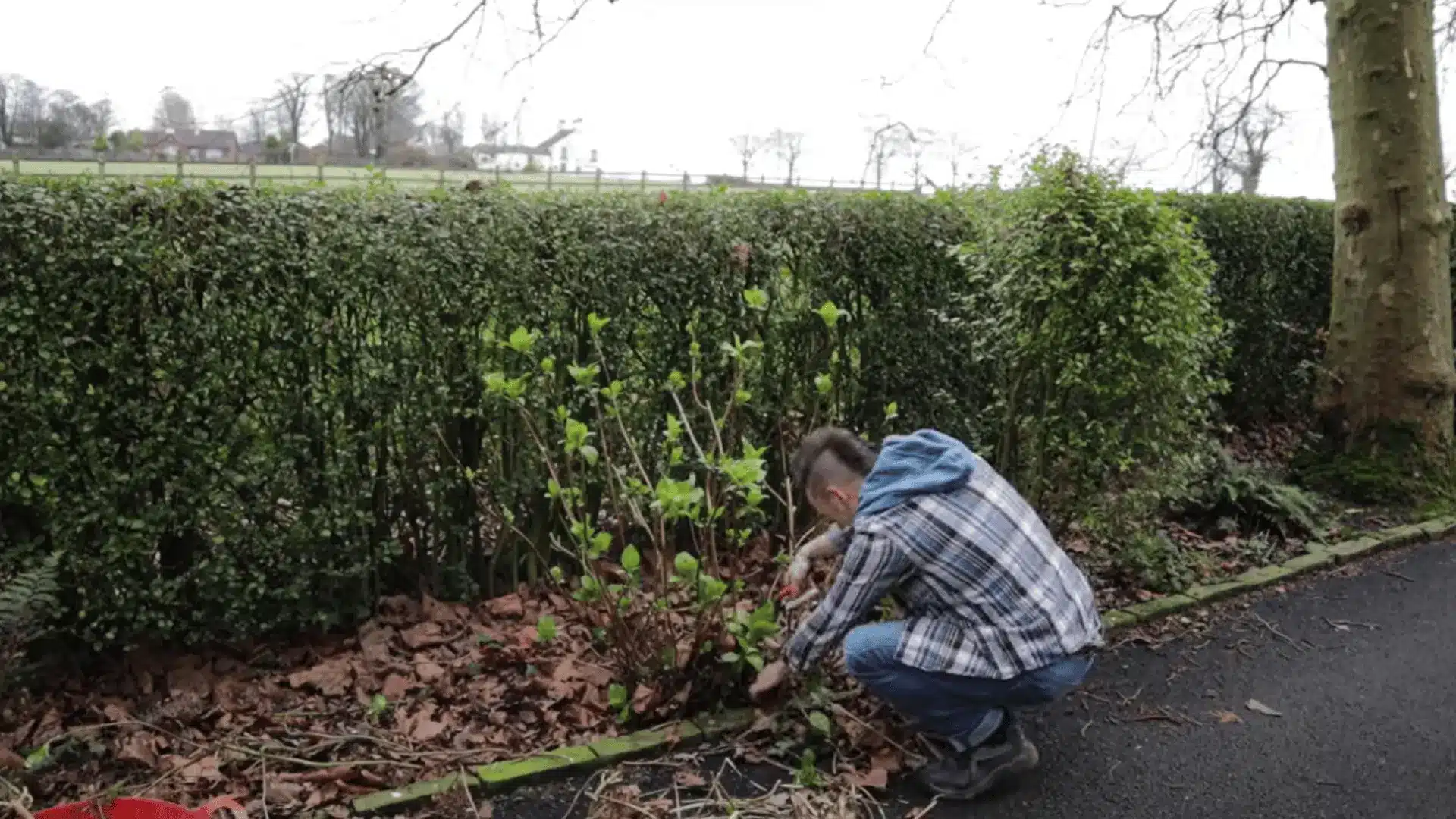
Inspect the base of the hydrangea for fresh shoots emerging from near the soil. Keep healthy new growth in place while clearing away loose dead stems, leaves, and other unwanted material.
Give the shrub one final check for missed dead branches or crowded areas.
Stop pruning once the plant looks open and balanced, with healthy buds and new shoots given space to develop.
For further information, check out the video below.
Why is My Hydrangea Not Growing After Pruning?
A hydrangea may pause after pruning without having a serious problem. Check these common causes before assuming the roots or plant are damaged.
- Pruning at the wrong time for your hydrangea’s type
- Removing too much growth in one session
- Cold or frost damage to remaining stems
- The plant still sitting dormant, not yet active
- Dead stems that were never producing shoots
- Drought stress from inconsistent watering
- Poor drainage holding water around the roots
- Root damage from digging or nearby construction
- Transplant stress if recently moved
- Not enough light reaching the plant daily
Several of these causes trace back to where the shrub was planted in the first place, so it’s worth confirming the spot still fits your overall yard layout before assuming pruning is the problem.
Start with pruning timing and how much you removed, since these commonly delay recovery.
Remember that healthy leaf growth without flowers usually points to lost flower buds, not stalled growth.
How Long Does a Hydrangea Take to Recover After Pruning?
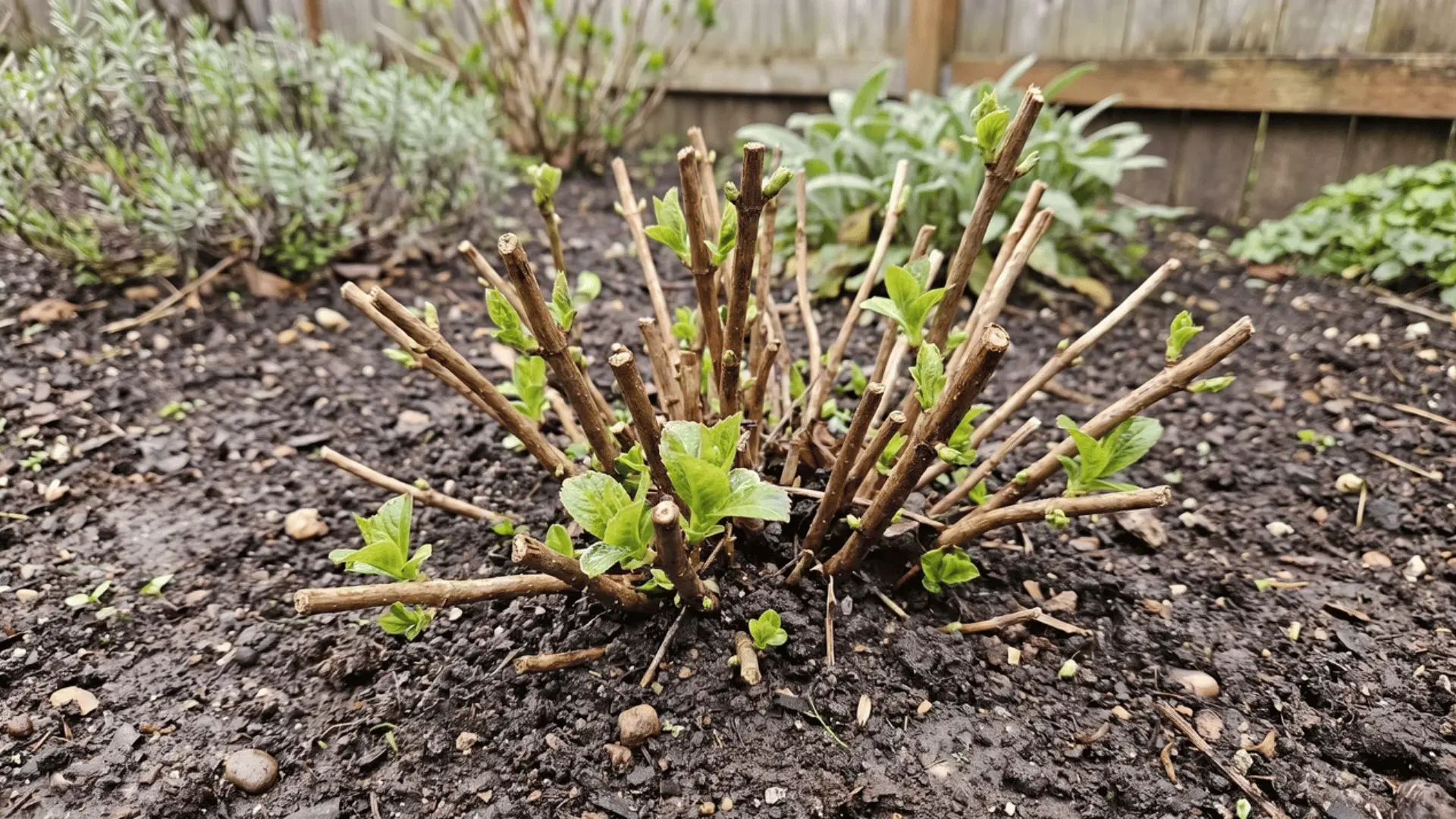
Most hydrangeas recover withintwo to four weeks, producing fresh leaves once temperatures rise and roots become active.
Cooler weather, late frosts, or very early pruning can delay visible growth beyond that window.
New-wood types such as panicle and smooth hydrangeas usually recover fastest because they naturally produce fresh stems each spring.
After a hard cutback, new shoots often appear within two or three weeks.
Old-wood types need more patience after pruning. Bigleaf, mountain, and oakleaf hydrangeas often focus on rebuilding leaves and stems first, while lost flower buds may not return until the following growing season.
If your hydrangea still looks bare after a month of warm weather and consistent watering, another issue may be involved.
Check for root damage, poor drainage, lingering frost injury, or unusually dry soil. Recovery also depends on how much growth you removed.
Light deadheading causes little stress, while a heavy rejuvenation prune forces the plant to spend more energy rebuilding stems, leaves, and its overall structure.
Common Hydrangea Pruning Mistakes to Avoid
Good technique matters as much as good timing. These are the mistakes that quietly ruin a season of blooms, even when the calendar was right.
Here are the habits worth checking against your own routine, since most gardeners fall into at least one without realizing it.
- Pruning Before Identifying the Hydrangea Type: Cutting first and identifying later removes flower-producing wood you didn’t need to touch.
- Using Hedge Shears to Shape the Entire Shrub: Shearing creates dense outer growth and strips stems indiscriminately, instead of preserving the plant’s natural shape.
- Making Cuts Too Far Above a Bud: Long stubs die back and leave untidy dead sections above otherwise healthy growth.
- Cutting Directly Into a Healthy Bud: Placing your pruners too close damages the bud meant to produce next season’s growth.
- Removing Healthy Stems Just to Make the Shrub Symmetrical. Hydrangeas grow unevenly by nature. Cosmetic pruning removes productive wood without improving the plant’s health.
Most of these come down to rushing the cut or skipping the identification step entirely. Slow down, and half of this list stops applying to you.
Final Thoughts
Learning how to prune hydrangeas comes down to knowing your plant before making a cut. Old wood types need careful timing because their flower buds form on stems from the previous year.
New wood types are more forgiving and can handle pruning in late winter or early spring.
Once you know the difference, the rest is simpler: remove spent flowers, cut above healthy buds, clear dead or crossing stems, and avoid shaping the shrub too aggressively.
You do not need to prune heavily every year to keep hydrangeas healthy. Keep each cut purposeful and watch how the plant responds.
Have you pruned your hydrangeas before? Share your questions or results in the comments.
Frequently Asked Questions
Can I Cut My Hydrangea All the Way Back?
Only new wood types such as panicle and smooth hydrangeas tolerate a hard cutback, since they form flower buds on fresh spring growth after pruning. Old wood types like bigleaf, mountain, and oakleaf store next year’s buds in stems that already exist, so cutting them to the ground removes those buds and the shrub skips blooming for a full season.
What Happens if I Prune Hydrangeas at the Wrong Time?
Pruning at the wrong time removes the stems that were about to carry next year’s flower buds, so the plant typically survives without lasting damage but produces few or no blooms the following season. Old wood types are most at risk, since fall or spring pruning cuts through buds that already formed the previous summer.
Should I Cut Dead Hydrangea Flowers Off?
Yes, deadheading spent blooms is safe for every hydrangea type and rarely causes harm. Follow the stem down from the faded flower head until you reach the first healthy pair of green buds, then make a clean angled cut just above them so the plant channels its energy into new growth instead of dried flowers.
Can I Prune Hydrangeas in Fall?
Fall pruning is safe only for new wood types like panicle and smooth hydrangeas, since their flower buds have not formed yet. Old wood types such as bigleaf, mountain, and oakleaf hydrangeas already hold next year’s buds by fall, so cutting them back now removes the flowers before they ever get the chance to open.
How Can I Tell if a Hydrangea Stem Is Dead?
Scratch the stem lightly with a fingernail near its base. Green tissue underneath means the stem is alive and worth keeping, even if it looks bare above. Brown, dry tissue all the way through means the stem is dead and can be cut flush to the ground without risking any of the plant’s healthy growth.
Do Hydrangeas Need to Be Pruned Every Year?
No, most hydrangeas bloom well with little more than deadheading spent flowers and removing dead or damaged wood, even in years you skip a full pruning session. Heavier pruning, such as thinning older stems, is only needed every few years to keep the shrub open, healthy, and producing strong new growth.