


A garden trellis can turn a plain bed, wall, fence, or patio corner into useful growing space.
It keeps climbing plants off the ground, makes harvesting easier, and helps vines grow in a cleaner direction.
The best garden trellis ideas are not just decorative. They should match the plant’s weight, the space you have, and how much support the structure needs over time.
A light string frame may work for peas, while squash, melons, roses, or grapevines need something much stronger.
Here, you will find practical trellis designs for raised beds, containers, narrow paths, garden entrances, and spaces that need privacy or shade.
What Does a Garden Trellis Do?
A trellis provides a structure that climbing plants can grip, wrap around, or be tied against. It guides stems upward instead of across the ground.
Raising foliage improves airflow and reduces disease pressure, keeping leaves drier and away from damp soil. It also makes plants easier to inspect for pests, damaged leaves, and developing fruit.
Vertical growing can increase usable planting space within raised beds and small gardens. Ground-level space remains available for herbs, flowers, or shorter vegetable crops.
A well-chosen trellis can also divide garden zones or screen exposed areas. Decorative designs remain useful even when plants become dormant during colder months.
Garden Trellis Ideas
The right design depends on your available space, plant weight, and preferred garden style. Consider how the structure will look both covered and uncovered.
1. Cattle Panel Arch
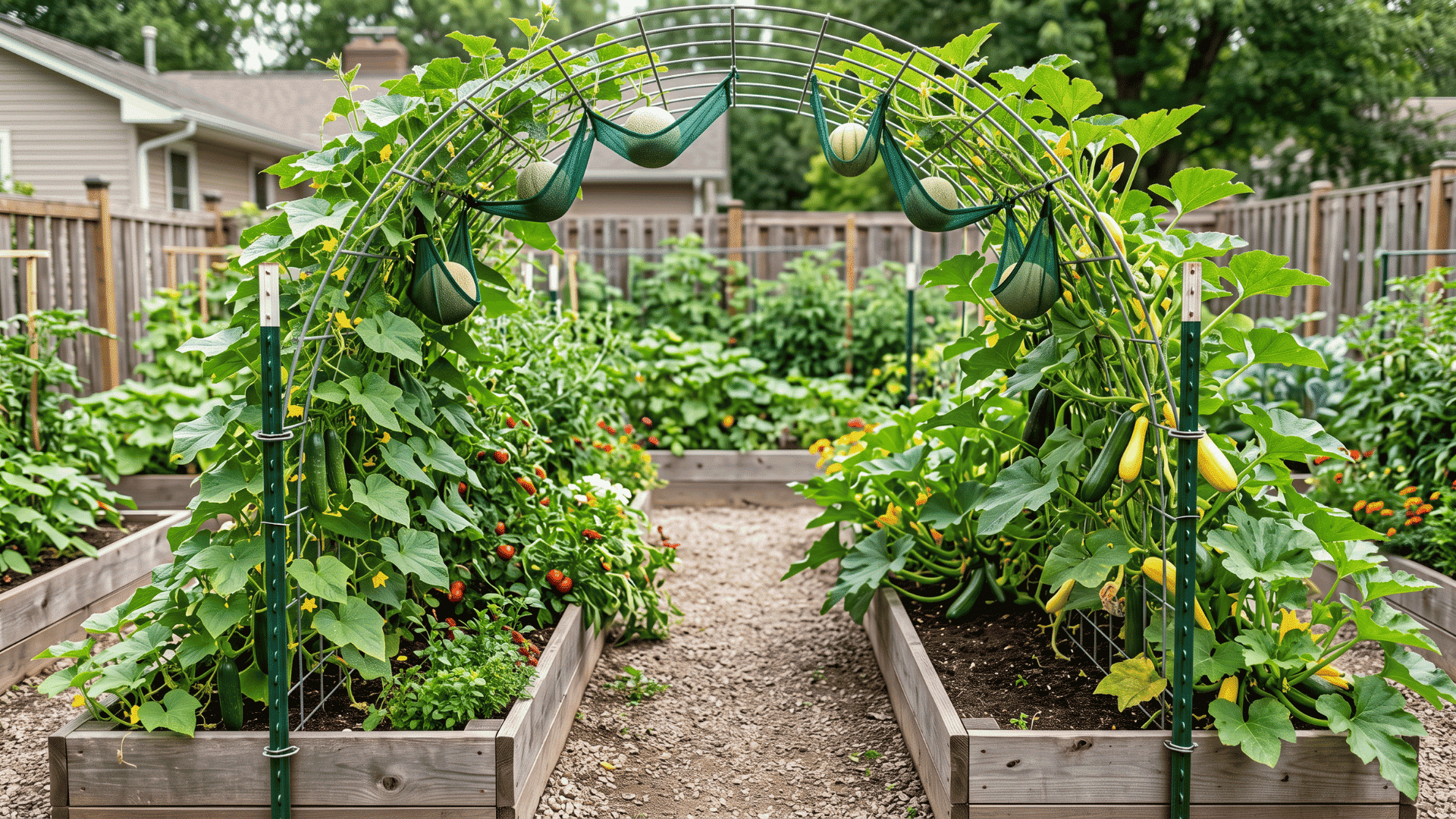
Bend a cattle panel between two garden beds to create a strong walk-through arch. Secure each side to firmly installed T-posts with heavy wire.
The rigid metal grid supports cucumbers, squash, melons, and other productive vines. Fabric slings can protect larger fruit as it develops overhead.
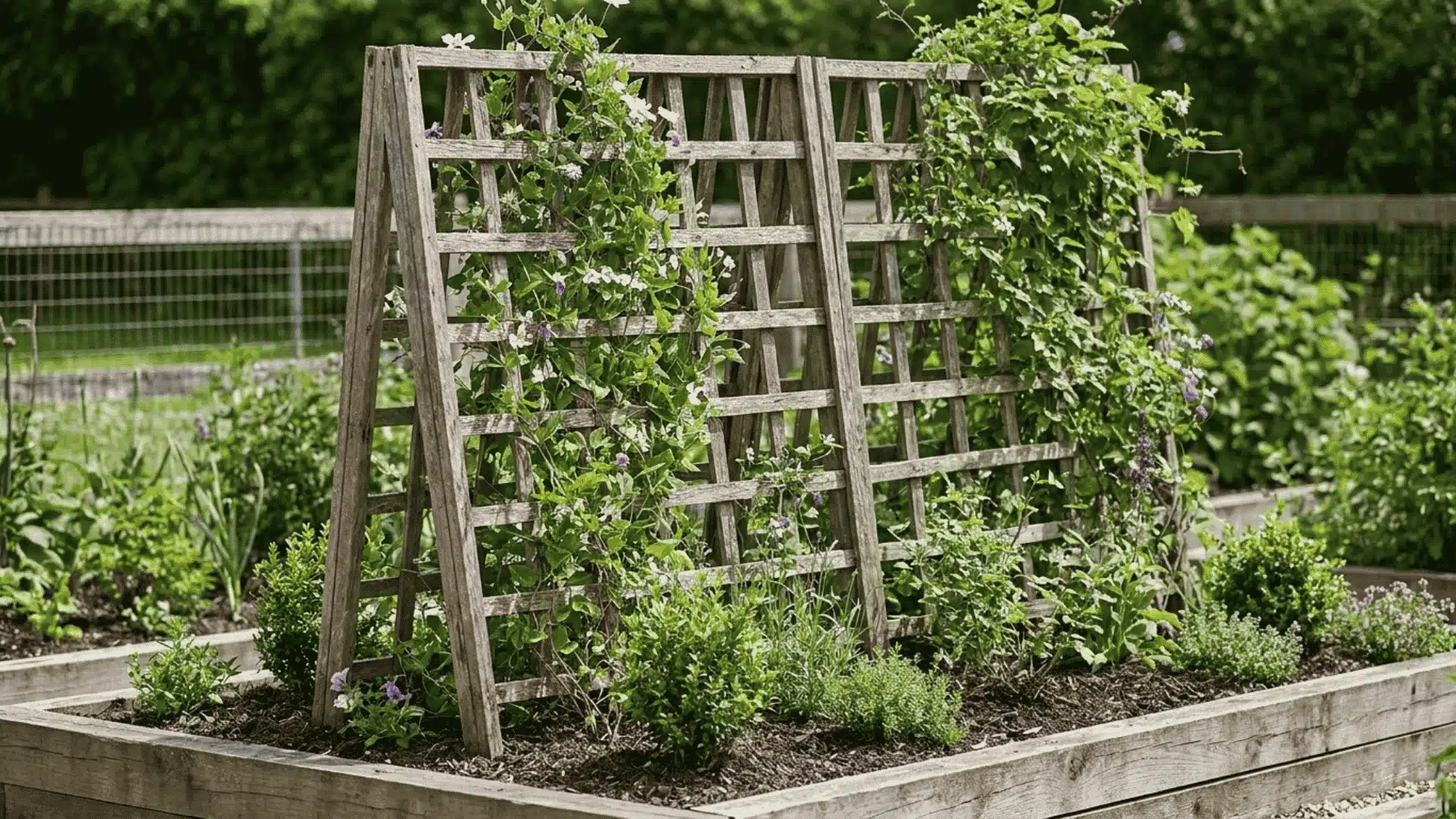
2. Wooden A-Frame Trellis
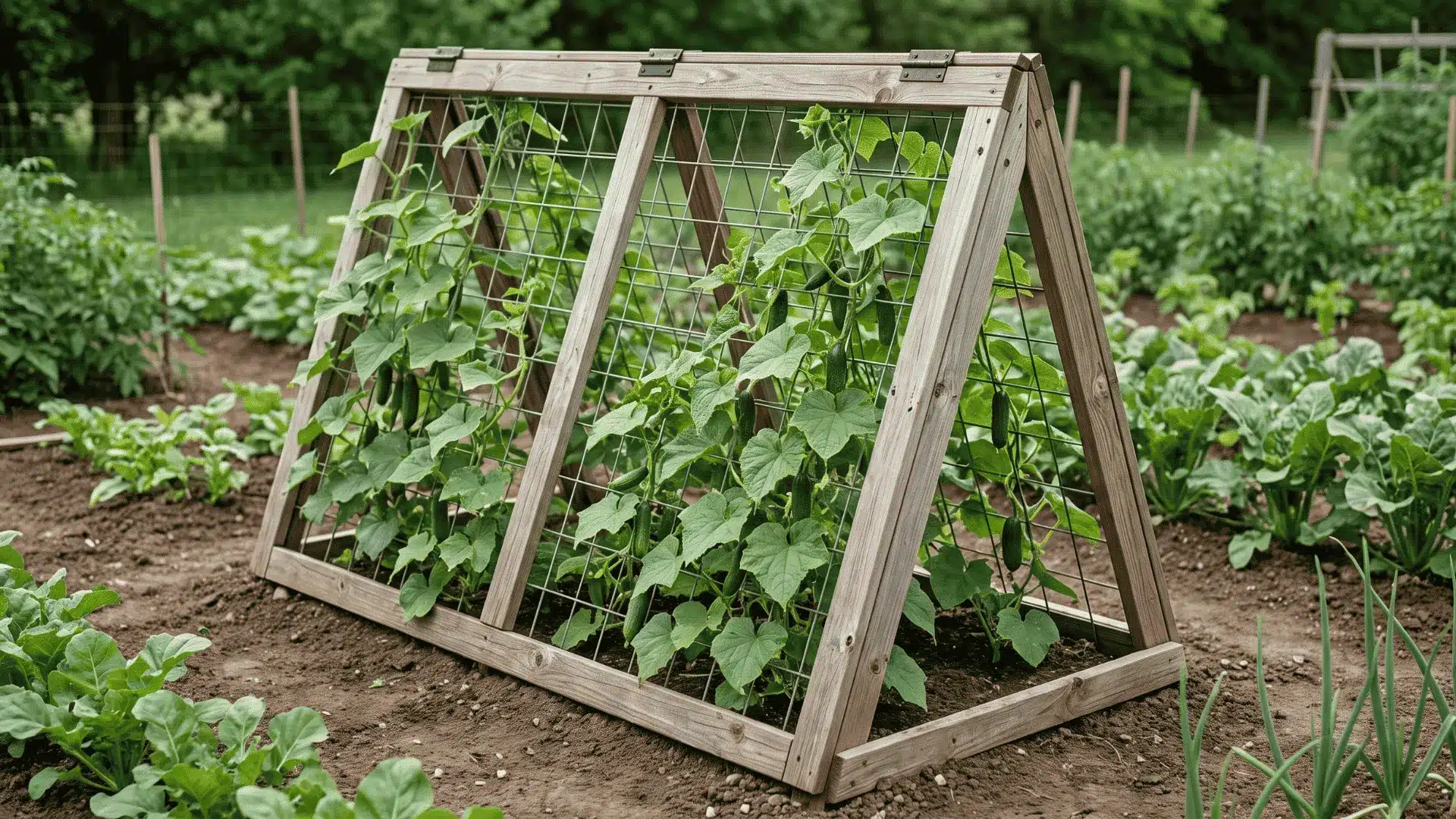
Join two wooden frames at the top with hinges to form a freestanding A-frame. Add wire mesh or horizontal slats along both angled sides.
This design gives climbing crops two usable growing surfaces. Hinges allow the structure to fold flatter when it needs to be moved or stored.
3. Recycled Wire Rack Trellis
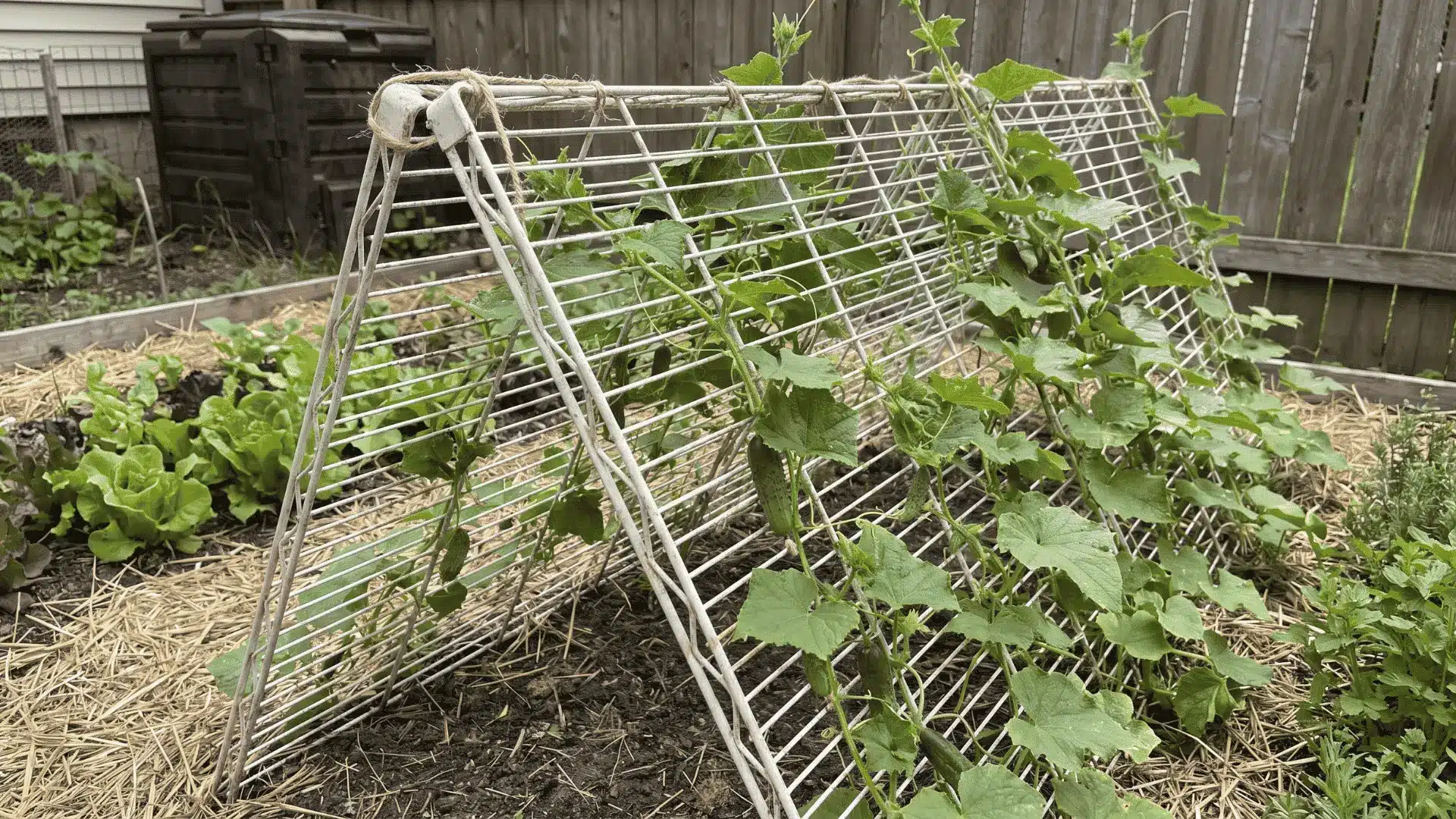
Tie two old wire shelves or fencing sections together at the top. Spread the bases apart until the structure stands securely over the planting row.
The open grid gives cucumber tendrils plenty of gripping points. Reusing an existing rack also reduces the cutting and measuring required for construction.
4. Foraged Branch Teepee
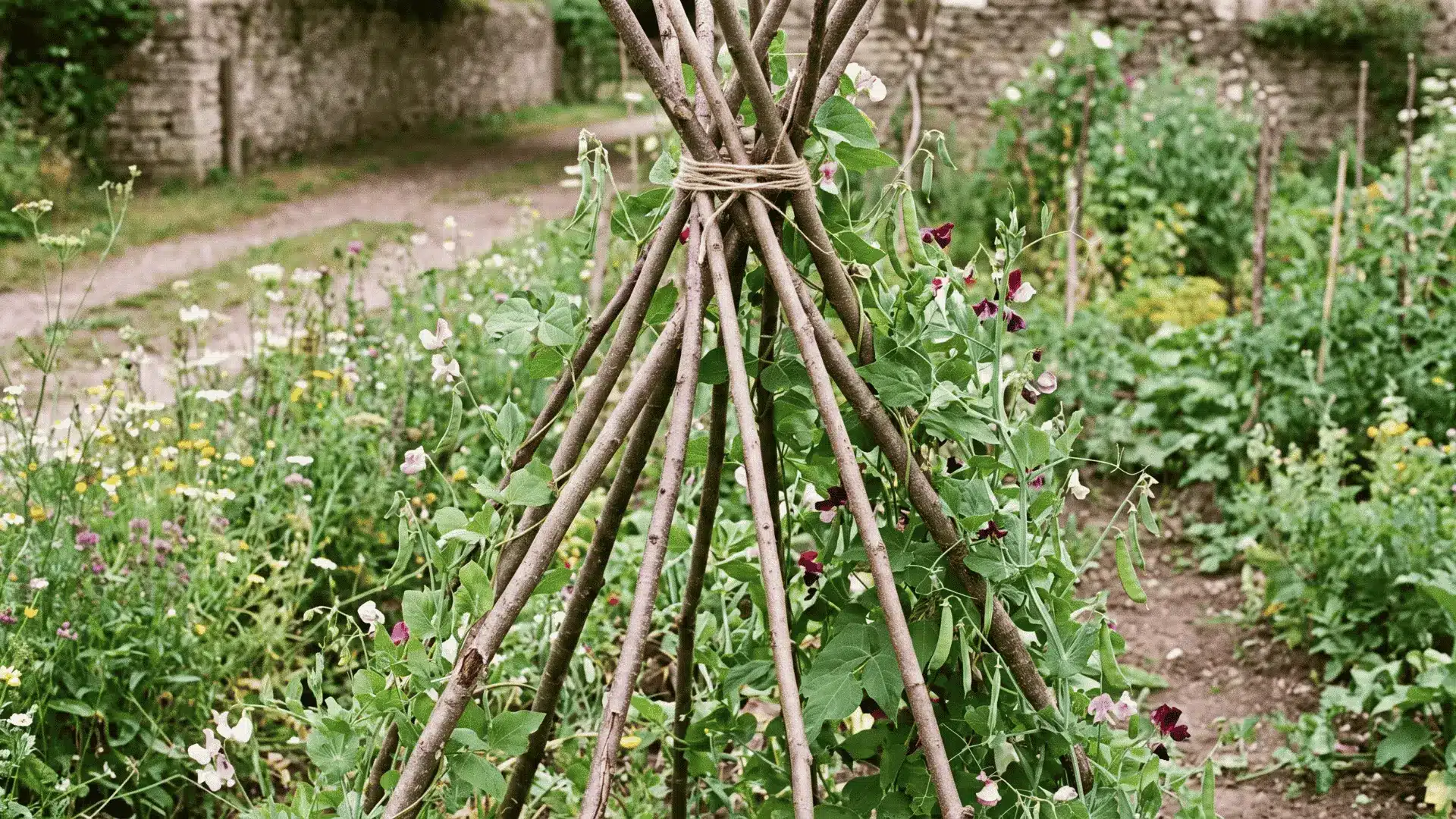
Gather several straight branches and arrange them in a circle around the planting area. Tie their upper ends securely with strong garden twine.
This natural structure suits beans, peas, and light flowering vines. Irregular branches create a relaxed appearance that works particularly well in cottage gardens.
5. Branch Ladder Trellis
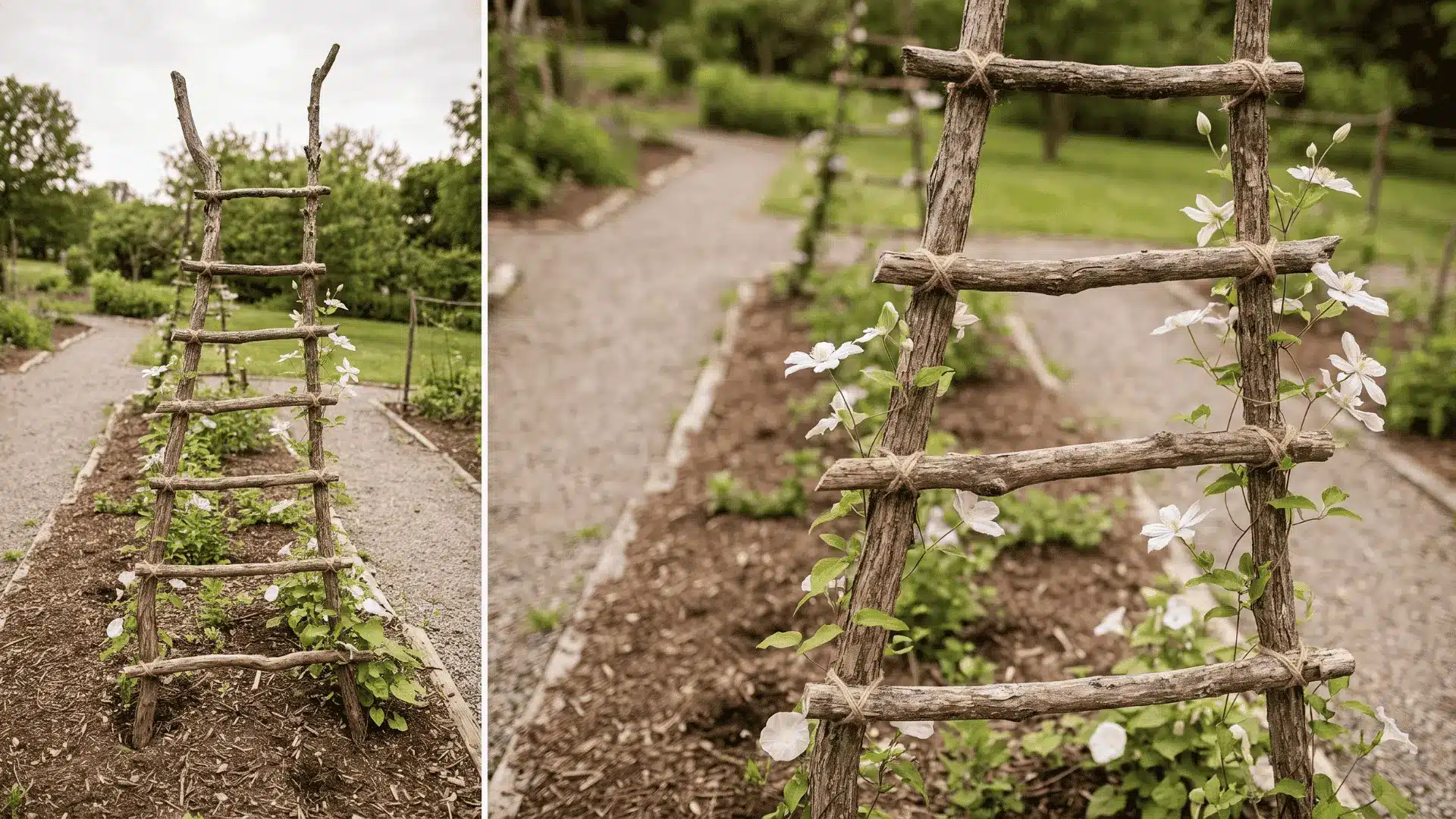
Place two long branches vertically and connect them with shorter horizontal pieces. Secure each joint with twine, wire, or outdoor-rated screws.
Lean the finished ladder against a fence or anchor it directly in the soil. Its narrow shape works well beside pathways and compact planting beds.
6. String and Stake Trellis
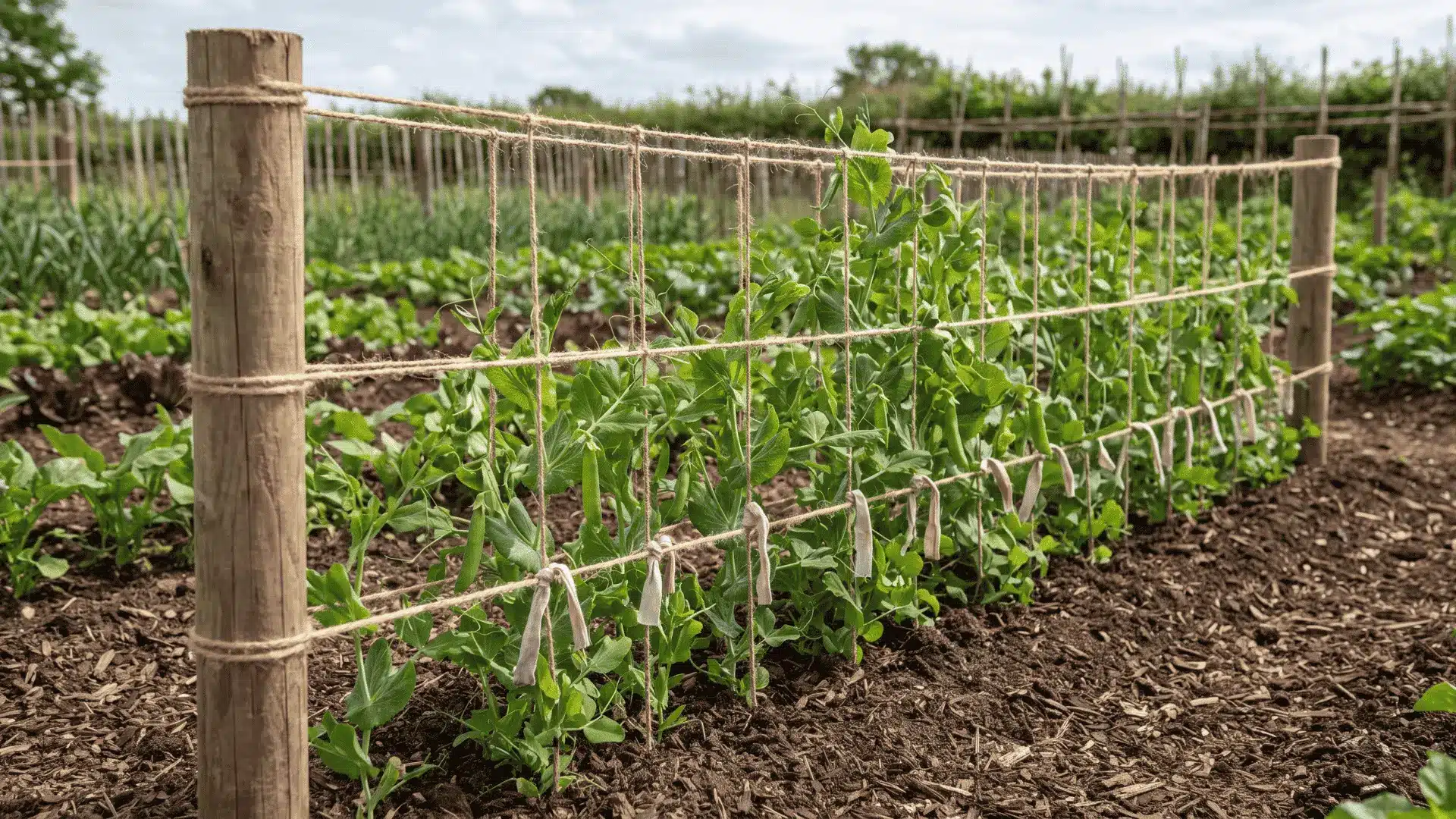
Install sturdy posts at both ends of a garden row. Stretch horizontal string between them, then add vertical lines for vines to climb.
This inexpensive system works well for peas and beans. At the end of the season, remove the string and leave the posts for future planting.
7. Living Willow Trellis
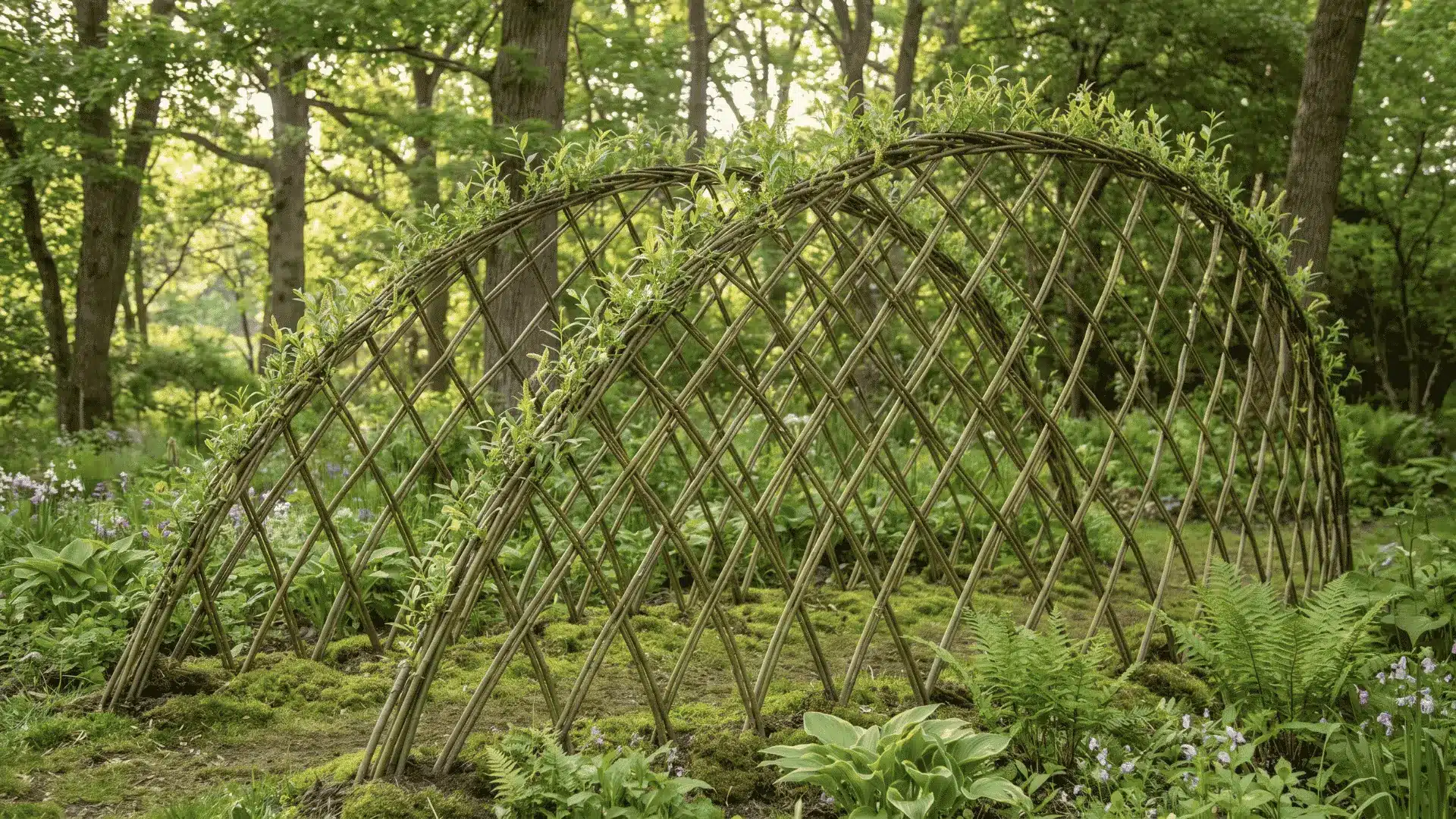
Plant flexible willow rods in two rows, then bend and weave them into a curved or diamond-patterned frame. The rods may root and continue growing.
This living structure suits natural and woodland-style gardens. Regular trimming keeps new shoots controlled while helping the original woven shape remain visible.
8. Bamboo Fan Trellis
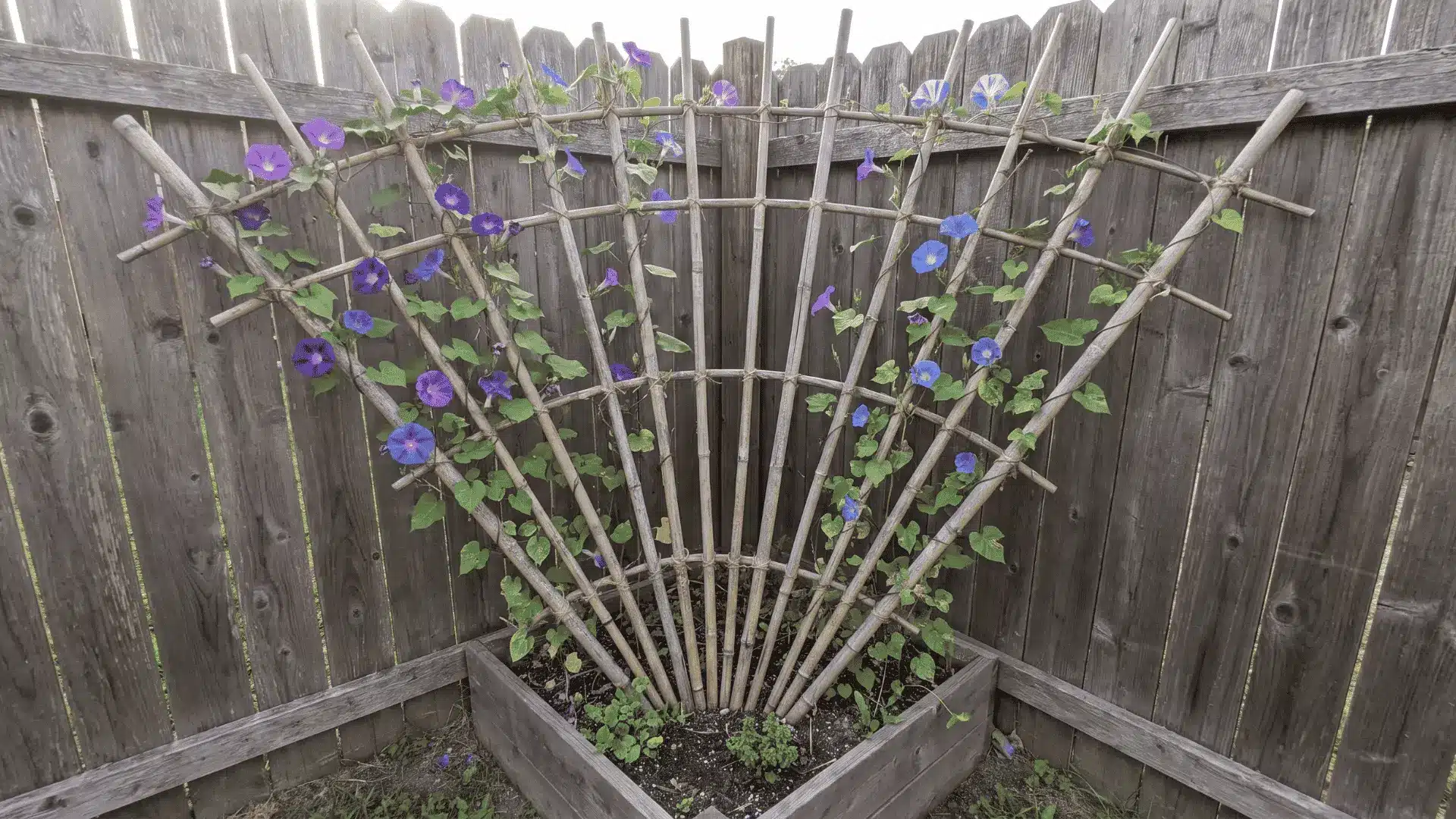
Arrange bamboo canes in a fan shape with the narrow ends meeting near the base. Connect them with several horizontal canes for added stability.
Its wide upper section gives vines room to spread without occupying much soil. Bamboo creates a light, natural structure for relaxed garden settings.
9. Freestanding Trellis Bench
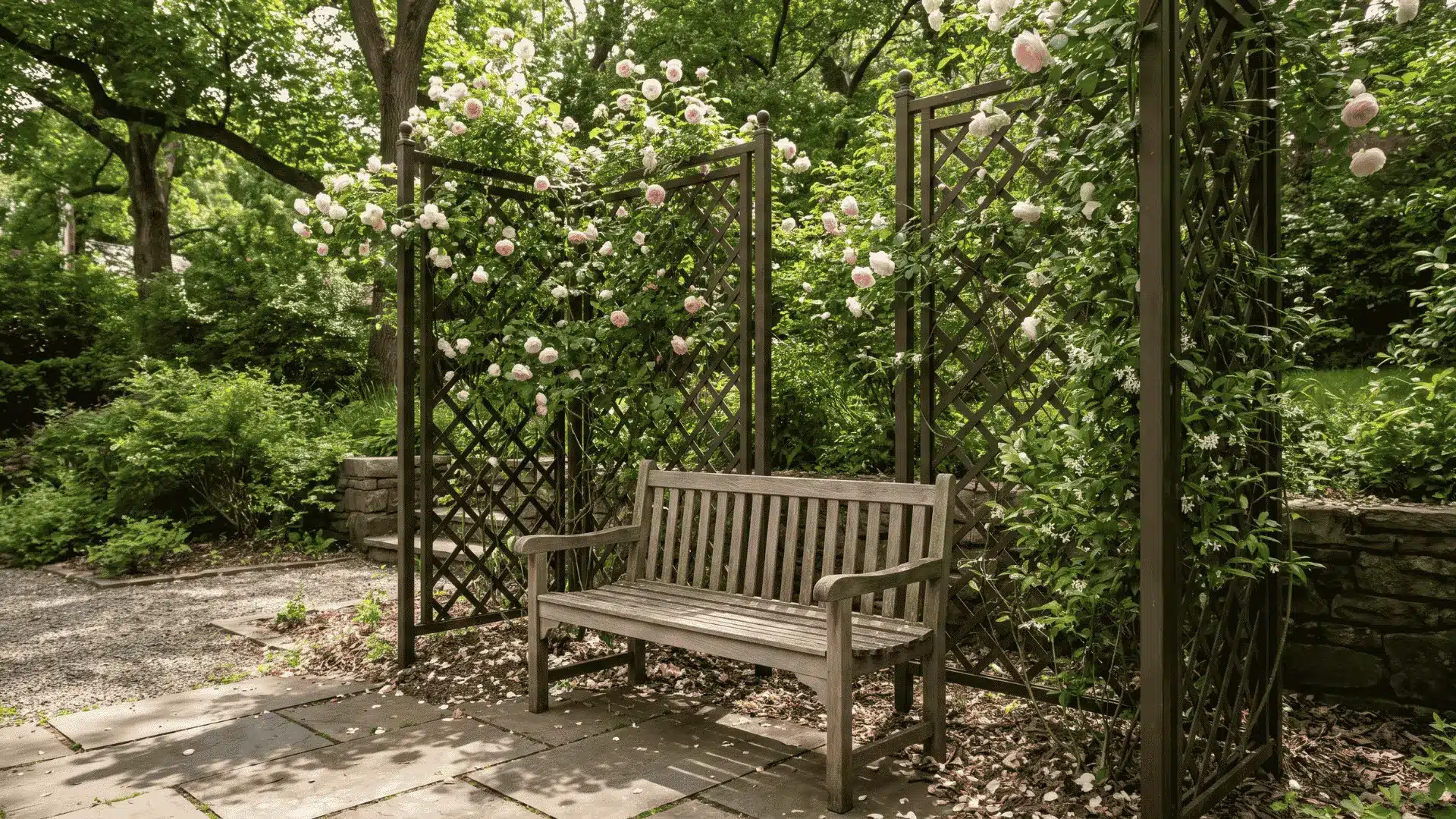
Add tall trellis panels behind or beside a garden bench. Climbing vines gradually frame the seating area while providing partial shade and privacy.
Use a weather-resistant bench with firmly anchored panels. Fragrant vines work especially well here, provided they do not attract excessive insects near the seat.
10. Garden Tool Trellis
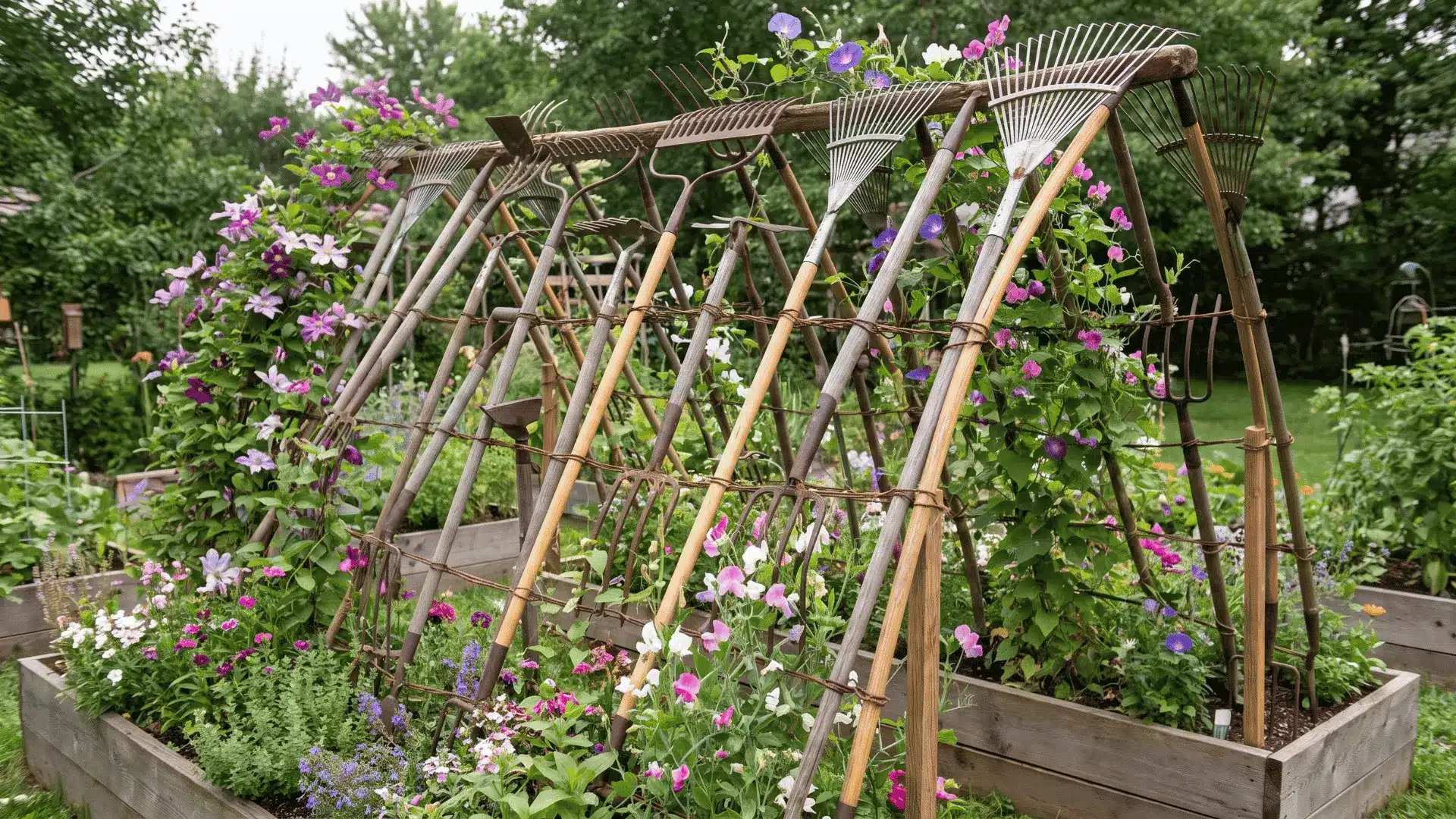
Repurpose old rakes, long-handled tools, or metal garden implements as an upright support. Fasten them together before anchoring the arrangement firmly in place.
This idea creates a distinctive feature for decorative vines. Avoid tools with sharp, loose, or heavily rusted parts that could damage stems or hands.
11. Bicycle Wheel Trellis
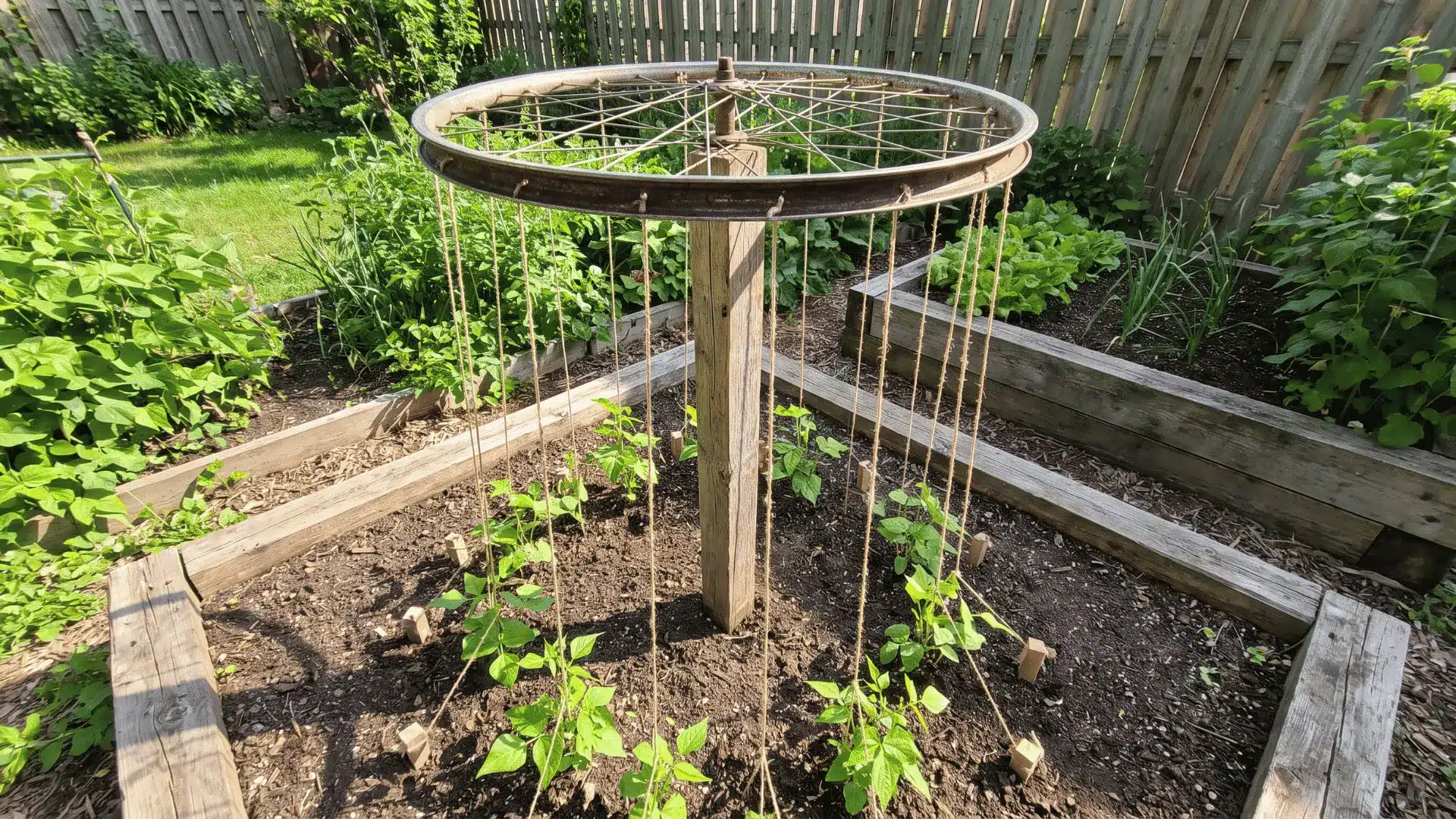
Mount an old bicycle wheel horizontally above a central post. Run strong strings from the wheel’s rim down to anchors around the planting area.
Climbing beans can follow the lines toward the circular top. The unusual shape adds height without requiring a large frame or wide garden bed.
12. Repurposed Bed Frame Trellis
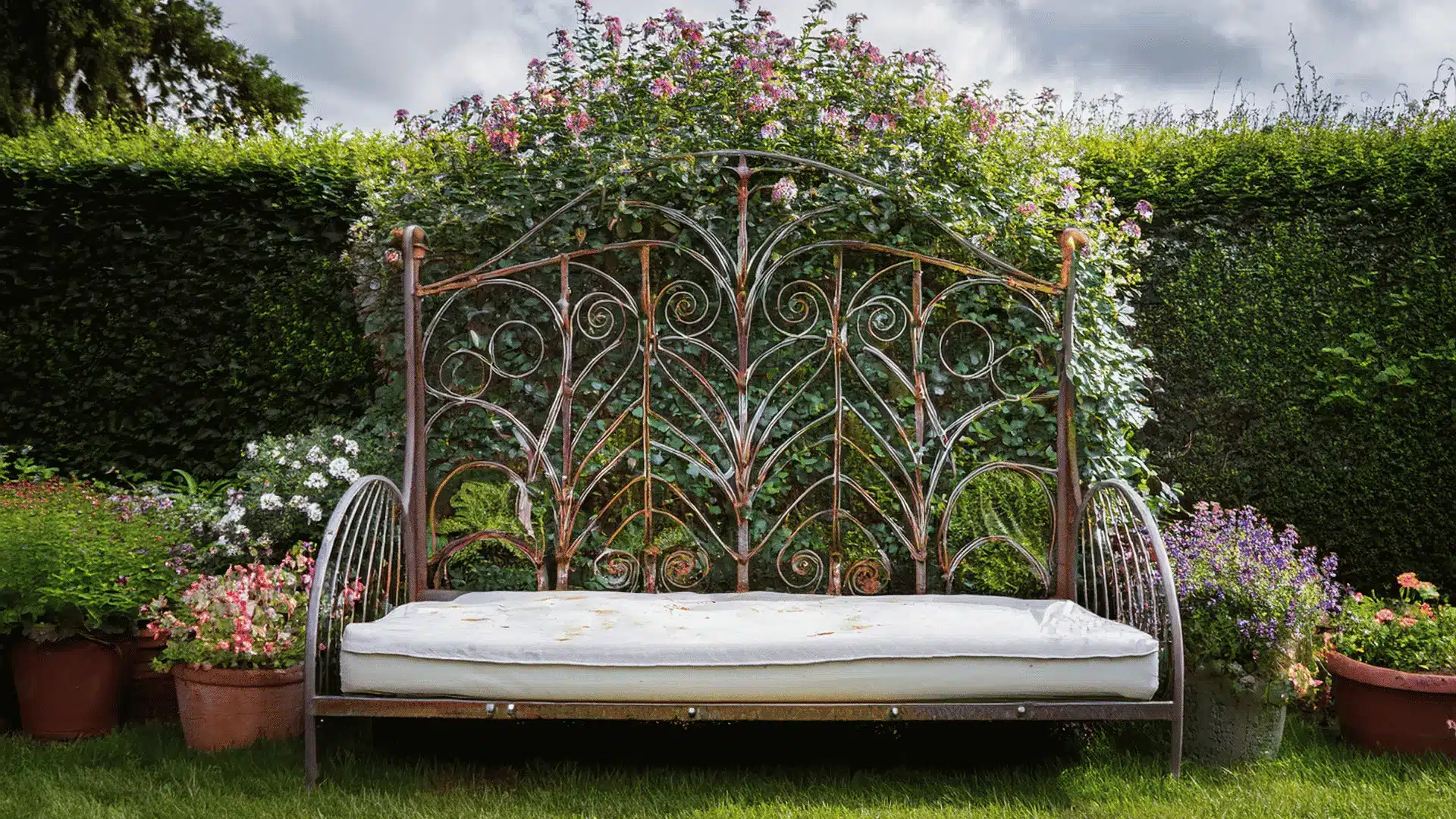
Stand an old metal headboard securely behind a flower or vegetable bed. Its rails and decorative sections provide natural points for climbing stems.
The finished look can suit cottage, vintage, or eclectic gardens. Remove flaking paint and seal exposed metal before placing it outdoors permanently.
13. Pallet Trellis
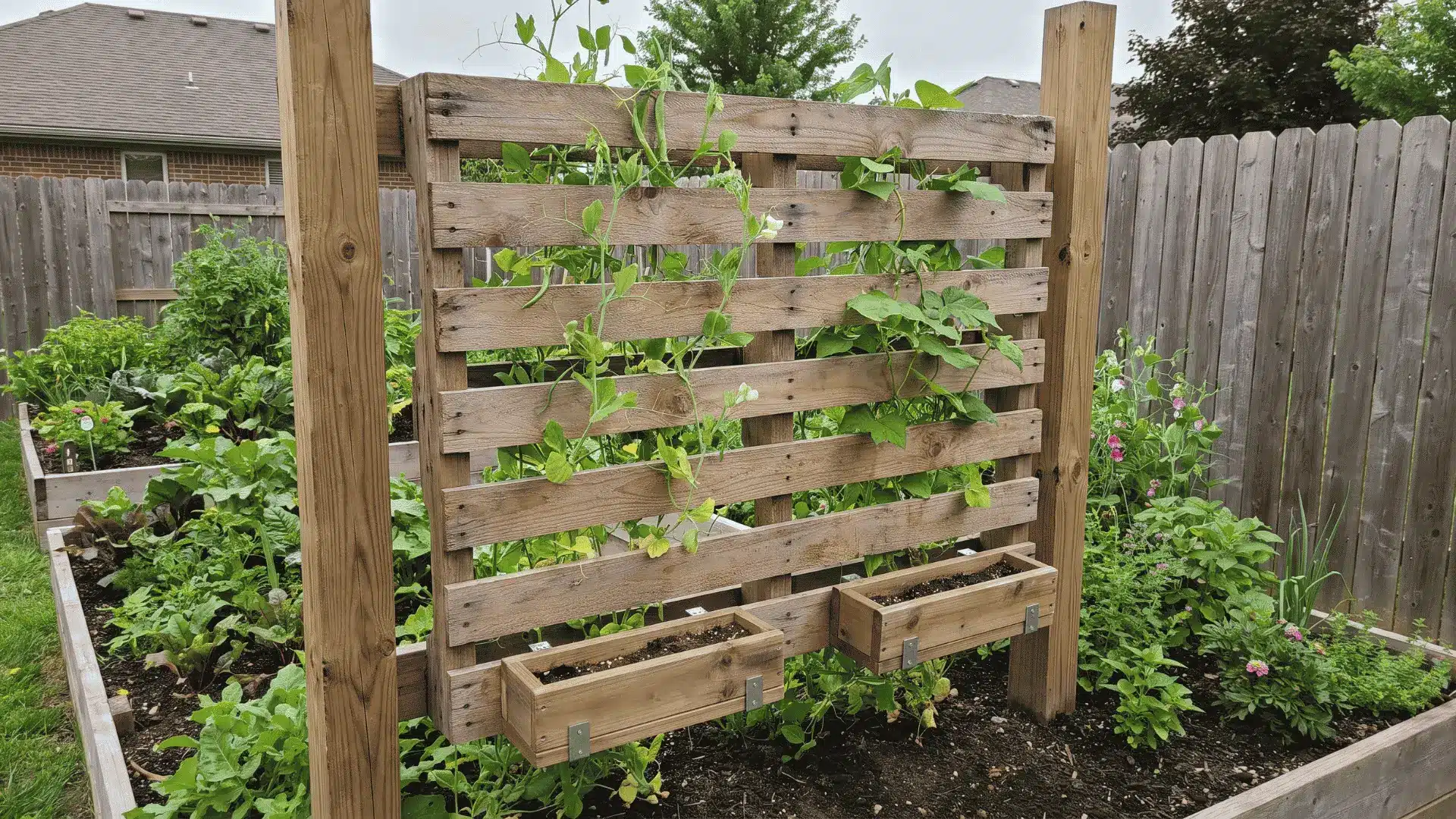
Position a sound wooden pallet vertically and anchor it to posts or a solid fence. Its existing slats create several levels for tying growing stems.
Use untreated or garden-safe wood around edible crops. A pallet can also support lightweight containers when reinforced and attached to a dependable structure.
14. PVC Pipe Trellis
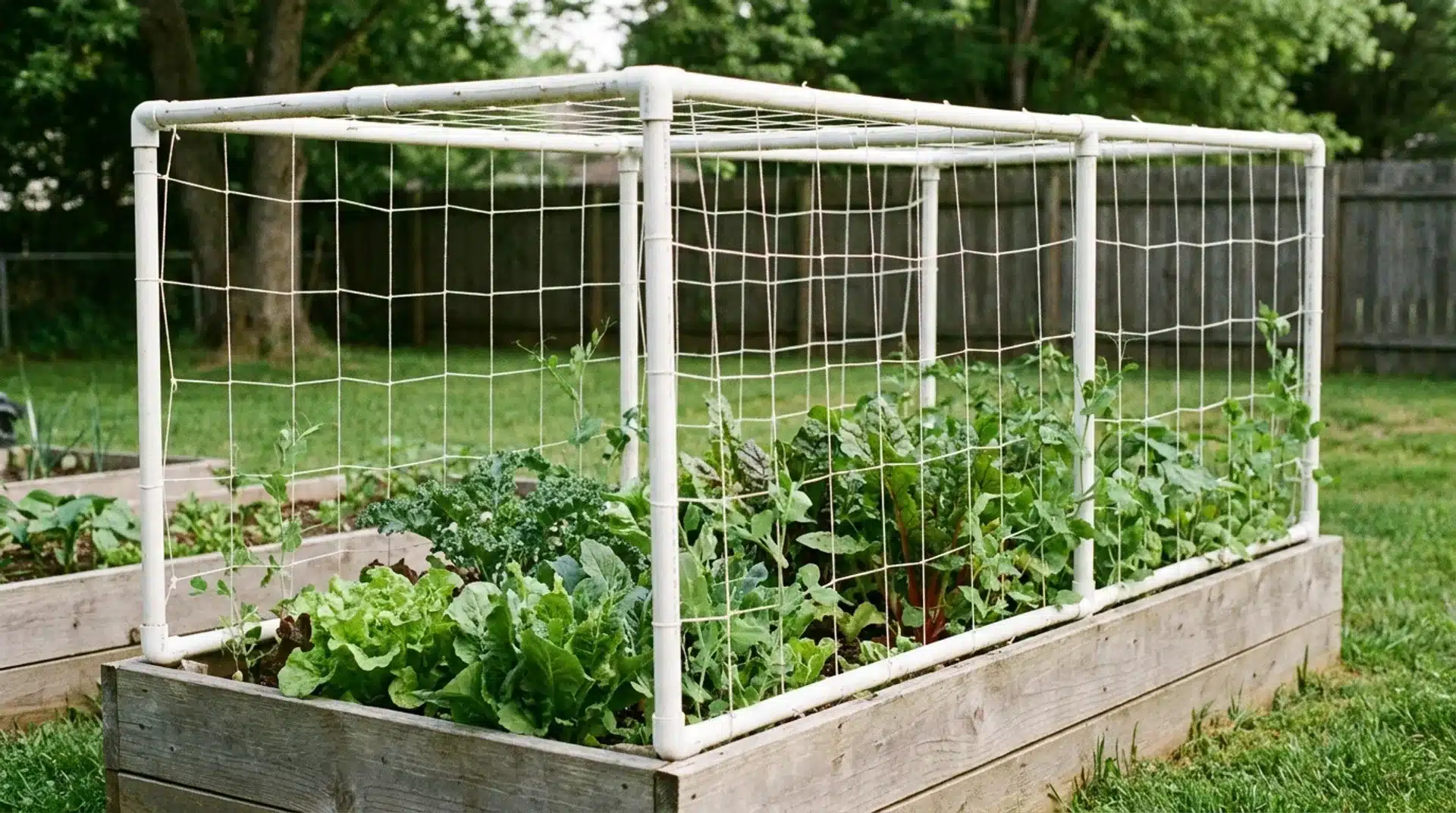
Build a lightweight rectangular frame from PVC pipes and elbow fittings. Attach garden netting across the opening to create a broad climbing surface.
PVC resists moisture and can be dismantled for winter storage. Anchor the base carefully because the lightweight frame may shift during strong winds.
15. Chicken Wire Frame
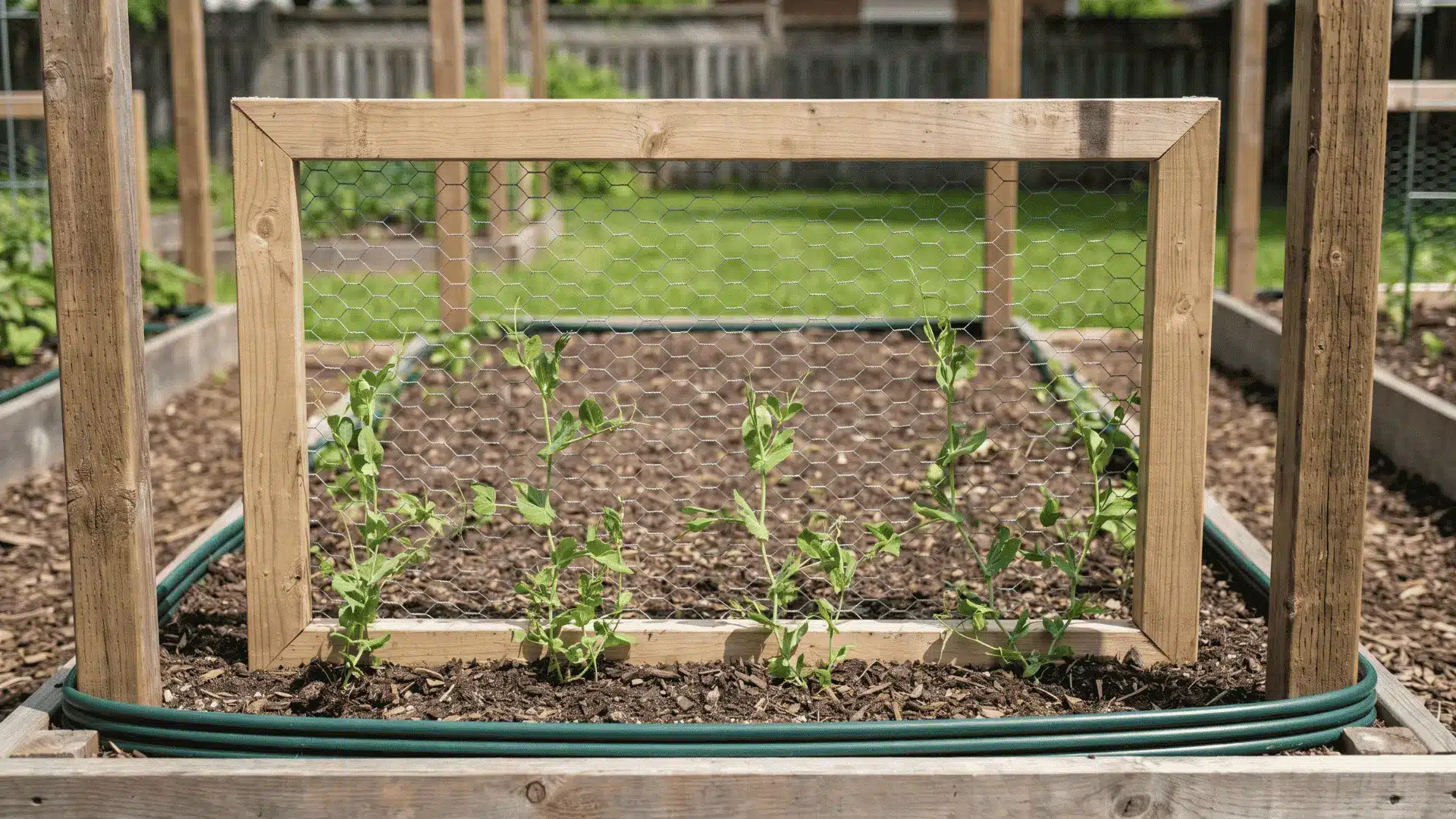
Stretch chicken wire across a basic wooden frame and secure the edges with staples. Anchor the finished panel behind peas or lightweight annual vines.
Its small openings give thin tendrils many gripping points. Wear gloves during construction because freshly cut wire ends can be sharp and difficult to handle.
16. Raised Bed Corner Trellis
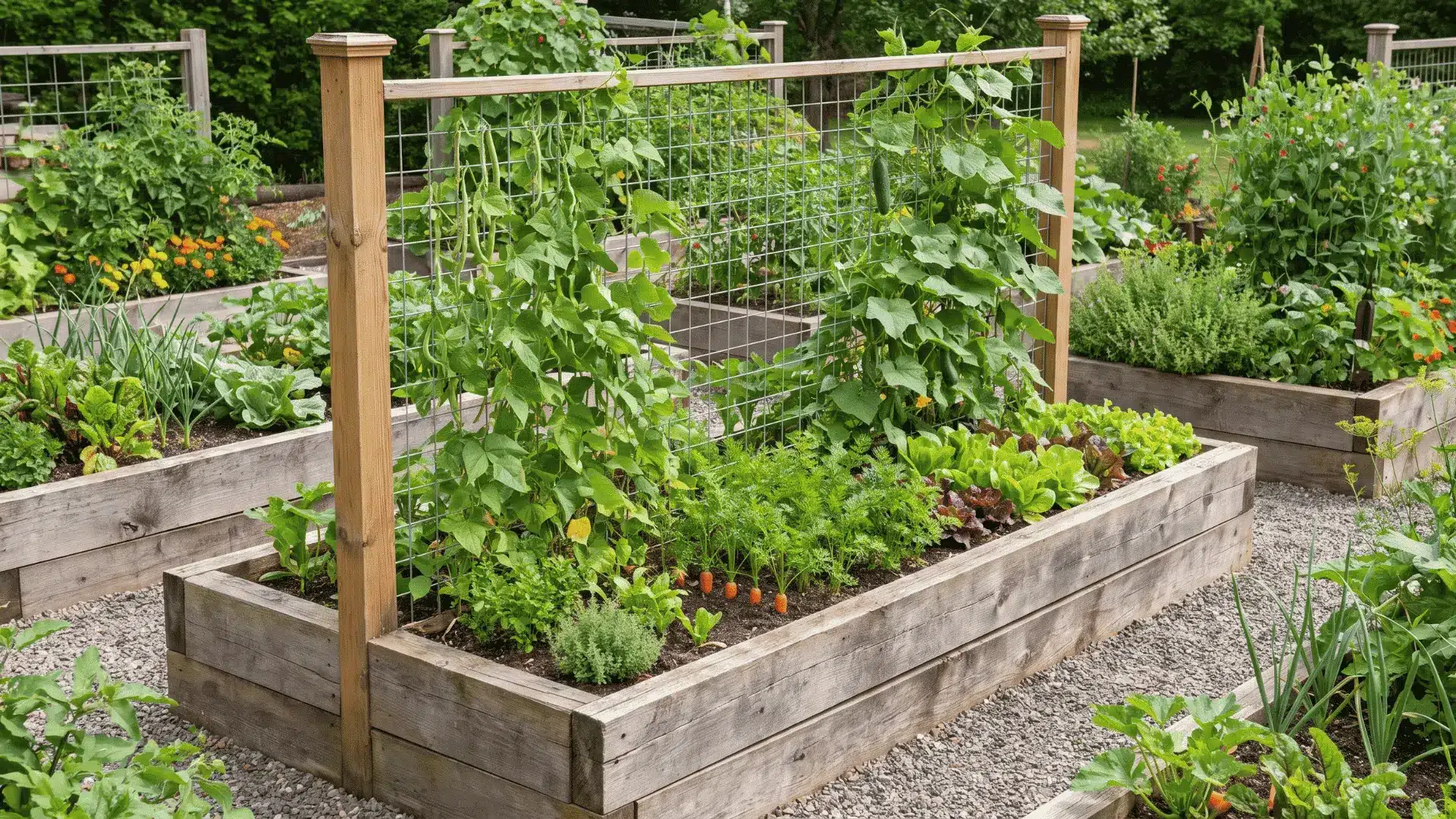
Install upright posts at two corners of a raised garden bed and connect them with wire mesh. The trellis uses the bed frame for additional support.
Position it along the northern side when possible to limit unwanted shade. This arrangement keeps the center open for shorter vegetables and routine maintenance.
17. Espalier Fruit Tree Frame
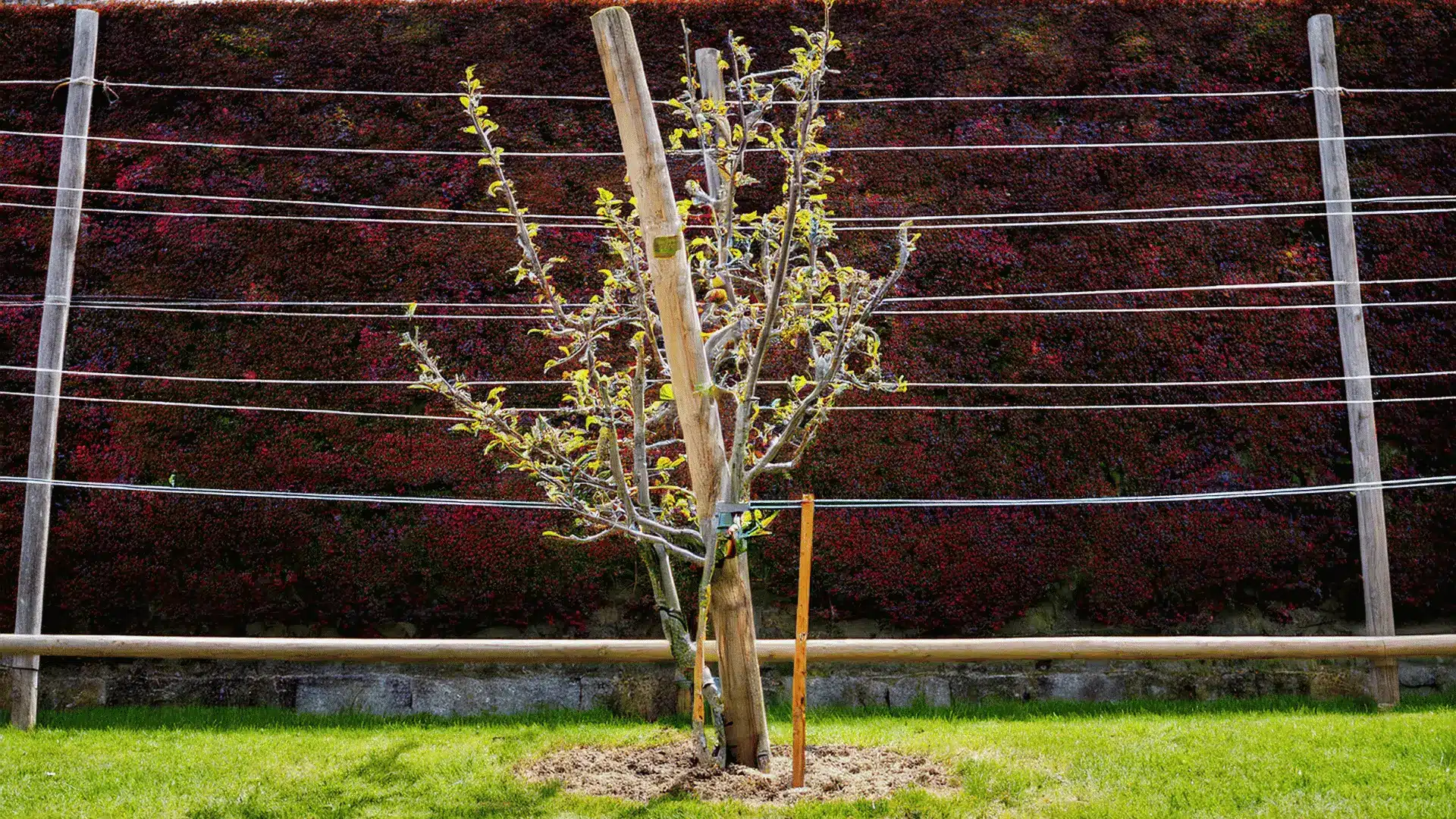
Install horizontal wires between sturdy posts, then train fruit tree branches along each level. This technique keeps the tree relatively flat and space-efficient.
Espalier frames suit narrow beds beside walls, fences, and pathways. Apples and pears are common choices, but regular pruning is essential for maintaining shape.
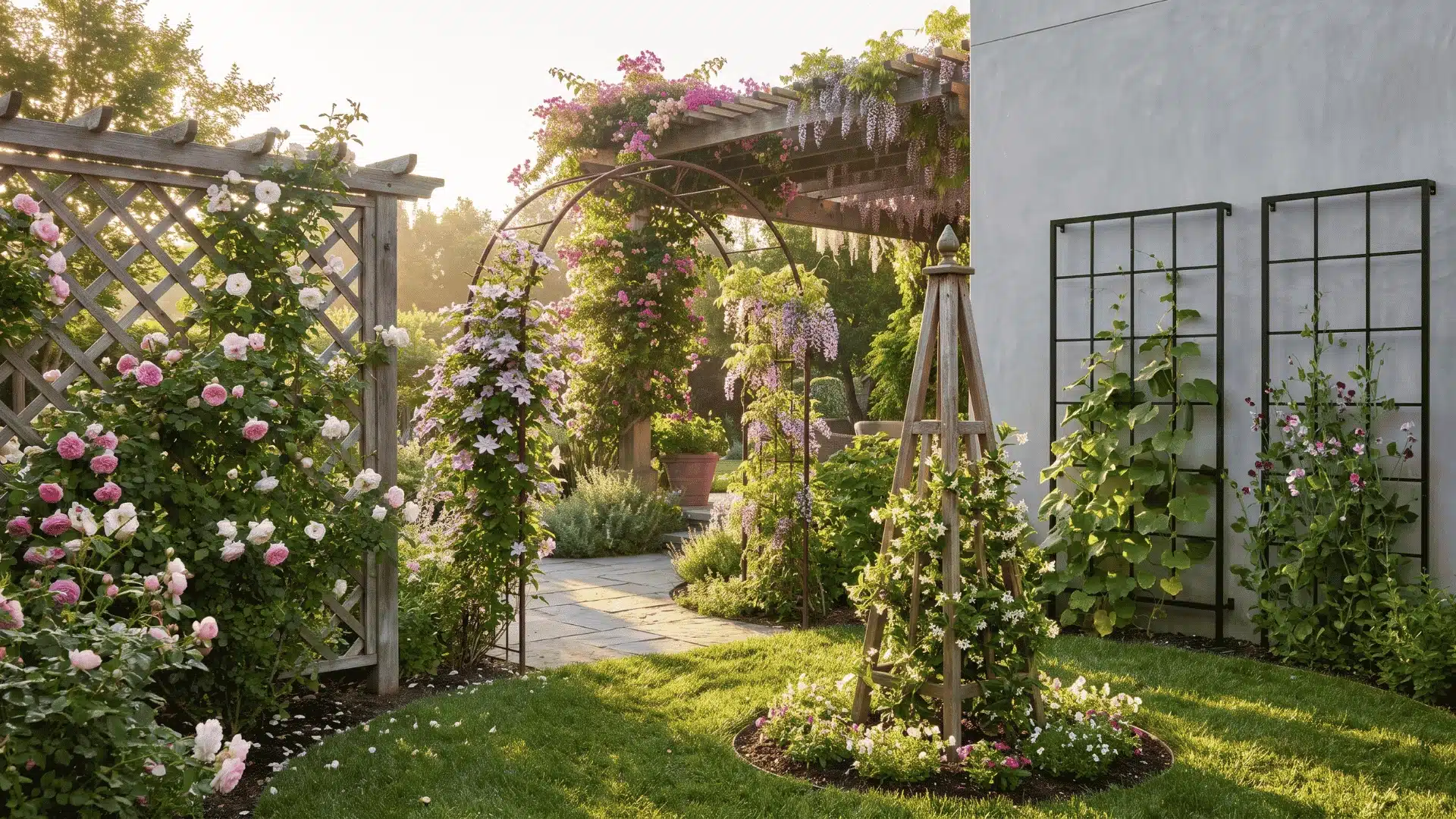
18. Metal Obelisk
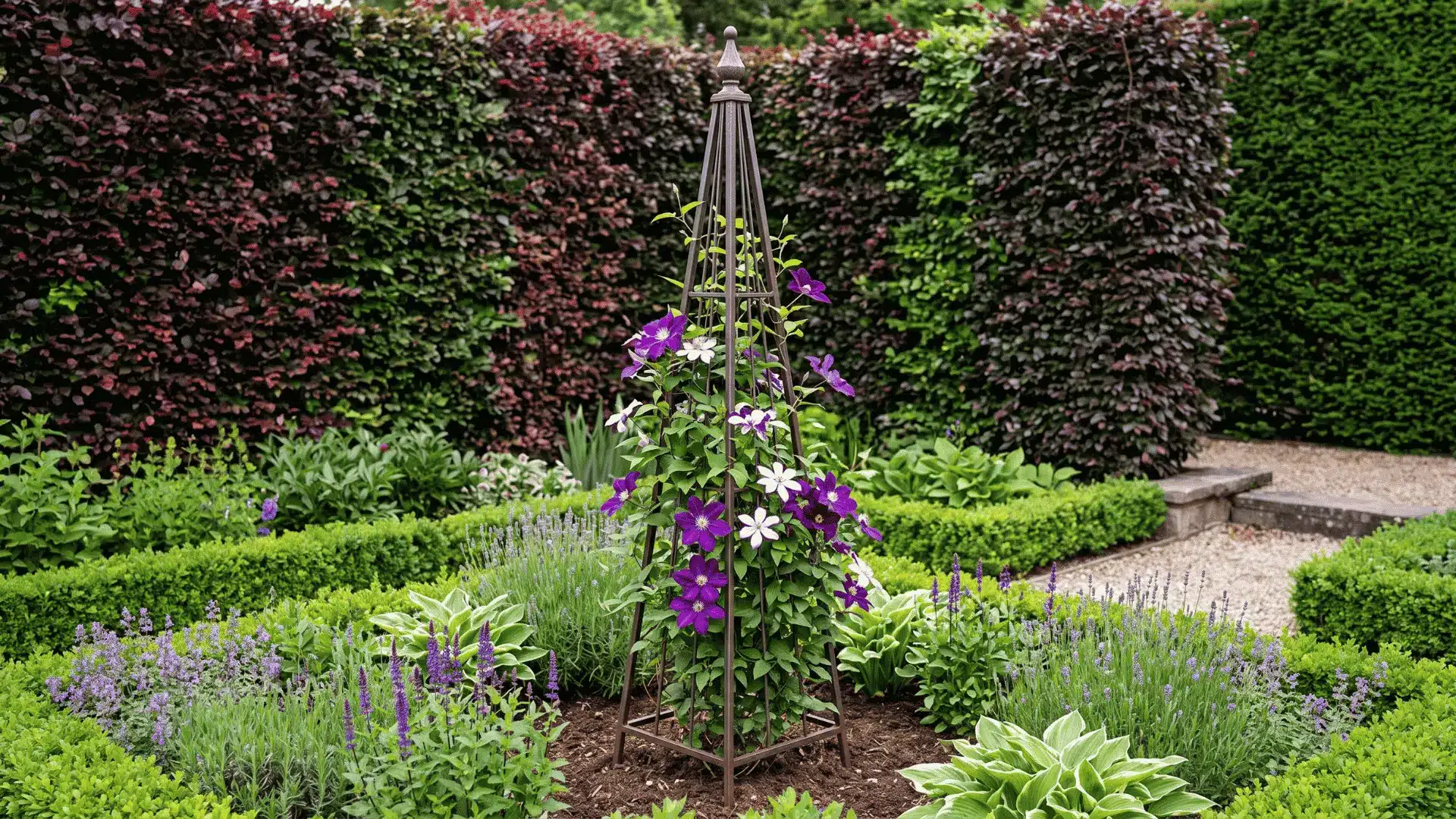
Place a narrow metal obelisk inside a garden bed or large container. Its tapered shape directs growth upward while requiring little ground space.
Obelisks suit clematis, morning glory, and compact climbing roses. Their decorative shape keeps the planting area structured before foliage completely covers the frame.
19. Hanging Rope Trellis
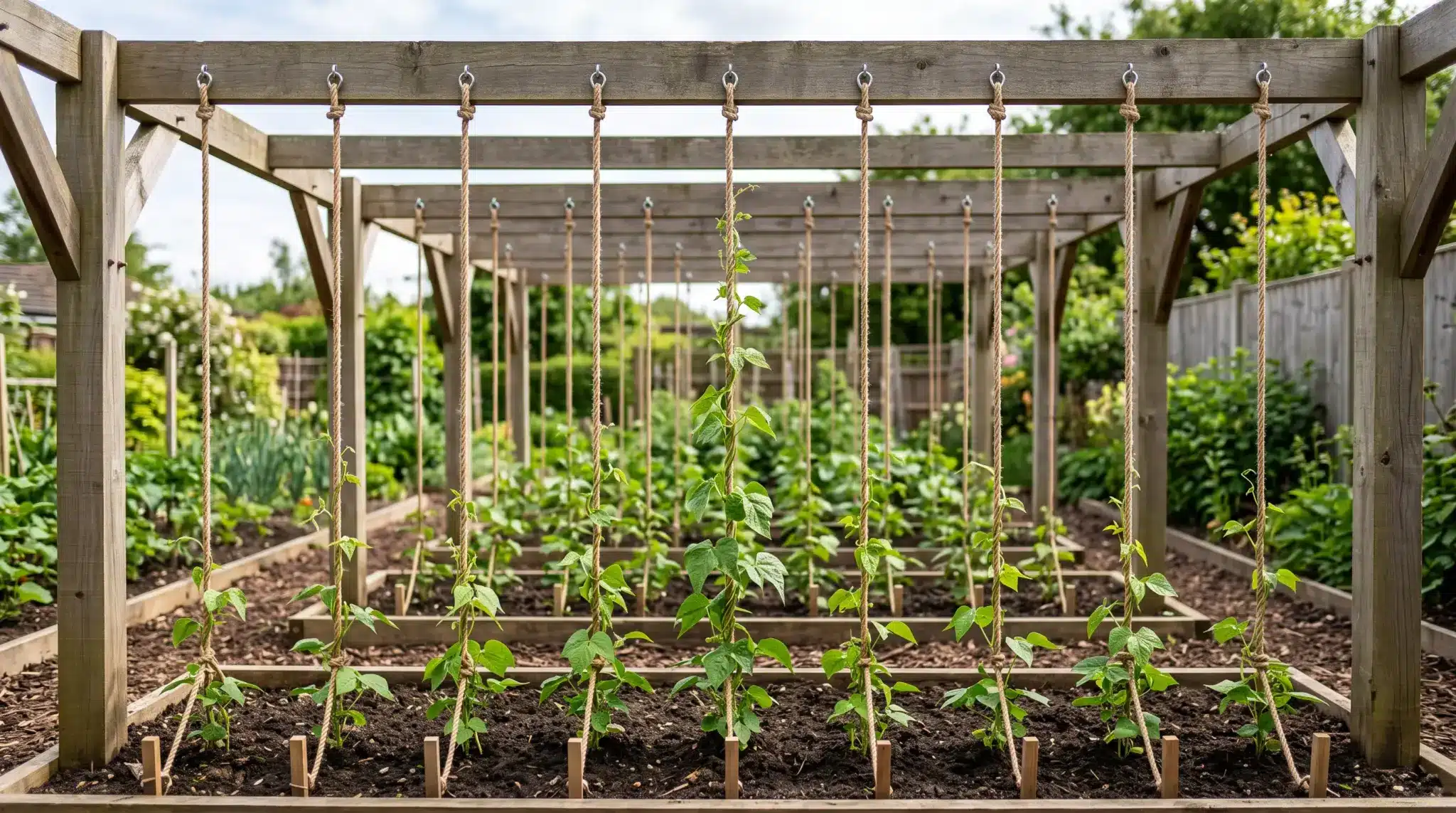
Suspend several weather-resistant ropes from an overhead beam, pergola, or reinforced frame. Secure the lower ends near each plant to prevent loose movement.
This minimal support works for beans and lightweight flowering vines. It leaves the ground open while adding vertical growth without a bulky permanent panel.
20. Decorative Metal Panel
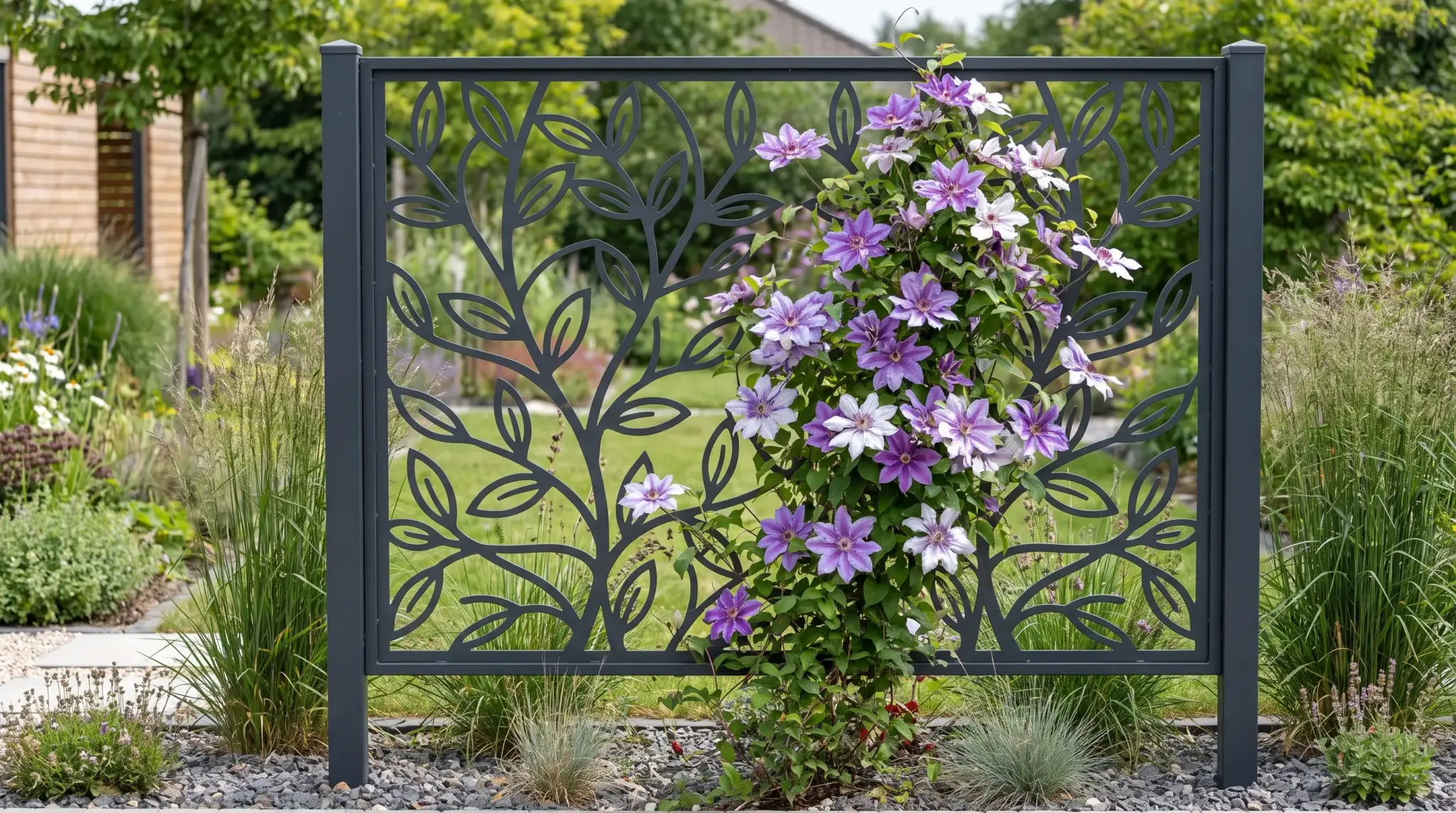
Install a freestanding metal panel behind flowering vines or ornamental vegetables. Geometric, botanical, and simple grid patterns suit different garden designs.
Several panels can be linked to cover a longer planting run. Choose a rust-resistant finish if the structure will remain outdoors throughout the year.
21. Modern Cable Trellis
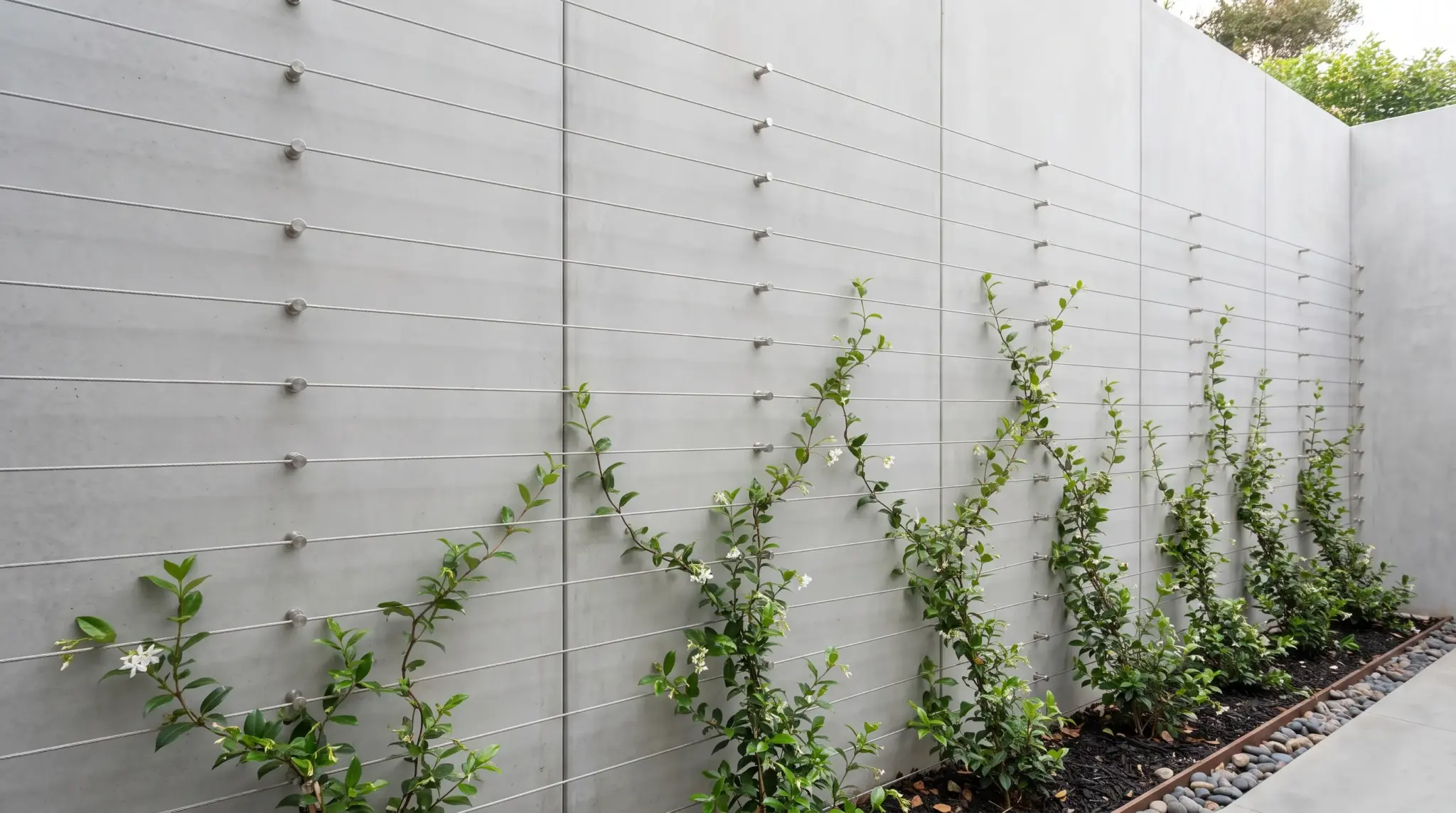
Run stainless-steel cables between strong posts or across a suitable exterior wall. Maintain consistent spacing to create a clean, architectural appearance.
The thin lines nearly disappear once plants become established. Use corrosion-resistant fittings and avoid overtightening cables against lightweight siding or weak attachment points.
22. Window-Box Trellis
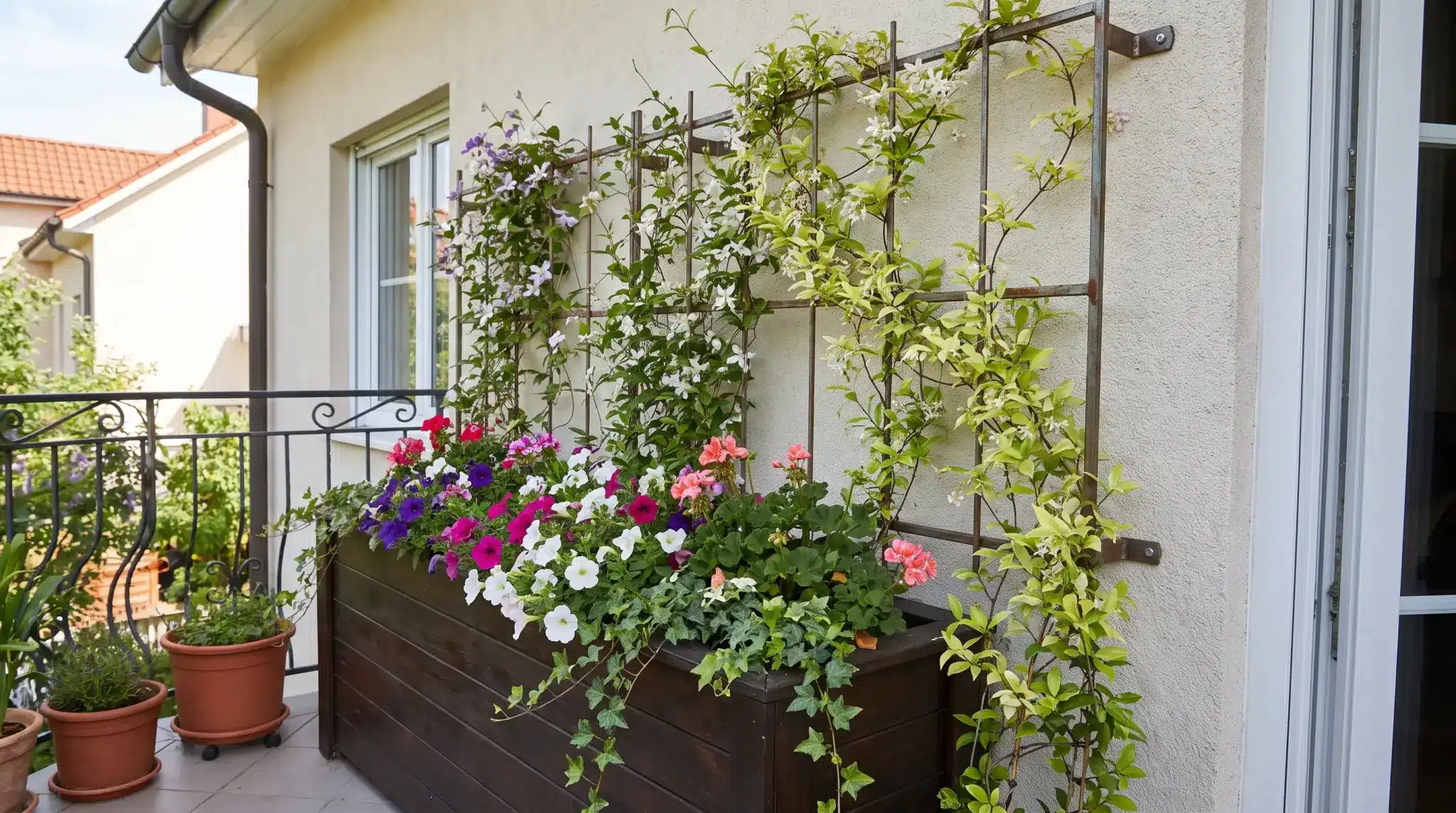
Attach a compact trellis behind a deep window box or railing planter. The frame directs climbing plants upward without using valuable patio or balcony floor space.
Choose a lightweight vine that will not overwhelm the container. Secure the box and frame separately so wind cannot pull the entire arrangement forward.
23. Diamond Lattice Trellis
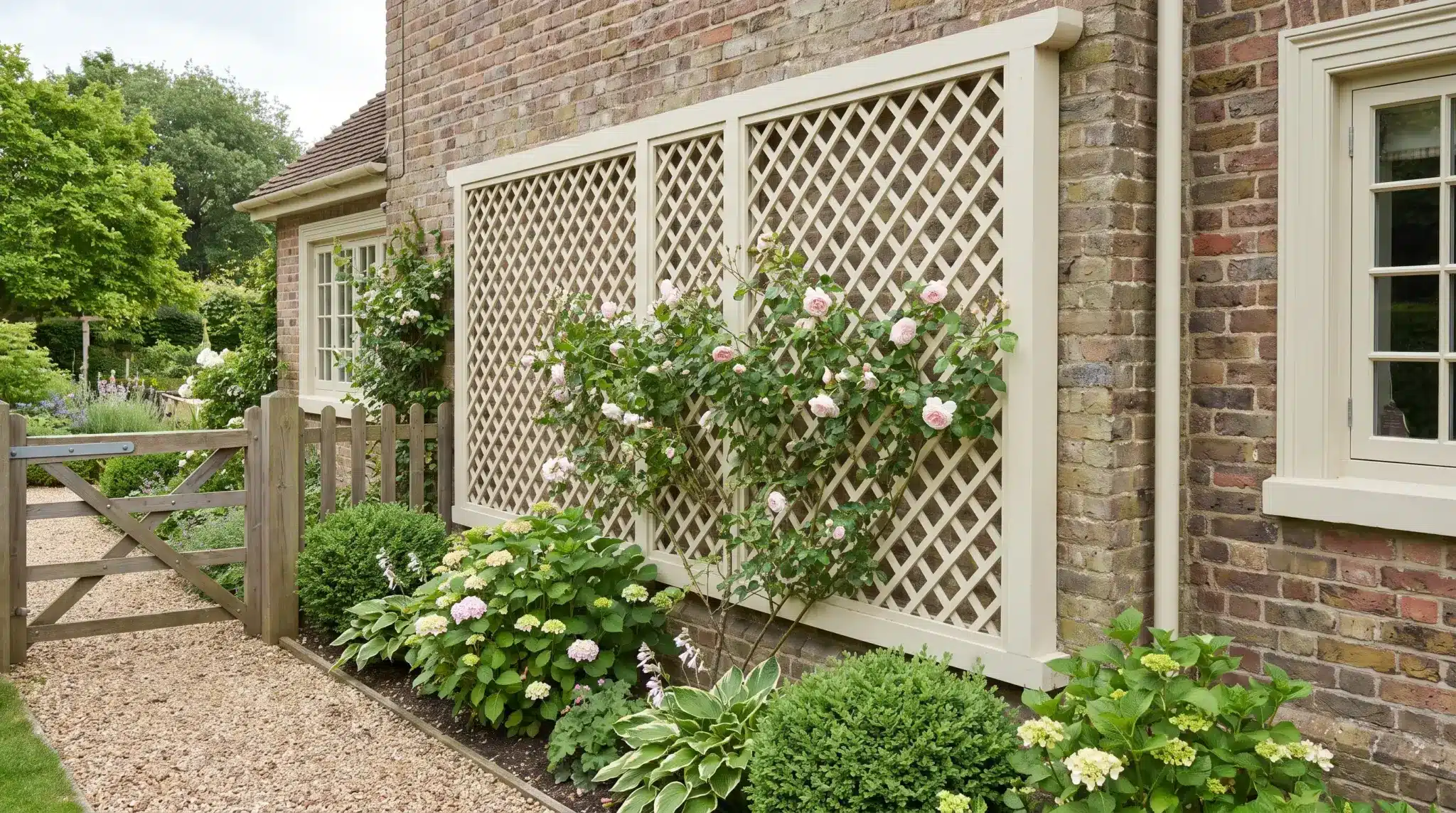
Mount wooden or vinyl lattice inside a framed panel. Its repeating diamond pattern adds visual interest while providing many points for tying or weaving stems.
This familiar design suits traditional homes and cottage gardens. A painted finish can connect the trellis with nearby fencing, trim, or outdoor furniture.
24. Privacy Screen Trellis
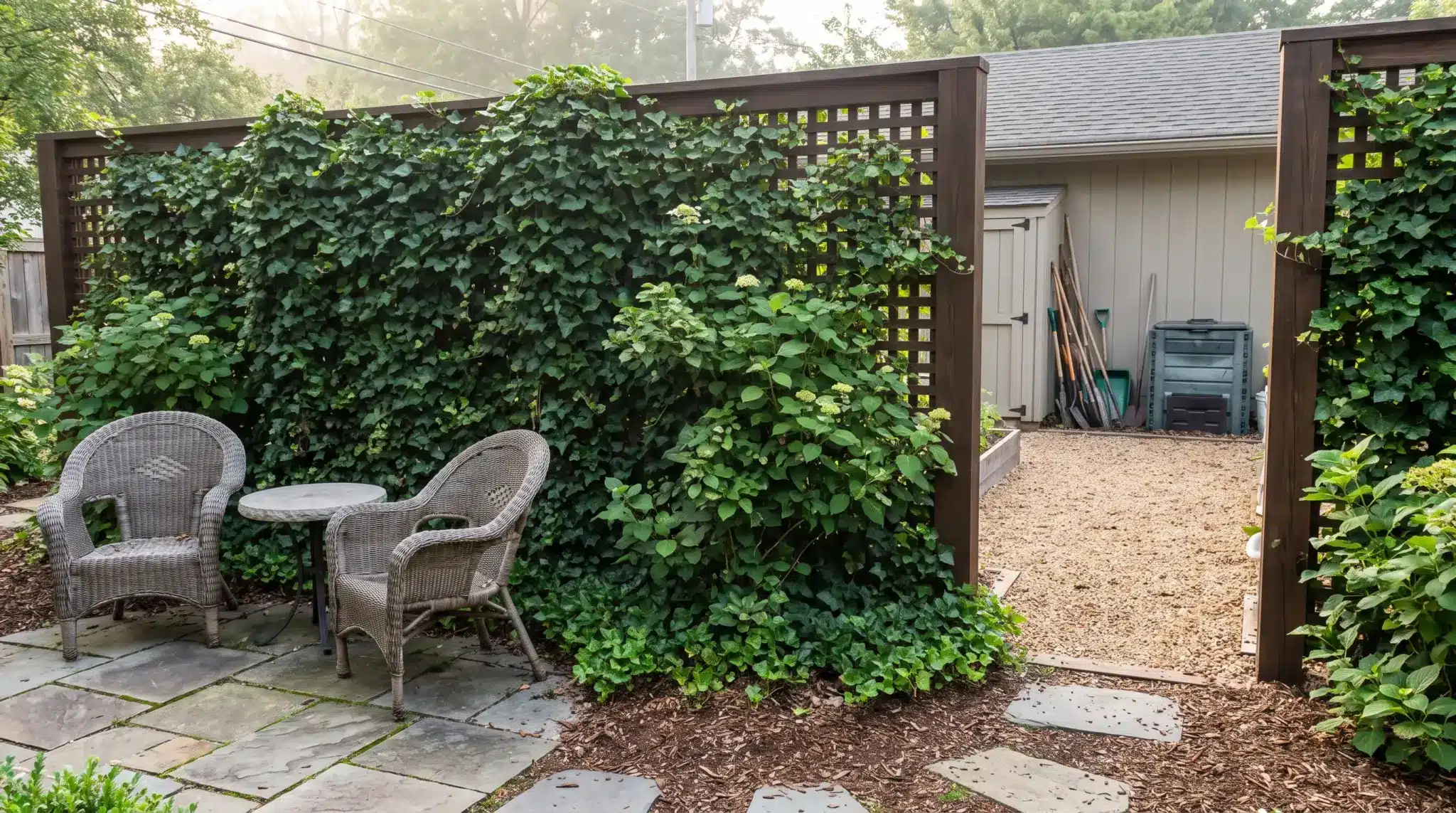
Build a tall framed trellis with closely spaced slats or wire mesh. Position it where climbing foliage can screen a patio, seating area, or utility feature.
Choose dense vines if privacy is the main goal. Leave enough clearance for pruning so growth does not become tangled with gutters, wiring, or neighboring structures.
25. Trellis Fence Topper
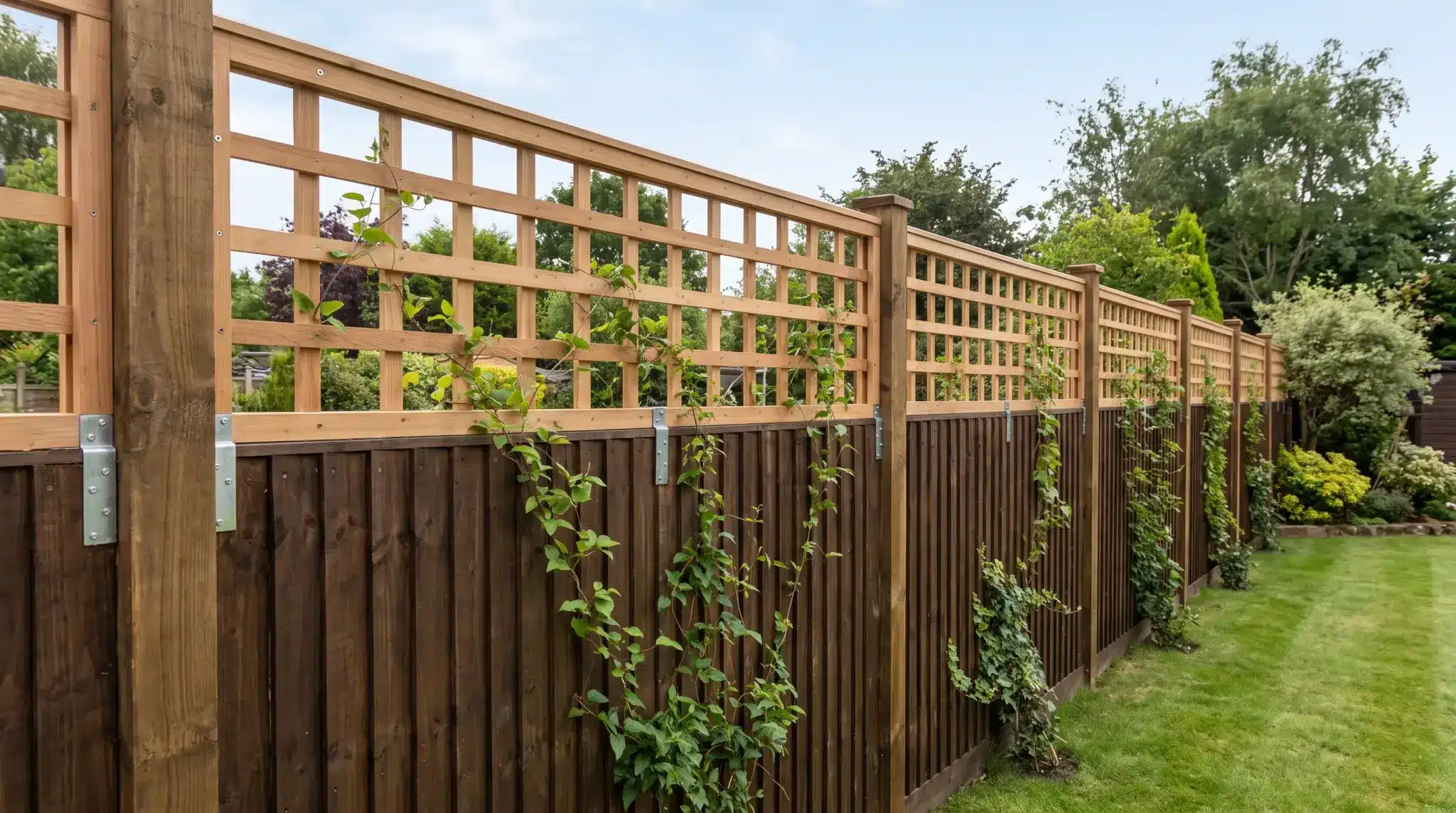
Add a lightweight lattice extension above a solid garden fence. The raised section supports vines without making the entire boundary feel visually heavy.
Check local height limits before installation. Fasten the topper to sound posts because wind pressure increases as foliage fills the open framework.
26. Expandable Accordion Trellis
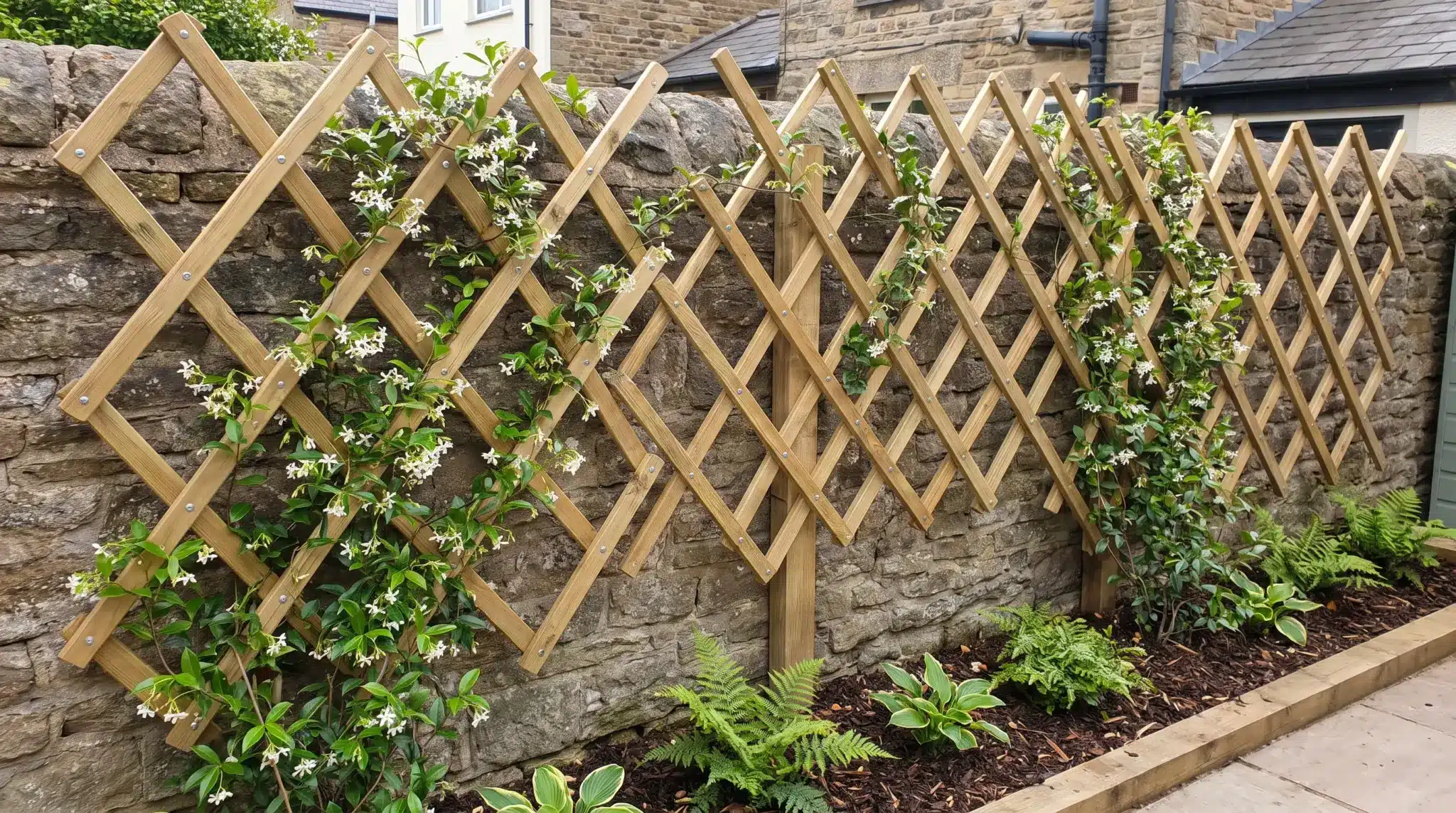
Mount an expandable wooden or metal accordion trellis against a fence or exterior wall. Adjust its width and height to fit the available growing space.
Its folding framework works well for clematis, jasmine, and lightweight annual vines. The trellis can be collapsed, repositioned, or stored when plants become dormant.
27. Corner Trellis
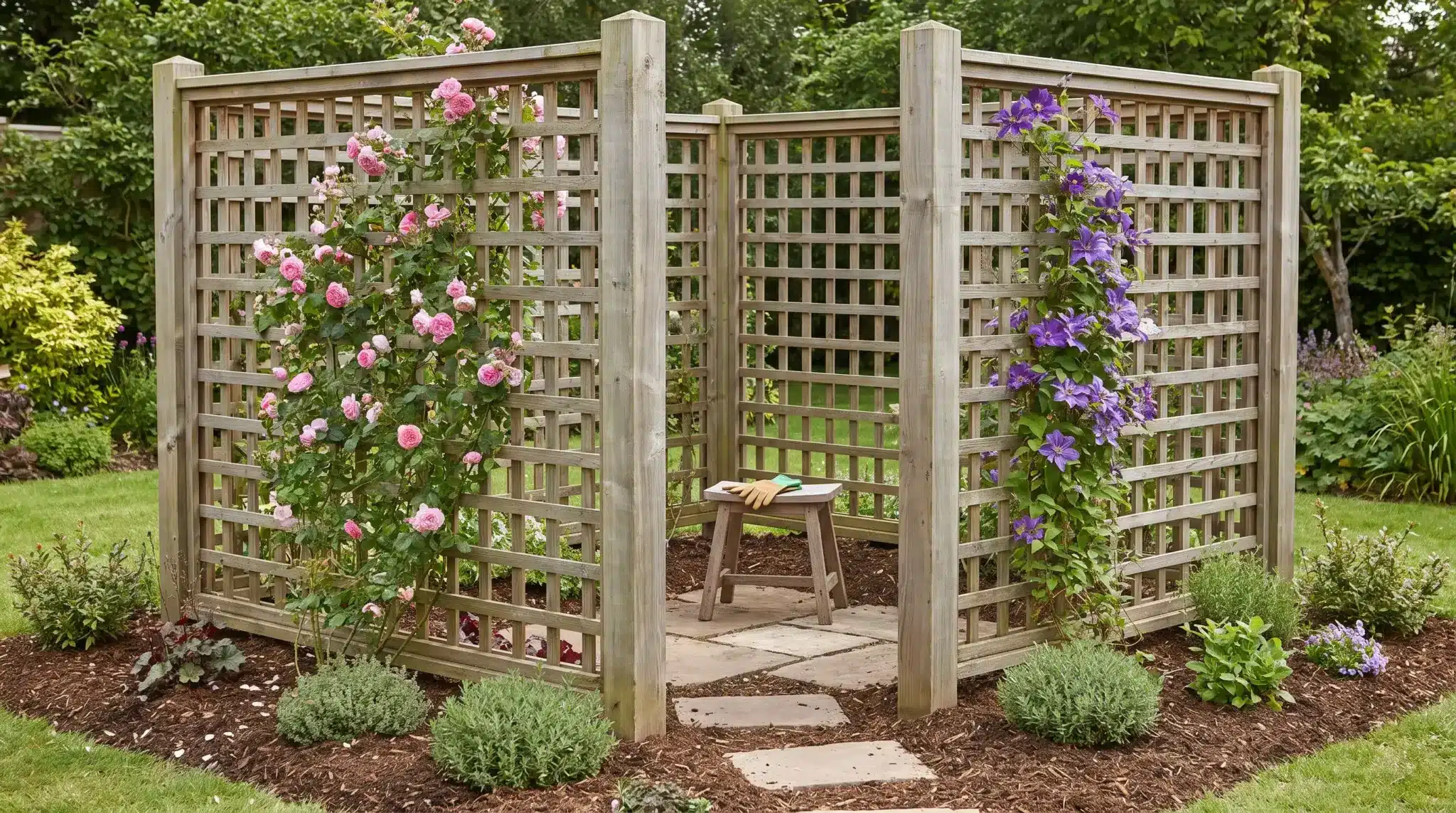
Join two narrow panels at a right angle and place them within an unused garden corner. The shape supports growth while making awkward space useful.
Plant one vine at each side to create balanced coverage. Keep the inner corner accessible because dense foliage can hide pests and restrict pruning access.
28. Pergola Trellis
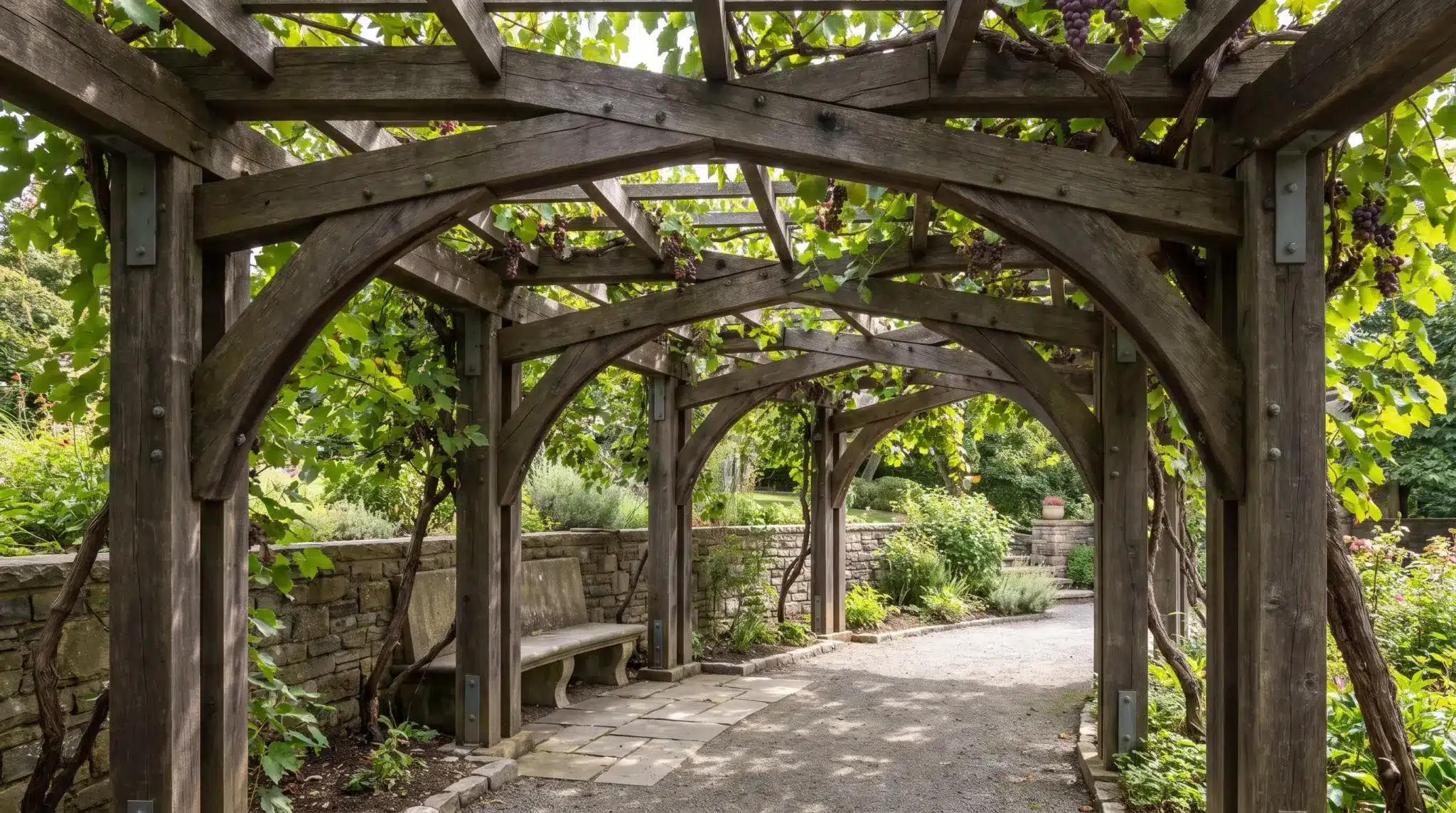
Add overhead crosspieces to a sturdy pergola so vines can spread above a seating or walkway area. The frame must support mature plant weight.
Wisteria and established grapevines require particularly strong construction. Lighter annual vines offer seasonal shade without placing the same long-term load on the structure.
29. Arbor Entrance Trellis
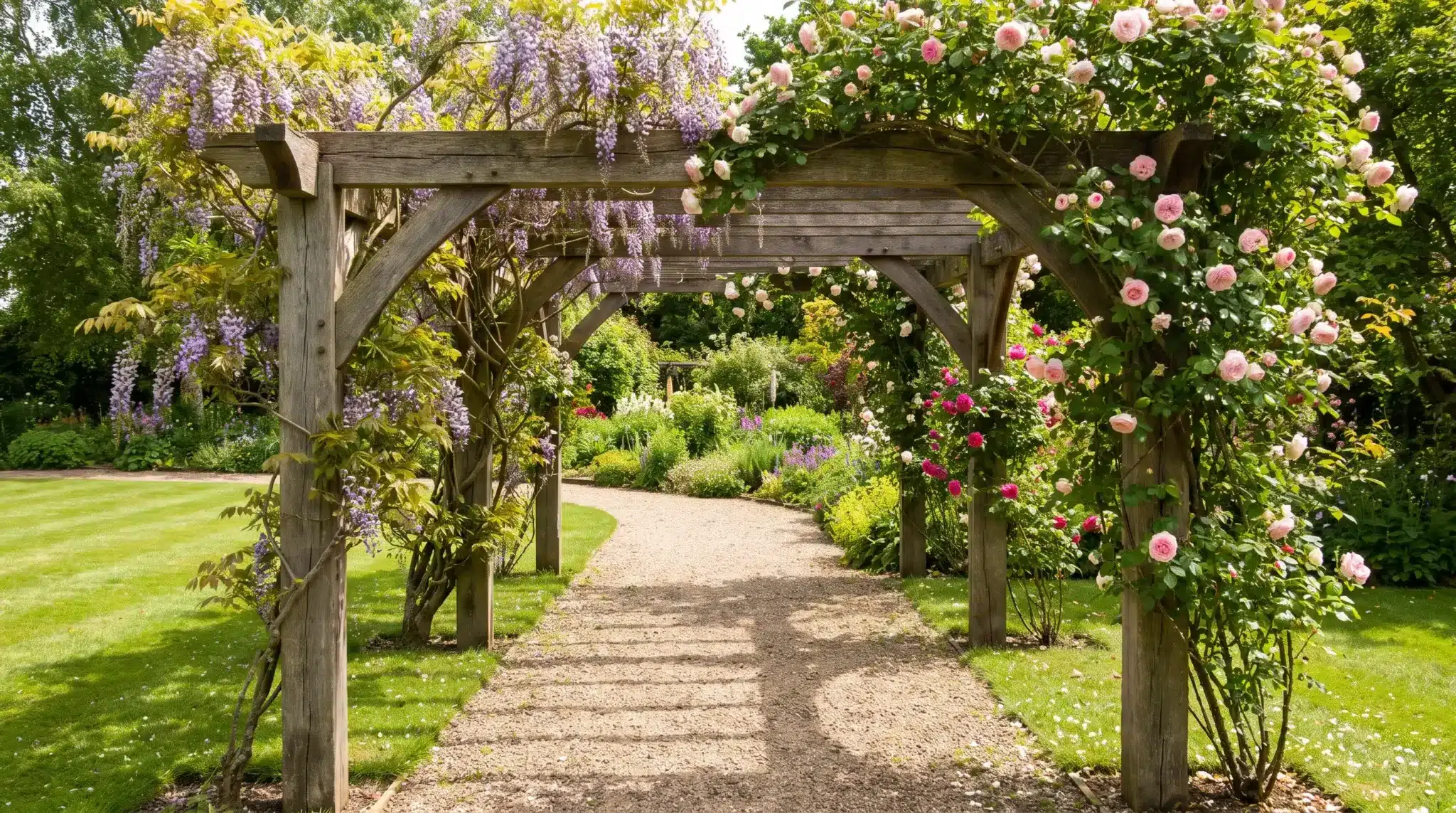
Place an arbor over a garden entrance or between two landscape zones. Train vines along the sides while keeping the center comfortably open.
The structure creates a clear transition without requiring a solid gate. Select plants that match the available sunlight and intended level of seasonal coverage.
How to Choose the Right Trellis?
Start with the plant’s mature size and weight rather than its appearance at planting time. Heavy crops need stronger frames and deeper anchors.
Sketching your vegetable garden layout before you build helps you size each structure correctly the first time.
- Heavy vegetables: Choose a cattle panel arch or reinforced A-frame with deep anchors to support mature vines and heavy fruit.
- Lightweight annual vines: Use string, netting, bamboo, or branches that delicate stems and small tendrils can grip easily.
- Containers: Add an obelisk or planter box trellis that supports vertical growth without taking up surrounding floor space.
- Narrow spaces: Install a wall grid, cable system, or straight panel to direct vines upward and preserve walking room.
- Added privacy: Use a tall screen or fence-top trellis that provides enough height and surface area for dense coverage.
- Garden entrances: Choose a sturdy arbor or arch that supports climbing plants while clearly defining the path beneath it.
- Seasonal storage: Select a folding A-frame that provides reliable support but stores flat once the growing season ends.
- Decorative structure: Use a metal panel, lattice, or obelisk that remains visually appealing after seasonal plants become dormant.
Also consider access from both sides. Dense vines against walls or fences can make harvesting, pruning, and pest control unnecessarily difficult.
Best Trellis for Different Plants
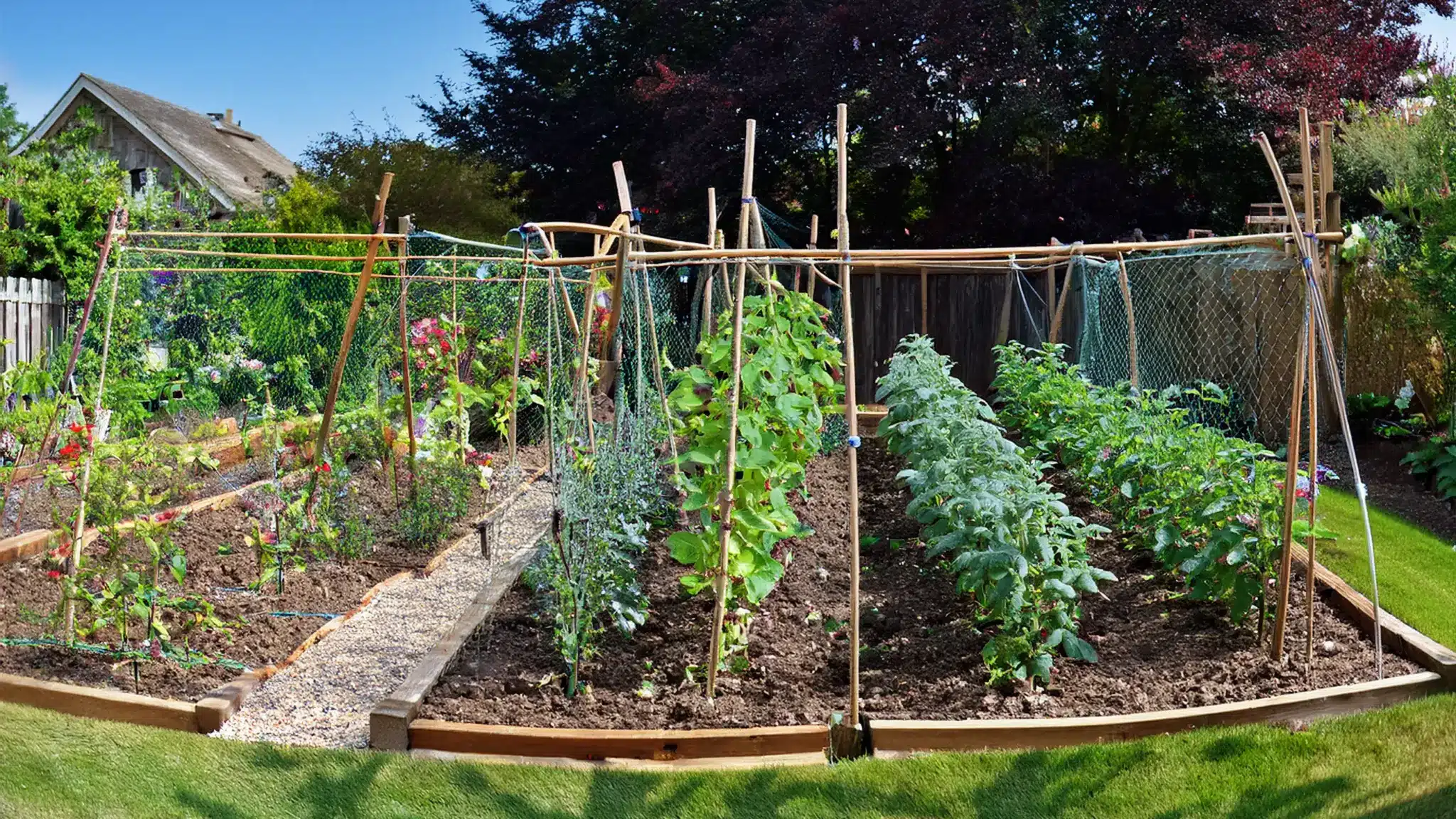
Match the trellis to how each plant climbs and the weight it must support.
| Plant | Best Trellis |
|---|---|
| Tomatoes | Cages, stakes, or reinforced frames with soft ties |
| Cucumbers | Netting, wire grids, or angled A-frames |
| Squash and melons | Cattle panels or reinforced frames with fruit slings |
| Peas | String grids, fine netting, or branch supports |
| Pole beans | Teepees, strings, bamboo poles, or tall arches |
| Clematis | Wire grids, narrow lattice, or metal obelisks |
| Morning glory | String, wire, or narrow poles |
| Climbing roses | Broad panels, arches, walls, or pergolas |
Heavy plants need reinforced structures, while plants with small tendrils climb best on narrow materials they can grip easily.
How Deep Should Trellis Posts Be?
Post depth depends on the structure’s height, plant weight, soil condition, and wind exposure. Loose or sandy soil usually requires deeper anchoring than firm ground.
- Light trellises: Set posts approximately 12 to 18 inches deep for string grids, branch supports, and other small seasonal structures.
- Medium trellises: Set posts around 18 to 24 inches deep for wire panels, wooden frames, and freestanding decorative supports.
- Heavy trellises: Set posts at least 24 inches deep for cattle panel arches, large crop supports, and structures exposed to strong winds.
- Permanent structures: Use concrete footings where suitable for large arbors, pergolas, or privacy screens. Keep untreated wood from sitting directly in wet soil.
Always check for buried utilities before digging. Local soil conditions, frost depth, building rules, and manufacturer instructions may require a different installation method.
Where to Position Your Trellis for the Best Results?
Depth and material only solve half the problem. Where a trellis sits inside the bed affects both plant health and the crops growing near it.
In my own vegetable beds, I place anything over four feet tall on the north or east edge, since a tall structure on the south side will shade shorter plants for most of the day.
Wind matters too: a solid panel or arch acts like a sail, so anchor tall structures deeper in exposed yards and choose a wider-based design like an A-frame if your site catches strong gusts.
Rotating portable trellises, such as teepees and A-frames, to a different bed each year also helps limit the buildup of soil-borne disease around the same crop.
Conclusion
The best garden trellis ideas start with the plant, not the design.
Think about how the vine climbs, how heavy it becomes, how much wind the structure will face, and how easily you can reach both sides for pruning and harvesting.
A simple branch teepee, string grid, or bamboo frame can work well for light seasonal crops. Heavier vegetables, climbing roses, privacy screens, and permanent vines need deeper posts and stronger materials.
Install the support early so young stems can grow in the right direction from the start.
Which trellis idea would you try in your garden first? Share your favorite in the comments.
Frequently Asked Questions
What is the Cheapest Way to Make a Garden Trellis?
Use straight branches gathered from your yard and tie them with garden twine to form a teepee or ladder shape. String stretched between existing fence posts or garden stakes also creates an inexpensive seasonal support for peas and light annual vines, and most of these materials cost little or nothing beyond the twine itself.
What Can You Use Instead of a Trellis?
Wire fencing, tomato cages, bamboo poles, garden stakes, wooden pallets, and chain-link fences can all support climbing vines when a dedicated trellis is not available. The substitute needs to remain stable under the plant’s mature weight, so reinforce lightweight materials like chicken wire with sturdy posts before heavier crops like squash or melons start climbing.
Is It Cheaper to Buy or Build a Trellis?
A DIY trellis usually costs less when you already have suitable materials like branches, pallets, or leftover fencing on hand. A manufactured metal frame costs more upfront but often provides better long-term value through repeated seasons of use, especially for permanent structures like arbors or obelisks that stay in place year after year.
Should a Trellis Be Installed Before Planting?
Installing a trellis before or immediately after planting reduces root disturbance, since digging post holes around established roots can damage them. Early placement also gives young vines a clear structure to climb as soon as they begin reaching outward, which prevents the tangled, ground-level growth that becomes harder to untangle and train later in the season.