


Fresh herbs are useful in the kitchen, but buying a whole bunch for one recipe often leads to waste.
Growing them at home can fix that, especially if you only need a few leaves at a time. Learning how to grow herbs indoors is not about having a perfect green thumb.
It is about giving each plant the right light, pot, soil, water, and harvest routine.
Some herbs need steady moisture, while others prefer to dry out between waterings. Once you understand those differences, a small windowsill setup becomes much easier to manage.
Here is how to start with herbs that can actually survive indoors.
What Makes a Herb “Suited” for Indoors?
A herb suited for indoors has shallow roots and does not need a cold winter dormancy period before it starts growing again.
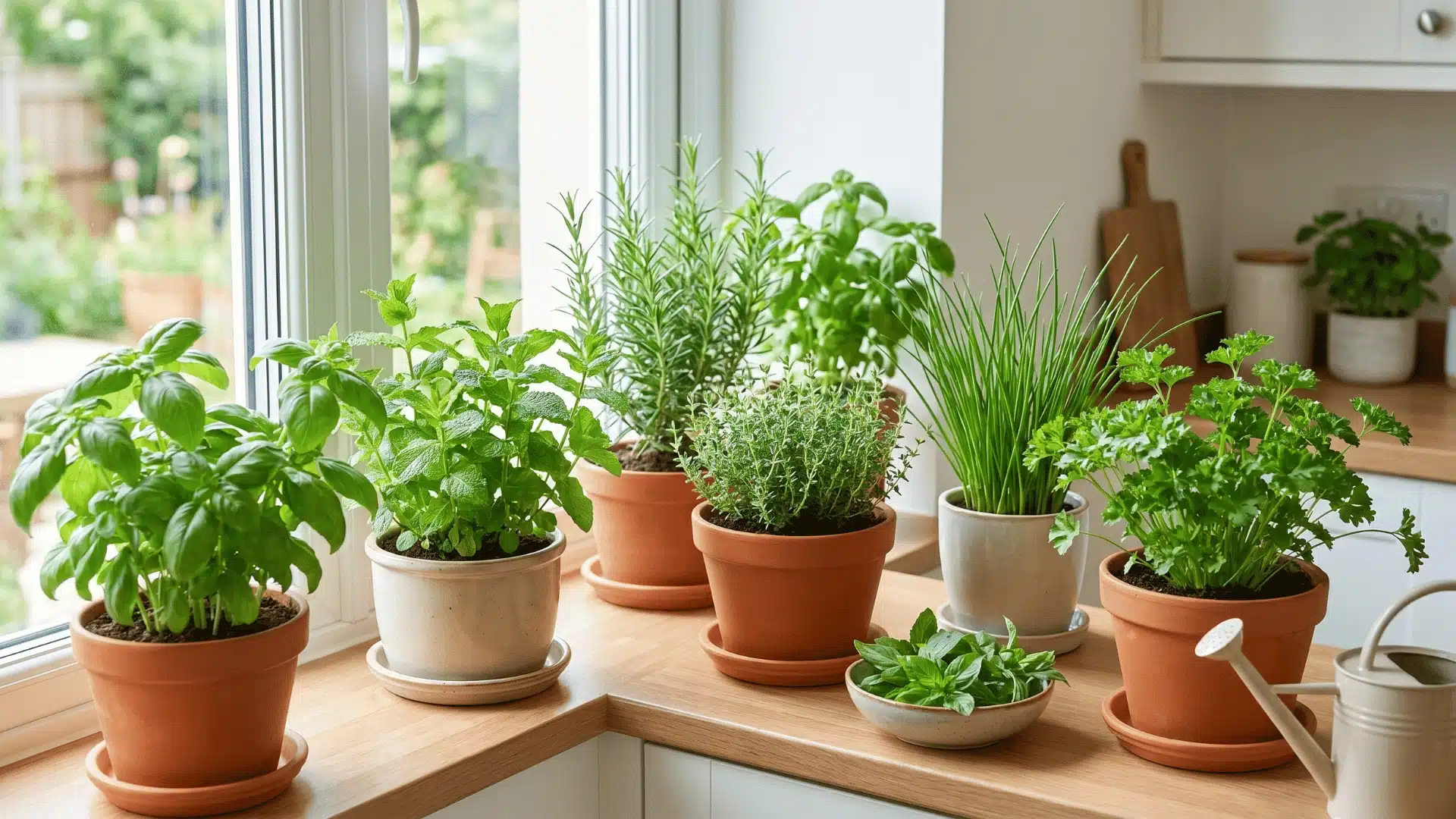
That combination is why basil, mint, thyme, oregano, and rosemary all perform reliably on a windowsill, while herbs with deep taproots or a hard dormancy requirement struggle no matter how much light they get.
Basil, mint, and chives prefer steady moisture and grow quickly. They droop fast when dry and need more consistent attention than most other indoor herbs.
Thyme, oregano, and rosemary come from dry Mediterranean climates.
They handle dry soil well and struggle more with overwatering than neglect, making them forgiving for inconsistent waterers. Starting material matters too.
Grocery store herb pots pack many seedlings together for short shelf life, not long-term indoor growth, and transplanting the whole pot rarely ends well.
For better results, separate supermarket herbs into smaller groups and repot them individually. Starting from seed or buying a single nursery transplant gives you a much stronger foundation.
Steps on How to Grow Herbs Indoors
Growing herbs indoors is simpler than most people expect, but success depends on getting a few fundamentals right from the start.
Follow these steps to create the right growing conditions and enjoy a steady supply of fresh herbs year-round.
Step 1: Choose A Bright Growing Spot
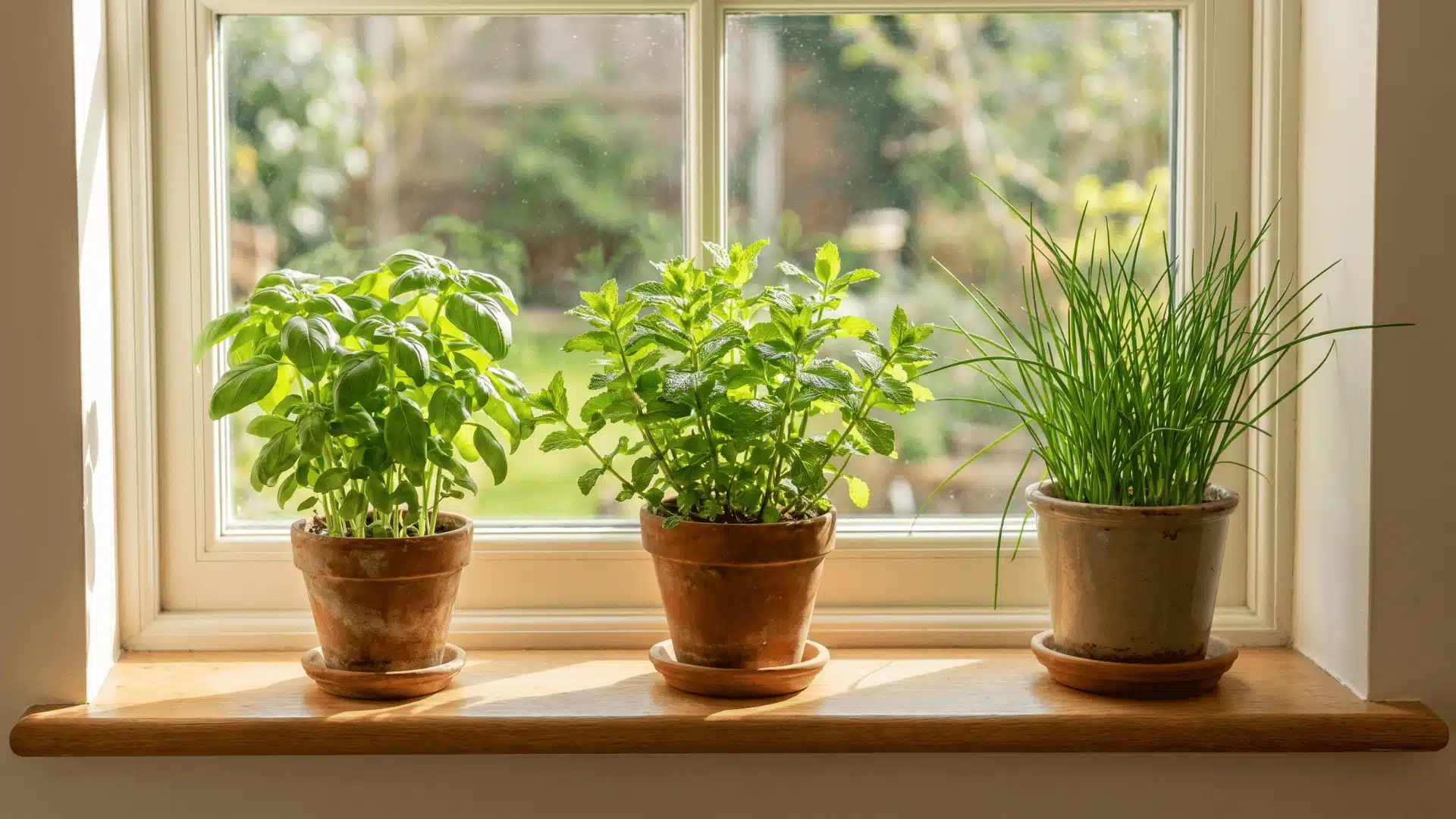
Start with light. Most herbs need 6-8 hours of direct sunlight daily. South-facing windows work best, and east- or west-facing windows can work well too.
If herbs get too little light, they grow tall, thin, and pale as they stretch toward the window.
Move them closer to the light source, since stronger sunlight improves flavor, leaf density, and the concentration of essential oils.
Step 2: Use a Grow Light if Natural Light is Limited
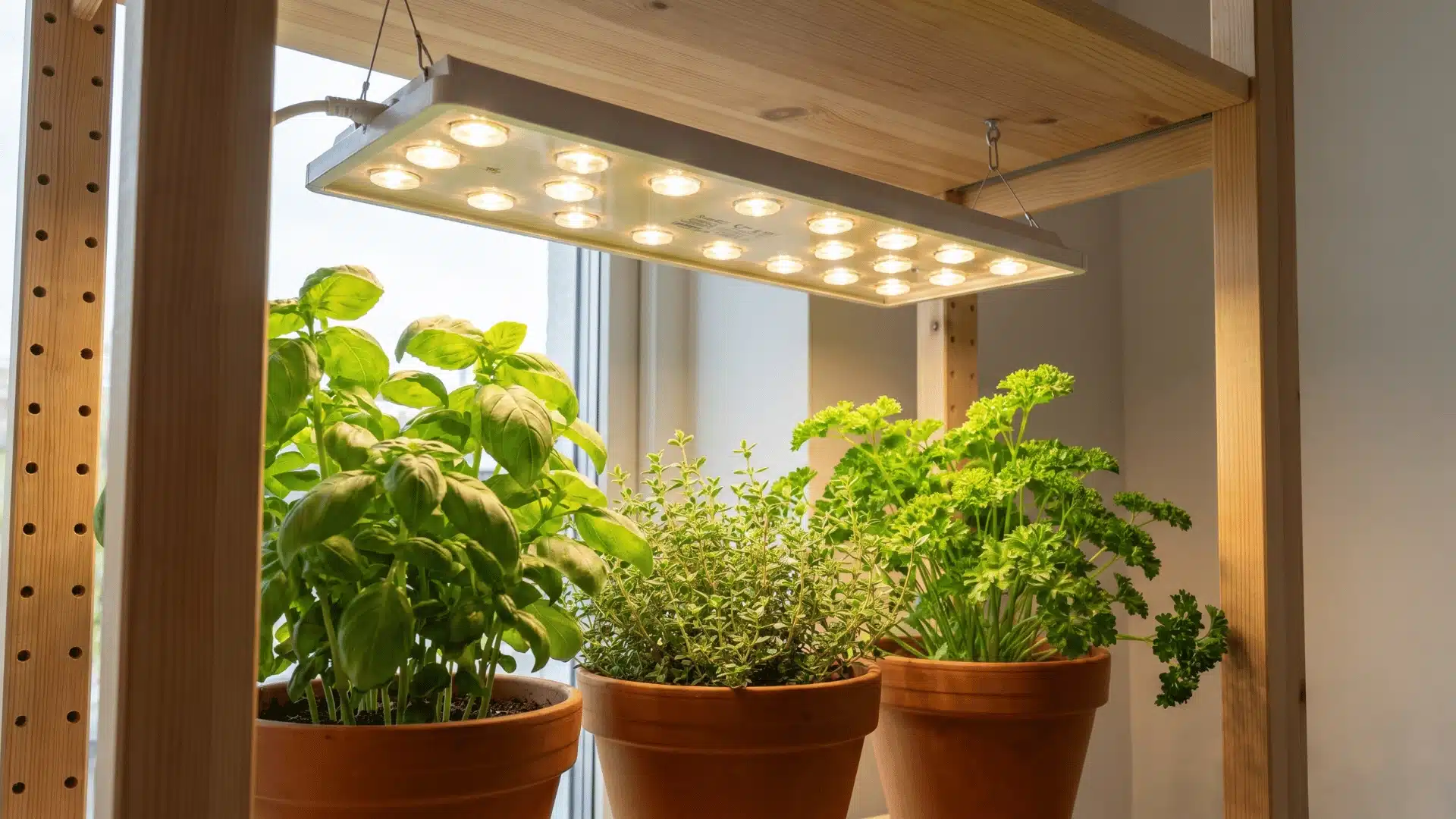
Use a full-spectrum LED grow light if you don’t have a bright window. Place 5–12 inches above plants, closer for seedlings; run 12–14 hours daily, consistently timed.
LED lights outperform older fluorescent options because they give stronger output, use less energy, and produce less heat, making indoor herb growing easier overall.
Step 3: Pick the Right Container
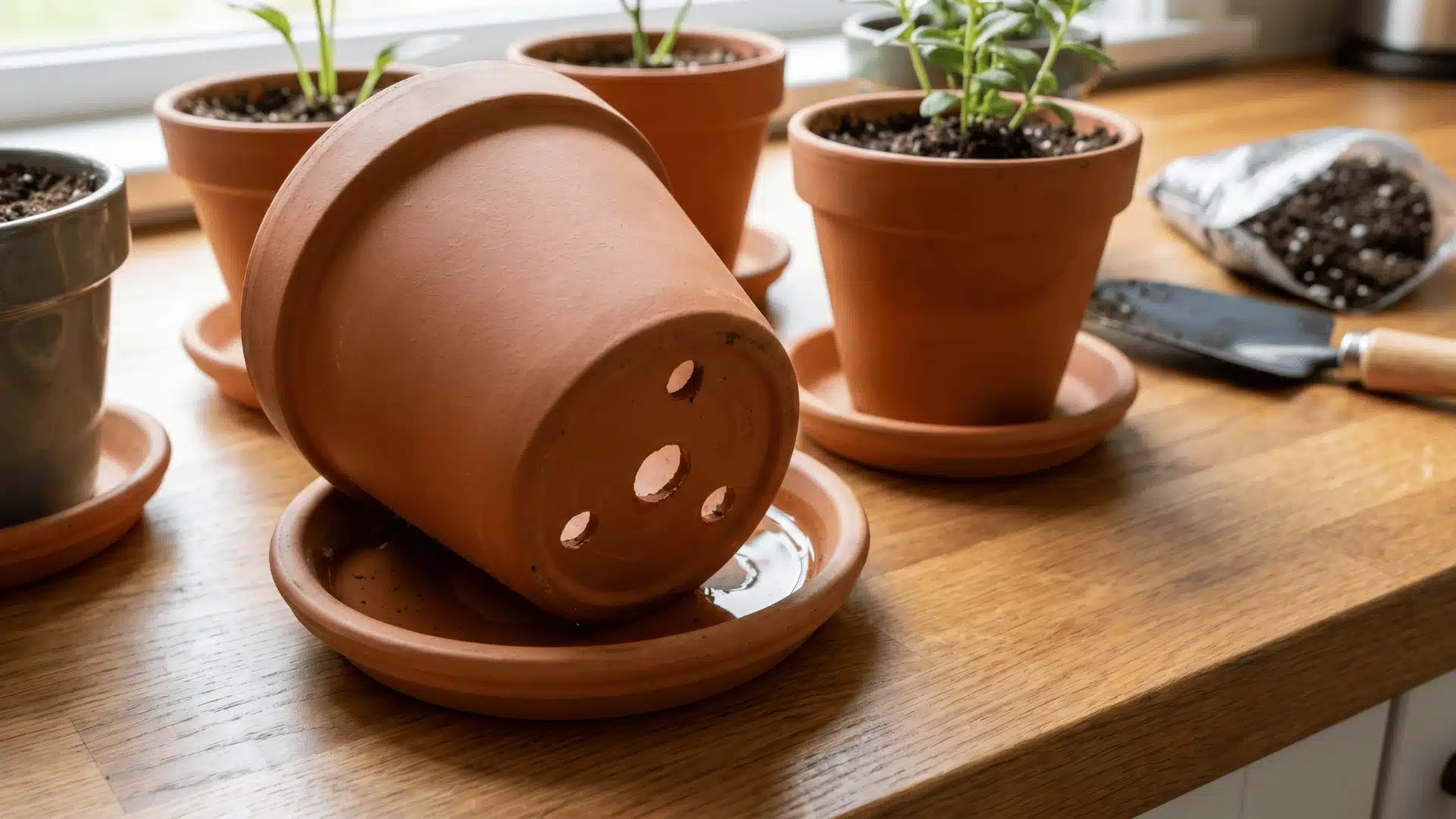
Every herb pot needs a drainage hole so water can drain freely, preventing root rot and keeping roots healthy, strong, consistently oxygenated, and properly balanced.
Most herbs grow best in a six-inch pot since larger containers hold too much moisture. Use a saucer and empty it after watering regularly.
Step 4: Use a Lightweight Potting Mix
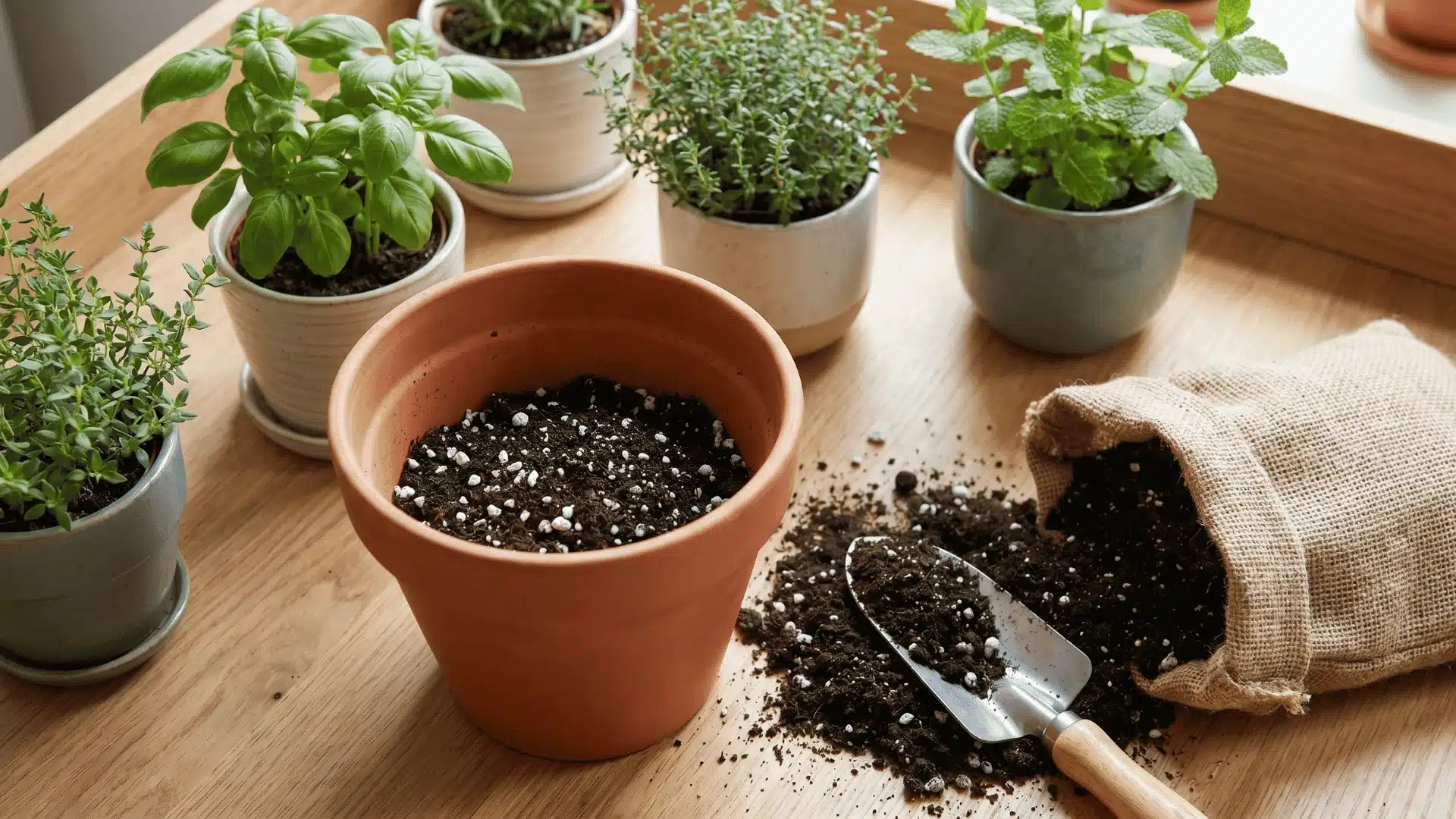
Avoid using garden soil indoors, as it is too dense, compacts easily, and restricts airflow around roots, leading to weak growth and poor overall herb health.
Use a light indoor potting mix for better drainage and airflow. For rosemary, thyme, and oregano, mix in perlite so the soil dries faster between waterings.
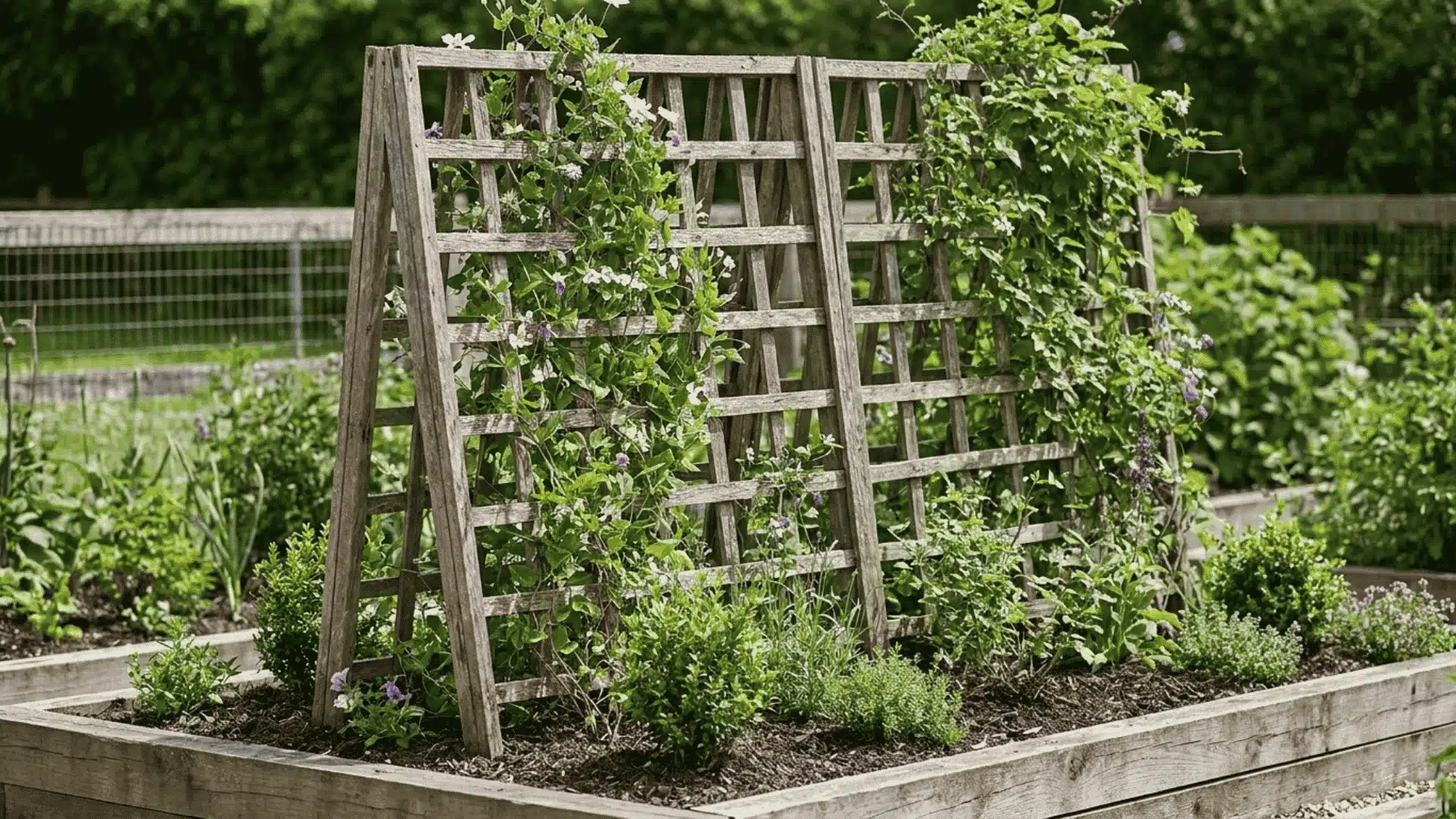
If you are also setting up outdoor containers for the same herbs, this planter box design guide covers drainage and sizing for a wider range of builds.
Step 5: Water Based on Soil, Not a Schedule
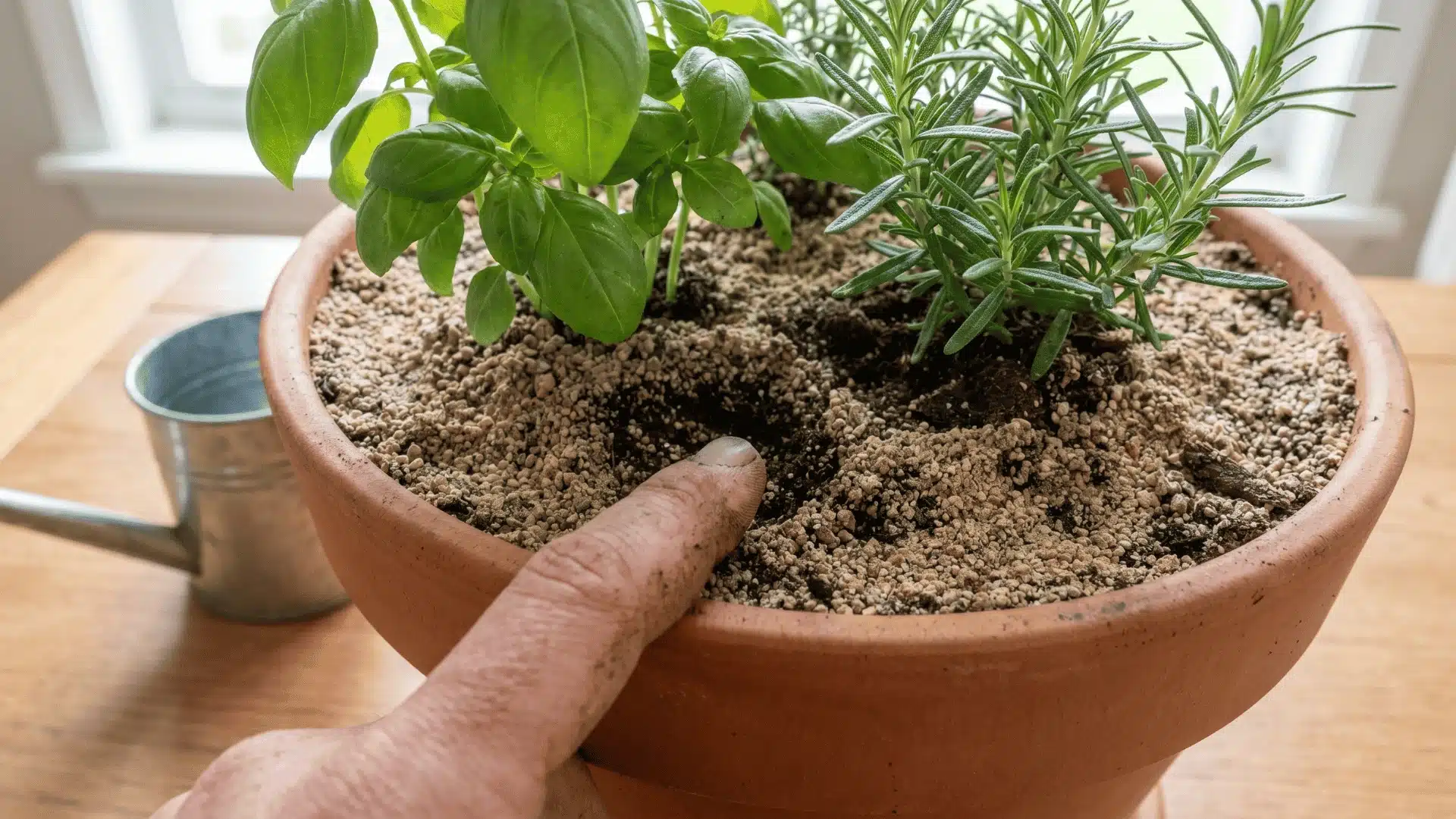
Do not water herbs on a fixed schedule. Check the soil first by inserting a a finger about one knuckle deep.
Water only when that spot feels dry, and check again the next day if it still feels damp. I have found that the biggest mistake beginners make is treating every pot the same way.
Soil moisture wicks upward, so a dry surface usually means the roots need water, but overwatering blocks oxygen and causes rot before you ever see it on the leaves.
If leaves wilt even though the soil is wet, the problem is usually low humidity rather than thirst.
Step 6: Harvest Regularly
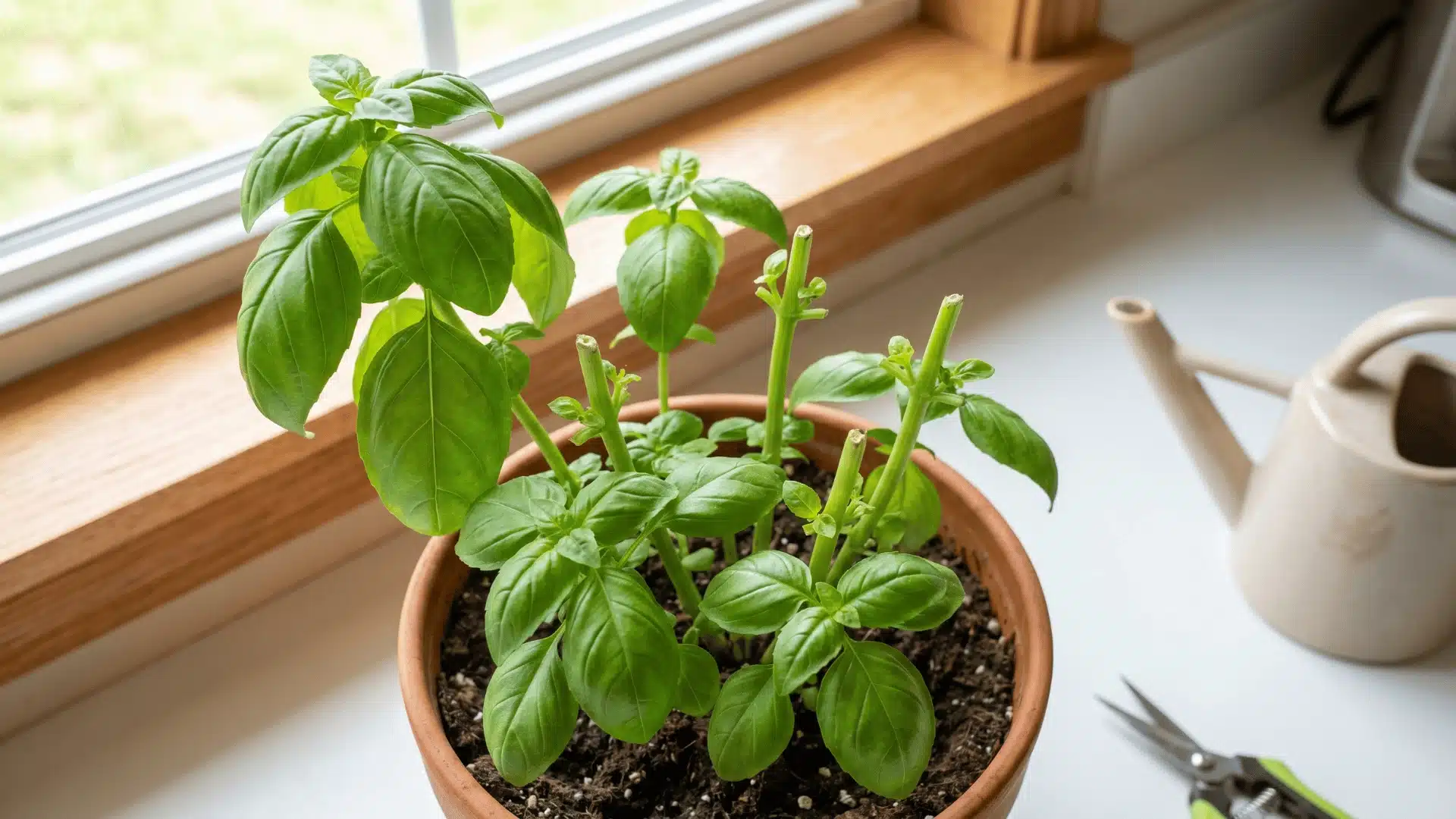
Harvesting is part of keeping herbs healthy and productive. Cut stems just above a leaf node to encourage new shoots and fuller growth.
Avoid removing more than one third of the plant at once, or it will struggle to recover and regrow properly after a heavy harvest.
Why Do Herbs Bolt Indoors?
Herbs bolt when they face stress from heat, irregular watering, or roots that have outgrown their pot. Once that happens, the plant shifts its energy toward producing seeds, and the leaves that remain often turn bitter.
Removing flower buds as soon as they appear and correcting the underlying stress usually stops the bolting before it ruins the harvest.
Best Herbs for Indoor Growing
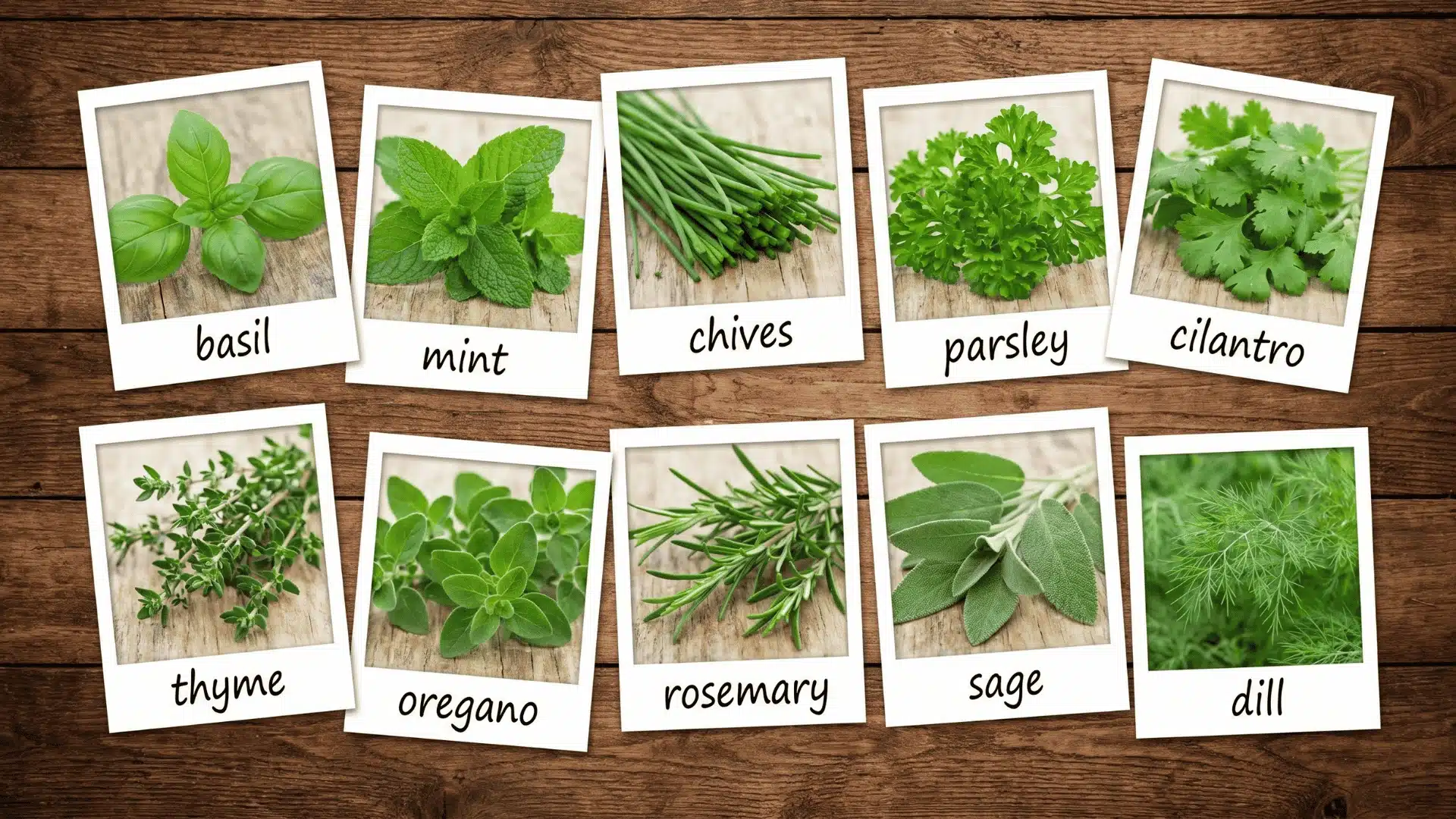
Choosing the right herbs makes indoor gardening much easier. Some herbs need more water and attention, while others thrive with minimal care.
Basil is one of the more demanding options, and basil’s light needs are worth understanding before you commit a spot to it.
| Herb | Light Needs | Water Needs | Best For |
|---|---|---|---|
| Basil | High | Moderate to High | Frequent cooking, pesto, salads |
| Mint | Medium to High | High | Teas, drinks, desserts |
| Chives | Medium to High | Moderate | Garnishes, soups, eggs |
| Parsley | Medium to High | Moderate | Everyday cooking, sauces |
| Cilantro | High | Moderate | Mexican, Indian, and Asian dishes |
| Thyme | High | Low | Roasted vegetables, meats |
| Oregano | High | Low | Italian and Mediterranean recipes |
| Rosemary | High | Low | Roasts, breads, and marinades |
| Sage | High | Low | Poultry dishes, stuffing |
| Dill | High | Moderate | Pickling, seafood, salads |
Most indoor-friendly herbs are relatively easy to grow once their basic needs are met.
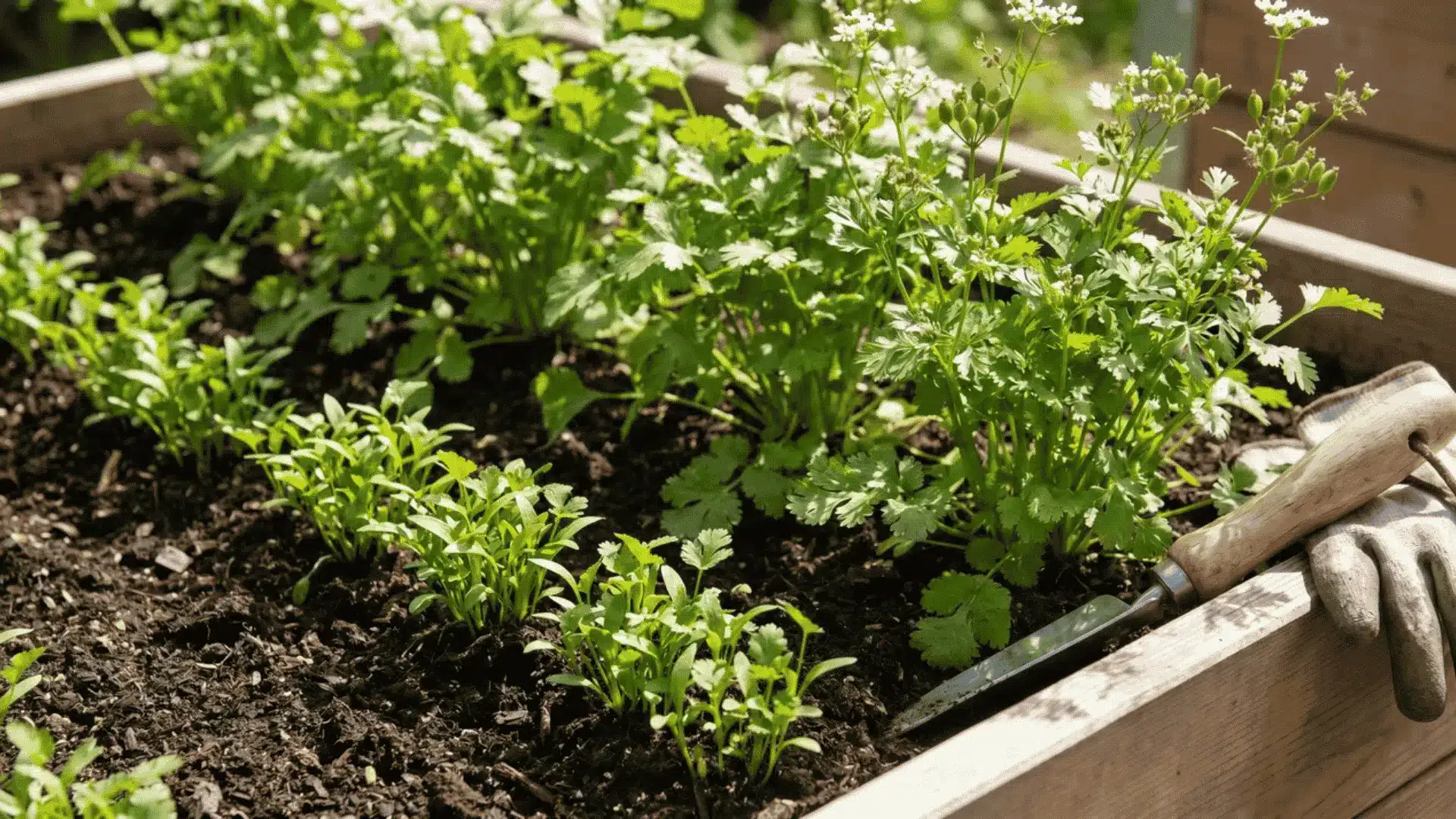
Cilantro is one exception worth a closer look, since growing cilantro indoors takes a slightly different approach than the other herbs on this list.
Start with varieties that suit your cooking habits and available growing conditions.
Note: Dill grows a long taproot and bolts quickly indoors It needs at least an 8 inch deep pot and frequent harvesting before flowering It is better suited for experienced growers
Indoor Herb Maintenance
Once your herbs are growing, maintenance is mostly about keeping conditions steady. Small habits make a big difference, especially with light, watering, and pruning.
- Rotate Pots Weekly: Turn pots a quarter turn each week to promote even growth and prevent plants from leaning toward the light.
- Adjust for Seasonal Light Changes: Winter sunlight is often weaker than summer sunlight. If herbs become leggy, supplement with a grow light.
- Feed Sparingly During The Growing Season: Apply a diluted all-purpose organic fertilizer every few weeks during spring and summer to support healthy growth.
- Remove Flower Buds Promptly: Pinch off buds as soon as they appear, especially on basil, to keep the plant focused on producing flavorful leaves.
- Watch for Early Warning Signs: Yellow leaves may indicate overwatering; ensure proper drainage. Dry yellowing indicates nitrogen deficiency; use diluted fertilizer. Brown tips indicate low humidity or salts; flush monthly. Gnats indicate moisture
Growing herbs indoors comes down to the right setup and steady care. Give them strong light, quick-draining soil, proper watering, and regular harvesting, and they will stay productive for much longer.
Why are My Indoor Herb Leaves Turning Yellow?
Yellow leaves most often signal overwatering, so check drainage before doing anything else. A few other symptoms point to different causes, and each one has its own quick fix.
- Yellow leaves: Usually a sign of overwatering. Check that the pot drains properly and let the soil dry out before watering again.
- Dry, yellowing leaves: Often points to a nitrogen deficiency. Feed with a diluted fertilizer.
- Brown leaf tips: Usually caused by low humidity or a buildup of salts. Flush the soil with water once a month.
- Fungus gnats: A sign that the potting mix is staying too wet between waterings.
Growing herbs indoors comes down to the right setup and steady care. Give them strong light, quick-draining soil, proper watering, and regular harvesting, and they will stay productive for much longer.
Conclusion
Learning how to grow herbs indoors becomes easier once you focus on the basics.
Most problems come from weak light, poor drainage, overwatering, or waiting too long to harvest.
Give your herbs a bright spot, use a lightweight potting mix, choose containers with drainage holes, and water only when the soil actually feels dry. Then trim often so each plant keeps producing fresh growth.
Start with one easy herb, such as basil, mint, thyme, or rosemary, and watch how it responds before adding more pots.
Which herb are you growing indoors first? Tell us what you’re trying on your windowsill.
Frequently Asked Questions
How Do You Grow Herbs Indoors Successfully as a Beginner?
Start with a container with a drainage hole, fill it with lightweight indoor potting mix, and place it in a south-facing window that gets at least 6 hours of direct light daily. Water only when the top inch of soil is dry, and harvest stems regularly just above a leaf node to encourage fuller, bushier growth.
Which Herbs Grow Best Indoors?
Basil, mint, chives, parsley, thyme, oregano, and rosemary are the most reliable herbs for growing indoors year round. Basil, mint, and chives prefer consistent moisture and grow quickly, so they need frequent attention. Thyme, oregano, and rosemary come from dry climates and tolerate a less frequent watering, which makes them more forgiving for beginners with inconsistent schedules.
How Much Light Do Indoor Herbs Need?
Most culinary herbs need six to eight hours of direct or bright light daily. A south-facing window provides the most consistent exposure. If natural light is limited, a full-spectrum LED grow light placed five to twelve inches above the plants and running twelve to fourteen hours per day is a reliable substitute.
Why Do Indoor Herbs Keep Dying?
The most common causes are overwatering, insufficient light, and poor drainage. Overwatering deprives roots of oxygen, leading to rot before visible symptoms appear. Insufficient light leads to weak, leggy growth and reduced flavor. Using a container without a drainage hole compounds both problems by trapping moisture in the root zone with no escape.