



Growing cilantro sounds simple, until it bolts before you get a single harvest.
I’ve watched this happen to careful gardeners more than casual ones. Timing trips people up more than skill ever does.
Cilantro is a cool-season herb with a narrow productive window. Miss it, and the plant goes straight to seed before your first cut.
Most failures come down to three things: planting too late, watering wrong, or harvesting wrong. None of these are hard to fix once you see why they happen.
Here’s everything you need: planting windows, bolt prevention, harvesting technique, and fixes for both garden beds and containers.
When Should You Plant Cilantro?
Cilantro needs cool soil, not cool air. Plant when soil temperature sits between 50–85°F. Soil can hit 85°F while the air still feels mild. Use a soil thermometer, not the weather app.
Spring vs. Fall Planting
Both seasons work, but only if you hit the right window.
Spring planting works if you catch the soil while it’s still cool. Here’s what that looks like:
- Start 60 days before your last frost date
- Keep soil cool and just workable
- Best in zones 6 and below, where summers stay mild longer
That window closes fast once summer heat arrives, so getting this stage right matters more than any other step.
Fall planting gives you a longer runway, especially south of zone 6. Here’s the setup:
- Start 6–8 weeks before your first frost
- Soil is already cooling, which cilantro loves
- The main reliable window for zones 7+, since spring soil warms too fast there
In zones 7 and up, spring soil crosses 85°F within weeks of the last frost. Fall is where you’ll get a real harvest.
If soil hits 85°F even two weeks after germination, the plant skips leaf production and bolts straight to seed.
You get a sprout, then a flower stalk. Nothing in between.
If your cilantro bolted fast, this timing window is almost always why.
Succession Planting
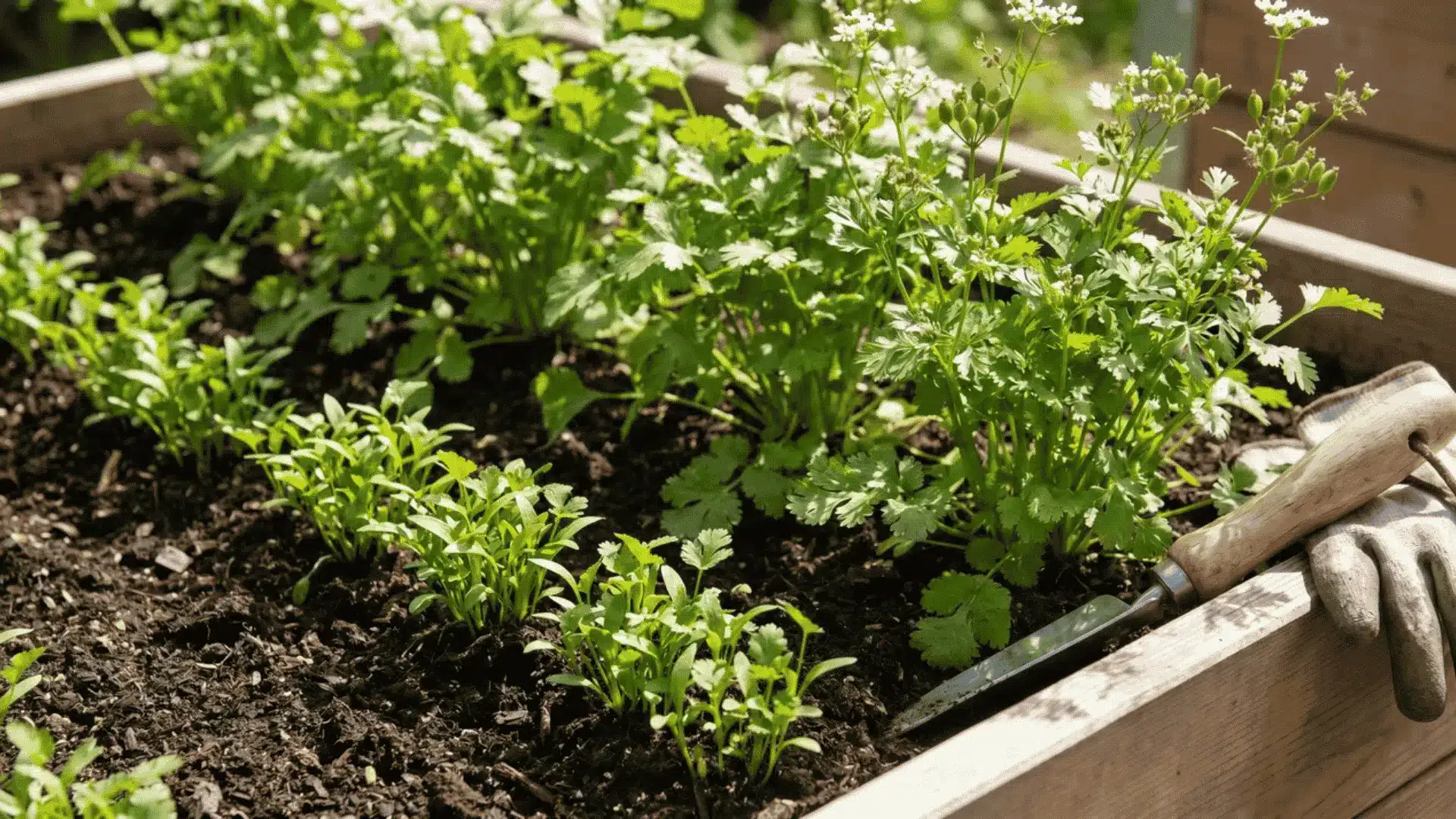
One planting gives you one short harvest. Succession planting keeps cilantro coming all season, not just for a week or two.
Here’s how it works:
- Sow a new batch every 2–3 weeks
- While one plant matures, the next is already in early growth
- Harvest only during early growth, when leaves are full and flavor peaks
Stagger your plantings across the whole cool-weather window. You’re not just extending supply, you’re keeping a plant that hasn’t hit its bolt trigger yet.
No variety pick or shade trick replaces this system.
Is July Too Late to Plant Cilantro?
In most climates, yes. July soil runs too warm, and cilantro bolts almost as soon as it germinates.
You get a sprout, not a harvest. I’ve seen gardeners lose an entire batch to July heat within a week.
Nursery starts make this worse. Greenhouse-grown seedlings are already used to warm conditions, so they bolt even faster once planted out.
Wait until fall instead, about 6–8 weeks before your first frost. Mild coastal climates are the exception, where afternoon shade can still pull it off.
How to Plant Cilantro Seeds the Right Way?
Always direct-sow cilantro. Never start seeds indoors and transplant later. Disturbing the taproot at transplant triggers stress bolting, often before the plant grows a single harvestable leaf.
In-Ground Planting
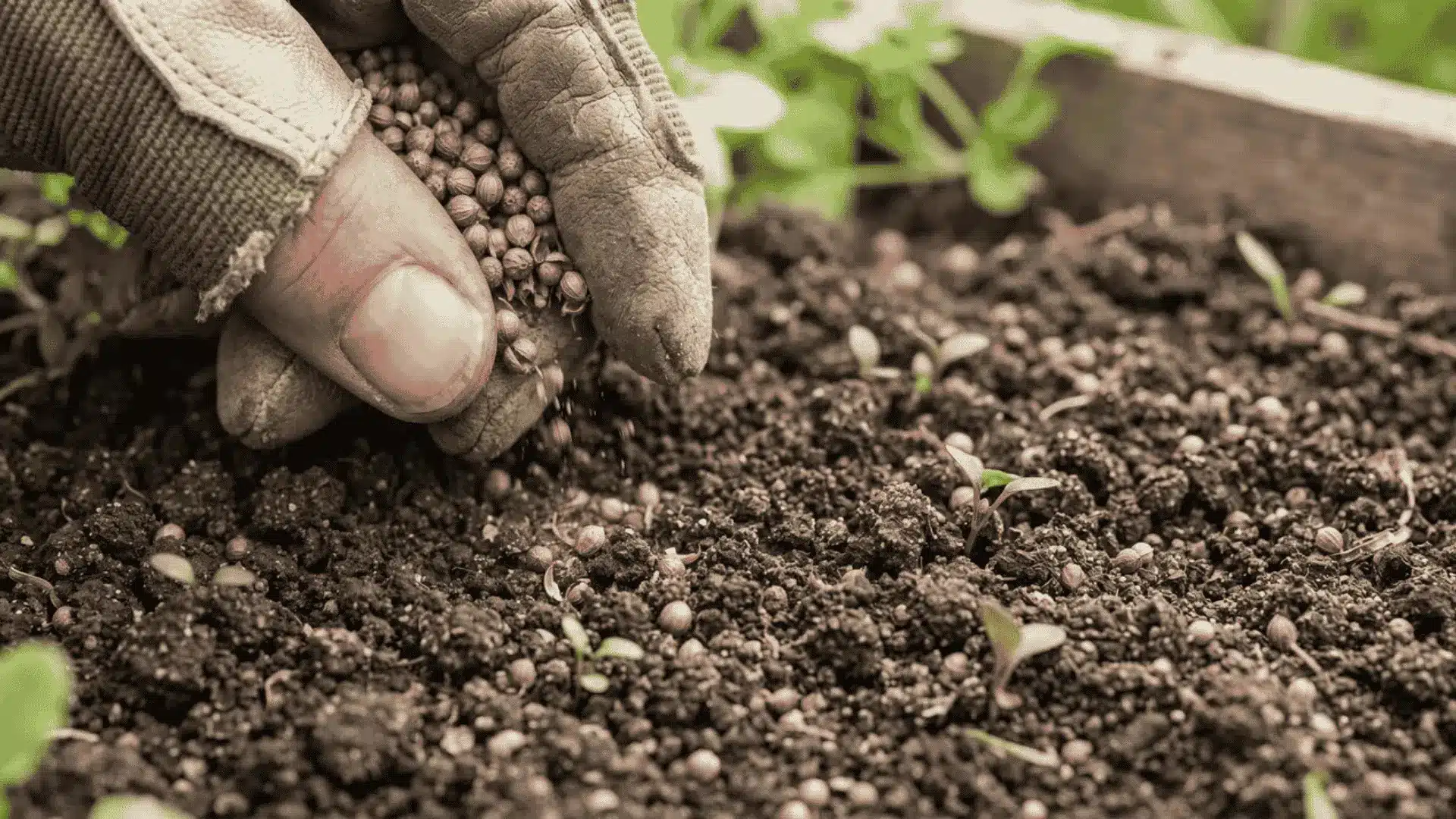
Cilantro seeds are actually two seeds fused inside one husk. Lightly crush the husk before sowing to help germination.
A 6–24 hour soak in water helps too, but it’s optional.
Steps to follow: get these right and germination takes care of itself.
- Sow seeds ¼–½ inch deep
- Space 1–2 inches apart at planting
- Thin to 6–10 inches once seedlings are established
- Work 2–3 inches of aged compost into the top 6 inches of soil before sowing
- Keep soil pH between 6.2 and 6.8
- Use well-draining soil; cilantro rots fast in waterlogged ground
Thinning feels counterintuitive, but it matters. Crowded plants compete for resources and bolt faster.
Container Planting
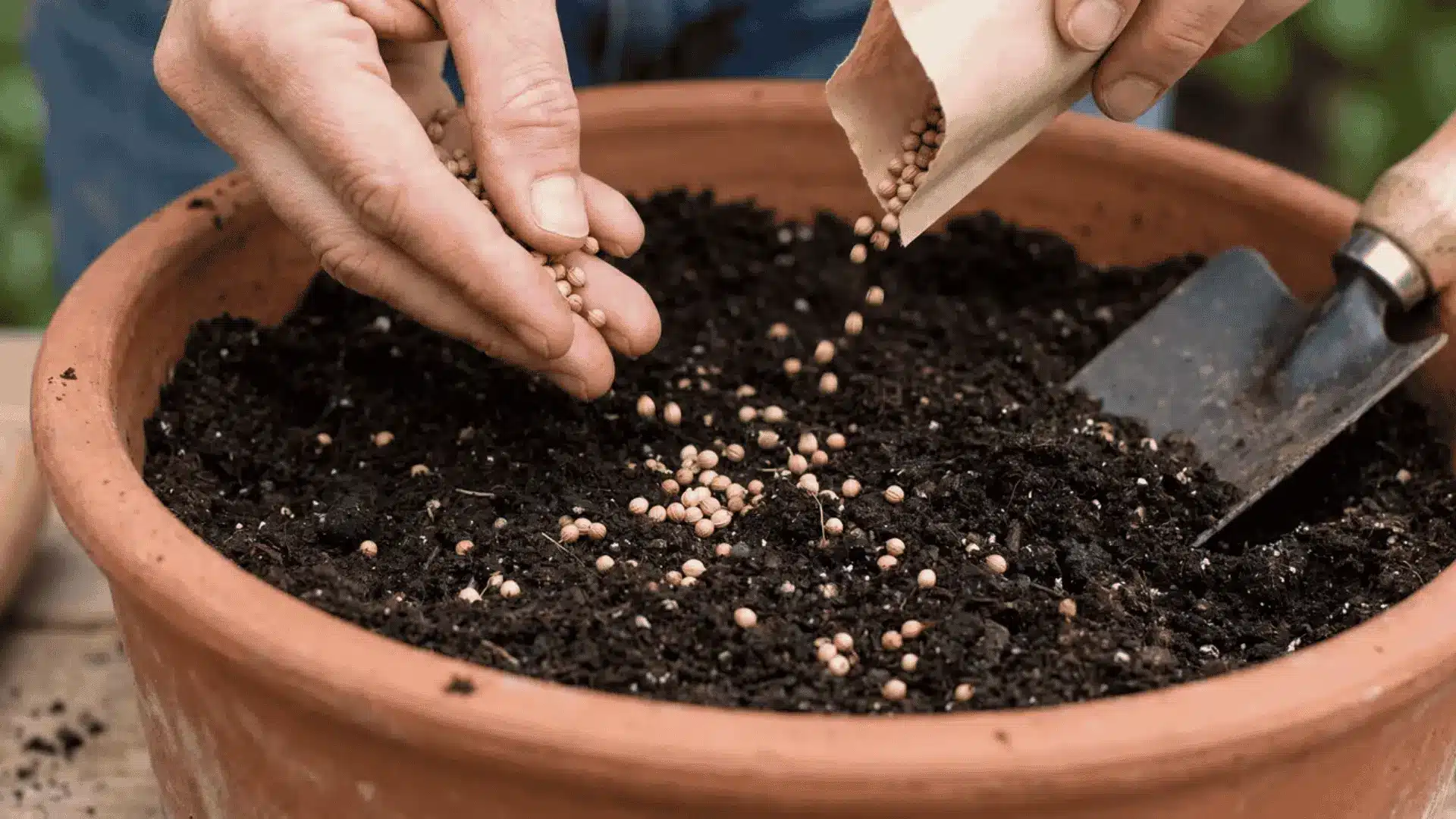
Containers work well for cilantro, but only if they’re deep enough. Use a minimum depth of 12 inches for the taproot.
Shallow pots force root stress, which speeds up bolting.
What to get right: these four details decide whether your container plant thrives or bolts early.
- 12-inch deep container minimum
- High-quality potting mix, not garden soil
- Full sun placement, partial shade in warmer climates
- Sow more seeds per cycle than you think you need
That last point matters most. Container plants have a shorter productive life than in-ground plants, so more seeds per sowing means fewer supply gaps.
Can You Grow Cilantro Indoors?
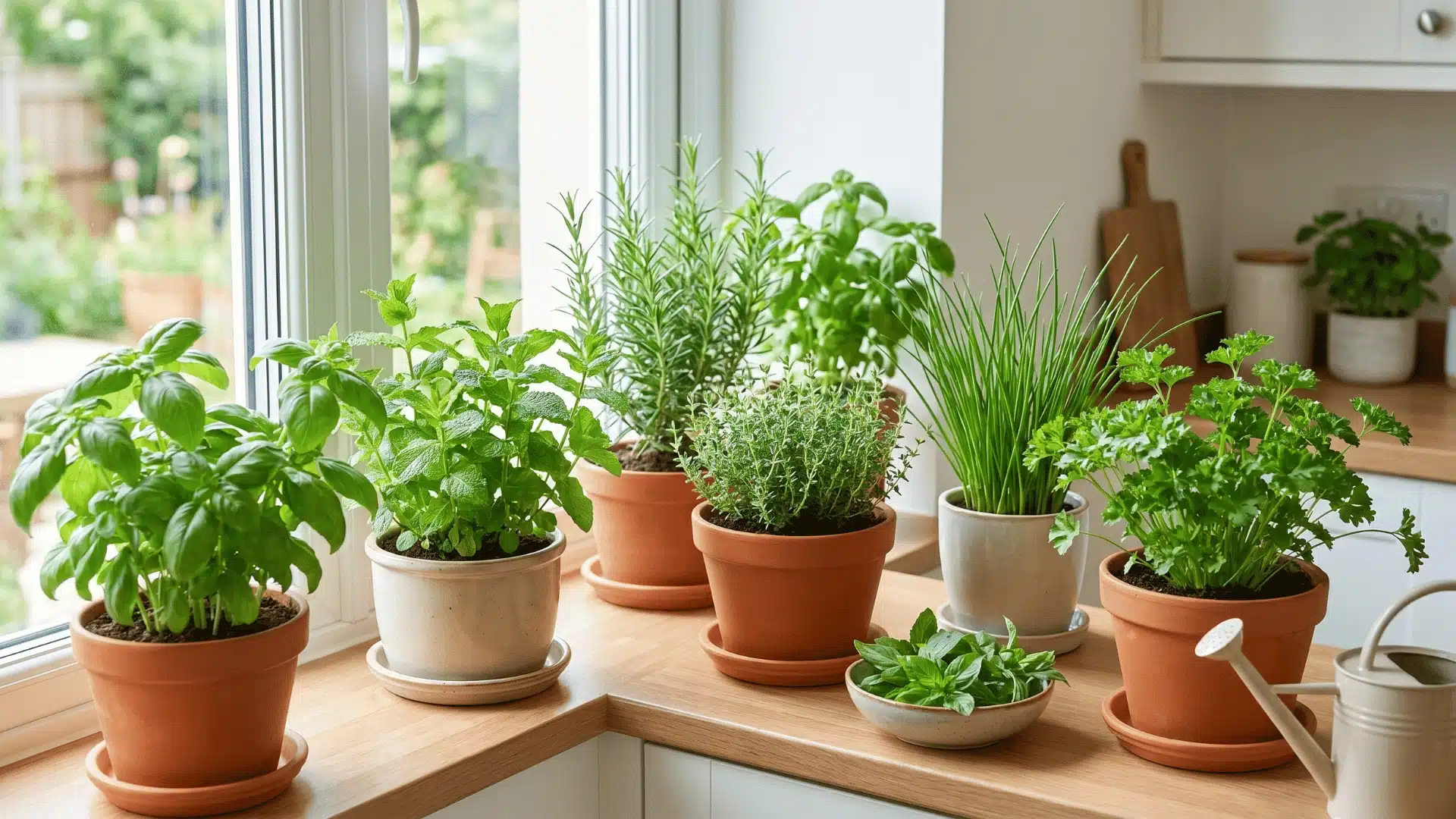
Yes, but light decides this, not space. Cilantro needs 5–6 hours of direct sun a day.
A south-facing windowsill can work in winter, but most homes fall short. A small grow light closes that gap fast.
What changes indoors: the container rules above still apply, plus a few extras worth knowing.
- Keep the same 12-inch minimum container depth
- Place near your brightest window, or add a grow light
- Check soil moisture every 1–2 days near heating vents
- Sow more often, since indoor warmth speeds up bolting
Treat an indoor plant like a warm-climate container: water more, and don’t expect one batch to last all season.
Why Cilantro Bolts (And how to Slow it Down)?
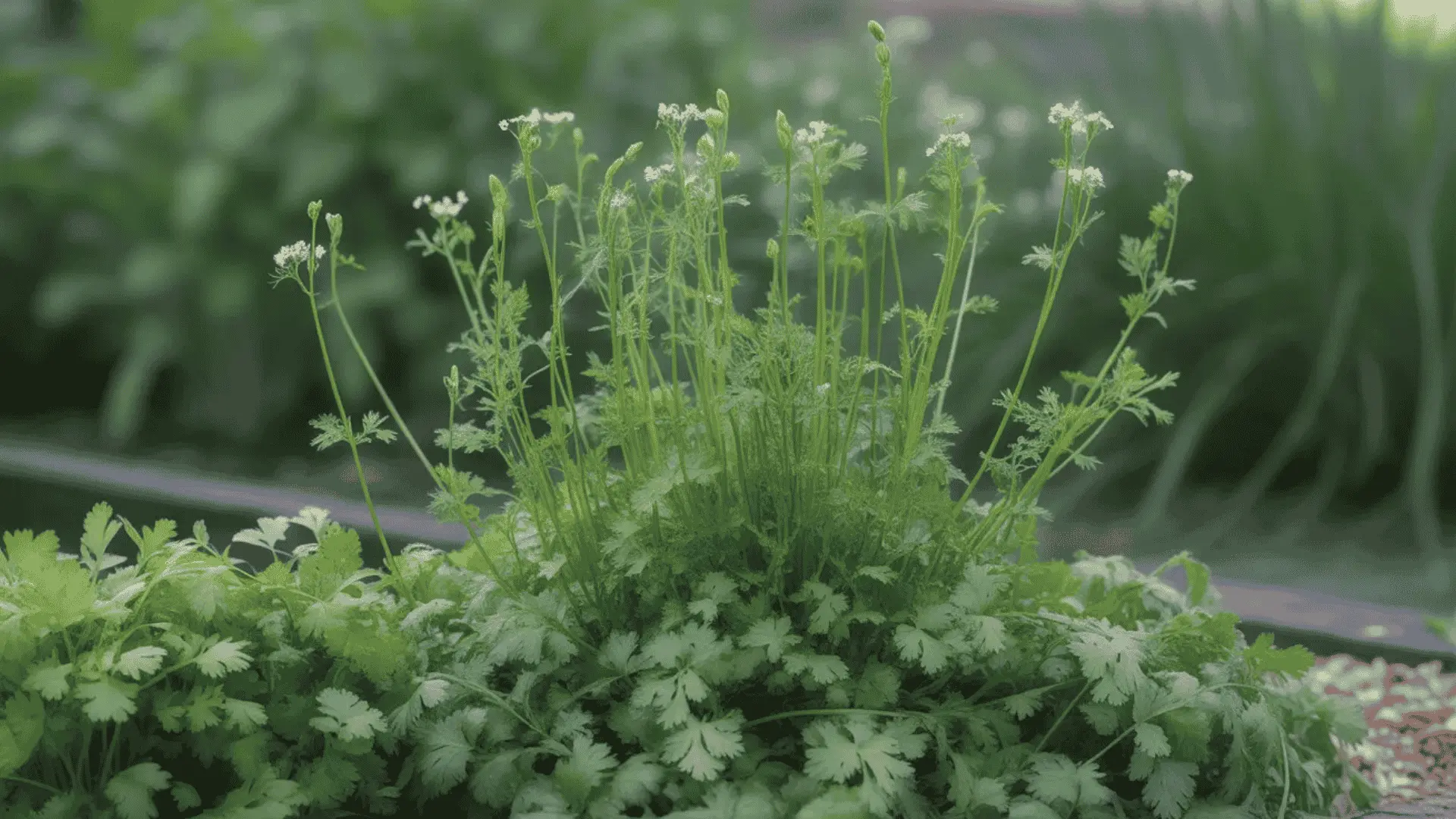
Cilantro bolts when two things happen together: temperatures rise and day length increases. Heat alone doesn’t trigger it.
Both conditions have to combine. Cilantro is what’s called a long-day plant.
Once day length crosses a certain point, it stops making leaves and shifts energy into seed production.
This is why shade helps but doesn’t always work. It cuts heat, but can’t override the day-length trigger once it’s crossed.
Succession planting is more reliable. Staggered sowings mean you always have a plant in early growth, before either trigger kicks in.
If your cilantro bolted within weeks of planting, timing is the more likely culprit than heat.
Prevention Tactics
No single tactic stops bolting permanently. The goal is to delay it long enough for a full harvest.
What works: none of these stop bolting for good, but stacked together, they buy real time.
- Mulch: keeps roots cool, cutting the heat side of the trigger
- Partial afternoon shade: helps in hot climates, but won’t override day length
- Slow-bolt varieties: Calypso, Santo, and Leisure buy extra time, they don’t stop bolting
- Succession planting: the only fix that works at a system level, keeps plants young
Container growers: pots hold less heat than ground soil, so they warm up faster and trigger bolting sooner. Mulching the container’s soil surface buys extra time.
What to Do when Bolting Starts?
Most gardeners notice bolting once flowers appear. By then, it’s too late to act.
The real sign is stem elongation, the center stem stretching upward before any flower forms. That’s your actual window.
What to do: move fast once you spot elongation, and you can still save the harvest.
- Catch it at stem elongation, not flower appearance
- Cut the plant back to 2–3 inches while weather is still cool
- Watch for a flush of new leaf growth before the plant fully commits to seed
- If flowers have already opened, pull the plant and sow a fresh batch
Cutting back early is your best shot at squeezing out one more round of leaves.
Why is Cilantro Difficult to Grow
Cilantro has a narrow cool-weather window, and it bolts fast once temperatures climb. Timing trips up more gardeners than soil or feeding ever does.
Most failures trace back to planting too late, or skipping the staggered sowing that keeps fresh plants in rotation.
Gardeners who get consistent harvests rarely have better soil or luck. They just have a second batch already growing before the first one bolts.
Watering, Soil, and Feeding Cilantro
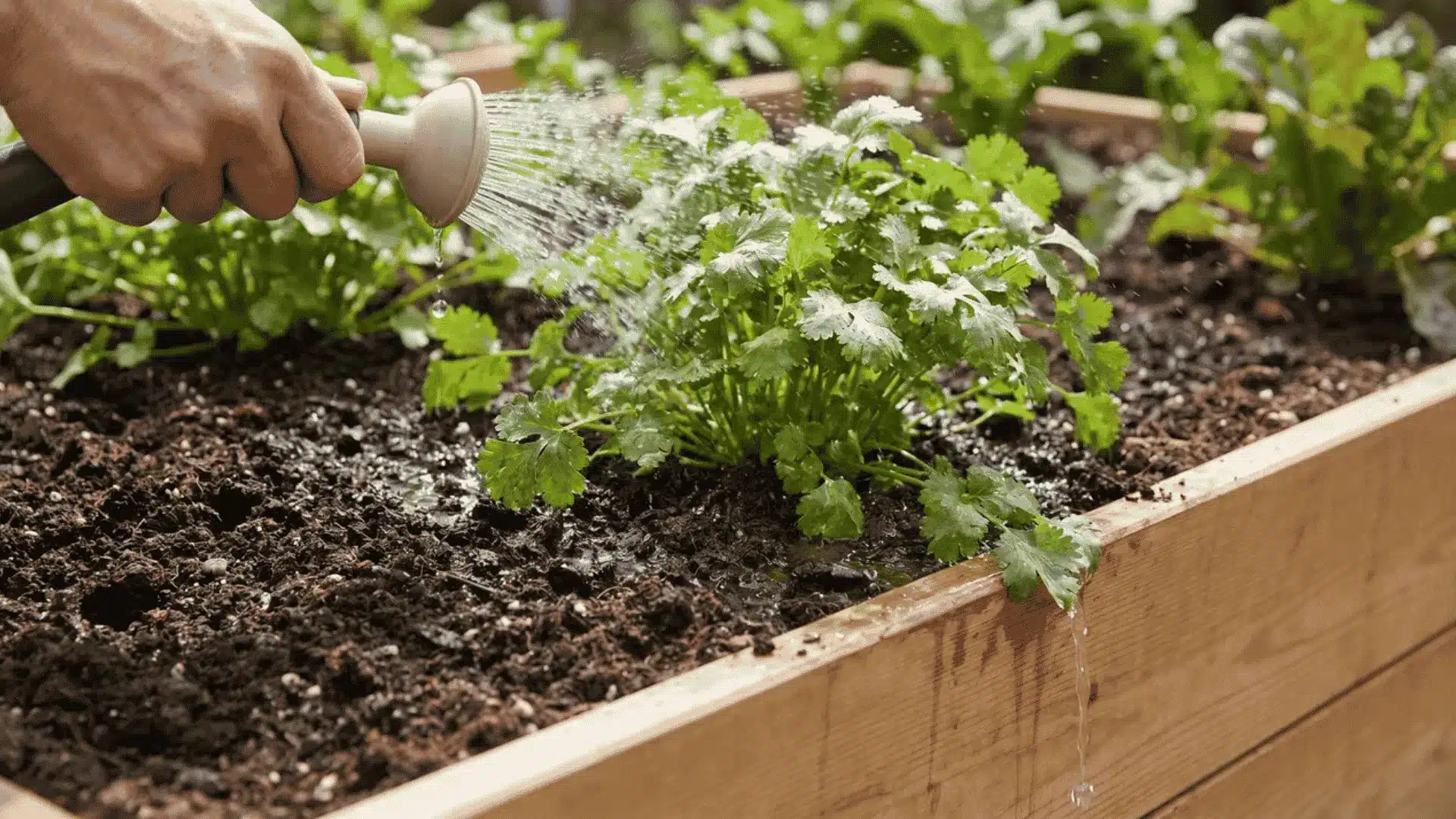
Cilantro needs about 1 inch of water a week in the ground. Keep soil consistently moist, since drought stress triggers bolting fast.
Don’t overwater either. Standing water causes root rot just as quickly.
Container growers: the 1-inch rule breaks down in pots.
Containers dry out faster, especially in warm weather. Check soil moisture every 1–2 days and water once the top inch feels dry.
Skipping this check is one of the most common reasons container cilantro fails.
Soil: use well-draining soil with a pH of 6.2–6.8.
Cilantro is a light feeder. Rich, well-balanced soil gives you healthy leaves without pushing the plant into stress.
Avoid heavy or compacted soil. Poor drainage leads to root rot before you ever reach harvest.
Feeding: in rich garden soil, cilantro needs no fertilizer at all.
Existing nutrients carry it through the whole growing cycle. Container soil depletes faster with repeated sowings.
Apply a balanced organic fertilizer after every 4–5 harvests to replace what’s been used.
One rule applies to both: go light on feeding. Heavy nitrogen pushes fast leafy growth, but it speeds up bolting too.
How to Harvest Cilantro? (And Keep it Producing)
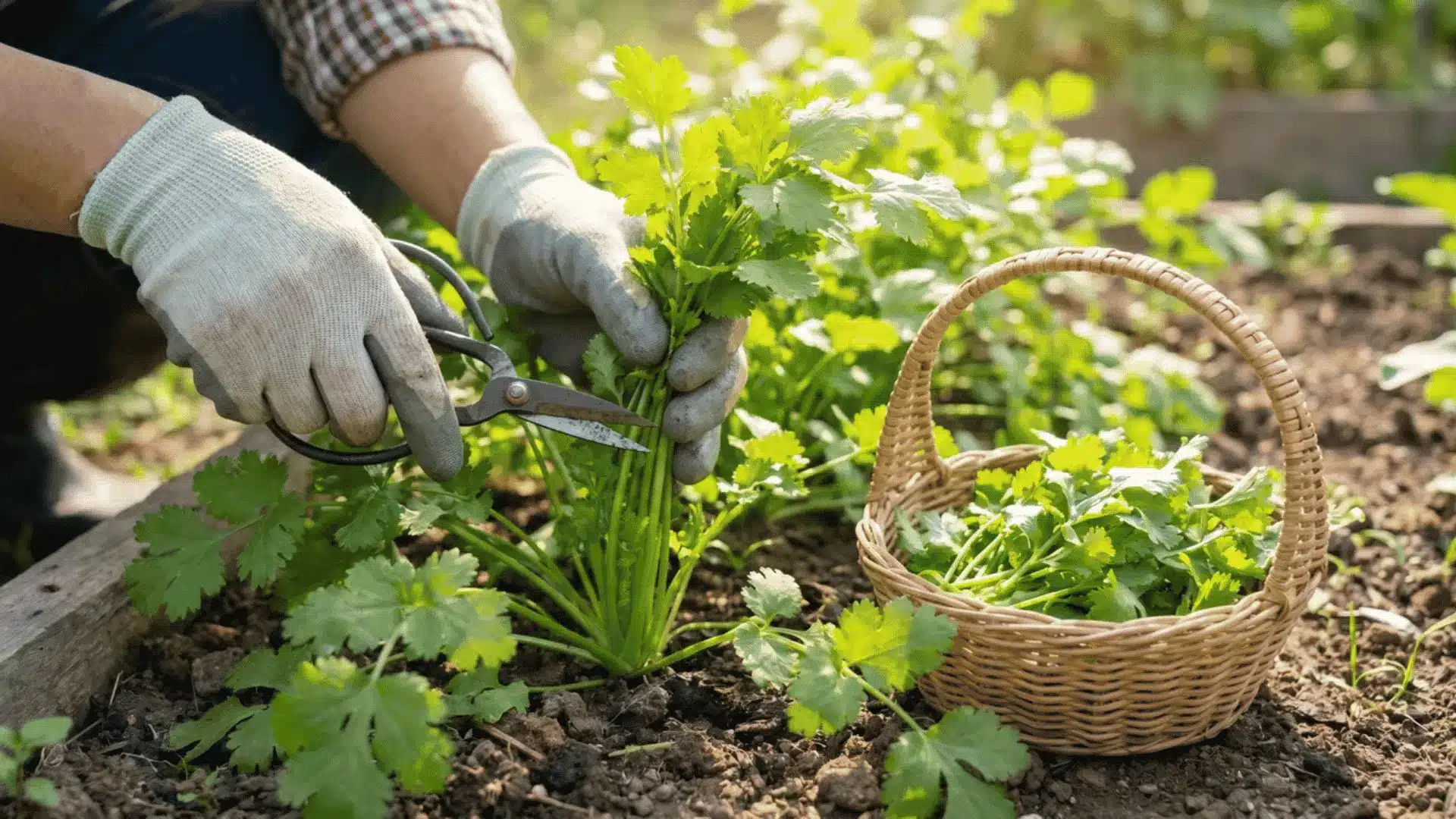
Cilantro grows back after cutting, but only if you cut it right. Regular harvesting of outer leaves slows the plant’s push toward seed.
This is why harvesting regularly isn’t just about yield. It actively delays bolting and keeps the plant leafy longer.
Harvesting Leaves
Harvest outer leaves once they reach 4–6 inches tall.
Never remove more than one-third at once. Overharvesting stresses the plant and shortens its productive window.
What to do: follow this order every time you cut, and the plant keeps producing.
- Cut outer leaves first, working from the outside in
- Cut stems down to 2–3 inches to stimulate new growth
- Never harvest from the center growing point, that’s where new leaves start
Cut wrong, and you damage the plant. Cut right, and you extend the harvest.
Container growers: expect 3–4 harvests per plant before leaf quality drops.
Container plants fade faster than in-ground ones. Start a second container mid-harvest to keep a steady supply going.
Harvesting Coriander Seeds
If a plant bolts, don’t pull it. Let it finish instead.
Wait until the flowers turn fully brown before harvesting seeds. Green seeds won’t dry or store properly.
Steps to follow: patience matters more than speed here.
- Cut seed heads once flowers are fully brown
- Place them in a paper bag in a dry spot for 1–2 weeks
- Store dried seeds in an airtight container
Seeds harvested too early lose potency fast and won’t be worth storing. Patience here pays off.
Will cilantro grow back after cutting? Yes, if you leave the center growing point intact and cut outer leaves only.
Taking more than one-third at a time, or cutting from the center, stops regrowth.
Common Cilantro Problems and Fixes
Most cilantro problems trace back to a handful of causes. Once you know what to look for, most have a direct fix.
Aphids
Small, soft insects on stems and leaf undersides. Spray with organic insecticidal soap or neem oil, and improve airflow.
Check local rules before using neem oil outdoors. Catch aphids early, since they weaken the plant if left too long.
Powdery Mildew
A white, dusty coating on leaves, usually from poor airflow or overhead watering.
Water at the base, keep 6–10 inches between plants, and remove affected leaves.
Container growers: crowded pots are the main trigger. Thin aggressively, and never reuse potting mix between cycles, since old mix carries spores.
Wilting or Yellowing
Usually overwatering, not disease. Check soil moisture first.
Reduce watering if soil feels consistently wet, and make sure drainage holes aren’t blocked.
Container growers: wilting despite moist soil usually means root-bound roots. Re-pot into something deeper, or pull the plant and restart.
Poor Germination
Three causes cover most cases: husks weren’t crushed, soil was too warm, or seeds went in deeper than ½ inch.
Fix the cause before resowing. The same conditions produce the same result every time.
Bitter Taste
Bitter cilantro means the plant has already bolted. The flavor shift is chemical, not something water, fertilizer, or pruning can fix.
Pull the plant and restart with tighter succession timing. Bitterness means the productive window already closed.
Most cilantro problems are recoverable. Catch them early, fix the cause, and resow. Getting succession timing right makes every setback easier to bounce back from.
Conclusion
Cilantro rewards growers who work with its nature, not against it. Cool soil, smart timing, and steady harvesting change everything.
Bolt prevention isn’t one trick, it’s a system. Succession planting, proper harvesting, and the right container setup keep supply running all season.
Now you know why cilantro fails, and exactly what to do differently. The window is narrow, but once you see it, it works every time.
Start sowing first. Get the timing right, harvest from the outside in, and let succession planting do the rest.
Frequently Asked Questions
Is July too late to plant cilantro?
In most climates, yes. July soil exceeds 85°F, which pushes cilantro straight into bolting. Wait for fall instead, about 6–8 weeks before your first frost.
Will cilantro grow back after cutting?
Yes, if cut correctly. Harvest outer leaves only, and never take more than one-third at once. Leave the center growing point intact, and it’ll keep producing for weeks.
What’s the trick to growing cilantro?
Timing is everything. Plant in cool weather, and succession sow every 2–3 weeks. Harvest outer leaves regularly. Those three habits outperform any fertilizer or soil amendment.
Can you regrow cilantro from grocery store stems?
Yes. Place fresh stems in water until roots appear, usually in 5–7 days. Transplant once roots hit an inch long. It’s slower than direct seeding, but it works.