

A dark corner can make plant shopping surprisingly frustrating. You bring home something beautiful, then watch it struggle because the room simply does not give it enough light.
I want to help you avoid that mismatch. The best indoor plants for low light are not all the same. Some handle dry soil well, while others need more humidity, space, or attention.
Your room size, window position, pets, and watering habits all matter.
Here, you’ll find reliable options for desks, shelves, bedrooms, offices, and larger corners, plus simple guidance on what low light really means, a few ideas for styling an empty corner around your plant, and how to care for these plants without overwatering them.
What Low Light Really Means Indoors
Low light usually describes a room that receives limited indirect daylight rather than direct sun. A north-facing window, a shaded window, or a plant positioned several feet from a brighter window may fall into this category.
You should still be able to see comfortably during daytime without relying entirely on artificial room lighting.
Distance from a window matters. Light intensity falls quickly as a plant moves farther into a room, even when the area still looks reasonably bright to human eyes.
Windowless bathrooms, hallways, and interior offices are different. Ordinary ceiling lights may not provide enough usable light for long-term plant growth. A grow light is usually the better solution in those spaces.
Best Indoor Plants for Low Light
Each plant below handles dim indoor conditions differently. The short paragraph explains why the plant stands out, while the bullets give only quick practical details such as placement, growth habit, or care considerations.
1. ZZ Plant
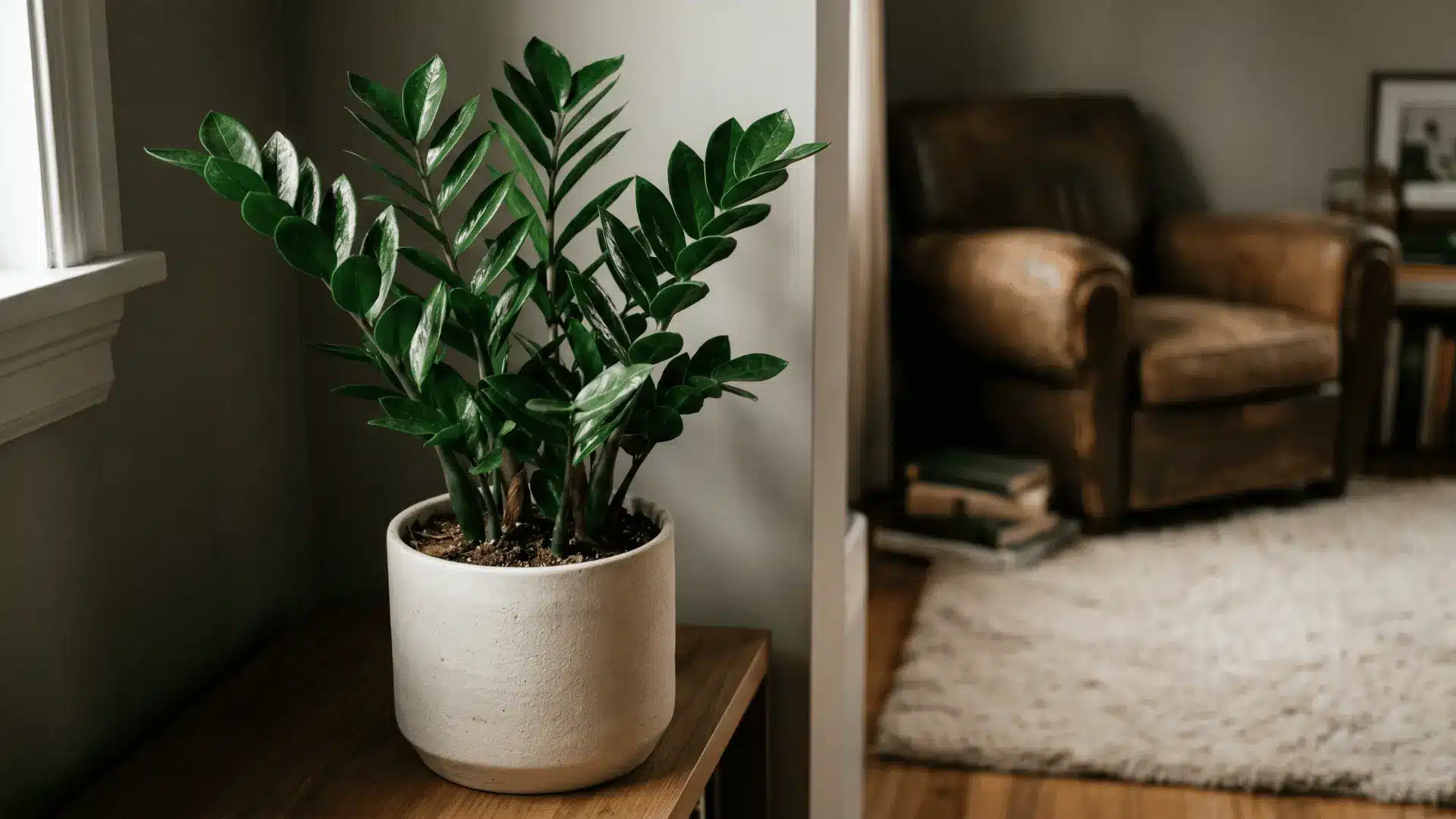
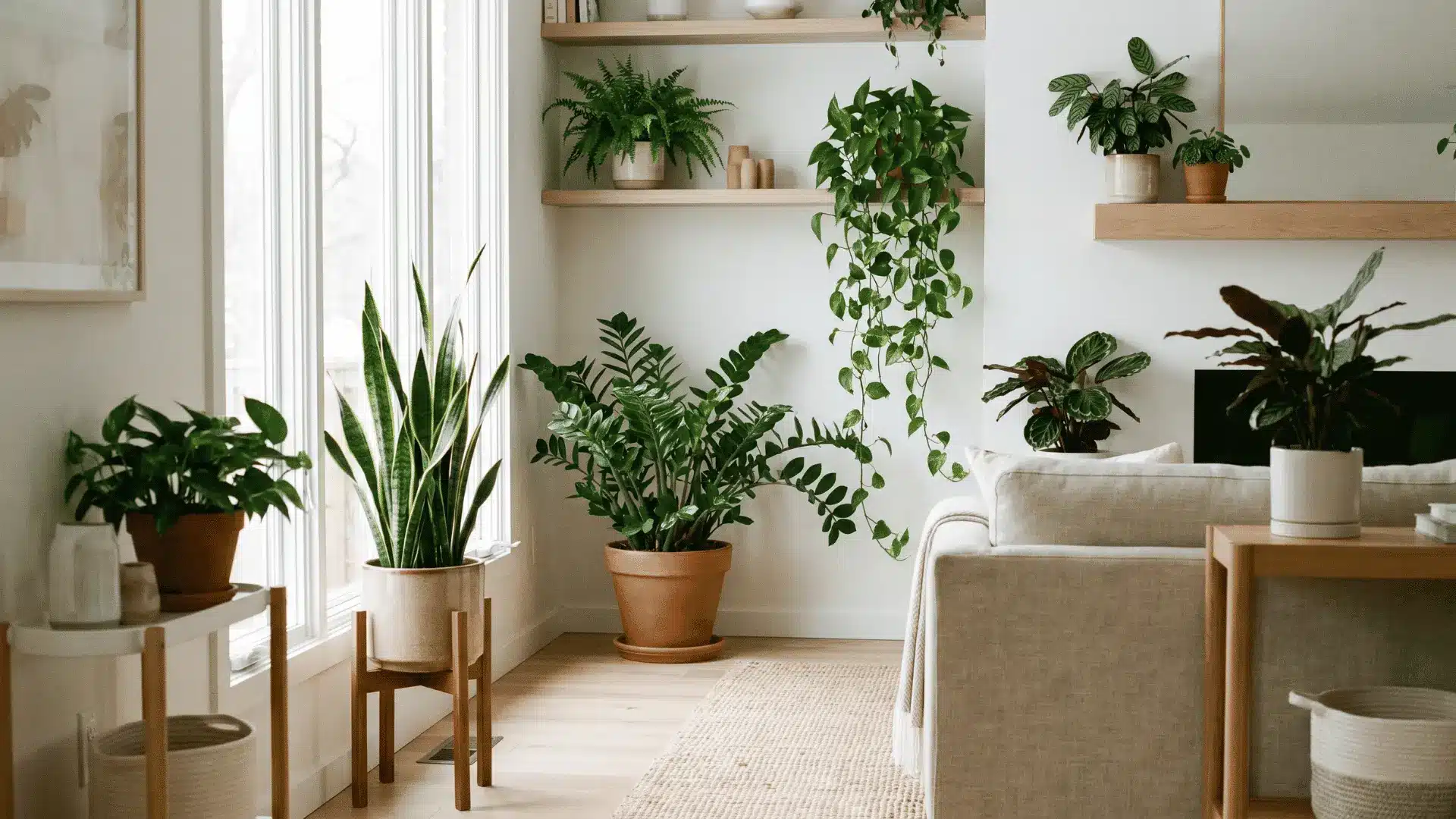
The ZZ plant is popular because it stays attractive even when growth is slow. Its glossy, dark green leaflets hold their shape well on upright stems, and its rhizomes store water like a succulent, so it handles neglect better than most tropical houseplants. It is especially useful for offices with limited natural light.
- Best placement: Offices, bedrooms, dim corners
- Growth habit: Upright, 2 to 3 feet tall and wide
- Main advantage: Extremely forgiving; water only every 2 to 3 weeks
- Watch for: A mushy, soft stem base, a sign of overwatering
- Pet safety: Keep away from pets
2. Snake Plant
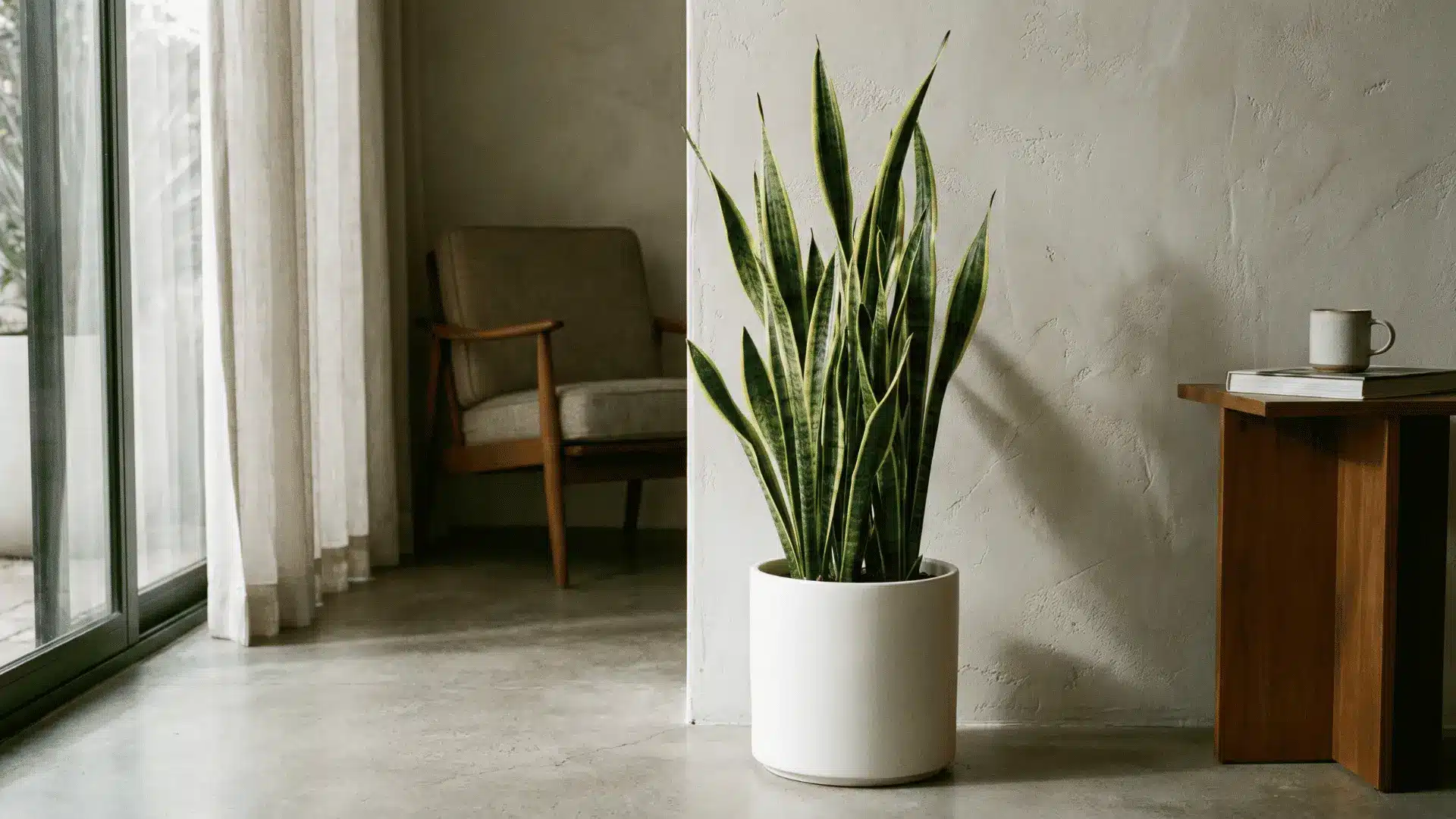
Snake plants are a strong choice when floor space is limited because their stiff, sword-shaped leaves grow vertically instead of spreading outward. Different varieties offer solid green, striped, or yellow-edged foliage, and the plant tolerates irregular watering without complaint. It suits modern interiors well thanks to its structured shape.
- Best placement: Bedrooms, hallways, narrow spaces
- Growth habit: Vertical, 1 to 4 feet tall depending on variety
- Main advantage: Handles missed waterings; water every 3 to 4 weeks
- Watch for: Mushy or translucent leaves at the base, a sign of root rot
- Pet safety: Keep away from pets
3. Cast Iron Plant
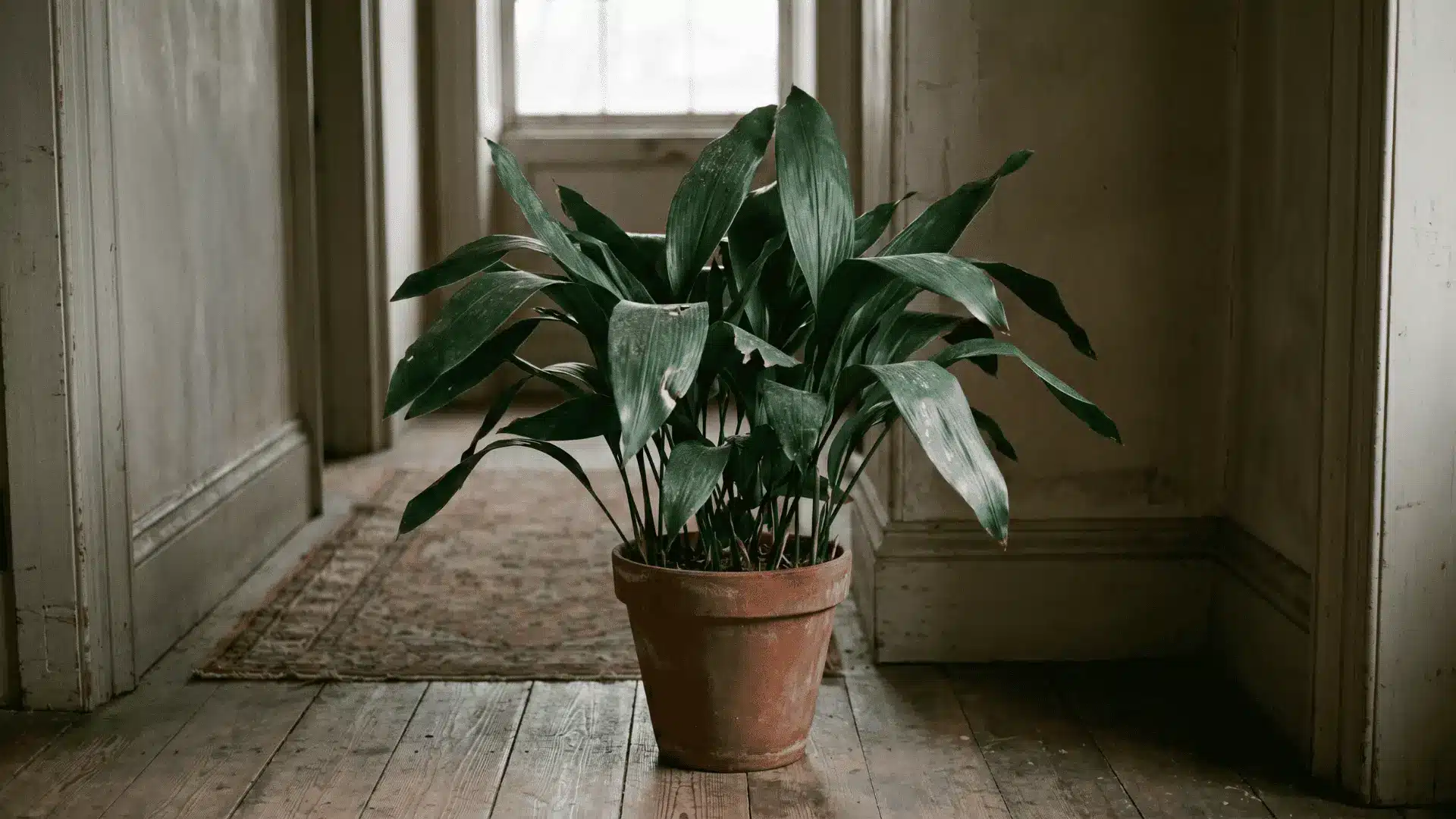
The cast iron plant stands out for its durability and slow, steady growth. Its broad, arching leaves form a full clump without needing frequent pruning, and it copes well with dust, dry air, and temperature swings. Because it tolerates very dim rooms better than most houseplants, it’s a dependable option where other foliage struggles.
- Best placement: Shaded corners and floor pots
- Growth habit: Upright clump, leaves to 2 feet long
- Main advantage: Tolerates deep shade and inconsistent conditions
- Watch for: Brown tips from dry air or fluoridated tap water
- Pet safety: Generally pet-friendly
4. Golden Pothos
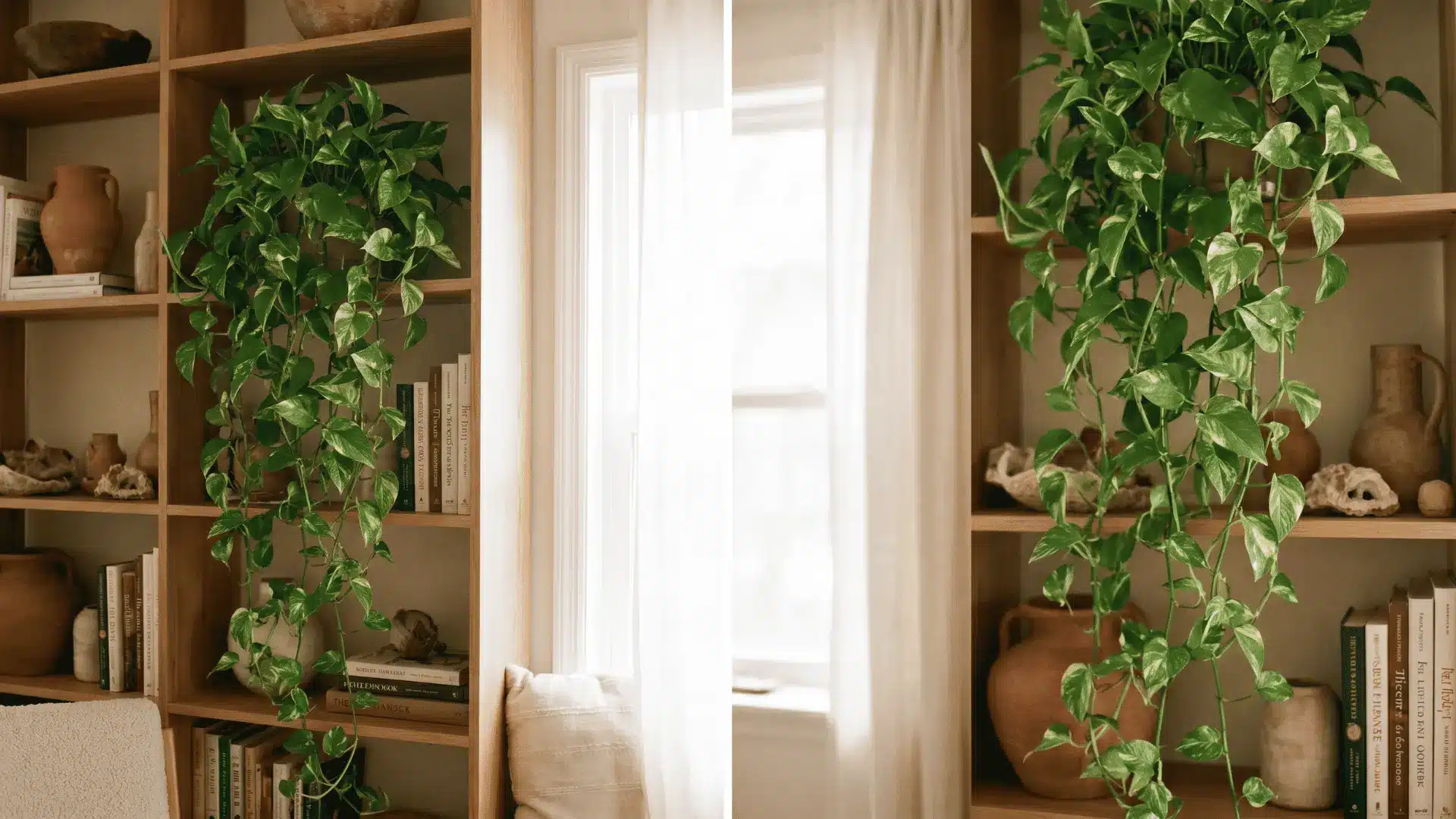
Golden pothos is useful when you want greenery above eye level rather than another floor plant. Its heart-shaped vines can trail over a shelf, hang from a basket, or climb a support, reaching 6 to 8 feet indoors over time. The plant is also easy to propagate, making it a practical option for expanding an indoor collection.
- Best placement: Shelves, bookcases, hanging baskets
- Growth habit: Trailing or climbing
- Main advantage: Fast-growing and easy to propagate
- Watch for: Fading variegation, a sign it wants more light, not water
- Pet safety: Keep away from pets
5. Heartleaf Philodendron
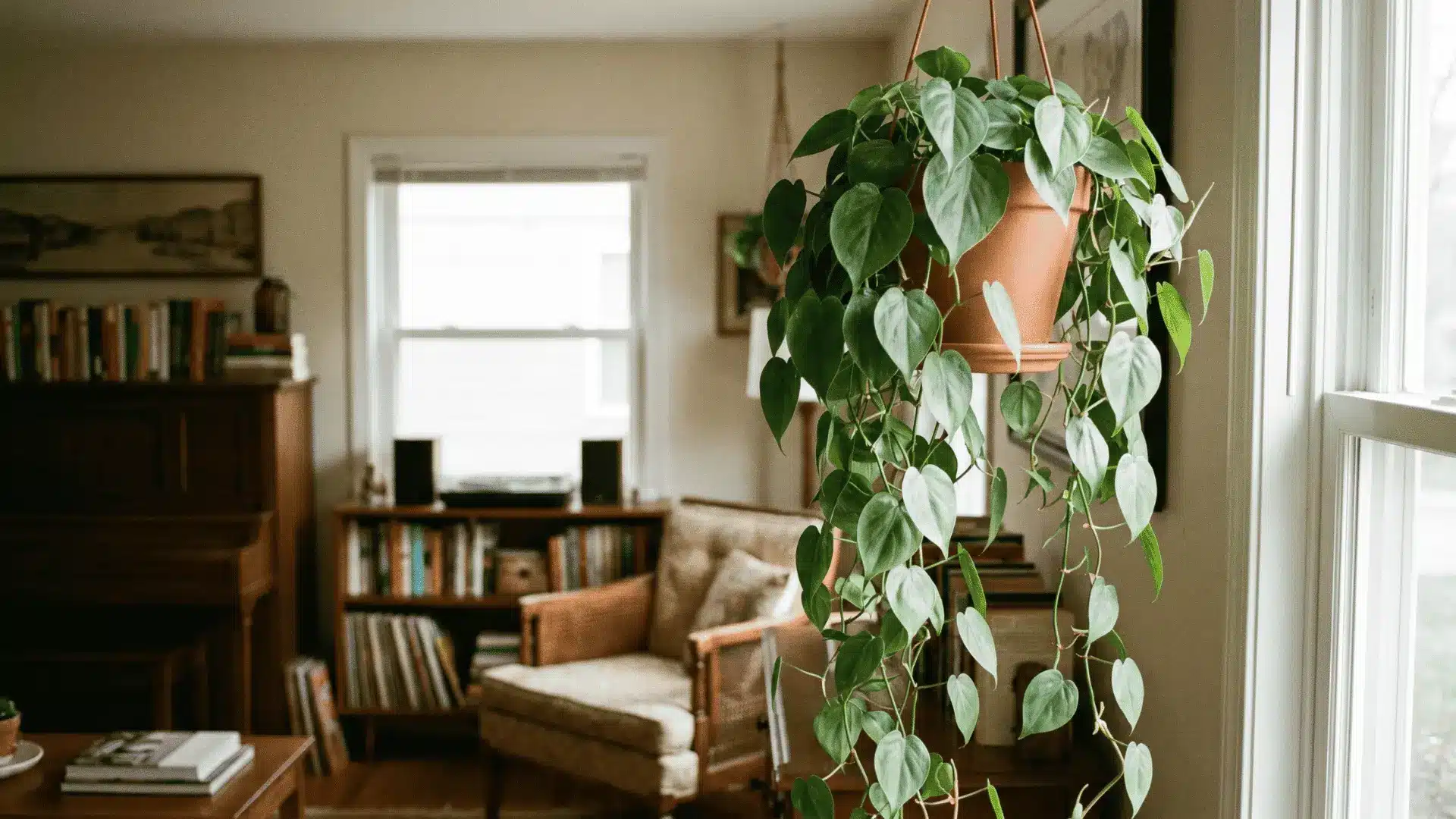
Heartleaf philodendron is a flexible choice because it can be displayed in several ways. It can trail naturally, climb a moss pole, or be trained onto a climbing support structure, and it often develops a fuller, denser look than pothos in the same space. Its foliage stays healthy without the stronger light that highly variegated plants need.
- Best placement: Shelves and hanging planters
- Growth habit: Trailing or climbing, over 4 feet long
- Main advantage: Easy to propagate from stem cuttings
- Watch for: Small, pale new leaves signaling a need for more light
- Pet safety: Keep away from pets
6. Chinese Evergreen
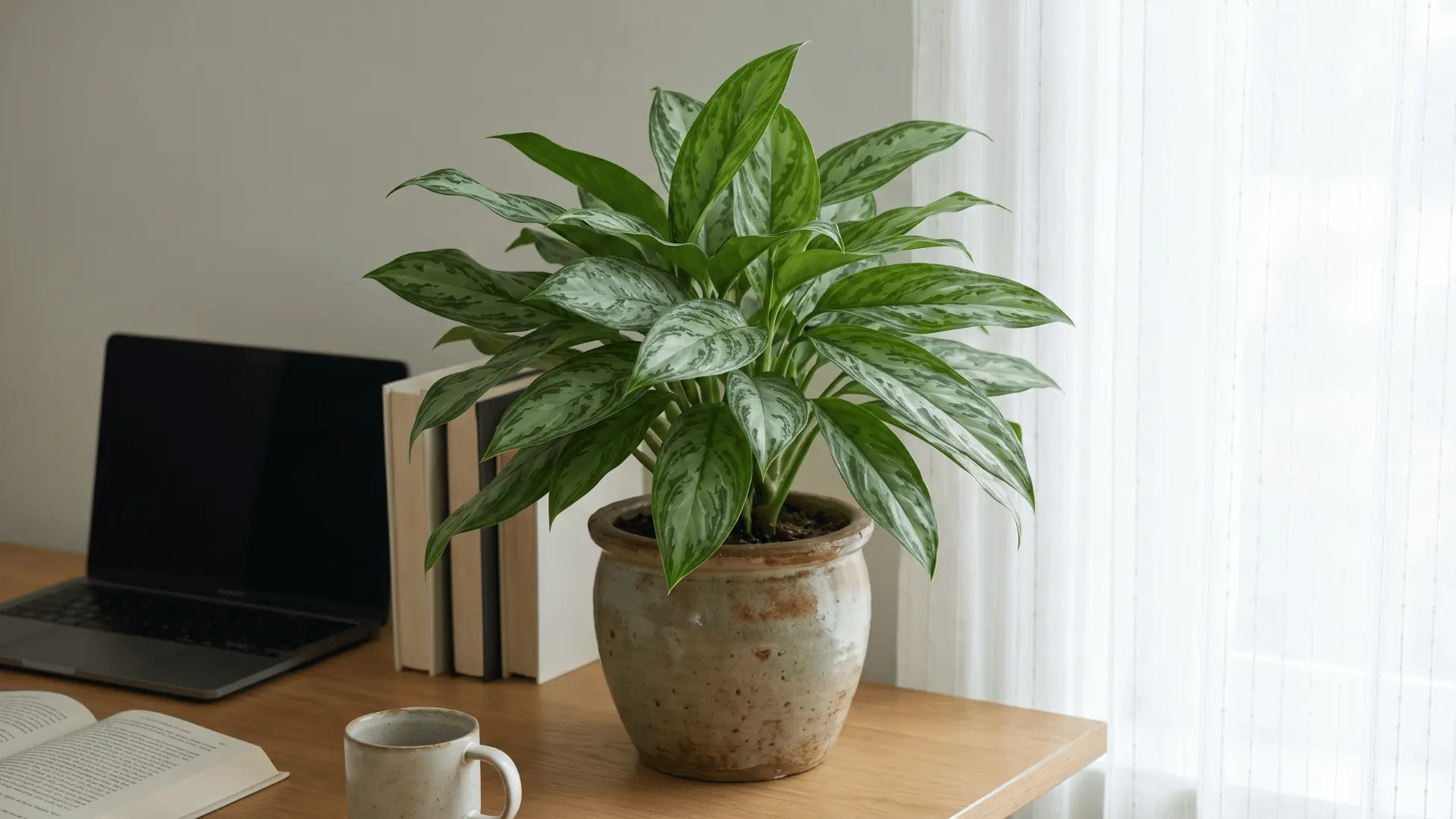
Chinese evergreen offers more foliage variation than many traditional low-light plants. Depending on the variety, its broad leaves feature silver, cream, pink, or red markings. Darker green cultivars are the safer choice for dimmer rooms, while colorful forms benefit from somewhat brighter conditions.
- Best placement: Offices, bedrooms, desks
- Growth habit: Compact, 1 to 2 feet tall
- Main advantage: Wide range of foliage colors without needing bright light
- Watch for: Sudden leaf spotting from cold drafts or AC vents
- Pet safety: Keep away from pets
7. Parlor Palm
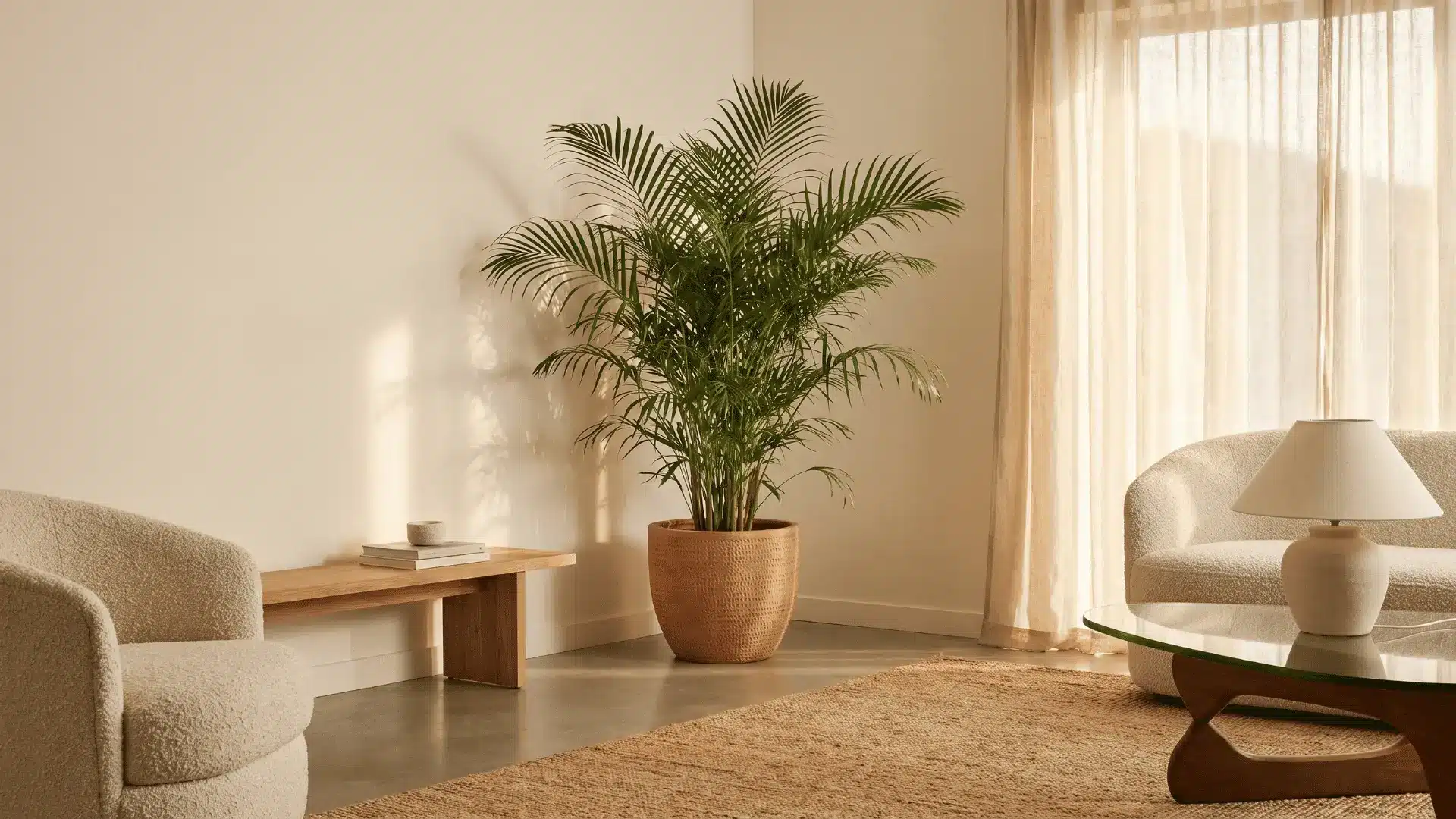
Parlor palms bring a softer, more tropical look than upright plants such as snake plants or ZZ plants. Their feathery, arching fronds add movement and height without needing direct sunlight, which makes them a natural pick when arranging your living room around a decorative floor plant. They’re also a better fit for households that want fewer pet-safety concerns.
- Best placement: Living rooms and bedrooms
- Growth habit: Upright with arching fronds, 2 to 4 feet tall
- Main advantage: Pet-friendly tropical appearance
- Watch for: Brown frond tips from low humidity
- Pet safety: Generally pet-friendly
8. Peace Lily
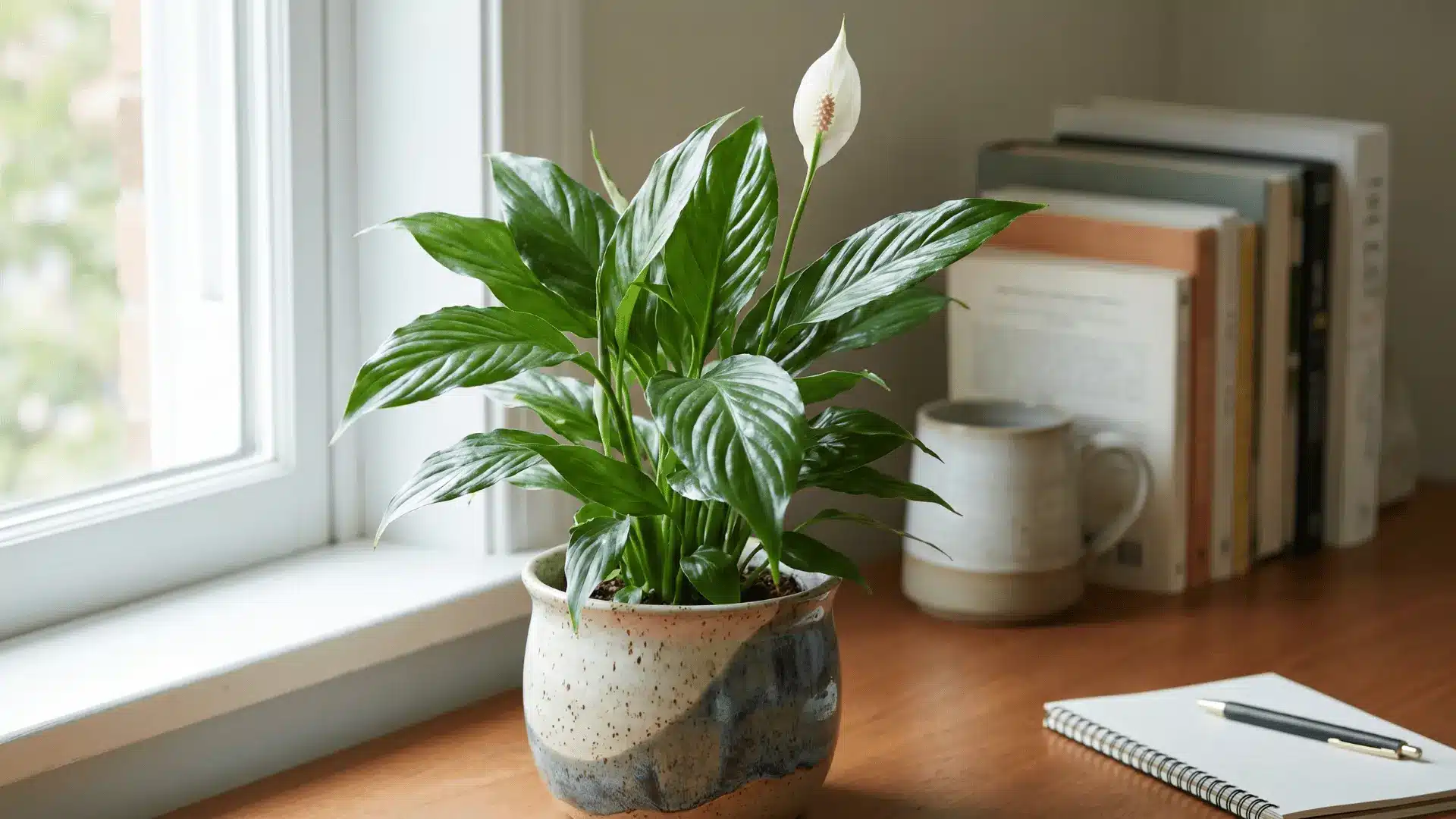
Peace lilies are often chosen for their glossy leaves and occasional white blooms, making them one of the few low-light plants that can still flower indoors. They remain attractive even when blooms are limited, so they still work well as foliage plants. Their leaves also droop visibly when thirsty, which makes moisture problems easy to notice.
- Best placement: Bathrooms and shaded living areas
- Growth habit: Clumping and upright, 1 to 3 feet tall
- Main advantage: Decorative foliage with potential blooms
- Watch for: Daily drooping, which means the pot is too small
- Pet safety: Keep away from pets
9. Lucky Bamboo
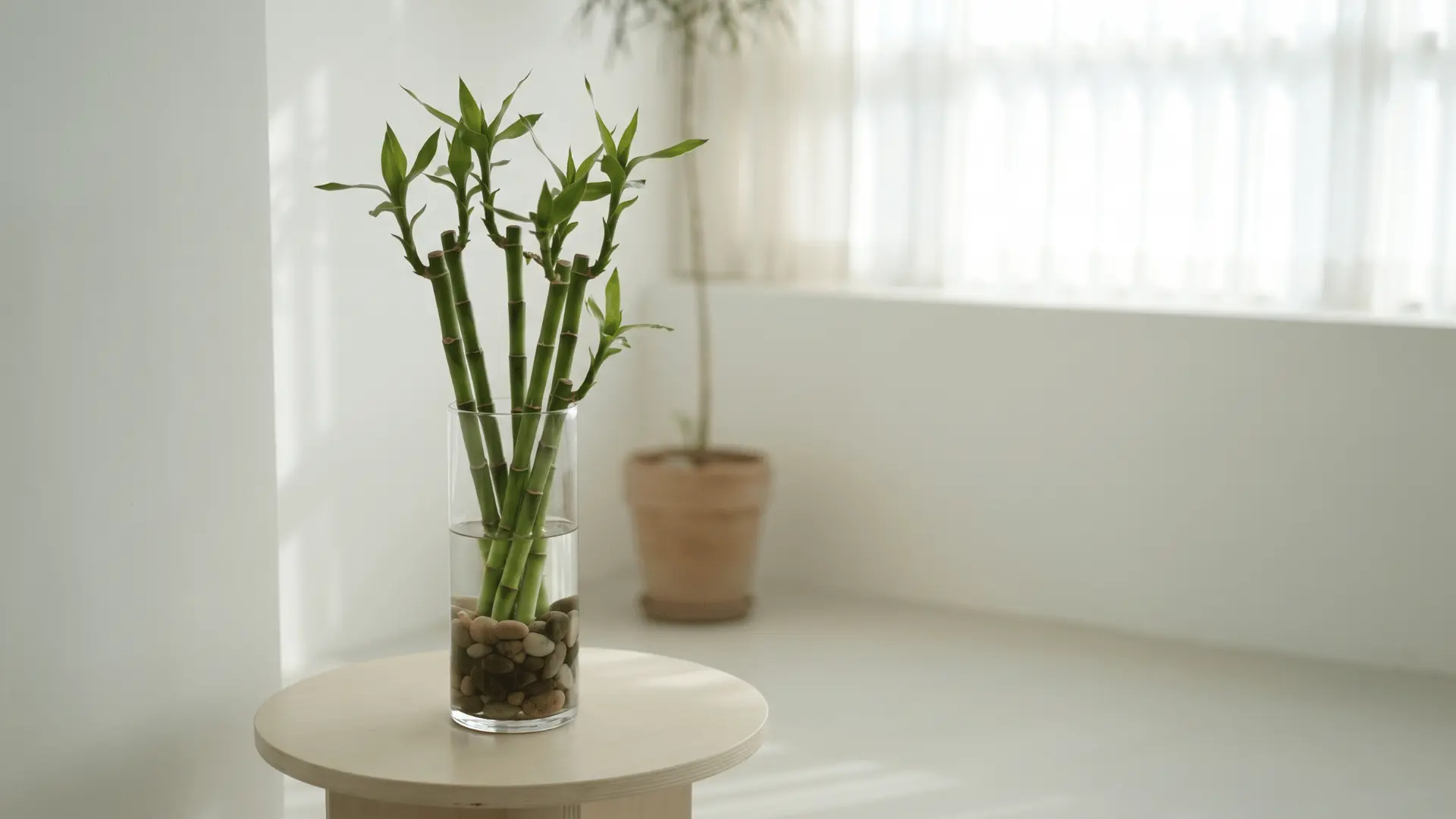
Lucky bamboo stands out because it can grow in water or soil, making it one of the more flexible compact plants. Its upright, segmented stalks are often twisted or braided, adding a decorative touch to small surfaces. Its compact shape makes it a natural fit for desks and other tight spaces.
- Best placement: Desks and tight spaces
- Growth habit: Upright, segmented, 1 to 2 feet tall
- Main advantage: Grows in either water or soil
- Watch for: Yellowing stalks from chlorinated water or too much direct sun
- Pet safety: Keep away from pets
10. Bird’s Nest Fern
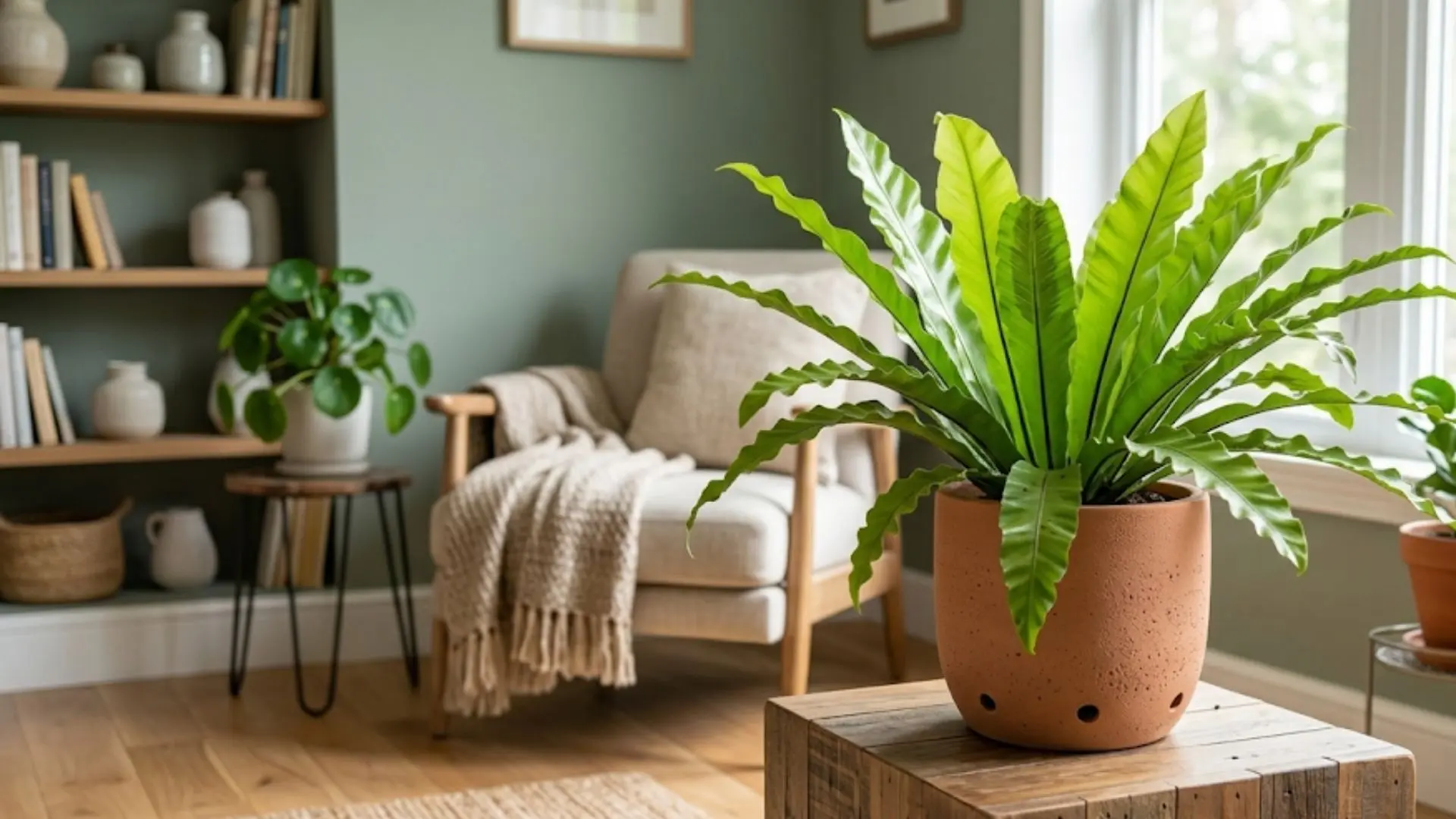
Bird’s nest fern gives a softer, more textured look than many common low-light plants. Its broad, wavy, apple-green fronds form a rosette and thrive in the humidity of a bathroom. It’s a good option for anyone wanting foliage variety beyond typical upright or trailing shapes.
- Best placement: Bathrooms and humid, shaded spots
- Growth habit: Rosette, spreading 1 to 2 feet wide
- Main advantage: Textured foliage that thrives on humidity
- Watch for: Brown, crispy edges from low humidity
- Pet safety: Generally pet-friendly
11. Nerve Plant
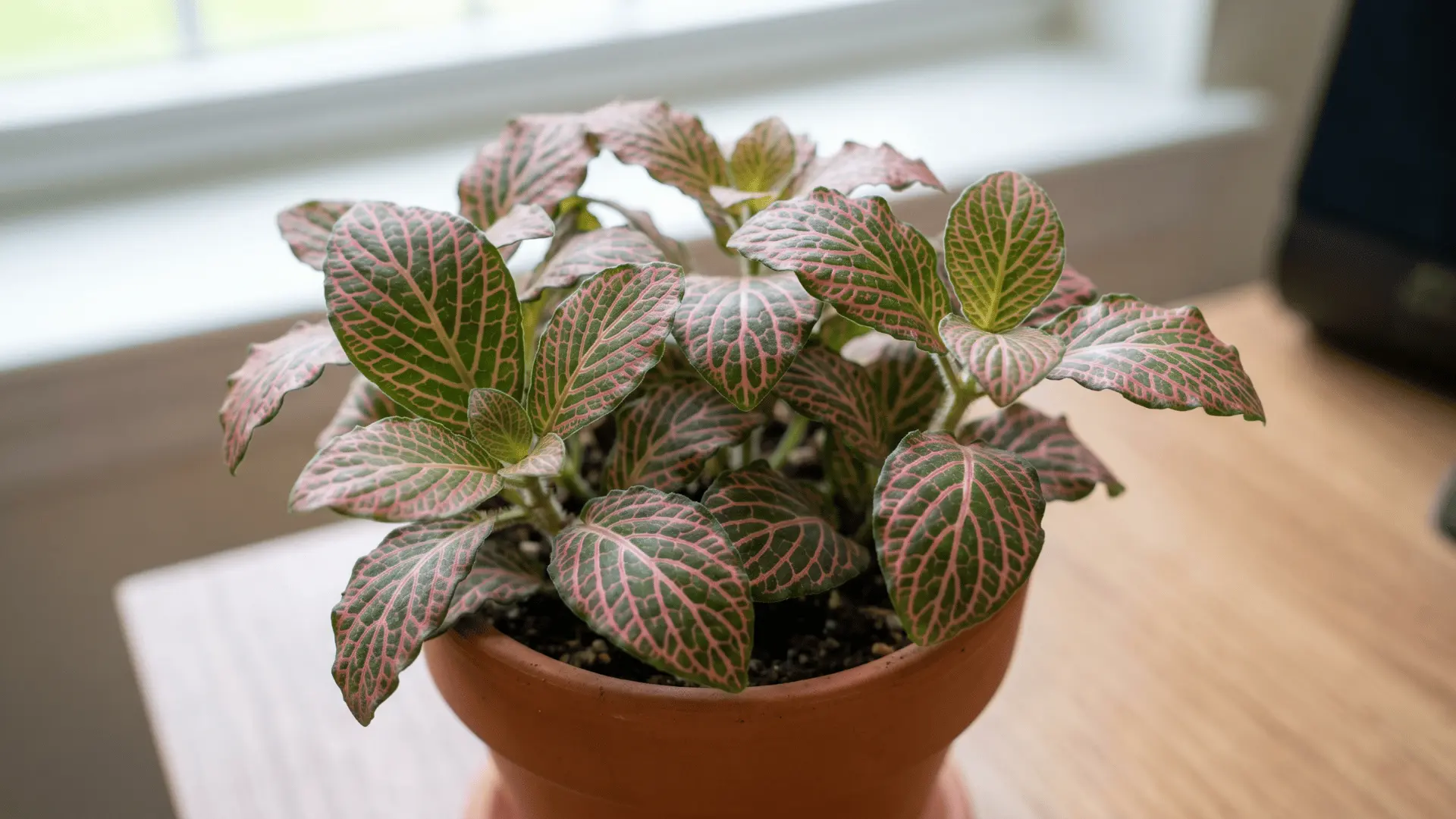
Nerve plant is grown primarily for its vividly veined leaves, which add pattern to small spaces where larger plants would feel crowded. It stays under 6 inches tall, making it easy to tuck onto a desk or shelf. It wilts quickly when dry, but usually recovers fast once watered.
- Best placement: Desks and small shelves
- Growth habit: Low-growing, under 6 inches tall
- Main advantage: Vividly patterned foliage in a small footprint
- Watch for: Frequent wilting, a sign it has outgrown its pot
- Pet safety: Generally pet-friendly
12. Spider Plant
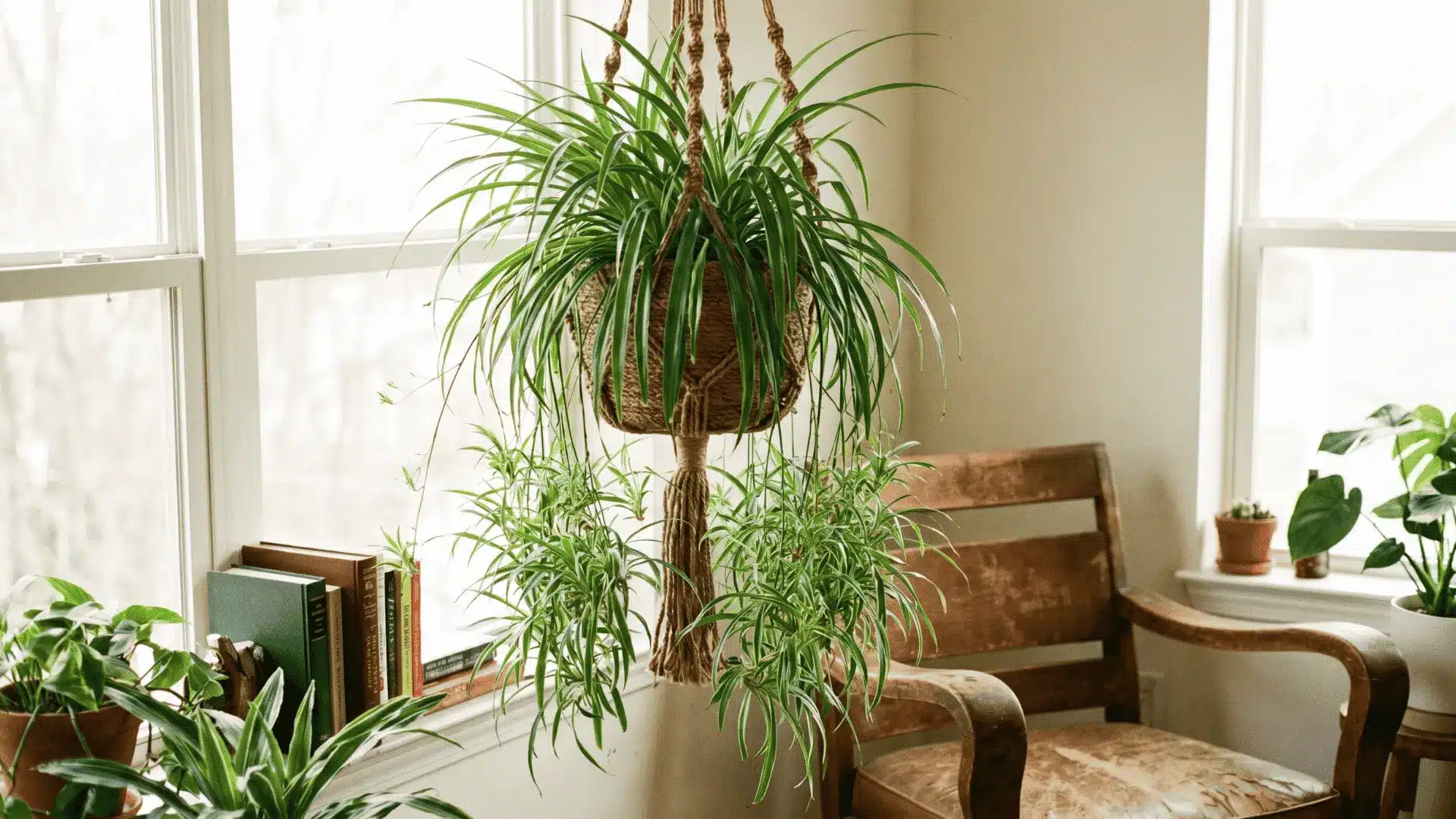
Spider plants are especially useful for hanging displays because their arching, grass-like leaves cascade outward and mature plants produce small plantlets on long stems. Those plantlets are easy to root, making spider plants simple to multiply. Their relaxed growth habit suits casual indoor spaces well.
- Best placement: Hanging baskets and high shelves
- Growth habit: Arching and spreading
- Main advantage: Produces easy-to-root plantlets
- Watch for: Brown leaf tips from fluoride or chlorine in tap water
- Pet safety: Generally pet-friendly
13. Arrowhead Plant
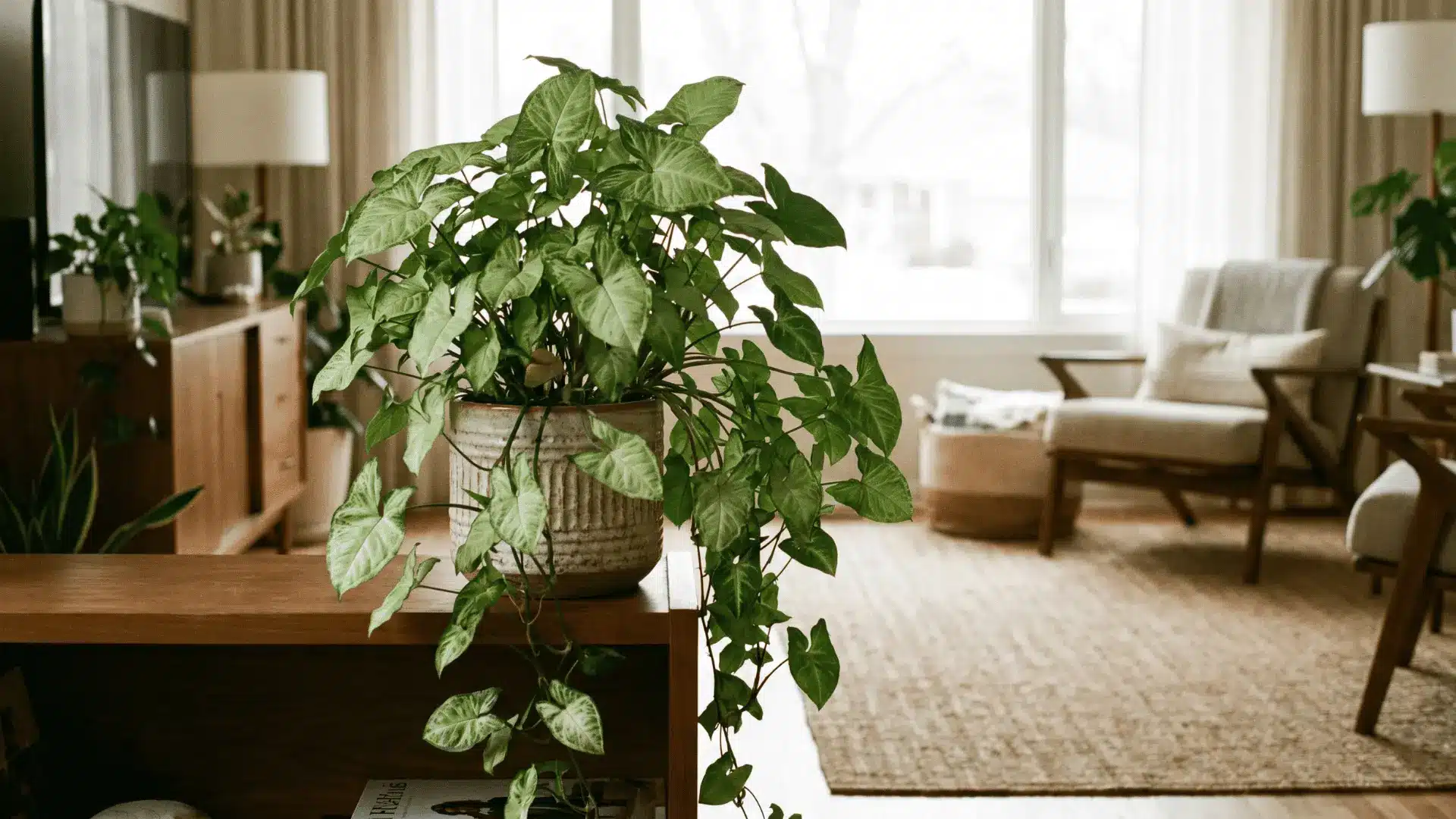
Arrowhead plant changes character as it matures. Young plants have neat, arrow-shaped leaves, while older plants gradually develop a trailing growth habit, giving it two distinct looks over time. This makes it adaptable for different displays without needing a different plant as it grows.
- Best placement: Tabletops, shelves, plant supports
- Growth habit: Compact when young, trailing later
- Main advantage: Two distinct looks across its life
- Watch for: Leggy growth with widely spaced leaves in low light
- Pet safety: Keep away from pets
14. Satin Pothos
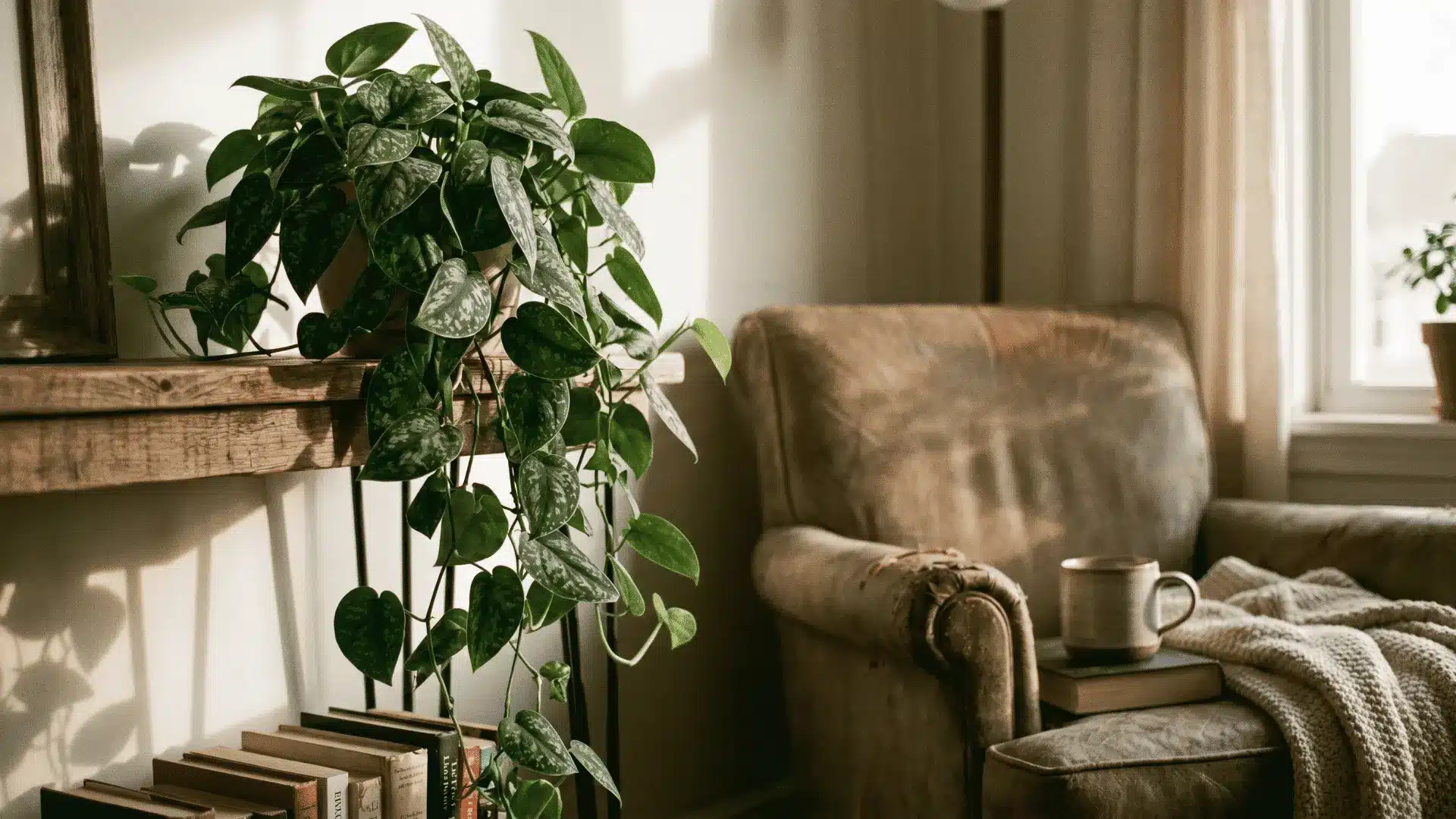
Satin pothos stands out for its silvery, almost metallic leaf markings, which give it a more decorative look than standard pothos even in dim rooms. Its trailing vines can reach 3 to 4 feet indoors, and the silver pattern stays most vivid in medium indirect light. It’s a good pick for anyone who wants texture beyond plain green foliage.
- Best placement: Shelves and hanging displays
- Growth habit: Trailing, 3 to 4 feet indoors
- Main advantage: Reflective, silvery foliage even in low light
- Watch for: Curling leaves, usually a sign of thirst rather than light
- Pet safety: Keep away from pets
15. Peperomia
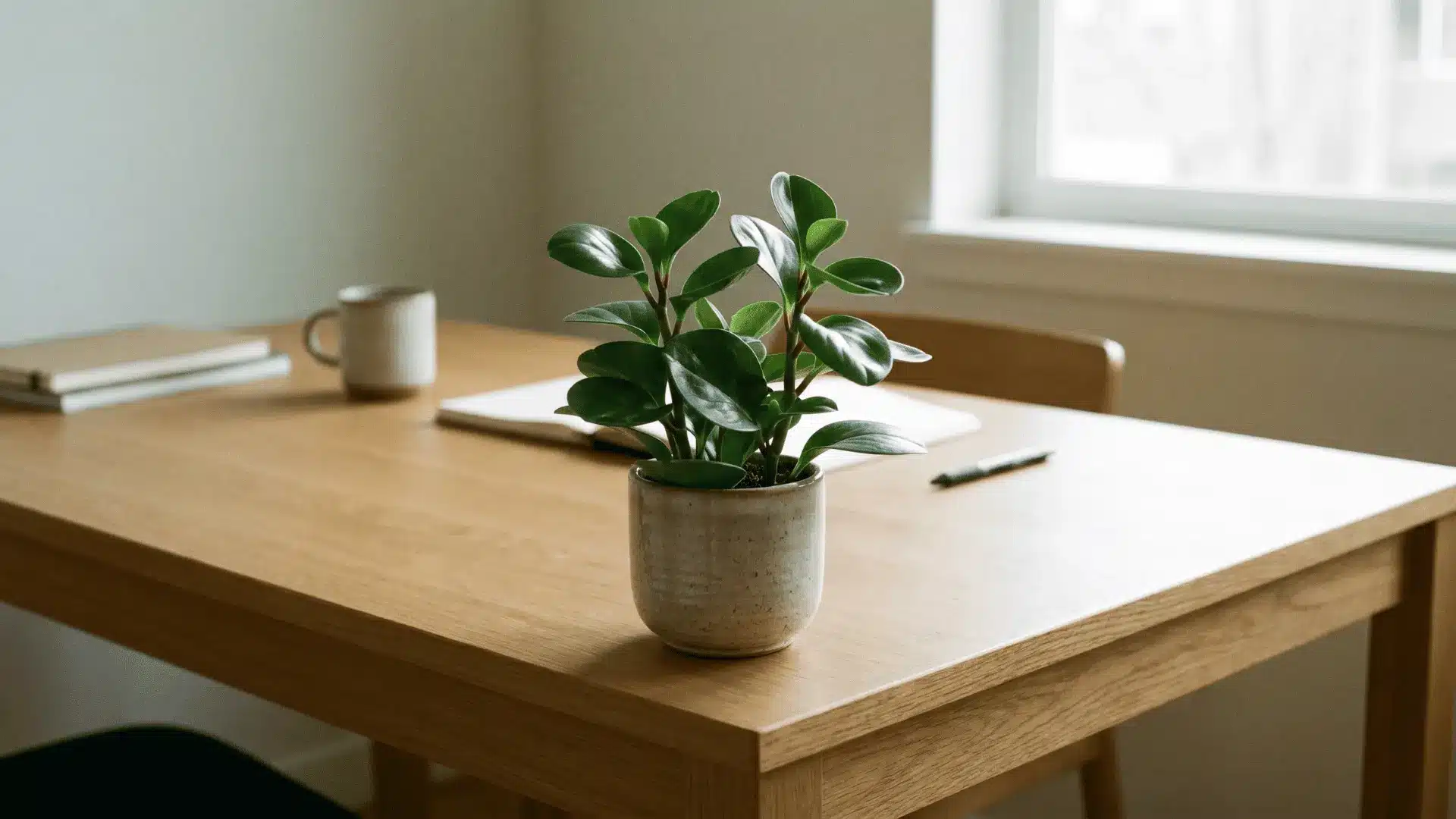
Peperomia is a good fit for small spaces thanks to its thick, glossy, rounded leaves and compact, bushy shape. Its succulent-like leaves store water, so it tolerates an occasional missed watering better than typical tropical houseplants. It’s best treated more like a succulent than a thirsty tropical plant.
- Best placement: Desks and small tabletops
- Growth habit: Compact and bushy, under 12 inches tall
- Main advantage: Stores water, so it tolerates missed waterings
- Watch for: Soft, mushy leaves from overwatering; wrinkled leaves from underwatering
- Pet safety: Generally pet-friendly
16. Janet Craig Dracaena
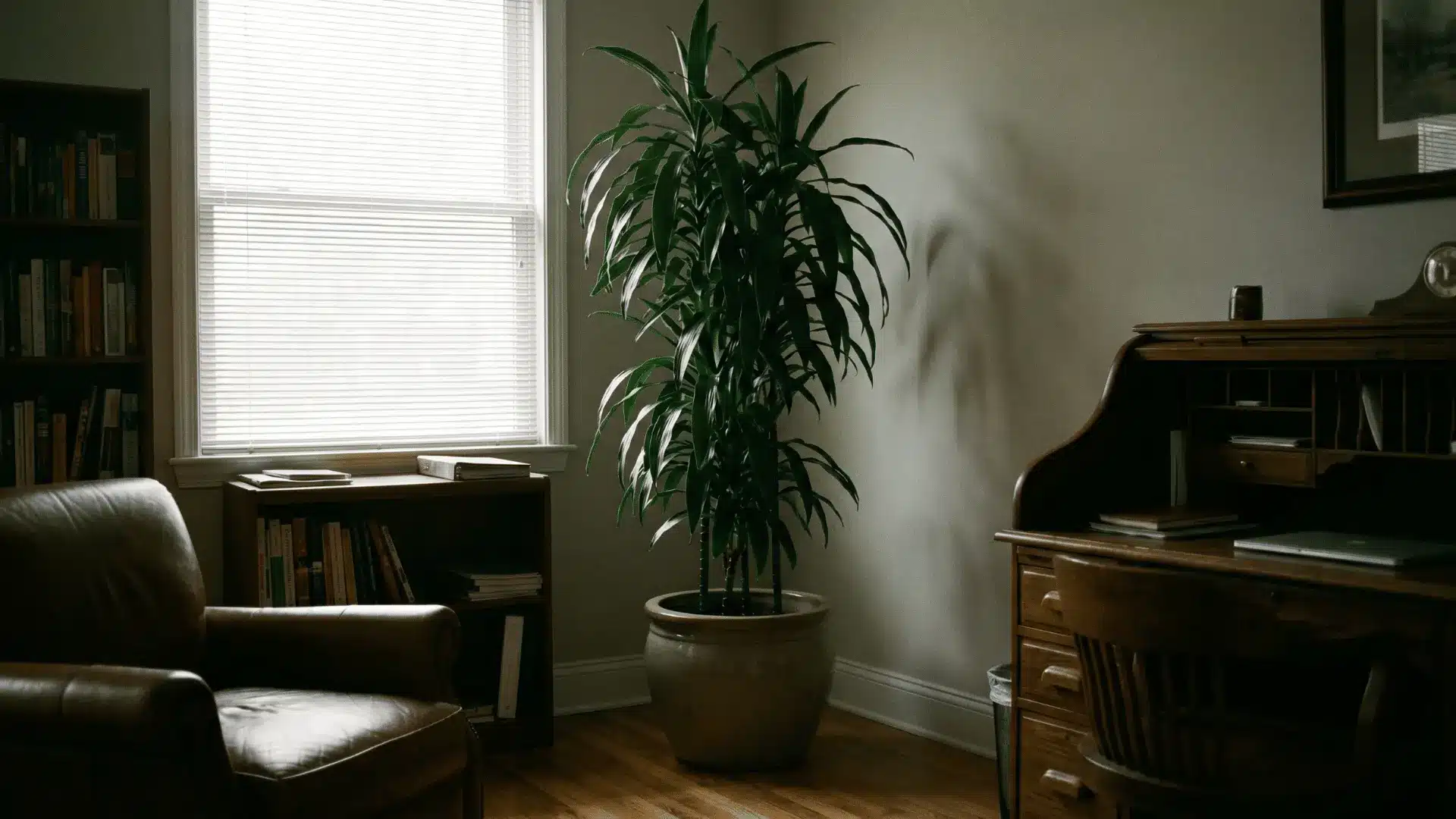
Janet Craig dracaena has been a favorite office plant for decades because of its clean, upright appearance.
If you are searching for large plants that don’t need sunlight, it is one of the better choices for rooms with limited indirect light, although it still needs some usable light to stay healthy. Its long, dark green leaves grow from sturdy canes and can reach 3 to 6 feet indoors.
- Best placement: Offices and corners needing a taller plant
- Growth habit: Upright canes, 3 to 6 feet tall
- Main advantage: Professional look; handles low humidity well
- Watch for: Brown leaf tips from fluoride in tap water
- Pet safety: Keep away from pets
How to Care for Plants in Low Light
Plants use water and nutrients more slowly when photosynthesis slows. That means low-light care should usually be more conservative than care for the same plant beside a bright window.
- Check soil before watering: Do not water simply because a certain number of days have passed. Feel the soil and consider the needs of the individual plant.
- Avoid constantly wet roots: Water evaporates more slowly in darker rooms. Good drainage becomes especially important because wet soil can remain saturated for longer.
- Feed lightly: Plants growing slowly need less fertilizer. Heavy feeding cannot compensate for poor light and may contribute to salt buildup in the potting mix.
- Keep foliage clean: Dust reduces the amount of light reaching leaf surfaces. Wipe broad leaves gently when visible dust begins to collect.
- Rotate when necessary: Plants often lean toward the nearest window. Turning the pot periodically can encourage more balanced growth.
- Watch seasonal changes: A location that receives enough light in summer may become considerably darker during shorter winter days.
Matching care to slower growth helps prevent more problems than following a rigid watering or feeding schedule.
Final Thought
Low-light spaces can support healthy houseplants when you choose varieties that match the conditions instead of forcing a sun-loving plant to adapt.
The best indoor plants for low light include tough options for dim corners, compact choices for desks, trailing plants for shelves, and pet-friendly varieties for shared spaces.
I’d also pay close attention to watering because plants use moisture more slowly when light is limited. You do not need a complicated routine.
Give each plant enough usable light, check the soil before watering, and watch how its leaves respond over time. Start with one plant that suits your room, try these care tips, and share which low-light variety works best in your home.
Frequently Asked Questions
Which indoor plants are best for rooms with very little light?
ZZ Plants, Snake Plants, and Cast Iron Plants are among the better choices for genuinely dim rooms. They tolerate limited light better than many common houseplants, although they still need some ambient or artificial light.
Can low-light plants grow in a room with no windows?
Not indefinitely without another light source. A windowless room needs supplemental grow lighting to provide the energy plants require. ZZ Plants and Snake Plants are practical choices when artificial light is available.
How often should I water a low-light indoor plant?
There is no single schedule because watering depends on the plant, pot, soil, room temperature, and available light. Check the soil before watering, and let it dry to the level appropriate for that species.
Why are my low-light plant leaves turning yellow?
Yellow leaves often point to overwatering, especially when the soil remains damp for long periods. Check the soil before watering and make sure the pot drains excess water properly.