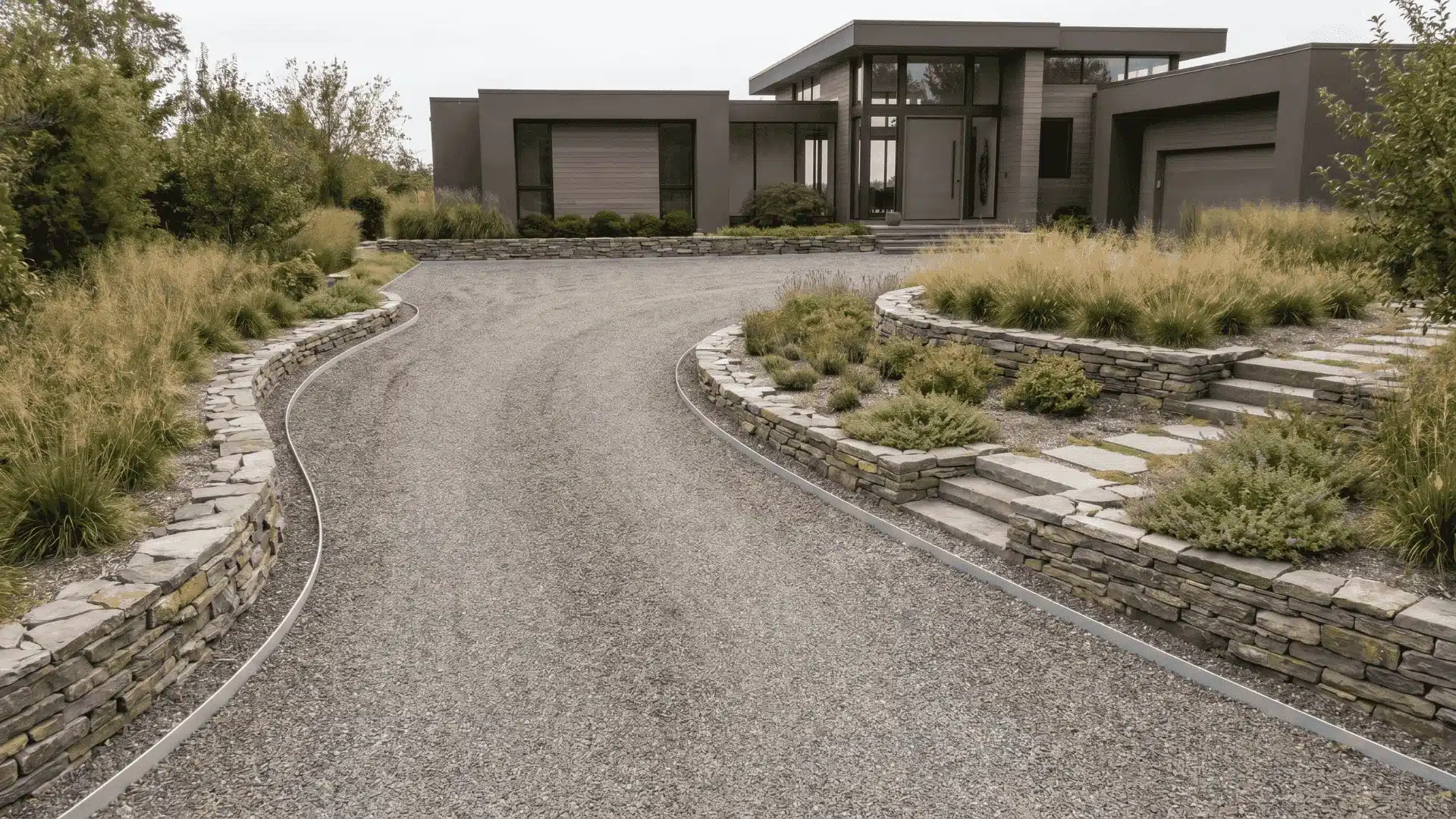
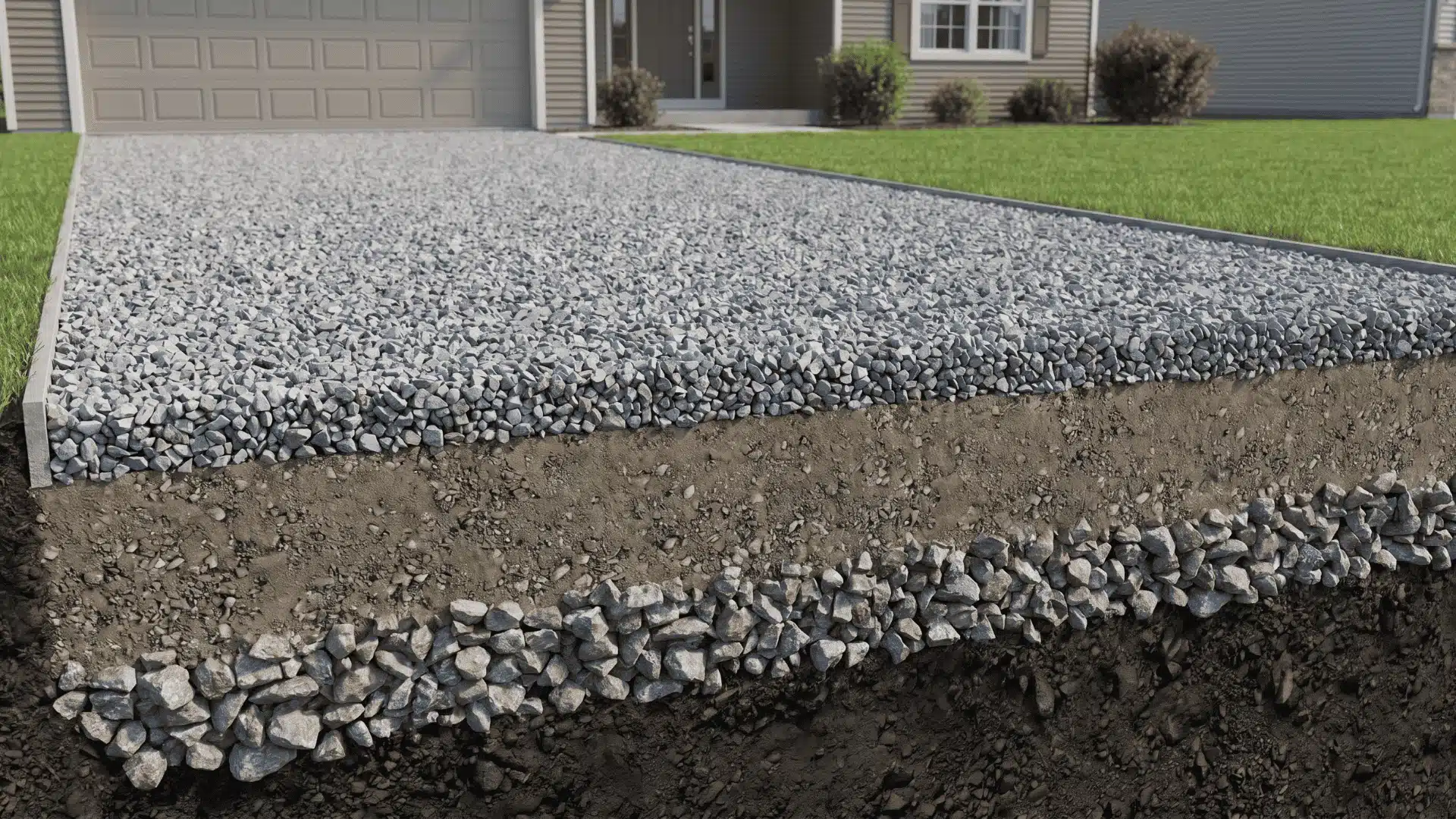



Choosing the best gravel for driveway projects is not just about picking the stone that looks clean or costs less. Some gravel locks together and holds firm under cars, while other types shift, roll, and leave ruts after rain.
The real difference comes from stone shape, layer depth, drainage, and how well the base is prepared before the top layer goes down.
I will help you understand which gravel works for each layer, what to avoid, and how to choose based on slope, budget, and traffic.
First, let us look at why gravel type matters more than size.
Why Gravel Type Matters More than Gravel Size?
Particle shape matters more than size. Angular crushed stone locks together under vehicle weight, while smooth, rounded stone shifts instead.
The difference becomes clear once vehicles start driving over it. Angular stone spreads the load across the surface as its jagged edges press together.
Rounded stones like pea gravel and river rock roll instead, creating ruts over time.
Size still matters, but it comes second. Even the right-sized stone won’t perform well if its shape can’t interlock. Compaction also depends on fines.
Those fine particles fill the gaps between larger pieces and, with pressure and moisture, help bind the gravel into a firmer surface. Without them, the gravel stays loose.
This matters even more on slopes. Angular stone resists sideways movement, while smooth stone gradually shifts downhill. Edging helps contain the gravel, but it can’t stop that movement on its own.
Choose shape first, then choose size. I’ve found that’s what gives a driveway the best chance of staying stable over time.
What’s the Best Gravel for Driveway Projects?
For most driveways, crushed limestone or granite built in three layersis the best gravel for driveway projects: coarse angular stone for the base, crusher run for the binder layer, and clean crushed stone (or more crusher run on a slope) for the surface.
That combination handles daily vehicle weight, drains rainwater instead of pooling it, and resists the sideways shifting that ruins pea gravel and river rock driveways within a season.
Recycled crushed concrete is a solid budget swap that performs almost the same. The wrong pick, in nearly every case, is anything rounded.
The table below breaks it down by situation, since the “best” gravel changes depending on which layer you’re filling, your budget, and whether the driveway sits on a slope.
| Situation | Best Gravel | Why It Works |
|---|---|---|
| Overall best for most driveways | Crushed limestone with a three-layer system | Strong, durable, drains well, and compacts into a stable surface. |
| Base layer | 1.5 to 3-inch crushed stone | Creates a stable foundation and allows water to drain beneath the driveway. |
| Binder layer | Crusher run | Stone dust fills gaps and locks the surface together after compaction. |
| Surface layer | #57 clean crushed stone (flat driveways) or crusher run (sloped driveways) | Clean stone drains well on flat surfaces, while crusher run resists movement on slopes. |
| Budget option | Recycled crushed concrete | Offers similar performance to crushed limestone at a lower cost. |
| Avoid | Pea gravel or river rock | Rounded stones don’t interlock, causing ruts, shifting, and frequent maintenance. |
- Most driveways: Crushed limestone, built in three layers
- Sloped driveways: Crusher run as the surface layer, not clean stone
- Tight budget: Recycled crushed concrete
- Avoid entirely: Pea gravel or river rock anywhere a vehicle drives
If you’re building a new driveway from scratch, this is almost always the winning combination: coarse stone for drainage at the base, crusher run for strength in the middle, and clean crushed stone on top for the surface you actually drive on.
That layering is what gives the best balance of stability, drainage, and long-term durability.
What Goes in Each Layer of a Gravel Driveway?
A gravel driveway isn’t made from just one type of gravel. It’s built in three layers, and each one has a different job.
Get the right material in each layer, and the driveway stays stable for years. Mix them up, and you’ll likely run into problems much sooner than expected.
1. Base Layer: What Coarse Stone Actually Does
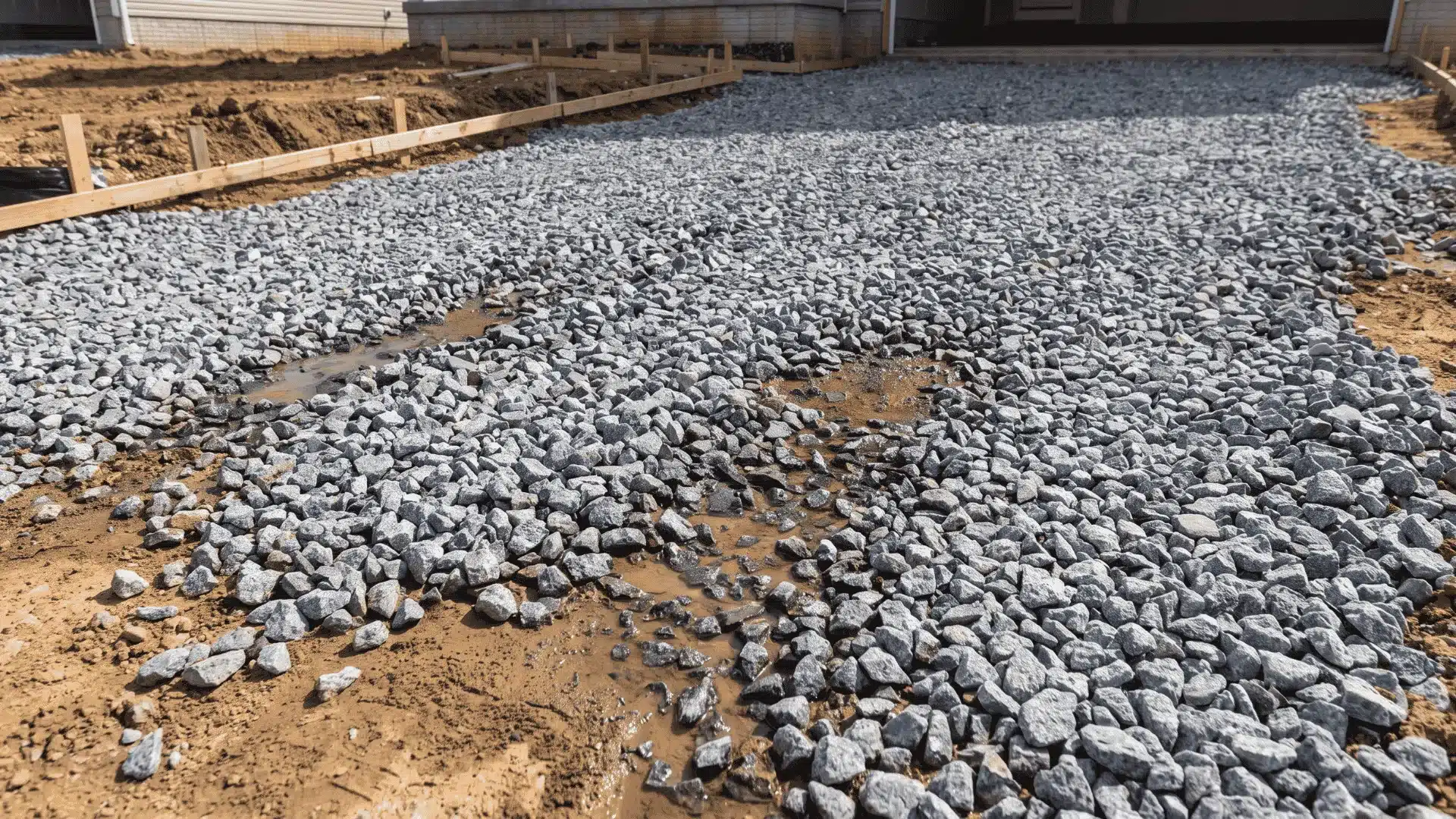
The base layer supports the entire driveway. It sits directly on the soil and keeps the surface from sinking, shifting, or developing deep ruts.
Its job is to:
- Support the load: Large crushed stone spreads vehicle weight across a wider area, reducing pressure on the soil.
- Improve drainage: Stones about 1.5 to 3 inches wide leave spaces for water to drain rather than collect underneath.
- Protect the soil: Better drainage helps keep the subgrade firm after rain.
- Suit the site: Clay soils usually need a deeper base because they hold water, while sandy, well-drained soils often need less.
A strong base supports every layer above it. If it fails, even the best surface gravel won’t stop the driveway from settling or rutting.
2. Binder Layer: Why Crusher Run Compacts Differently
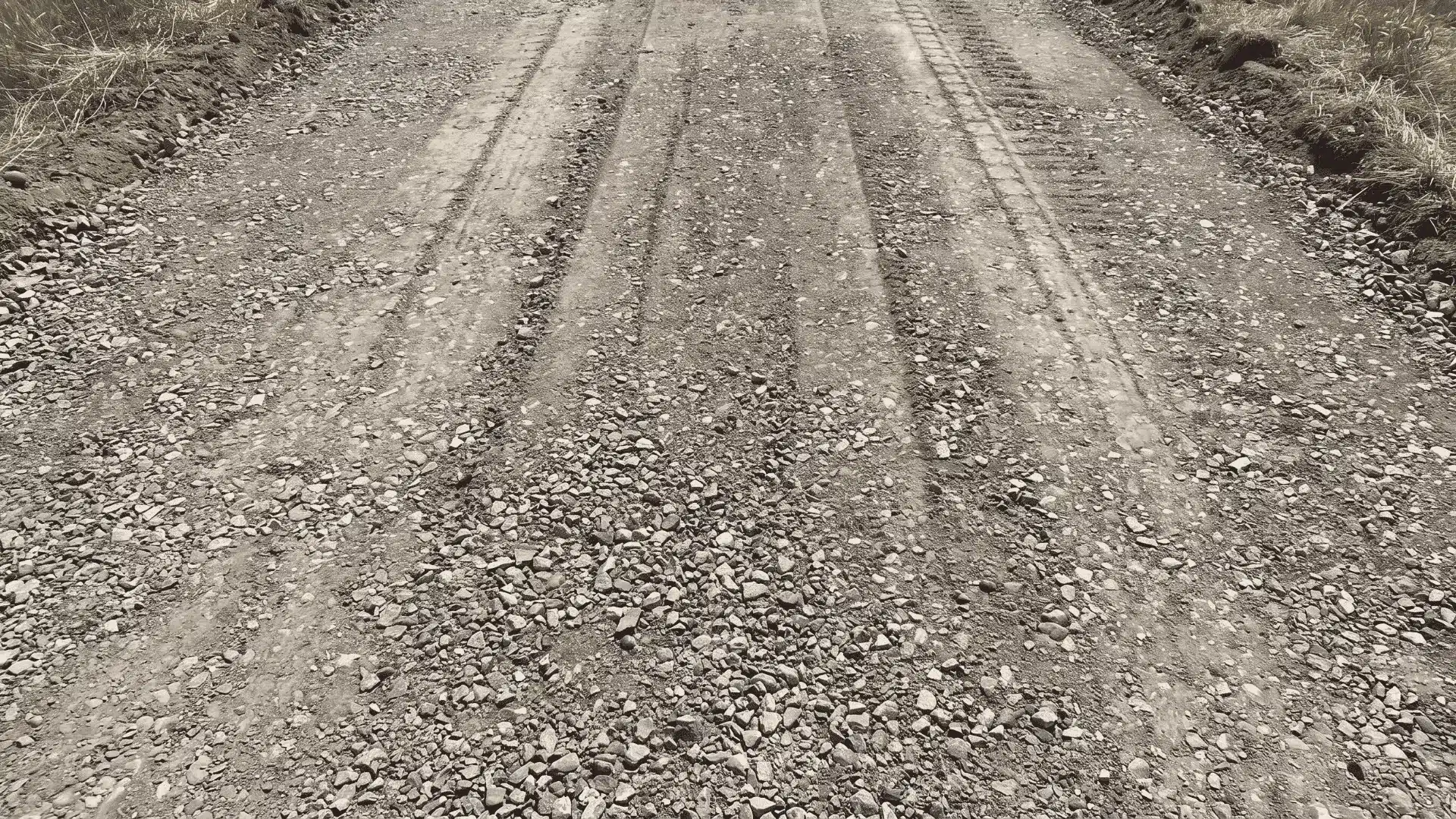
The binder layer is what gives a gravel driveway its strength. Skipping it may save money upfront, but it often leads to ruts, potholes, and washouts much sooner.
Its job is to:
- Lock the gravel together: Crusher run combines crushed stone with fine stone dust that fills the gaps between larger pieces.
- Create a firm layer: When compacted, moisture helps the fines bind the material into a dense, stable surface.
- Reduce movement: The compacted layer keeps the gravel from shifting under vehicle traffic.
- Limit washouts: A tightly packed layer is more resistant to erosion during heavy rain.
Without a binder layer, clean crushed stone stays loose because nothing fills the gaps between the rocks. That makes the driveway less stable and causes it to wear out faster.
In the driveways I’ve inspected after just a year or two of problems, a missing or too-thin binder layer is almost always the reason for the potholes.
3. Surface Layer: Why Clean Stone Works on Top
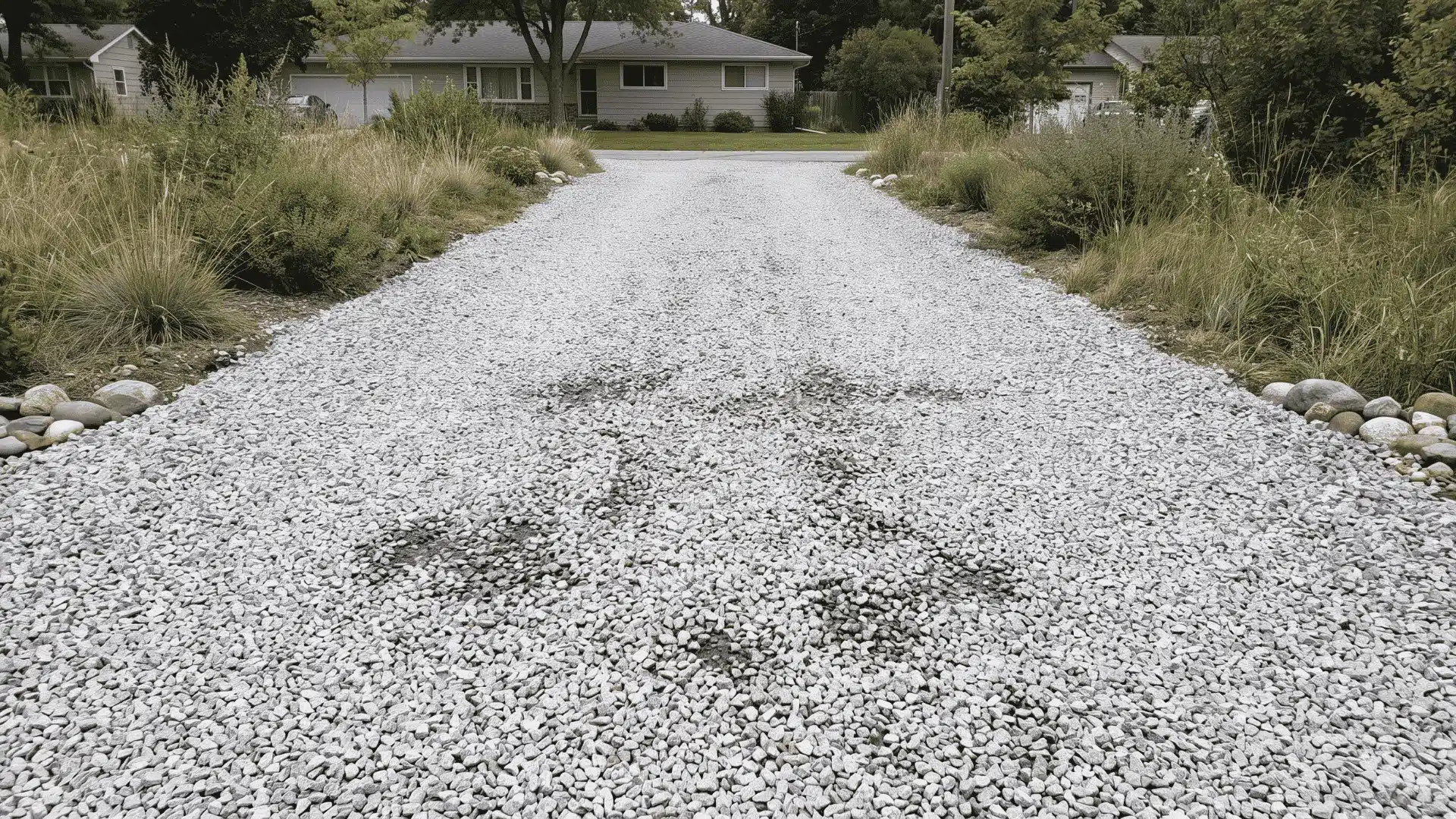
The surface layer is the part of the driveway you drive on every day. Its main job is to provide good traction while allowing rainwater to drain quickly without damaging the layers underneath.
Its job is to:
- Drain water efficiently: Clean crushed stone, typically ½ to 1 inch in size, allows water to pass through rather than pool on the surface.
- Stay stable under traffic: The angular edges interlock well enough to reduce shifting and rutting from vehicle tires.
- Protect the binder layer: Because it contains no fines, rainwater won’t wash binding material out of the layer below.
- Provide a durable driving surface: A properly sized clean stone balances drainage with enough stability for everyday vehicle use.
The surface layer performs well only when the base and binder layers are properly built. Even the best surface gravel will rut if the foundation underneath isn’t strong enough.
Which Gravel Works for Specific Situations?
The three-layer system is the foundation.
But most driveways have at least one complicating factor: a slope, a tight budget, or light enough use that the full system feels like overkill; the material answer shifts in each case.
If you’re also planning a gravel path through a nearby garden bed, our garden landscaping ideas guide has more low-maintenance surface options.
1. Sloped Driveways
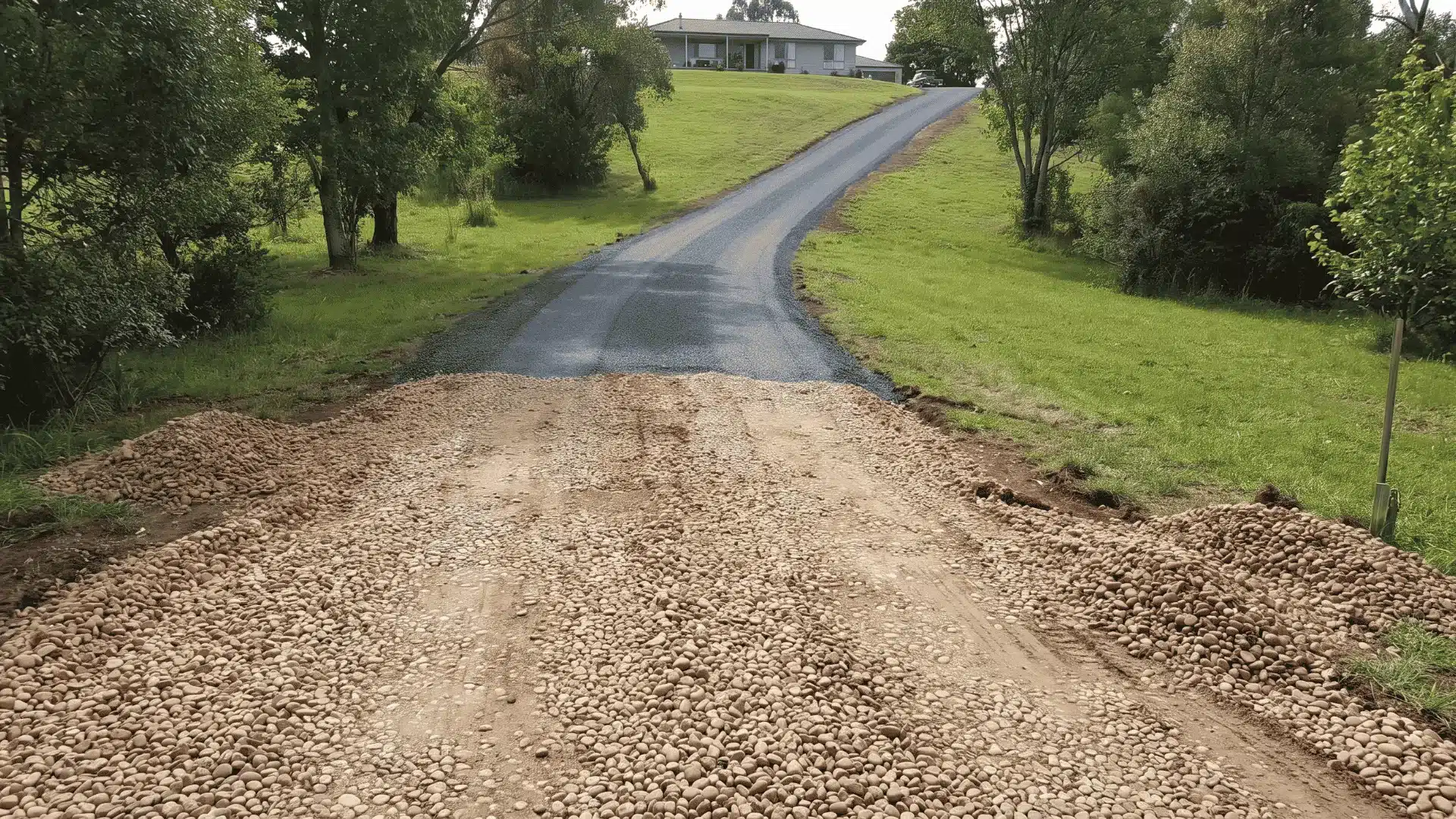
On a flat driveway, #57 clean stone works well as a surface layer. On a slope, it doesn’t, and this is where a lot of driveways go wrong.
Clean stone has no fines to bind it. On flat ground, interlocking edges hold the surface together. On a slope, gravity adds a lateral force that interlocking alone can’t resist.
The stone migrates downhill, slowly at first, then faster after rain.
Crusher run is the right surface material on any meaningful incline. The bound fines hold the particles in place against that sideways pressure. It compacts into a surface that stays put.
2. Budget Alternatives
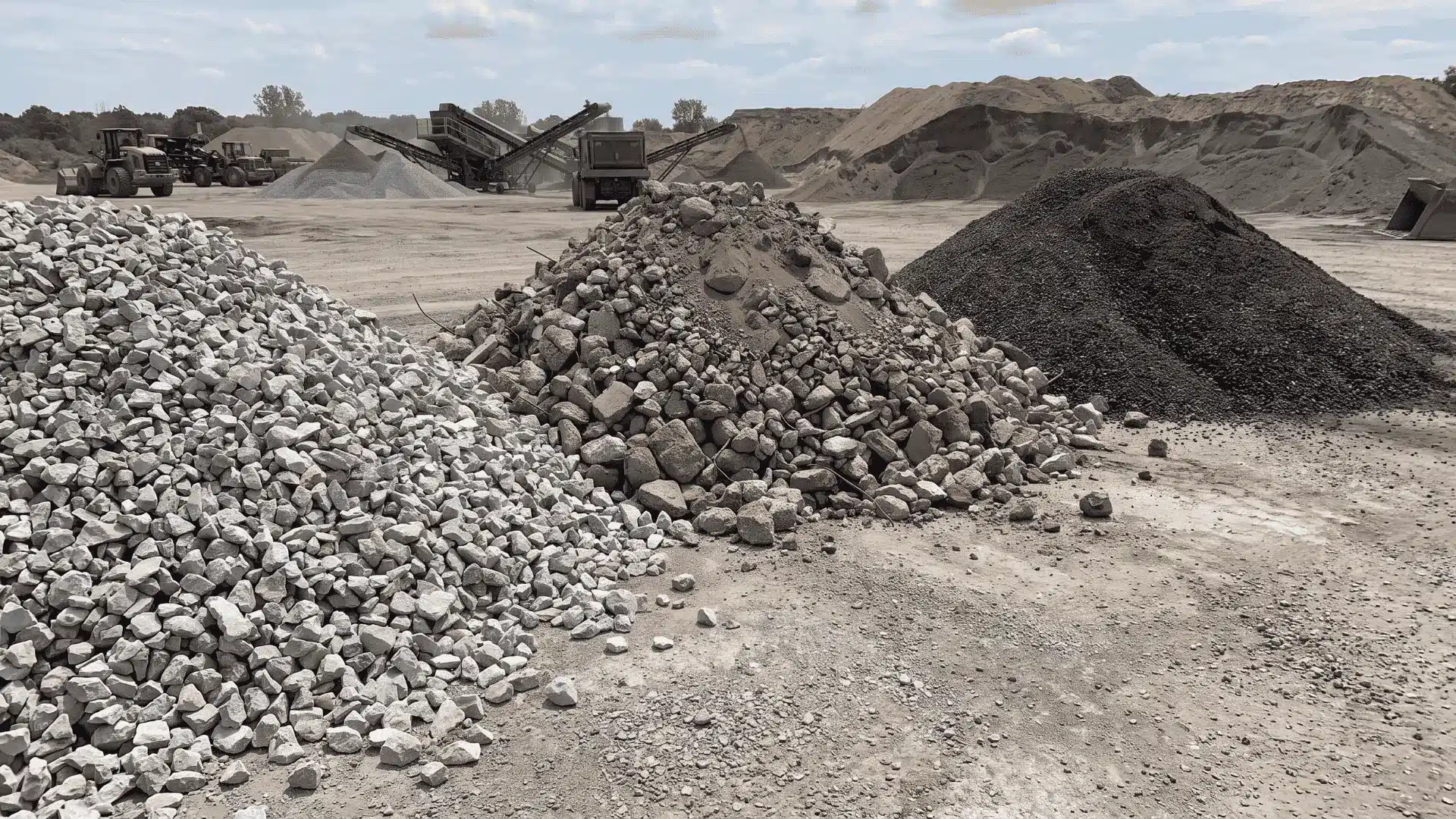
Recycled crushed concrete performs close to virgin limestone at a lower price point. The particle shape remains angular; it breaks the same way, so it compacts and drains properly.
It’s a legitimate choice for any layer, not just a compromise.
The same logic of picking a material for durability over looks applies elsewhere outdoors, like when choosing the best wood for outdoor furniture.
Crushed asphalt millings work differently. On hot days, residual bitumen in the material partially re-bonds. That makes it surprisingly durable as a surface layer on lightly used driveways.
Won’t perform like a full three-layer build, but it holds up better than most budget options.
3. Light-Use and Short Driveways
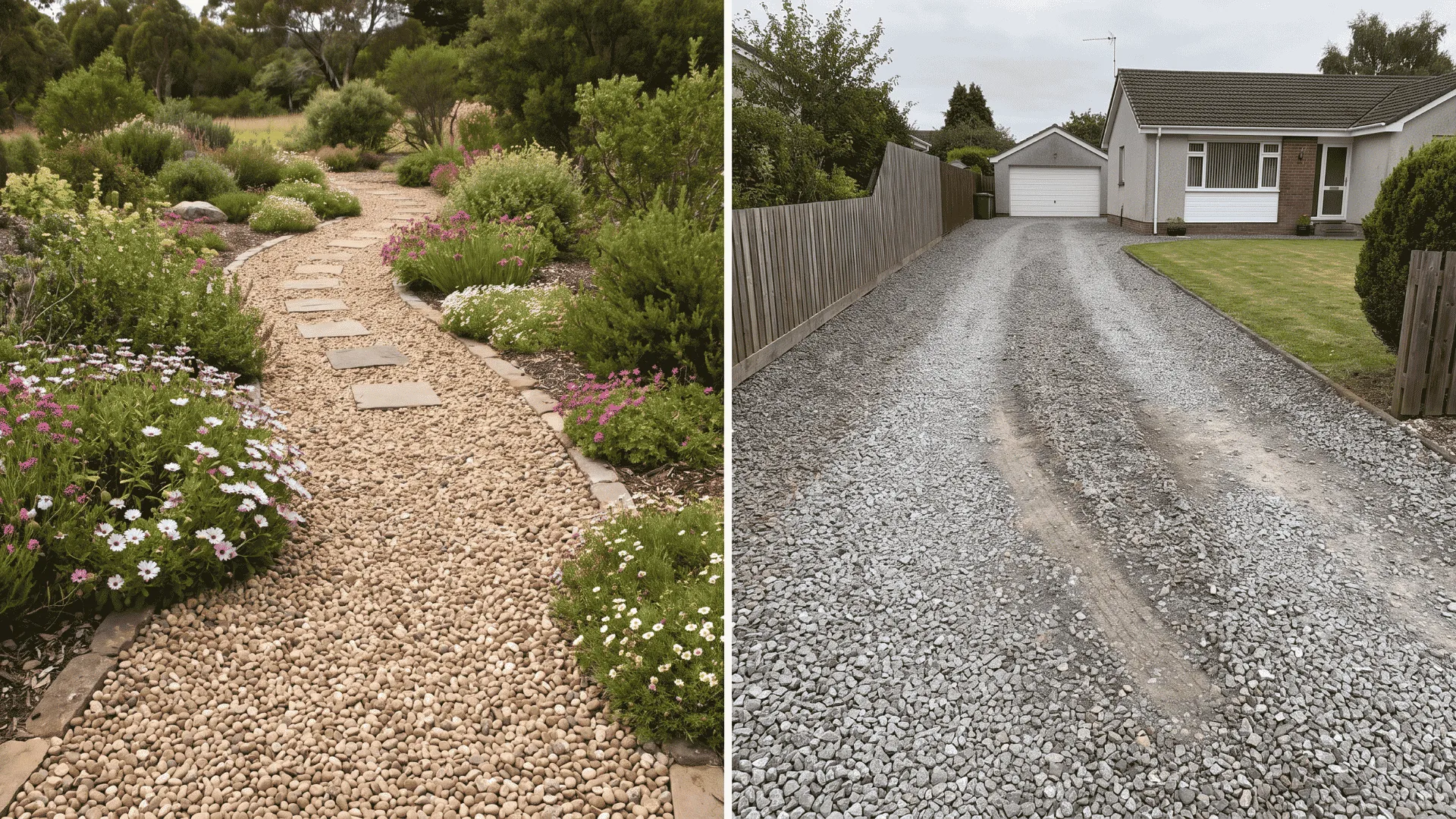
Pea gravel comes up often here because it’s affordable and easy to source. It isn’t a viable vehicle surface regardless of how short the driveway is or how well itit’sdged.
The problem is the shape. Smooth, rounded particles cannot interlock. Every pass of a tire pushes them aside.
Edging contains the spread but doesn’t change what happens underneath the tire. For foot-traffic paths, pea gravel works fine. For anything a car touches regularly, it won’t hold.
How Much Gravel Should You Order?
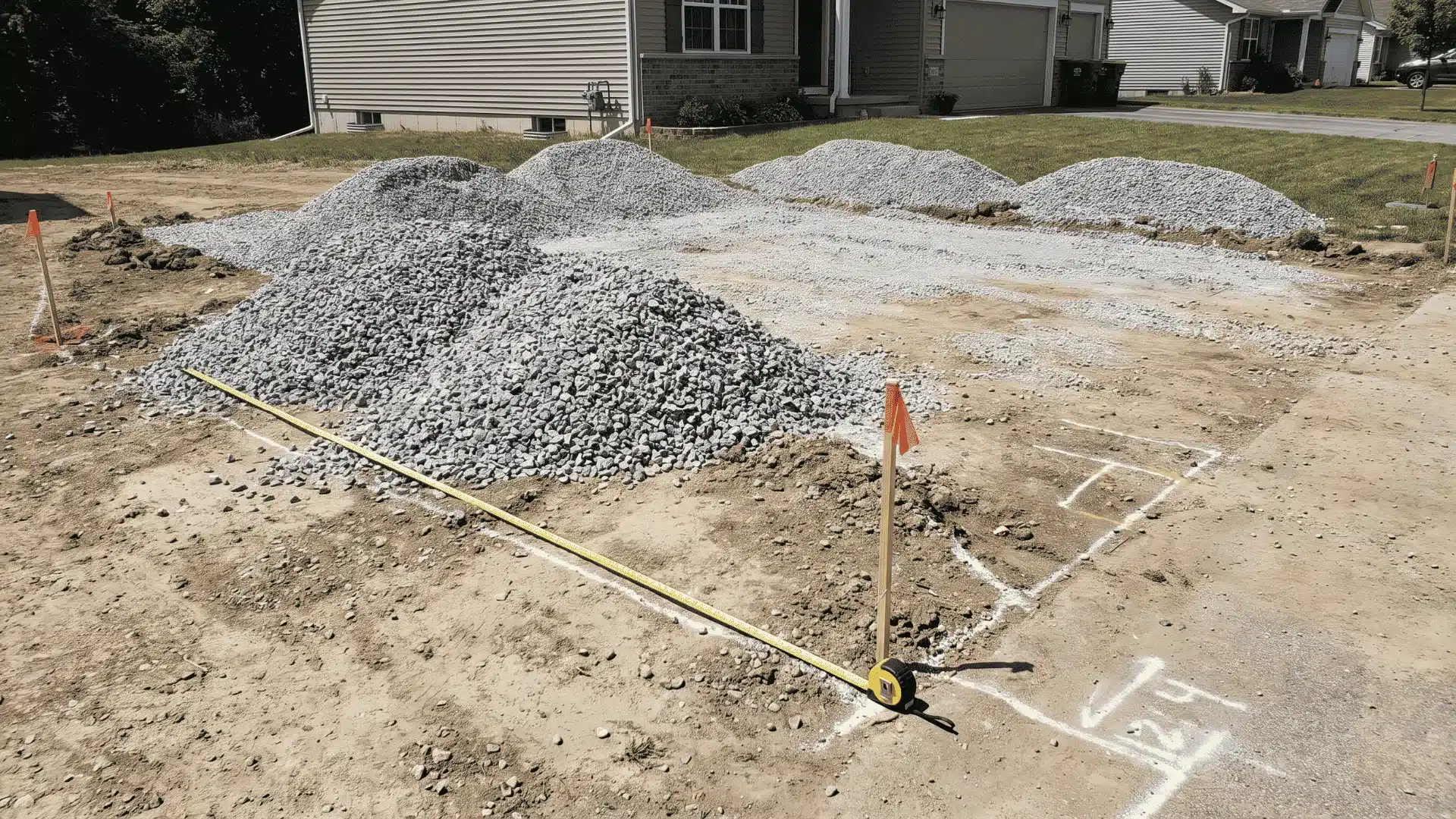
Ordering the right amount of gravel is just as important as choosing the right type. Basic calculations are easy, but they don’t tell the whole story.
- Measure your space: Record the driveway’s length, width, and planned depth, then run the numbers through a supplier’s gravel calculator to convert to tons.
- Add for compaction: Gravel settles after installation, often losing 20 to 25 percent of its depth, so order more than the raw calculation suggests.
- Confirm the stone type: Limestone and granite are priced differently per ton, so get a rate for the exact material you’re ordering.
- Check delivery cost: A nearby supplier can save hundreds of dollars in hauling fees compared to one farther away.
Conclusion
The best gravel for driveway projects depends on more than the top layer you see every day.
A strong driveway starts with a stable base, a compacted binder layer, and a surface stone that fits your slope and traffic.
Angular gravel is usually the safer choice because it locks together instead of rolling away under tires. I would also think about drainage before appearance, since water causes many gravel driveway problems.
Before ordering, measure carefully, compare local suppliers, and ask for prices by layer instead of buying one mixed load.
Which gravel type are you considering for your driveway? Tell us, share with us in comments below.
Frequently Asked Questions
What Kind of Gravel Hardens Like Concrete?
Crusher run comes closest. It’s a mix of crushed stone and fine stone dust. When you compact it and it gets wet, the dust bonds between the larger particles and cures into a semi-rigid surface. It doesn’t literally harden like concrete, but under load it behaves similarly; it resists rutting and feels nearly solid underfoot.
How Deep Should a Gravel Driveway Be?
A typical gravel driveway is about 4 to 8 inches deep, depending on soil conditions and vehicle traffic. Clay soils usually need a deeper base since they hold water, while sandy, well-draining soil can get by with less. Most long-lasting driveways use separate base, binder, and surface layers rather than a single gravel layer.
How Often Does a Gravel Driveway Need New Gravel?
Most gravel driveways need a fresh surface layer every few years, depending on traffic, weather, and drainage. If you notice ruts, bare spots, or loose stone spreading toward the edges, it is usually time to add and compact new gravel. Driveways on slopes or in wetter climates tend to need this more often than flat, well-drained ones.