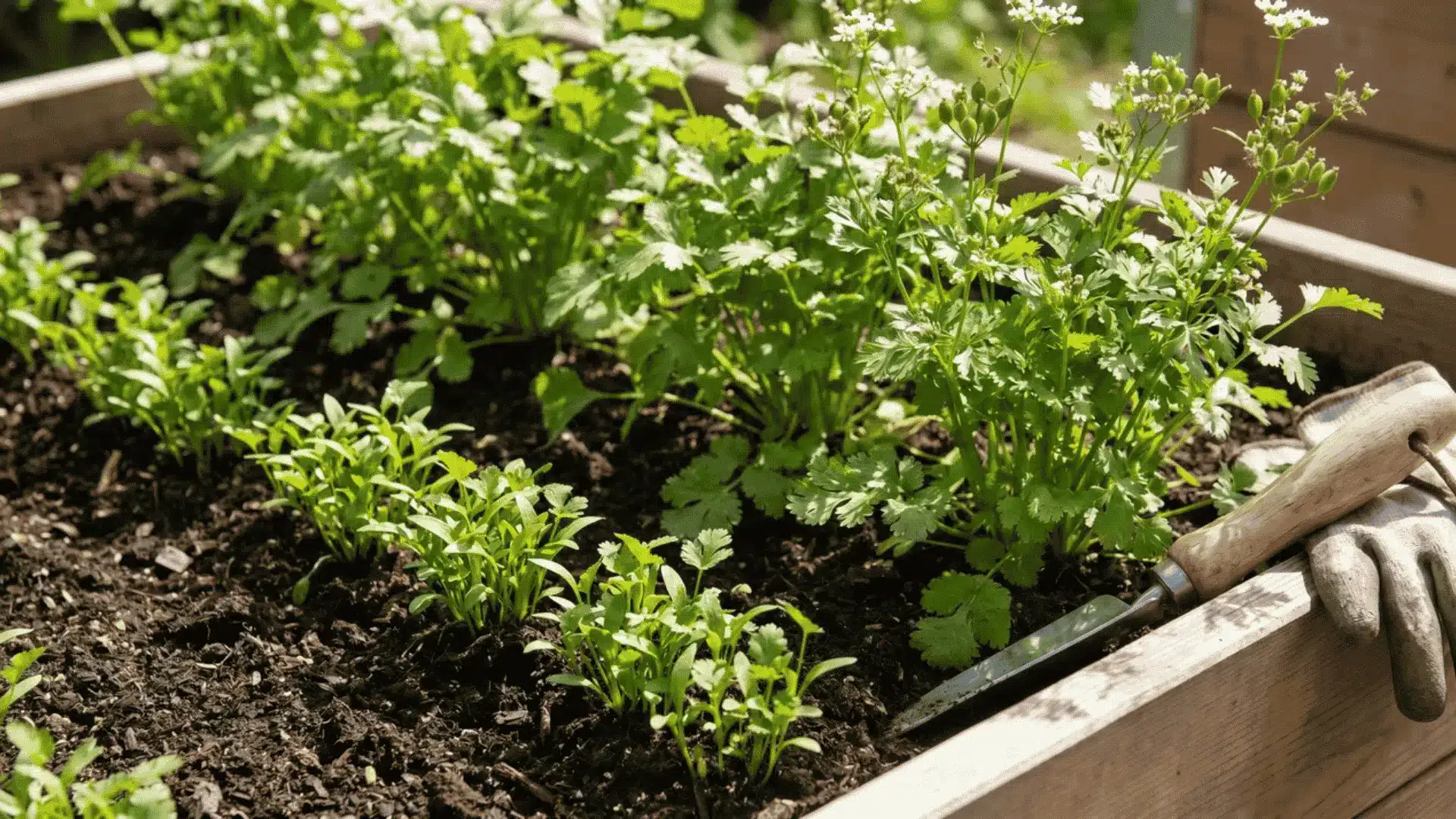
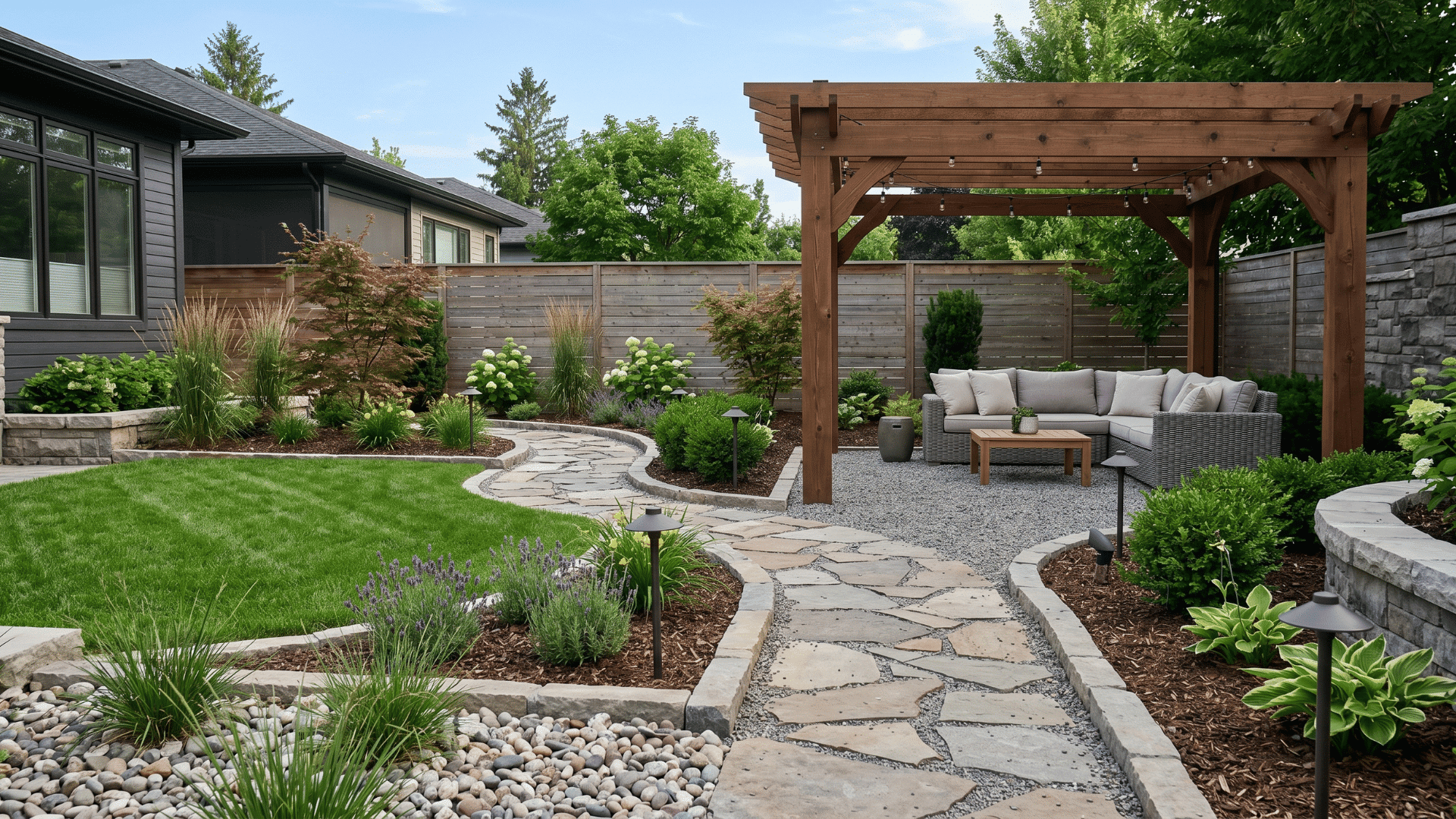



A well-planned garden does more than add greenery; it changes how your entire outdoor space looks and feels.
From simple gravel paths to structured raised beds, the right garden landscaping ideas can turn even the most basic yard into a space you actually want to spend time in.
No matter the size or condition of your outdoor space, the right approach can make a real difference, and it does not have to cost a fortune or require professional help to get there.
How to Make Small Gardens Feel Bigger?
Small gardens come with real limits, but the right garden landscaping ideas can make them feel significantly larger than they are.
Using light-colored paving materials reflects natural light and visually opens up tight spaces. Curved pathways draw the eye further into the garden, creating a sense of depth.
Vertical planters and wall-mounted greenery draw the eye upward, making the area feel taller. Placing a mirror behind plants or along a fence wall adds an illusion of extra space.
Keeping furniture compact and choosing one or two clear focal points rather than filling the space with too many decorative pieces keeps small gardens feeling open, calm, and well-put-together.
Garden Landscaping Ideas that Yard Look Better
From compact patios to wide open backyards, these garden landscaping ideas cover every style, size, and budget to give you a practical starting point for your next outdoor project.
1. Curved Flagstone Garden Walkway
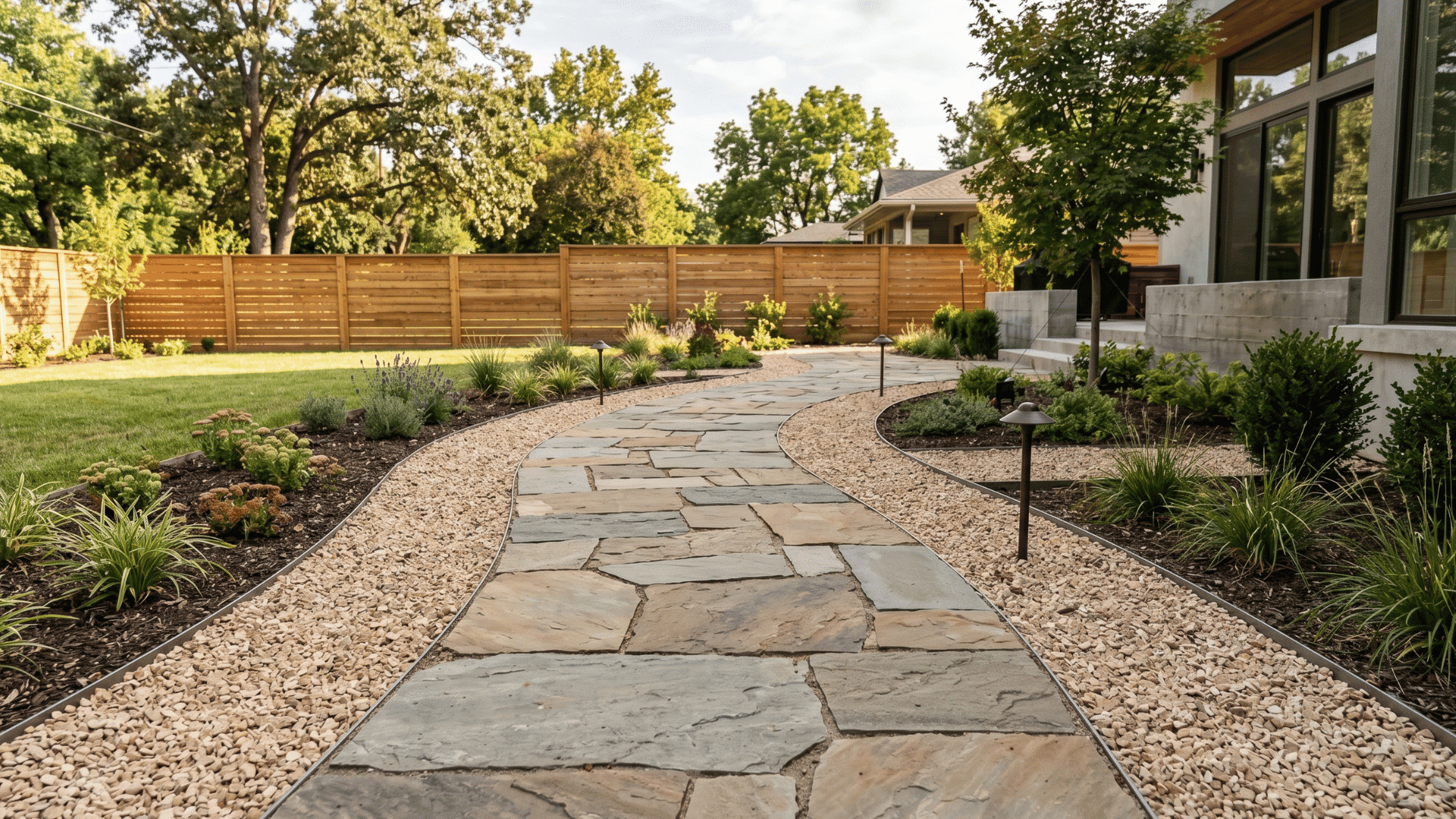
Irregularly shaped flagstones set along a gentle curve add structure and character, making the path a standout feature in any garden landscaping layout.
How to set it up:
- Use naturally shaped flagstones in varied sizes for an organic, less constructed look
- Space stones 3 to 4 inches apart and fill the gaps with creeping thyme or moss
- Keep the curve gradual so it guides the eye through the space without feeling forced
- Line either side with low-growing border plants or fine gravel for a clean finish
- Add low-level path lights along the edges for visibility and depth after dark
2. Sunken Backyard Fire Pit Lounge
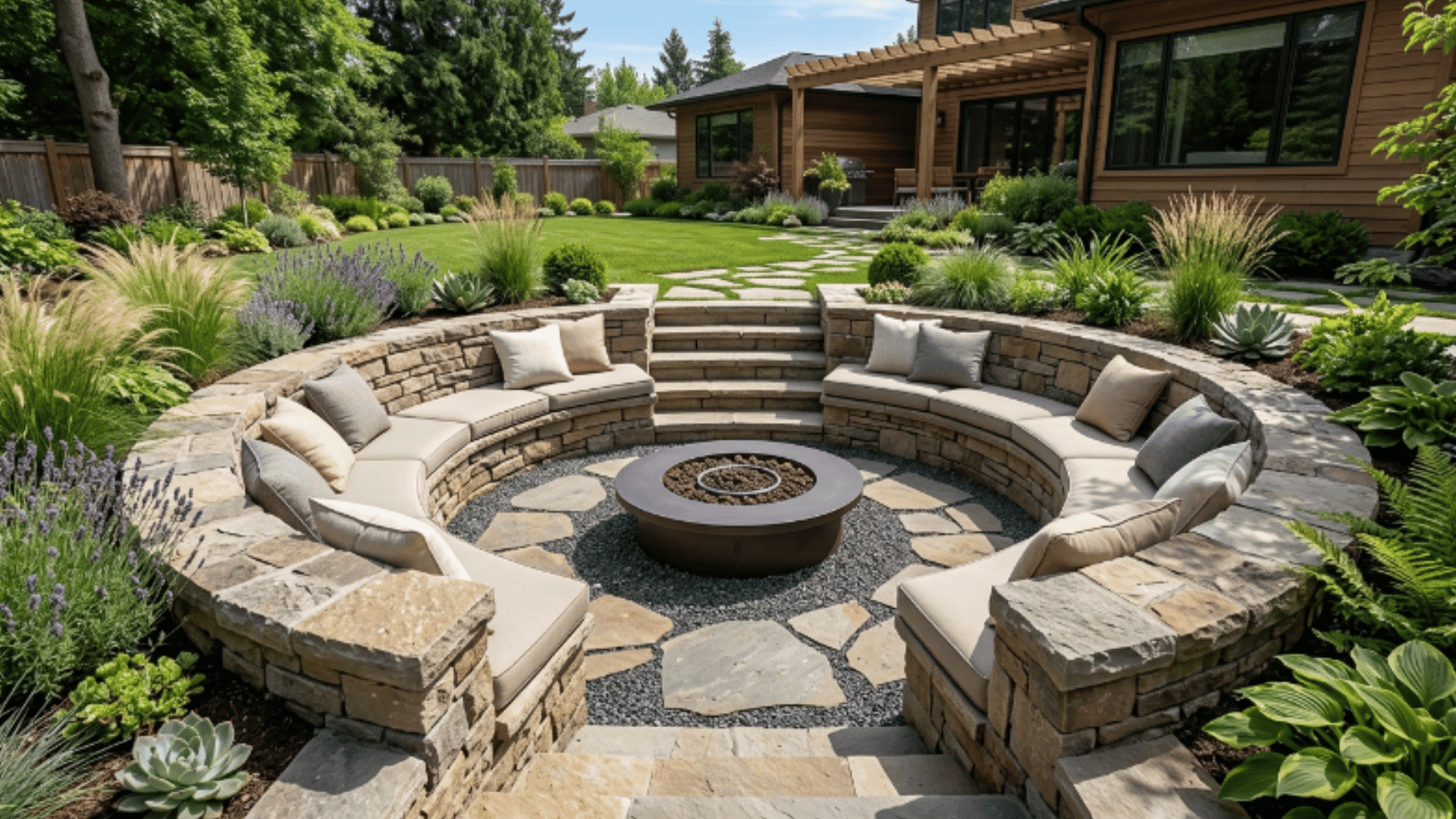
A sunken seating area built around a central fire pit creates a cozy, sheltered outdoor lounge that feels separate from the rest of the yard.
How to set it up:
- Dig the seating area 18 to 24 inches below ground level for a natural shelter effect
- Use concrete blocks or natural stone to build the retaining walls around the pit
- Install built-in bench seating along the inner perimeter with weatherproof cushions
- Place the fire pit centrally and surround it with heat-resistant gravel or stone pavers
- Add low-voltage lighting around the outer rim to define the space at night
3. Raised Cedar Vegetable Garden Beds
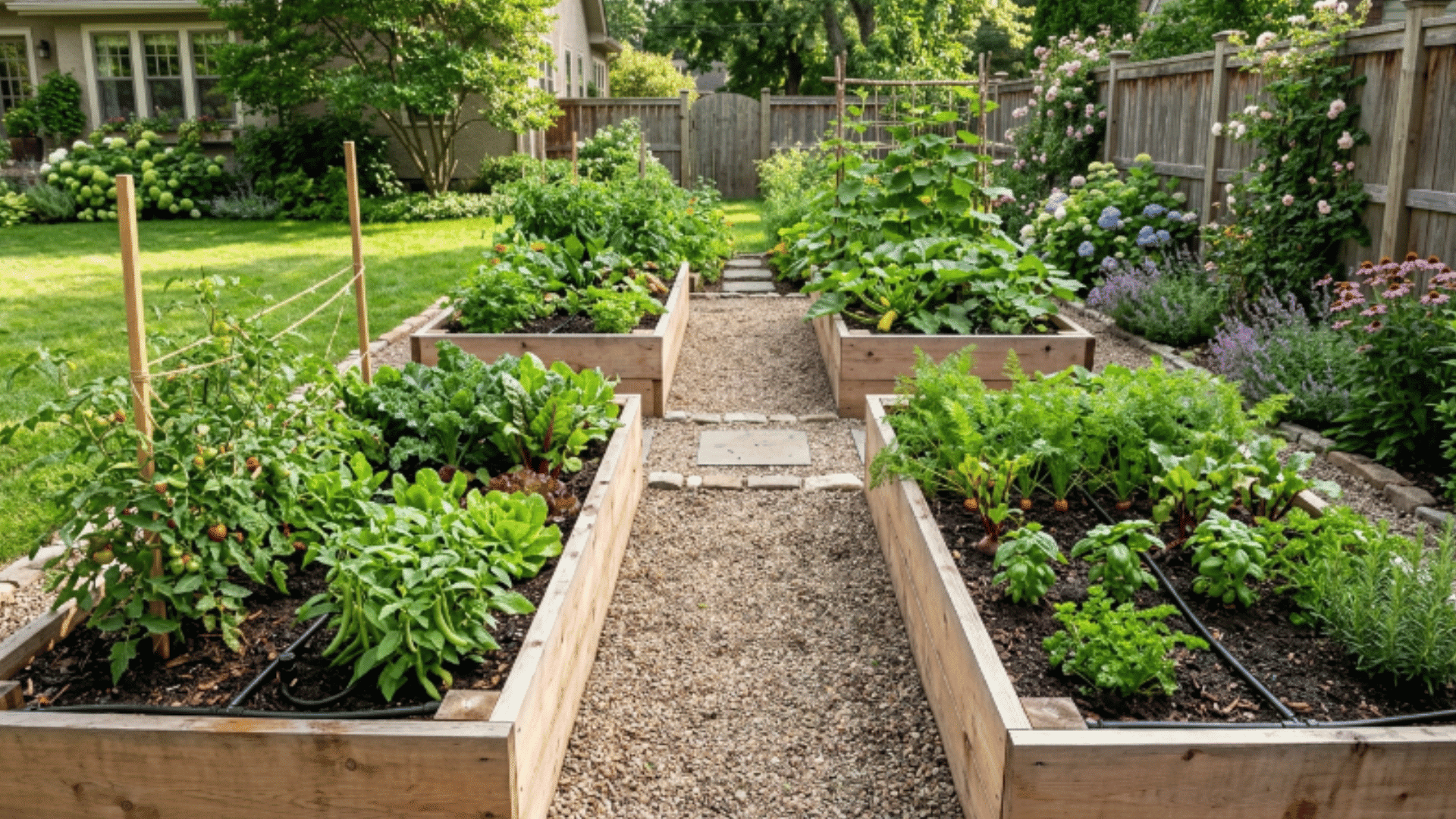
Cedar-framed raised beds bring a clean, structured look to the backyard while keeping vegetables and herbs easy to access and maintain all season.
How to set it up:
- Build beds at 12 to 18 inches in height to improve drainage and reduce bending
- Use untreated cedar wood, as it naturally resists rot without chemical treatment
- Space beds at least 2 feet apart to allow comfortable access on all sides
- Fill with a mix of topsoil, compost, and perlite for strong plant growth
- Add a drip irrigation line under the soil surface for low-effort daily watering
4. Low-Maintenance Gravel Garden with Stepping Stones
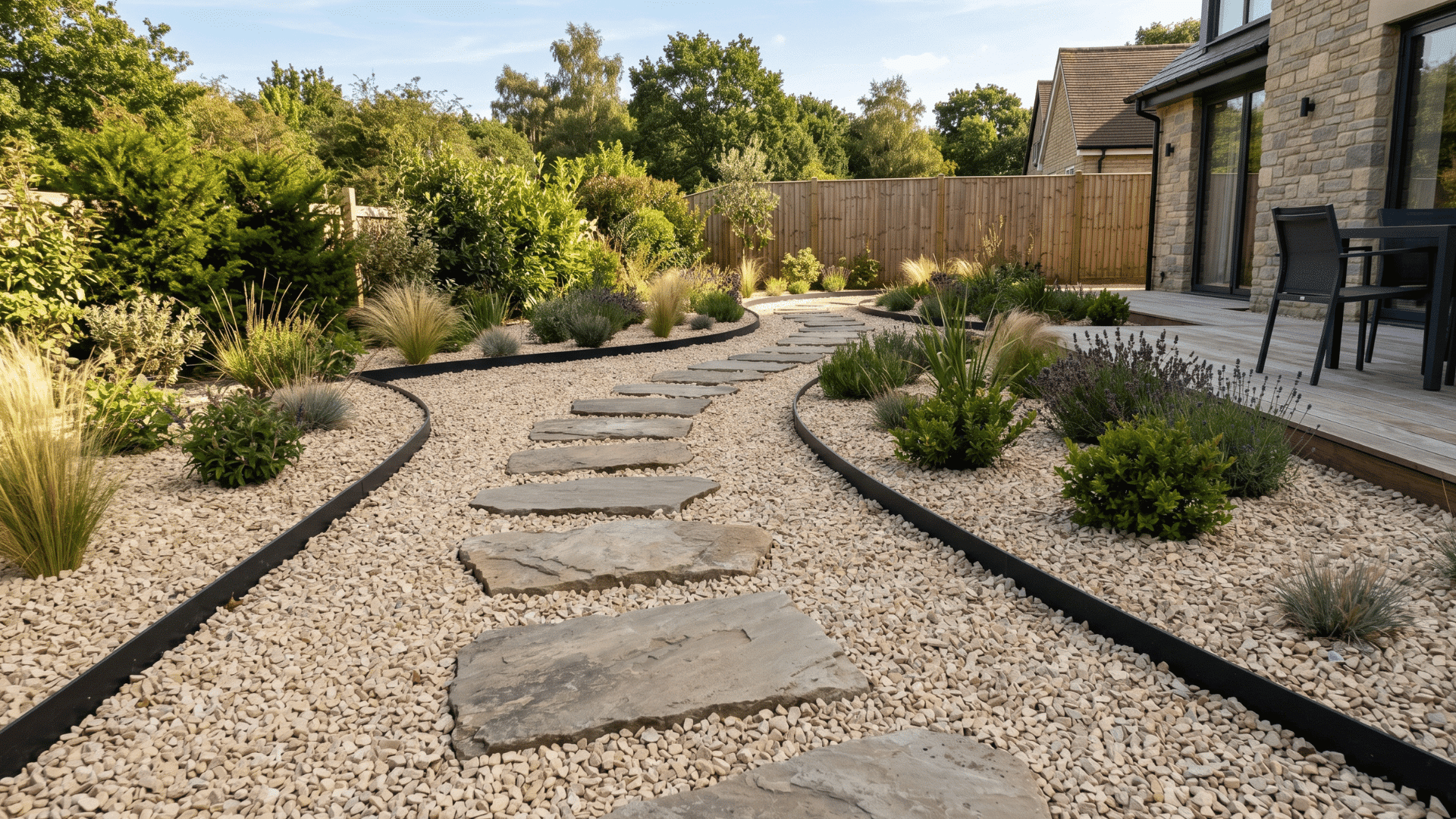
A gravel base layered with flat stepping stones creates a tidy, low-maintenance garden landscape surface that stays neat year-round.
How to set it up:
- Lay a weed-suppressing membrane beneath the gravel before spreading to prevent regrowth
- Choose angular gravel over rounded pebbles, as it stays in place more reliably
- Space stepping stones at natural walking stride intervals for comfortable movement
- Plant ornamental grasses or drought-tolerant shrubs at intervals for structure and height
- Edge the gravel border with metal or timber edging to keep it contained and clean
5. Checkerboard Grass and Paver Layout
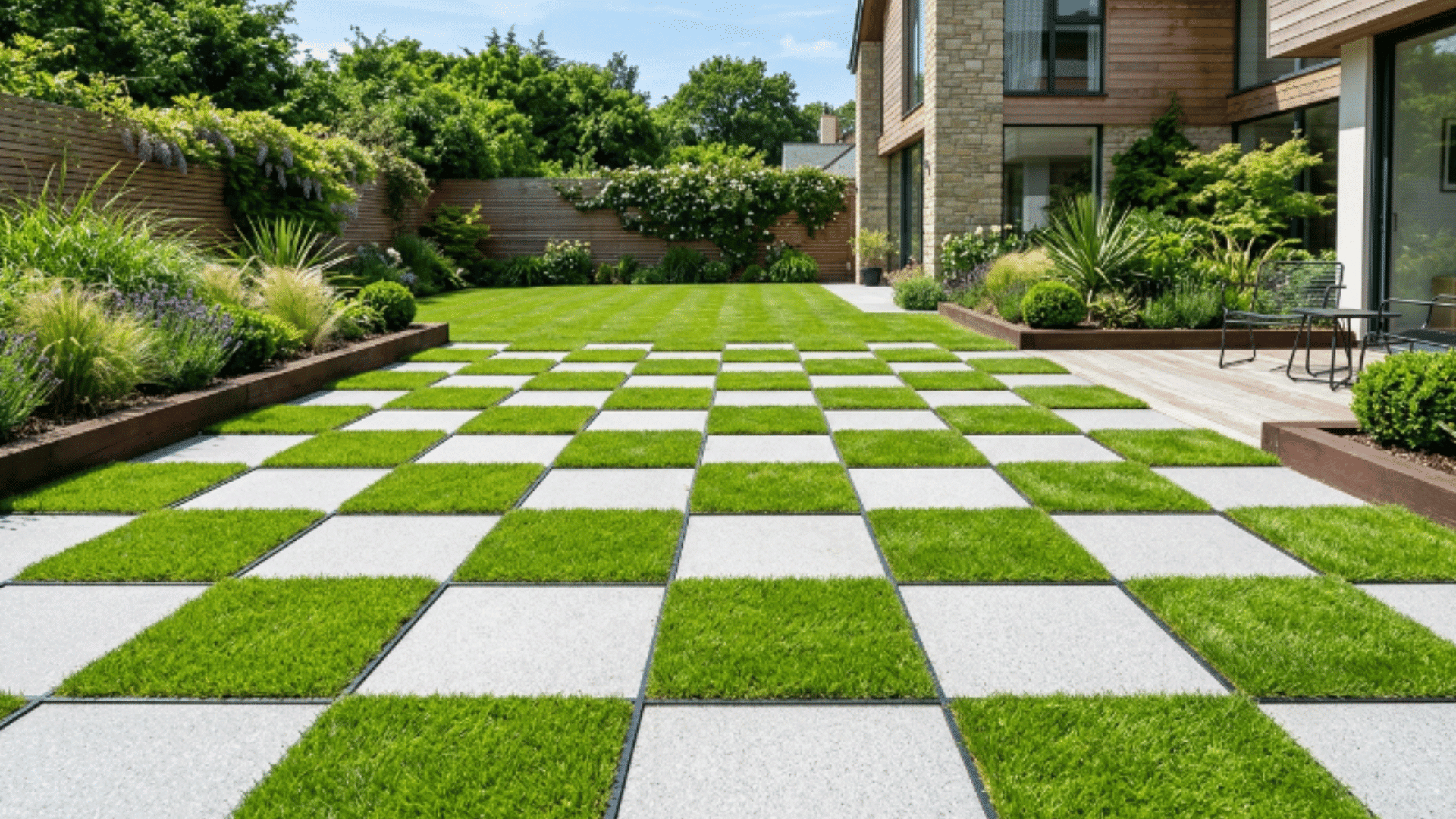
Alternating square grass patches with flat concrete pavers creates a bold, geometric garden floor that works well in modern and formal outdoor spaces.
How to set it up:
- Use 60 x 60 cm square pavers and match them with equal-sized grass sections
- Keep grass sections trimmed short so the checkerboard pattern stays visually sharp
- Choose a neutral paver tone like light grey or sandstone to contrast the green grass
- Install a steel or aluminum edge strip between each section to maintain clean lines
- Water grass sections separately from paved areas using targeted irrigation points
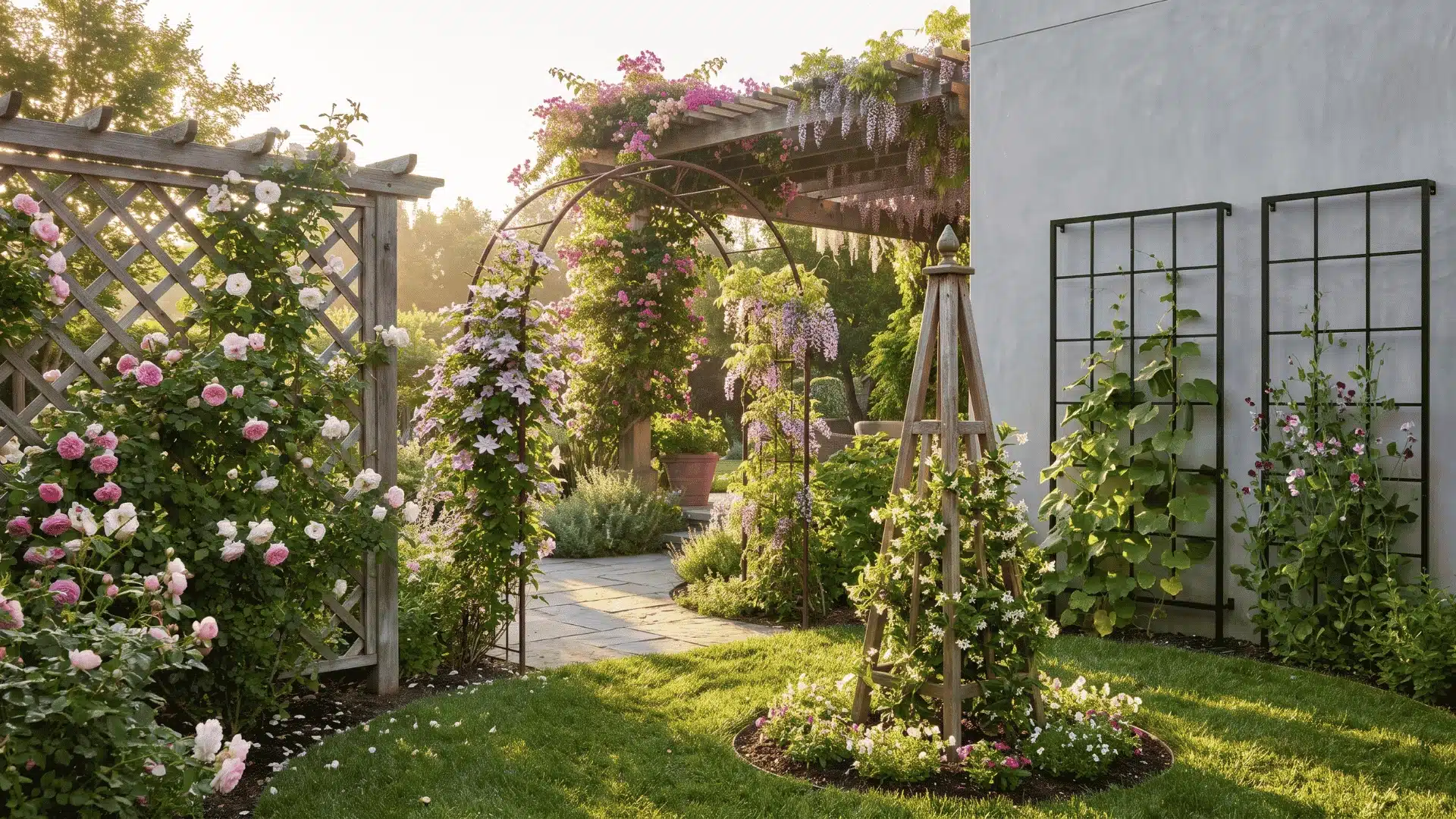
6. Pergola with Climbing Vine Roof
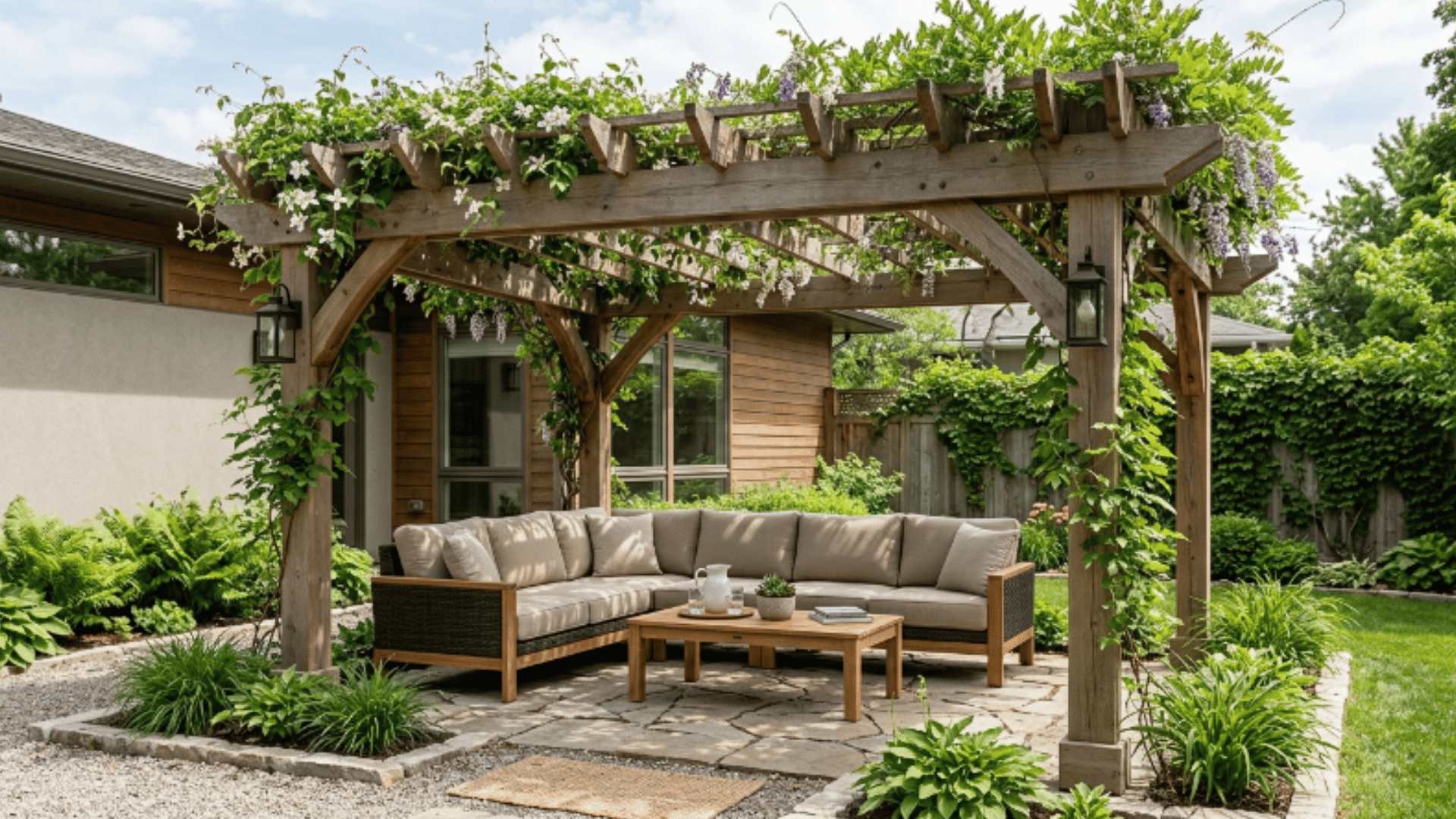
A freestanding pergola covered with climbing plants creates a shaded outdoor room that feels established, green, and structurally integrated with the garden.
How to set it up:
- Use pressure-treated timber or powder-coated steel for a long-lasting pergola frame
- Train wisteria, jasmine, or climbing roses along the crossbeams from the first season
- Attach horizontal wire guides across the top for vines to grip and spread evenly
- Hang solar-powered fairy lights through the canopy for evening warmth without wiring
- Place weatherproof seating directly beneath for a ready-to-use shaded sitting area
7. Tropical Garden with Palm Clusters
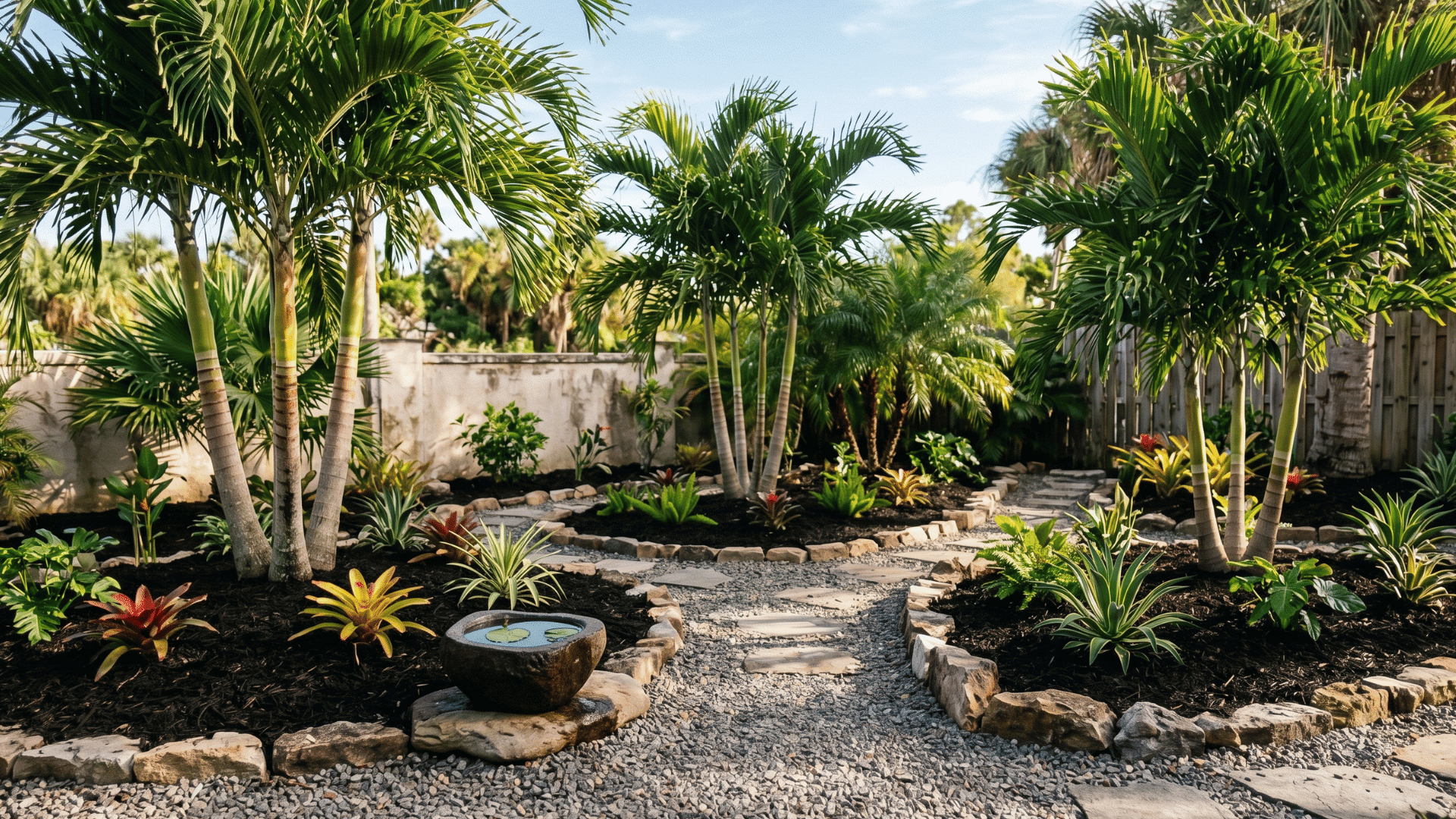
Grouping tall palms with dense ground-level planting creates a layered tropical effect that brings bold color and texture to warm or sheltered gardens.
How to set it up:
- Plant palms in odd-numbered clusters of three or five for a natural grouping effect
- Layer shorter tropical plants like bird of paradise or elephant ears at the base
- Use dark mulch around the base of each plant to retain moisture and contrast foliage
- Add a water feature or stone bowl nearby to reinforce the tropical setting
- Choose palms suited to your local climate to avoid winter dieback and replanting costs
8. Outdoor Dining Patio with String Lights
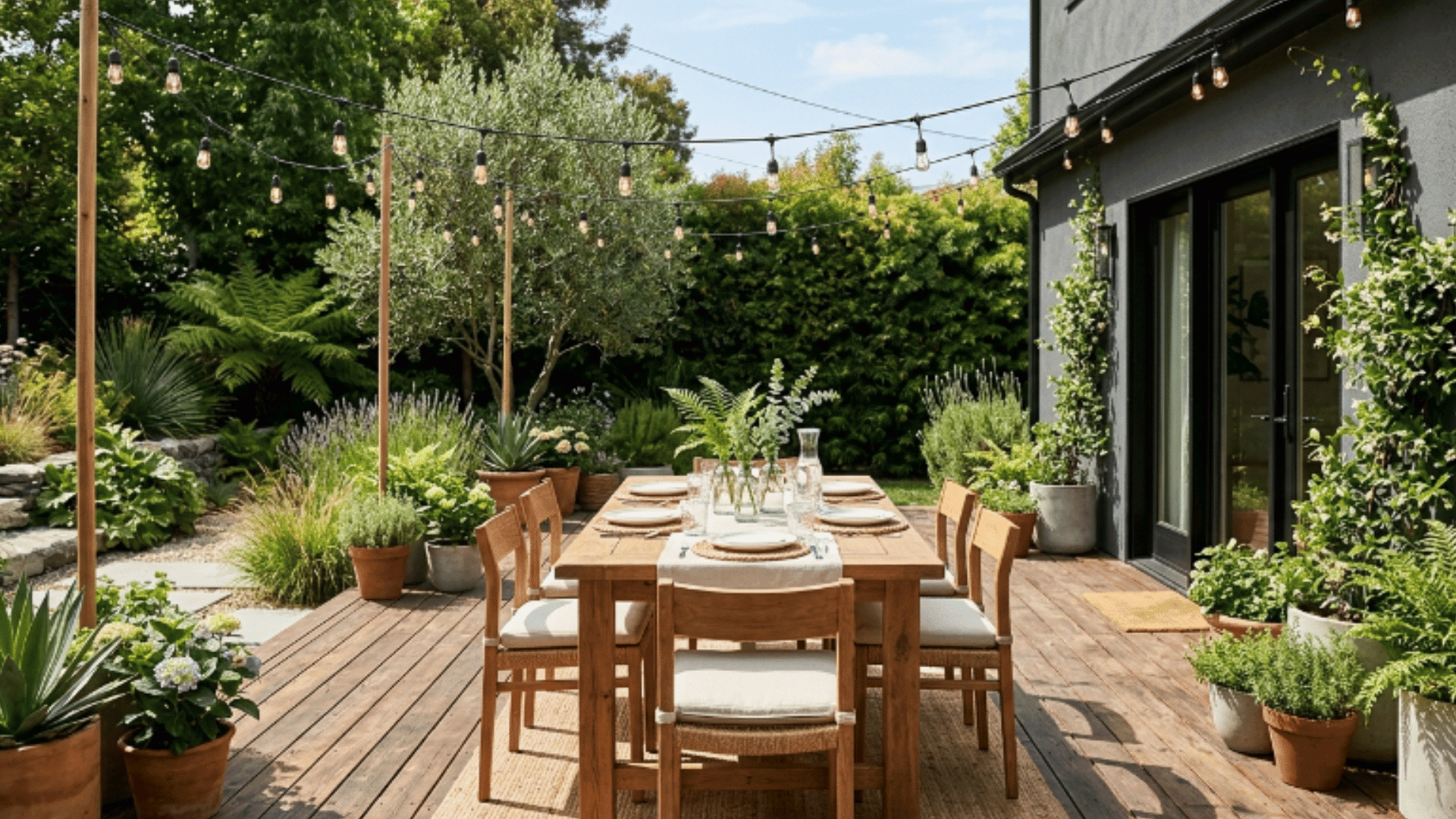
A defined patio area, framed by overhead string lights, turns an ordinary backyard into a practical and inviting outdoor dining space for year-round use.
How to set it up:
- Use weatherproof Edison-style bulb string lights strung between anchor posts or walls
- Choose a patio table with enough surface space for serving dishes alongside plates
- Place the dining area on a flat paved or decked surface to keep furniture stable
- Add a large outdoor rug beneath the table to define the zone and soften the look
- Include a small side table or drinks trolley nearby to avoid overcrowding the main table
9. Terraced Hillside Garden Design
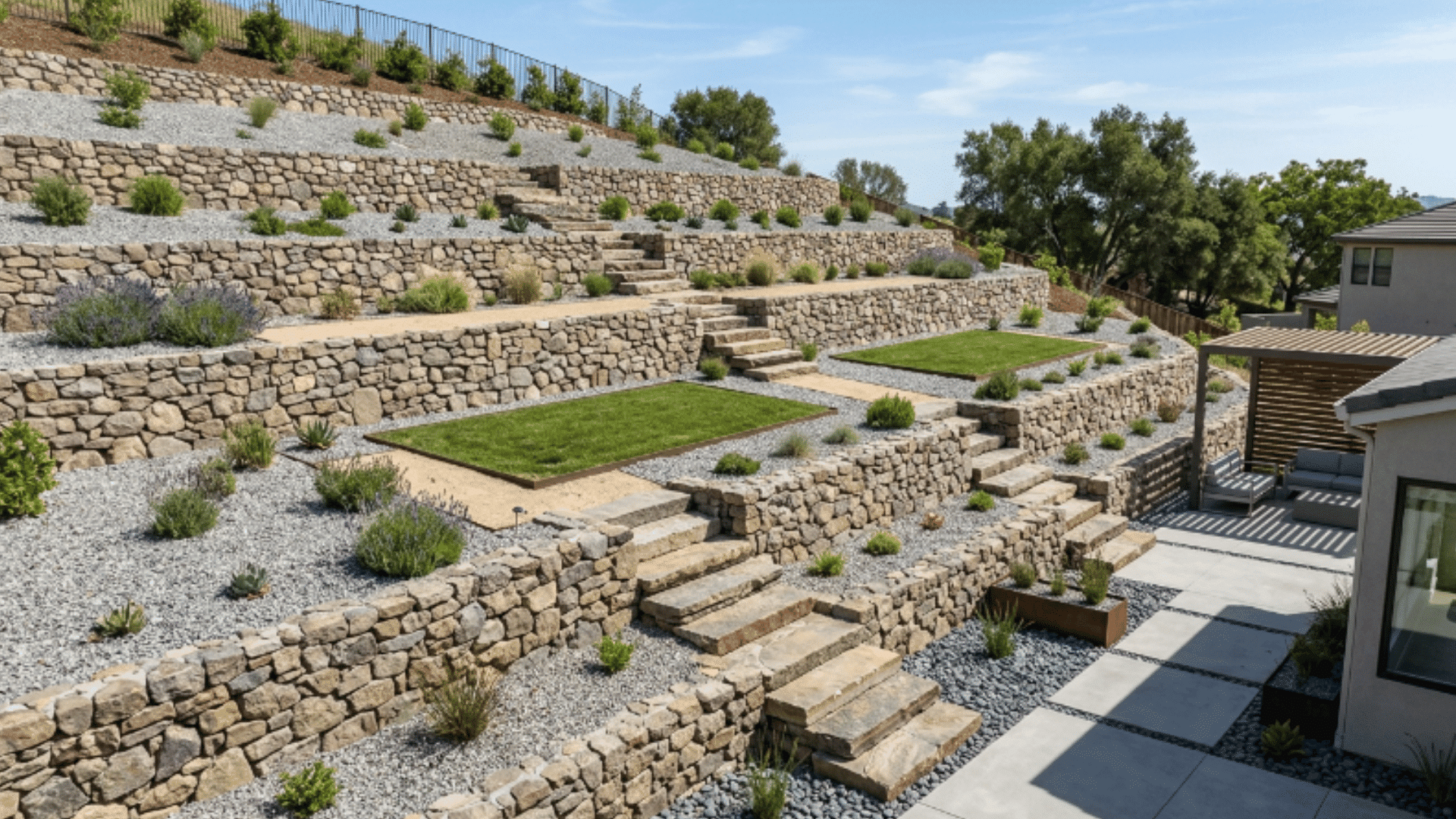
Stepped retaining walls cut into a sloped backyard create flat, usable tiers that turn difficult-to-uneven terrain into structured, productive garden space.
How to set it up:
- Build retaining walls from natural stone, sleepers, or concrete blocks based on slope height
- Use each tier for a different purpose, such as planting, seating, or lawn space
- Install steps between tiers at one consistent width for safe and easy movement
- Plant low ground cover along wall edges to soften the hard lines of each retaining layer
- Direct water runoff between tiers using gravel channels to prevent erosion over time
10. Living Wall Garden with Mounted Planters
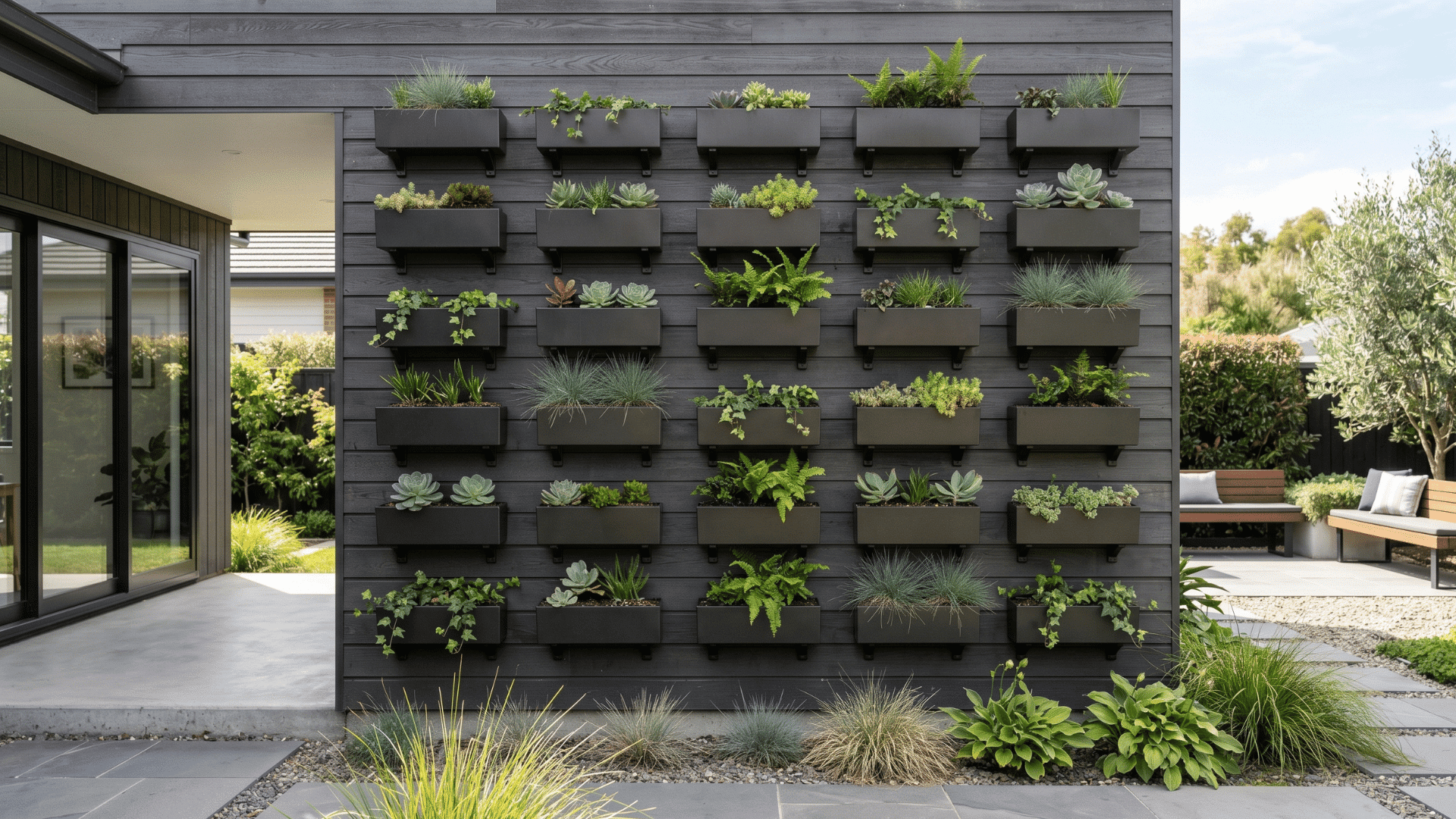
Rows of wall-mounted planters filled with trailing and upright plants turn a bare fence or exterior wall into a full vertical garden display.
How to set it up:
- Use modular planter pockets or individually mounted pots arranged in a grid pattern
- Mix trailing plants like string of pearls with upright varieties for contrast and depth
- Install a drip irrigation line behind the wall panel to water all planters at once
- Choose a south or west-facing wall to ensure plants receive adequate daily sunlight
- Repot or replace individual sections seasonally to keep the wall looking fresh year-round
11. Cactus and Boulder Desert Garden

Large boulders arranged among a variety of cacti and drought-tolerant plants create a bold, low-water garden style suited to dry or sunny climates.
How to set it up:
- Use boulders in varying sizes and place them at slight angles for a natural, settled look
- Choose a mix of tall columnar cacti and low spreading varieties for layered height
- Spread a layer of coarse sand or decomposed granite across the planting bed surface
- Leave visible gaps between plants, as negative space is part of the desert aesthetic
- Avoid overwatering, as most cacti and succulents thrive on neglect once established
12. Japanese Zen Courtyard with Raked Sand
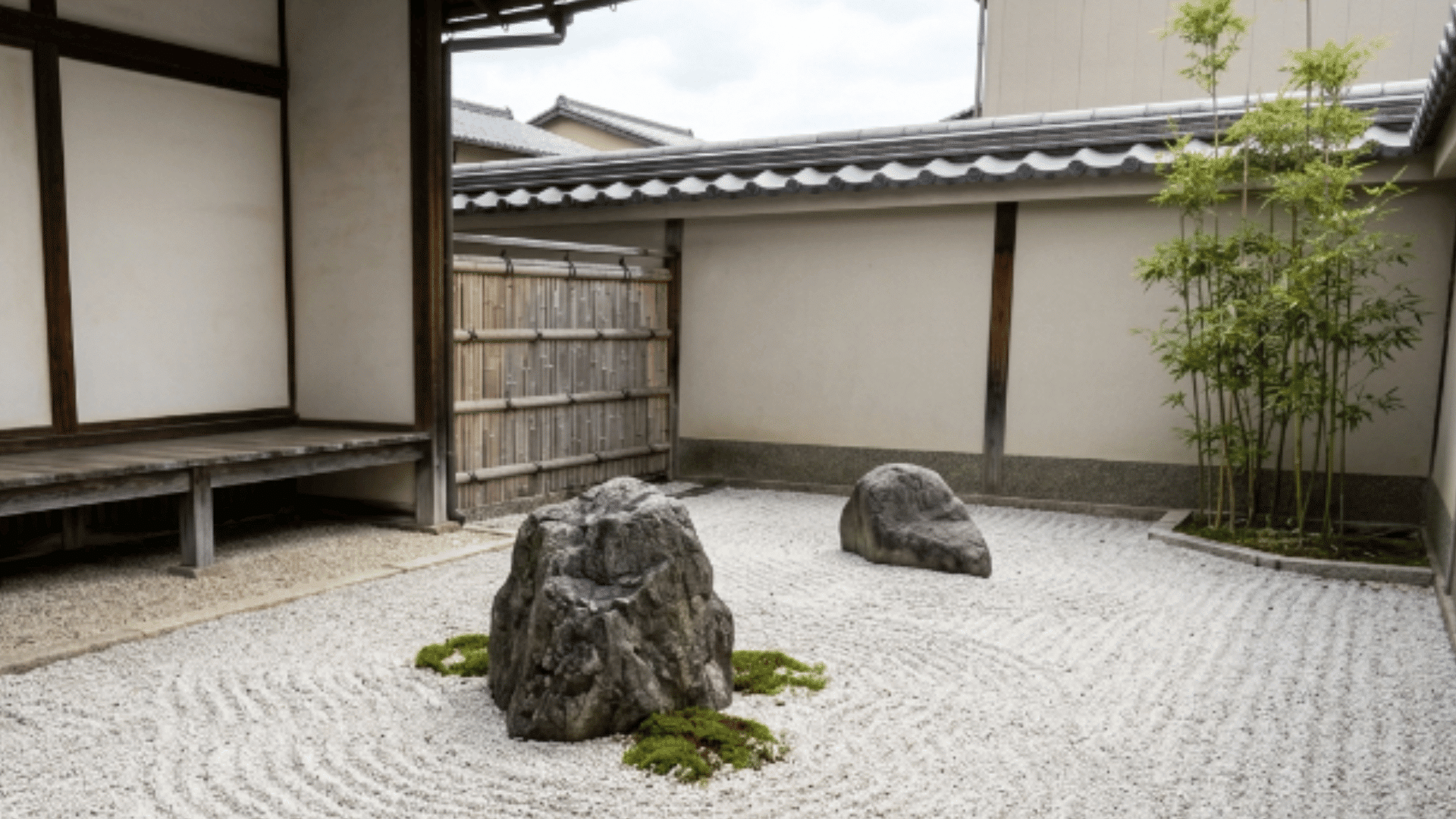
A contained courtyard filled with fine raked sand, moss, and placed stones creates a calm, minimalist garden landscape rooted in traditional Japanese design principles.
How to set it up:
- Use fine white or grey sand raked into straight or wave patterns for a meditative look
- Place two or three large flat stones within the sand as the main focal elements
- Add a compact Japanese maple or bamboo in a corner for a single vertical accent
- Keep surrounding walls or fencing simple and uncluttered to preserve the quiet tone
- Rake the sand weekly to maintain the pattern and keep the space looking intentional
13. English Cottage Flower Border Garden
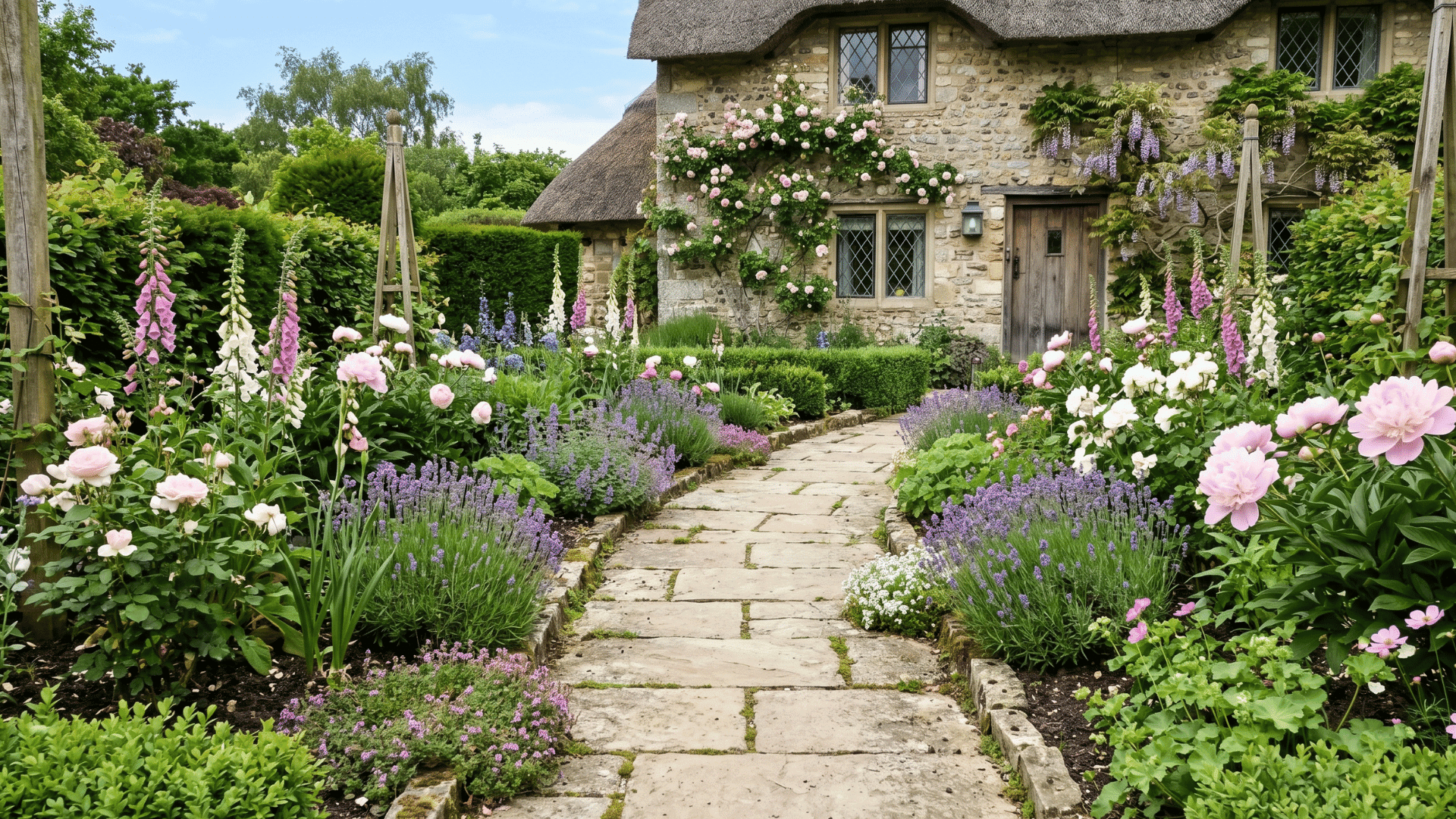
Densely planted flower borders filled with layered seasonal blooms create the full, informal look characteristic of a classic English cottage garden style.
How to set it up:
- Plant taller varieties like delphiniums and foxgloves at the back of each border
- Fill the middle tier with roses, peonies, or lavender for color through spring and summer
- Use low-growing plants like alyssum or violas along the front edge to soften the border
- Allow plants to grow slightly over pathways and edges for a full, relaxed appearance
- Deadheading spent flowers regularly to extend the blooming period through the season
14. Wooden Deck Garden with Border Plants
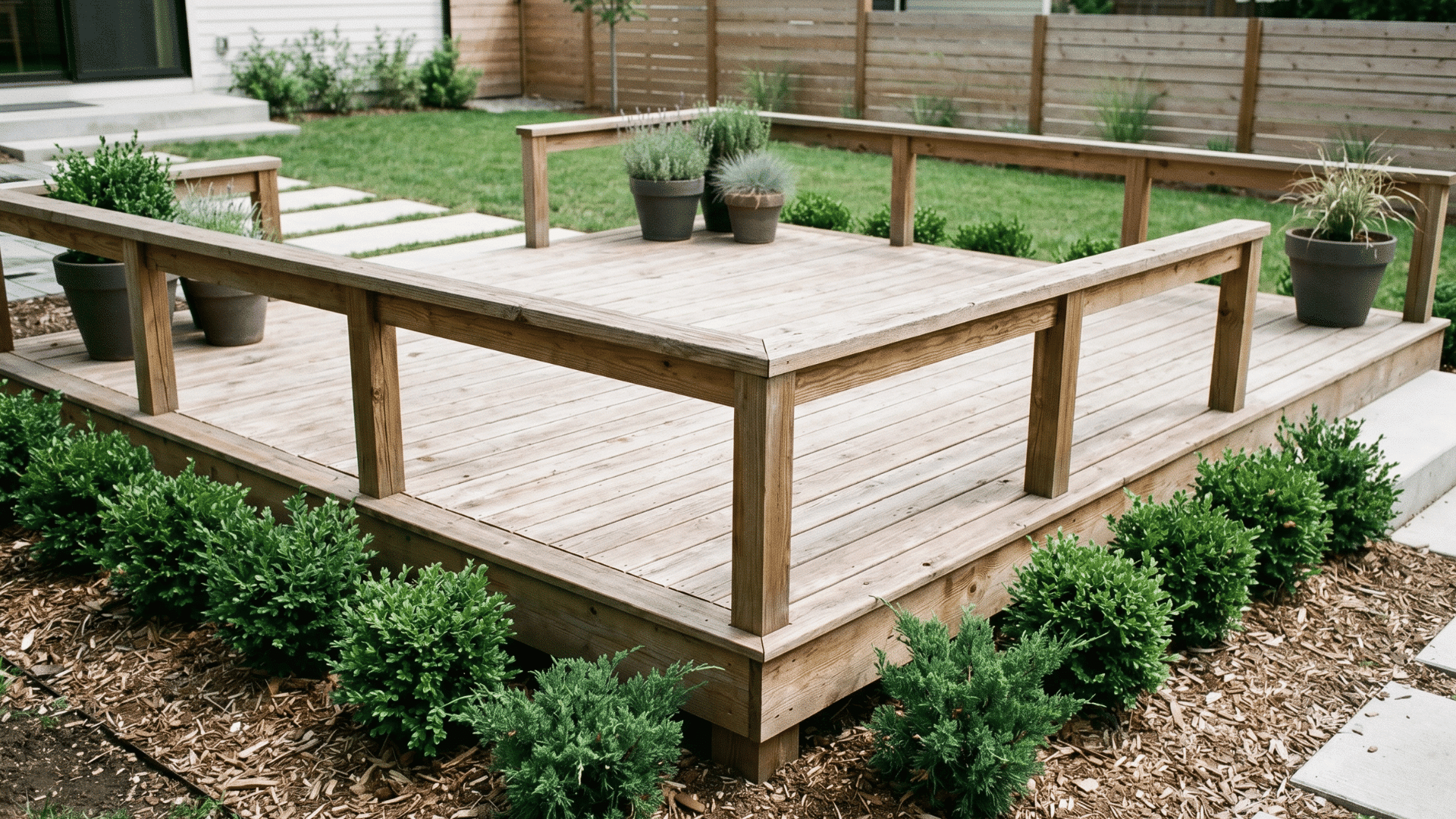
A raised timber deck, surrounded by planted borders, blends hard landscaping with soft planting, making the transition from indoor to outdoor feel considered and complete.
How to set it up:
- Use hardwood or composite decking boards laid in a consistent direction for a clean look
- Plant evergreen shrubs directly into the border at deck level to frame the structure
- Add a low railing or balustrade along open edges for both safety and definition
- Place potted plants at the deck corners to bring greenery onto the surface itself
- Treat the timber annually with oil or sealant to maintain color and prevent weathering
15. Backyard Koi Pond with Waterfall
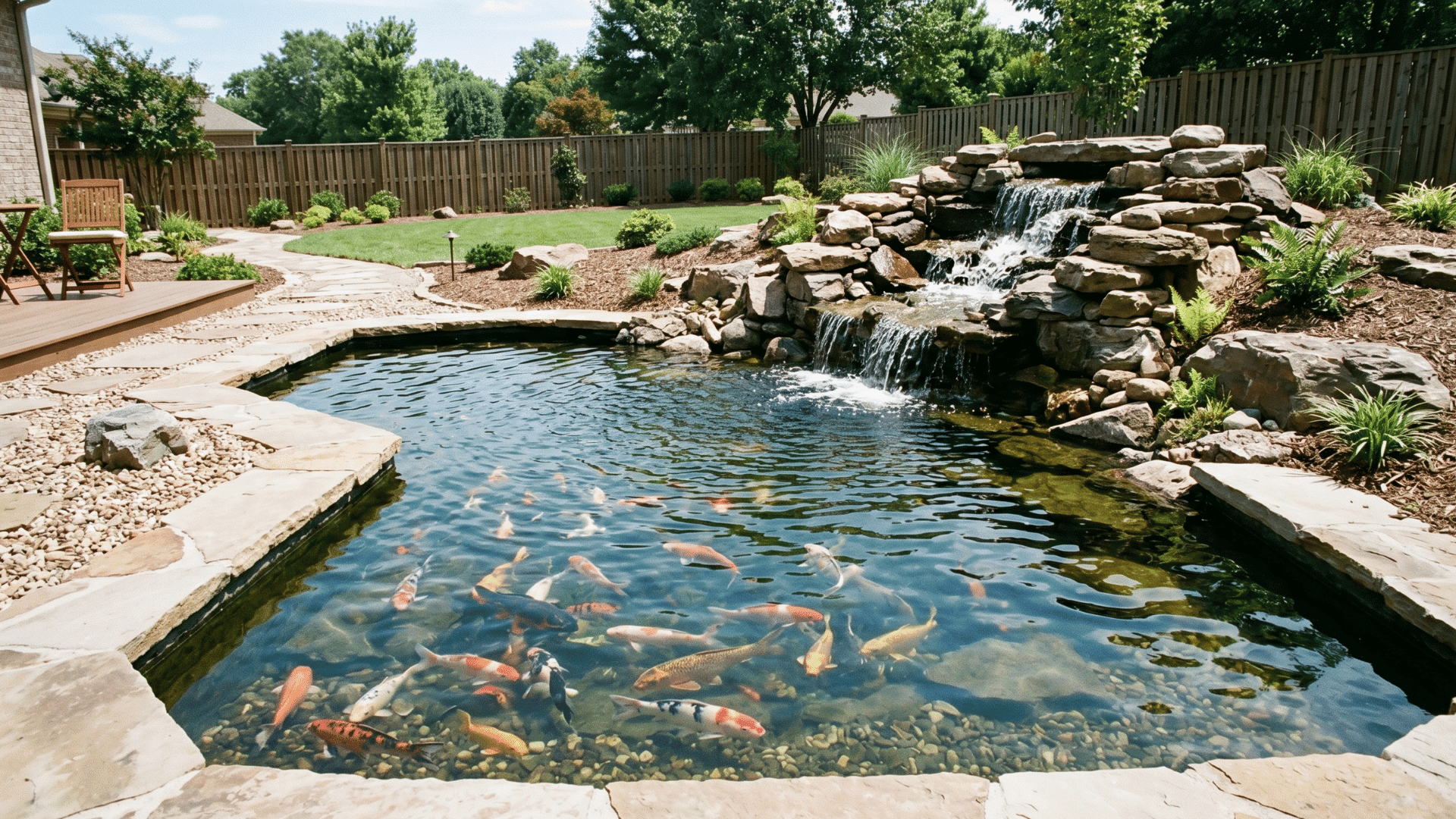
A lined garden pond stocked with koi and fitted with a small waterfall feature creates a calming focal point that adds sound, movement, and wildlife interest.
How to set it up:
- Dig the pond to at least 4 feet deep in the center to protect fish through winter
- Line the pond with a durable rubber liner and cover the edges with flat coping stones
- Build the waterfall from stacked natural stones with a pump hidden behind the top layer
- Plant marginals like iris or bulrush around the pond edge to soften the liner perimeter
- Install an external filter and UV clarifier to keep the water clear without constant upkeep
16. Circular Brick Patio with Flower Ring
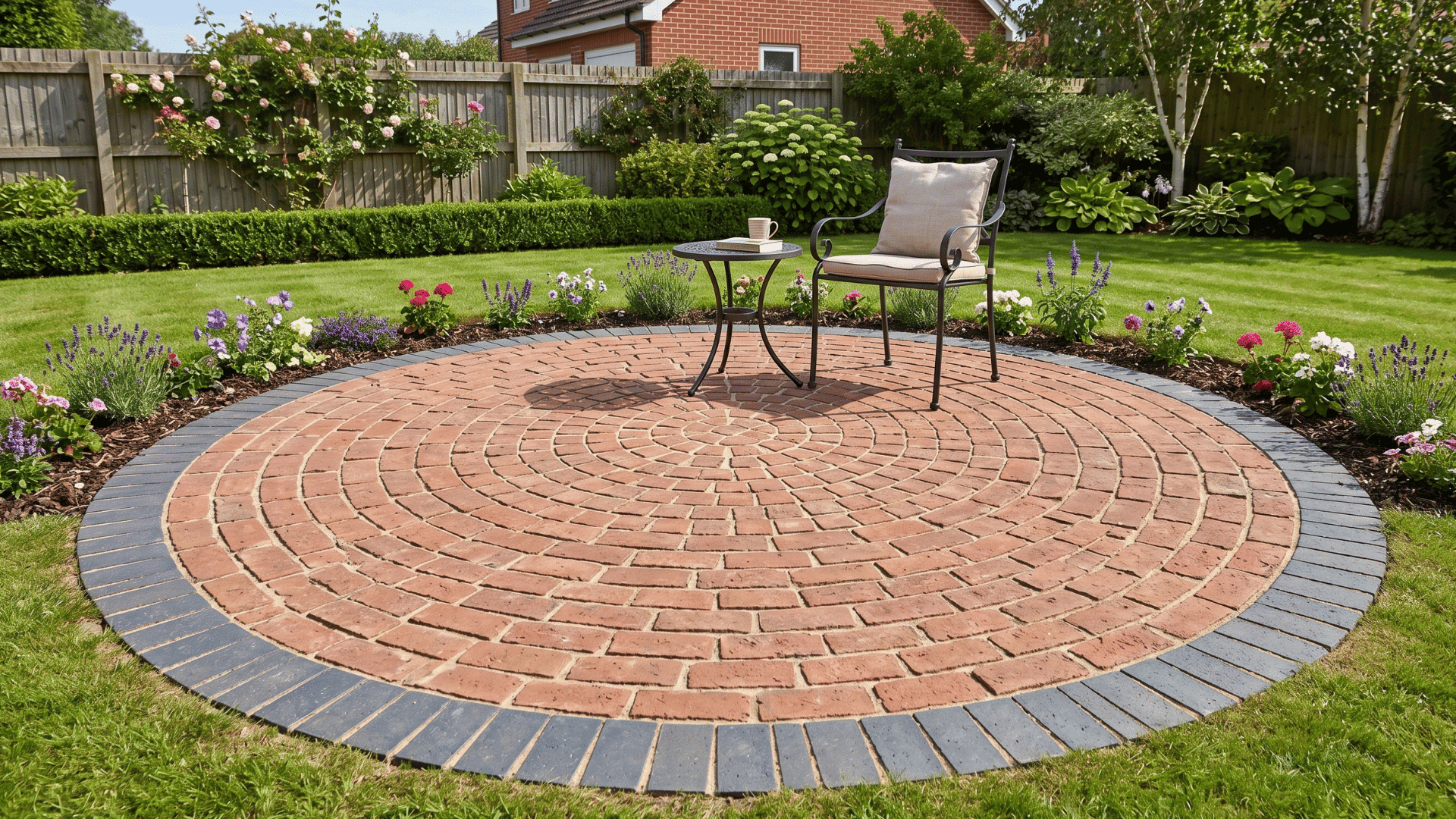
A round brick patio laid in a concentric-circle pattern, with a planted flower border along the outer edge, creates a structured, decorative garden centerpiece.
How to set it up:
- Lay bricks in a running bond or herringbone pattern radiating from the circle center
- Use a contrasting brick tone for the outer ring to define the circle edge clearly
- Plant a continuous flower border in a single color palette directly outside the brick ring
- Place a central garden chair, table, or container planting as the circle’s focal point
- Seal the brick surface annually to prevent moss growth and maintain a clean finish
17. Small Garden with Mirrored Wall Feature
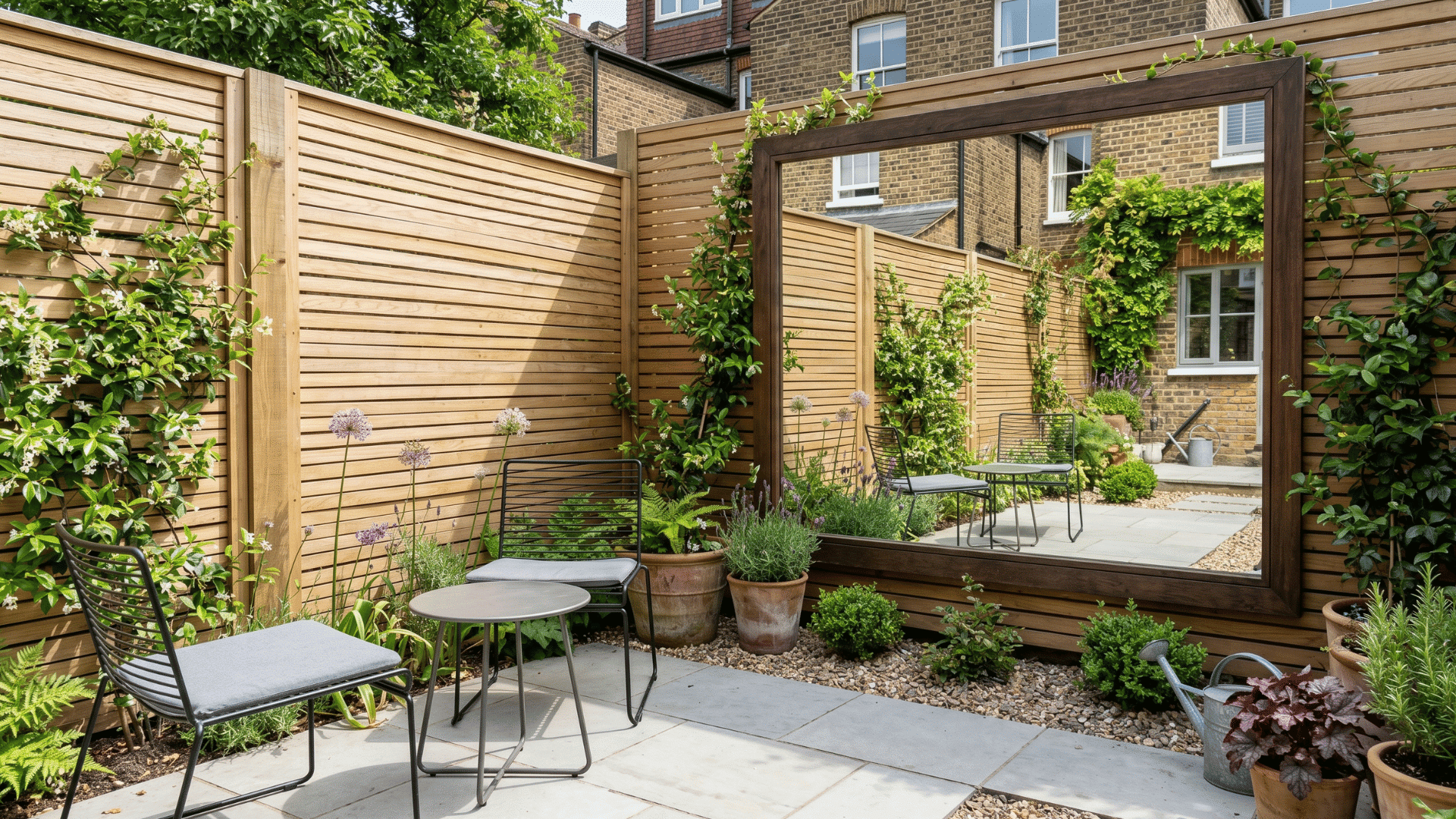
A large outdoor mirror fixed to a fence or garden wall reflects light and greenery, making compact spaces appear wider and more open than they actually are.
How to set it up:
- Use a weatherproof outdoor mirror rated for exterior use to prevent rusting or fogging
- Position the mirror to reflect the most planted or colorful section of the garden
- Frame the mirror with climbing plants or a simple timber border for a finished look
- Avoid placing the mirror where direct sunlight could create a glare hazard for visitors
- Combine with light-coloured paving and slim furniture to maximize the open space effect
18. Built-In Stone Bench Garden Corner
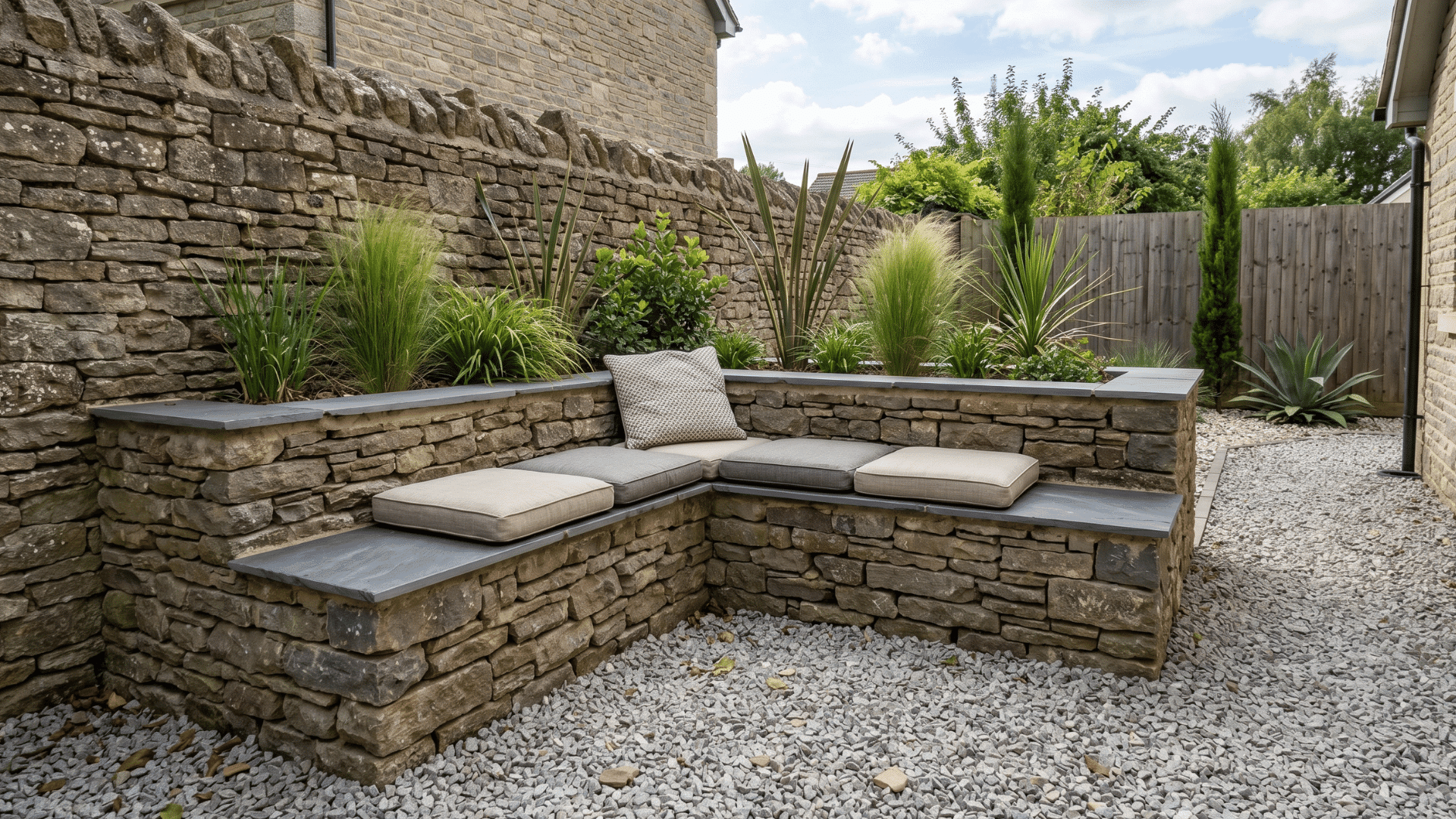
A fixed bench built from natural stone or rendered blockwork creates permanent, low-maintenance seating that becomes a structural part of the garden layout itself.
How to set it up:
- Build the bench into a corner or along a wall to use space efficiently without cluttering
- Set the seat height at 17 to 18 inches for comfortable sitting without additional cushions
- Use coping stones or smooth slate as the seat surface for a clean, durable finish
- Plant trailing or upright specimens directly behind the bench to frame the seating area
- Add weatherproof seat pads in a neutral tone for comfort during longer outdoor use
19. Outdoor Kitchen with Bar Seating
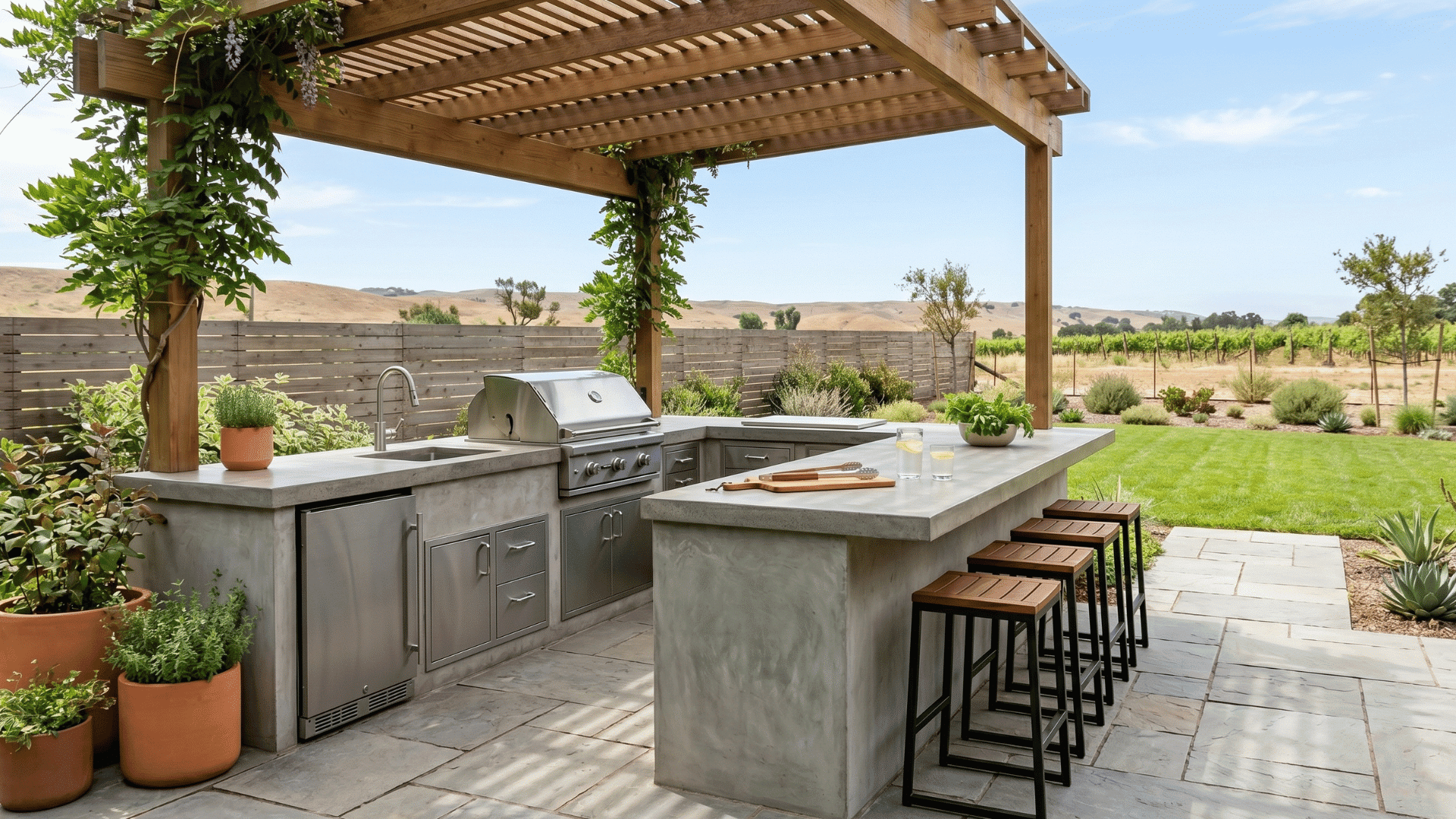
A built-in outdoor kitchen fitted with bar-height counter seating creates a fully functional cooking and social space that keeps the host part of the outdoor gathering.
How to set it up:
- Use concrete block or stainless steel as the base structure for weather resistance
- Install a built-in grill, burner, and prep surface along one continuous counter run
- Fit bar stools along the outer edge of the counter at a height of 28 to 30 inches
- Add overhead shade in the form of a pergola or sail shade directly above the kitchen
- Include a small under-counter fridge and storage drawers for practical daily use
20. Wildflower Meadow Garden Path
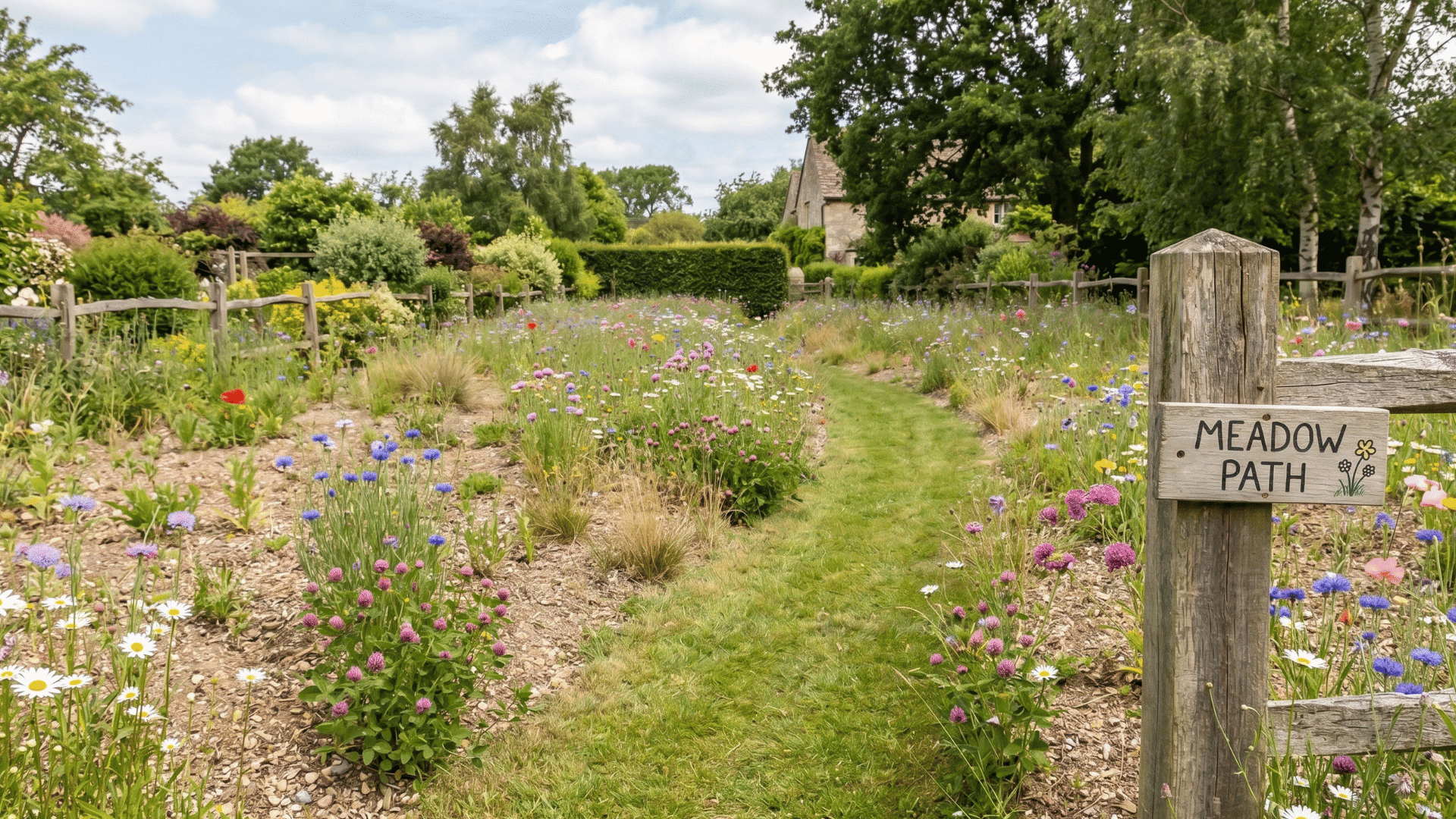
A mown-grass path cutting through a section of planted wildflowers creates a natural, relaxed garden feature that supports local pollinators throughout the growing season.
How to set it up:
- Sow a native wildflower seed mix directly into prepared bare soil in early spring or autumn
- Mow a 60 to 90 cm wide path through the center for easy access without flattening growth
- Allow the meadow section to grow freely until late summer before cutting it back
- Edge the mown path cleanly with a half-moon edger to keep the boundary defined
- Add a simple wooden sign or marker at the path entrance for a considered garden detail
21. Rose-Covered Garden Tunnel Arch
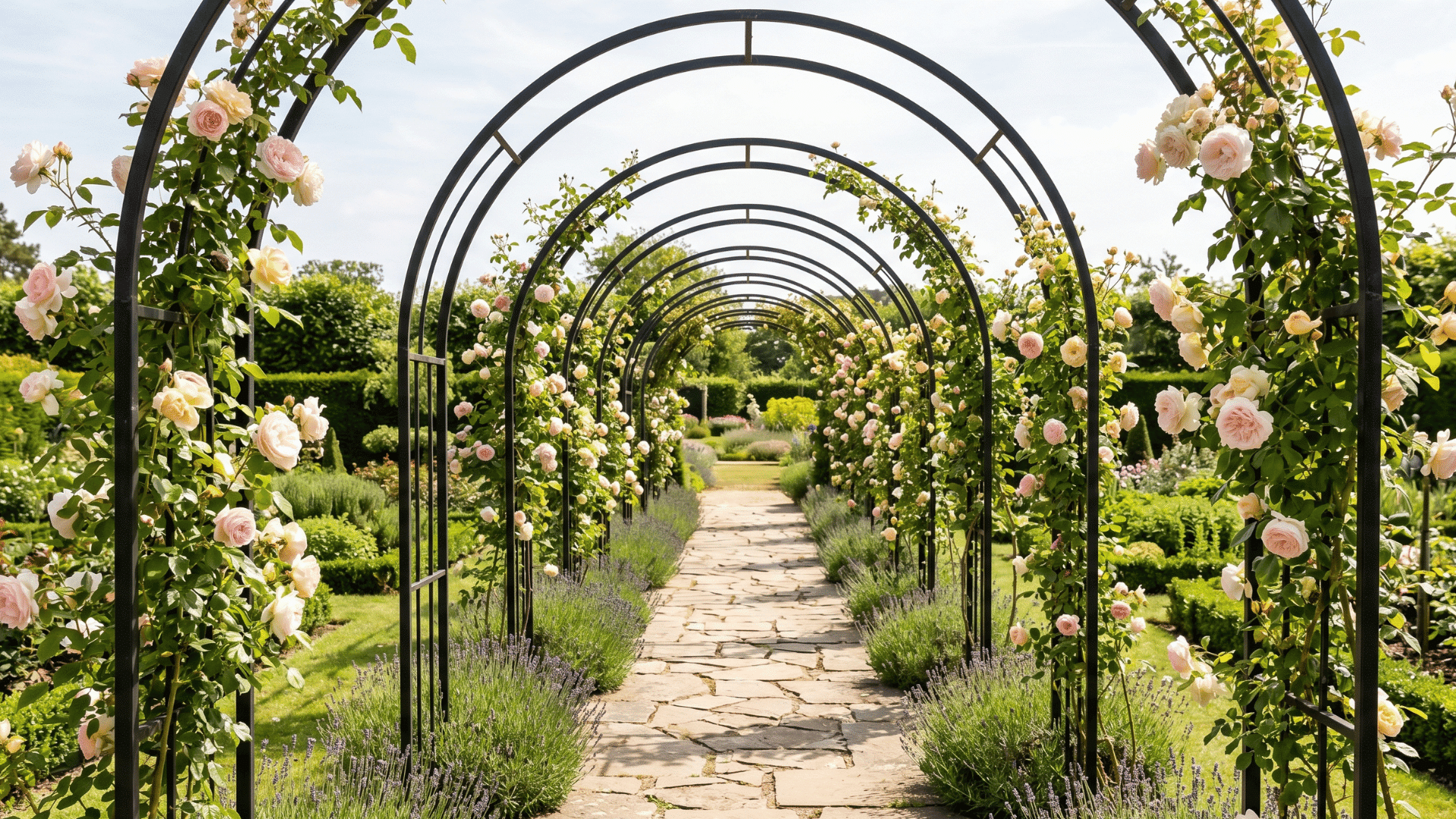
A series of metal or timber arches planted with climbing roses creates a covered tunnel walkway that becomes a standout structural feature through the flowering season.
How to set it up:
- Space arch frames at 60 cm intervals to allow roses to bridge and connect between them
- Choose repeat-flowering climbing varieties for color from late spring through to autumn
- Tie the new rose stems horizontally along the arch frame to encourage lateral flowering growth
- Underplant the base of each arch with low lavender or catmint for a layered ground finish
- Keep the path beneath the tunnel clear and wide enough for two people to walk side by side
22. Poolside Garden with Stone Paved Border
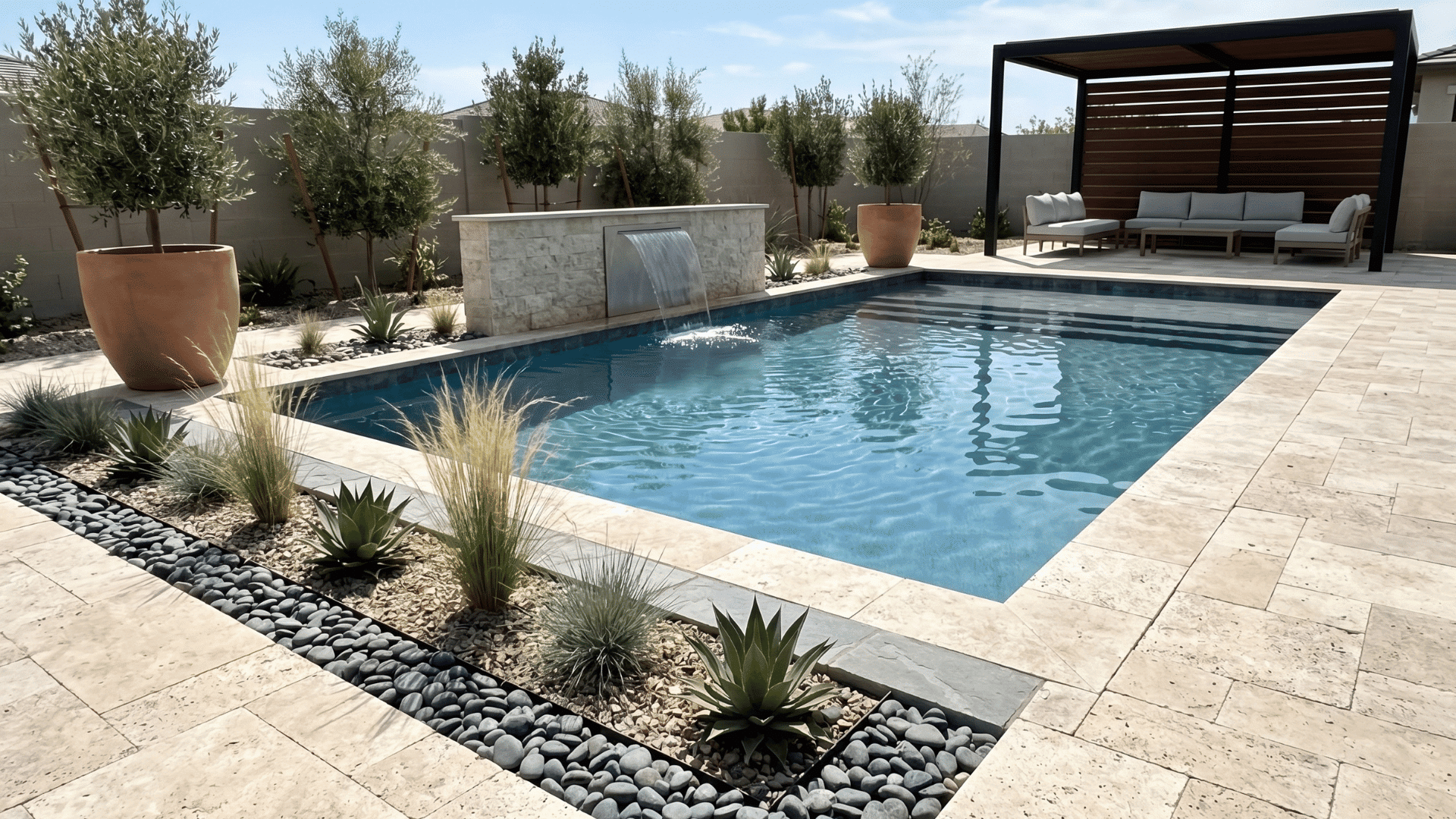
A stone-paved border running around the pool’s perimeter creates a clean, slip-resistant edge that ties the pool into the wider garden, giving it a structured, finished look.
How to set it up:
- Use textured natural stone or brushed concrete pavers rated for wet outdoor conditions
- Keep the border width consistent at 1.2 to 1.5 metres around the full pool perimeter
- Plant low ornamental grasses or agapanthus just beyond the paved edge for soft framing
- Install recessed ground lights along the paved border for evening poolside visibility
- Use a consistent stone tone throughout to connect the poolside area with other paved zones
23. Grid-Style Botanical Bento Garden
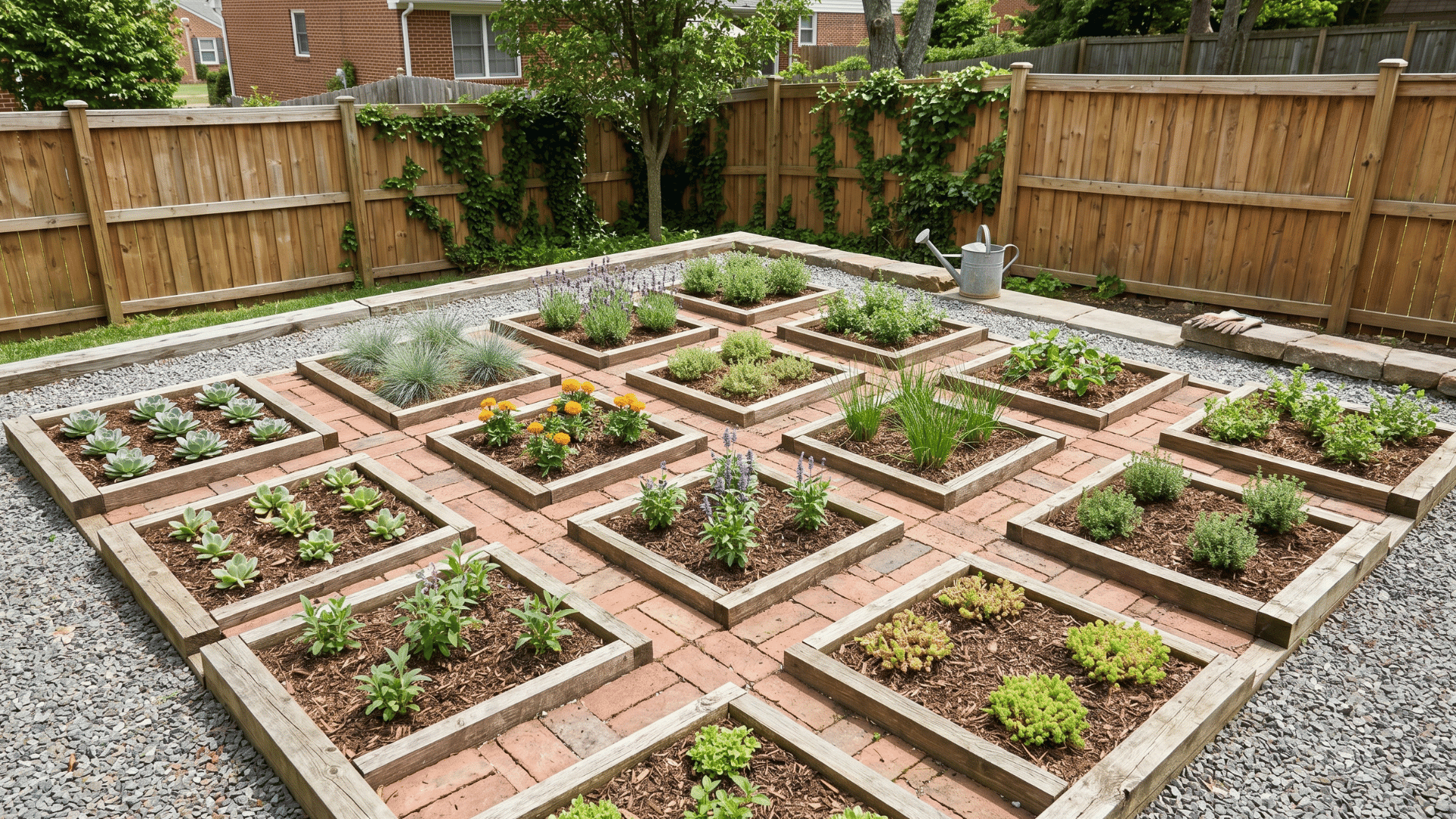
A small garden divided into a neat grid of separate planting squares creates a structured, considered layout, with each section housing a distinct plant type or color.
How to set it up:
- Use timber, steel, or brick edging strips to divide the growing area into equal grid squares
- Assign each square a single plant species for a clean, ordered botanical bento appearance
- Vary plant heights across the grid so taller sections sit at the rear or center
- Use contrasting foliage colors between adjacent squares to make the grid pattern visible
- Keep paths between sections at a practical width for kneeling and working comfortably
24. Floating Wood Steps Over Pebbles
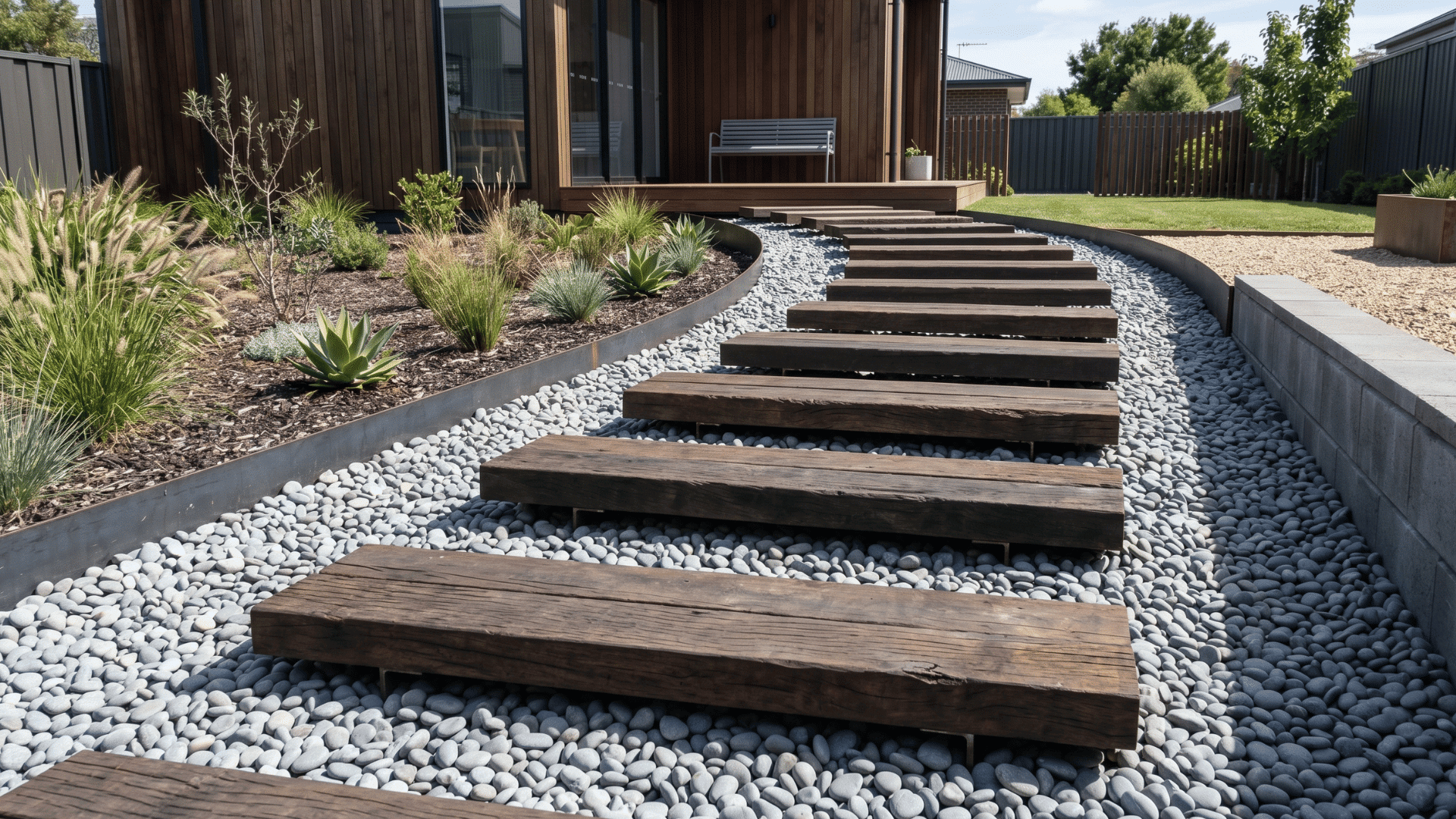
Thick timber sleepers set into a bed of rounded pebbles create the appearance of steps floating above the ground, adding a contemporary garden landscaping detail to any yard.
How to set it up:
- Use hardwood sleepers at least 10 cm thick so they sit firmly without shifting underfoot
- Spread a weed membrane beneath the pebble bed before laying stones to suppress growth
- Space each sleeper step at a consistent rise of 15 to 18 cm for comfortable movement
- Choose white or pale grey pebbles to contrast against dark timber for maximum visual impact
- Edge the pebble bed with a steel strip to keep stones contained and the border defined
25. Layered Garden Lighting Layout
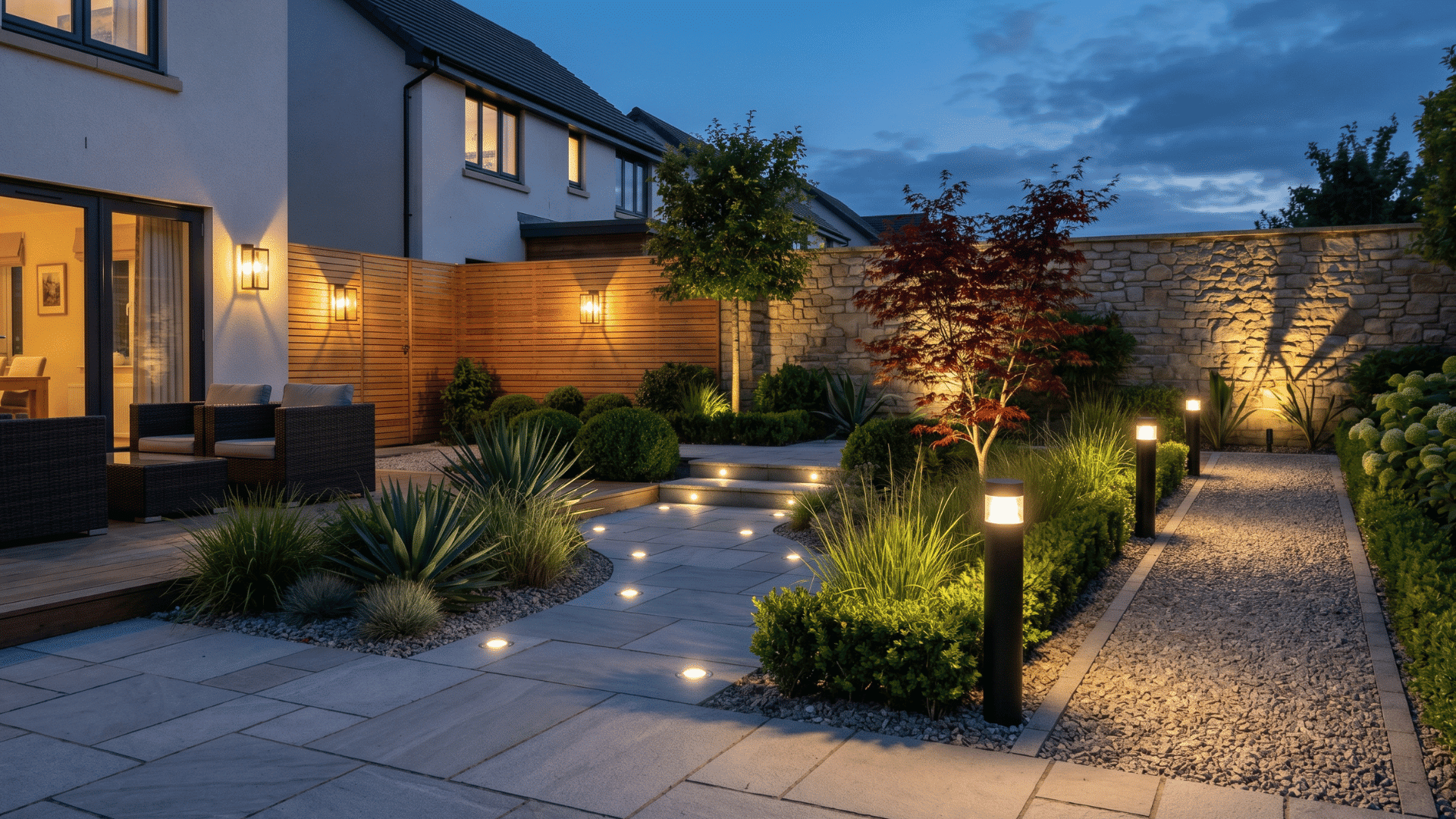
Using multiple types of outdoor lighting at different heights creates depth, definition, and usability across the garden once natural light fades in the evening.
How to set it up:
- Combine spike spotlights, path lights, and overhead string lights for a layered lighting effect
- Use warm white bulbs throughout to keep the lighting tone consistent across the space
- Direct spike lights upward at feature trees or walls to create drama through shadow
- Place path lights at 1.5 to 2 meter intervals for even coverage along walkways and borders
- Connect all lights to a single timer or smart switch so the full setup activates together
26. Rain Garden with Natural Drain Channel
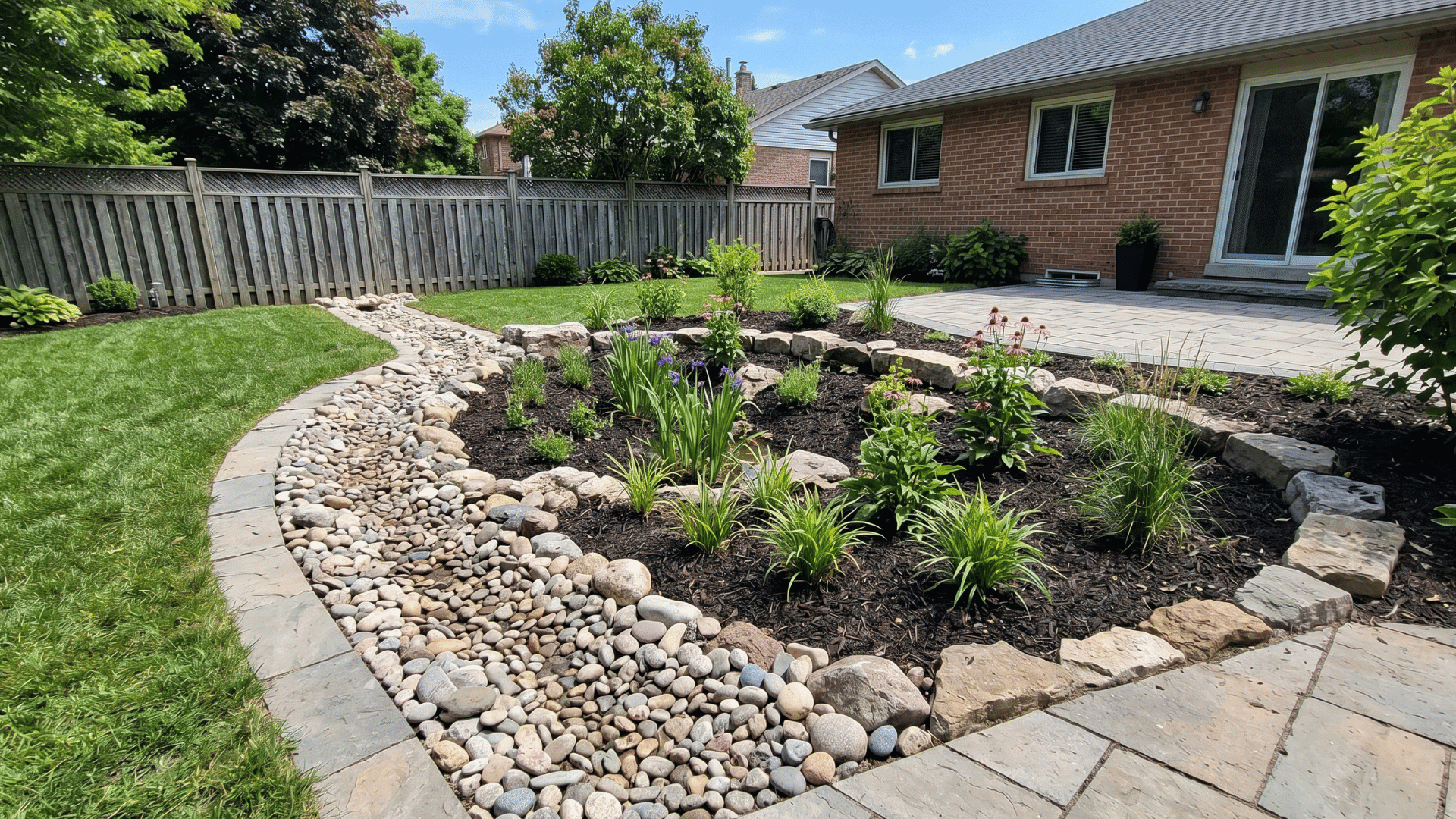
A planted depression in the ground designed to collect and absorb rainwater runoff creates a practical drainage solution that also functions as a soft garden feature.
How to set it up:
- Position the rain garden at the lowest natural point of the yard to collect runoff effectively
- Dig the basin 15 to 30 cm deep with gently sloping sides for stable plant root zones
- Plant moisture-tolerant species like sedge, iris, or native rushes throughout the basin
- Line the inlet channel with smooth pebbles to slow water flow and prevent soil erosion
- Allow the basin to drain naturally within 24 to 48 hours to avoid standing water buildup
27. Artificial Turf Play Zone Backyard
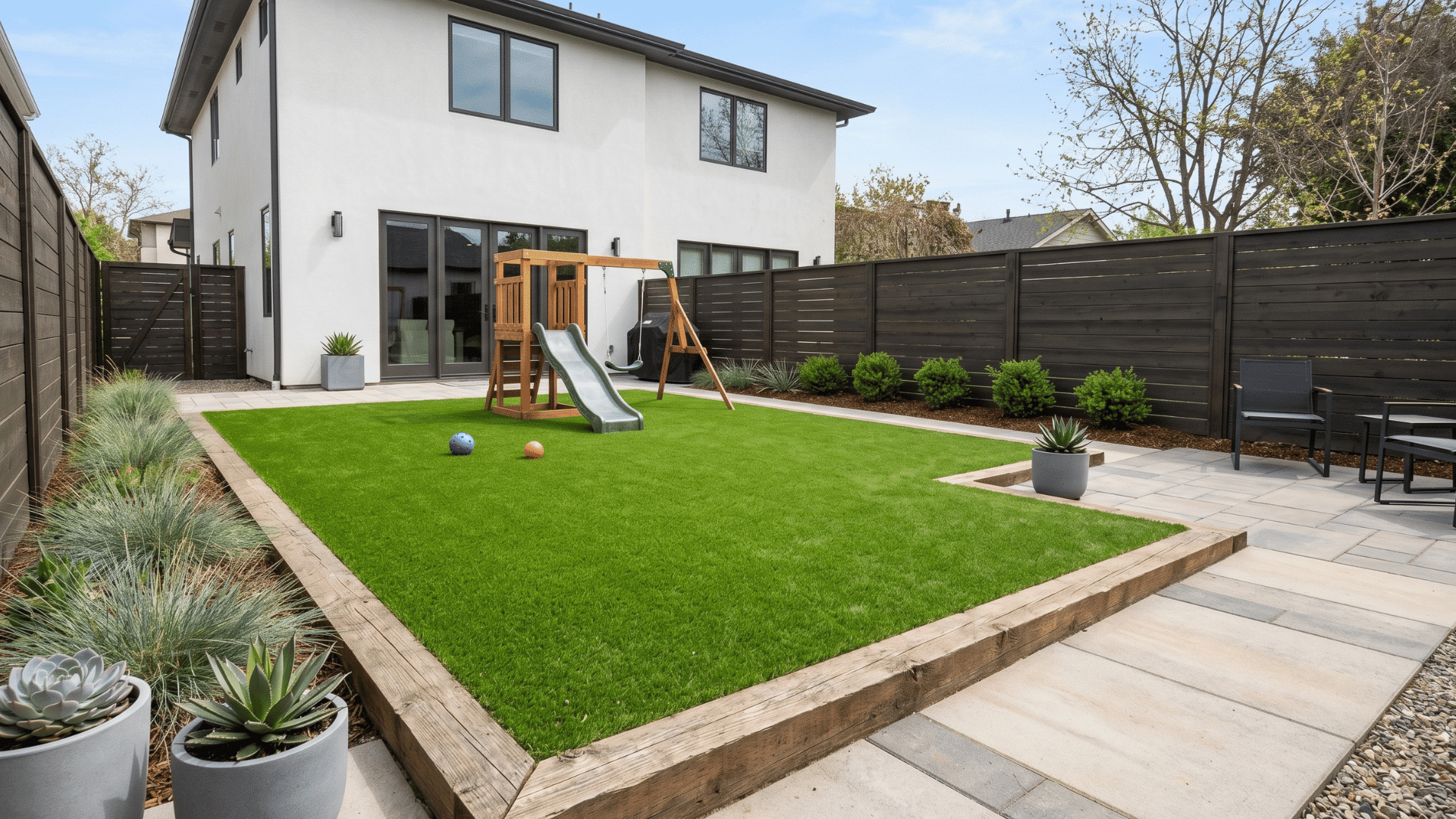
A defined section of artificial grass within the backyard creates a soft, mud-free play area for children that stays usable and tidy throughout the year.
How to set it up:
- Choose a turf pile height of 30 to 35 mm for a surface that feels soft underfoot
- Lay a shock-absorbing underlay beneath the turf for a safer fall surface for children
- Edge the turf zone with timber or steel border strips to separate it from other surfaces
- Install a discreet drainage layer beneath the turf base to prevent water pooling after rain
- Keep the turf area clearly defined by surrounding it with contrasting paving or gravel
28. Mediterranean Courtyard with Olive Trees
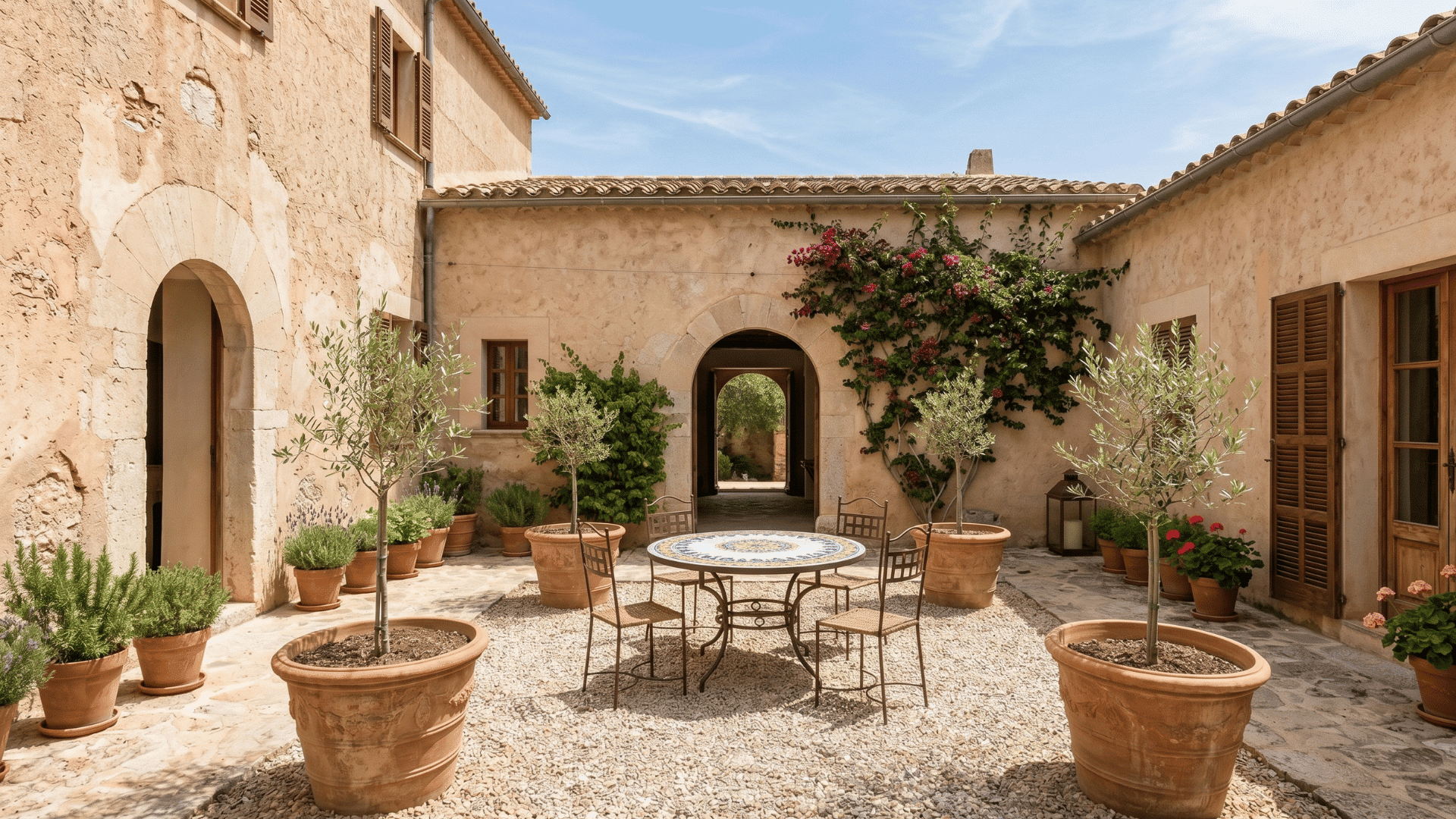
Terracotta pots, gravel ground cover, and established olive trees create a warm, sun-drenched courtyard look inspired by the gardens of southern Europe.
How to set it up:
- Use large terracotta or aged ceramic pots to plant olive trees as the main courtyard feature
- Spread pale limestone gravel across the courtyard floor for an classic Mediterranean base
- Add a central mosaic tile table or stone water bowl as a decorative focal point
- Plant drought-tolerant herbs like rosemary, thyme, and oregano in smaller pots nearby
- Use warm-toned render or natural stone on surrounding walls to complete the courtyard setting
29. Tall Privacy Hedge Garden Border
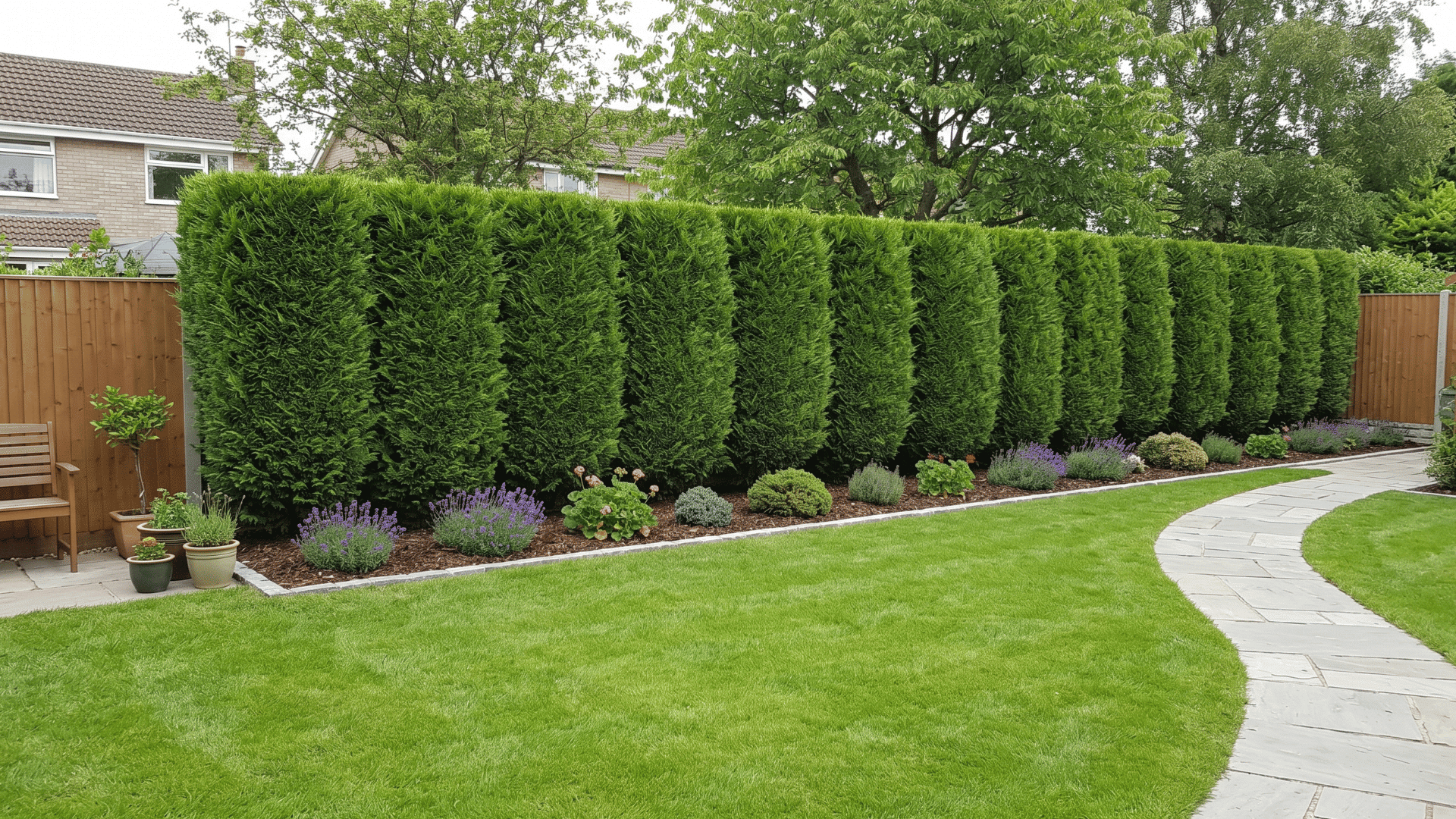
A continuous row of tall evergreen hedging planted along the garden boundary creates natural, year-round screening without the visual weight of a solid fence or wall.
How to set it up:
- Choose fast-growing evergreen species like laurel, photinia, or Leyland cypress for screening
- Plant hedging at 60 to 90 cm spacing and allow two to three seasons to fill in fully
- Trim hedges twice a year in late spring and early autumn to maintain a neat, even line
- Back the hedge with a trellis panel during the early years while the plants establish and grow
- Plant a narrow flower border along the inner hedge base to soften the transition into the garden
30. Oversized Ceramic Pot Display Garden
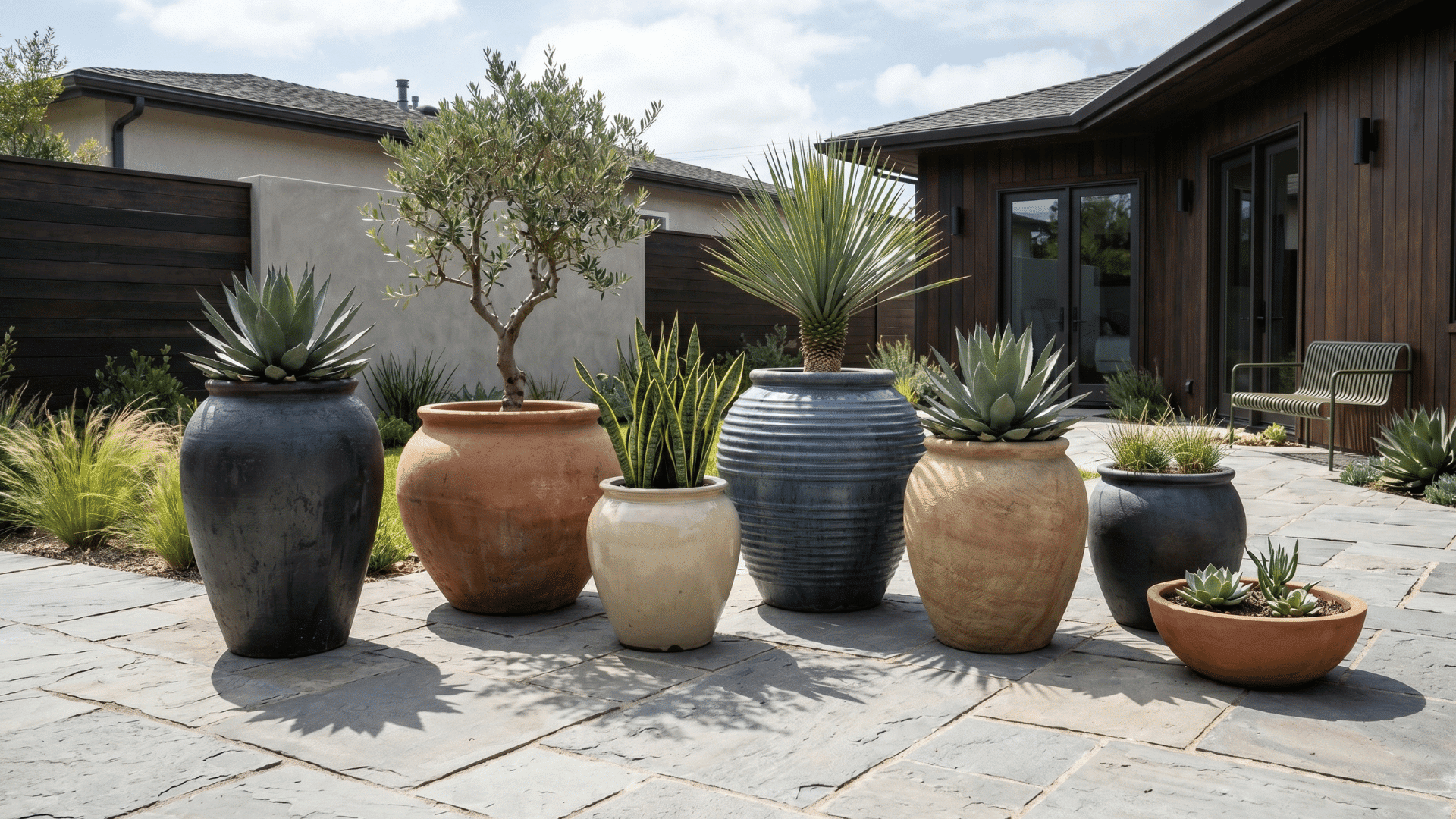
Grouping large ceramic planters in varying heights and sizes creates a bold container garden display that adds color, structure, and personality to paved or hard surfaces.
How to set it up:
- Use pots in odd-numbered groupings of three or five for the most visually balanced arrangement
- Vary pot heights by placing taller pots at the rear and shorter ones toward the front
- Choose a consistent glaze color or tone across all pots to keep the display cohesive
- Plant each pot with a tall specimen, a mid-height filler, and a trailing plant at the base
- Raise pots on pot feet or tiles to improve drainage and prevent base staining on paving
31. Rustic Farmhouse Garden with Wagon Decor
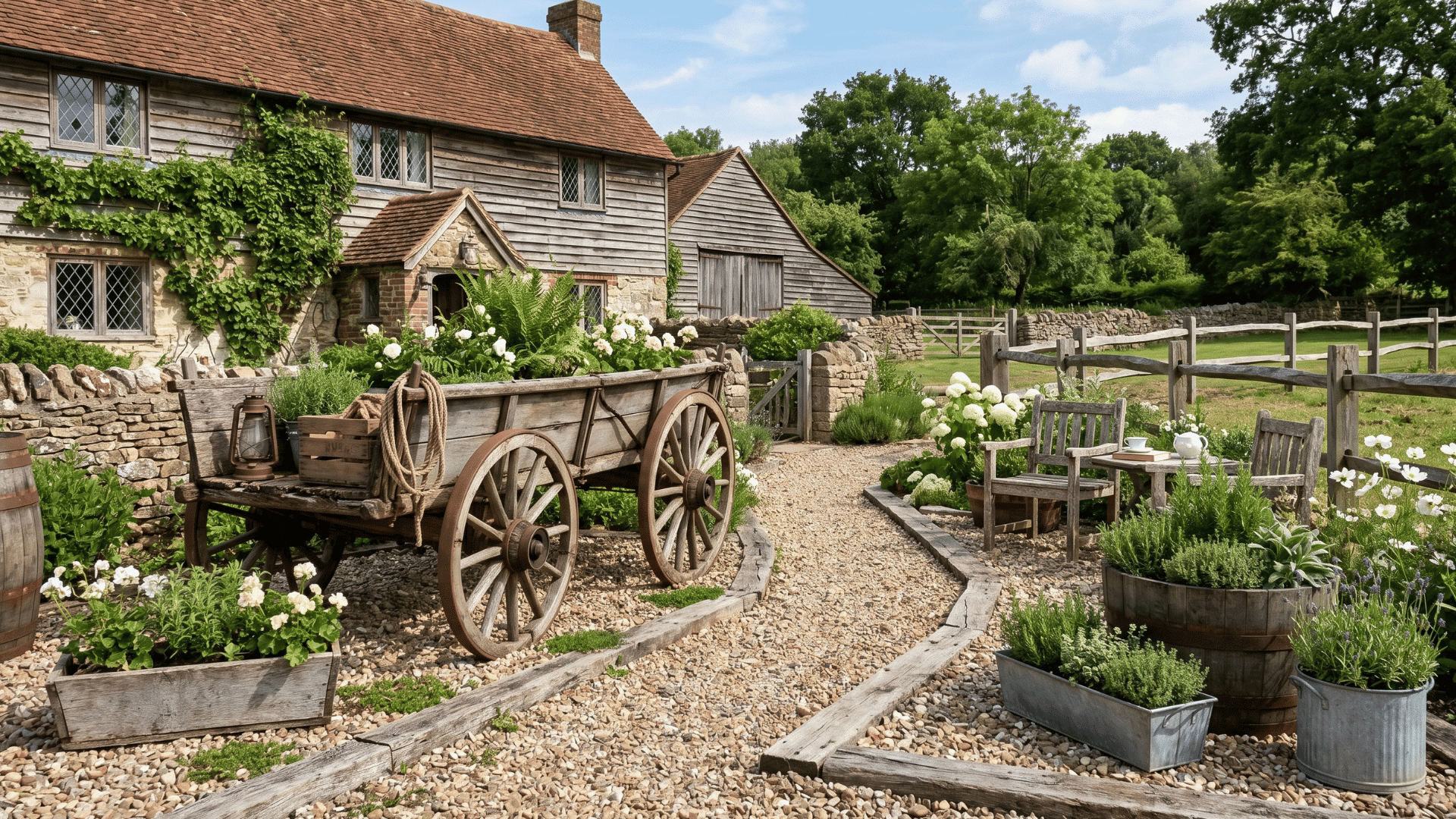
Vintage or replica wooden wagon wheels and reclaimed timber accents create a relaxed, farmhouse-inspired garden style with natural character and a lived-in quality.
How to set it up:
- Use one or two wagon wheels as statement pieces rather than scattering them across the space
- Place reclaimed timber planters or barrels near the main seating area as planting features
- Choose planting in soft, muted tones like white, cream, and blush to suit the rustic style
- Add a gravel or compacted earth path to reinforce the informal countryside garden character
- Use galvanized metal containers or vintage crates for small herb or flower planting displays
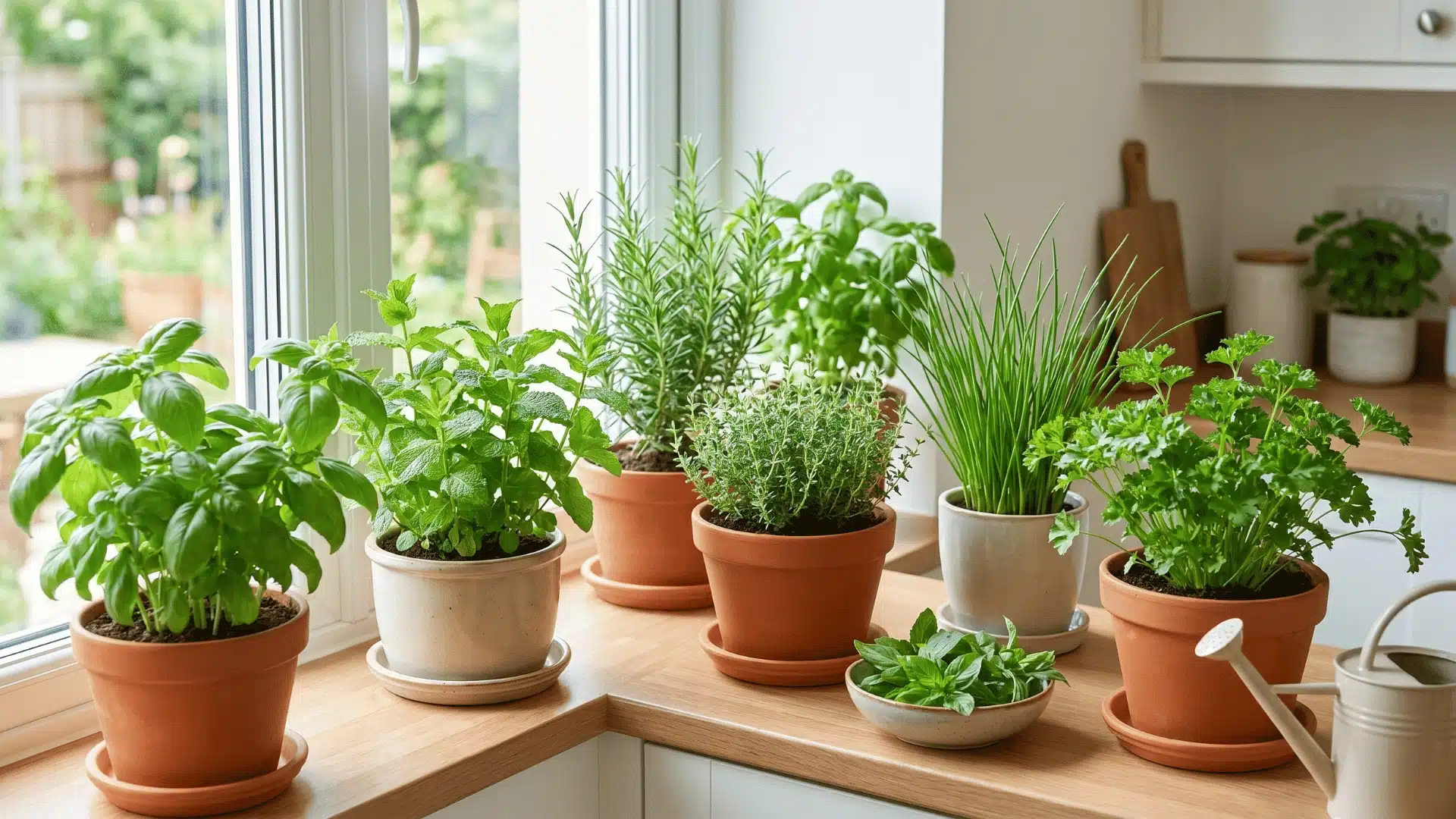
32. Spiral Herb Garden Bed
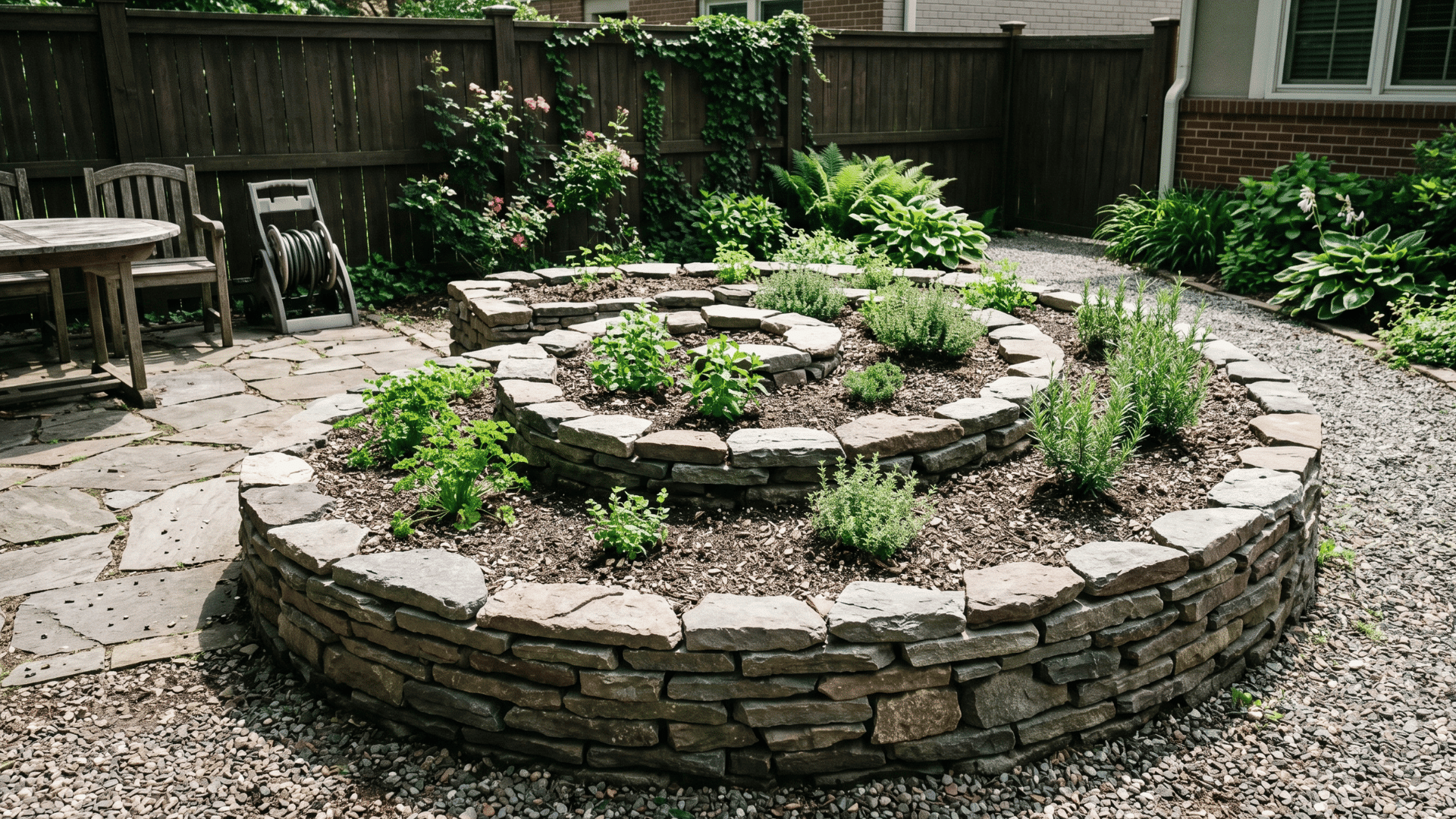
A raised spiral mound planted with culinary herbs at different heights creates a compact, productive, and visually structured garden bed suitable for any size of outdoor space.
How to set it up:
- Build the spiral using stacked flat stones or bricks rising from ground level to around 90 cm
- Plant moisture-loving herbs like mint and parsley at the lower, outer sections of the spiral
- Place drought-tolerant herbs like thyme and rosemary in the higher, drier top sections
- Fill the spiral with free-draining soil mixed with grit to suit a range of herb types
- Position the spiral in a sunny spot and keep it within easy reach of the kitchen door
33. Black Mulch Garden with White Stones
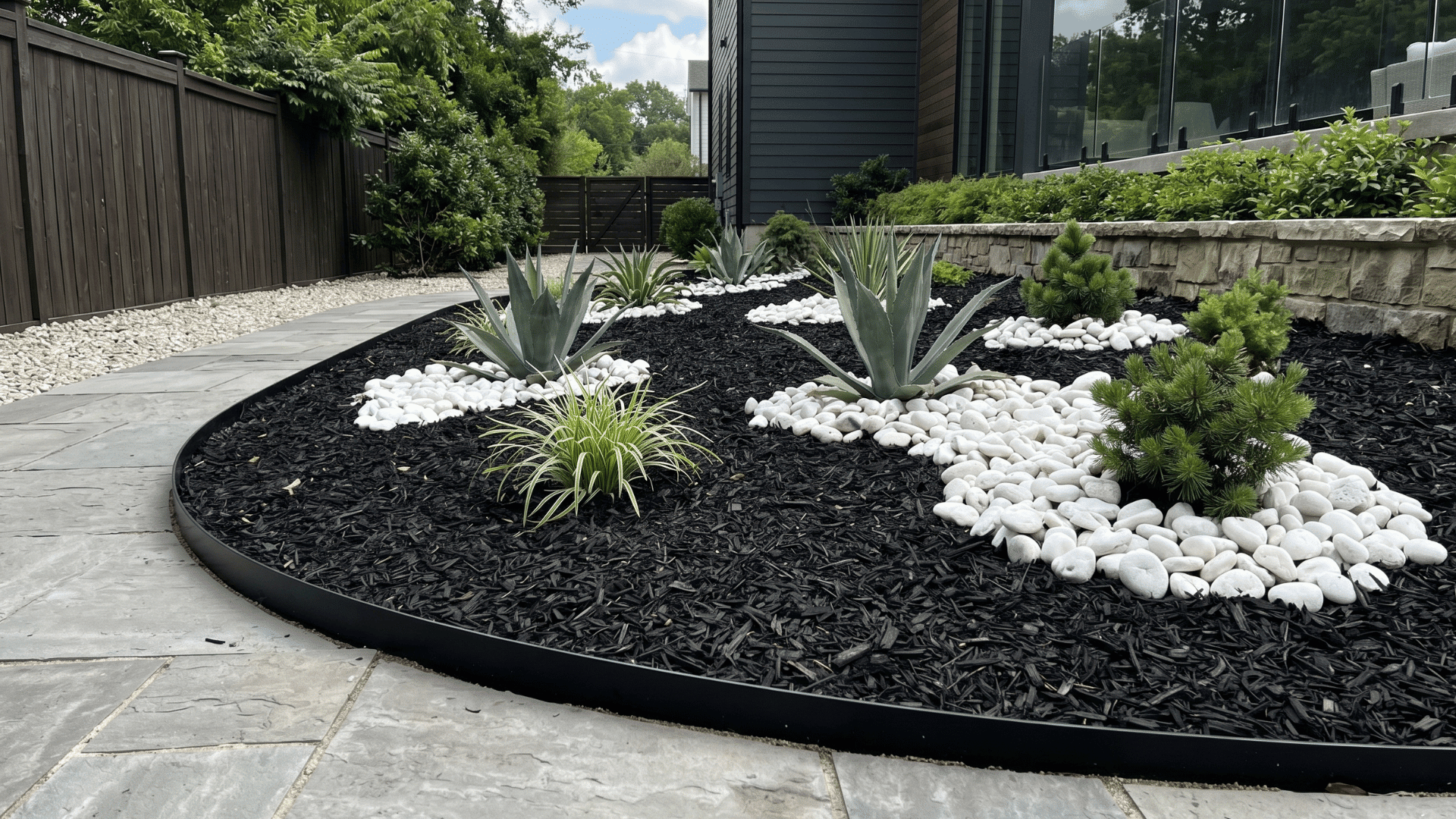
A combination of dark bark mulch as the base with white decorative stones as accents creates a high-contrast garden bed that makes plant foliage stand out sharply.
How to set it up:
- Spread black bark mulch at a depth of 5 to 8 cm across the planting bed surface
- Place clusters of white or pale grey stones around feature plants for accent contrast
- Choose plants with large, bold leaves or bright flowers to maximize the contrast effect
- Keep the mulch topped up annually, as it breaks down to maintain the dark, rich appearance
- Edge the bed with a clean steel or black metal border strip to frame the planting area
34. Hammock Retreat Under Shade Trees
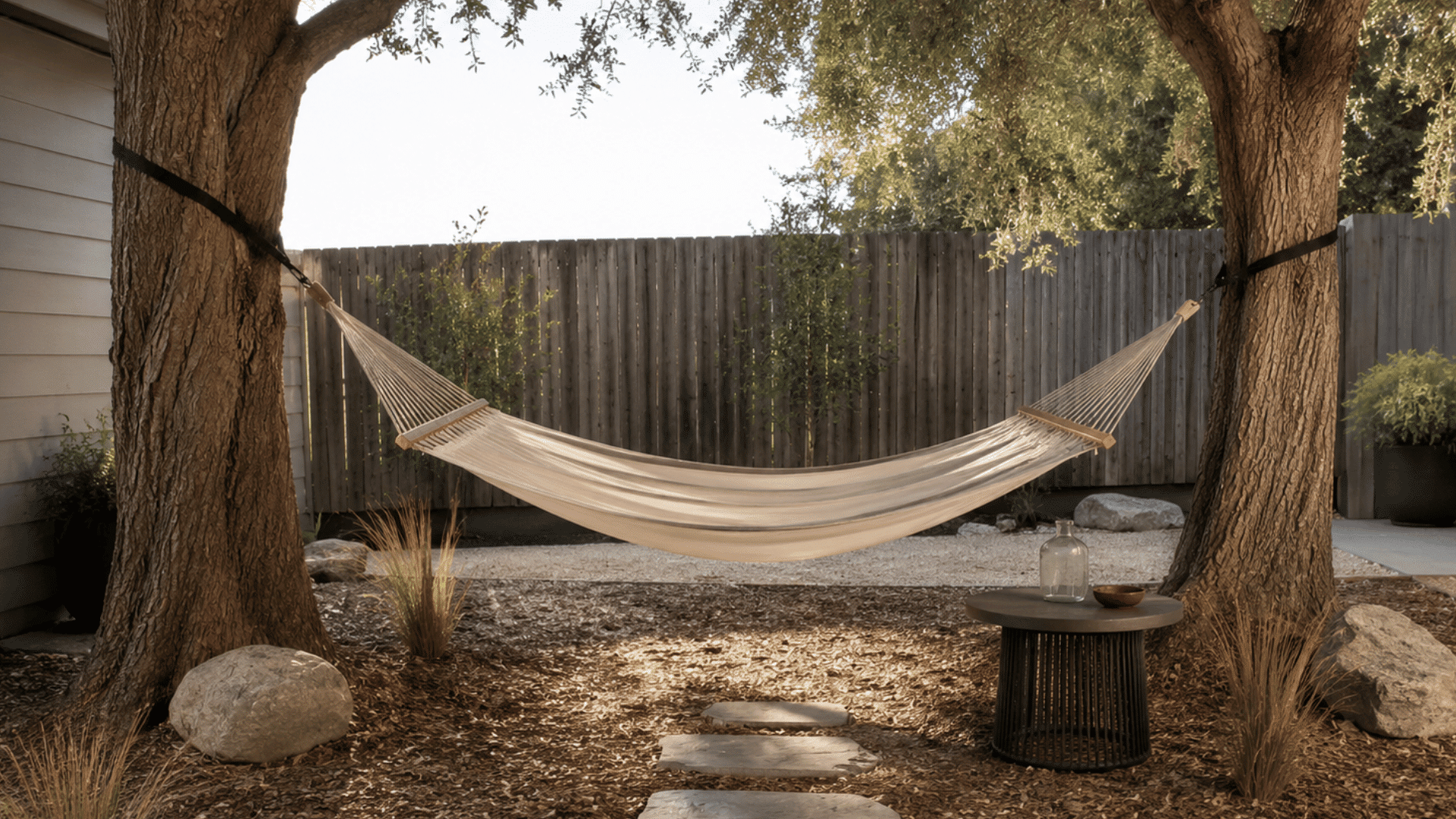
Two established trees used as natural anchor points for a garden hammock create a low-cost, relaxed outdoor rest area that fits naturally into the existing garden layout.
How to set it up:
- Use heavy-duty tree straps rather than bolts or screws to protect the tree bark from damage
- Position the hammock so it hangs 50 to 60 cm above the ground at the lowest central point
- Place a flat stone or timber stepping pad beneath the hammock for a dry entry and exit point
- Add a small side table or hanging caddy nearby for books, drinks, or sunscreen
- Surround the base of each tree with shade-tolerant ground cover or bark mulch for a tidy finish
35. Modern Garden with Defined Planting Zones
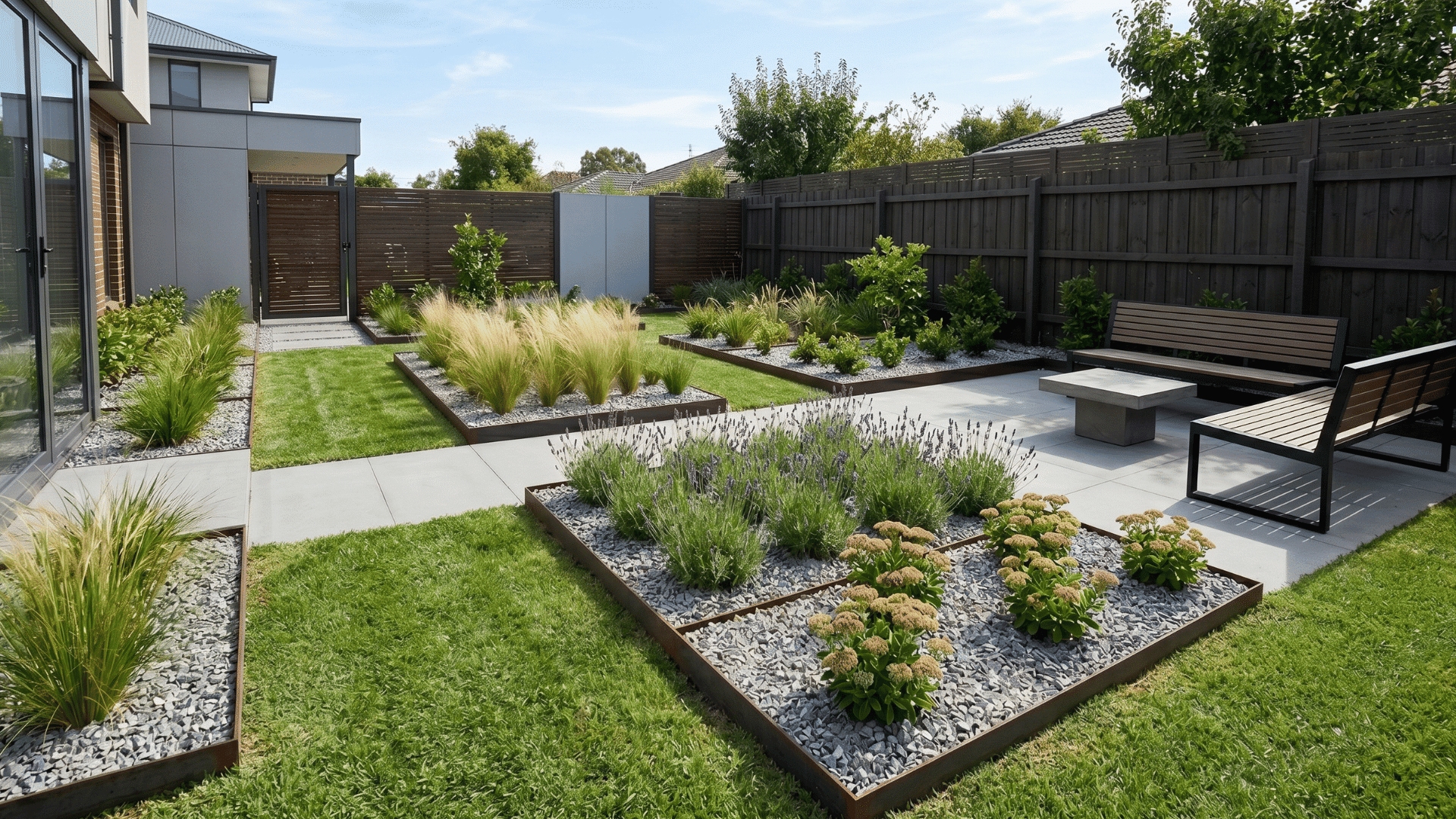
Dividing the garden into clearly separated zones for planting, seating, and movement creates a structured, purposeful layout that suits modern garden landscaping at any scale.
How to set it up:
- Use contrasting materials like gravel, grass, and paving to visually separate each garden zone
- Define planting borders with a low steel or corten edging strip for a clean, modern line
- Keep each zone’s planting palette limited to two or three species for a considered look
- Position the seating zone away from the main planting area to avoid clutter and crowding
- Use consistent lighting across all zones to tie the layout together after dark
It’s a Wrap
Every garden has potential, regardless of its current shape or size. The key is knowing where to start and making gradual changes over time.
Small updates, whether a new planting bed, a defined path, or a simple seating corner, can build into a space that genuinely works for you.
Good garden landscaping is not about doing everything at once. Pick one idea, give it your full attention, and build from there.
Your outdoor space deserves the same thought and care as any room inside your home. Choose your favorite idea from the list and take the first step today.