
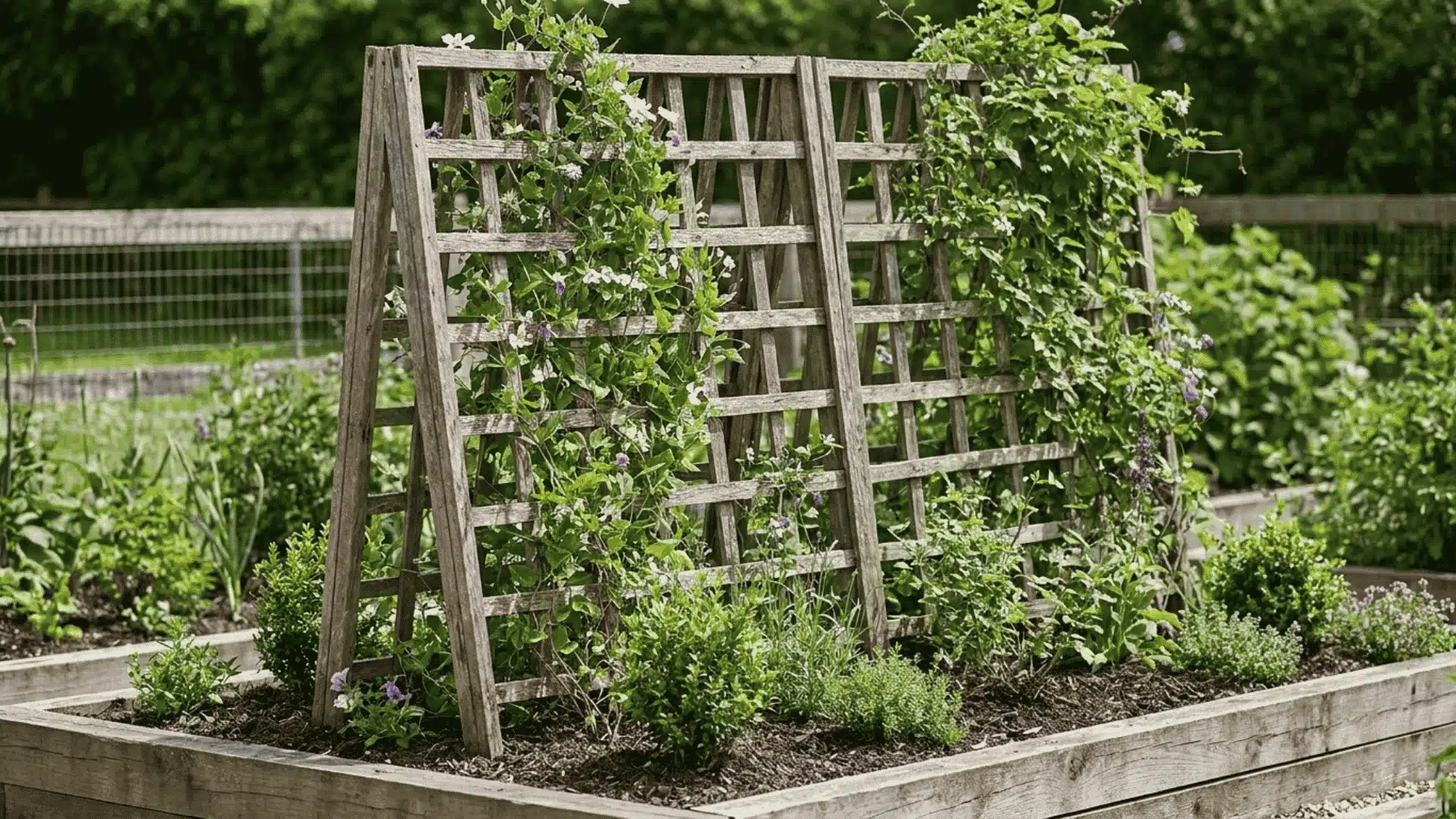



Climbing plant problems often begin with poor support, not unhealthy plants. Weak structures, crowded vines, and limited airflow create preventable growing issues outdoors.
A garden trellis helps vines grow upward while improving airflow, reducing overcrowding, and making harvesting easier in smaller outdoor spaces throughout the growing season.
Vines trailing across damp soil often develop mildew, tangled stems, and hidden produce. Still, different plants require different support depending on sunlight, space, and weight.
Let me break down how different trellis styles actually work in outdoor gardens.
What Is a Trellis?
A trellis is a structure that supports climbing plants and helps them grow upward instead of spreading across the ground.
It can stand on its own in a garden bed or attach to a wall, fence, planter, or raised bed. The goal is simple: give climbing plants a surface to grow on while keeping the garden more organized and easier to manage.
Trellises come in many shapes, sizes, and materials. Some are small and decorative for flowers, while others are large and strong enough to support heavy fruiting vines.
What Does a Trellis Look Like?
Most trellises have an open framework made from crossed bars, wires, poles, or lattice panels.
The open spaces are important because they allow plants to weave through the structure while still getting sunlight and airflow around the leaves.
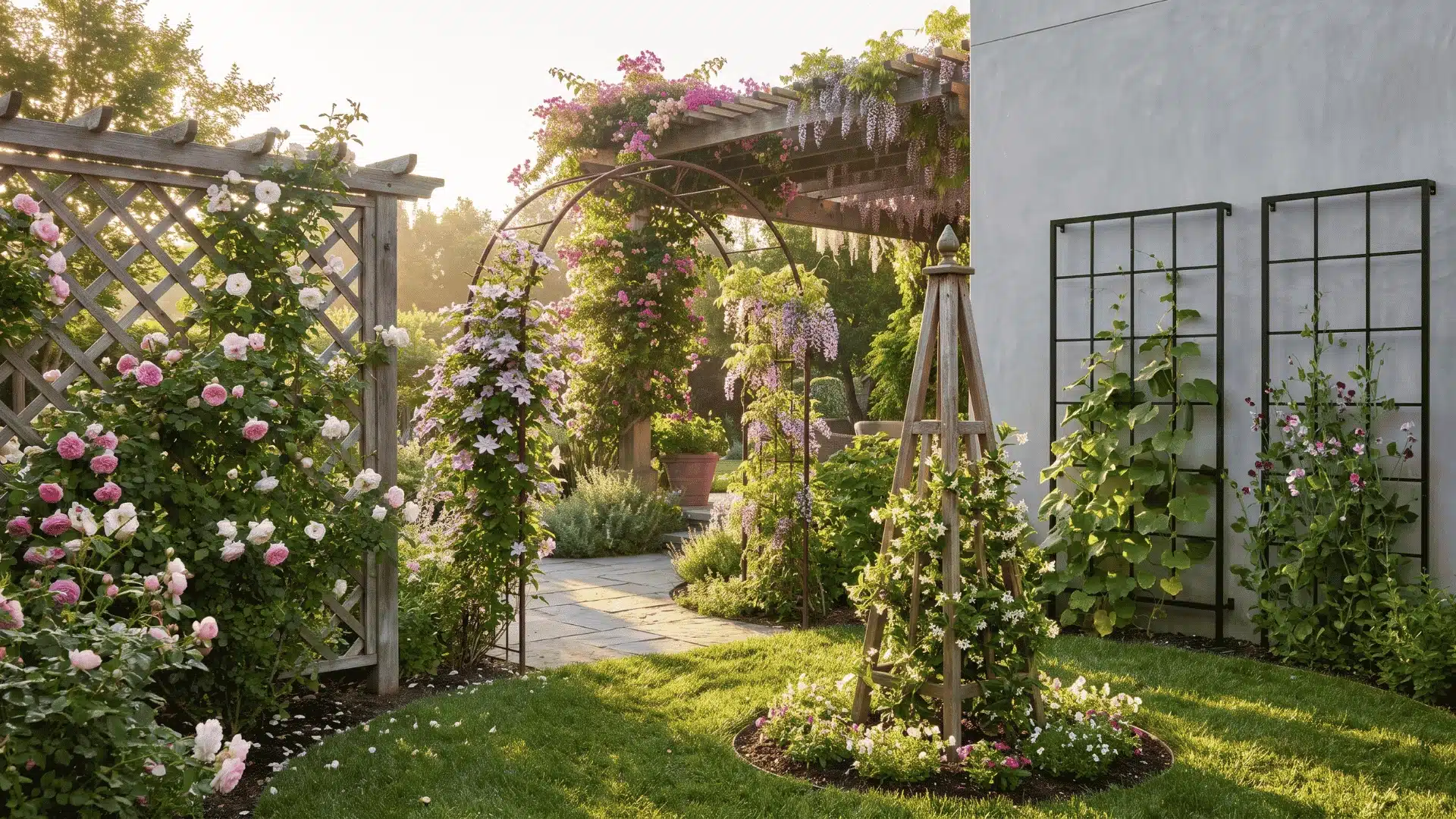
Some trellises sit flat against walls or fences, while others stand freely in garden beds. You can find simple straight panels, tall towers, arches, and cone-shaped designs depending on the plants and the available space.
Common Trellis Designs
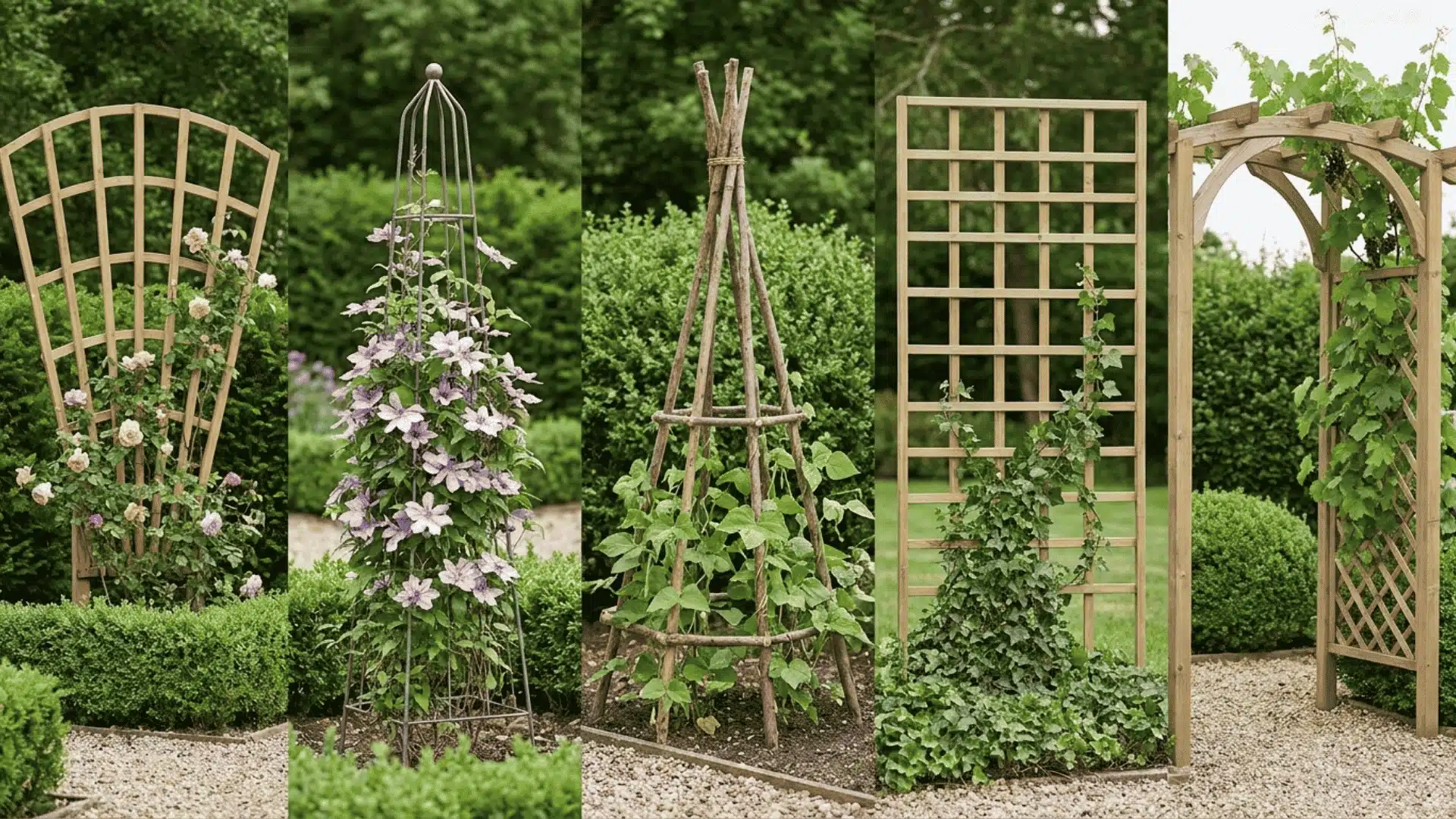
Different trellis styles work better for different garden layouts and plant types.
| Design | What It Looks Like | Best For |
|---|---|---|
| Fan Trellis | Wide top with narrow bottom | Roses, wall spaces |
| Obelisk Trellis | Tall tower shape | Flower beds, focal points |
| Teepee Trellis | Poles tied together at the top | Beans, peas, temporary setups |
| Flat Panel Trellis | Straight grid panel | Walls, fences, espalier plants |
| Arbor Trellis | Arched walkway frame | Garden entrances, pathways |
A flat panel trellis works well in smaller gardens because it fits neatly against fences and walls.
Obelisk and teepee styles are common in vegetable gardens because they support climbing plants while taking up very little ground space.
Arbor trellises are often used over pathways or entrances to create a more structured garden look.
How to Choose the Right Trellis Material for Your Garden?
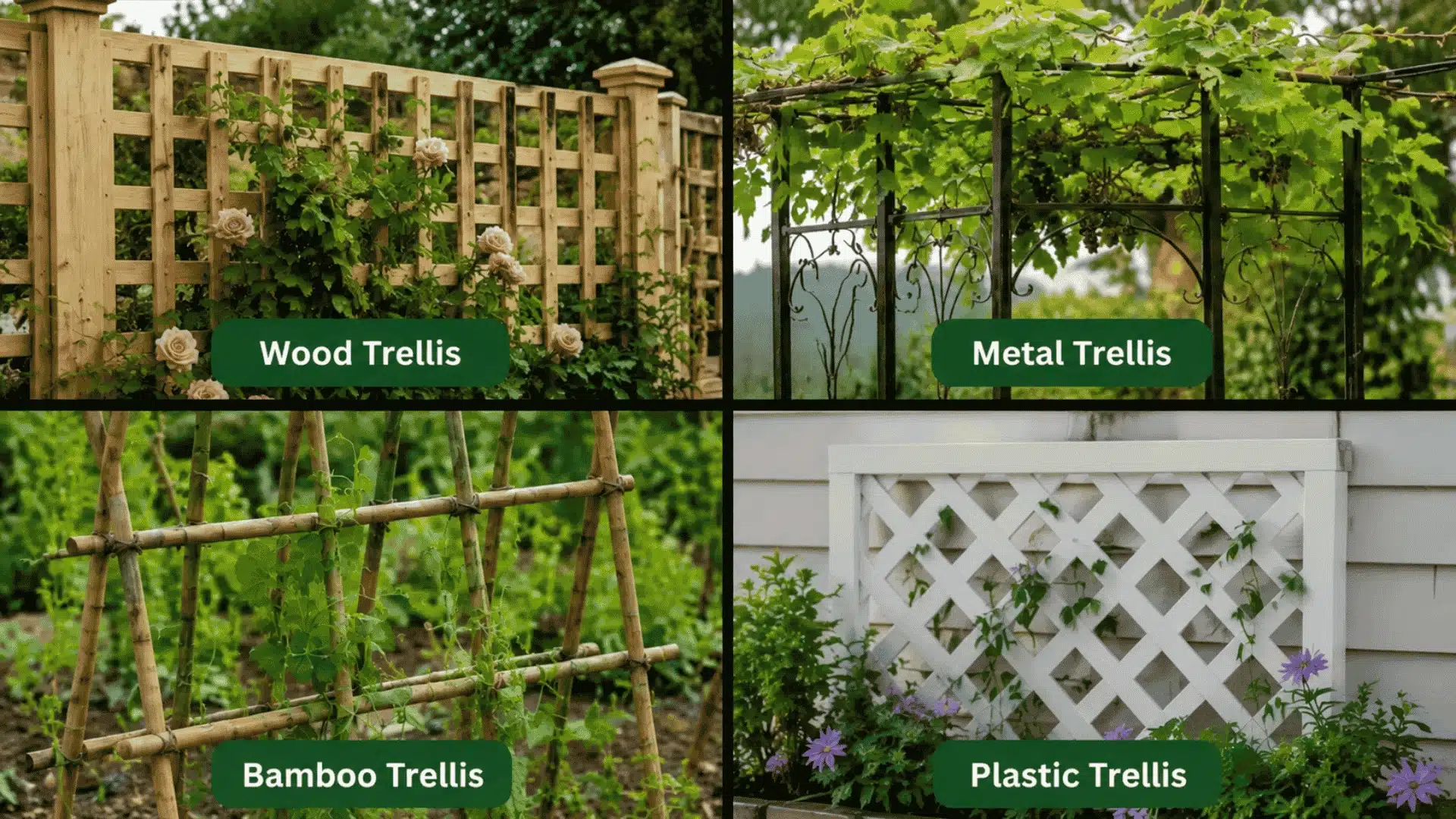
The material affects how long the trellis lasts and how much weight it can support.
- Wood Trellises: Wood blends nicely into outdoor spaces and works well in traditional gardens. Cedar and redwood last longer because they handle moisture better.
- Metal Trellises: Metal trellises are stronger and usually need less maintenance. They work better for heavier climbing plants like grapes and mature roses.
- Bamboo Trellises: Bamboo costs less and works well for lightweight plants. It breaks down faster in rainy or humid climates.
- Plastic Trellises: Plastic options are lightweight and affordable, though cheaper versions may crack after long sun exposure.
Choosing the right material ensures your trellis performs well over the long term, so consider your climate, the plants you’re growing, and how much maintenance you’re willing to do.
What Does a Trellis Do for Plants?
A trellis helps climbing plants grow upward rather than across the ground. That single shift in direction changes how a garden performs across the entire season.
Vertical growth does several things at once:
- Saves space: Vines grow up instead of out, freeing ground space for other plants alongside them.
- Improves airflow: Leaves spread apart naturally on a trellis, reducing moisture buildup and lowering the risk of mildew developing.
- Easier harvesting: Cucumbers, beans, and peas hang openly and become far easier to spot and pick without digging through dense foliage.
- Cleaner produce: Fruits and vegetables stay off damp soil, which directly reduces rot and makes them harder for pests to find.
Trellises also add visible height and structure to outdoor spaces. That matters even during cooler seasons when climbing plants aren’t actively growing across the structure.
How Plants Actually Climb
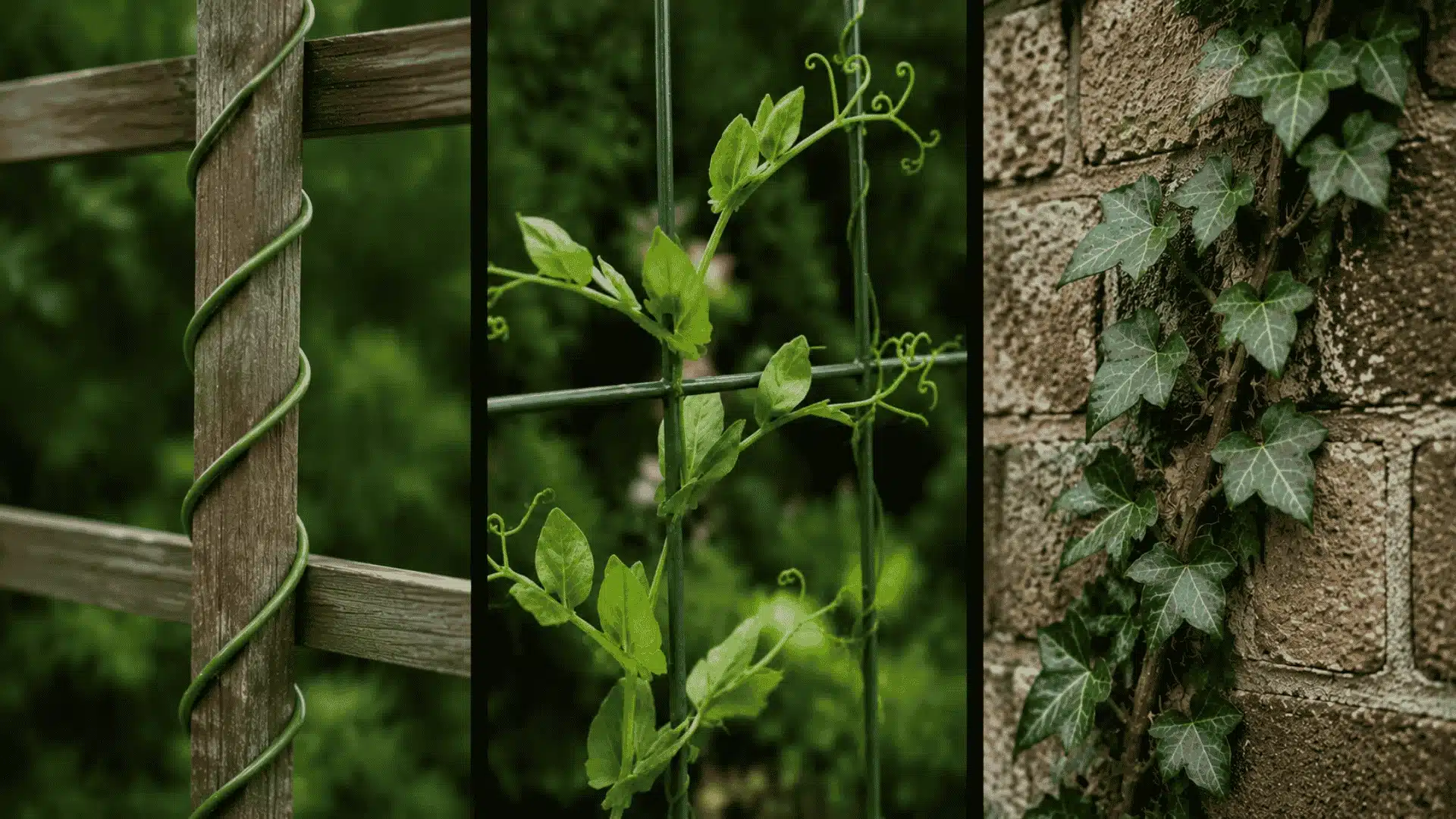
Different climbing plants grow upward in different ways. Knowing how a plant climbs helps you choose a support that actually works for it.
1. Twiners
Twining plants wrap their stems around supports as they grow upward.
These plants need narrow poles, strings, or thin bars that are easy to grip. Thick posts or wide flat panels are harder for them to climb.
Common twining plants include:
- Pole beans
- Morning glory
- Jasmine
Teepee trellises and narrow metal frames work especially well for these plants.
2. Tendril Climbers
Tendril climbers use tiny curling strands to grab nearby supports.
These plants need narrow gaps and thinner materials so the tendrils can attach properly. If the spaces are too wide, the plant may struggle to climb.
Common tendril climbers include:
- Peas
- Cucumbers
- Clematis
Wire grids, netting, and string mesh work well for these plants.
3. Clinging Climbers
Clinging climbers attach themselves using aerial roots or sticky pads.
Many can grow directly on brick, stone, wood, or walls without needing a traditional trellis at all.
Common clinging climbers include:
- Ivy
- Climbing hydrangea
These plants usually work better on permanent outdoor surfaces than on lightweight movable structures.
What Can You Grow on a Trellis?
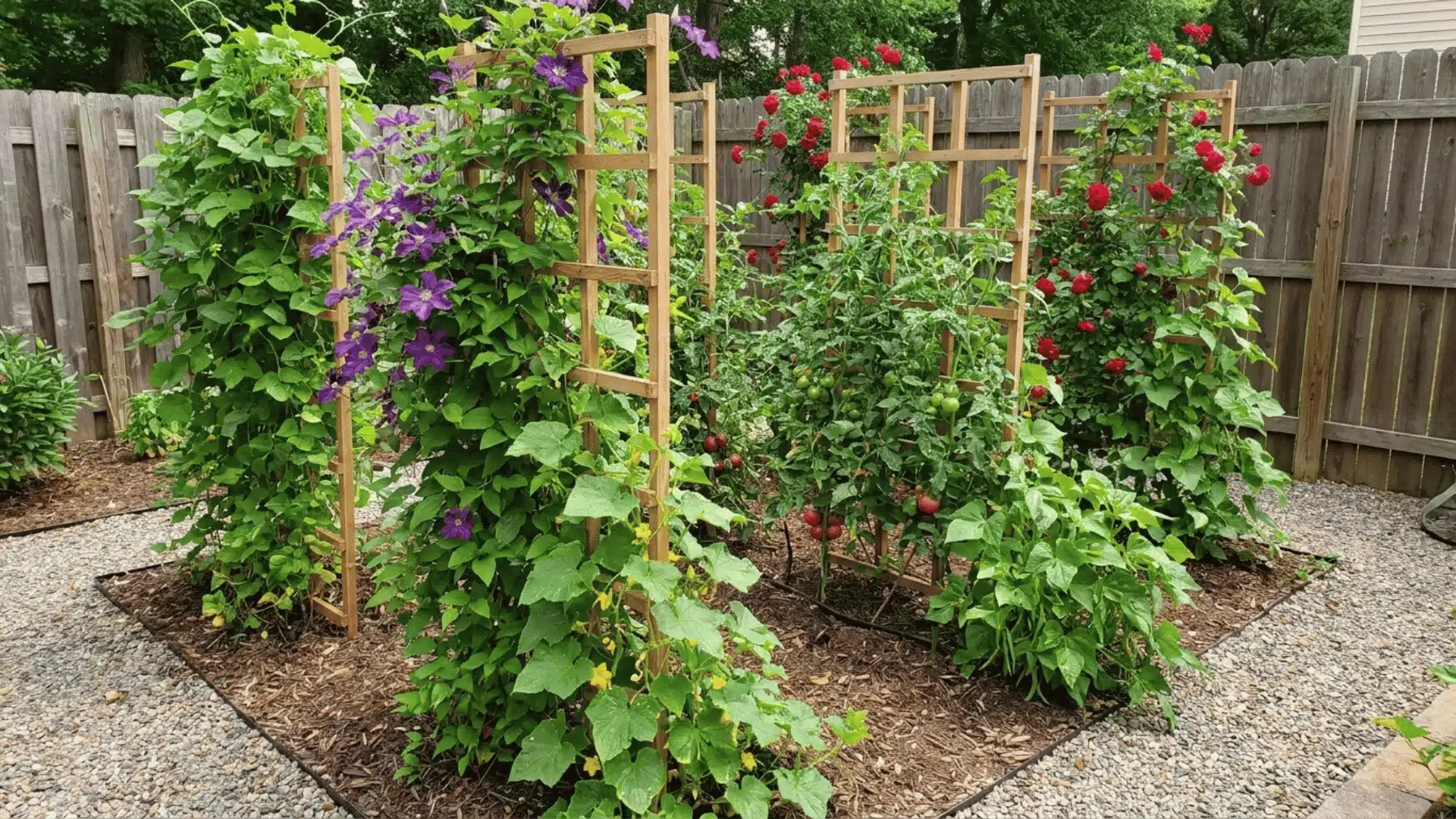
Trellises support both flowering vines and climbing vegetables while helping gardens stay organized, productive, and easier to maintain outdoors throughout the growing season.
Flowering Plants
Climbing flowers add color, coverage, and height to outdoor spaces.
Some flowering vines stay lightweight and fast-growing, while others become heavy and woody over time.
Popular climbing flowers include:
- Clematis
- Climbing roses
- Jasmine
- Wisteria
- Mandevilla
Heavy plants like wisteria need strong permanent support because mature vines become very heavy after several growing seasons.
Vegetables and Fruit Plants
Many vegetables benefit from vertical growing.
Popular edible climbers include:
- Cucumbers
- Pole beans
- Peas
- Grapevines
- Kiwi vines
Vertical growing improves airflow, keeps produce cleaner, and saves space in smaller gardens.
Not every plant benefits from a trellis, though. Large shrubs and spreading plants often grow better with wider ground support.
Where to Put a Trellis?
The right location helps climbing plants grow better while keeping the trellis stable, secure, and easier to maintain in outdoor conditions.
Sun Exposure Matters
Most climbing vegetables and flowering vines grow best in full sun.
Place the trellis where plants receive at least six hours of direct sunlight daily unless the plant prefers shade.
South-facing and west-facing areas usually receive the strongest sunlight.
Leave Space From Walls
Do not press a trellis tightly against a wall or fence.
Leaving a small gap improves airflow behind the plants and helps leaves dry faster after rain. Better airflow lowers mildew and moisture problems.
The extra space also gives vines room to spread properly.
Anchor It Securely
A fully grown trellis can become heavy once covered with vines and foliage.
Freestanding trellises should sit firmly in the ground, while larger structures may need stakes or concrete support for stability.
Wall-mounted trellises should be attached to strong supports rather than thin fence panels or siding.
Protect It From Wind
Strong wind can damage lightweight trellises and break climbing stems.
Placing the trellis near a fence, hedge, or wall can help reduce wind pressure while still allowing airflow around the plants.
Metal and strong wooden trellises usually handle windy conditions better than lightweight bamboo or thin plastic.hh
Trellis vs. Pergola: What’s the Difference?
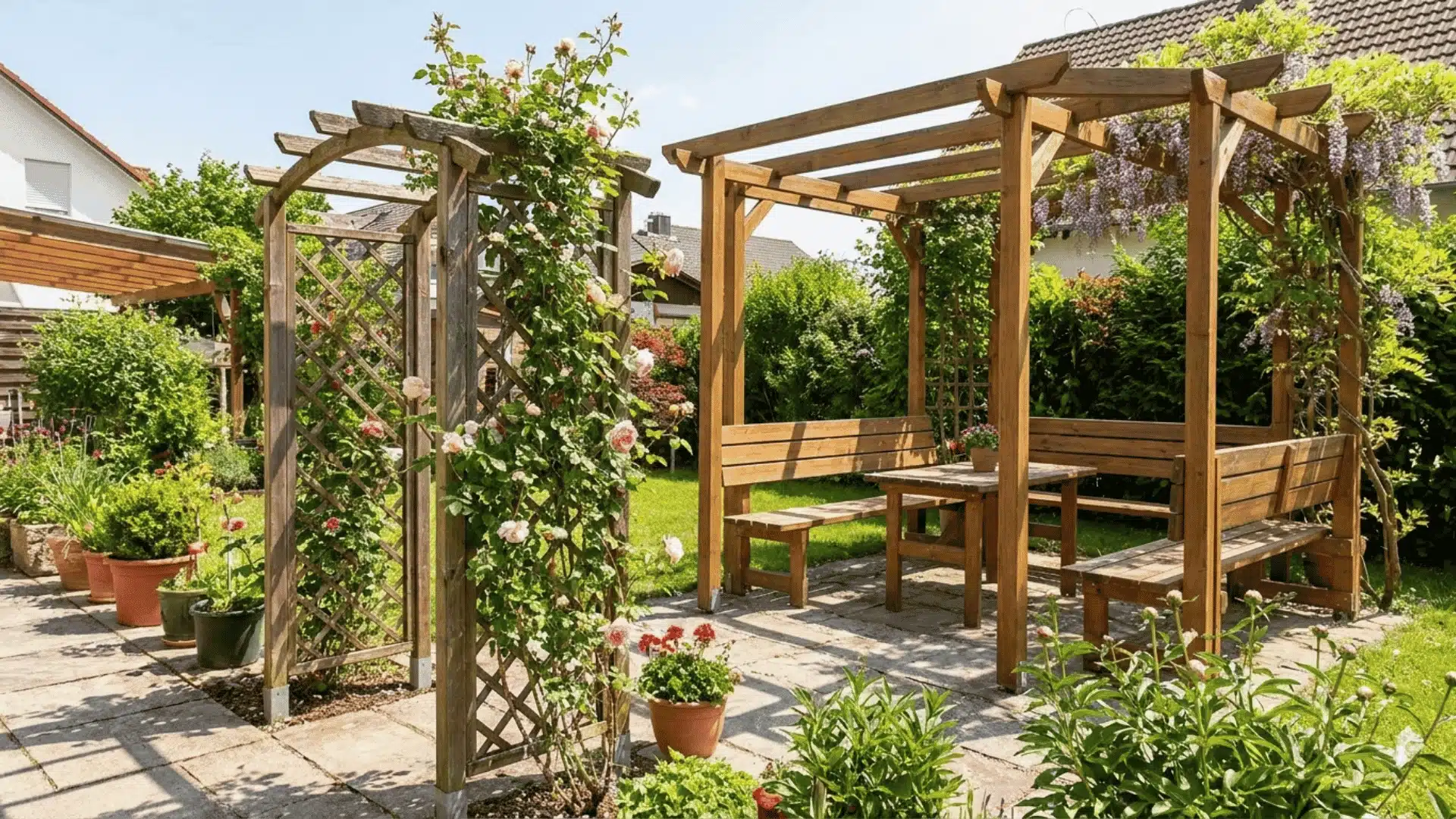
A trellis supports climbing plants, while a pergola creates a larger outdoor sitting area with overhead shade.
| Feature | Trellis | Pergola |
|---|---|---|
| Main Purpose | Supports climbing plants | Creates outdoor seating space |
| Size | Small and lightweight | Large and permanent |
| Structure | Thin bars or panels | Heavy posts and roof beams |
| Shade | Very little shade | Partial shade |
| Best For | Flowers, vines, and vegetables | Patios, seating areas |
An arbor may look similar to a pergola, but it mainly supports plants and frames pathways rather than creating a full outdoor living area.
A simple way to remember the difference is this:
If the structure mainly supports plants, it is a trellis. If people regularly sit underneath it, it is closer to a pergola.
Conclusion
A trellis does more than hold plants upright. It shapes how a garden breathes, produces, and looks through every stage of the growing season.
The right choice depends on how a plant climbs, how much weight it carries, and where support actually needs to go in your space.
Different styles: flat panels, A-frames, arches, towers suit different plants and goals. Matching structure to plant type changes how well everything grows.
For healthier vines, easier harvests, and better use of limited space, the trellis you choose matters more than most gardeners initially expect.
Frequently Asked Questions
What is the best material for a trellis?
Wood trellises look classic, while metal trellises last longer outdoors with less maintenance. The best option depends on climate, plant weight, and durability needs.
Can you use a trellis for vegetables?
Many vegetables grow well on trellises, including cucumbers, peas, and pole beans. Vertical growing saves space, improves airflow, and makes harvesting much easier.
How far should a trellis be from a wall?
Leave a small gap between the trellis and wall for airflow. Better air circulation helps plants dry faster and lowers mildew and moisture problems.
Do all climbing plants need a trellis?
Some climbing plants attach directly to walls or fences using aerial roots or sticky pads. Others need trellises, strings, or narrow supports for climbing properly.






One Response