



Setting the table might seem like a small detail, but it changes the way a meal feels. A clean layout helps everything flow smoothly.
Learning how to set a table is one of those simple skills that instantly makes your dining space feel more thoughtful and put-together.
In this post, I’ll walk you through each step, from essential placements to easy upgrades, so you can set any table with confidence and ease.
Whether it’s a family dinner, a casual brunch, or a special event, let’s take the guesswork out of hosting.
What is a Basic Table Setting?
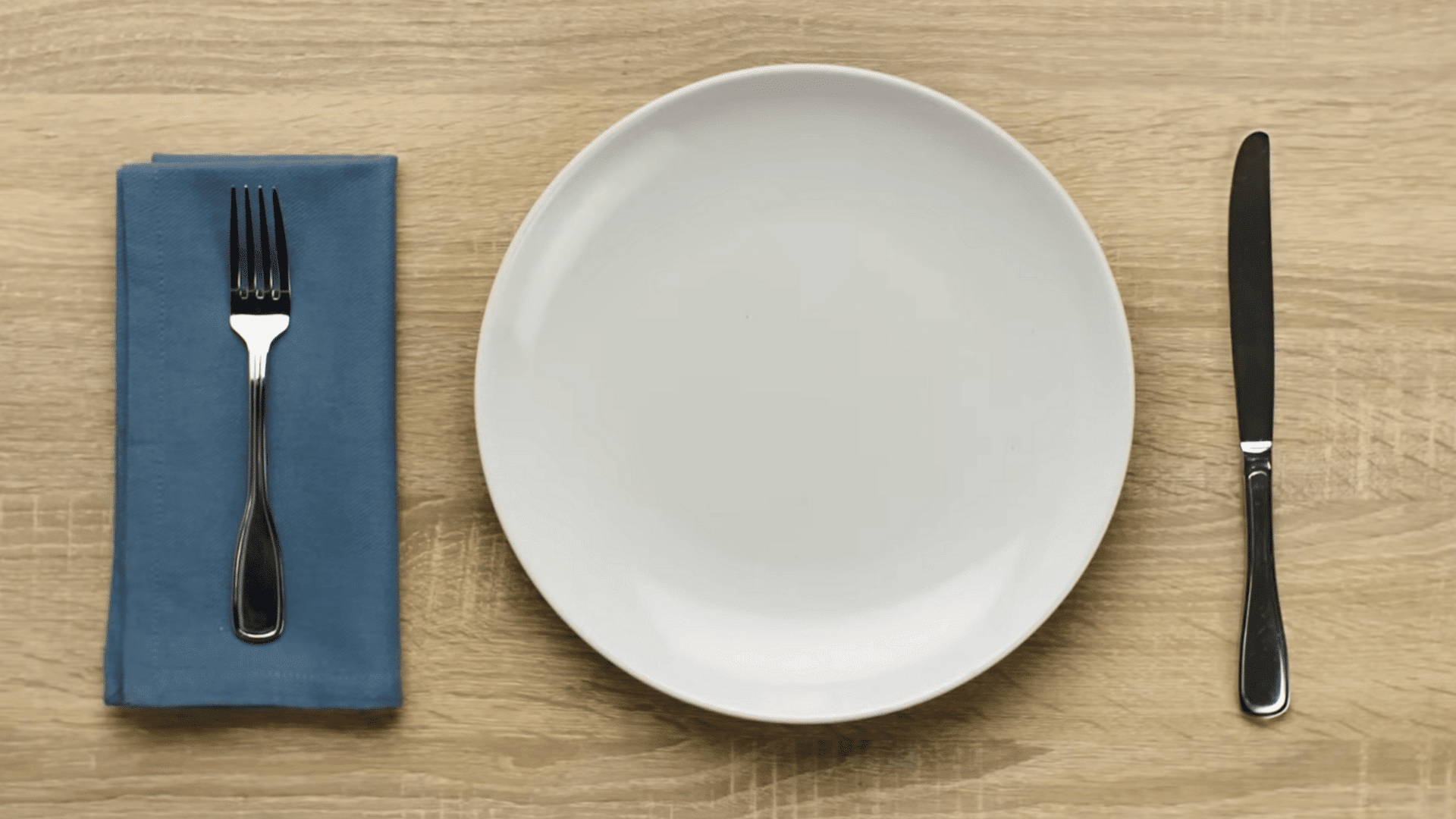
A basic table setting is the simple foundation every meal starts with. It’s the setup you’ll use most often for family dinners, casual get-togethers, or everyday meals.
It includes just the essentials you need to eat comfortably and neatly.
Here’s what a standard setup looks like:
- Dinner plate: Center of the setting, your main piece.
- Fork: On the left side of the plate.
- Knife: On the right side, with the blade facing in.
- Spoon: Next to the knife if soup or dessert is served.
- Water glass: Just above the knife, slightly to the right.
- Napkin: Either to the left of the fork or neatly on the plate.
Each piece has its place, and once you get used to it, setting the table becomes second nature.
Step-by-Step Basic Table Setting Guide

Here’s how to do it right every time. I like to keep things simple and practical, so once you learn this flow, you won’t have to think twice the next time you set a table.
Step 1: Start with the Base
Begin with a tablecloth or placemat. It protects your table and gives everything a clean surface to rest on.
If it’s a casual meal, a placemat works great. For something a little nicer, like a small dinner or holiday meal, use a cloth that fits your table’s size and tone.
Step 2: Place the Dinner Plate
Set the dinner plate in the center of each place setting. Make sure every plate lines up evenly across the table for a neat look.
A quick tip: picture an invisible straight line running through all the plates, which helps keep everything balanced.
Step 3: Add Utensils in Order of Use
The fork goes to the left of the plate. The knife sits on the right, with its blade facing the plate, and the spoon goes next to the knife if needed.
In my experience, the easiest rule to remember is “outside to inside.” You use utensils starting from the outside and move inward with each course.
Step 4: Placing Napkin and Glassware
You can place the napkin either to the left of the fork or on top of the plate. Both are perfectly fine; choose what feels right for the occasion.
Next, place the water glass just above the knife, slightly to the right.
If you’re serving wine, the wine glass goes just above and to the right of the water glass.
Step 5: Alignment and Finishing Touches
Once everything’s set, take a quick look from the front of each seat. The bottoms of all utensils should line up with the bottom edge of the plate.
Keep it minimal and tidy, only include what you’ll actually use. A simple, well-organized setting always looks more polished than a crowded one.
Common Table Setting Mistakes to Avoid
It’s easy to miss small details when you’re setting a table, especially if you’re in a rush. I’ve seen these little mistakes make a setup look uneven or unfinished, but they’re simple to fix once you know what to look for.
- Putting utensils on the wrong side: Forks go left, knives and spoons stay right. A quick side check before serving helps avoid mix-ups.
- Crooked placement: Keep the bottoms of your utensils and plate edges lined up for a neat, balanced look.
- Adding too many utensils: Only set out what guests will actually use; extra pieces can make the table feel cluttered.
- Changing napkin placement between seats: Stay consistent with napkin placement so every setting looks uniform.
A quick glance across the table before guests sit down can make everything look polished and effortless.
Variations of Table Settings
Once you master the basics, try a few small upgrades to match the occasion.
1. Casual Setting
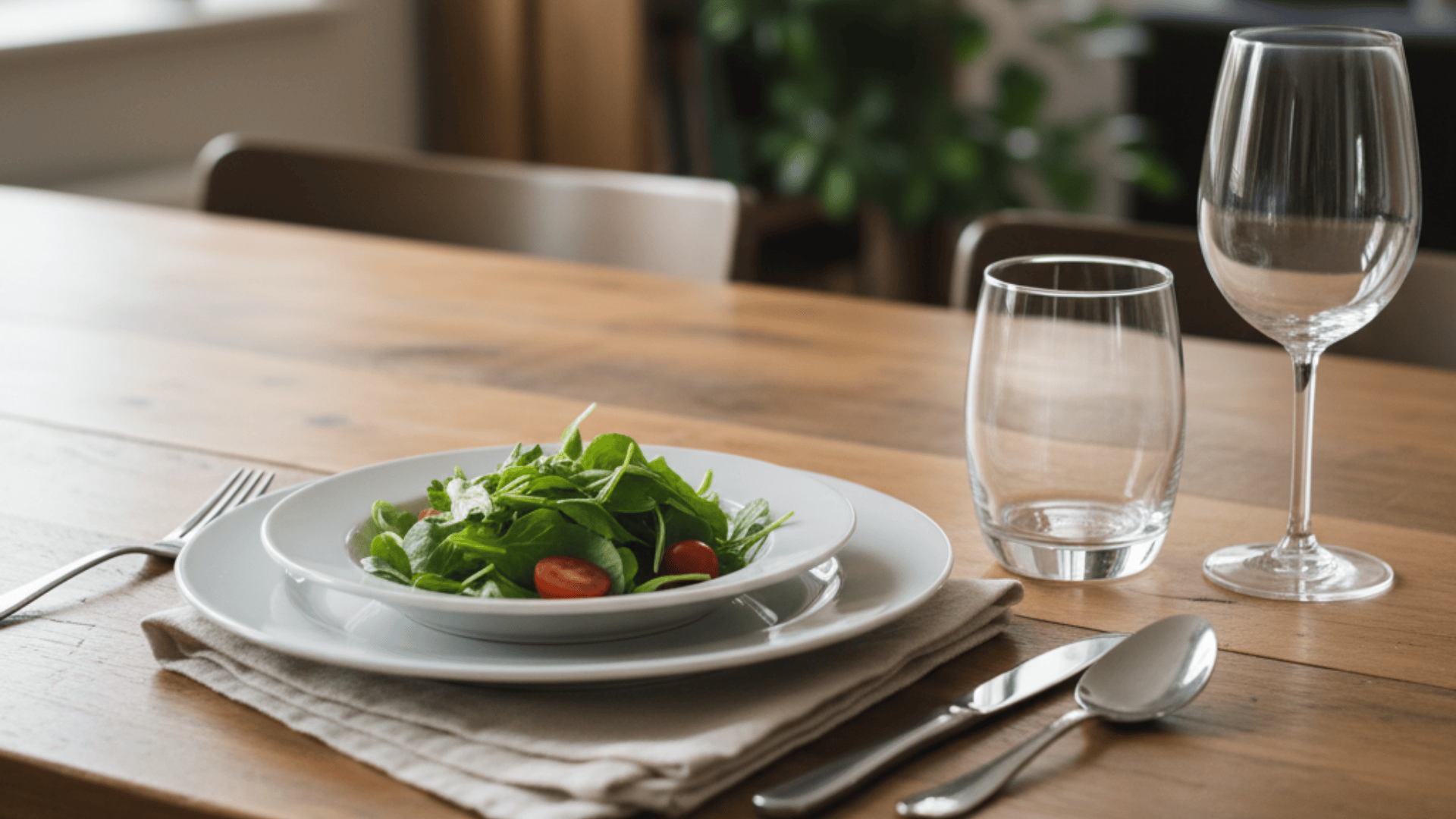
A casual table setting adds a touch of polish without feeling too formal.
Start with your basic setup, then include a salad plate on top of the dinner plate. Add a wine glass next to the water glass for guests who’d like a drink.
It’s a relaxed look that still feels thoughtful; perfect for weekend dinners or small get-togethers.
2. Formal Setting
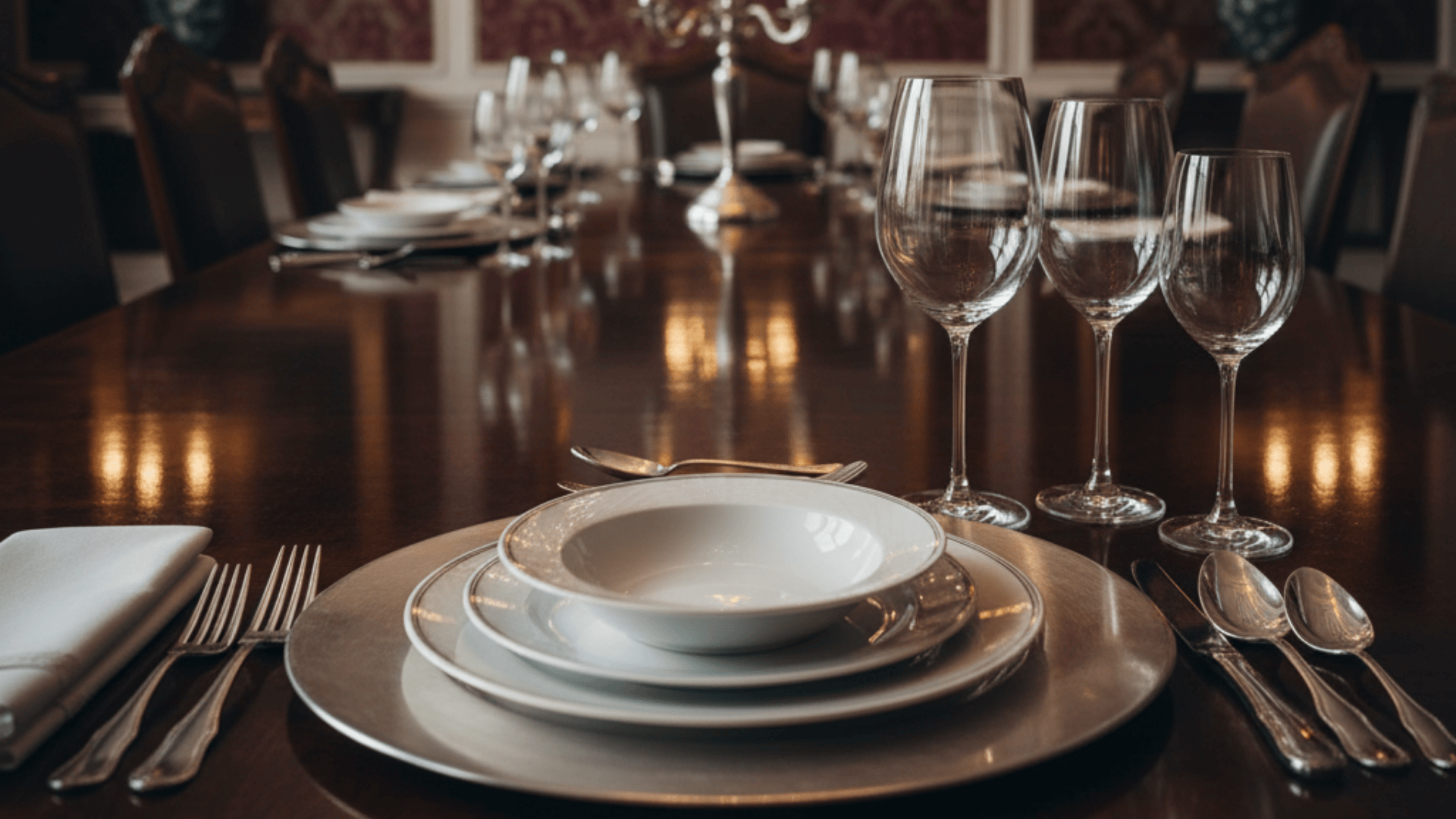
For a formal dinner, layering is key. Begin with a charger plate as the base, then stack the dinner plate and soup bowl on top.
Add a dessert spoon above the plate and include multiple glasses, one for water, one for white wine, and one for red.
This type of setup works best when every piece is evenly spaced and matched. It looks elegant but stays functional.
3. Buffet or Family-Style Setting
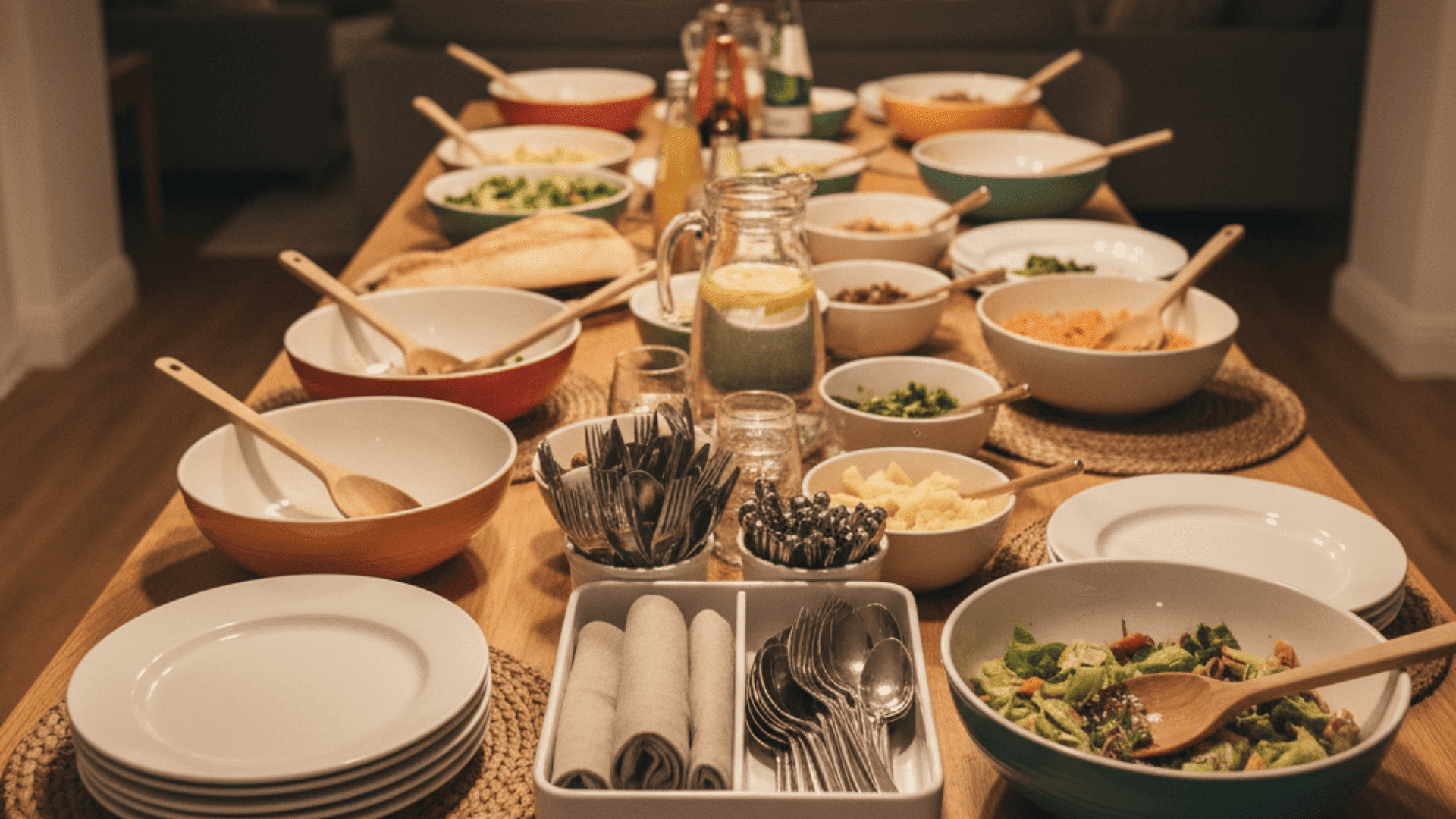
For buffet-style or family meals, simplicity matters most. Keep the plates, napkins, and utensils in a neat stack so guests can serve themselves easily.
Leave extra space on the table for shared dishes and drinks.
This layout keeps things comfortable and organized, ideal when everyone’s helping themselves or passing plates around.
Why Proper Table Setting Matters
A proper table setting makes a meal feel more welcoming. When everything is in place, guests feel relaxed and know where things are. It shows that you care about their comfort.
It also reflects good manners and attention to detail. A clean, balanced layout tells others you’re thoughtful and organized.
Knowing how to set a table is useful beyond the home. It helps when hosting, working in restaurants, or attending formal events where presentation matters.
Quick Reference: “FORKS” Rule and Memory Tips
There’s an easy way to remember how to set a table without overthinking it: the “FORKS” rule.
Each letter stands for what goes where, left to right:
- F = Forks
- O = Plate (think of the round shape)
- K = Knives
- S = Spoons
Think of it as reading the word “FORKS” straight across your table. Once you picture it that way, it’s almost impossible to forget.
Wrapping Up
A basic table setting might seem simple, but it has a real impact on how a meal feels. When each piece has its place, it creates calm, order, and a sense of care that guests instantly notice.
I’ve found that even small touches, like straight lines and clean napkins, can change the whole mood of a table.
Once you get comfortable with the basics, you can adjust for any occasion, from a quick family dinner to a formal celebration.
In the end, a well-set table isn’t about perfection; it’s about creating an easy, welcoming space where everyone can enjoy good food and good company.