
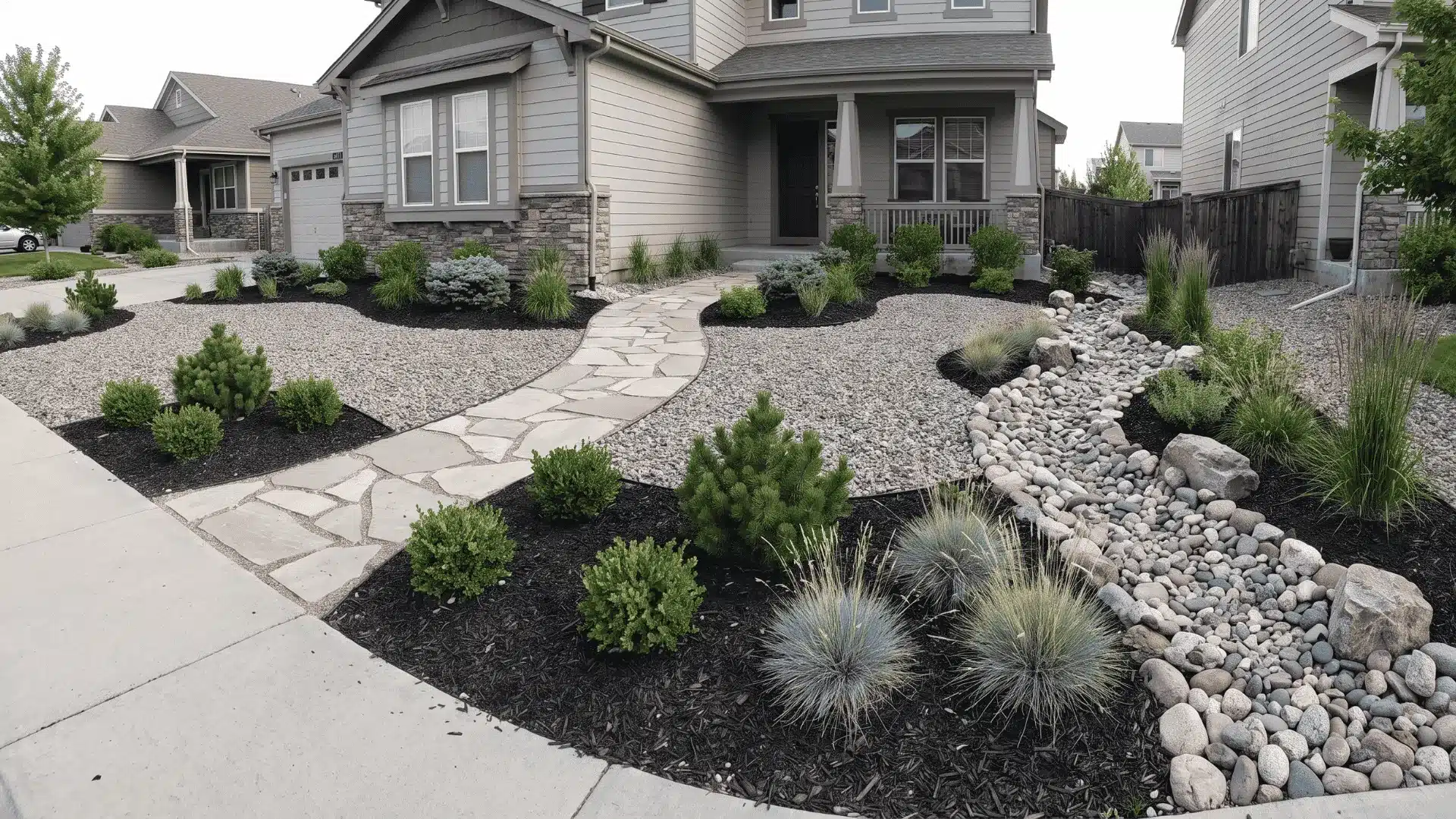



A front yard can look great without becoming a weekend job. I used to think a neat yard meant more grass, more trimming, and more time with a hose.
But the right plants, ground covers, stones, and simple hardscaping can cut down on much of that work, and pairing these choices with broader garden landscaping ideas can help the whole property feel connected.
Low-maintenance front yard landscaping is really about making choices that fit your climate, soil, sunlight, and available time. You can still have color, texture, and curb appeal without filling every corner with plants that need constant care.
From drought-tolerant shrubs to gravel paths, small changes can make the whole yard easier to manage.
What Actually Makes a Front Yard Low Maintenance?
A low-maintenance front yard starts with choices that reduce repeated work. Cutting back on lawn in areas that are difficult to mow can save time, water, and effort.
Choose plants that suit your local climate, soil type, sunlight, and moisture levels so they can grow well without extra care. Good drainage also matters, especially before adding pavers, gravel, or other hardscaping.
Water should drain or soak into the soil properly instead of collecting around plants or beneath hardscape. Finally, use clear edges between grass, planting beds, gravel, and walkways.
Defined borders help keep materials in place and make routine cleanup, mowing, and trimming easier.
Low-Maintenance Front Yard Landscaping Ideas
A low-maintenance front yard doesn’t have to look plain. The right mix of plants, hardscaping, and simple design choices can reduce the need for watering, mowing, pruning, and weeding while still giving your home great curb appeal.
1. Replace Grass With Decorative Gravel
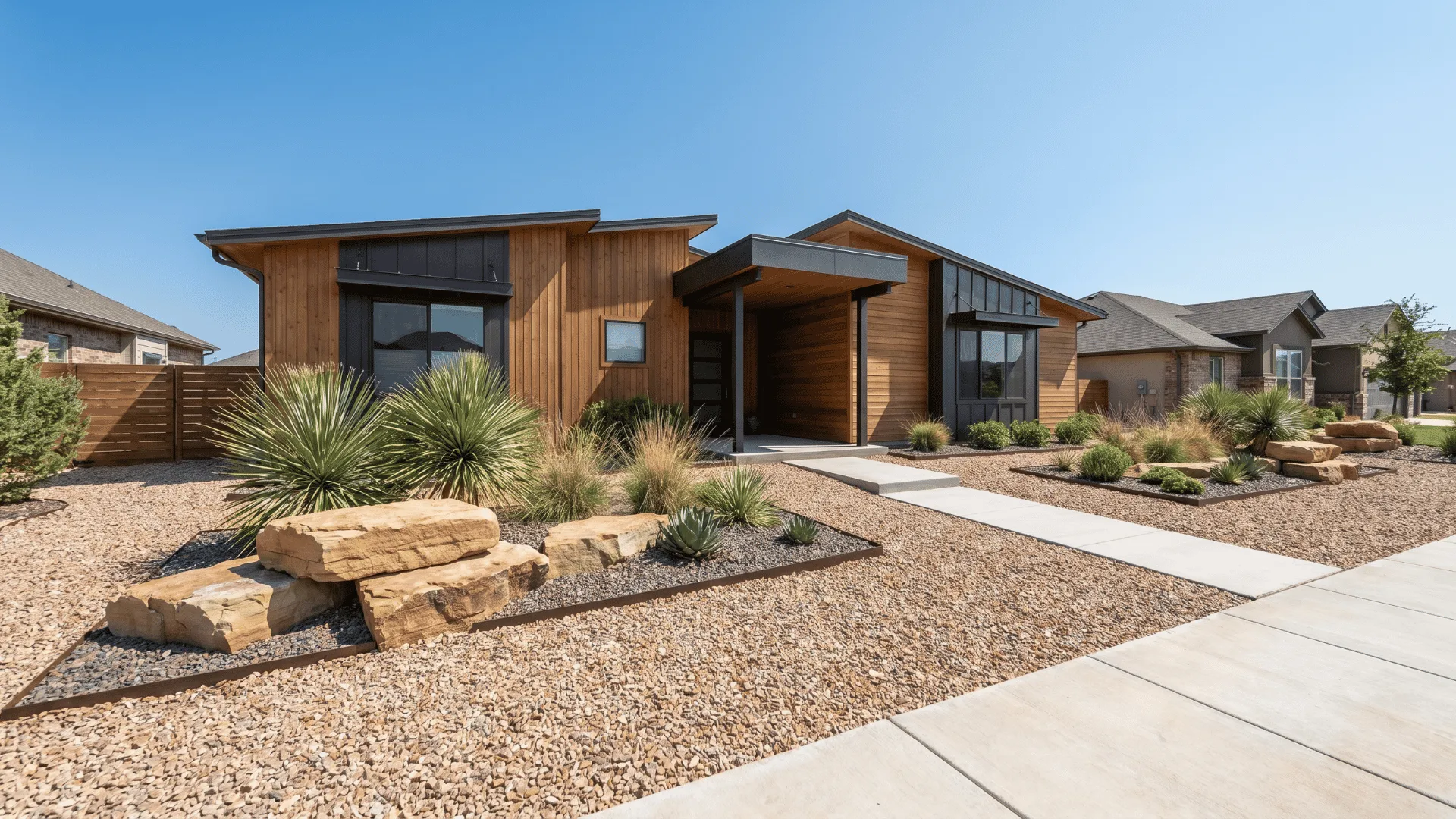
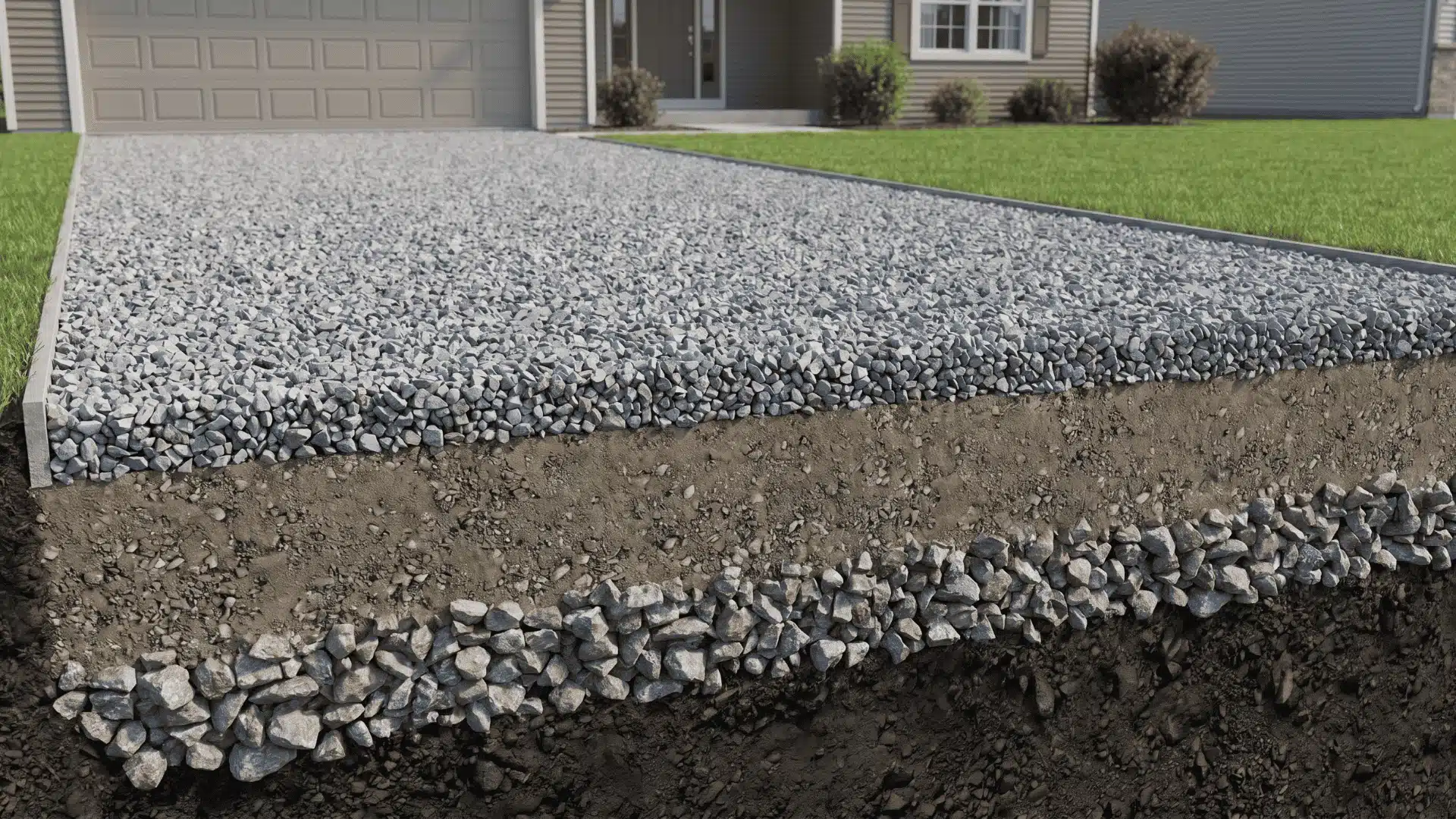
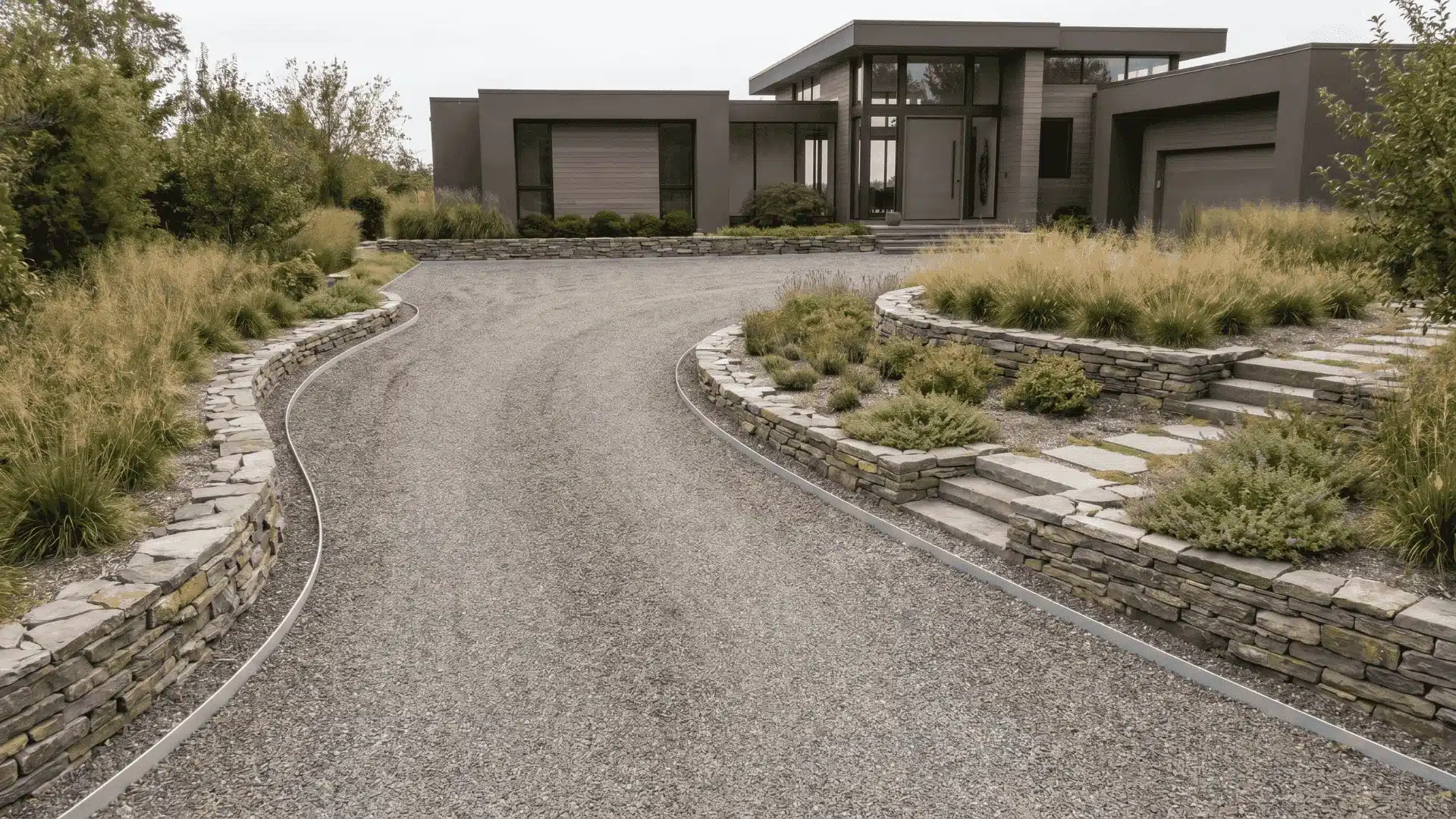
A gravel front yard removes one of the biggest maintenance jobs, mowing. It also reduces watering and works well in dry climates where keeping a lawn green takes a lot of effort.
Choose decorative gravel in a color that complements your home’s exterior, similar to how gravel driveway designs match a home’s exterior finish.
Add a few larger boulders and drought-tolerant plants to break up the open space and create a finished look without adding extra upkeep.
2. Create Mulched Planting Beds
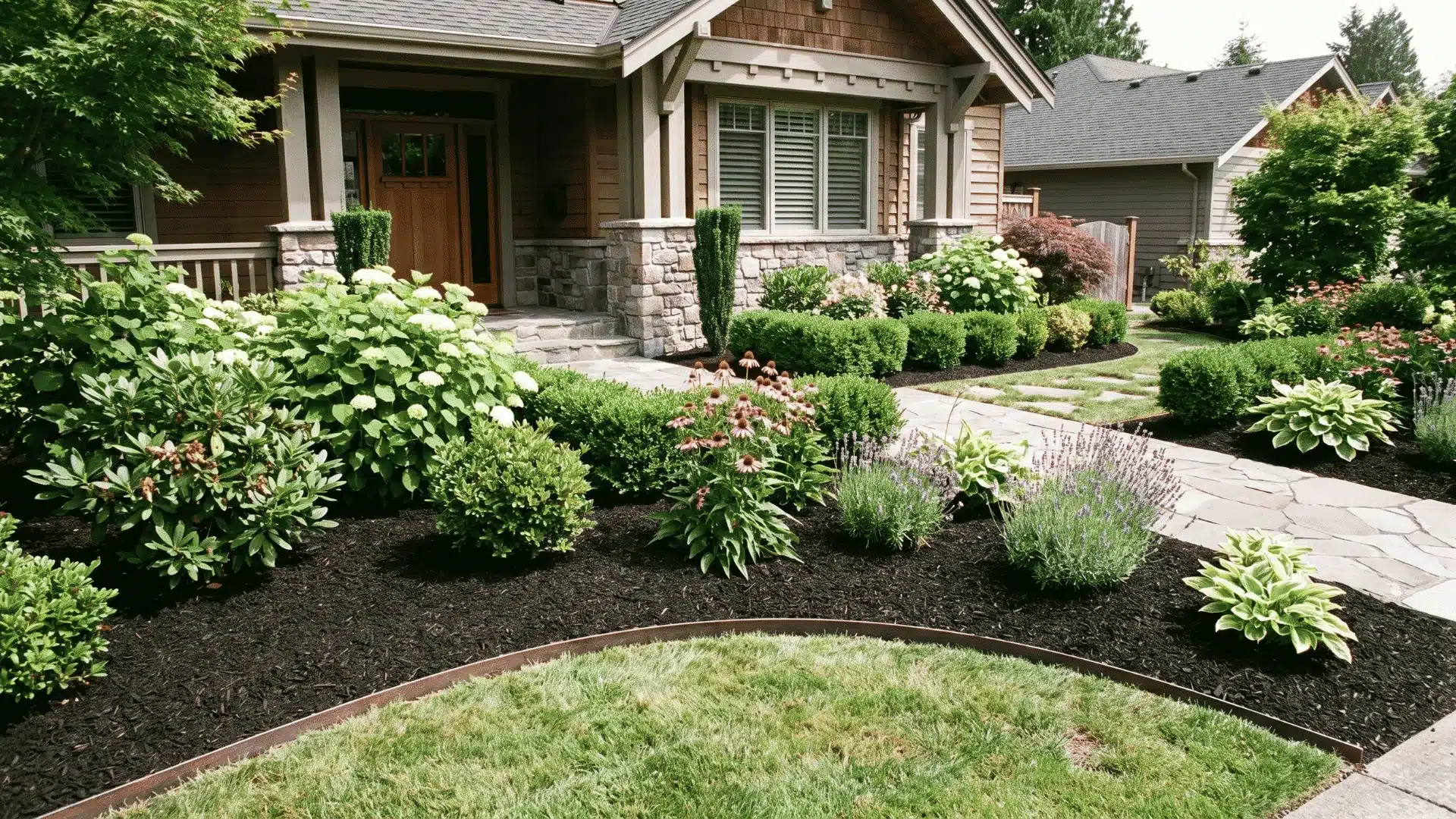
Mulch keeps weeds under control, helps soil hold moisture, and gives planting beds a neat appearance. It also reduces how often you’ll need to water during warm weather.
Use shredded bark, wood chips, or pine bark around shrubs and perennials. Refresh the mulch once a year to keep the beds looking tidy and protect the soil beneath.
3. Plant Drought-Tolerant Native Plants
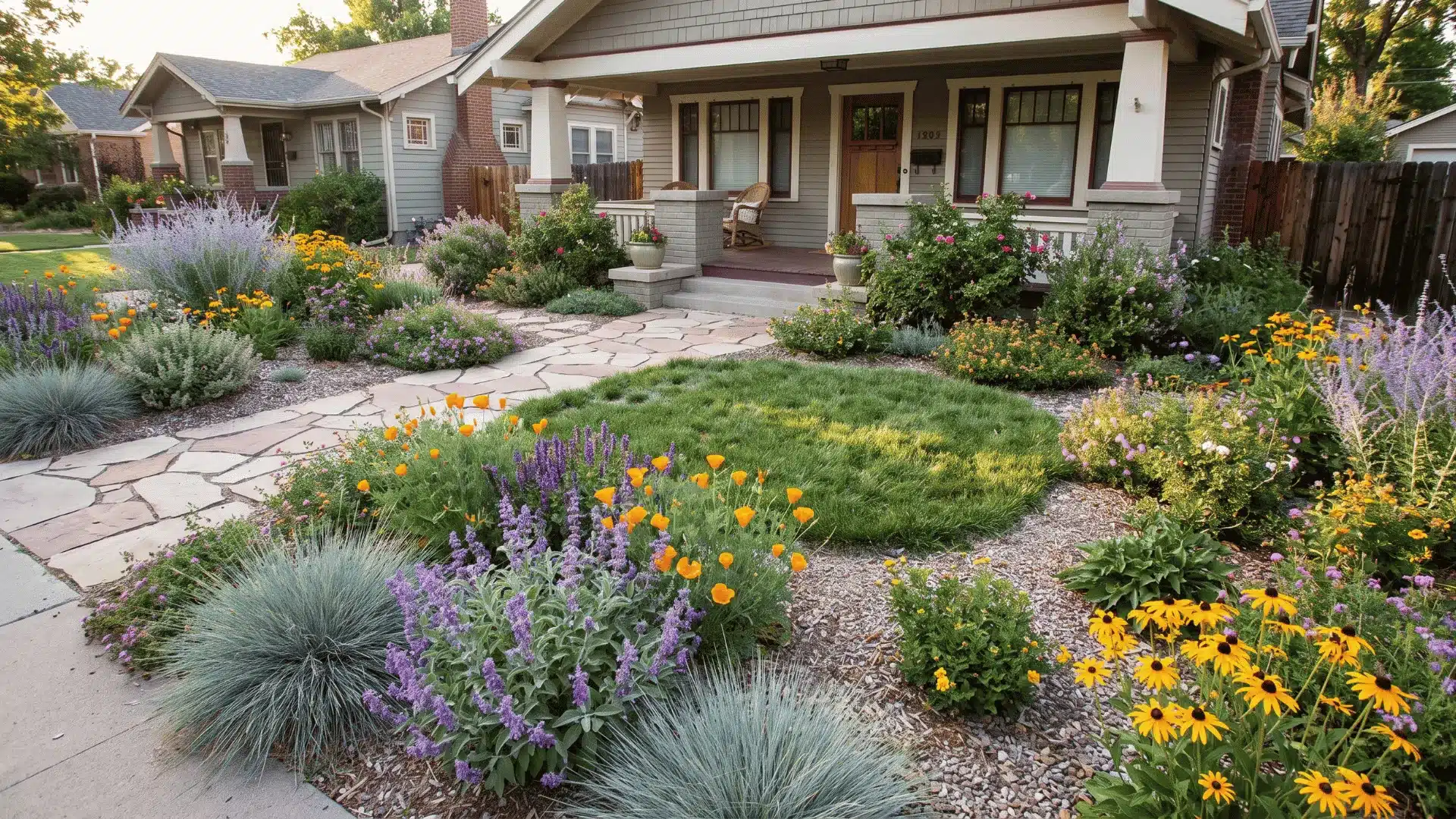
Native plants are naturally suited to your local climate, so they usually need less water, fertilizer, and attention than non-native varieties once established.
Mix flowering plants, ornamental grasses, and native shrubs to add seasonal interest. Since they’re adapted to local conditions, they often stay healthier with very little maintenance.
4. Add a Stone Walkway With Ground Cover
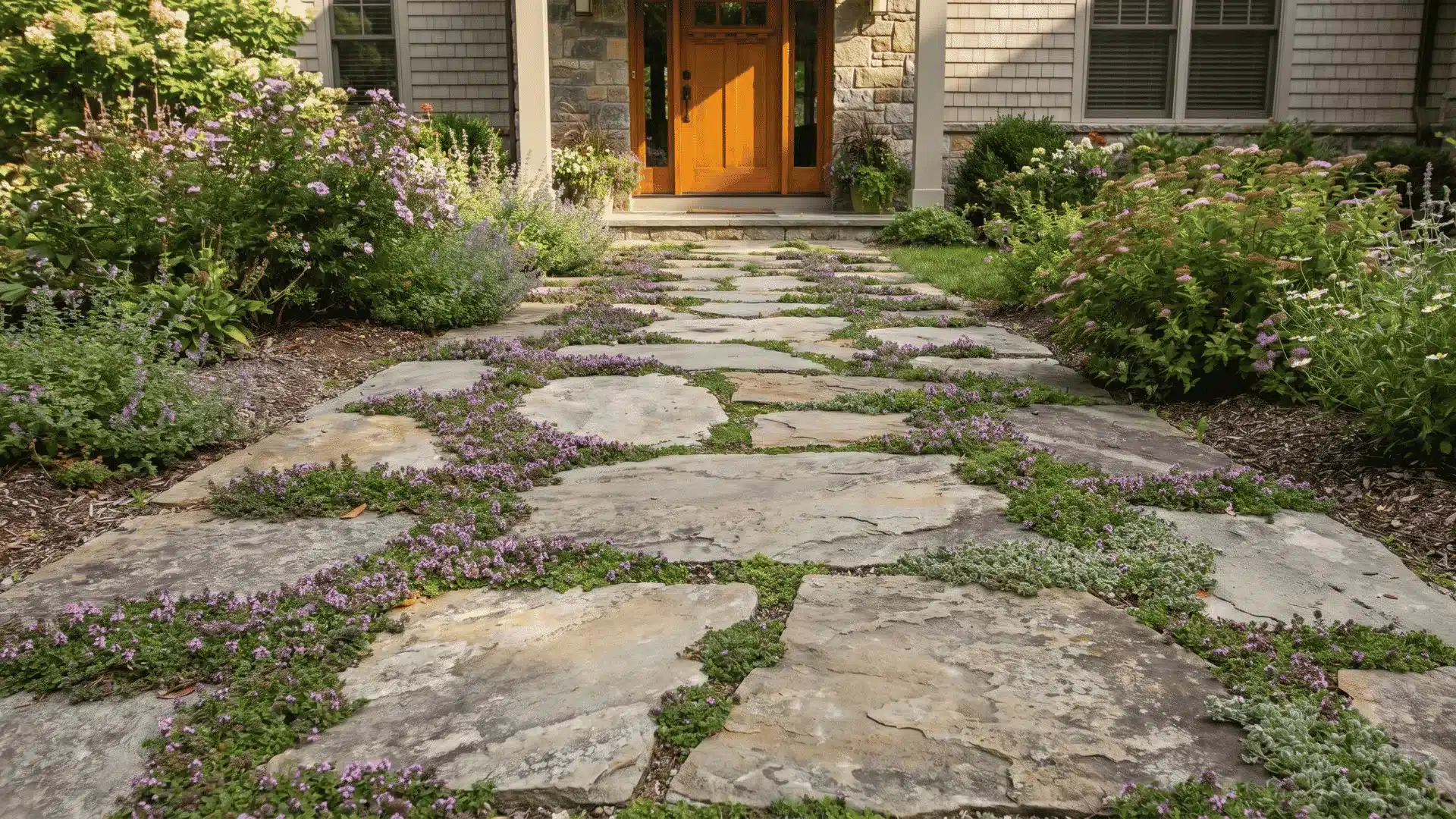
A stone walkway creates a clear path to your front door while reducing the amount of lawn that needs regular care. It also helps prevent worn paths through the yard.
Plant low-growing ground covers between stepping stones instead of grass. Wide varieties spread slowly, stay compact, and require only occasional trimming to keep the walkway looking clean.
5. Build a Rock Garden
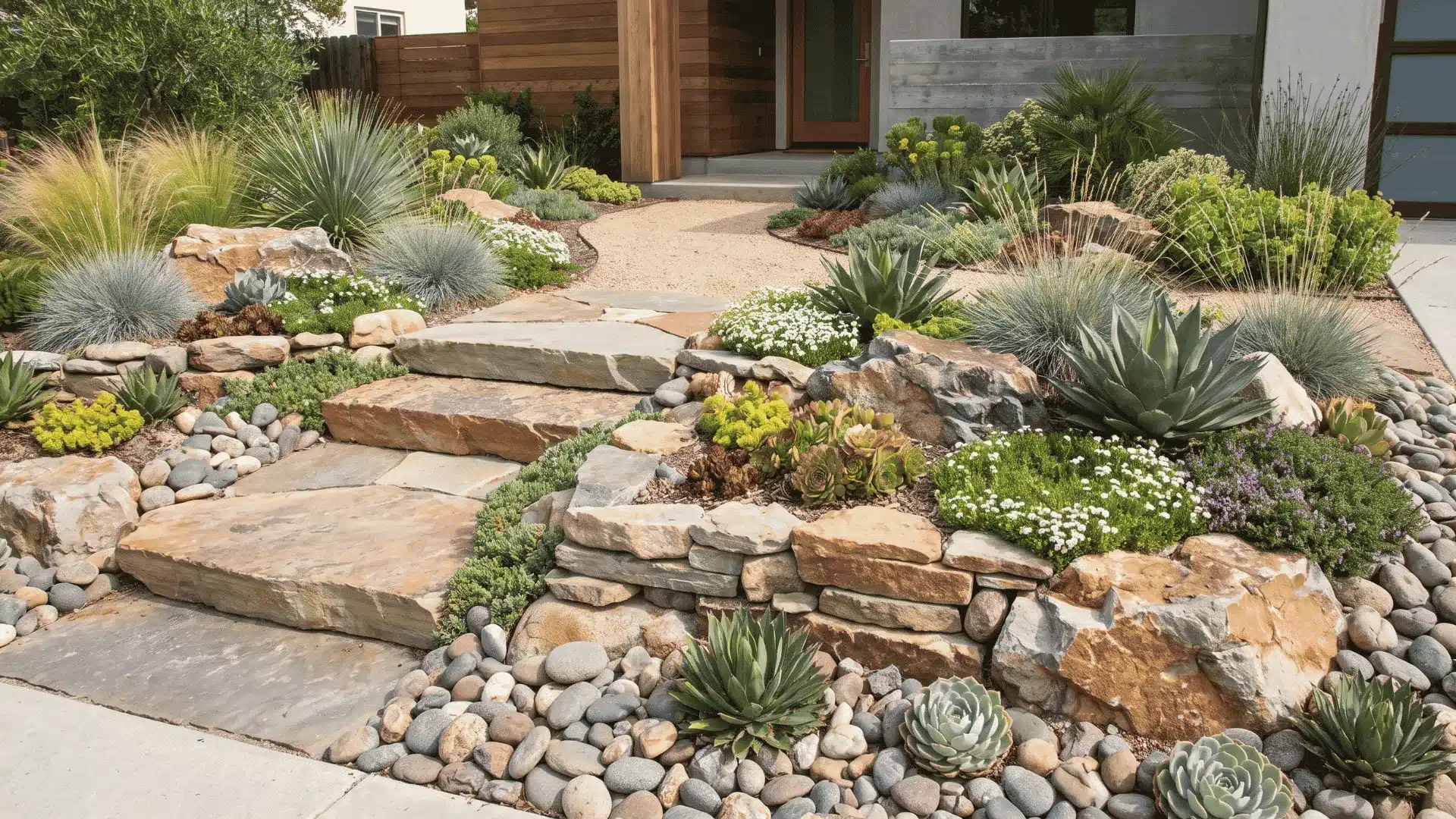
Rock gardens combine decorative stones with hardy plants that thrive in dry conditions. Once established, they need very little watering and almost no mowing.
Use different rock sizes to add texture and pair them with succulents, ornamental grasses, or alpine plants. The contrast between stone and greenery creates year-round visual interest.
6. Use Evergreen Shrubs for Year-Round Color
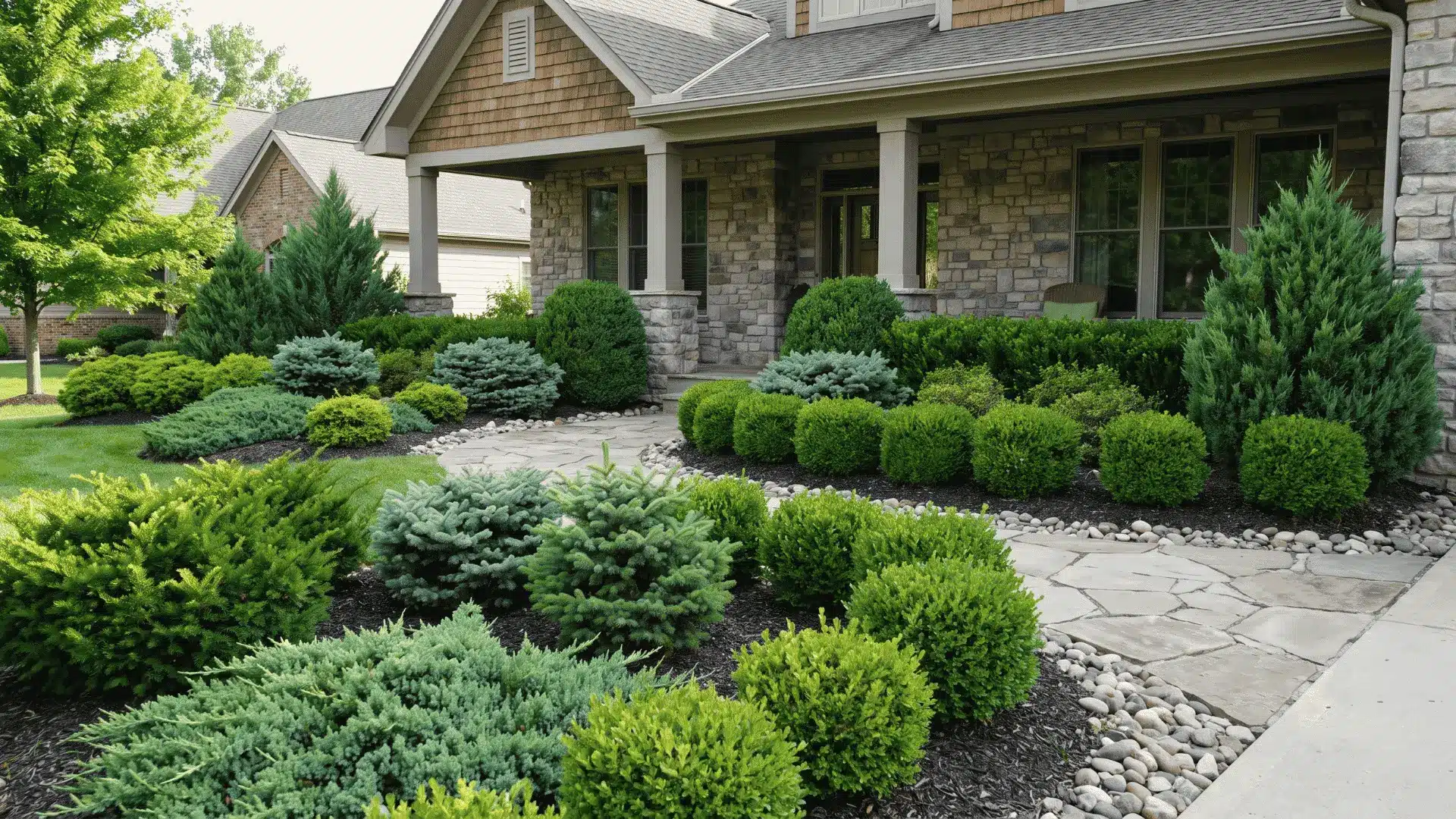
Evergreen shrubs keep their foliage through every season, so your front yard looks full even during winter. Wide varieties grow slowly and only need occasional shaping.
Choose shrubs that fit the available space rather than fast-growing varieties that require constant pruning. Proper spacing also improves airflow and reduces maintenance later.
7. Install Raised Landscape Beds
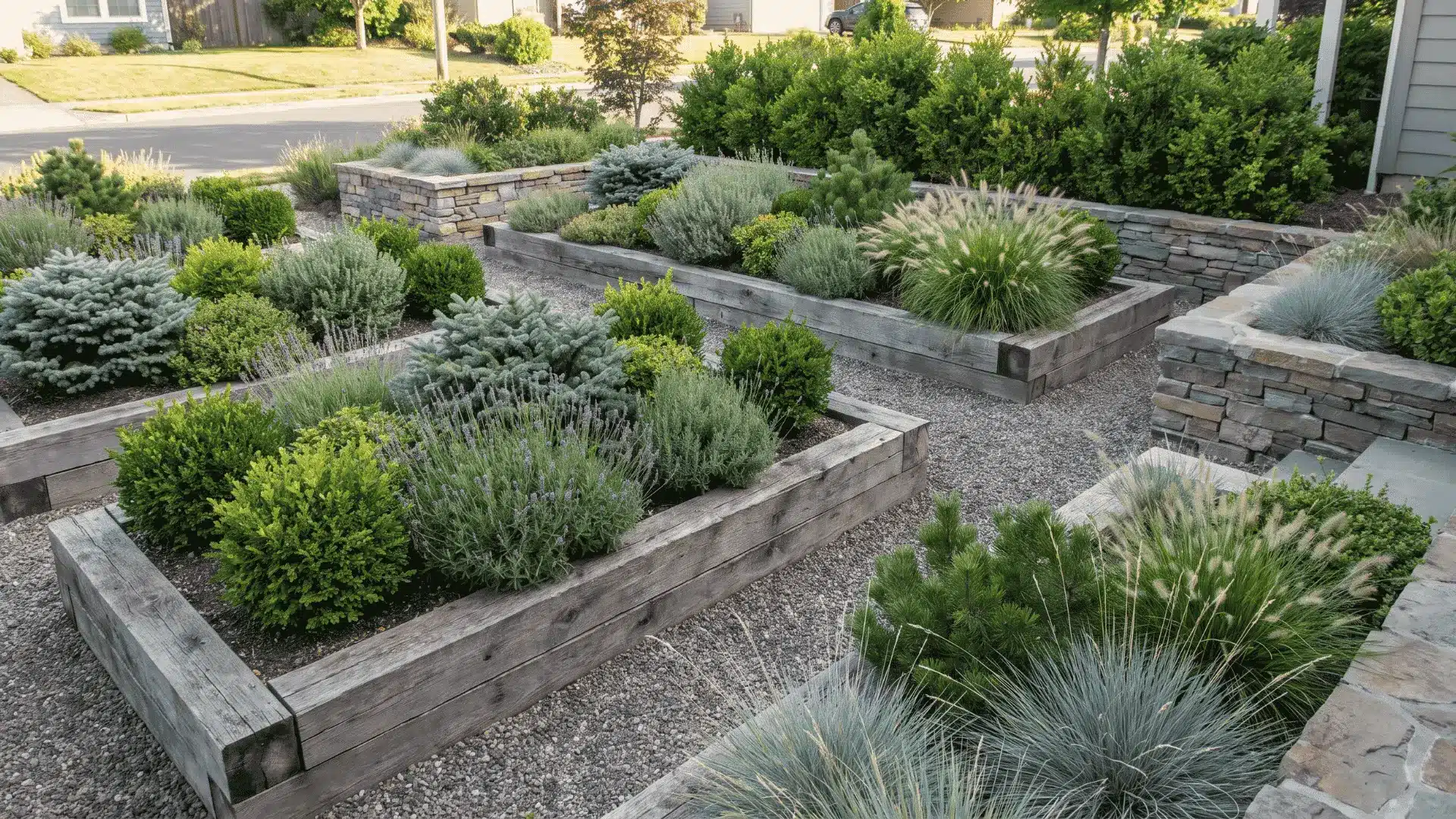
Raised beds create defined planting areas that are easier to manage than large garden spaces. They also improve drainage and make weed control much simpler.
Fill them with hardy shrubs, perennials, or ornamental grasses that don’t require frequent attention.
The clean edges also give the front yard a more organized appearance, the same structured feel you get when pairing raised beds with a backyard pergola retreat further into the yard.
8. Try a Lawn Alternative Like Clover or Artificial Turf
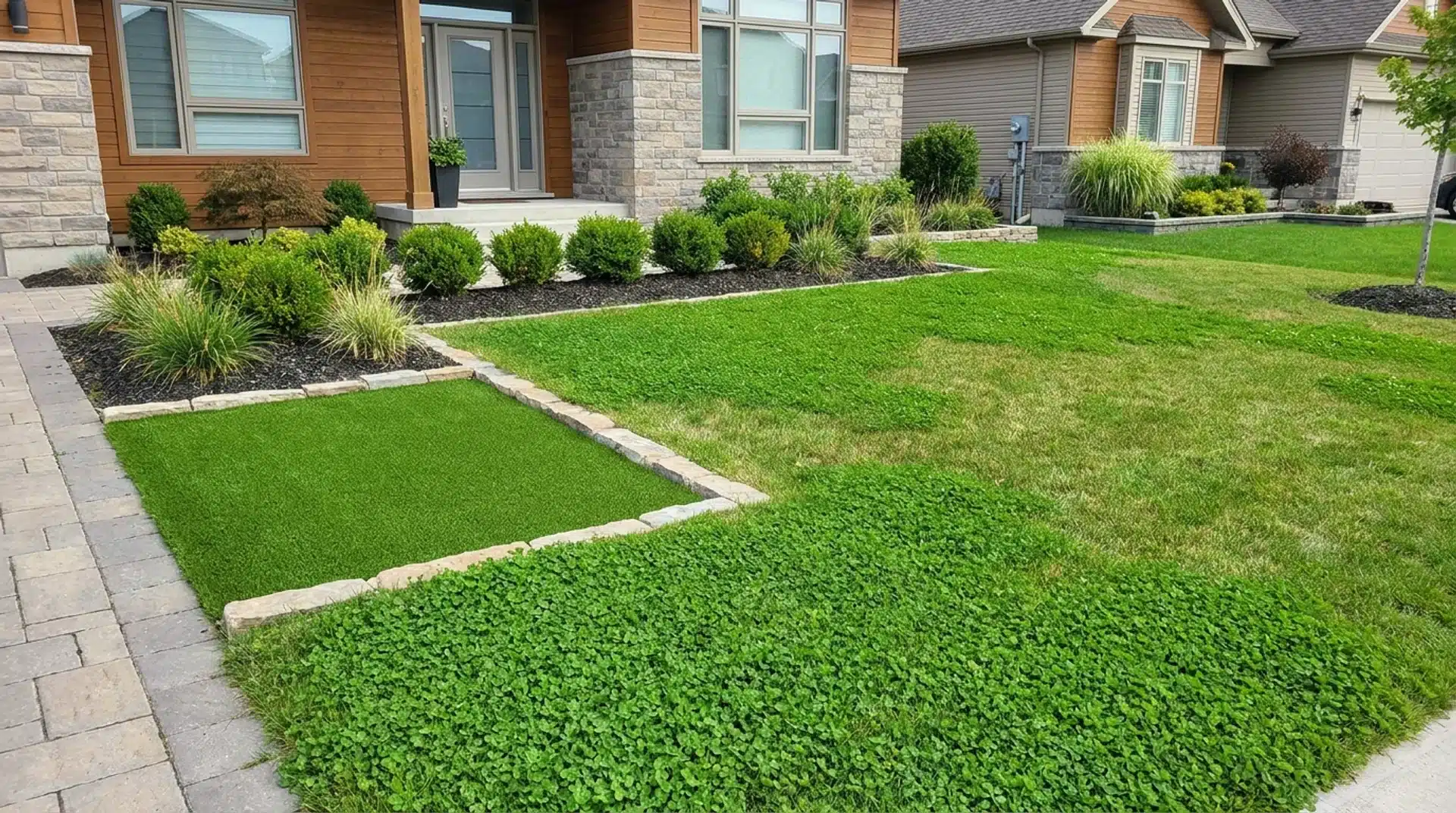
Clover stays green with little mowing and fixes its own nitrogen, so it needs less fertilizer than grass.
It handles light foot traffic well, but mixing it with a durable grass like Bermuda or fescue helps it hold up in busier spots and keeps color through winter.
Artificial turf skips watering and mowing altogether and can last fifteen to twenty-five years, though it costs more upfront than seed or clover.
9. Plant Ornamental Grasses
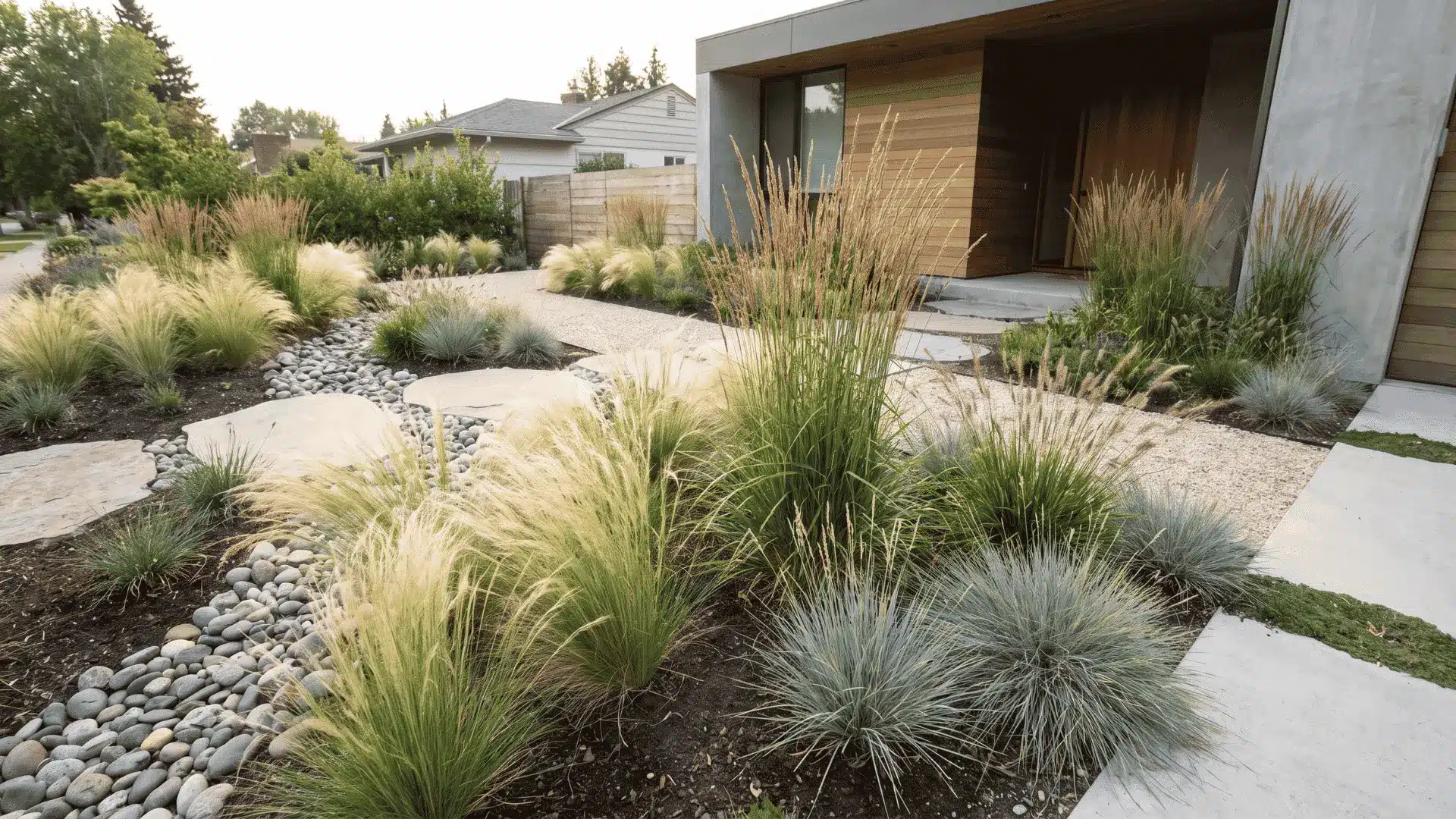
Ornamental grasses bring movement and texture to the front yard while requiring very little maintenance. Most varieties tolerate heat, drought, and poor soil once they’re established.
Choose grasses that match the available space and mature height. A simple trim once a year is often all that’s needed to keep them looking their best.
10. Edge Your Beds With Natural Stone
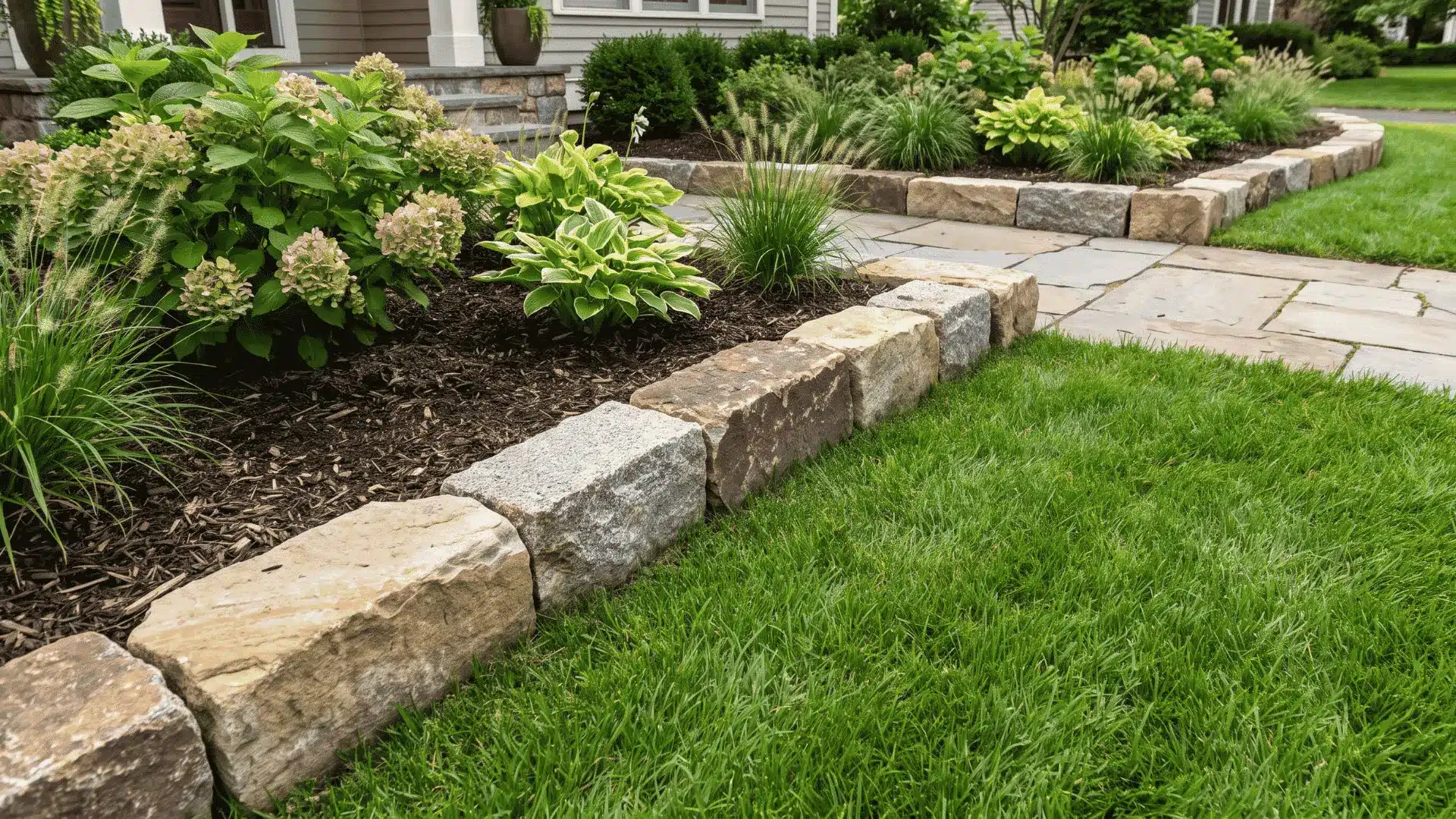
Natural stone edging creates clear borders between planting beds, gravel, and walkways. It helps keep mulch in place and makes the landscape look more finished.
Stone edging lasts for years without rotting or shifting like some other materials. It also reduces the time spent cleaning up messy lawn edges during the growing season.
11. Fill Empty Spaces With River Rock
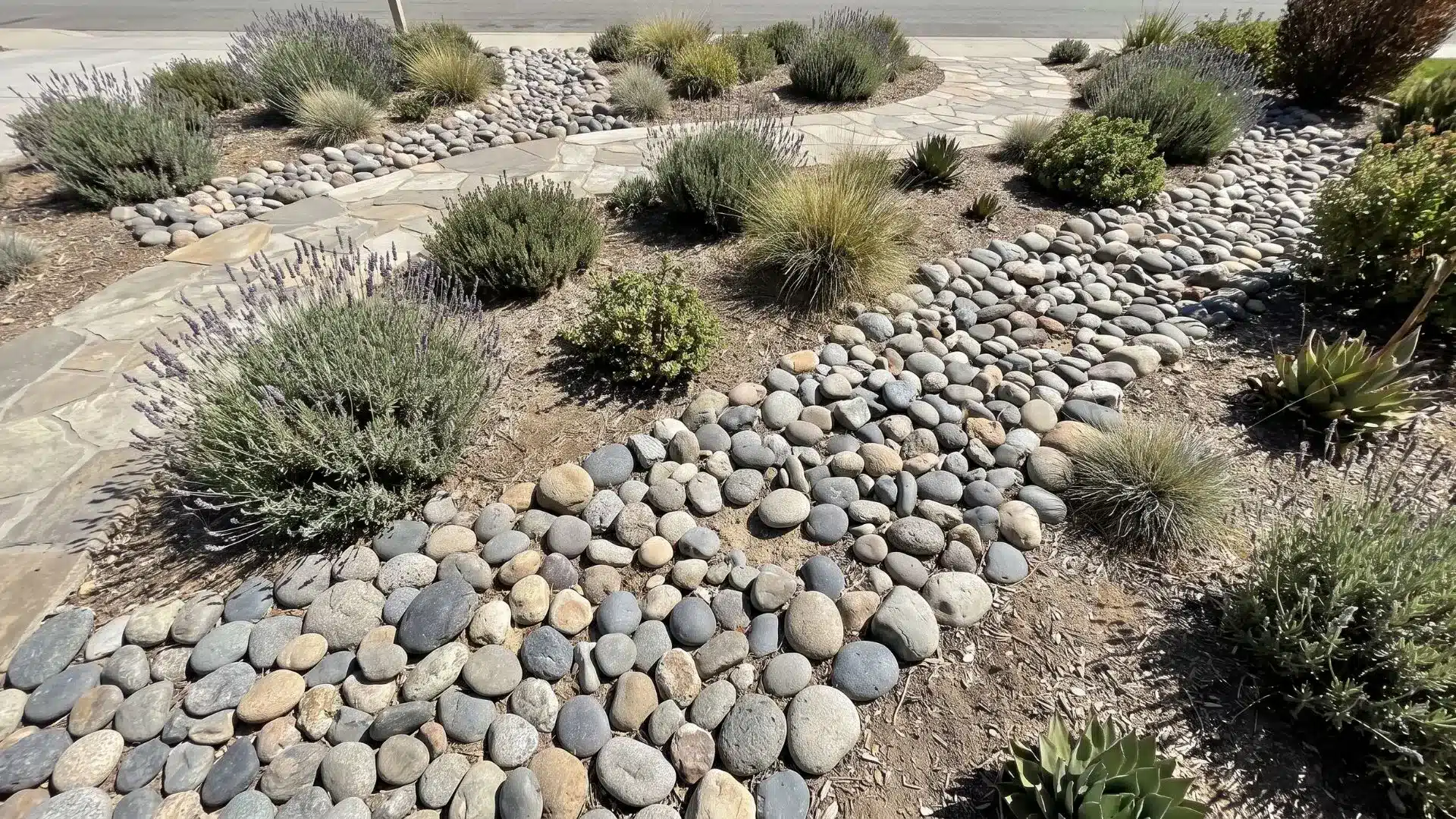
River rock works well in areas where grass struggles to grow or where constant mowing is inconvenient. It also improves drainage and helps prevent muddy spots after rain.
Combine river rock with shrubs or small accent plants for a clean, low-maintenance design. Weed fabric underneath can further reduce unwanted plant growth.
12. Create a Simple Dry Creek Bed
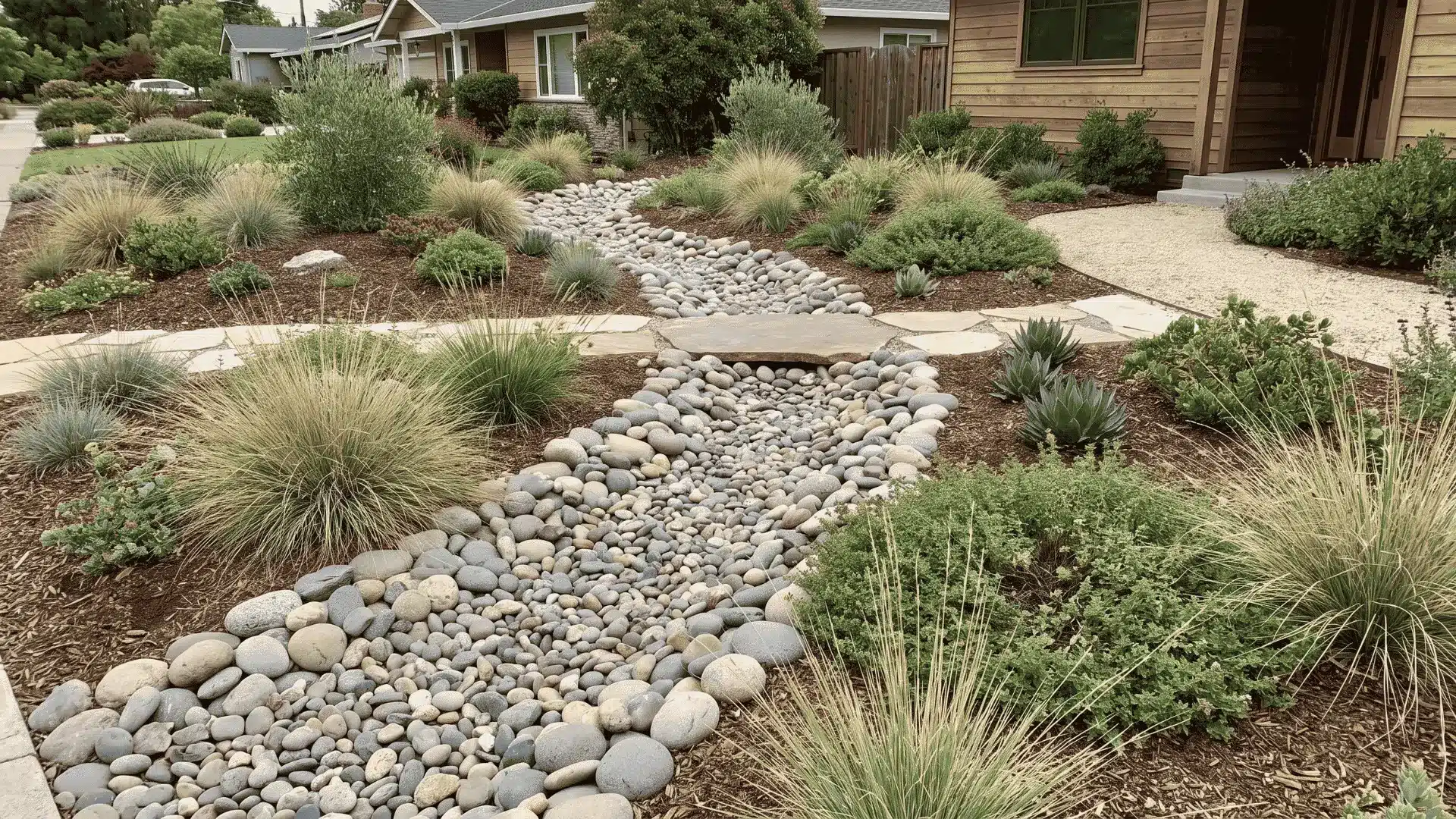
A dry creek bed adds texture while helping direct rainwater away from certain parts of the yard. It looks decorative even when there’s no flowing water.
Use smooth stones in different sizes and edge the feature with hardy plants or ornamental grasses. Once installed, it needs very little attention beyond occasional cleanup.
13. Choose Slow-Growing Foundation Plants
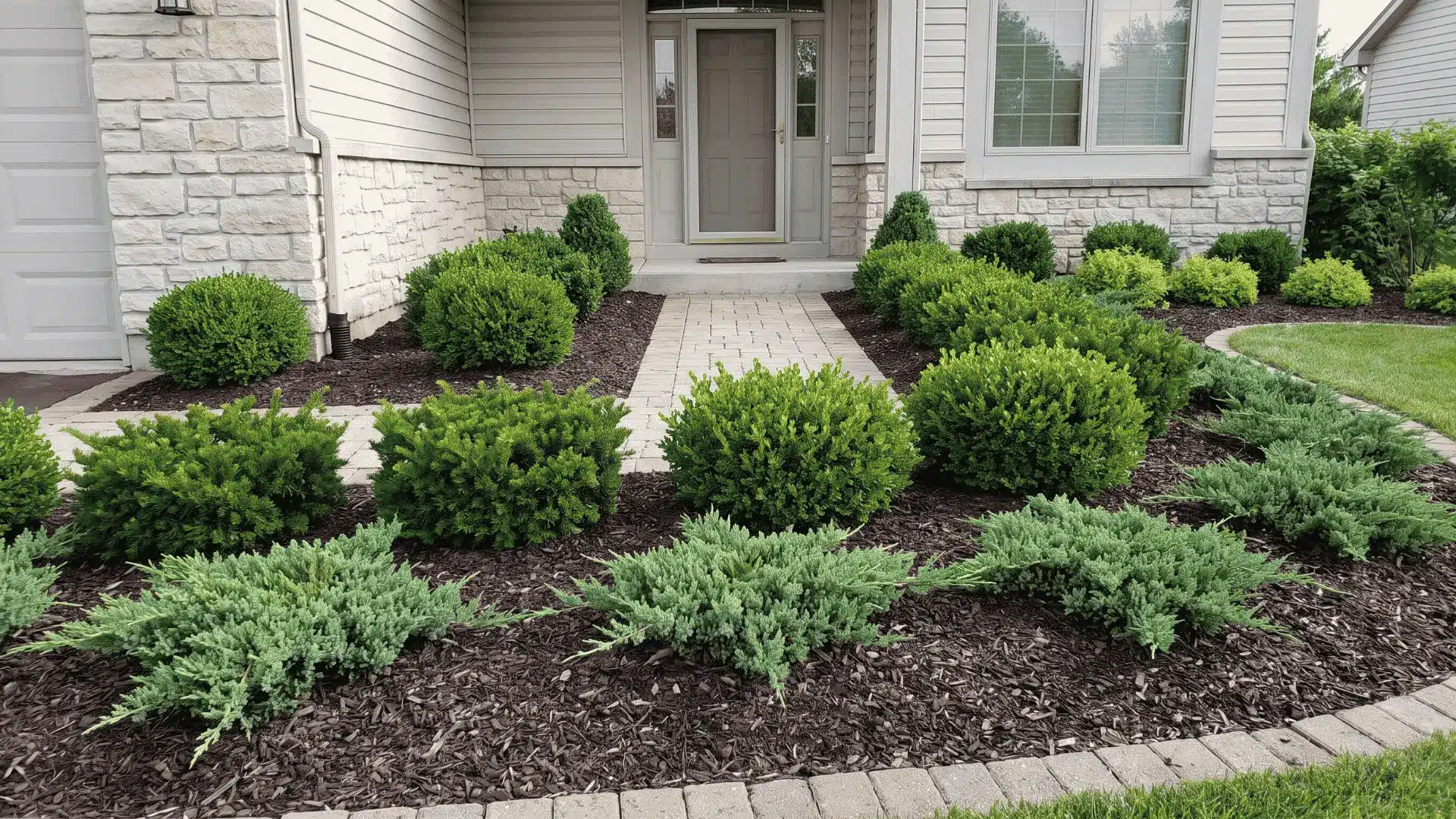
Slow-growing shrubs around the front of the house reduce how often you’ll need to prune. They also help maintain a balanced look without quickly covering windows or walkways.
Pick varieties that naturally stay close to their mature size for the space. This avoids heavy trimming and keeps the landscape looking well planned.
14. Install a Simple Drip Irrigation System
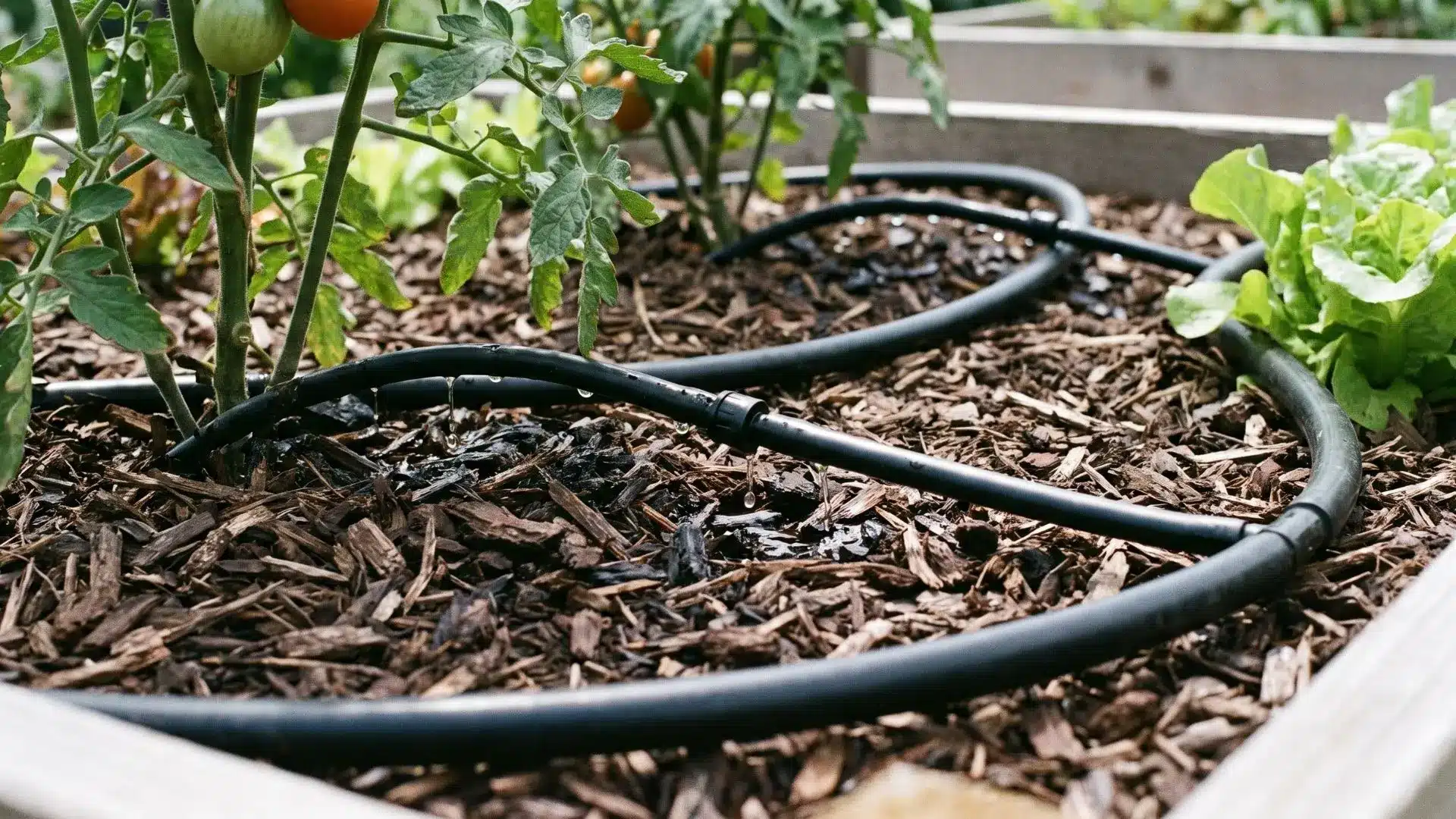
A drip irrigation system delivers water directly to plant roots, reducing waste and making watering much easier. It also keeps leaves drier, which may help reduce some plant diseases.
Adding a timer means the system runs automatically, so you spend less time dragging hoses around the yard while keeping plants consistently watered.
15. Consider Xeriscaping for Dry Climates
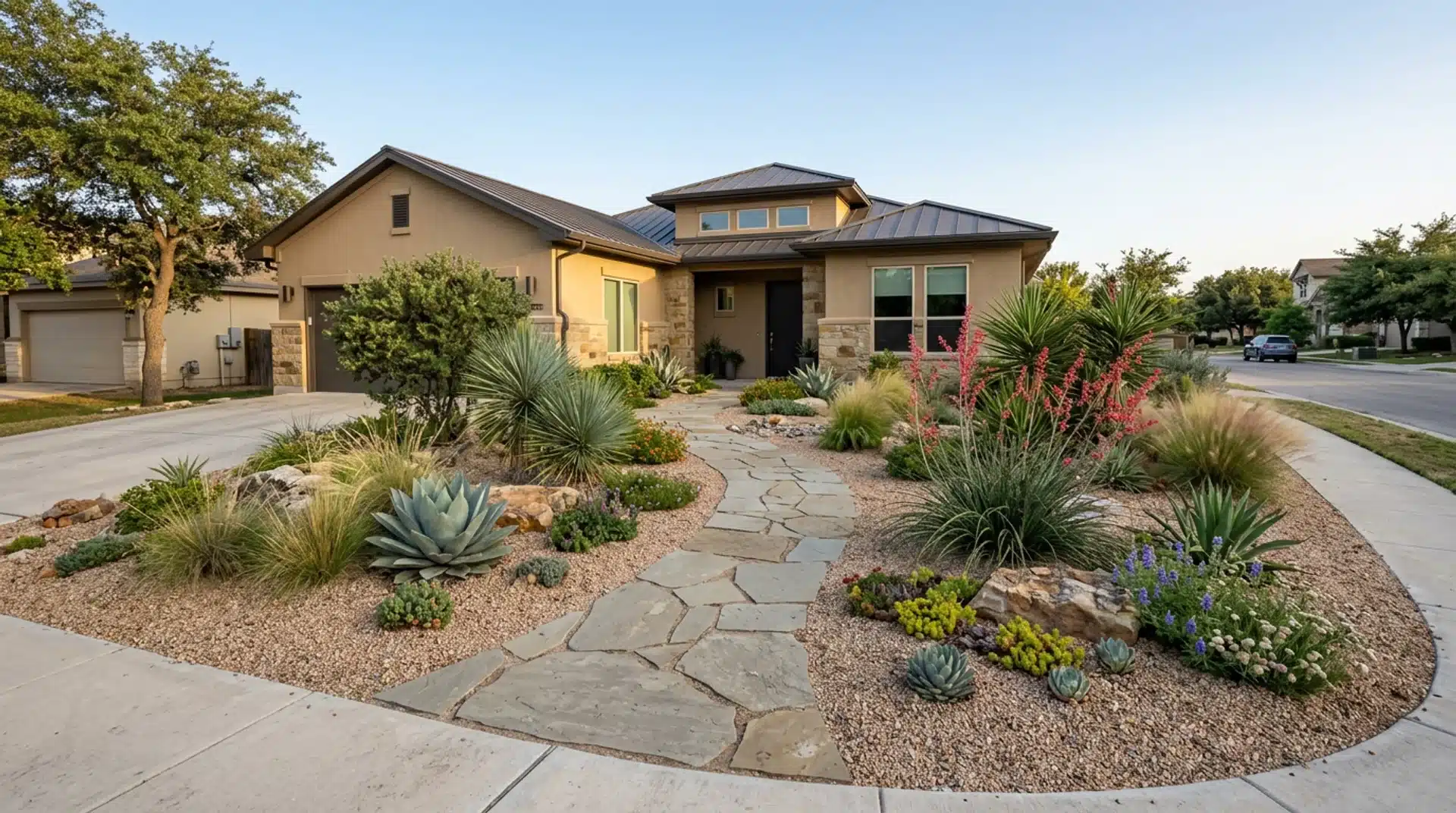
Xeriscaping is a landscaping method built around plants that need little to no extra water once they take root.
It works best in dry or hot regions where a traditional lawn struggles without heavy watering. The approach pairs native and drought-tolerant plants with gravel, mulch, or stone to reduce irrigation.
Grouping plants by water need also makes it easier to water efficiently and avoid waste.
Choosing Bushes for Front of House Landscaping
The best bushes for front-of-house landscaping should fit the space when fully grown, not just look small and neat at the nursery. Sunlight, soil, drainage, and mature size all affect how well a shrub performs.
Choosing plants that match those conditions can reduce pruning and replacement work later.
- Check Sun Exposure: Note how much direct sunlight the area receives before choosing a shrub. Match the plant’s light needs to the site.
- Choose Compact Varieties: Look for slow-growing or naturally compact shrubs when space is limited. They generally need less frequent pruning to stay within their area.
- Check Mature Size: Read the plant label for its expected height and width. Plan around its full size, not its size at planting.
- Allow Room to Grow: Give shrubs enough space from windows, paths, and other plants based on their mature size and growth habit.
- Match Soil and Drainage: Choose bushes that can handle your soil and moisture conditions. Poorly matched plants may need more watering or other care.
These choices can make a noticeable difference over time. A shrub that fits its location naturally is less likely to need repeated cutting, moving, or replacement as it grows and matures over the years.
Cost of Low-Maintenance Front Yard Landscaping
Cost depends a lot on how much of the work you do yourself. A simple DIY refresh with mulch, gravel, and a few drought-tolerant plants usually runs $500 to $2,000.
A full professional redesign with hardscaping, like a stone walkway or raised beds, typically costs $3,000 to $15,000, depending on your yard size and the materials you pick. Labor is often the biggest expense, so getting a few quotes can help you budget.
Ongoing costs stay low once everything is planted, since most low-maintenance yards only need occasional mulch refreshing, light pruning, and basic irrigation checks.
Spending more upfront on hardscaping usually means less work and lower costs down the road.
Maintenance Tips for a Low-Maintenance Front Yard
Low-maintenance landscaping still needs occasional care, but simple routines can keep the work manageable. The goal is to catch small problems early and keep plants, irrigation, mulch, and hardscaping in good condition.
Mulch can help suppress weeds and conserve soil moisture, while proper watering supports healthier root growth.
- Pull Weeds Early: Remove weeds while they are small so they have less time to spread through planting beds, gravel, and other open areas.
- Refresh Mulch as Needed: Check mulch depth and add more when it has broken down or become too thin. Keep mulch away from plant stems and tree trunks.
- Check Irrigation Regularly: Look for clogged emitters, leaks, or dry areas. Adjust irrigation as plants grow and group plants with similar water needs when possible.
- Trim Only When Needed: Prune shrubs and grasses according to their growth habits instead of cutting them on a fixed schedule. Avoid frequent heavy pruning when light shaping is enough.
- Clear Hardscaping: Remove leaves and debris from gravel, pavers, walkways, and drainage features. Keeping these areas clear helps the yard stay neat and allows drainage features to work properly.
A few simple checks throughout the growing season can prevent small maintenance problems from becoming larger ones. The exact amount of care will depend on your plants, climate, soil, and landscape design.
Final Thoughts
A front yard does not need constant mowing, watering, and pruning to look cared for.
With the right plants, clear edges, practical hardscaping, and a layout that suits your space, low-maintenance front yard landscaping can save time while keeping your home’s exterior inviting.
I’d start with the area that creates the most work, then make one change at a time.
Choose plants based on their mature size and growing needs, and give them enough room to thrive. Simple choices often make the biggest difference over time. Which idea would you try first in your front yard?
Share your favorite low-maintenance landscaping idea in the comments!
Frequently Asked Questions
Do I Need a Landscape Designer for a Low-Maintenance Yard?
Not necessarily. You can design it yourself by learning from local conservation gardens and using free online layout tools. Then, just hire a landscaping company for installation to save on design fees.
How Do I Choose Bushes for the Front of My House?
Select slow-growing or compact varieties that will fit the mature space, match your sun exposure, and suit your soil and drainage conditions. This prevents constant pruning and keeps the look balanced.
Is Mulch or Rock Better for a Low-Maintenance Yard?
Rocks are permanent and require less upkeep, but they don’t improve soil. Mulch enriches soil and retains moisture but needs yearly refreshing. Many designers recommend a hybrid approach for the best results.







One Response