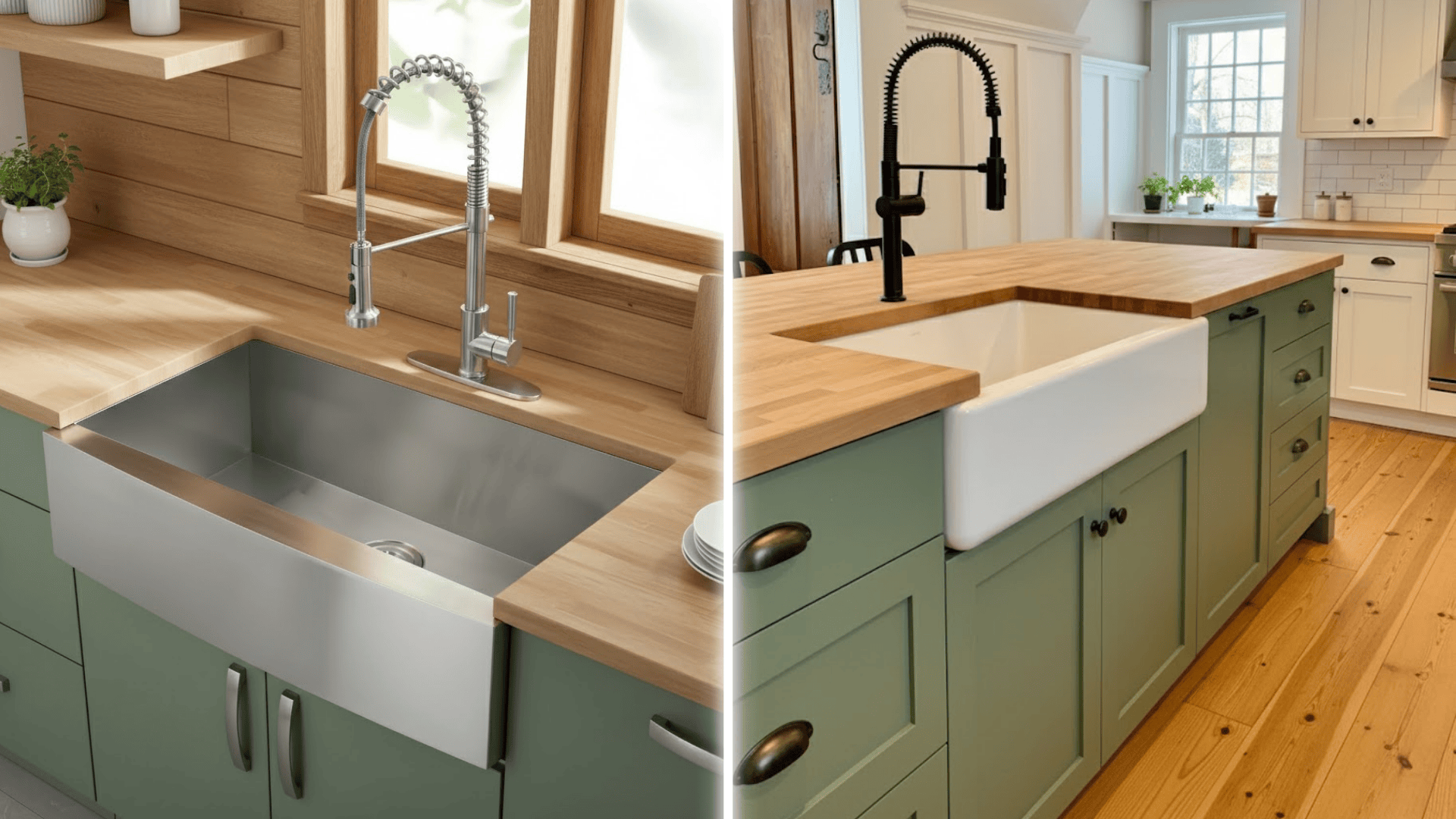




If you’ve been torn between an apron sink and a farmhouse sink, you’re not alone.
Both look stylish and practical, but they differ in ways that affect how your kitchen functions day to day.
This guide walks through their key differences, from design and installation to styling and maintenance, so you can choose the one that fits your space and routine.
What is a Farmhouse Sink?
A farmhouse sink was originally used in older kitchens that needed deep basins for washing dishes and food. It has a wide, deep bowl with an exposed front that extends slightly past the cabinets.
Most are made from fireclay or cast iron, which resist heat, scratches, and stains. These sinks are durable and practical, but require a strong cabinet base for support.
Farmhouse sinks provide a large washing area and traditional charm, but often cost more to install and can cause splashing if paired with a tall faucet.
What is an Apron Sink?
An apron sink is a modern version of the farmhouse style. It also features an exposed front, often called an apron front, and is available in more materials, such as stainless steel, copper, and concrete.
Stainless steel is lightweight and easy to clean; copper adds warmth but requires regular care; and concrete gives a custom, modern look.
Apron sinks are easy to maintain and blend well with modern or transitional kitchens. However, installation can be expensive, and they require precise fitting and a solid cabinet support to remain secure.
Popular Materials for Both Types
Both sink types combine practicality with design versatility. Knowing their key traits and materials helps you choose one that matches your kitchen’s style, size, and maintenance needs.
- Fireclay: Scratch-, stain-, and heat-resistant with a glossy surface. Ideal for traditional kitchens, but very heavy and prone to cracking under impact. Installation costs are typically higher due to weight.
- Cast Iron: Durable, with an enamel coating that withstands heat and daily use. Needs strong cabinet support and can chip if the enamel surface is damaged during use.
- Stainless Steel: Lightweight, affordable, and easy to clean. Resists rust and fits modern designs, but can show water spots and scratches if not wiped regularly after use.
- Copper: Naturally antibacterial and forms a warm patina over time. Adds charm to rustic kitchens but requires frequent cleaning and can dent or darken with heavy use.
- Concrete: Customizable in color and shape with a strong, industrial look. Very heavy and prone to hairline cracks if not sealed and maintained properly over time.
Apron Sink vs. Farmhouse Sink: Key Differences
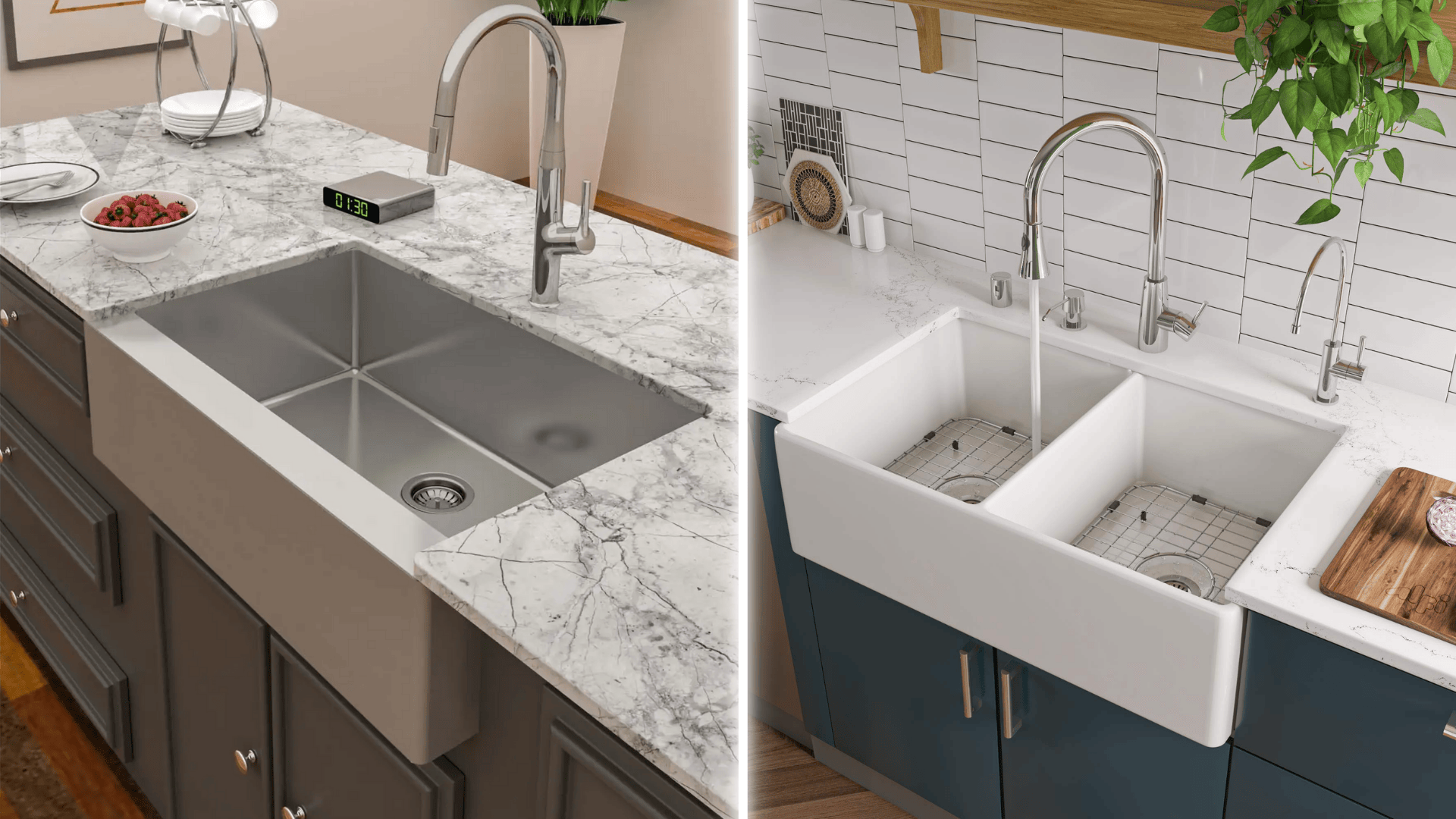
Both sinks look similar, but the real differences show up in their design, installation, and everyday use.
| Category | Farmhouse Sink | Apron Sink |
|---|---|---|
| Design and Appearance | Deep, wide bowl with a slightly extended front for a traditional, rustic look. Best suited for vintage or country-style kitchens. | Exposed front with sleek edges and clean lines. Fits modern or transitional kitchens with flexible design options. |
| Installation and Fit | Requires custom cabinets to support weight and depth. Installation is more complex and time-consuming. | Needs precise measurements and may require cabinet modifications. Easier to retrofit when replacing a similar front-facing sink. |
| Functionality and Use | A deep basin is ideal for washing large pots and trays. It may be uncomfortable for shorter users due to the depth. | Same deep basin, but often includes ergonomic improvements for easier daily use. Cleaning is simple thanks to reduced leaning. |
| Materials and Durability | Typically made from fireclay or cast iron for strength and longevity. Heavy and more challenging to install. | Available in stainless steel, copper, concrete, and more. Lightweight, durable, and easier to maintain. |
| Cost and Maintenance | Usually higher in cost due to weight, material, and craftsmanship. Needs gentle cleaning to preserve the finish. | Varies by material; stainless steel is more affordable. Requires regular cleaning to avoid water spots or scratches. |
| Ideal Kitchen Style | Works best in rustic, vintage, or country kitchens. Adds warmth and acts as a statement piece. | Blends easily into modern or transitional kitchens. Offers versatility without overwhelming the overall design. |
Both sinks combine style and function but serve different kitchen needs. Farmhouse sinks fit best in traditional spaces, while apron sinks offer a flexible, modern option for a clean and practical look.
Choosing Between Apron and Farmhouse Sinks
Selecting the right sink depends on your kitchen size, overall style, and budget. Here’s how each factor can guide your decision:
1. By Kitchen Size
In smaller kitchens, an apron sink can be a better fit since it comes in more compact designs and lighter materials.
Farmhouse sinks tend to be larger and deeper, which works best in open or spacious kitchens.
Before deciding, measure your base cabinet and counter depth to ensure the sink fits comfortably without taking up too much workspace.
2. By Style
A farmhouse sink is perfect for rustic, country, or traditional kitchens that highlight warmth and charm. It pairs well with wood cabinetry and natural finishes.
Apron sinks suit modern, transitional, or industrial spaces where clean lines and metal or stone finishes stand out.
Their versatility allows them to blend old and new elements, making them ideal for mixed-style interiors.
3. By Budget
Budget plays a big role in choosing between the two. Farmhouse sinks made from fireclay or cast iron are typically more expensive due to weight and installation needs.
Apron sinks offer more material choices, like stainless steel or composite, which can lower costs.
However, both styles may require custom cabinet work, so include installation expenses when planning your kitchen upgrade.
Both sinks serve the same purpose but suit different needs. Knowing what fits your space, style, and budget helps you make the right choice.
Installation of Apron and Farmhouse Sinks
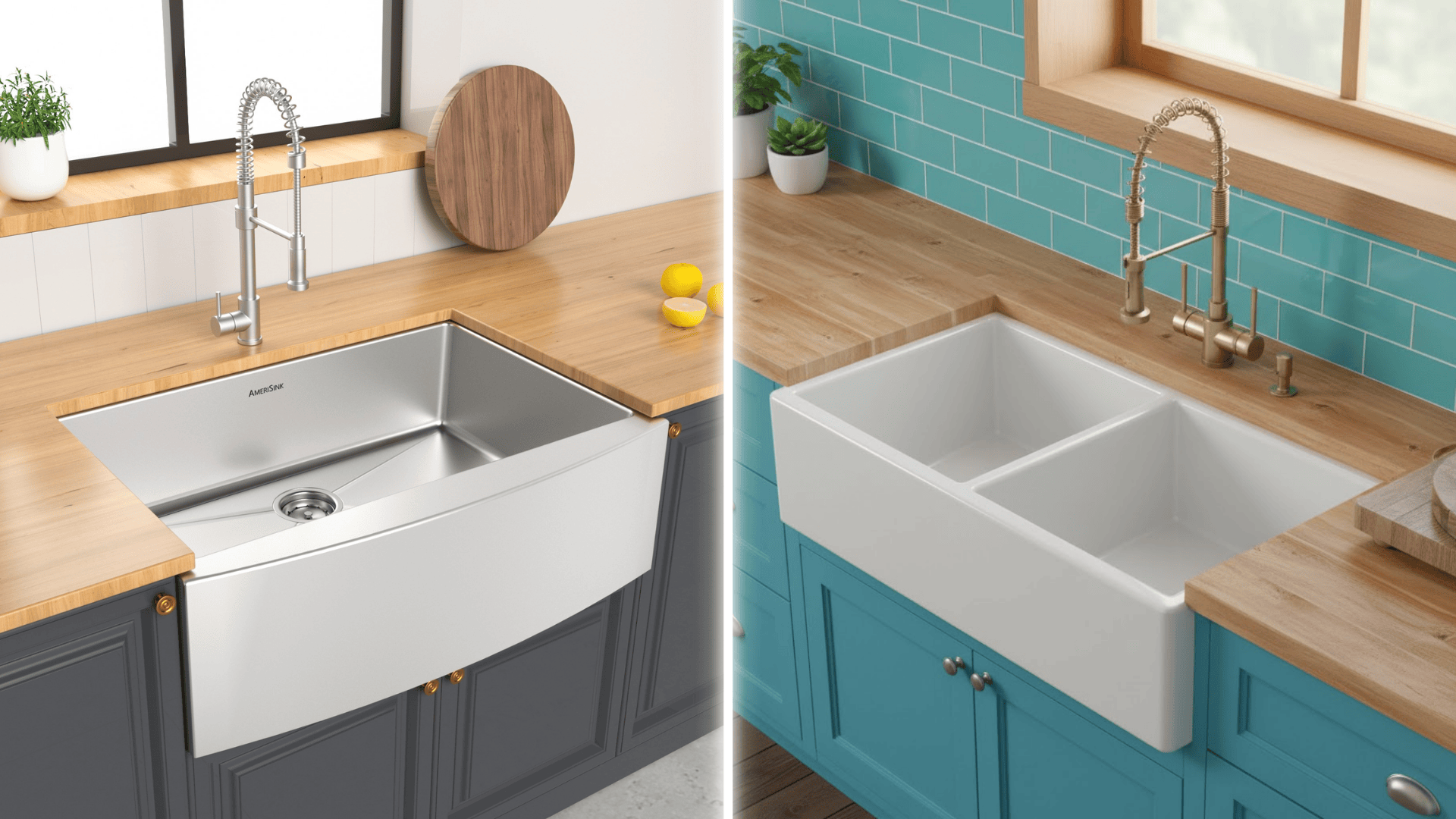
Both apron and farmhouse sinks need careful installation to ensure proper support and a clean fit. Each has specific requirements based on its weight, shape, and exposed front design.
Apron Sink Installation
Installing an apron sink requires careful planning and accurate fitting. Each step below ensures a stable setup and a smooth, clean finish:
- Cabinet Preparation: Requires accurate cabinet cutouts to fit the exposed front properly. Precise measurements help the sink sit flush with the surrounding surfaces.
- Support: Reinforce the base cabinet to hold the sink’s full weight, especially for heavy materials. A solid frame prevents sagging or shifting over time.
- Countertop Alignment: The countertop edge should align evenly with the sink’s front for a clean finish. This helps maintain a smooth transition between materials.
- Sealing: Apply waterproof caulking and silicone around all seams and edges. Proper sealing prevents leaks and protects nearby cabinetry from moisture.
- Measurement Check: Double-check all dimensions before final fitting to ensure accuracy. Small alignment errors can lead to uneven gaps or poor sealing later.
Farmhouse Sink Installation
Farmhouse sinks are heavier and deeper, requiring strong support and careful leveling. These steps help ensure a secure, lasting installation:
- Cabinet Strength: Build or reinforce a sturdy base cabinet to support the sink’s heavy weight. This prevents joint stress and keeps the sink stable in the long term.
- Countertop Cutting: Cut the countertop precisely to fit the sink’s extended front edge. Accurate cutting ensures the exposed front sits evenly and securely.
- Leveling: Level the sink before sealing to evenly distribute weight across the surface. This step prevents tilting and keeps the basin balanced.
- Sealing: Use high-quality sealant around all edges and seams. Proper sealing helps prevent leaks and protects the counter from water.
- Professional Setup: Due to their size and depth, farmhouse sinks often need expert installation. Professional fitting ensures structural support and a perfect finish.
Both sinks demand precision and care during installation to ensure stability and prevent future issues. When fitted correctly, they provide lasting performance and a clean, professional look in any kitchen.
Styling Tips for Apron and Farmhouse Sinks
Both sink styles can blend into different kitchen designs with the right mix of color, finish, and lighting. These quick tips help you coordinate each element for a balanced look:
| Design Element | Farmhouse Sink Pairs Well With | Apron Sink Pairs Well With |
|---|---|---|
| Cabinet Colors | Warm tones like cream, beige, or natural wood | Cool hues like gray, white, or navy for contrast |
| Countertop Edges | Rounded or beveled edges for a softer, more traditional look | Straight or mitered edges for a clean, modern finish |
| Faucets & Finishes | Bridge or gooseneck faucets in bronze, brass, or brushed nickel | Sleek pull-down faucets in chrome, matte black, or stainless steel |
| Backsplash Pairing | Subway tiles or stone backsplashes for a classic, timeless touch | Glass, quartz, or textured tiles for a contemporary accent |
| Lighting Choices | Warm pendant lights or lantern-style fixtures for a cozy, inviting feel | Minimal or industrial-style lighting for a balanced, modern setup |
When colors, finishes, and lighting are coordinated thoughtfully, both sink types can become standout features that tie the kitchen design together.
Maintenance Tips for Both Sinks
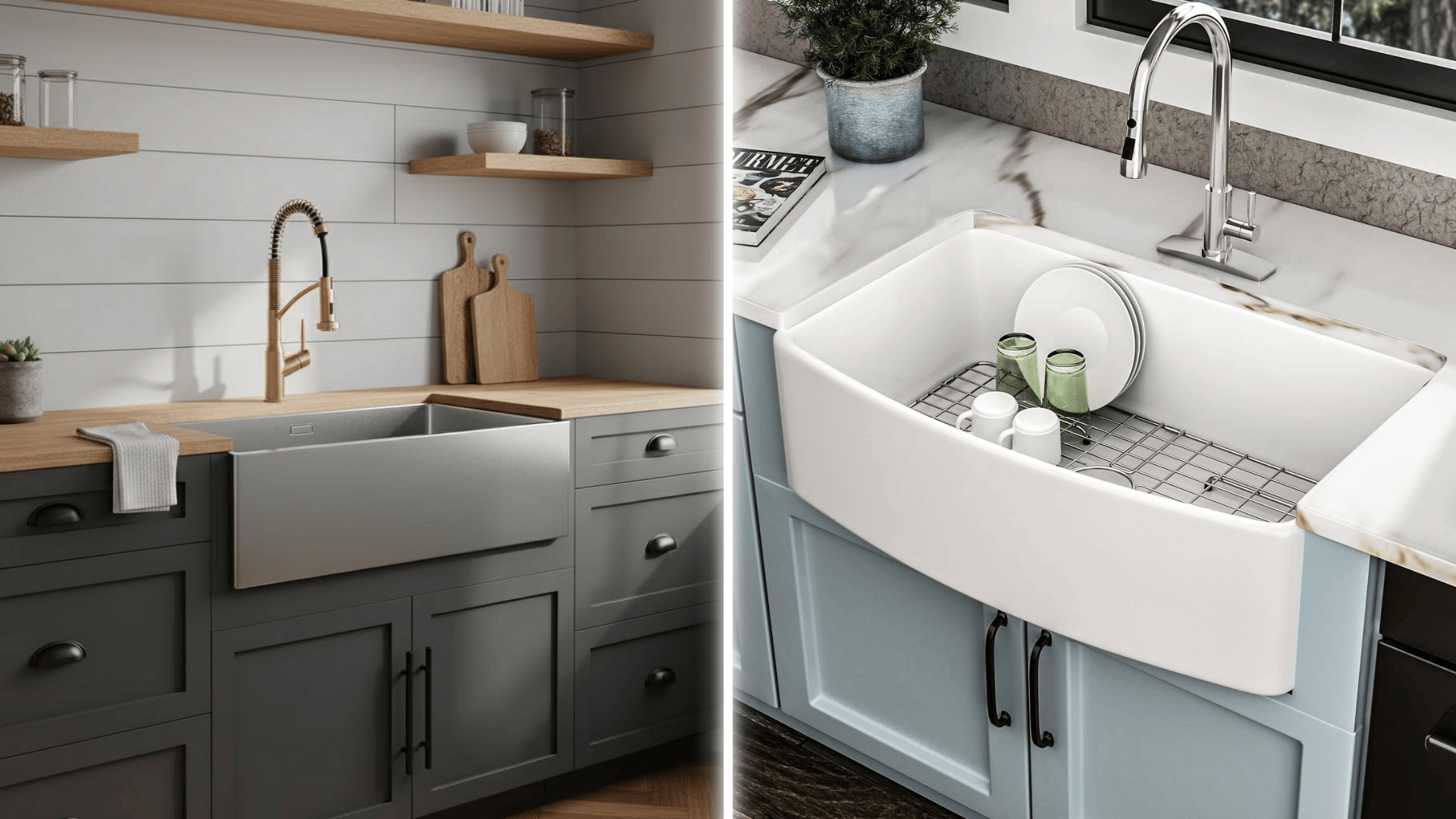
Proper maintenance keeps both sink styles looking good and performing well over time. These basic care steps help prevent damage and extend their lifespan.
Apron Sink Maintenance
Regular care keeps an apron sink looking clean and prevents long-term damage. Simple habits go a long way in maintaining its shine and durability:
- Daily Cleaning: Wipe the sink after each use to remove water spots and residue. Use mild dish soap and a soft cloth for regular cleaning.
- Stain Prevention: Avoid leaving metal pans or acidic foods in the sink for long periods. Rinse thoroughly to prevent discoloration or stains.
- Scratch Protection: Use a sink grid or mat at the bottom to prevent dents or scratches from heavy cookware.
- Seal Check: Inspect the sealing around edges every few months. Reapply caulking if cracks or moisture appear near the seam.
Farmhouse Sink Maintenance
Consistent upkeep helps a farmhouse sink stay durable and keeps its finish looking new. These simple steps make cleaning and care easy to manage:
- Regular Cleaning: Wash the sink daily with warm water and mild soap. Avoid abrasive pads that can scratch or dull the surface.
- Avoid Harsh Chemicals: Stay away from bleach or other strong cleaners, as they can damage the glaze on fireclay or cast-iron sinks.
- Dry After Use: Wipe the sink dry after washing to prevent water stains and mineral buildup, especially in hard-water areas.
- Surface Protection: Use a protective rack or mat to reduce the chance of chips or scratches. Reseal the joints annually to stop leaks and protect the nearby cabinetry.
Both sinks stay in great shape with simple, consistent care. Regular cleaning, drying, and resealing help prevent wear and keep them looking fresh for years.
Final Thoughts
When remodeling your kitchen, the choice between an apron sink and a farmhouse sink can significantly shape its style and functionality.
Choosing between an apron sink and a farmhouse sink really comes down to how you cook, clean, and style your space.
Each option differs in design, installation, and maintenance, so now it’s about picking the one that fits your kitchen and lifestyle best, as both bring character and function, just in their own way.
If you’re planning a remodel, take a closer look at what matters most to you: style, space, or upkeep, and your perfect fit will be easy to spot!