

A ceiling can make a room feel polished, or it can expose every roller mark and small surface flaw. If you choose the wrong paint, you may end up with uneven coverage, too much shine, or a finish that highlights imperfections instead of hiding them.
The best ceiling paint should give you smooth coverage, low splatter, and a finish that suits the room. I also know bathrooms, patched ceilings, and everyday living spaces do not need the same formula.
You will learn which paint types work best, how sheen affects flaws, when moisture resistance matters, and what to consider before buying so your ceiling looks cleaner and more even.
What Makes a Ceiling Paint the Right Choice
The right ceiling paint should do more than simply cover the surface. It needs to reduce glare, hide minor flaws, apply smoothly overhead, and create an even finish once dry.
For most rooms, flat or ultra-flat formulas work best because they reflect less light and make patches, drywall seams, and uneven texture less noticeable.
You should also consider the condition of the ceiling and the room itself. Bathrooms may need better moisture and mildew resistance, while older or repaired ceilings benefit from stronger hiding power.
Low splatter, good leveling, and reliable coverage also make application easier. These factors help narrow down which products best suit different ceiling needs.
Best Ceiling Paints for Different Needs
For most ceilings, choose a flat or ultra-flat paint with strong coverage and low splatter. The right formula should hide minor flaws while matching the room’s moisture and surface conditions.
1. Benjamin Moore Waterborne Ceiling Paint
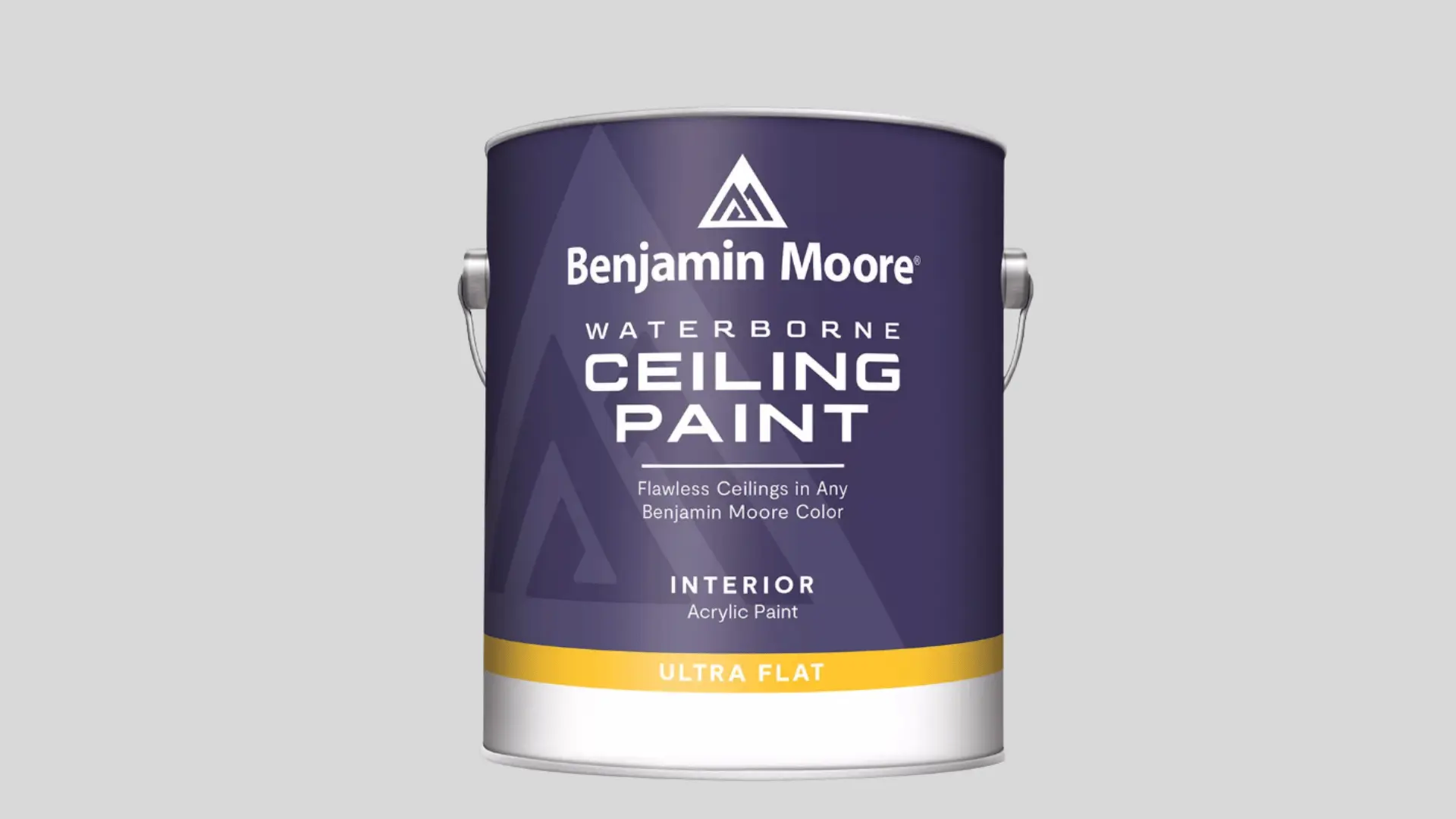
Benjamin Moore Waterborne Ceiling Paint is a strong choice for bedrooms, living rooms, hallways, and other general interior spaces. Its ultra-flat appearance helps keep light reflection low, which makes the finished ceiling appear more uniform.
The formula resists splatter during application, an important benefit when rolling paint overhead. Its high-hide finish also makes it useful for ceilings with minor surface inconsistencies.
Best for:
- Living rooms
- Bedrooms
- Hallways
- Smooth ceilings
- Minor surface imperfections
- Homeowners wanting an ultra-flat finish
It works particularly well when the goal is a traditional clean white ceiling without noticeable shine.
2. Sherwin-Williams Premium Ceiling Paint
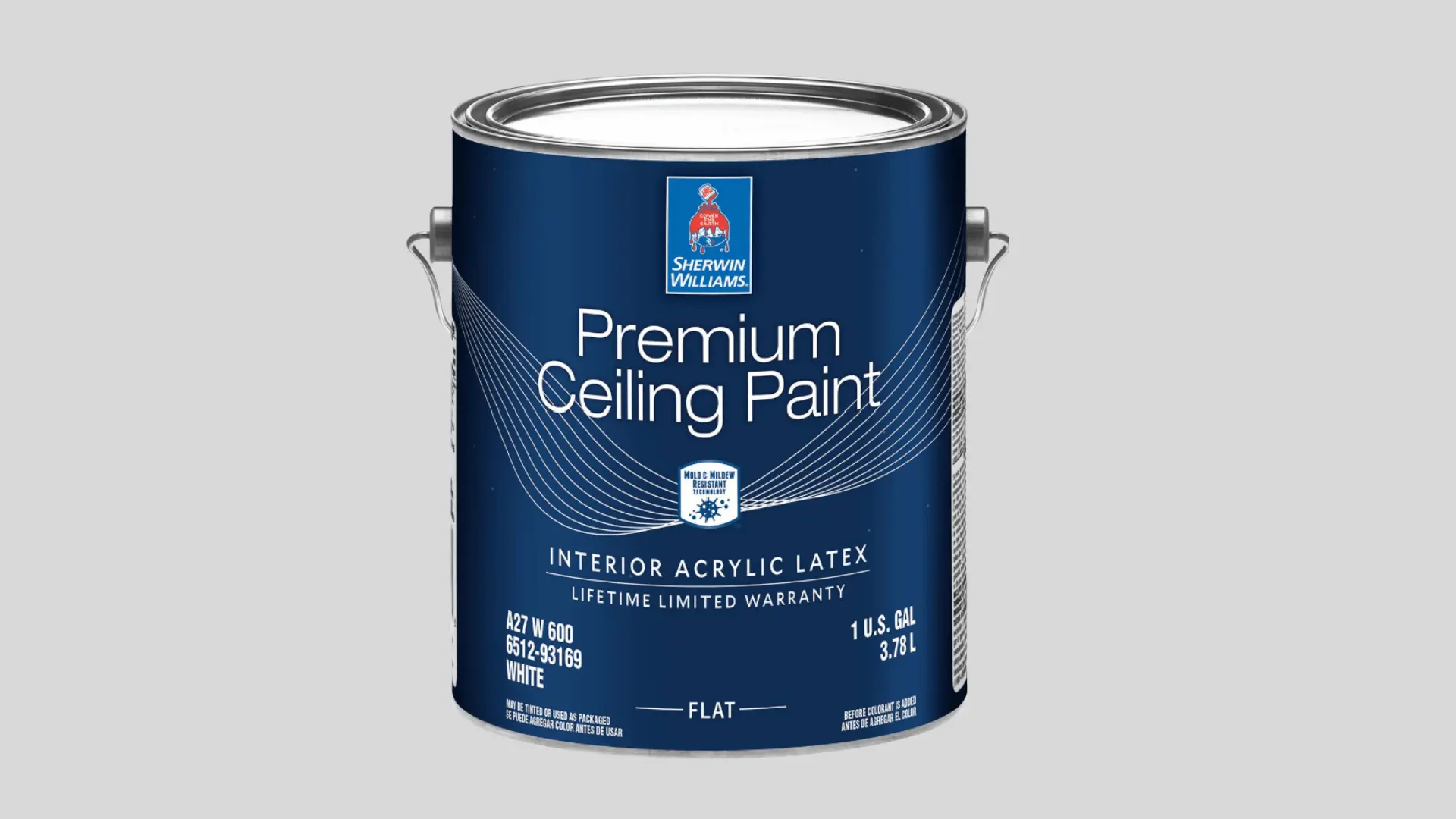
Sherwin-Williams Premium Ceiling Paint focuses on smooth coverage and an even flat finish. Its leveling properties can help reduce the uneven appearance that sometimes develops as rolled sections dry.
The formula also offers splatter and mildew resistance, making it more versatile than a basic flat interior paint.
Best for:
- High-visibility ceilings
- Bright rooms
- Large open spaces
- Homeowners concerned about roller texture
- Rooms where mildew resistance is useful
Its bright white appearance can also help reflect available light, particularly in rooms with limited natural illumination.
3. Behr Premium Plus Ceiling Paint
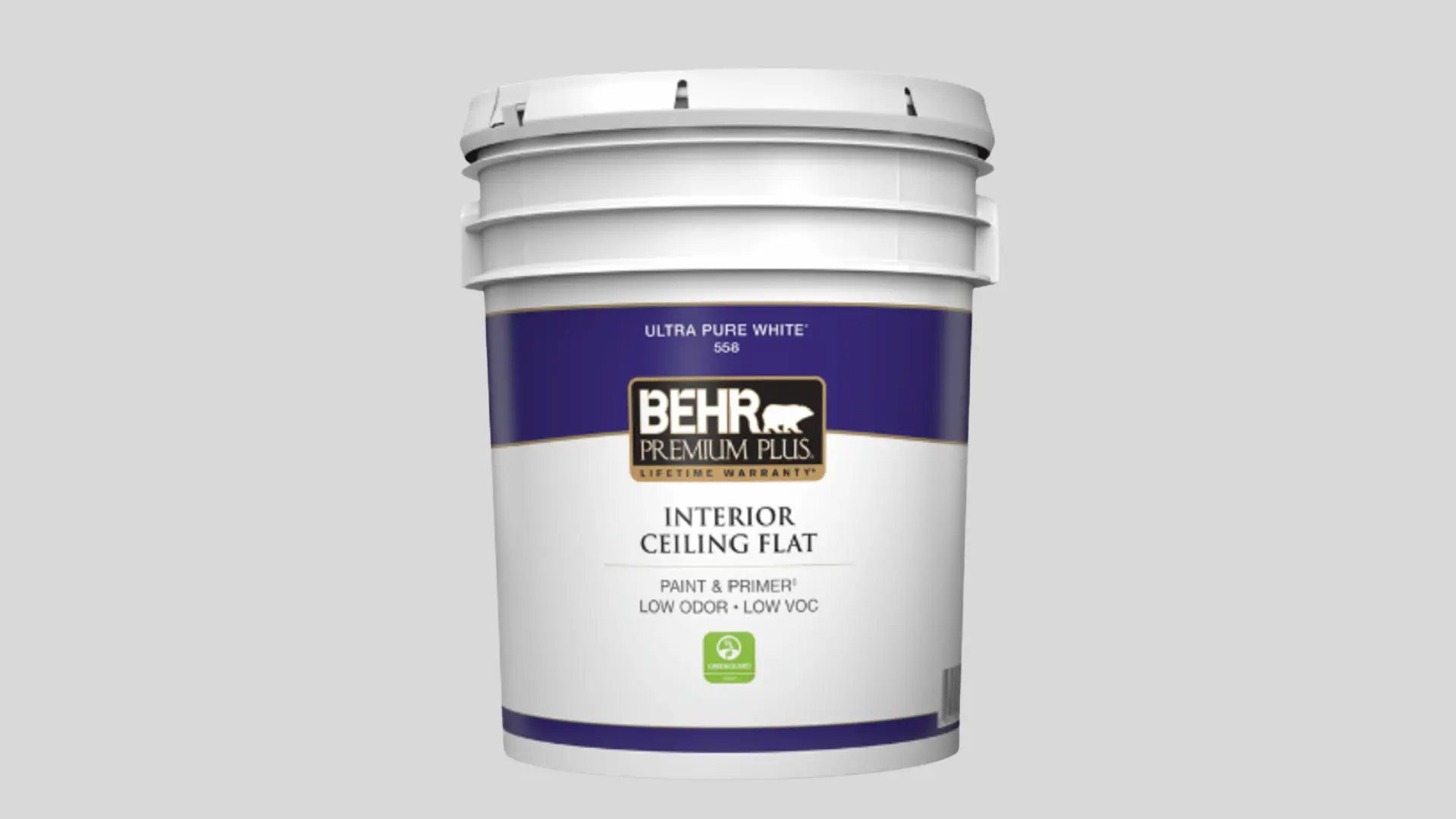
Behr Premium Plus Ceiling Paint is a practical choice when you need to cover a large ceiling without moving into premium-priced products, which matters most when you’re estimating your painting budget for the whole house.
Its flat finish keeps reflections down, while the low-odor formula can make interior painting more manageable. It is also widely available, which makes buying additional paint for later touch-ups relatively convenient.
Best for:
- Budget-conscious projects
- Rental properties
- Bedrooms
- Living rooms
- Routine repainting
- DIY ceiling projects
It makes the most sense on ceilings that are already in reasonably good condition and mainly need a fresh, uniform finish.
4. Sherwin-Williams CHB
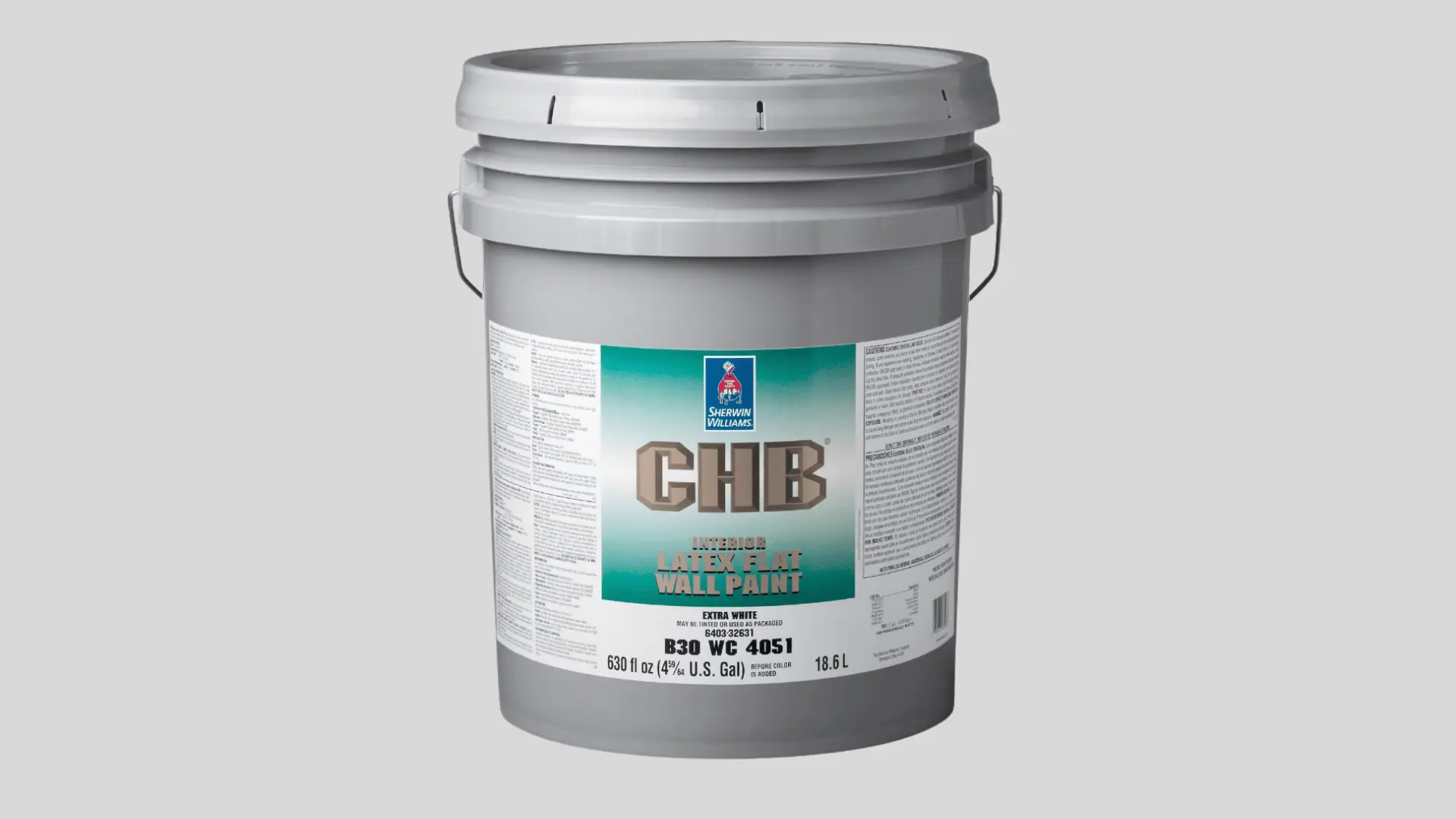
If minor flaws are the main concern, Sherwin-Williams CHB is worth considering because of its dead-flat appearance and strong hiding ability.
The best ceiling paint to hide imperfections is usually a true flat or ultra-flat formula. These finishes scatter rather than strongly reflect light, making small drywall waves, sanding variations, patches, tape joints, and uneven texture less obvious.
CHB is especially useful for:
- Large ceilings
- Older drywall
- Minor patched areas
- Slightly uneven texture
- Visible drywall joints
- Rooms with strong side lighting
Paint cannot repair a damaged ceiling, however. Deep cracks, loose compound, raised tape, large dents, or badly patched areas should be repaired and sanded before painting. Adding more coats over major defects rarely solves the underlying problem.
5. Valspar Ultra Flat Ceiling Paint
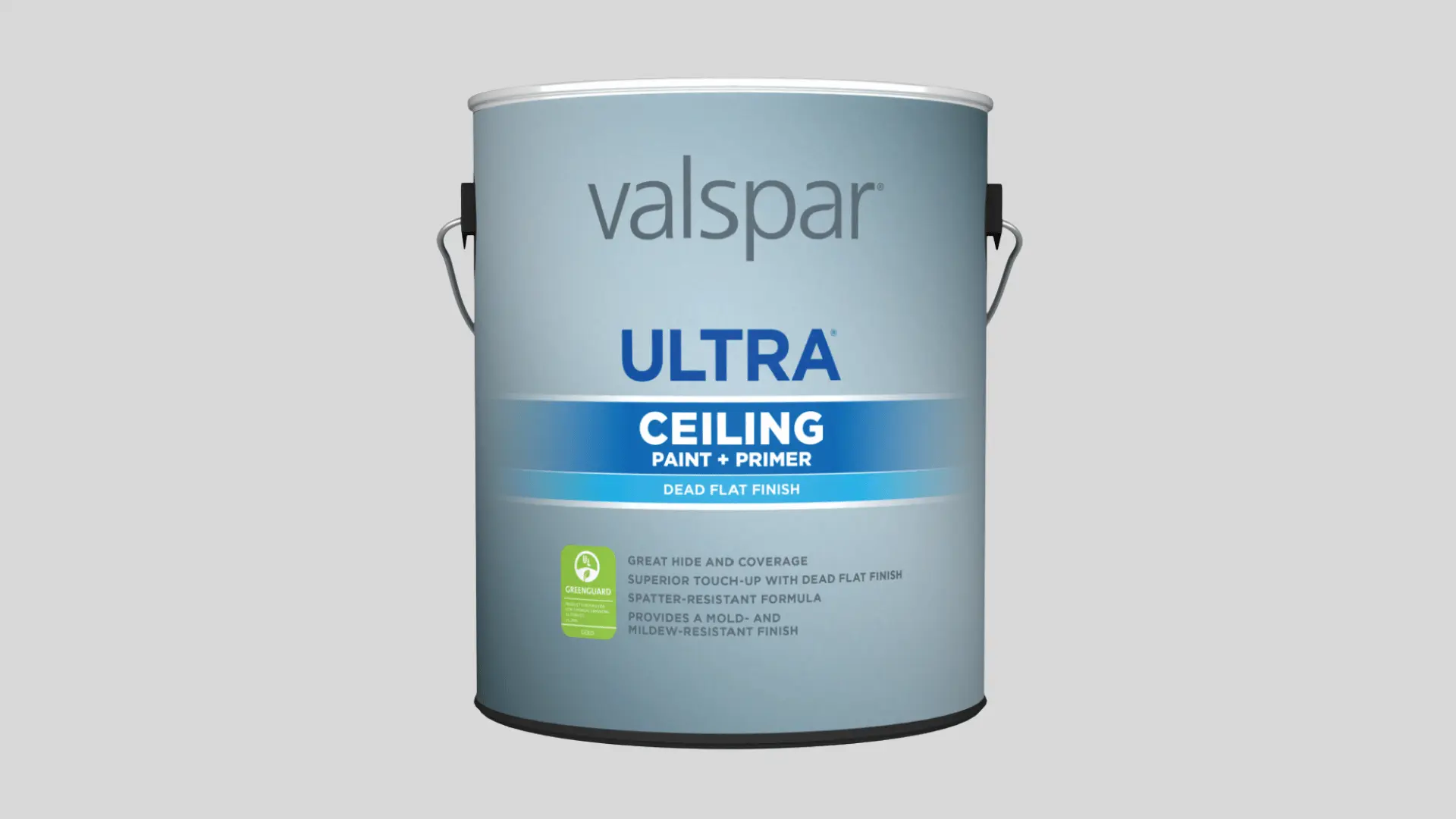
Valspar Ultra Flat Ceiling Paint is a straightforward option for common residential rooms. Its flat white appearance works well where the main goal is an even, low-reflection ceiling.
Paint-and-primer versions are also available, which may simplify repainting over sound, previously painted surfaces.
Best for:
- Bedrooms
- Guest rooms
- Living areas
- Home offices
- Routine repainting
- Standard drywall ceilings
For ceilings with water stains, smoke discoloration, bare drywall, or extensive repairs, separate priming may still be necessary.
6. Zinsser Ceiling Paint and Primer
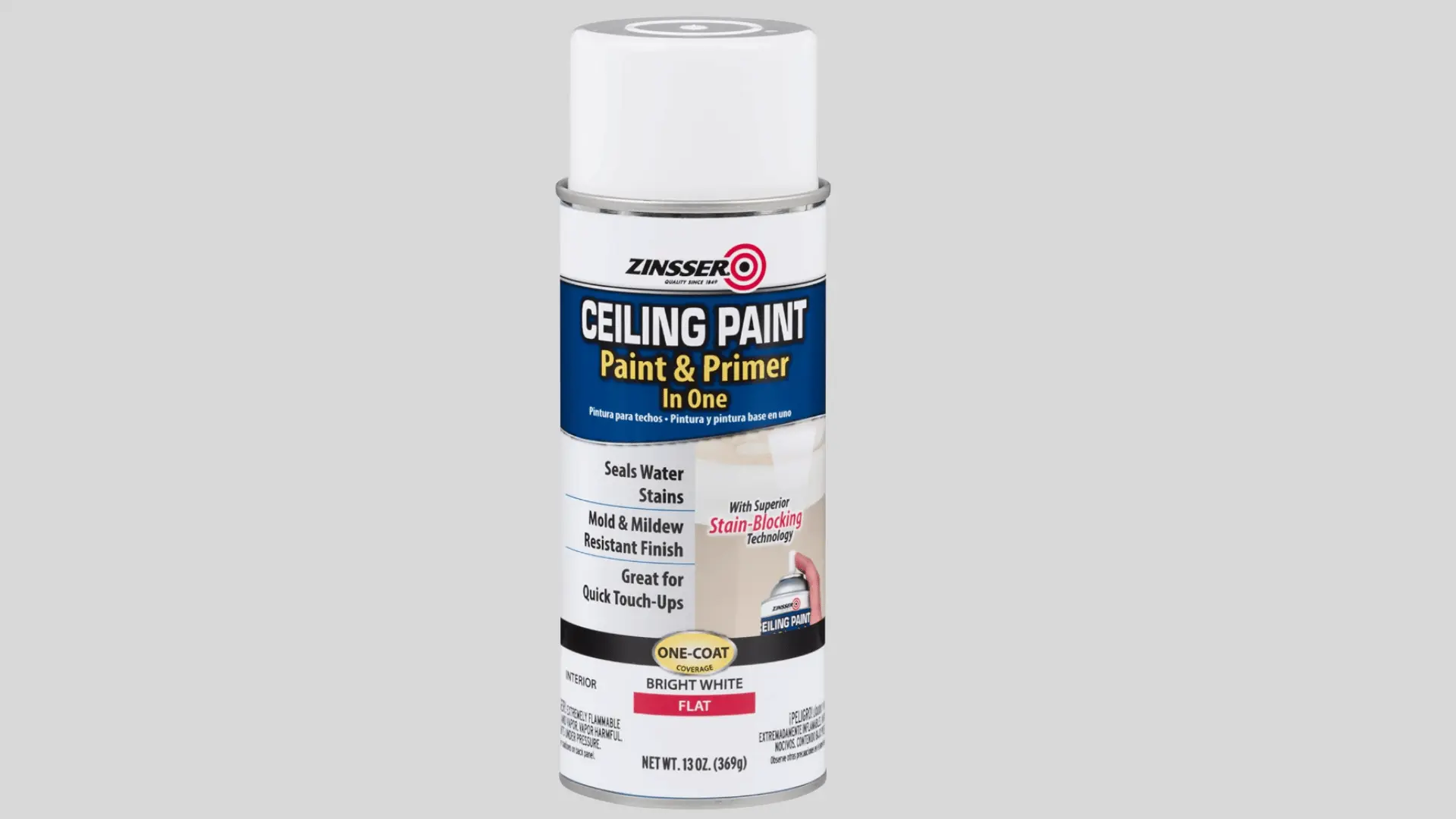
Zinsser Ceiling Paint and Primer combine ceiling paint with priming properties, making it convenient for repainting ceilings that need a fresh, more uniform appearance.
It can be useful when dealing with light color differences or previously painted surfaces, but paint-and-primer products should not be confused with dedicated stain-blocking primers.
Best for:
- Previously painted ceilings
- Routine renovations
- Light discoloration
- Small touch-up projects
- General ceiling repainting
If a ceiling has yellow-brown water marks, smoke staining, or another material that may bleed through the finish coat, use an appropriate stain-blocking primer first.
Best Paint for Bathroom Ceiling
Bathrooms need a slightly different approach because steam, condensation, and poor airflow can place more stress on the coating, something worth keeping in mind if you’re also renovating the whole bathroom rather than doing a simple repaint.
The best paint for a bathroom ceiling should resist moisture and mildew while providing enough durability for occasional cleaning. Sherwin-Williams Premium Ceiling Paint can be suitable in well-ventilated bathrooms because of its mildew-resistant properties.
For bathrooms that remain humid for long periods, a bathroom-rated moisture- and mildew-resistant matte or low-sheen paint may be a better choice than ordinary dead-flat ceiling paint.
Pay particular attention to:
- Ventilation: A functioning exhaust fan helps reduce condensation.
- Mildew resistance: Useful where warm, damp conditions are common.
- Washability: Matte or eggshell finishes generally tolerate cleaning better than dead-flat paint.
- Stains: Investigate water marks before repainting.
- Existing mildew: Remove the mildew and correct the moisture source before applying new paint.
A shiny finish is not automatically better. Higher sheen improves washability but can make drywall flaws and repaired areas much easier to see.
Flat vs Matte and Eggshell Ceiling Paint
Sheen changes how both the paint and the ceiling surface look. The lighter a finish reflects, the more likely it is to highlight dents, patches, roller texture, and drywall seams.
| Ceiling Finish | Hides Imperfections | Washability | Best Use |
|---|---|---|---|
| Ultra-flat | Excellent | Low | Bedrooms, living rooms, imperfect ceilings |
| Flat | Very good | Low to moderate | Most interior ceilings |
| Matte | Good | Moderate | Kitchens and lightly humid spaces |
| Eggshell | Fair | Good | Bathrooms or areas needing easier cleaning |
Flat remains the standard choice for most ceilings because it gives a soft, uniform appearance. Matte is useful when you want slightly better durability without creating too much shine.
Eggshell should be used selectively. It is easier to wipe down but reflects more light, particularly near windows and ceiling fixtures.
Do You Need Primer Before Painting a Ceiling?
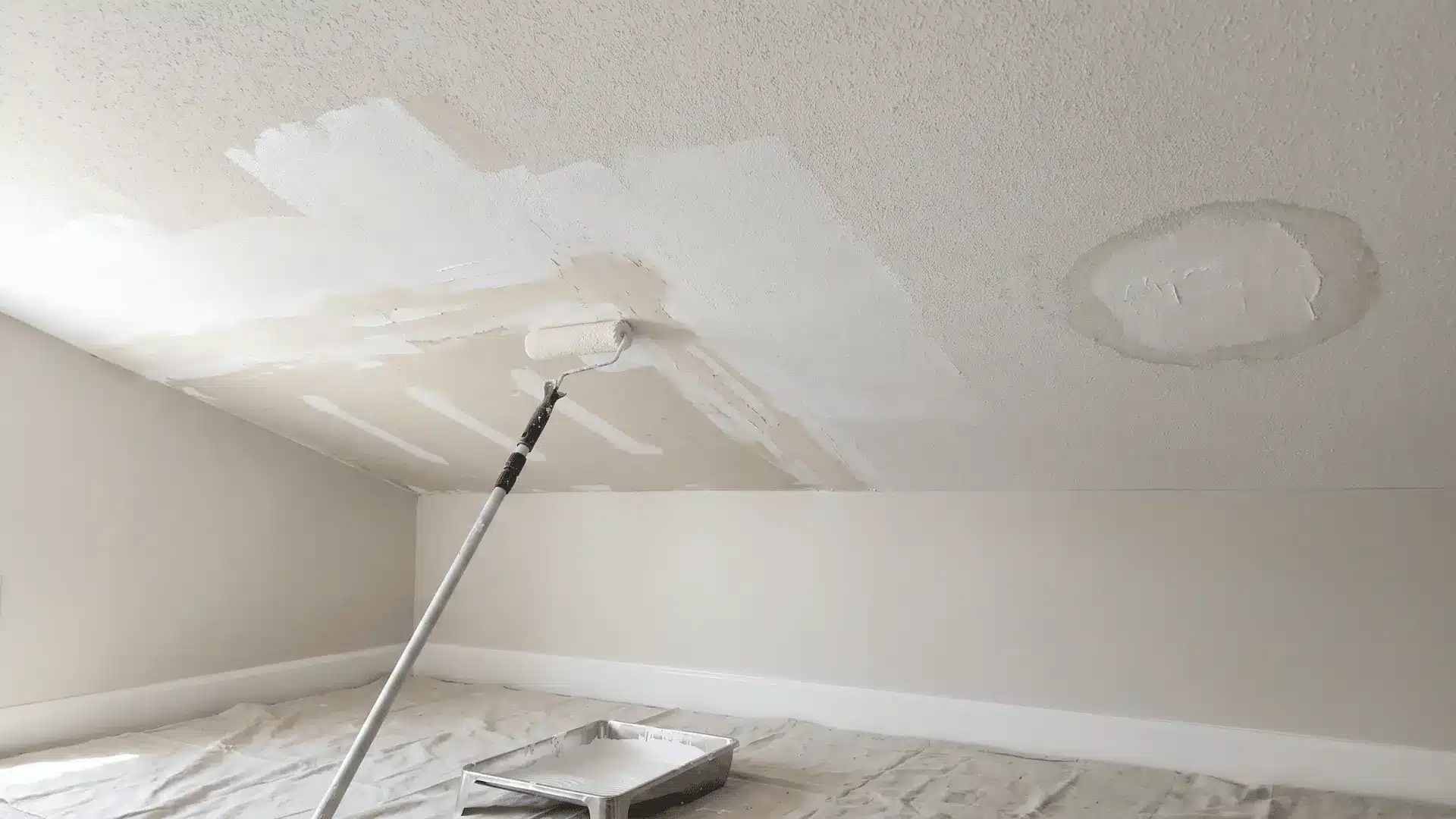
Primer is not necessary for every ceiling, but certain surfaces should not be painted without it.
You will usually benefit from primer when working with:
- New drywall
- Large, patched areas
- Bare joint compound
- Water stains
- Smoke or nicotine stains
- Dark existing colors
- Uneven porosity
- Previously repaired surfaces
Previously painted ceilings that are clean, sound, and close to the new color can often be repainted without a separate full coat of primer.
Water stains deserve special attention. Make sure the leak has been repaired, and the ceiling is fully dry before painting. A stain-blocking primer is usually more reliable than repeatedly coating the mark with regular ceiling paint.
Ceiling Paint vs. Wall Paint and Color Choices
Ceiling paint differs from wall paint mainly in sheen, thickness, washability, and application. Color choice then affects how bright, warm, or visually open the room feels.
| Factor | Ceiling Paint | Regular Wall Paint | White Ceiling | Tinted Ceiling |
|---|---|---|---|---|
| Finish | Usually flat or ultra-flat | Available in flat, eggshell, satin, and gloss | Creates a clean, traditional look | Creates a softer or more coordinated look |
| Light reflection | Low reflection helps hide flaws | Higher sheens can reveal imperfections | Reflects more light and can brighten a room | Can reduce contrast and create a warmer feel |
| Thickness | Often thicker to reduce dripping and splatter | Usually formulated for vertical surfaces | Works well in most room styles | Useful when matching walls or creating contrast |
| Washability | Usually lower, especially with flat finishes | Often more washable | Best for low-maintenance ceilings | Darker or richer colors may show dust more easily |
| Best use | Most bedrooms, living rooms, and standard ceilings | Ceilings needing a washable or specific sheen | Small, dark, or traditional rooms | Tall rooms, warm interiors, or coordinated color schemes |
| Main advantage | Smooth, forgiving finish | More sheen and color flexibility | Makes ceilings feel bright and open | Adds depth and reduces harsh white contrast |
For most rooms, dedicated flat ceiling paint remains the safer option because it minimizes surface flaws. White is the most versatile color, but off-white or tinted ceilings can work better when the wall color, lighting, or room proportions call for a softer finish.
How to Avoid Roller Marks and Streaks
Even premium paint can look uneven if it is applied incorrectly.
Start by using a roller nap suited to the ceiling texture. Smooth drywall usually needs a shorter nap than heavily textured surfaces.
Work in manageable sections and maintain a wet edge as you move across the room. Avoid stopping halfway through a large ceiling whenever possible.
Do not repeatedly roll over paint that has begun to dry. Overworking partially dried sections can create flashing, texture differences, and visible roller tracks.
Also avoid stretching the paint too far. A roller that is nearly dry tends to leave uneven coverage.
For the final passes, roll consistently in the same direction with light pressure. This can help create a more uniform texture across the ceiling.
Common Ceiling Painting Mistakes
Several common mistakes can make a newly painted ceiling look worse than expected.
- Choosing too much sheen: Glossy finishes emphasize surface irregularities.
- Skipping repairs: Paint will not fill deep cracks or poorly finished drywall joints.
- Ignoring stains: Water and smoke discoloration may bleed through ordinary paint.
- Using too little paint: Thin coverage can create visible light and dark areas.
- Overworking the surface: Rolling drying paint often causes streaks.
- Ignoring moisture problems: New paint will not fix leaks, condensation, or mildew.
- Skipping proper preparation: Dust and loose material interfere with adhesion.
- Using the wrong roller: Incorrect nap can leave excessive texture or poor coverage.
Spending more on paint cannot compensate for a ceiling that has not been properly cleaned, repaired, and prepared.
Final Thoughts
Choosing the right ceiling paint comes down to the surface, the room, and the finish you want. Flat and ultra-flat formulas are usually best for hiding minor flaws, while bathrooms may need better moisture and mildew resistance.
I would also pay attention to coverage, splatter control, primer needs, and how much sheen the ceiling can handle. The best ceiling paint should make the surface look smoother without creating extra problems during application.
Once you match the paint to the room and prepare the ceiling properly, you are more likely to get an even, clean result. Try these tips on your next project and check out related painting guides for more practical ideas.
Frequently Asked Questions
Can ceiling paint cover cracks?
Paint may make tiny hairline imperfections less noticeable, but it does not properly repair cracks. Moving, widening, or deep cracks should be investigated and repaired before painting.
Is one coat of ceiling paint enough?
One coat may be sufficient when repainting a clean ceiling with a similar color and strong coverage. Two coats often produce a more consistent finish when changing color, covering repairs, or painting porous surfaces.
Does a bathroom ceiling need special paint?
Bathrooms benefit from paint that can tolerate humidity and resist mildew. In heavily used bathrooms, moisture-resistant matte or low-sheen paint may perform better than a basic dead-flat ceiling formula.
Should ceiling paint always be white?
No. White reflects light and remains the most common choice, but off-white, wall-matched, and darker ceiling colors can all work depending on the room proportions, lighting, and desired appearance.
Why does my ceiling look streaky after painting?
Streaking may come from insufficient paint, uneven roller pressure, poor wet-edge control, overworking drying paint, or inconsistent surface porosity. A properly prepared surface and another evenly applied coat can often improve the appearance.