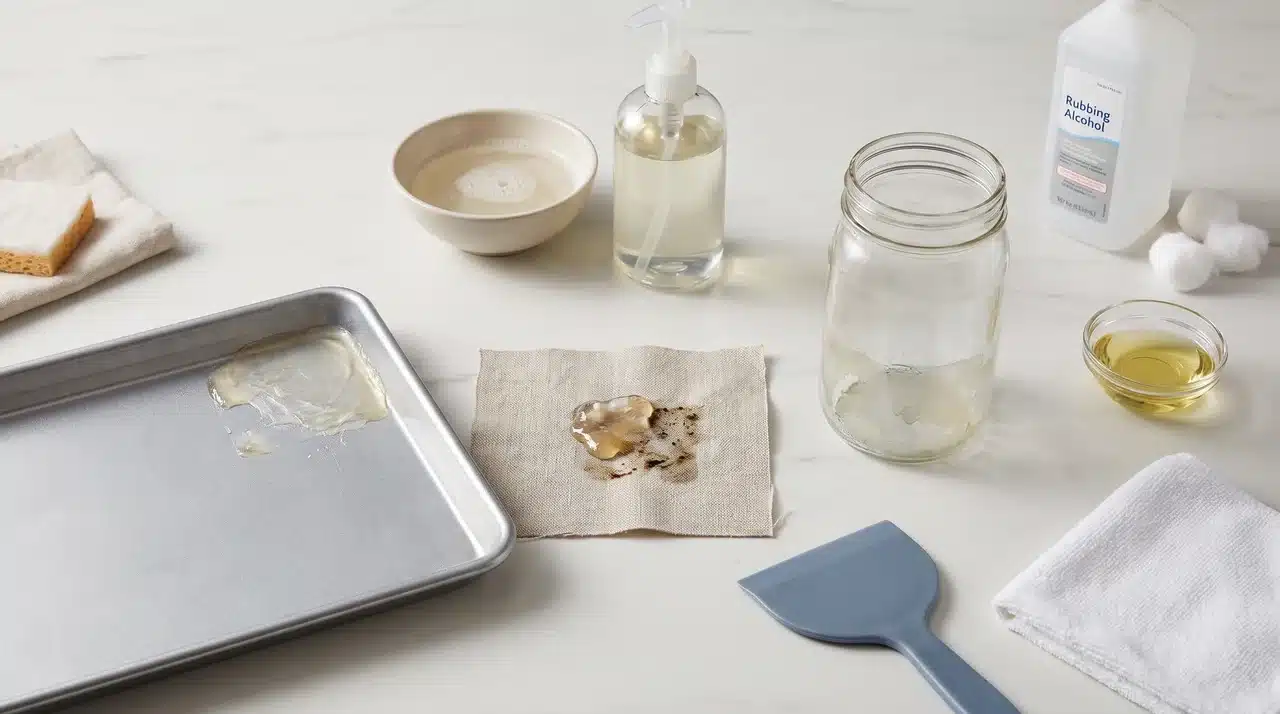




Sticky residue from labels, stickers, tape, or glue can turn a small cleanup into a frustrating job. The biggest mistake is treating every surface the same way.
Glass, plastic, metal, wood, fabric, and skin all react differently to heat, oil, alcohol, and scraping.
Learning how to remove adhesives safely starts with matching the method to the material, not scrubbing harder.
This guide explains which removal method to try first, how to clean adhesive from common surfaces, and what mistakes to avoid so you can remove the residue without leaving scratches, stains, dull spots, or damage behind.
Types of Adhesives and Which Removal Method to Choose
Not all adhesives react the same way to heat, oil, or solvents.
Knowing what type you are dealing with can help you choose a method that removes the residue without unnecessarily damaging the surface
| Type of Adhesive | Common Examples | Best Method to Try First |
|---|---|---|
| Pressure-sensitive adhesive | Stickers, labels, tape residue | Warm water or gentle heat, followed by oil or rubbing alcohol |
| Water-based adhesive | Paper labels, school glue, some wallpaper pastes | Warm water and mild soap |
| Rubber-based adhesive | Duct tape, masking tape, some labels | Rubbing alcohol or oil |
| Acrylic adhesive | Strong labels, double-sided tape, mounting strips | Gentle heat, followed by rubbing alcohol or an adhesive remover |
| Hot-melt adhesive | Glue sticks and some packaging adhesives | Gentle heat and careful lifting |
| Epoxy or cured adhesive | Two-part epoxy and heavy-duty repairs | Mechanical removal or a product specifically made for the cured adhesive |
When you’re unsure what type of adhesive you’re dealing with, start with the gentlest method and work your way up only as needed.
How to Remove Adhesives & Sticker Residue From Glass & Plastic?
Old labels can be stubborn, especially when they leave paper or sticky glue behind.
If you’re wondering how to get sticker residue off glass or what removes it from plastic, this method uses a few common household items.
Tools and Materials
- Hot water: Helps soften the adhesive behind the label.
- Baking soda: Helps scrub away paper and sticky residue.
- Cooking oil: Vegetable, olive, or canola oil will work.
- Small bowl: Used for mixing the baking soda and oil.
- Paper towel or cotton ball: Useful for removing printed ink.
- Rubbing alcohol or hand sanitizer: Helps remove printed dates or ink marks.
Step 1: Empty and Wash the Container
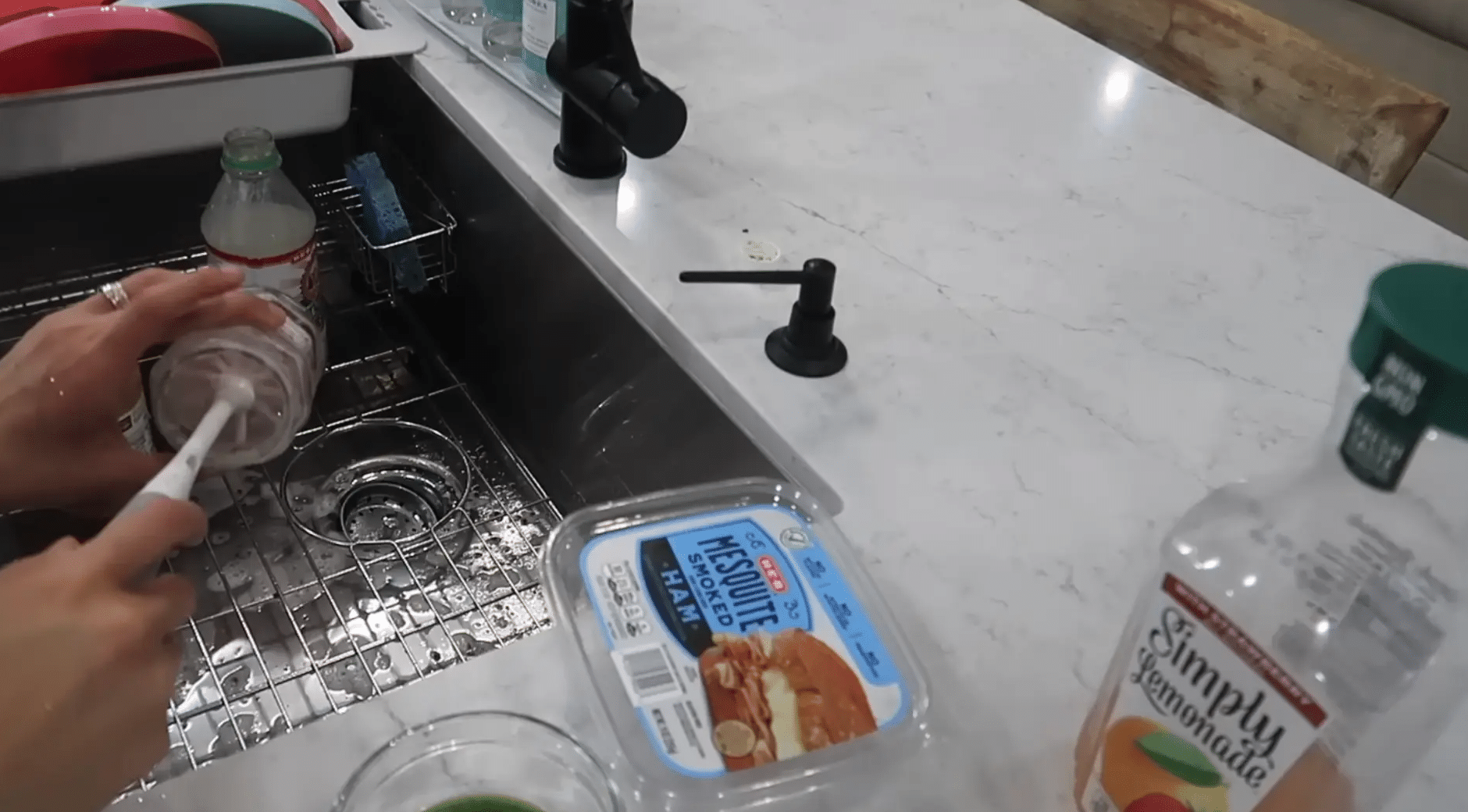
Empty the container completely and wash the inside. Remove any food, drink, or other contents so you can safely fill it with hot water later.
Give the inside a normal wash before moving on.
Try to keep the label dry while cleaning, especially if it is made from paper. A wet paper label can break apart while peeling and leave more scraps stuck to the surface.
Step 2: Fill the Container With Hot Water
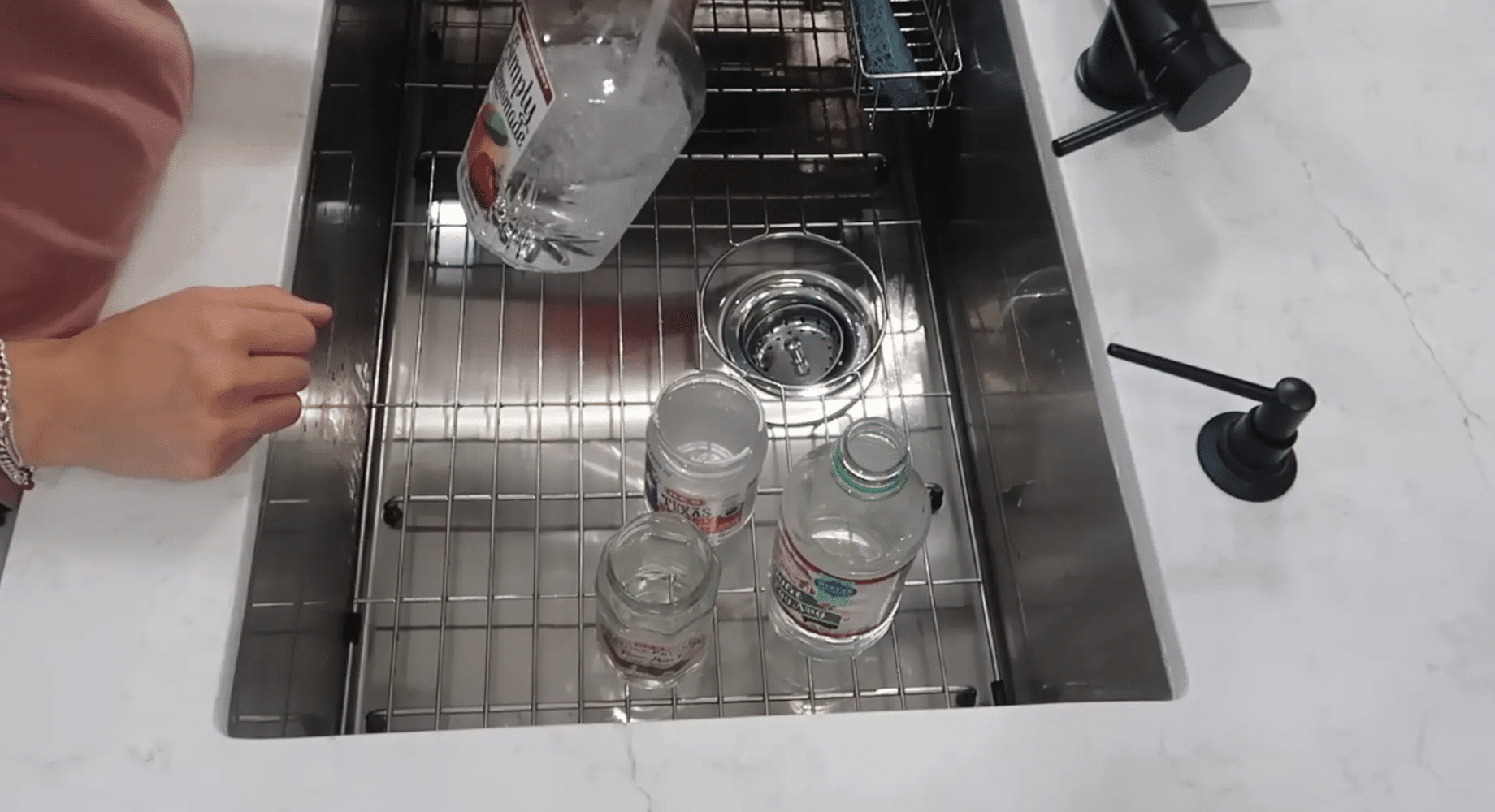
Fill the container with hot water until the water reaches the area directly behind the label.
You don’t need to soak the outside of the container or submerge the whole thing. If the label sits lower on one side, turn the container so the hot water rests against that section.
Keep the label itself dry whenever possible, particularly when working with paper labels.
Step 3: Let the Hot Water Sit for a Few Minutes
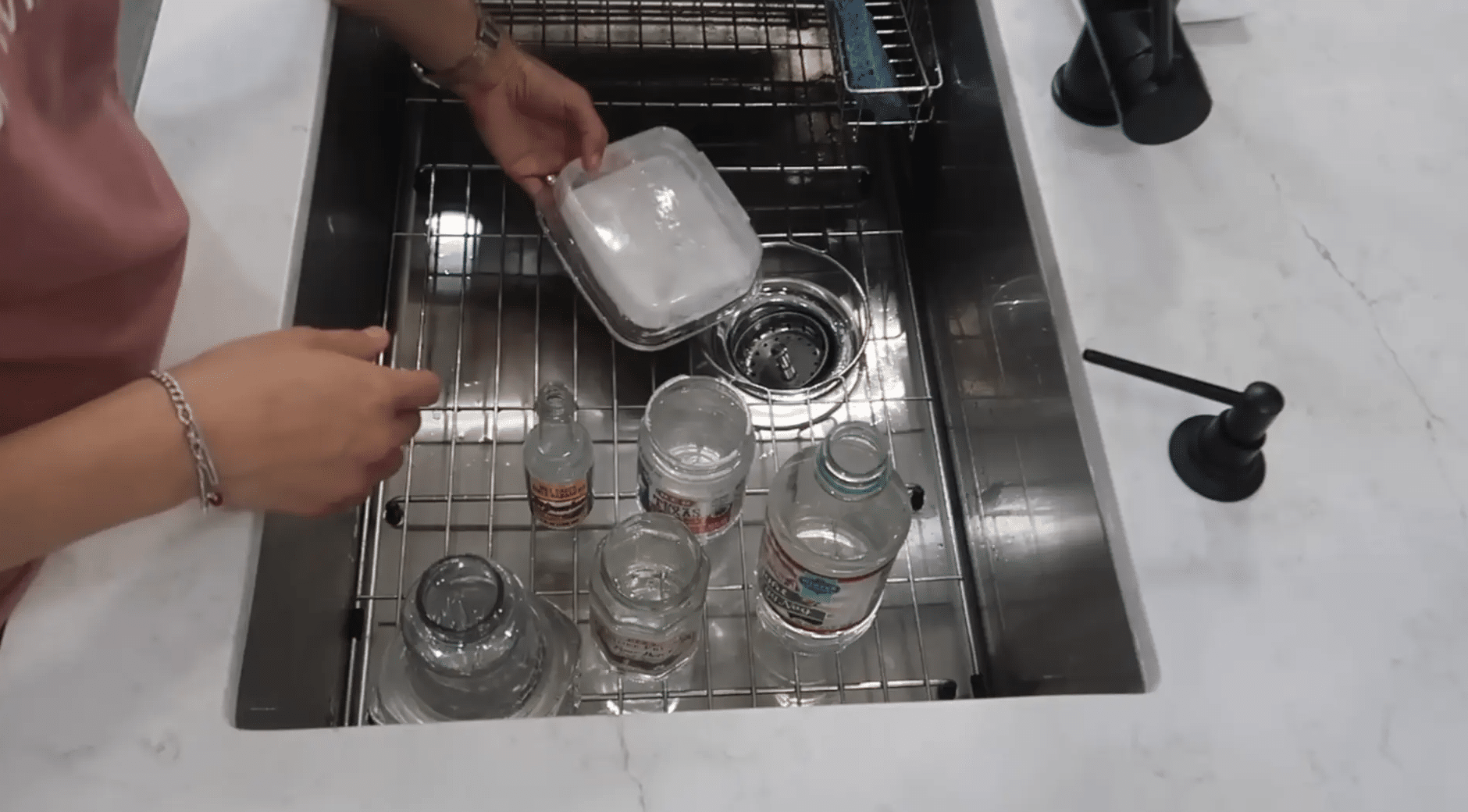
Leave the hot water inside the container for a few minutes before trying to peel anything.
The heat passes through the glass or plastic and helps soften the adhesive holding the label in place. No need to rush this part.
Giving the container a few minutes usually makes peeling much easier and can reduce the amount of glue or paper left behind afterward.
Step 4: Peel the Label From One Corner
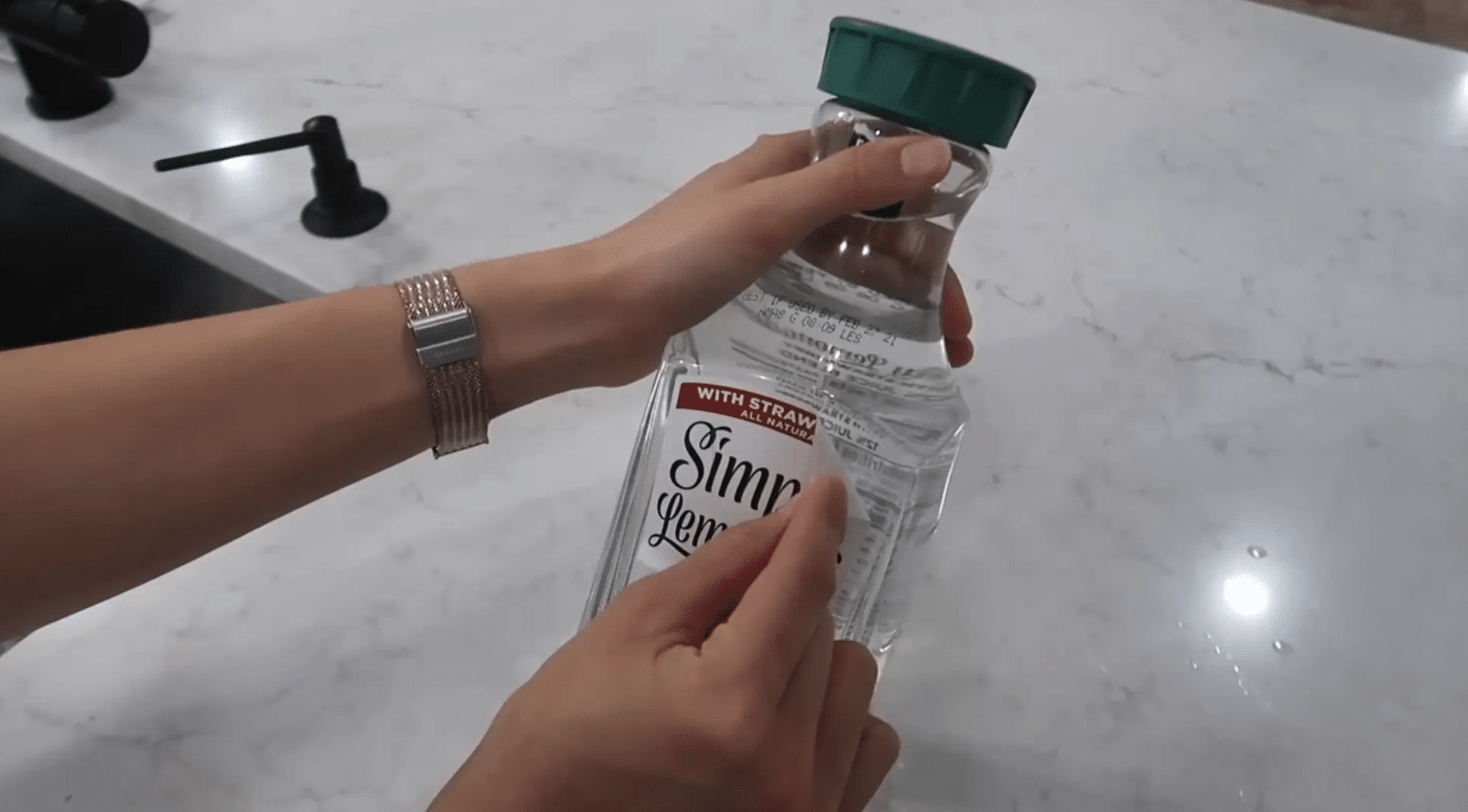
Use your fingernail to lift one corner of the label, then slowly start pulling it away from the container. Pulling at a slight diagonal can help keep the label together while you remove it.
Thicker, water-resistant labels often peel away in one piece.
Paper labels may tear or leave small sections behind. If that happens, remove as much as you can and deal with the remaining residue next.
Step 5: Rub Away Leftover Paper and Adhesive
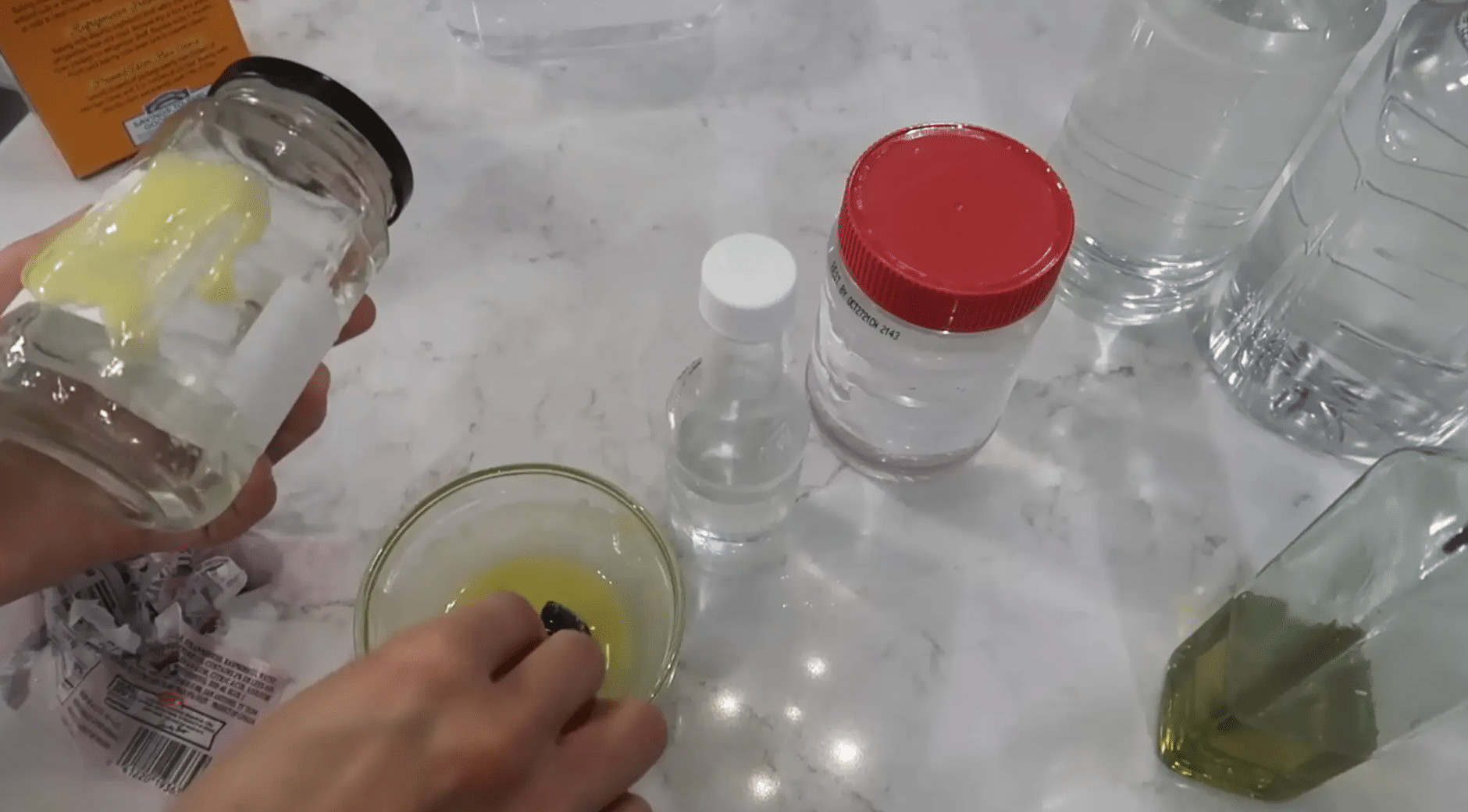
Mix roughly equal parts baking soda and cooking oil in a small bowl. Stir until you get a loose paste that spreads easily without being too runny or too thick.
Rub the mixture over any paper, glue, or sticky patches left on the container.
Work it across the residue with your fingers, adding gentle pressure. Keep rubbing until the surface feels smooth and the remaining adhesive comes away.
Step 6: Wash the Container and Remove Printed Ink
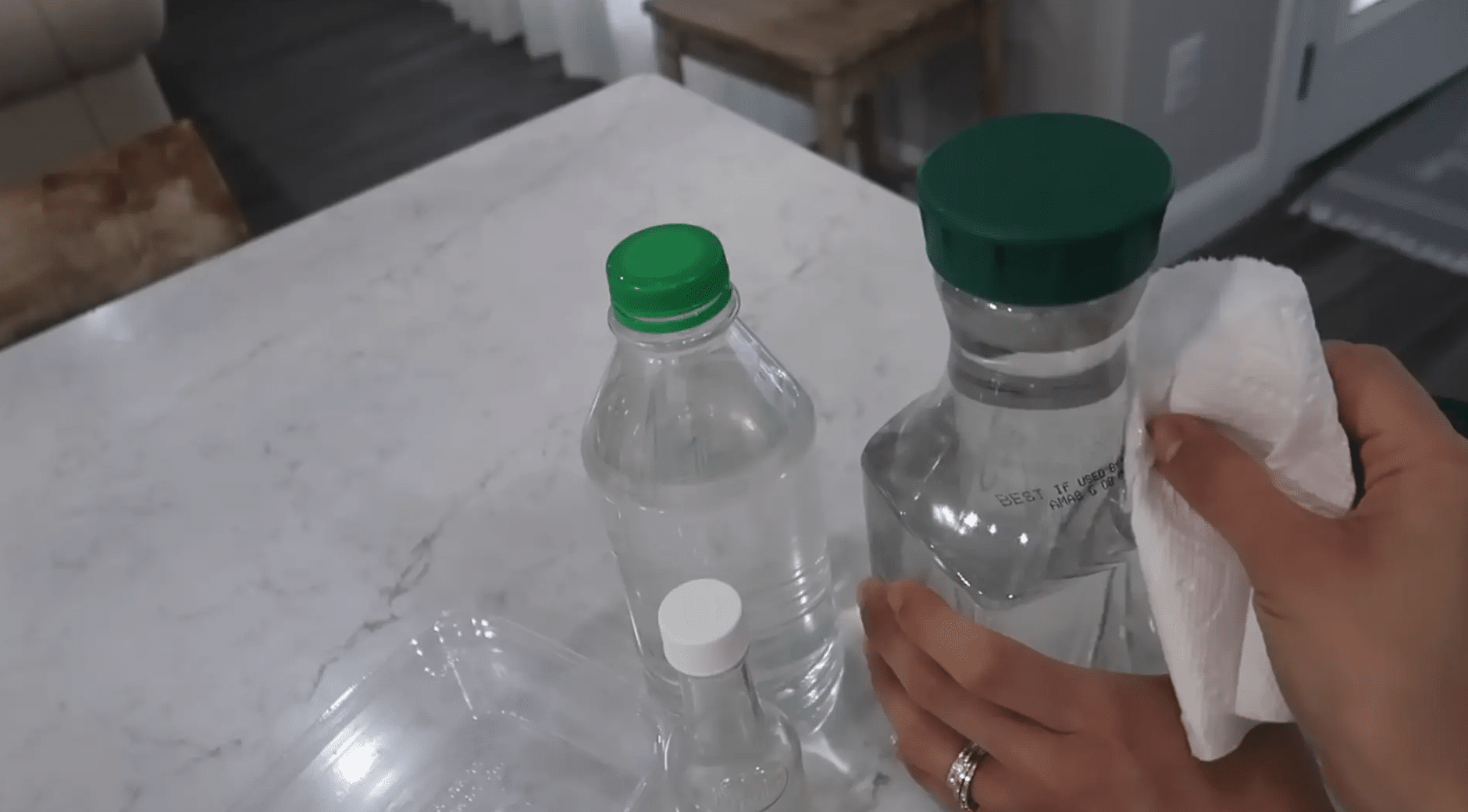
Wash the container again with dish soap and water to remove the baking soda, oil, and loosened adhesive. Dry the surface and check it with your fingers to make sure no sticky patches remain.
For printed dates or ink marks, add rubbing alcohol or alcohol-based hand sanitizer to a paper towel or cotton ball.
Rub the printed area until the ink lifts, then wipe the container clean.
For a complete walkthrough of the process, check out the video tutorial below.
How to Remove Adhesive From Metal?
Metal handles mild treatments well, so it’s worth working through these steps in order before reaching for anything stronger.
- Start with soap or rubbing alcohol: Wipe the area with warm soapy water first. If the adhesive remains, apply rubbing alcohol with a clean cloth and let it sit briefly before wiping.
- Try oil or WD-40 for stubborn residue: Apply a small amount of cooking oil, mineral oil, or WD-40 to the sticky area. Give it a few minutes to soften the adhesive, then wipe it away.
- Loosen hardened adhesive carefully: Soften thick residue with warm water, rubbing alcohol, or gentle heat when suitable. Use a plastic scraper or old card instead of a metal blade to reduce scratching.
- Use a commercial adhesive remover when needed: For residue that will not come off with milder methods, use a remover that is suitable for metal. Follow the product directions and test it on a hidden spot first.
- Take extra care with painted or coated metal: Strong solvents can dull paint, strip coatings, or change the finish. Use mild cleaners, and test any stronger product before treating the full area.
Once the adhesive is gone, wash the metal with mild soap and water to remove any oily or chemical residue, then dry it thoroughly.
How to Remove Adhesive From Wood?
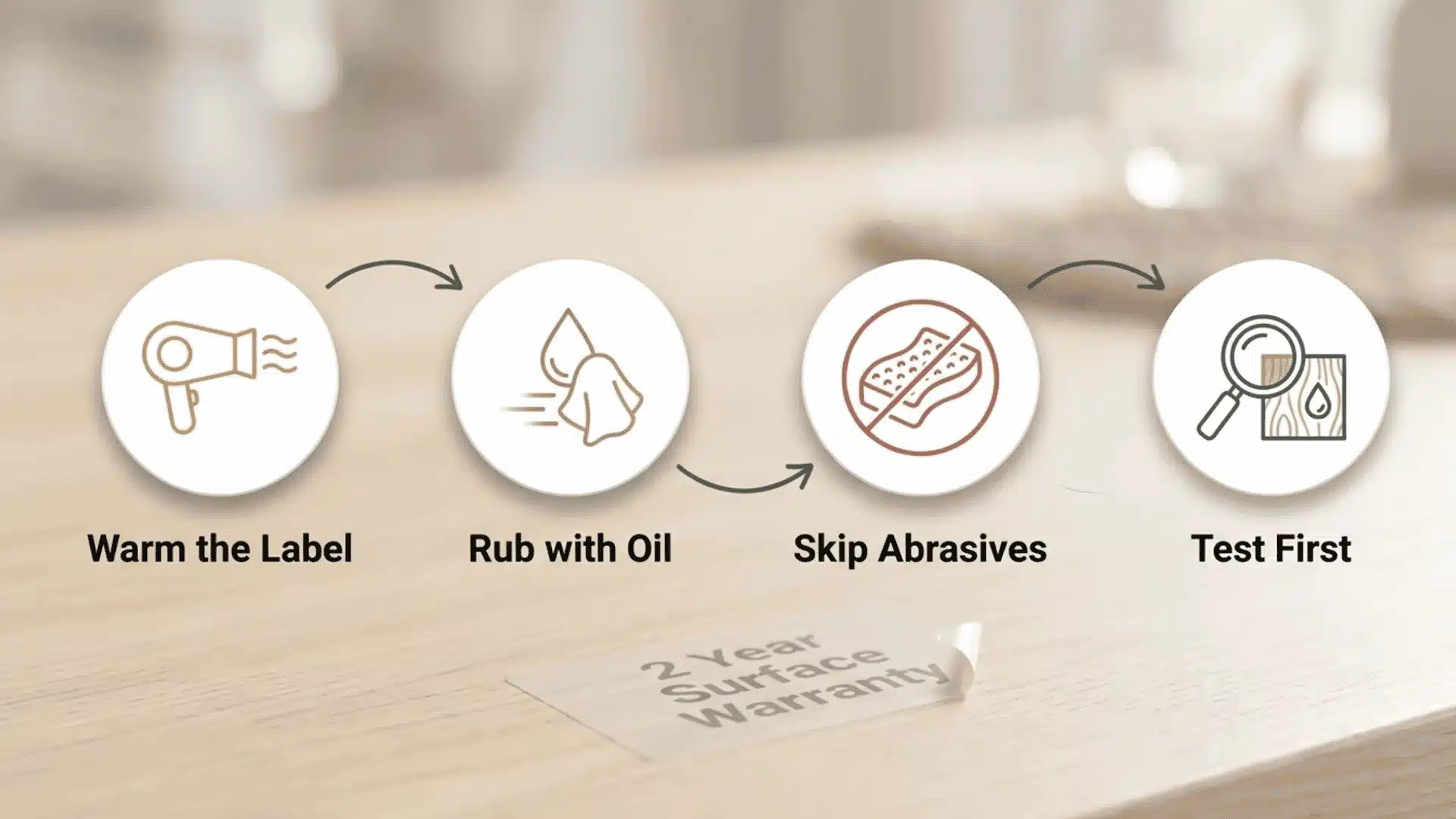
Wood is more sensitive than glass or metal, since heat and moisture can raise the grain or dull the finish if you push too hard.
- Warm the label first: Use a hair dryer on a low setting for thirty seconds before peeling, which softens the glue without wetting the wood.
- Rub with oil, not water: Cooking oil or a small amount of mayonnaise breaks down residue on finished wood without leaving a water stain behind.
- Skip anything abrasive: Steel wool and scouring pads can scratch through varnish or paint, so stick to a soft cloth or an old credit card for lifting residue.
- Test unfinished wood carefully: Raw or unsealed wood absorbs oil and alcohol, so try a hidden spot first and use the smallest amount that gets the job done.
Wipe the area with a barely damp cloth once the residue lifts, then dry it right away so moisture doesn’t sit on the wood.
If the surrounding finish looks worn afterward, our guide to painting kitchen cabinets covers how to refresh it.
How to Remove Adhesives From Clothes and Fabric?
I’ve found fabric is much easier to deal with when you treat stubborn fabric stains in stages instead of trying to remove all the adhesive at once.
- Test a hidden area first: Try the treatment on an inside hem or hidden seam. Check for discoloration before working on the visible stain.
- Blot instead of rubbing: Dab the adhesive with rubbing alcohol or vinegar. Rubbing aggressively can spread softened residue across a larger part of the fabric.
- Wash after blotting: Once the adhesive begins loosening, work a small amount of dish soap into the spot. Wash the garment according to its care instructions.
- Check before drying: Inspect the fabric after washing. If residue remains, repeat the process before using a dryer because heat can set leftover adhesive into the fibers.
For a leftover stain once the adhesive is gone, our carpet cleaner formulas guide has additional treatment options worth trying.
How to Remove Adhesive From Skin
General practice is to use the mildest method on skin. Avoid strong solvents used elsewhere.
- Use a mild oil: Cooking oil can help loosen adhesive while avoiding the harshness associated with stronger solvents such as acetone.
- Rub gently: Massage the oil over the residue using small circles for one or two minutes. This helps lift adhesive without pulling hard at the skin.
- Repeat if needed: Stubborn residue may need another small application rather than harder rubbing. Give the oil time to soften what remains.
- Keep hard-surface products away: Products intended for glass, metal, or plastic are not automatically safe for skin. A chemical safe for a hard surface can still irritate skin.
Common Mistakes to Avoid
Even a simple cleanup can go wrong when the method does not match the material. Focus on these common mistakes before you start.
| Mistake | Why It Causes Problems | Better Approach |
|---|---|---|
| Using strong solvents too soon | They can damage plastic, paint, fabric, and finishes. | Start with the mildest suitable method. |
| Scraping with sharp tools | Metal blades can leave permanent scratches. | Use a plastic scraper or old card instead. |
| Applying too much heat | High heat can warp plastic or damage paint and fabric. | Use gentle heat and keep it moving. |
| Mixing cleaning products | Some combinations can create harmful fumes or reactions. | Use one product at a time. |
| Rubbing fabric too hard | This can spread adhesive deeper into the fibers. | Blot or lift the residue gently. |
Wrapping Up
Once you know how to remove adhesives by surface type, the job becomes much easier and safer.
Start with the mildest method that fits the material, then give the residue time to soften before rubbing or scraping.
Warm water, oil, rubbing alcohol, gentle heat, and plastic scrapers can all work well when used in the right place.
The key is to avoid rushing, using sharp tools, or applying strong solvents before testing a hidden spot. A careful approach protects glass, plastic, metal, wood, fabric, and skin from extra damage.
What surface are you trying to clean? Share it in the comments below & share any secret tips you have.
Frequently Asked Questions
Does WD-40 Dissolve Adhesive?
WD-40 does not dissolve adhesive the way a solvent like acetone does. It works by penetrating and loosening the adhesive’s grip on the surface with light oil, making it easier to wipe or scrape away. It works best on fresh to moderately aged adhesive and is gentle enough for painted metal, plastic trim, and most household surfaces.
How Do You Remove Hardened Adhesive?
Hardened adhesive usually needs longer contact time with a solvent or oil before scraping. Apply rubbing alcohol, oil, or a commercial remover and let it sit for several minutes to soften the bond, reapplying if needed. Gentle heat from a hair dryer can also loosen stubborn spots before you scrape with a plastic scraper or old card.
What Dissolves Most Adhesives?
Acetone and rubbing alcohol dissolve the widest range of household adhesives because they break down the adhesive’s chemical bond rather than just loosening it. Acetone works strongest but can damage plastic or painted finishes, so rubbing alcohol is the safer default when you are unsure what surface or adhesive you are dealing with.
What Removes Adhesive the Best?
The best remover depends on the surface and adhesive age, since no single product handles every material safely. Rubbing alcohol suits fabric and skin, acetone suits glass and metal, oil works gently on plastic, and commercial removers like Goo Gone handle stubborn residue across most surfaces when label instructions are followed.