

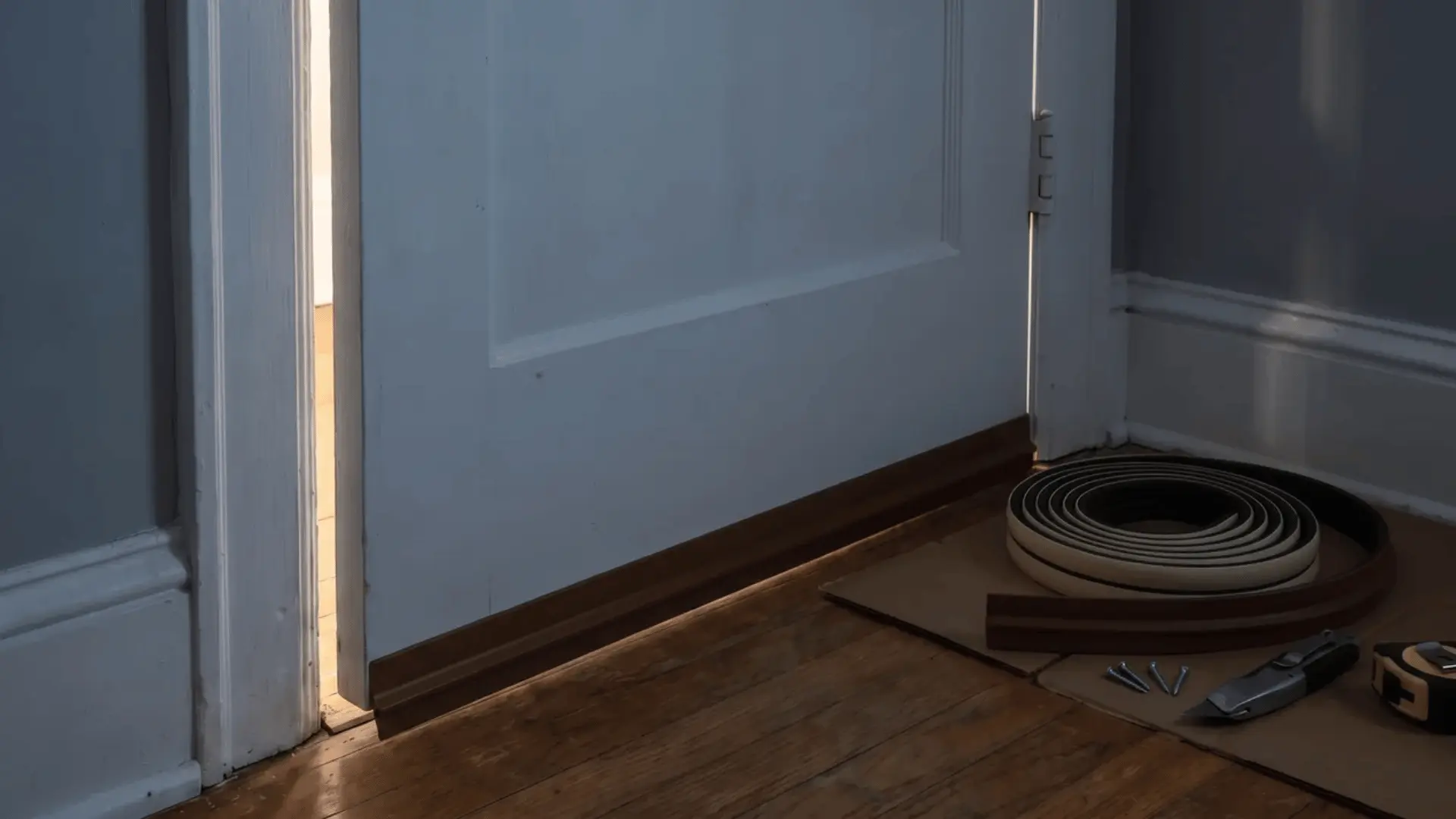
Finding the right DIY carpet cleaner isn’t about choosing the strongest mix. It’s about matching the formula to the stain type, carpet, and cleaning method used.
Using the wrong solution can leave residue, spread the stain further, or even damage carpet fibers. Small formulation changes can significantly affect the final cleaning result.
The chemistry is simple, but still important.
Ingredient balance, dilution level, and application method all influence how effectively a stain lifts from carpet fibers. There is no single best option.
The right choice depends on concentration needs, dwell time, and whether rinsing or machine extraction is required for proper cleaning.
Which DIY Carpet Cleaner Formula Do You Need?
The right formula depends on what you’re cleaning and how you’re cleaning it. Pick the one that best matches your situation before mixing anything to make an ideal homemade rug cleaner.
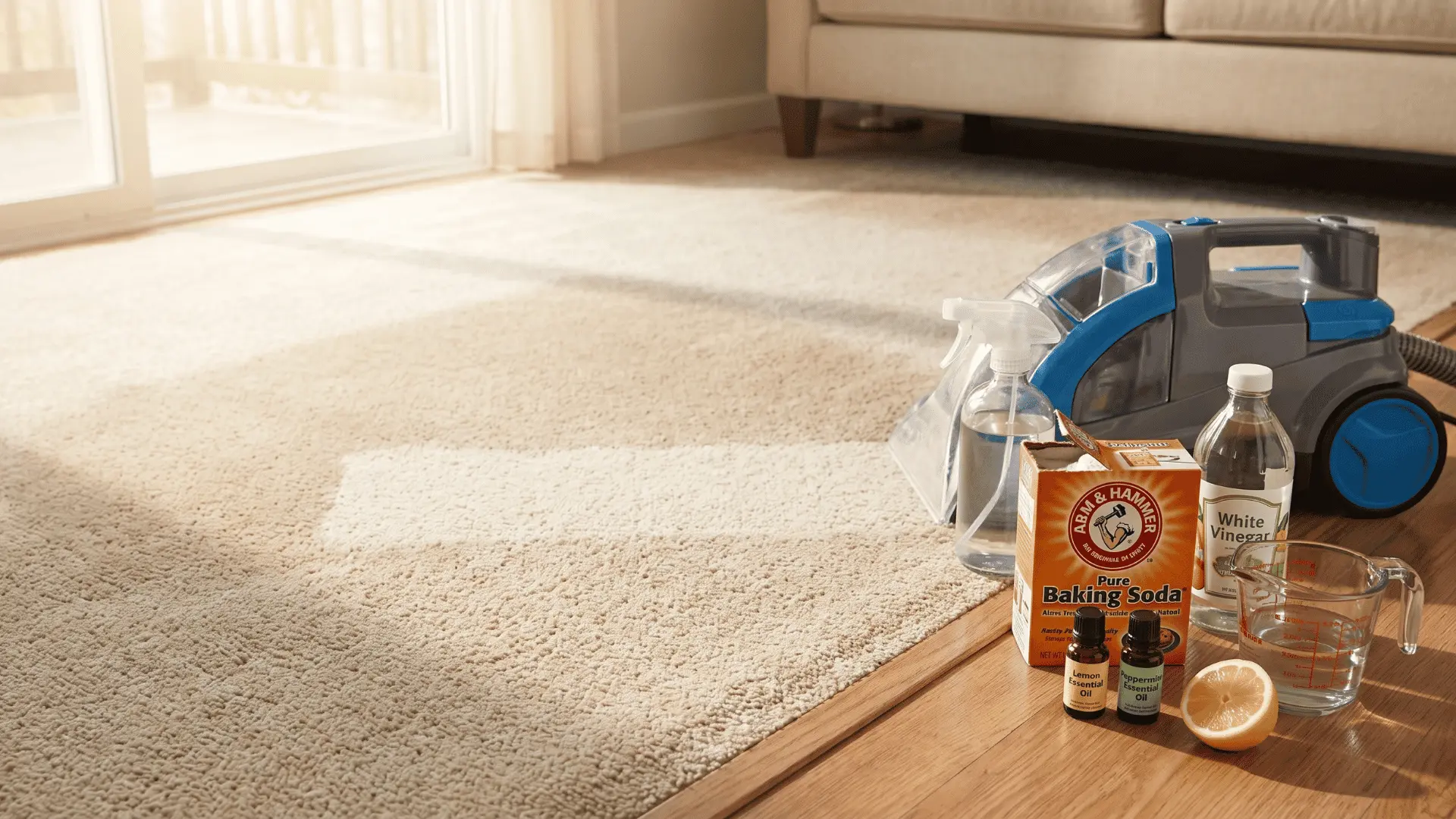
- Machine Cleaning: 1 gallon hot water, ½ cup white vinegar, 1 tablespoon dish soap, ¼ cup oxygen bleach. Fully dissolve the oxygen bleach before adding it to the reservoir.
- Spot Cleaning: 1 cup warm water, 1 cup white vinegar, 1 teaspoon dish soap. Use exactly 1 teaspoon of soap; more leaves residue that re-soils the carpet faster.
- Pet and Organic Stains: 1 cup warm water, ¼ cup 3% hydrogen peroxide, 1 teaspoon dish soap. Patch test first since peroxide can lighten some carpet dyes. If the stain came from a spill in the kitchen rather than a pet accident, our stain removal guide covers fabric-specific fixes too.
- Dry Deodorizer: 1 cup baking soda, ½ cup cornstarch, 5 to 10 drops essential oil. Leave overnight, then vacuum. For freshening between cleans, not stain removal.
Each ingredient carries its own job.
Vinegar loosens dirt and cuts odor, dish soap breaks up grime, and peroxide or oxygen bleach gets into stain compounds that soap alone leaves behind.
I have used a version of each of these on my own carpets, and the machine formula above is the one that comes closest to what I used to pay a rental company for.
How to Make a DIY Carpet Cleaner: Step-By-Step
Learn how to deep-clean your carpets using simple household ingredients with this easy DIY carpet cleaner guide. Follow each step to tackle stains, odors, and dirt effectively.
Step 0: Tools & Materials Required
- Small mixing bowl
- Spoon
- 1-gallon container, milk jug, or water jug
- Measuring spoon and cup
- Carpet cleaning machine
- Vacuum cleaner
- Tide liquid detergent
- OxiClean or similar oxygen cleaner
- LA’s Totally Awesome cleaner or degreaser
- Fabric softener (e.g., Downy)
- Hot water
- Extra concentrate for stain pre-treatment
- Clean water for rinsing
This concentrate uses the same laundry staples as our homemade laundry detergent, so if you already keep those on hand, you are most of the way to a carpet cleaner too.
Step 1: Mix the Cleaning Ingredients
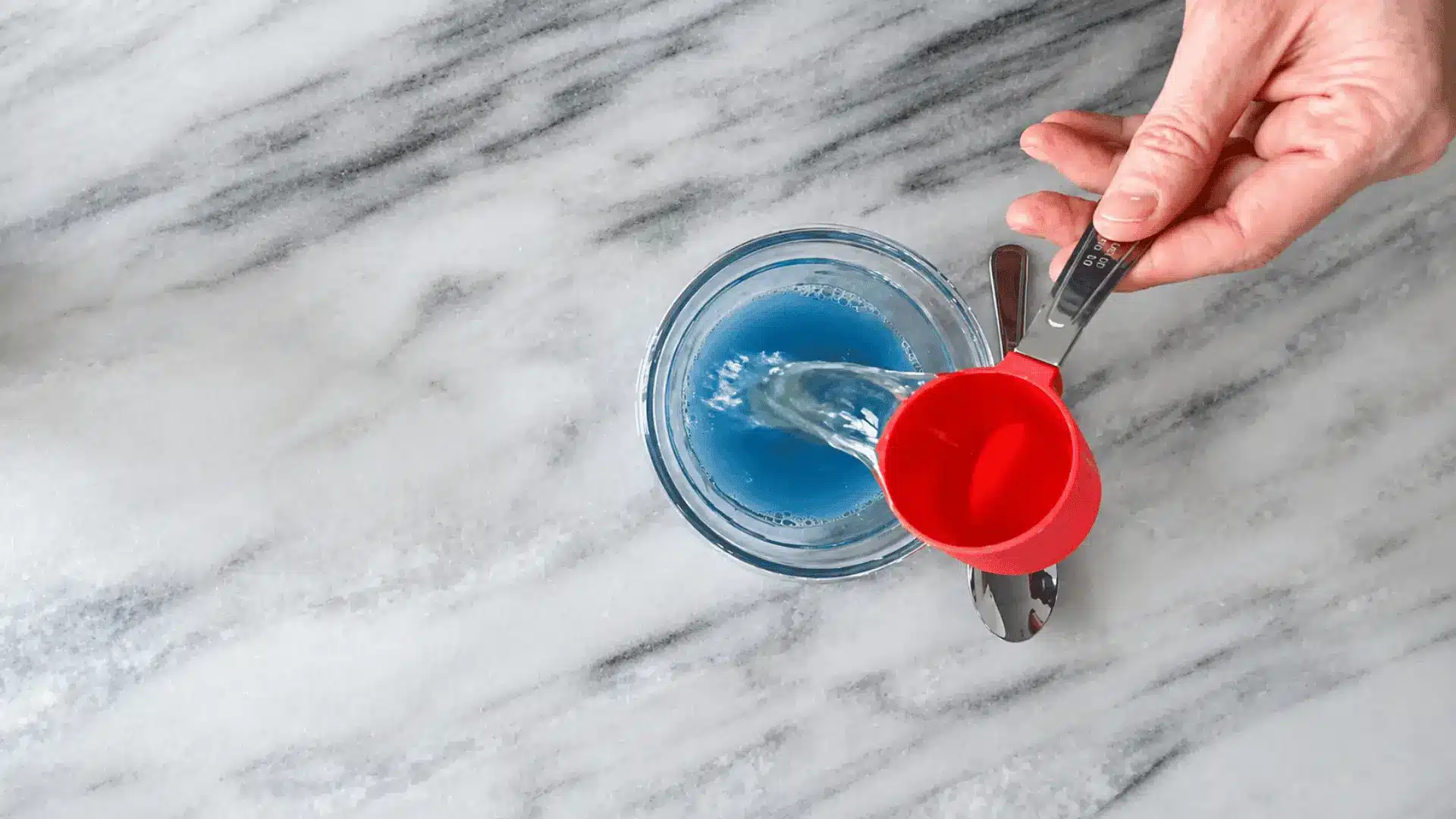
Use a small mixing bowl, measuring spoon, and spoon for this step. Measure the Tide, OxiClean, LA’s Totally Awesome cleaner, and fabric softener into the bowl.
Stir everything together for about 15 to 20 seconds until the ingredients are evenly blended. Mixing them first helps each ingredient dissolve more evenly later.
Step 2: Add the Mix to Hot Water
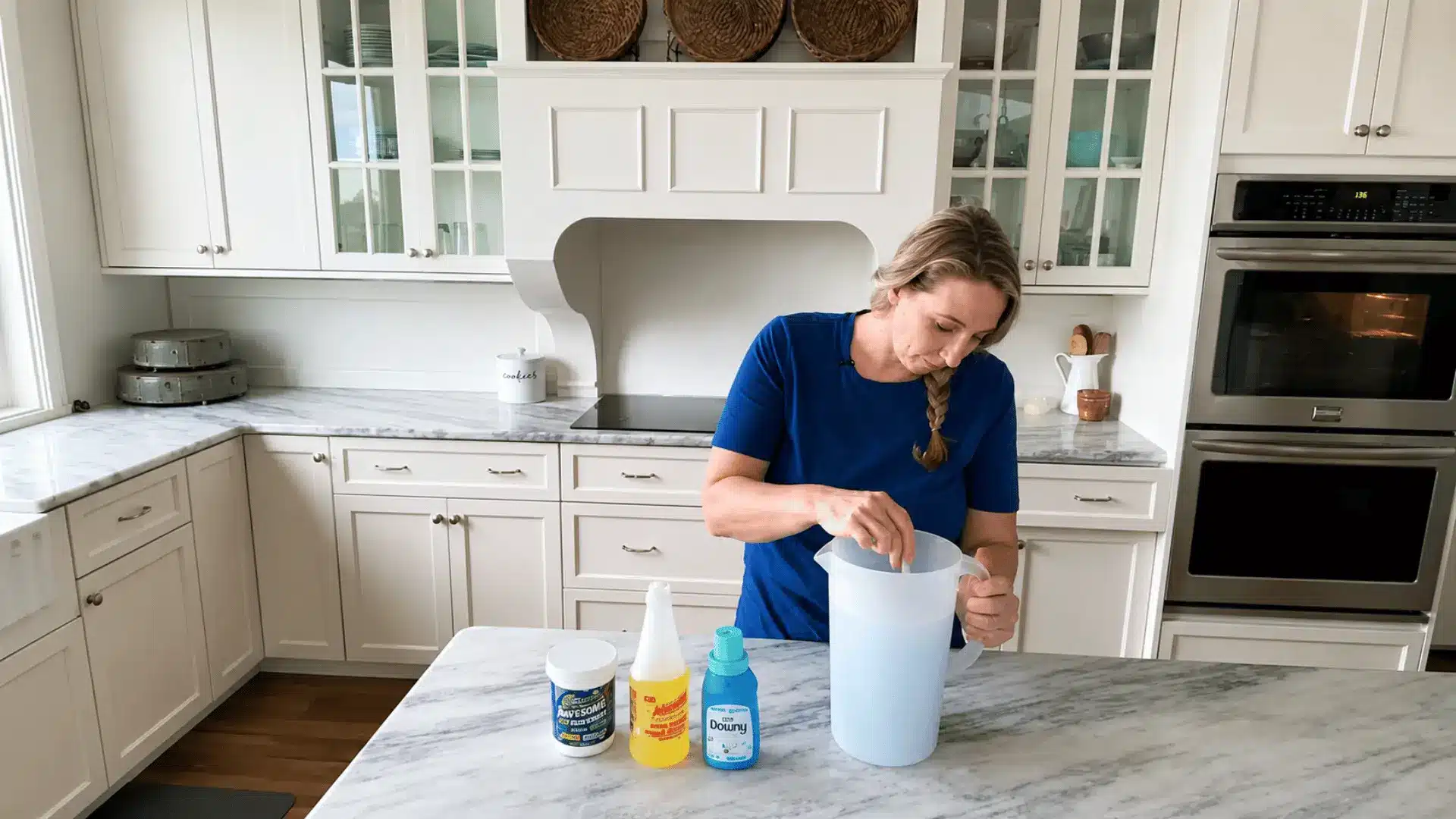
Pour the mixed ingredients into a 1-gallon container filled with hot water. Use a spoon to stir the solution slowly so the OxiClean crystals fully dissolve.
Avoid stirring too vigorously, as it can create excessive foam before the cleaner reaches your carpet. A smooth mixture works better inside most carpet cleaning machines.
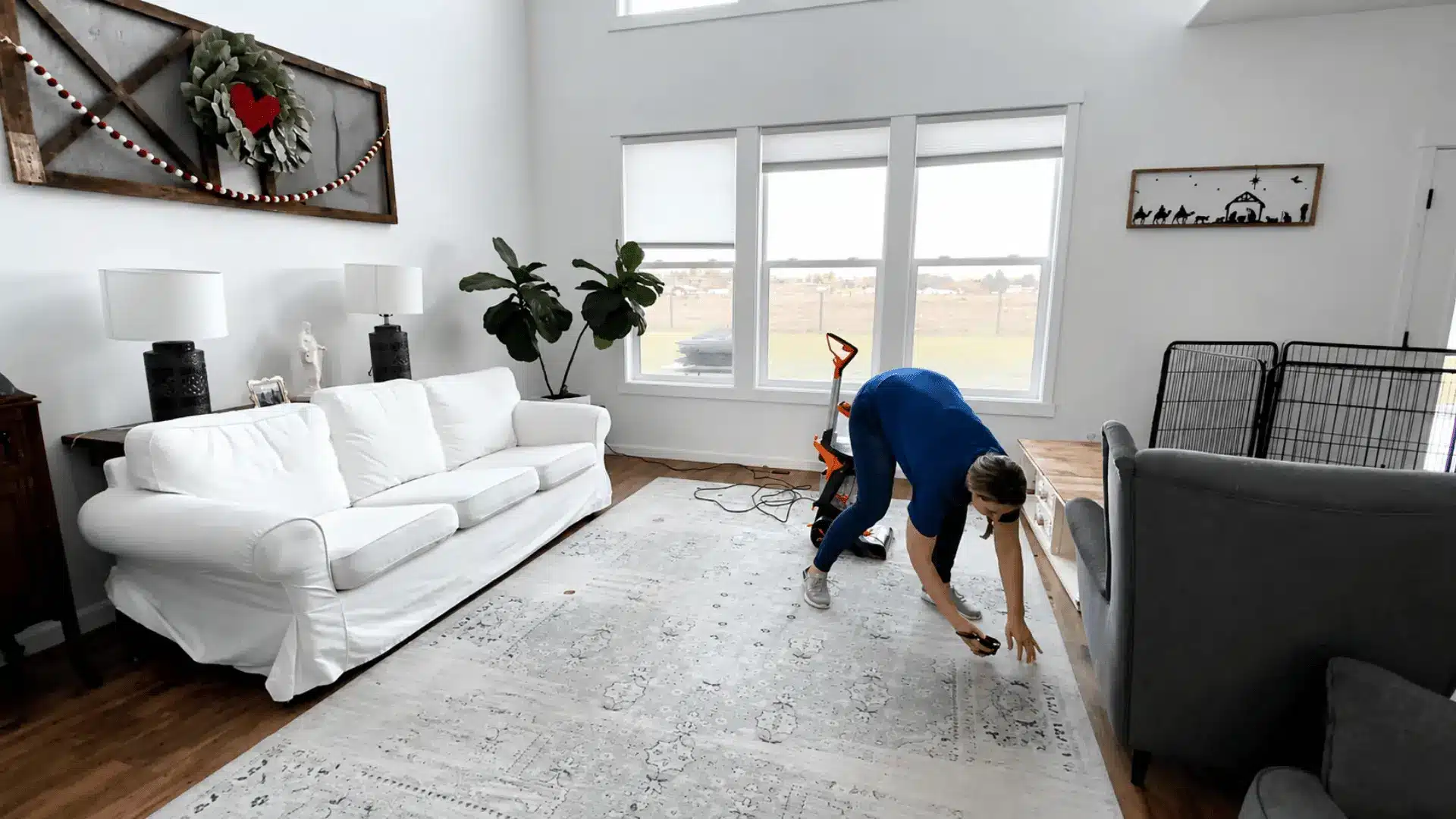
Step 3: Vacuum the Carpet First
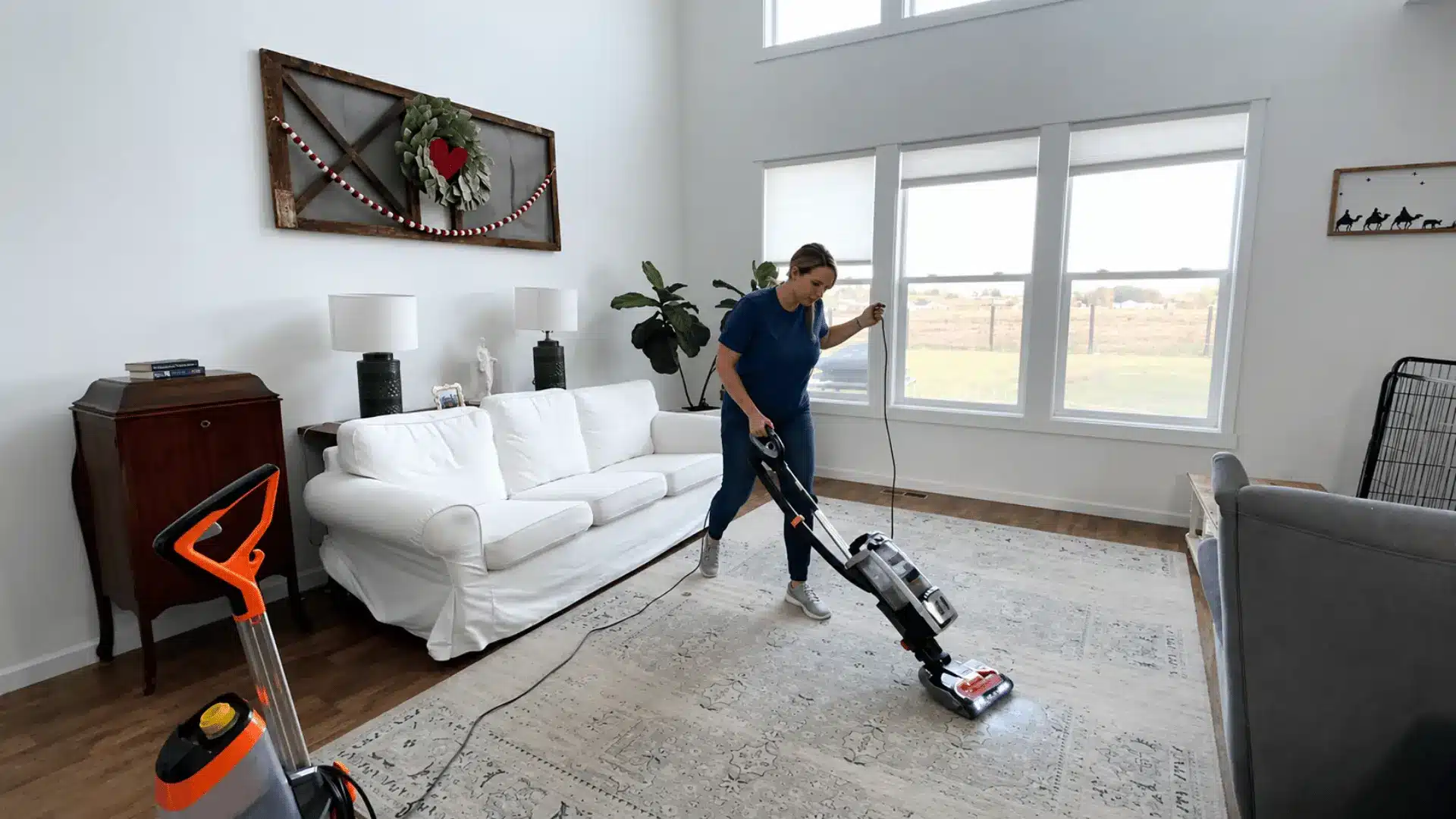
Use a vacuum cleaner to remove loose dirt, dust, pet hair, and crumbs before shampooing. This simple step prevents extra debris from mixing into the cleaning solution.
Work across the carpet slowly, overlapping each pass for better coverage.
Pay extra attention to corners, edges, and high-traffic areas where dirt tends to build up.
Step 4: Pre-Treat Stained Areas
Apply a small amount of the concentrated cleaner directly onto visible stains before using the carpet cleaning machine.
Let the solution soak for several minutes.
This extra soaking time helps loosen dirt, pet stains, and everyday spills before shampooing begins. Skip delicate materials until you’ve tested the cleaner in a hidden spot.
Step 5: Fill the Carpet Cleaning Machine
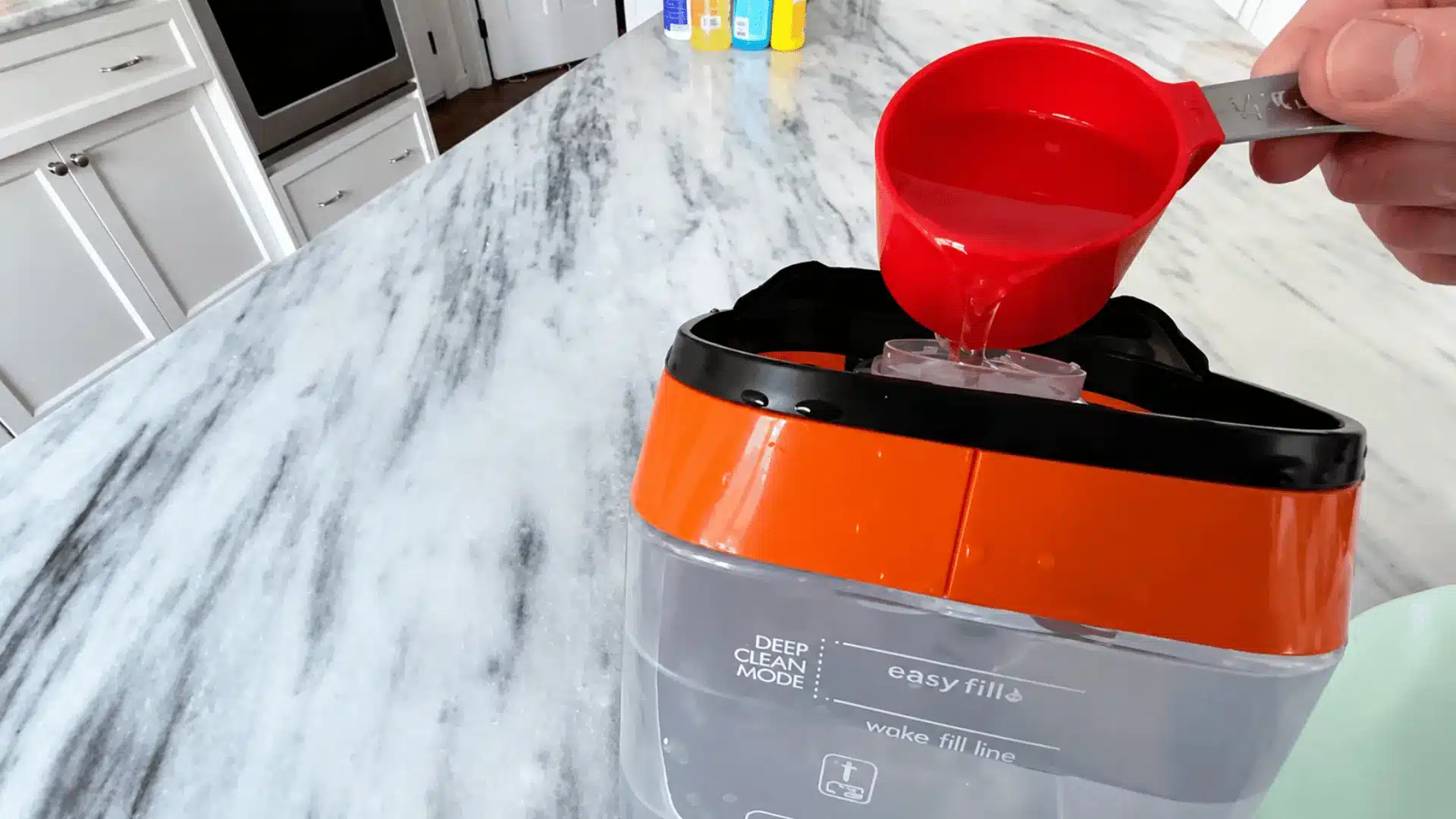
Fill your carpet cleaning machine with clean water until it reaches the recommended fill line. Measure and add 1/4 cup of the homemade concentrate.
For heavily soiled carpets, you can increase the concentrate to 1/2 cup if needed. Follow your machine’s instructions and avoid overfilling the solution tank completely.
Step 6: Shampoo the Carpet Slowly
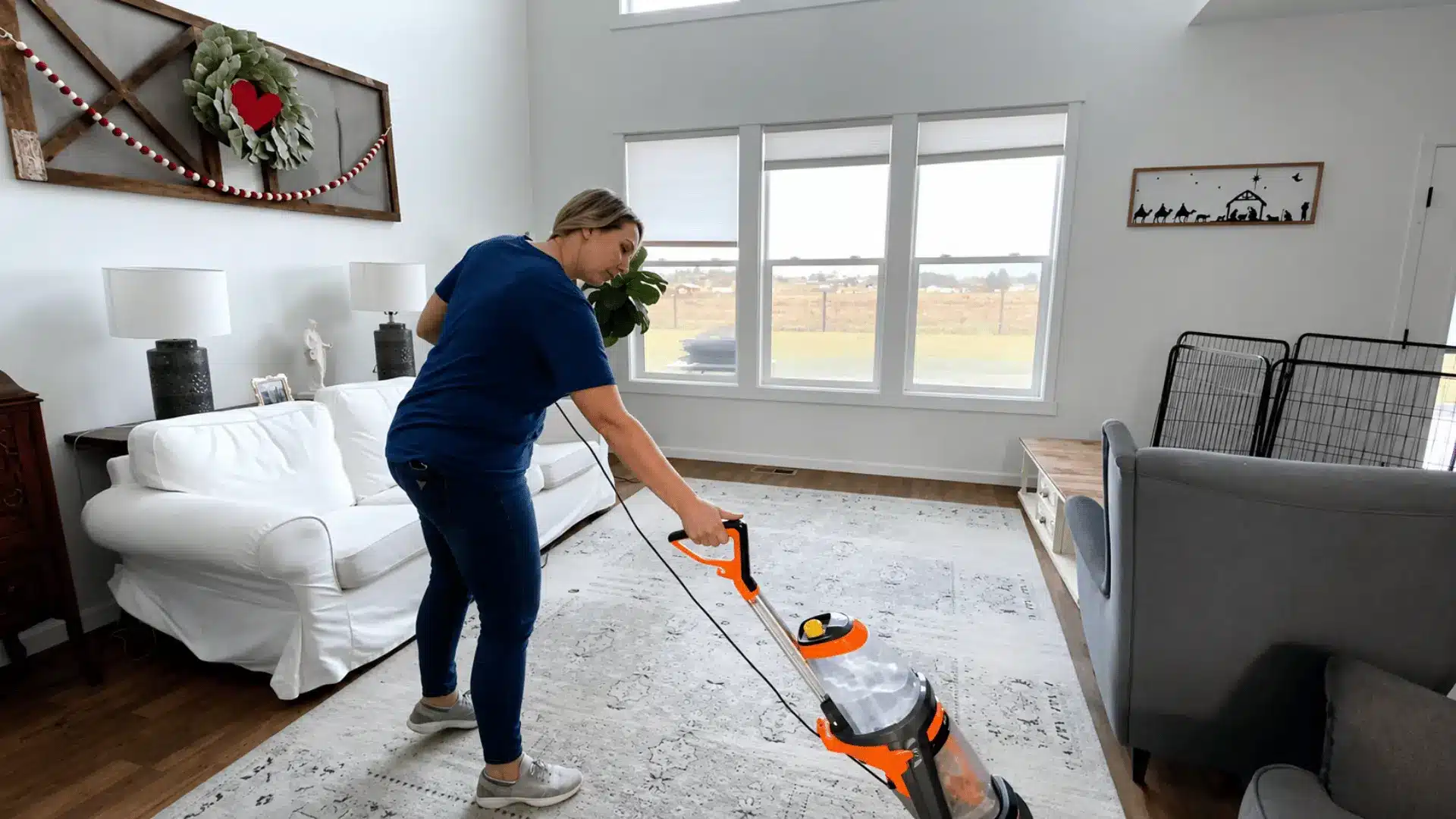
Run the carpet-cleaning machine across the carpet with slow, steady passes. Clean in both directions so the brushes and suction remove more embedded dirt.
Empty the dirty water tank when it’s full, then refill the machine as needed. Continue until the entire carpet looks clean and evenly refreshed.
For a quick visual guide, check out the video below by Karrie Truman and HappyMoneySaver.
Dry Deodorizer for Freshening without Moisture
This is a dry method: no liquid, no rinsing, no drying time. It’s for freshening carpet between cleans, not replacing it.
- Freshen between deep cleans: Use this to maintain carpets, not to remove stains.
- Mix the deodorizer: Combine 1 cup baking soda, ½ cup cornstarch, and 5 to 10 drops of essential oil (optional).
- Apply and wait: Sprinkle evenly over the carpet and leave for several hours or overnight.
- Vacuum thoroughly: Clear the powder completely after the full dwell time.
- Skip early vacuuming: Pulling it up too soon means the baking soda has not had time to absorb odors.
Vacuuming too early is the one mistake that undoes this whole method.
If the baking soda has not had enough time to absorb odor compounds, all you are removing is a powder that never got the chance to work.
Give it the full dwell time, and lean toward overnight rather than a few hours if the carpet has any real odor to deal with.
Three Rules that Determine Whether Any DIY Formula Works
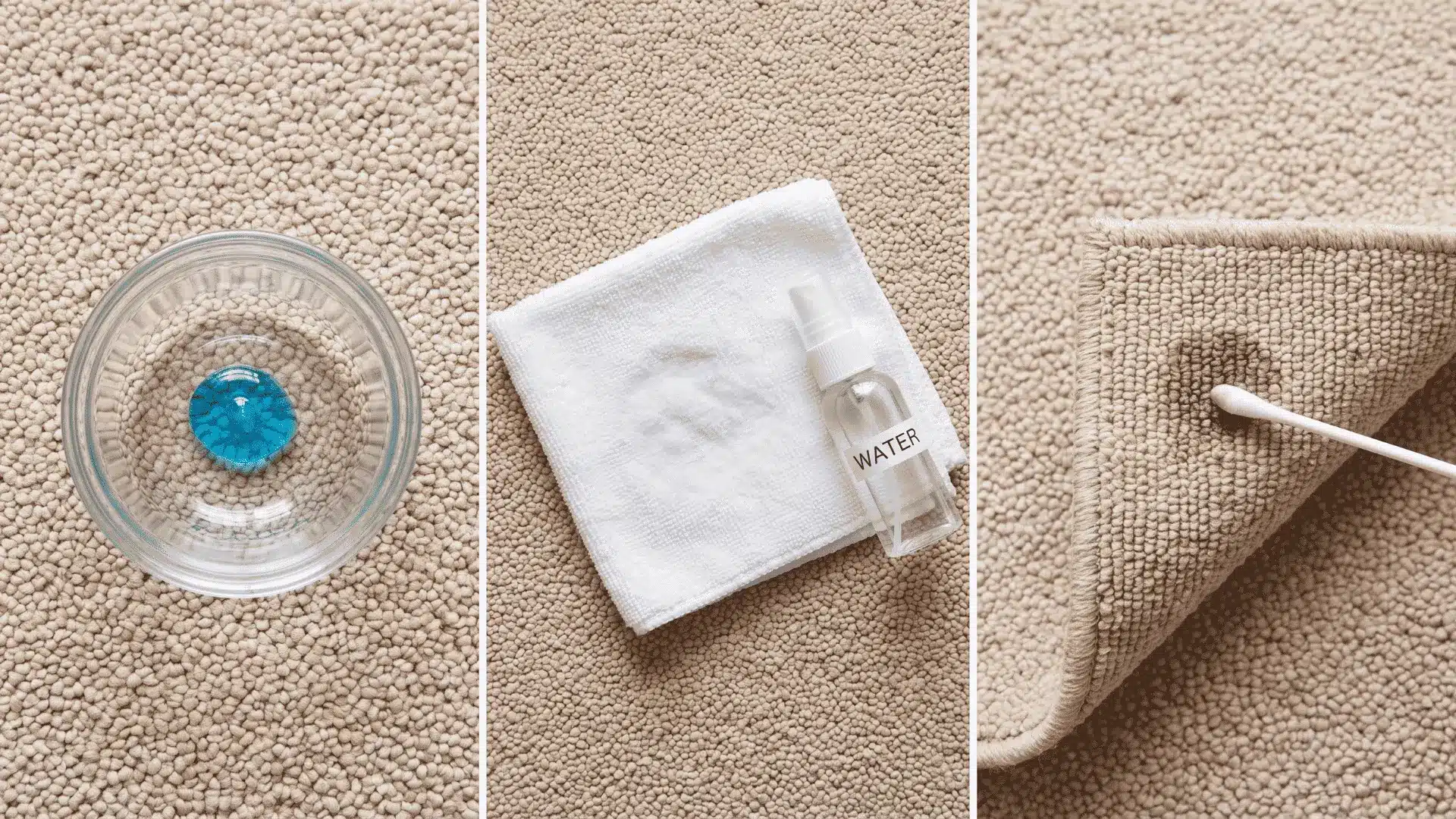
Even the best DIY carpet cleaner won’t work well if a few basic steps are skipped. These rules make the biggest difference between lasting results and carpets that quickly look dirty again.
| Rule | Why It Matters | What to Do |
|---|---|---|
| Use less soap | Extra soap leaves sticky residue that attracts dust and dirt, making carpets look dirty again. | Stick to the recommended amount of dish soap. |
| Always rinse | Leftover soap remains in the fibers if you skip rinsing. | Blot the cleaned area with plain warm water after every wet treatment. |
| Patch test first | Peroxide, oxygen bleach, and strong vinegar solutions can discolor some carpet dyes. | Test the solution on a hidden corner before treating visible areas. |
Following these rules takes only a few extra minutes but prevents most of the residue, discoloration, and poor results I see people run into when they skip straight to the machine.
If the goal is a fresher-smelling home overall and not just cleaner carpet, running a load through your dishwasher with our dishwasher cleaning routine rounds out the same weekend of upkeep.
Conclusion
A DIY carpet cleaner works best when the formula fits the mess in front of you. Machine cleaning, spot stains, pet accidents, and dry deodorizing all need slightly different mixes and methods.
The biggest mistakes usually come from using too much soap, skipping the rinse, or cleaning without a patch test first.
Keep the solution simple, measure carefully, and give each cleaner enough time to work before judging the result.
If your carpet looks dirty again too soon, residue is usually the problem, not the recipe.
Which DIY carpet cleaner formula are you trying first? Share your result in the comments and let others know what worked for your carpet.
Frequently Asked Questions
What is the Best Homemade Carpet Cleaner for a Machine?
For a carpet cleaning machine, mix one gallon of hot water with half a cup of white vinegar, one tablespoon of dish soap, and a quarter cup of oxygen bleach such as OxiClean. Dissolve the oxygen bleach completely before adding it to the reservoir. Undissolved granules can lodge in the feed lines and damage the pump over repeated use.
Can Dawn Dish Soap and Vinegar Clean Carpet Effectively?
Yes, for spot treatment. Combine one cup of warm water, one cup of white vinegar, and one teaspoon of Dawn dish soap. The vinegar lifts dirt and neutralizes odors while the soap breaks down grime in the fibers. Keep the soap to exactly one teaspoon, since any more leaves a residue that attracts dirt and speeds up re-soiling.
What Can I Use to Clean Carpet If I’m Out of Commercial Solution?
Warm water, white vinegar, and a small amount of dish soap handle most everyday situations. For a machine, use the one-gallon vinegar-and-oxygen-bleach formula above. For spot cleaning, mix equal parts warm water and vinegar with a few drops of dish soap, which clears most spills without needing anything specialized from a store.
Why Does My Carpet Look Dirty Again Shortly After I Clean It?
Almost always, leftover dish soap sitting in the fibers is the cause. Residue creates a tacky surface that grabs airborne dust and dirt from foot traffic, so the carpet re-soils faster than it would with none at all. Use the smallest effective amount of soap and rinse every wet treatment with plain warm water afterward.