



Have you ever looked at your window and wondered what all those parts are called or how they work together? I’ve been there too, and it can feel confusing until you see everything clearly in one place.
That’s why I created this simple guide to help you understand every part of your window without any complicated terms.
I’ll break down the basics of a window frame so you can see how the main pieces work together. Whether you’re comparing window types or just trying to learn the names, this blog will help you understand your windows clearly.
Understanding Window Anatomy
Window anatomy explains how different pieces come together to support movement, comfort, and protection. Each part contributes to how the window performs and how well it handles daily use.
The overall structure is built to stay steady through changing weather and regular opening or closing. This helps the window hold its shape, stay aligned, and remain dependable throughout its life.
The glass is placed to bring in natural light while keeping indoor temperatures balanced. When all elements work as one, the window feels complete, reliable, and easy to use.
Key Components of a Window
A window has several important parts, and understanding these basics makes it easier to see how the whole unit works.
WindowFrame Parts
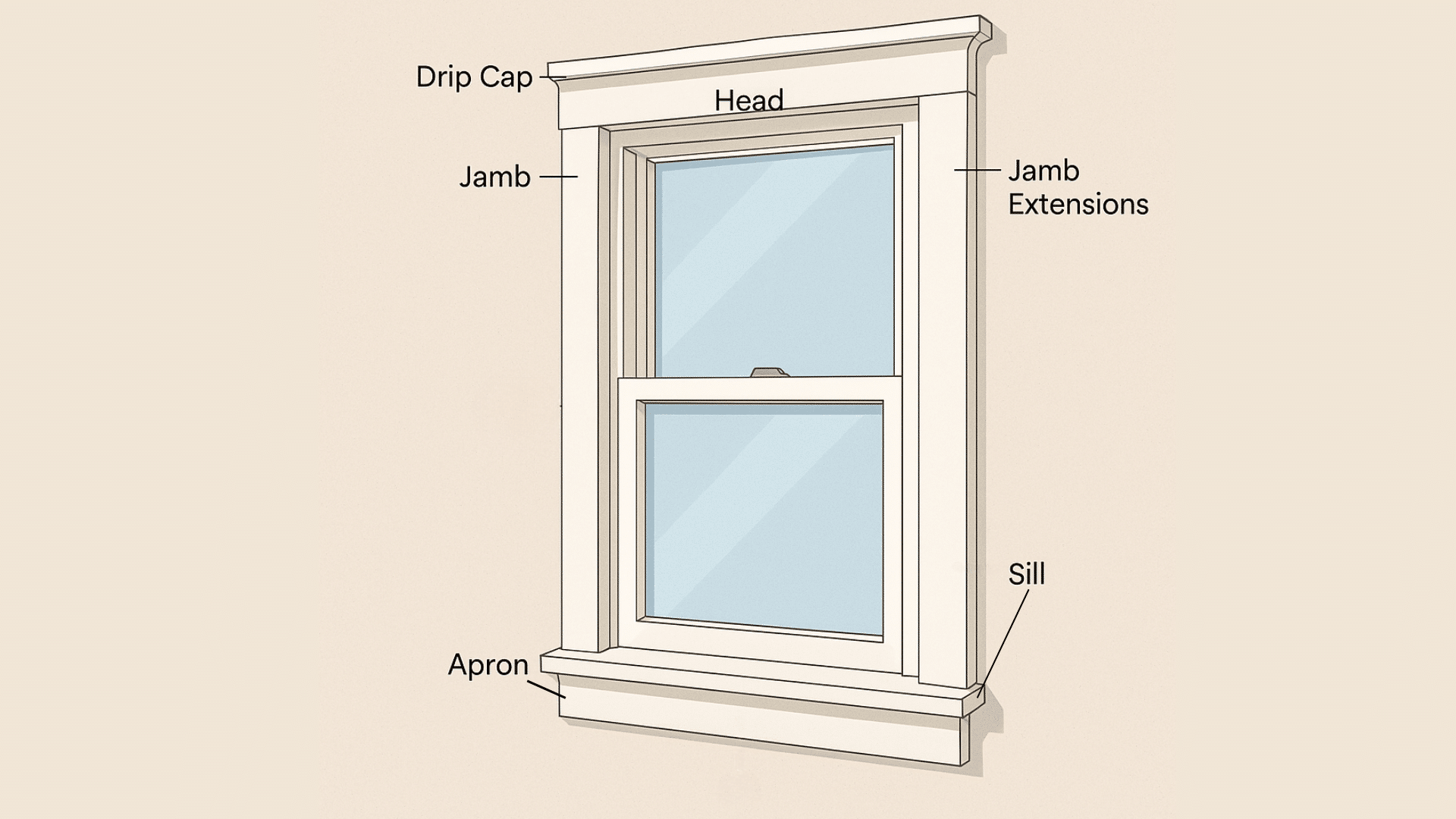
These parts make up the outer structure of the window and keep the whole unit steady. They hold the sash, glass, and trim in place and help the window work well over time.
1. Head
The head sits at the top of the frame and supports the window from above. It helps keep the frame straight so the sash can move smoothly.
A strong head also reduces gaps around the top edge. This helps the window stay sealed and comfortable in every season.
2. Jambs
Jambs run along the left and right sides of the frame and guide the sash as it moves. They keep the sash straight so it does not tilt or get stuck.
These sides also help create a tight seal when the window is closed. This reduces drafts and helps the window feel solid and secure.
3. Sill
The sill is the bottom part of the frame and supports the lower sash. It also directs water away from the window to keep the frame dry.
A well-shaped sill protects the wall below the window. It also helps keep the room warmer by limiting moisture and air leaks.
4. Apron
The apron sits just under the inside sill to cover the wall gap. It gives the window a clean finish and makes the trim look complete.
This piece also helps the sill blend neatly with the wall. It adds a smooth, simple look to the inside frame.
5. Casing
Casing is the trim that surrounds the window on the inside or outside. It hides small gaps between the frame and the wall to keep air out.
It also gives the window a neat border that finishes the overall look. With good casing, the frame feels smooth and well-fitted.
6. Drip Cap
The drip cap sits above the window and directs rain away from the frame. It helps stop water from getting into the wall.
This small shield protects the top of the window from rot and moisture damage. It also helps keep the outside trim in good shape.
7. Jamb Extensions
Jamb extensions make the window frame deeper so it fits thicker walls. They help the window sit even with the inside surface.
They also give the frame a smooth and finished look. This removes uneven gaps and helps the window blend cleanly with the room.
Window Sash Parts
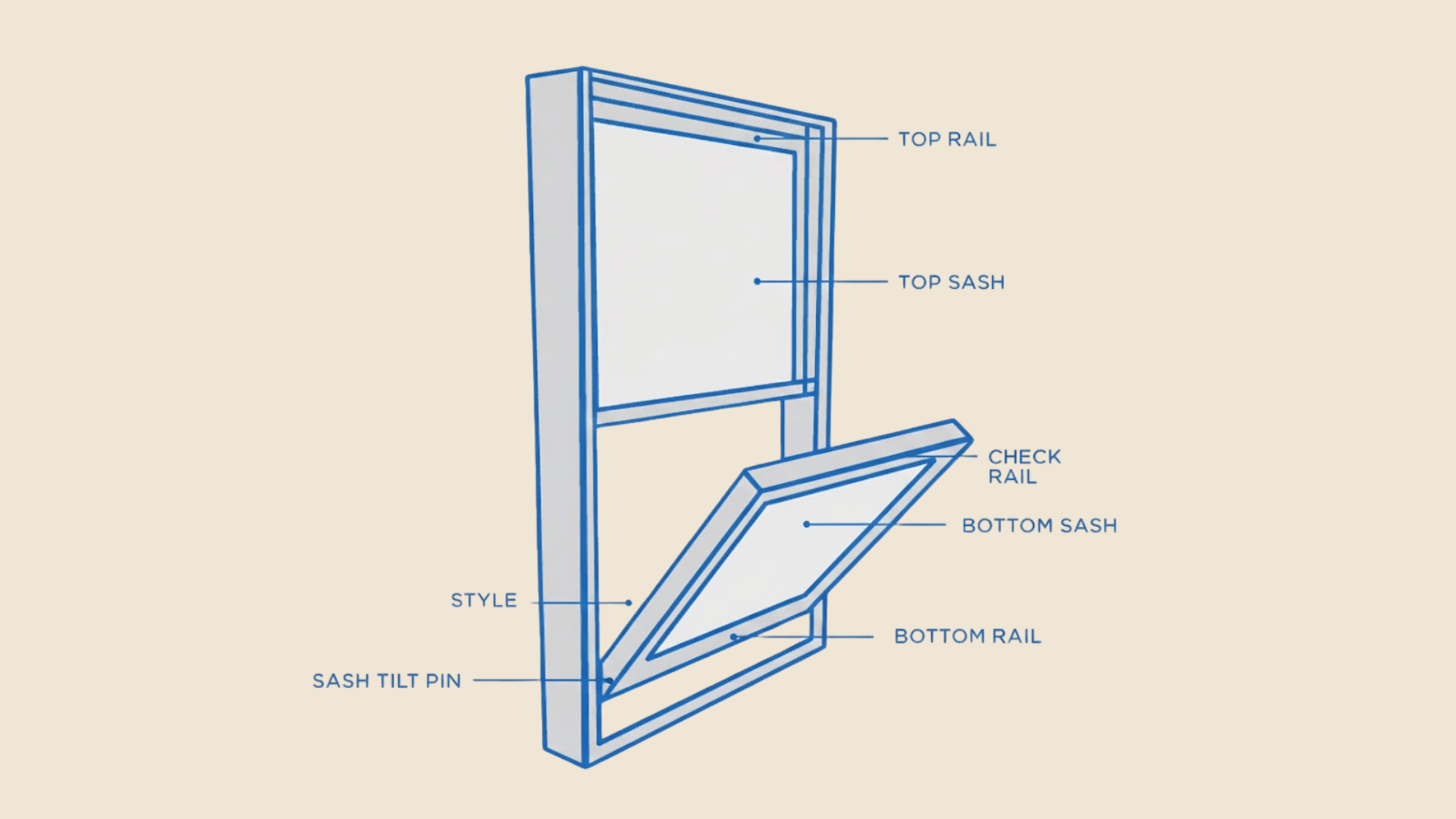
The sash is the part that holds the glass in place. It may slide, tilt, or swing open depending on the type of window.
1. Stiles
Stiles are the tall side pieces of the sash that hold the glass and connect to the rails. They help the sash keep its shape while it moves.
Their strength supports the full weight of the glass. This helps the window open and close without wobbling.
2. Rails
Rails are the top and bottom pieces of the sash that join the stiles. They help hold the glass tight and keep the sash aligned.
They also help the sash move in a smooth, steady path. This makes opening and closing the window feel easy.
3. Check Rail
The check rail is where the two sashes meet on a double-hung window. It forms a tight seal and helps the window lock firmly.
A good check rail reduces drafts around the center. It also adds strength where both sashes come together.
4. Lift Rail
The lift rail is the bottom part of the sash that you hold to open it. It gives you a firm grip so you can lift or slide the window easily.
It also supports the lower edge of the sash during movement. This helps the sash stay steady as you raise or close it.
5. Tilt Latch
The tilt latch sits on top of the sash and lets you tilt it inward for cleaning. It helps you reach both sides of the glass from inside the home.
It also locks the sash back into place so it stays secure. This makes the window simple to use and easy to maintain.
6. Balance System
The balance system is hidden inside the side jambs and supports the sash’s weight. It keeps the sash from dropping and makes lifting feel light.
This system helps the window stay open at any height. It also reduces strain on the frame each time the sash moves.
7. Crank (Casement)
A crank is used on casement windows to open the sash outward. Turning the handle gives you smooth, steady control as the window moves.
The crank also helps pull the sash tight when the window closes. This creates a firm seal that reduces drafts and noise.
Glass and Glazing Parts
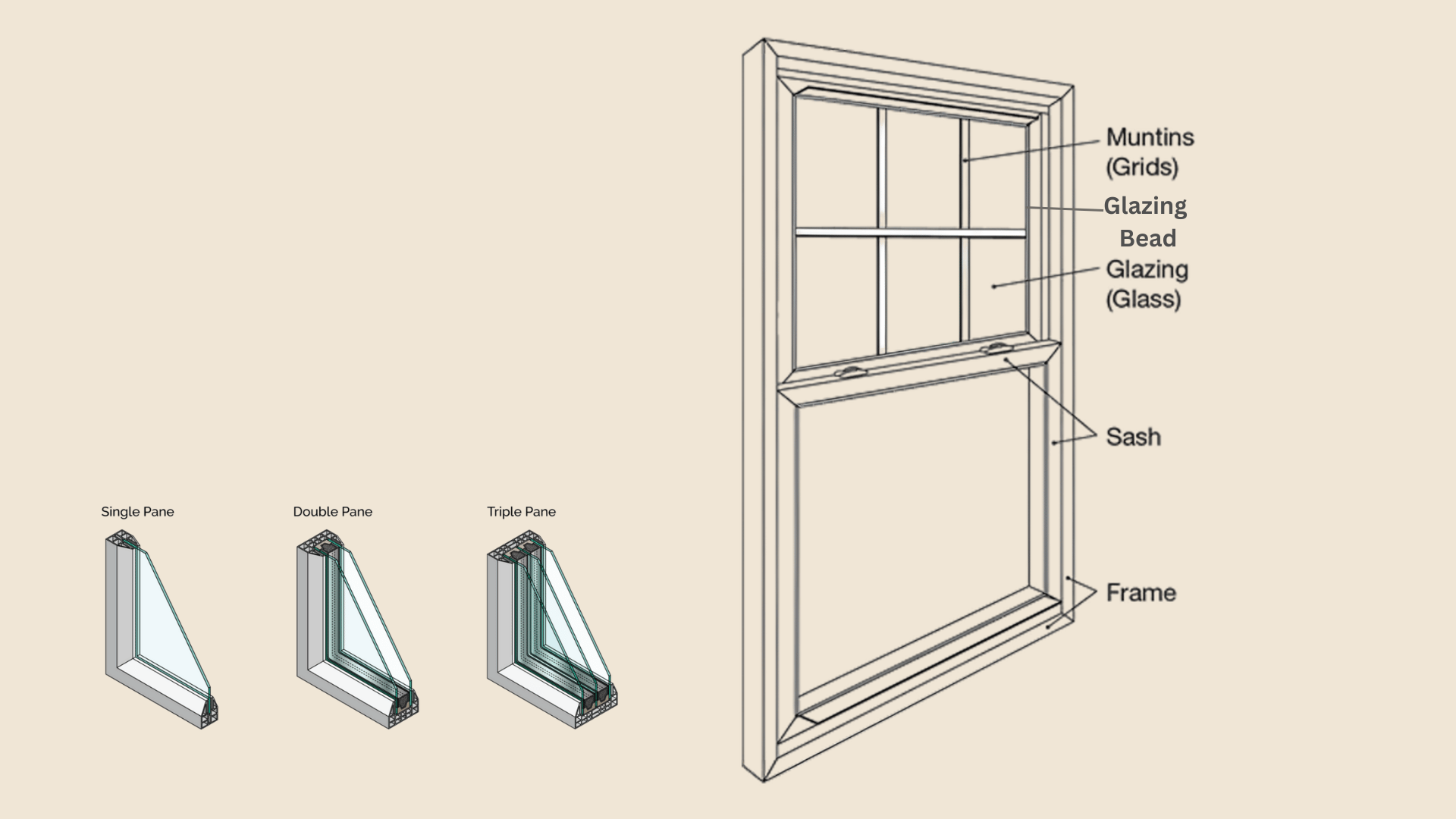
These parts make up the glass section of the window and affect light, comfort, and insulation. They help manage heat, sound, and the window’s overall performance.
1. Glass Pane
The glass pane is the clear sheet that lets light into the home. It blocks wind, rain, and outside noise at the same time.
A strong pane helps maintain indoor comfort throughout the year. It also gives the window a clean and open view.
2. Glazing Beads
Glazing beads are thin strips that hold the glass securely in the sash. They keep the glass tight so it does not shift or rattle.
They also help seal the edges to block air and moisture. This keeps the window snug and well-protected.
3. Muntins / Grids
Muntins or grids divide the window into smaller sections to create a classic look. They can sit on top of the glass or between the panes.
They add style without affecting how the window opens. They also make the design feel more balanced and detailed.
4. Single / Double / Triple Pane
These terms describe how many layers of glass the window has. More layers improve insulation and help block heat and noise.
Double and triple panes are common in modern windows for better comfort. They also help lower heating and cooling costs.
5. Low-E Glass
Low-E glass has a thin coating that reflects heat. It keeps warmth inside during winter and blocks heat in summer.
This coating improves energy savings without changing how the glass looks. It also helps protect furniture from fading in direct sunlight.
Anatomy by Types of Windows
Different window styles use the same parts but move and arrange them in their own way. These examples show how each style works.
1. Double-Hung Windows
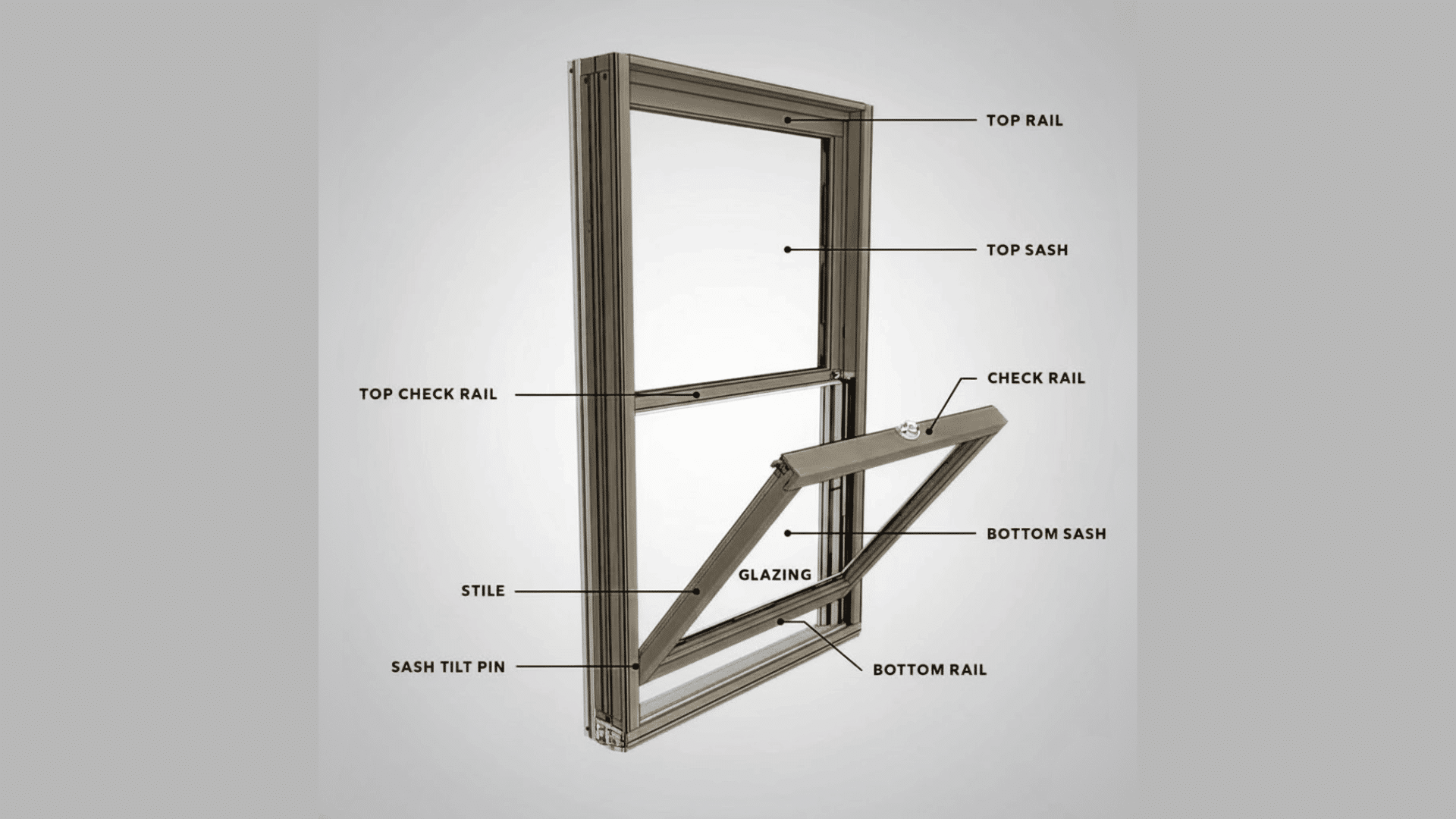
Double-hung windows use two sashes that move up and down to control airflow. Each sash stays supported by balances that hold the weight and make lifting feel smooth and easy.
The tilt latches allow the sashes to swing inward for cleaning without needing to step outside. This design gives you simple access to both sides of the glass while keeping the frame steady and secure.
2. Casement Windows

Casement windows open outward using hinges on one side, which gives you a wide, clear opening. A crank handle pulls the sash out smoothly, guiding it along a steady path as it opens.
When you close the window, the lock pulls the sash tightly against the frame to form a firm seal. This helps block drafts and keeps the window secure while improving comfort inside the home.
3. Sliding Windows
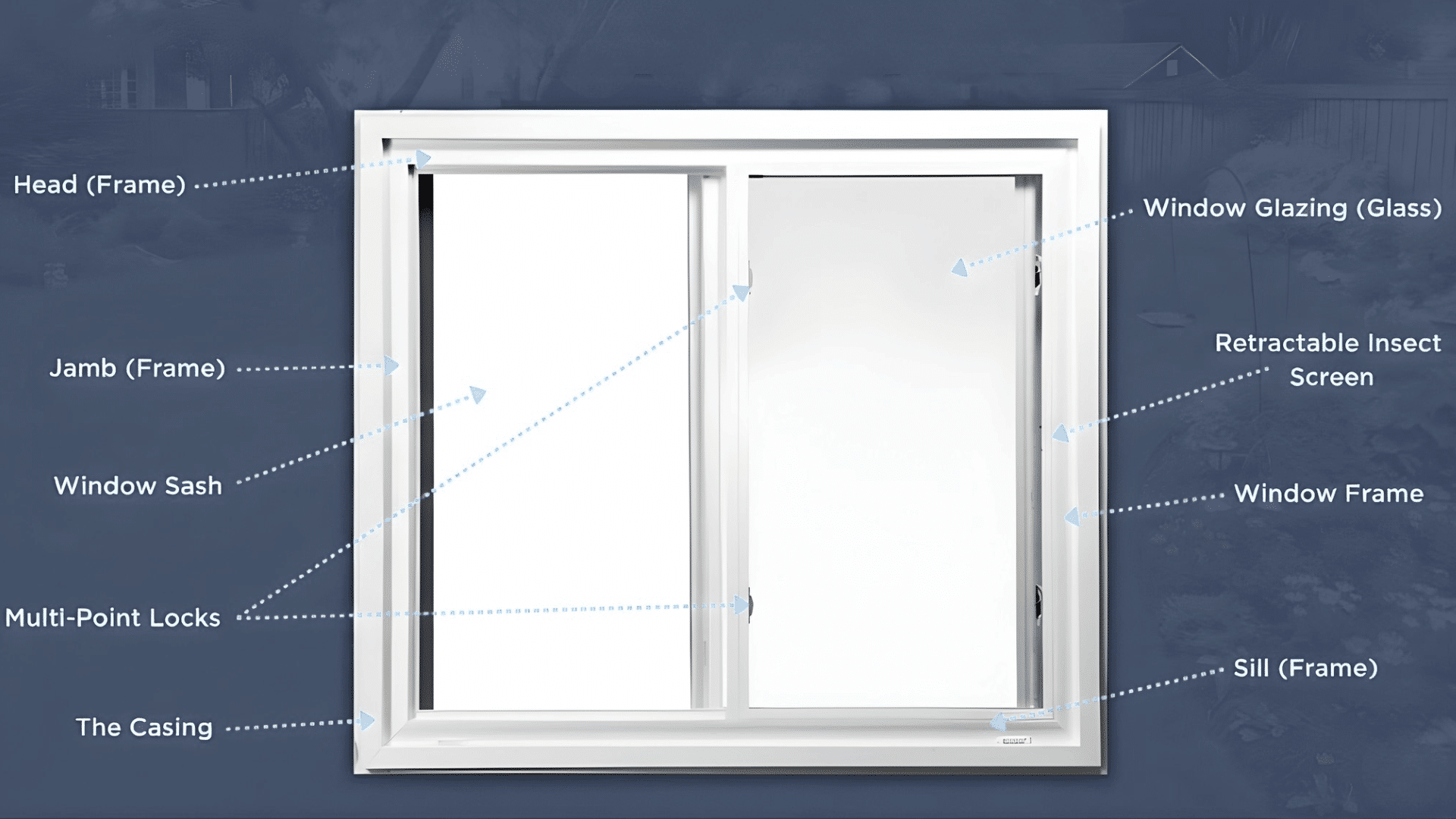
Sliding windows move horizontally along bottom rollers or tracks, which makes them easy to open with a gentle push. The sash glides smoothly, staying aligned as it slides across the frame.
The interlocking edges meet when the window is closed to keep the sash firmly in place. The sill design helps water drain away, keeping the frame protected and working well over time.
4. Vinyl Windows
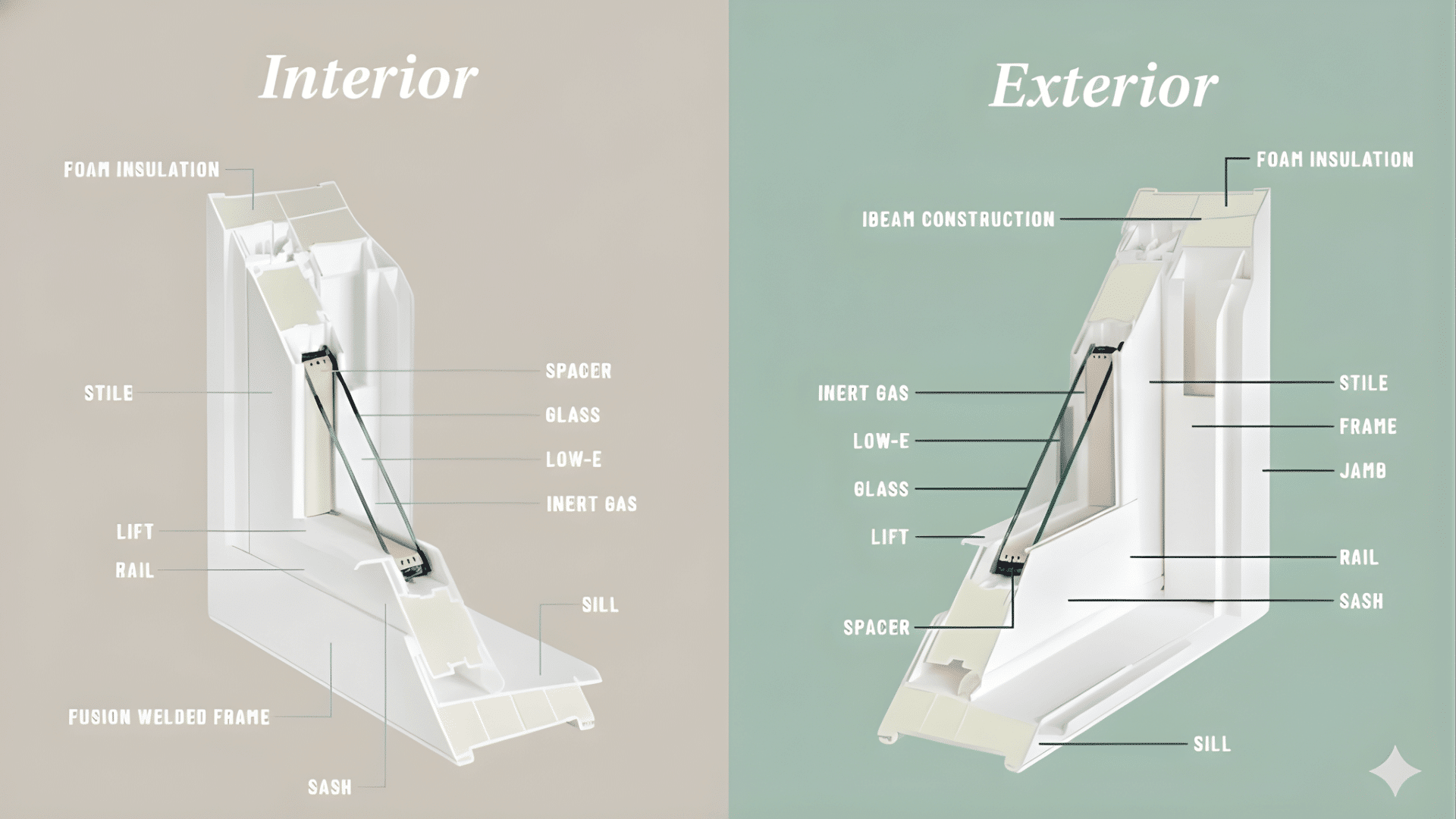
Vinyl windows use PVC frames with multiple inner chambers that help block heat and sound. These chambers improve insulation and make the window more energy-efficient throughout the year.
The welded corners give the frame strength and help resist moisture, bending, or cracking. This makes vinyl a low-maintenance option that stays durable and steady with very little work needed.
Comparing Window Frame Materials
Window anatomy doesn’t change across materials, but each one affects durability, care, and energy performance.
| Material | Durability | Maintenance | Energy Efficiency |
|---|---|---|---|
| Vinyl | High | Low | Excellent |
| Wood | Moderate | High | Good |
| Aluminum | Very High | Low | Fair |
| Fiberglass | Very High | Low | Excellent |
A quick look at this makes it easier to choose a frame material that matches your home’s needs and long-term expectations.
How to Maintain Window Parts
- Inspect key parts: Look over the sash, locks, sill, and weatherstripping every few months.
- Clean gently: Use mild soap to wipe the glass, frame, tracks, and hardware.
- Replace worn seals: Fix damaged weatherstripping or loose locks to prevent drafts.
- Keep hardware clear: Remove dirt from rollers, hinges, and cranks so they move evenly.
- Lubricate moving areas: Apply light lubricant to locks, cranks, and rollers for smoother use.
- Clear drainage holes: Make sure the sill and channels stay open so water can flow out.
- Care for wood frames: Repaint or refinish wood to stop moisture damage.
- Upgrade glazing: Choose better-insulated glass when you need improved comfort.
- Avoid harsh cleaners: Skip strong chemicals that weaken seals and finishes.
- Use exact part details: Follow model labels when ordering replacements.
Regular care keeps your windows working smoothly and helps you catch small issues before they grow.
Conclusion
Now that you understand the structure behind a window frame parts diagram, it becomes easier to see how each piece supports comfort and daily use. I’ve learned that recognizing these parts helps me spot small issues early and care for my windows with more confidence.
If you want the same clarity, keep this guide handy whenever you look at a window parts diagram or compare details in a vinyl window parts diagram. Use it as a quick reference the next time you clean, inspect, or plan repairs for your windows.
Take a moment today to review your windows and put these steps into action. It makes home care much easier.